Last week, the Centers for Medicare and Medicaid Services (CMS) issued the final 2024 Physician Fee Schedule, which reduces overall payment rates for physicians by 1.25 percent, including a 3.4 percent decrease in the conversion factor for relative value units, compared to 2023.
The rule also implements a new add-on payment for complex evaluation and management visits, which is expected to boost pay for primary care physicians.
The American Medical Association (AMA) strongly opposes these cuts and immediately appealed to Congress for a reprieve. In response, the Senate Finance Committee unanimously advanced a bill to the Senate floor that would reduce the conversion-factor rate cut from 3.4 percent to 2.15 percent, while also delaying reductions in Medicaid disproportionate share funding for safety-net hospitals. Senate Majority Leader Chuck Schumer (D-NY) has indicated he intends to assemble a broad healthcare bill, including some or all of these provisions, by the end of this year.
The Gist: Physicians were hopeful that inflation’s toll on labor and supply costs would earn them a break from continued Medicare pay cuts, but CMS remains committed to reductions within its budget neutrality framework.
Earlier this year, the Medicare Payment Advisory Commission (MedPAC) recommended for the first time that physician payments be tied to an index of physician practice inflation, but that would require legislative intervention, which Congress has not taken up.
The AMA calculated that Medicare physician pay has lagged inflation by 26 percent since 2001, pointing to burnout and large numbers of physicians exitingthe profession as a result.
Until calls for Medicare payment reform are heeded, physicians, like health systems, will have to adopt new, lower-cost models of care to cope with what they will continue to see as insufficient reimbursements.
Bloomberg reported this week that retail behemoth Walmart has engaged in talks to acquire a majority stake in ChenMed, a closely held value-based primary care company based in Miami, FL.
The deal would significantly expand Walmart’s primary care footprint and capabilities, adding to the 39 Walmart Health centers slated to be in operation by the end of this year.
ChenMed, which operates 120+ clinics across 15 states, delivers primary care to complex Medicare Advantage beneficiaries, taking risk for the total cost of care, and has grown its membership by 36 percent annually across the last decade. It has remained privately owned by the Chen family, but recently revamped its leadership structure and tapped UnitedHealth Group (UHG) veteran Steve Nelson to run operations. ChenMed has an expected value of several billion dollars, a price that could be driven upwards if other bidders express interest. Bloomberg’s sources emphasized that the deal could still be weeks away and that no terms have been finalized.
The Gist: Should this purchase go through, it might change Walmart’s status as a “sleeping giant” in healthcare.
ChenMed’s primary care model and strong foothold in the Southeast would dovetail with Walmart’s store clinic footprint and its 10-year partnership with UHG to drive value-based care adoption in that region.
With ChenMed competitors Oak Street, One Medical, and VillageMD now backed or owned by some of Walmart’s biggest competitors, Walmart may view ChenMed as its best opportunity to scale its primary care footprint through a large acquisition.
However, much of ChenMed’s success to date has been attributed to its strong culture and track record of physician recruitment and retention—something a large company like Walmart may have challenges preserving.
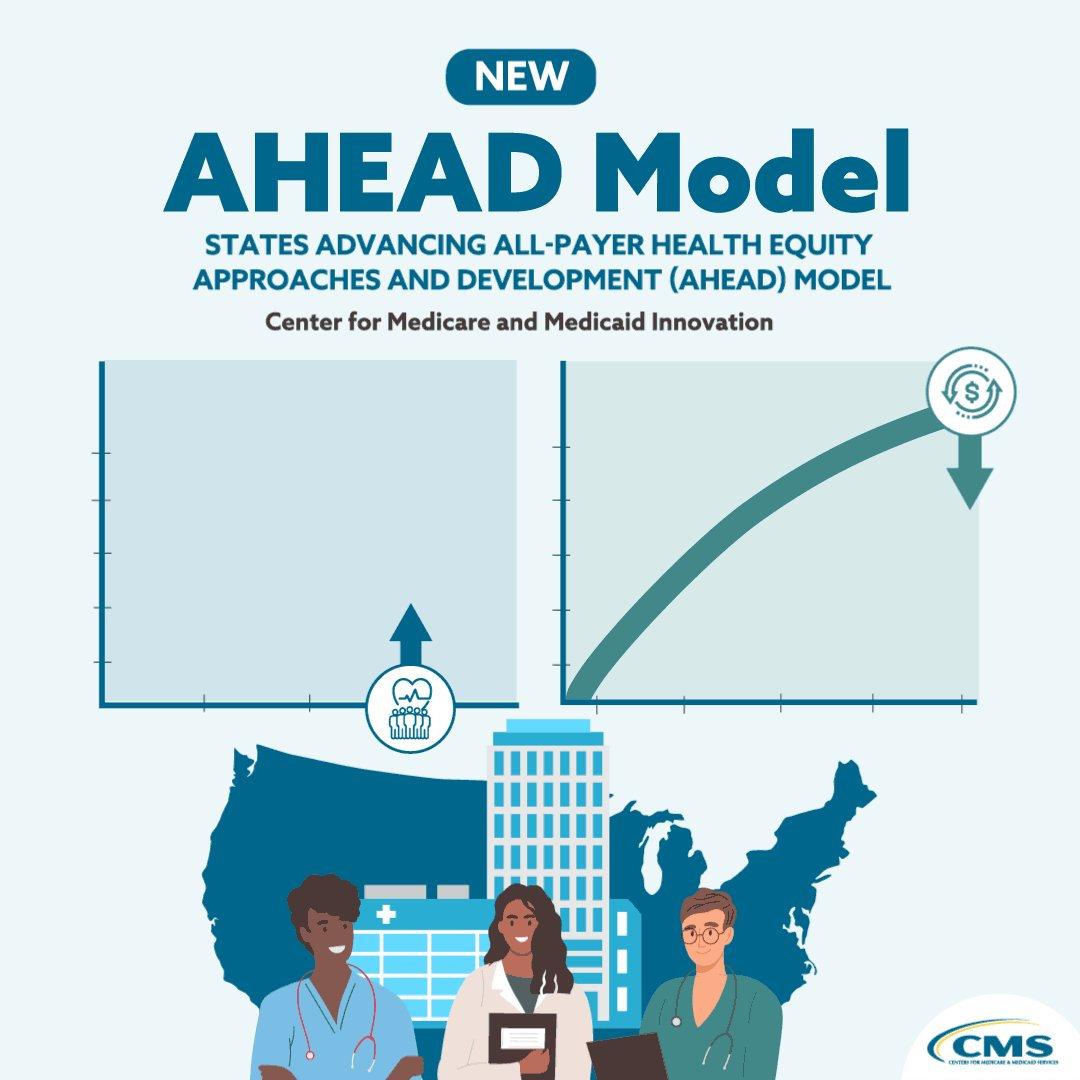
On Tuesday, CMS announced the States Advancing All-Payer Health Equity Approaches and Development (AHEAD) Model, a new payment model that will give up to eight states or sub-state regions the ability to test global hospital budgets across an 11-year period.
Participating states will assume responsibility for managing healthcare costs for traditional Medicare and Medicaid populations, while encouraging private payers to pay hospitals under a similar relationship.
Primary care practices will have the option to participate in a primary care component of the model, called Primary Care AHEAD, in which they will receive a Medicare care management fee and be required to engage in state-led Medicaid transformation initiatives.
CMS is hoping that the AHEAD model will reduce healthcare cost growth, improve population health, and reduce health outcome disparities. It builds upon existing Innovation Center state-based models, including the Maryland Total Cost of Care Model, the Vermont All-Payer Accountable Care Organization Model, and the Pennsylvania Rural Health Model, which have all shown promise in lowering Medicare spending while improving patient outcomes.
Program applications will open late this year, and the first states selected would begin a pre-implementation period in summer 2024.
The Gist:
Shifting to a total-cost-of-care model will be a difficult undertaking for even the most motivated states.
Though a stable annual budget may be a welcome prospect to struggling hospitals, large regional systems may balk at the idea, especially as the Maryland Hospital Association has claimed that their state’s regulated rates have lagged hospital cost inflation by 1.3 percent per year.
With the Medicare Shared Savings Program (MSSP)saving only one quarter of one percent of Medicare’s total spending in 2022, CMS has good reason to explore other ways to reduce Medicare cost growth
—but these Innovation Center models will only achieve their goals if they can first induce sufficient participation.
Five years ago, I started the Fixing Healthcare podcast with the aim of spotlighting the boldest possible solutions—ones that could completely transform our nation’s broken medical system.
But since then, rather than improving, U.S. healthcare has fallen further behind its global peers, notching far more failures than wins.
In that time, the rate of chronic disease has climbed while life expectancy has fallen, dramatically. Nearly half of American adults now struggle to afford healthcare. In addition, a growing mental-health crisis grips our country. Maternal mortality is on the rise. And healthcare disparities are expanding along racial and socioeconomic lines.
Reflecting on why few if any of these recommendations have been implemented, I don’t believe the problem has been a lack of desire to change or the quality of ideas. Rather, the biggest obstacle has been the immense size and scope of the changes proposed.
To overcome the inertia, our nation will need to narrow its ambitions and begin with a few incremental steps that address key failures. Here are three actionable and inexpensive steps that elected officials and healthcare leaders can quickly take to improve our nation’s health:
1. Shore Up Primary Care
Compared to the United States, the world’s most-effective and highest-performing healthcare systems deliver better quality of care at significantly lower costs.
One important difference between us and them: primary care.
In most high-income nations, primary care makes up roughly half of the physician workforce. In the United States, it accounts for less than 30% (with a projected shortage of 48,000 primary care physicians over the next decade).
Primary care—better than any other specialty—simultaneously increases life expectancy while lowering overall medical expenses by (a) screening for and preventing diseases and (b) helping patients with chronic illness avoid the deadliest and most-expensive complications (heart attack, stroke, cancer).
But considering that it takes at least three years after medical school to train a primary care physician, to make a dent in the shortage over the next five years the U.S. government must act immediately:
The first action is to expand resident education for primary care. Congress, which authorizes the funding, would allocate $200 million annually to create 1,000 additional primary-care residency positions each year. The cost would be less than 0.2% of federal spending on healthcare.
The second action requires no additional spending. Instead, the Centers for Medicare & Medicaid Services, which covers the cost of care for roughly half of all American adults, would shift dollars to narrow the $108,000 pay gap between primary care doctors and specialists. This will help attract the best medical students to the specialty.
Together, these actions will bolster primary care and improve the health of millions.
2. Use Technology To Expand Access, Lower Costs
A decade after the passage of the Affordable Care Act, 30 million Americans are without health insurance while tens of millions more are underinsured, limiting access to necessary medical care.
Furthermore, healthcare is expected to become even less affordable for most Americans. Without urgent action, national medical expenditures are projected to rise from $4.3 trillion to $7.2 trillion over the next eight years, and the Medicare trust fund will become insolvent.
With costs soaring, payers (businesses and government) will resist any proposal that expands coverage and, most likely, will look to restrict health benefits as premiums rise.
Almost every industry that has had to overcome similar financial headwinds did so with technology. Healthcare can take a page from this playbook by expanding the use of telemedicine and generative AI.
At the peak of the Covid-19 pandemic, telehealth visits accounted for 69% of all physician appointments as the government waived restrictions on usage. And, contrary to widespread fears at the time, patients and doctors rated the quality, convenience and safety of these virtual visits as excellent. However, with the end of Covid-19, many states are now restricting telemedicine, particularly when clinicians practice in a different state than the patient.
To expand telemedicine use—both for physical and mental health issues—state legislators and regulators will need to loosen restrictions on virtual care. This will increase access for patients and diminish the cost of medical care.
It doesn’t make sense that doctors can provide treatment to people who drive across state lines, but they can’t offer the same care virtually when the individual is at home.
Similarly, physicians who faced a shortage of hospital beds during the pandemic began to treat patients in their homes. As with telemedicine, the excellent quality and convenience of care drew praise from clinicians and patients alike.
Building on that success, doctors could combine wearable devices and generative AI tools like ChatGPT to monitor patients 24/7. Doing so would allow physicians to relocate care—safely and more affordably—from hospitals to people’s homes.
Translating this technology-driven opportunity into standard medical practice will require federal agencies like the FDA, NIH and CDC to encourage pilot projects and facilitate innovative, inexpensive applications of generative AI, rather than restricting their use.
3. Reduce Disparities In Medical Care
American healthcare is a system of haves and have-nots, where your income and race heavily determine the quality of care you receive.
Black patients, in particular, experience poorer outcomes from chronic disease and greater difficulty accessing state-of-the-art treatments. In childbirth, black mothers in the U.S. die at twice the rate of white women, even when data are corrected for insurance and financial status.
Generative AI applications like ChatGPT can help, provided that hospitals and clinicians embrace it for the purpose of providing more inclusive, equitable care.
Previous AI tools were narrow and designed by researchers to mirror how doctors practiced. As a result, when clinicians provided inferior care to Black patients, AI outputs proved equally biased. Now that we understand the problem of implicit human bias, future generations of ChatGPT can help overcome it.
The first step will be for hospitals leaders to connect electronic health record systems to generative AI apps. Then, they will need to prompt the technology to notify clinicians when they provide insufficient care to patients from different racial or socioeconomic backgrounds. Bringing implicit bias to consciousness would save the lives of more Black women and children during delivery and could go a long way toward reversing our nation’s embarrassing maternal mortality rate (along with improving the country’s health overall).
The Next Five Years
Two things are inevitable over the next five years. Both will challenge the practice of medicine like never before and each has the potential to transform American healthcare.
First, generative AI will provide patients with more options and greater control. Faced with the difficulty of finding an available doctor, patients will turn to chatbots for their physical and psychological problems.
Already, AI has been shown to be more accurate in diagnosing medical problems and even more empathetic than clinicians in responding to patient messages. The latest versions of generative AI are not ready to fulfill the most complex clinical roles, but they will be in five years when they are 30-times more powerful and capable.
Second, the retail giants (Amazon, CVS, Walmart) will play an ever-bigger role in care delivery. Each of these retailers has acquired primary care, pharmacy, IT and insurance capability and all appear focused on Medicare Advantage, the capitated option for people over the age of 65. Five years from now, they will be ready to provide the businesses that pay for the medical coverage of over 150 million Americans the same type of prepaid, value-based healthcare that currently isn’t available in nearly all parts of the country.
American healthcare can stop the current slide over the next five years if change begins now. I urge medical leaders and elected officials to lead the process by joining forces and implementing these highly effective, inexpensive approaches to rebuilding primary care, lowering medical costs, improving access and making healthcare more equitable.
A physician who has led the primary care enterprise for a large health system for over twenty years told us he’s never seen physician morale as low as it is now:
“Burnout is bad across the board for all specialties, but I’m having a really hard time finding the bright spots for primary care”.
We recalled a recent survey of primary care physicians that confirmed his observations, with 61 percent of doctors stating that primary care is “crumbling”. But it struck us that we’ve been seeing these kinds of dire surveys about the state of primary care for the entire quarter-century we’ve been doing this work.
What’s different now?
He posited one critical change. Ten years ago, during the heyday of accountable care, primary care was central to health system strategy. Systems were devoting resources to converting practices to patient-centered medical homes. “We felt like primary care was at the heart of transforming health systems, and that we were finally getting resources to help patients,” he shared.
“Now it feels like the health system has moved away from ‘value’, the focus is all on specialists and growing procedure volume again, and we’re being treated as a cost center and told to cut staff and up our referral targets.”
We agree. Although large independent primary care groups continue to command record valuations, overall, the transition to value has slowed, and work burden has increased given staffing shortages.
Where could optimism come from now?
We both agreed that workflow innovations to ease documentation burden and help the transition to virtual care appear closer to reality than ever before.
And the increased focus on “consumerism” has many systems recognizing that primary care is the first—and principal—touchpoint for most patients and will be key to winning consumer loyalty.
On Tuesday, the US Preventative Services Task Force (USPSTF), which is appointed by an arm of the Department of Health and Human Services, finalized guidance that all adults ages 19 to 64 should be routinely screened for anxiety, even in the absence of symptoms. Last fall, USPSTF proposed a draft version of this guidance, and also finalized its recommendation that children and adolescents ages 8-18 be screened for anxiety. The task force found that anxiety screening for seniors, as well as suicide-risk screening for all adults, lacked conclusive evidence of effectiveness.
The Gist: Policymakers and providers are right to respond to the nationwide increase in anxiety and depression brought on by the pandemic, and regular screenings will help quantify the scope of a problem we face.
However, given the pervasive undersupply of behavioral health practitioners, widespread screenings will only lead to better care if access to treatment can be scaled.
Solutions that take advantage of telemedicine’s success in behavioral health, combined with the tools—and time—to manage mild anxiety in the primary care setting, are critical to provide support for a coming wave of newly identified patients.
Walmart Health opened three new clinics in Jacksonville, Fla., starting June 6 as the company continues its push into retail healthcare, the Florida Times-Union reported.
The retail giant now has more than 30 Walmart Health centers across Florida, Arkansas, Georgia, Illinois and Texas, with plans to grow to 77 by the end of 2024 and expand into Arizona and Missouri.
Florida is one of Walmart Health’s biggest markets, with 22 coming to the state by fall 2023. They are also located in the Orlando and Tampa metro areas. They include medical, dental, vision, hearing and behavioral health services.
“With only one primary care doctor per 1,380 Florida residents, these Walmart Health centers will help address the demand for care in three major cities in the Sunshine State,” David Carmouche, MD, senior vice president of omnichannel care offerings for Walmart, said in a 2022 Times-Unionstory. “We are part of these communities, and we are excited to bring more options for in-person and telehealth care services to our neighbors. We’re making healthcare available when and where you may need it.”
As the nation’s leading provider of retail healthcare, CVS Health partners with hospitals and health systems in many local markets.
The health systems assist providers at CVS MinuteClinic locations and accept referrals from patients needing a higher level of care. Here are CVS’ clinical affiliates, according to its website:
Less than a month after CVS Health acquired Oak Street Health, the primary care provider plans to expand into four more states.
The company plans to open value-based primary care centers in Little Rock, Arkansas; Des Moines and Davenport, Iowa; Kansas City, Kansas and Richmond, Virginia, beginning this summer.
Oak Street Health will operate centers in 25 states by the end of the year.
The provider also aims to open new centers in existing markets this year with additional centers planned for Arizona, Colorado, Georgia, Illinois, Indiana, Louisiana, New York, Ohio and Pennsylvania.
CVS finalized its $10.6 billion acquisition of the Medicare-focused primary care company in early May, picking up, at the time, about 169 medical centers in 21 states.
The acquisition significantly broadens CVS Health’s primary care footprint and the retail pharmacy giant said the deal will improve health outcomes and reduce costs for patients, particularly for those in underserved communities.
The two deals will help advance the health giant’s push into value-based care and mark its latest moves to get further into healthcare services.
Oak Street specializes in treating Medicare Advantage patients and its network of clinics is expected to grow to over 300 centers by 2026.
The provider says it developed an integrated care model that incorporates behavioral healthcare and social determinants support and patients can access care in-center, in-home and through telehealth appointments.
Oak Street Health says it has reduced patient hospital admissions by approximately 51% compared to Medicare benchmarks, and driven a 42% reduction in 30-day readmission rates and a 51% reduction in emergency department visits.
“One of the most critical ways we advance our mission to rebuild healthcare as it should be is by bringing our high-quality primary care and unmatched patient experience to more older adults across the country,” said Mike Pykosz, Oak Street Health’s CEO. “We look forward to meeting and caring for new deserving patients in Arkansas, Iowa, Kansas and Virginia, as well as the opportunity to create meaningful jobs for those passionate about improving health outcomes for patients and bridging health equity gaps in their communities.”
The CVS-Oak Street Health deal marks the latest example of vertical integration in healthcare. In addition to operating thousands of pharmacies and MinuteClinics, CVS also is the parent company of major health insurer Aetna and pharmacy benefit manager CVS Caremark.
Retail giant Walmart announced the 2024 opening of four new health centers in Oklahoma.
Oklahoma joins Missouri and Arizona as the third state Walmart Health will enter in 2024.
The 5,570-square-foot centers will be located next to Walmart retail locations and will include primary care, labs, X-rays, EKG, behavioral health, dental, hearing and telehealth services, according to an April 26 Walmart news release.
The health centers will use the Epic EHR system. The new locations will be in the Oklahoma City area, according to the release.








 HENRY KOTULA