The Healthcare Industry Mega Trend to Watch in 2024

The Nelson A. Rockefeller Institute of Government is a public policy think tank founded in 1981 that conducts cutting-edge research and analysis to inform lasting solutions to the problems facing New York State and the nation.

Introduction & Definitions

In 2023, I noted 10 trends within three broad categories in healthcare worth watching and provided a mid-year update on those trends. They included: the impact of unwinding the Public Health Emergency on insurance coverage, healthcare workforce shortages, price inflation, declining margins at hospitals, private equity in healthcare, consolidations, alternate payment models, attention to health equity, digital telehealth expansion, and the expansion of non-traditional providers in healthcare. These trends continue to be worth watching in 2024.

More significant than any one of these trends is the combined interaction of the trends in the industry overall—what I’ll call a “mega-trend,” which results in a trifurcation of the industry. Currently, there are parts of the healthcare industry struggling to exist. This is due to different factors, including high expenses, staffing challenges, and a lack of access to capital and technology, among other things. I call the types of healthcare entities that fall into this category “Today” entities because they exist now but may or may not exist in the future. In contrast, there is another set of entities in healthcare that have emerged in the last five or so years. They are becoming larger through consolidation and integration, and have greater access to capital and technology. I call these types of healthcare entities the “Tomorrow” entities because their size, resources, and forward-looking strategies are changing the future of healthcare.

In between these two categories, are existing and traditional entities in healthcare that seek sustaining strategies. I call these entities the “Striving Survivors” whose success and ability to persevere is still an open question. Most look like the healthcare entities of Today, but what distinguishes them is their ability to partner, use technology, and diversify what they offer. To understand the mega–trend phenomena of this trifurcation in healthcare and what’s happening within and across each of these three categories, this blog dissects how the trends I highlighted in 2023 are impacting the Today and the Tomorrow entities and discusses how the Striving Survivors are attempting to keep pace as the healthcare industry evolves.

The “Today” Healthcare Entities

As noted in my 2023 blog, price inflation and expense growthparticularly as they relate to workforce and labor costs—were two trends impacting existing healthcare organizations. Today’s healthcare entities are heavily reliant on people, and, unsurprisingly, increased expenses for personnel, which had a major impact on organizations’ bottom lines for the past few years, as did general inflation and increased supply prices. However, for some providers, revenue and patient volume have returned to levels comparable to pre–pandemic. According to Kaufman Hall, a healthcare consulting firm, by the end of 2023, some hospitals’ margins were beginning to stabilize.

In looking at what may happen in 2024 for providers, however, the return of patient volume and, therefore, more predictable revenue may not be enough to yield positive margins. This is because expenses are predicted to be challenging. Industry experts estimate that healthcare prices will grow 7 percent in the coming year. The estimate reflects increases in pharmaceutical costs, growing provider expenses given the high labor and supply costs noted earlier, and insurer rate increases.

Another challenge to the healthcare entities of Today is the availability of capital to make strategic investments. More of this capital is now being provided by private equity firms, an estimated $750 billion in the last decade. To secure capital in the private market, bond rating agencies typically favor larger providers because they are less risky. This, among other factors, has contributed to growing consolidation in the industry among physician groups, insurers, and hospitals. Not only do these entities need capital for projects like upgrades to existing facilities, but to also make strategic investments. Such investments include acquisitions of other providers or companies that add to the revenue base, or technologies that allow improvements in care delivery.

The Today entities are increasingly challenged with adapting to consumer demands for tech–enabled care options. Consumers want more tech–supported smart applications that allow them to book appointments or get assistance with care more quickly via chatbots. Consumers also want new options for care at home—including hospital–at–home, which provides acute care in a home-based setting, and home–based care. As noted in my November blog on AI in healthcare, access to such technologies is not only creating further separation between healthcare entities, but can also create further inequities among consumers.

The “Tomorrow” Healthcare Entities

With the challenges for the healthcare entities of Today outlined above, it is important to note that those same challenges are not as significant for the healthcare players of Tomorrow. This is because most are substantial in size and have sufficient revenue, technology, and capital resources—often in the form of private equity. And many of them did not start in healthcare. They include, for example, Amazon—which started as an online bookstore and now has annual revenues of over $500 billion, CVS—which started as a retail pharmacy and now has revenues close to $300 billion; Uber—which started as a tech-enabled taxi-like transport application and now has revenues of over $30 billion, and Microsoft—which started as computer company but has expanded into healthcare with annual revenues of over $200 billion.

Some of these companies have entered healthcare by partnering with, or acquiring companies already in the sector such as Amazon’s 2023 acquisition of One Medical, a tech–enabled primary care entity; the 2022 partnership between United Health Group and Change Healthcare, a technology company; and CVS’s official 2023 acquisition of Signify, a home health organization. This was on top of CVS’s earlier (2018) merger with health insurance company Aetna, and its 2022 partnership announcement with Uber with the stated aim of improving access to care and decreasing health inequities in underserved communities across the country. Other entities have increased their footprint in healthcare by launching their products, such as Microsoft’s 2020 launch of Cloud services, specifically for healthcare.  Some of these companies are now collaborating, including the 2021 partnership between CVS Health and Microsoft, which was designed to customize care further, enable frontline workers to more easily access and use data, and digitize operations.

In addition to these large nontraditional healthcare entities, the health insurance industry has also experienced large–scale consolidation and diversification that enables them to compete. One of the most notable companies in the world of healthcare integration is the nation’s largest insurer, United Health Group (UHG). UHG continued to outpace provider margins, with 2023 third quarter margins for UHG at levels 14 percent higher year-over-year.  The continued growth at UHG was largely due to the increasing number of individuals served and a growing provider base of 90,000 physicians, or 10 percent of all physicians nationwide. This contrasts with one of the largest provider margins (Kaiser) whose 2023 third-quarter margin was only $239 million, an improvement from the $1.5 billion loss they experienced in the third quarter from the previous year. Although no other insurers are as big as UHG, the next biggest including,  AetnaAnthemCigna, and Humana all had 2023 third–quarter net incomes ranging from $1 billion to $1.4 billion.

The Striving Survivors

Not all traditional healthcare entities are being left behind; I call these the Striving Survivors. They may currently be considered Today entities, but they are attempting to put in place strategies so they can be Tomorrow entities in the future.  Here are three primary strategies that may help these entities survive into the future:

  1. PartneringThe number of independent hospitals as well as the number of independent physician groups has shrunk dramatically in the past decade, and there is increasing pressure for both to consider merging. A report by Kaufman Hall prepared at the request of the American Hospital Association, shows that merging can have advantages such as creating economies of scale, improving leverage to bargain for better payments from increasingly large insurance companies, and allowing better access to capital markets. Other advantages to partnering include diversifying what services can be offered to patients, allowing providers to assume risk for the care of a larger population, or leveraging complementary strengths for strategic investments. Although many of these consolidations used to be regional in nature (providers would merge with neighboring providers), new mergers are occurring across broader geographic areas, as was the case with the merger of west–coast–based Kaiser and Pennsylvania-based Geisinge.
  2. Maximizing Technology—Striving Survivors are also seeking to compete and survive into the future by partnering to maximize technology.  Technologies like telehealthremote monitoringartificial intelligence, and hospital–at–homeare growing because they are delivering care in ways that are preferable to consumers. As recently noted by Deloitte, “Adopting new technologies and business models—while under sustained financial pressure—might be the biggest challenge health care executives will face in 2024.” The good news for the healthcare players of Today is the use of data and technology in new and creative ways can counteract some of their current financial and care delivery challenges. Technology can make care more convenient for consumers, reduce costs, or provide care in places where it is sometimes inaccessible.  Some recent examples of partnerships between technology companies and today’s healthcare entities include women’s health tech startup Tia’s partnership with Common Spirit, one of the largest healthcare systems in the country.  Similarly, Strive Health is managing kidney patients for Bon Secours Mercy Health; Carbon Health is providing tech–enabled urgent care for Milwaukee–based Froedtert Health. Even Best Buy, a home electronics store, has begun offering homecare through several partnerships, including, for example, Mass General Brigham.
  3. Revenue Diversification—Revenue diversification has long been a growth strategy in many industries. Up until recently, there hasn’t been the same pressure for such diversification for healthcare entities. That is changing, in part, because many of the healthcare entities of Tomorrow come from non–health–related industries.  Diversification can occur using either of the strategies noted above (partnership or maximizing the use of technology). Diversification might also include providing services in areas of healthcare where demand is growing (e.g. urgent care or outpatient instead of legacy inpatient services). It might also include services that are not currently widely used but are likely to become more commonplace in the future, such as precision medicine or hospital–at–home.

Conclusion

In 2024, it will not only be important for healthcare policymakers to monitor single trends such as the continued focus on health equity, the expansion of alternate payment models, or the cost of the healthcare workforce, but it will also be important to understand how trends may be interacting with each other to create larger market trends. Such is the case for the emergence of non-traditional players in healthcare, the influx of private equity, digital expansion, and major consolidations— which when combined —are resulting in a mega trend of trifurcation of the industry into Today, Tomorrow, and Striving entities in healthcare that are seeking to survive into the future.  For healthcare policymakers, all these trends along with their interaction will be worth monitoring and understanding so that effective policies can be developed that result in a healthcare system that supports innovation, protects patients, reduces inequities, and results in better health outcomes at lower cost.


Economic Indigestion for U.S. Healthcare is Reality: Here’s What it Means in 2024

By the end of this week, we’ll know a lot more about the economic trajectory for U.S. healthcare in 2024: it may cause indigestion.

  • Digesting deal announcements and industry prognostics from last week’s 42nd JPM conference in San Francisco. Notably, with the exceptions of promising conditions for weight loss drugs, artificial intelligence and biotech IPOs, the outlook is cautionary for providers and inviting for insurers and retail health. Expanded conflicts in Ukraine and Gaza loom as threats. The U.S. trade relationship with China and its growing tension with Taiwan poses an immediate threat to the U.S. healthcare supply chain for raw materials in drugs, OTC products, disposables. U.S. public opinion about its institutions is arguably shaped in part in social media: TikTok is owned by Chinese internet tech company ByteDance and operates in 150 countries. The 16 not for profit health system presentations at JPM sounded a chorus in unison: ‘our core business—hospital care– is not sustainable. We need deals with private capital to stay afloat.’ By contrast, national insurers and retailers sang a different tune: ‘the market is receptive to our products and services that are cheaper, better and more easily accessed through digital platforms. The status quo is outdated’.
  • Digesting results from today’s Iowa GOP Caucus which serves as a gatekeeper for Presidential candidate wannabes. In the run-up to Campaign 2024, polls show voters interested in abortion rights and affordability. But specific health system reforms have not surfaced to date in this election cycle and understandably: per the November 2023 Keckley Poll, 76% of U.S. adults agree that “Most politicians avoid healthcare issues because solutions are complicated and they fear losing votes” vs. 6% who disagree. Thus, the Iowa results might narrow the President contestant pool, but it will do little to clarify U.S. health policies in 2025 and beyond.
  • Digesting takeaways from the World Economic Forum (WEF) in Davos. The annual confab draws world leaders and big-name consultancies and bankers who want to rub elbows with them. It’s notable that the WEF pre-conference Global Risk Survey indicated growing concern about a looming “global catastrophe” and its agenda includes sessions on women’s health, misinformation and artificial intelligence—all central to healthcare’s future. The world is small: 8 billion inhabitants in 195 countries. There’s growing global attention to healthcare and recognition that the integration of social services (nutrition, housing, transportation, et al) and elimination of structural barriers that limit access are necessary to the effectiveness of their systems. The U.S. lacks both though it’s the world’s most expensive system. Thus, U.S.-based solutions to enhance clinical efficacy for specialty care are accessible to global markets at prices significantly lower than what U.S. taxpayers pay because their government’s refuse to pay U.S. rates.
  • Digesting where Congress lands this week on the fiscal 2024 budget. A deal was reached tentatively yesterday on a short-term funding bill that would avert a partial government shutdown this Friday. The $1.6 trillion continuing resolution funds the government through March 1 and March 8 and includes $886B for defense and $704B for other total discretionary programs. While payments for social security and Medicare are not impacted, most other federal health programs are impacted and therefore caught in the Congressional crossfire between budget hawks wary of the ballooning federal deficit ($34 trillion) and progressives who think the federal government spends too much on the ‘have’s’ and not enough, including health and social services, on its ‘have not’s.’ And this deal is TENTATIVE!

My take:

The cumulative effect of these events in economic indigestion for the entire U.S. economy and especially for those of us who work in its healthcare industry. So, for the balance of 2024, the realities for U.S. healthcare are these:

  1. Public support for the health system is eroding. Trust and confidence in the U.S. health system is low. No sector in U.S. healthcare is immune though some (community hospitals, public health programs, independent physicians) are more favorably viewed than others. Confidence in government agencies (CDC, FDA, CMS) is fractured due to misinformation and disinformation. ‘Not-for-profit’ designation is a meaningful distinction to some but secondary to characteristics more readily understood and valued.
  2. Federal policies toward healthcare are increasingly antagonistic. They’re popular and in most cases, bipartisan. Federal policies that expand price transparency (drugs, hospitals, health insurance), constrain on consolidation (horizontal) and private equity investing, expose/reduce conflicts of interest, address workforce resilience (compensation, work-rules) and protect consumers will be prominent. Beyond these, court actions and budgetary negotiations will define/refine federal health policies. Notably, the rumored DOJ antitrust action against Apple will be a closely watched barometer as will the government’s attention toward Microsoft given its leading role in ChatGPT and AI platform Copilot et al.
  3. The big players enjoy advantages over smaller players. It’s a buyer’s market for them. The corporatization of U.S. healthcare has rewarded big operators in each sector and punished smaller, independent operators. More regulation, higher operating costs, escalating administrative complexity and shifting demand require capital that’s increasingly unaffordable/inaccessible to less credit-worthy players. In 2024, in every sector, bigger fish will eat the smaller as readily-accessible private capital is deployed to welcoming sellers. But mechanisms whereby ‘independents’ are protected and growing disparity in how care is financed and delivered will be a prominent concern to policymakers.

Regrettably, an off-the-shelf Pepto-Bismol is not available to the U.S. system. It is complex, fragmented, inequitable and expensive, but also profitable for many who benefit from the status quo.

So, the conclusion that can be deduced from the four events this week is this: economic indigestion in U.S. healthcare will persist this year and beyond because there is no political will nor industry appetite to fix it.  Darwinism aka ‘survival of the fittest’ is its destiny unless….???

One System; Two Divergent Views

Healthcare is big business. That’s why JP Morgan Chase is hosting its 42nd Healthcare Conference in San Francisco starting today– the same week Congress reconvenes in DC with the business of healthcare on its agenda as well. The predispositions of the two toward the health industry could not be more different.

Context: the U.S. Health System in the Global Economy


Though the U.S. population is only 4% of the world total, our spending for healthcare products and services represents 45% of global healthcare market. Healthcare is 17.4% of U.S. GDP vs. an average of 9.6% for the economies in the 37 other high-income economies of the world. It is the U.S.’ biggest private employer (17.2 million) accounting for 24% of total U.S. job growth last year (BLS). And it’s a growth industry: annual health spending growth is forecast to exceed 4%/year for the foreseeable future and almost 5% globally—well above inflation and GDP growth. That’s why private investments in healthcare have averaged at least 15% of total private investing for 20+ years. That’s why the industry’s stability is central to the economy of the world.

The developed health systems of the world have much in common: each has three major sets of players:

  • Service Providers: organizations/entities that provide hands-on services to individuals in need (hospitals, physicians, long-term care facilities, public health programs/facilities, alternative health providers, clinics, et al). In developed systems of the world, 50-60% of spending is in these sectors.
  • Innovators: organizations/entities that develop products and services used by service providers to prevent/treat health problems: drug and device manufacturers, HIT, retail health, self-diagnostics, OTC products et al. In developed systems of the world, 20-30% is spend in these.
  • Administrators, Watchdogs & Regulators: Organizations that influence and establish regulations, oversee funding and adjudicate relationships between service providers and innovators that operate in their systems: elected officials including Congress, regulators, government agencies, trade groups, think tanks et al. In the developed systems of the world, administration, which includes insurance, involves 5-10% of its spending (though it is close to 20% in the U.S. system due to the fragmentation of our insurance programs).

In the developed systems of the world, including the U.S., the role individual consumers play is secondary to the roles health professionals play in diagnosing and treating health problems. Governments (provincial/federal) play bigger roles in budgeting and funding their systems and consumer out-of-pocket spending as a percentage of total health spending is higher than the U.S. All developed and developing health systems of the world include similar sectors and all vary in how their governments regulate interactions between them. All fund their systems through a combination of taxes and out-of-pocket payments by consumers. All depend on private capital to fund innovators and some service providers. And all are heavily regulated. 

In essence, that makes the U.S. system unique  are (1) the higher unit costs and prices for prescription drugs and specialty services, (2) higher administrative overhead costs, (3) higher prevalence of social health issues involving substance abuse, mental health, gun violence, obesity, et al (4) the lack of integration of our social services/public health and health delivery in communities and (5) lack of a central planning process linked to caps on spending, standardization of care based on evidence et al.

So, despite difference in structure and spending, developed systems of the world, like the U.S. look similar:

The Current Climate for the U.S. Health Industry


The global market for healthcare is attractive to investors and innovators; it is less attractive to most service providers since their business models are less scalable. Both innovator and service provider sectors require capital to expand and grow but their sources vary: innovators are primarily funded by private investors vs. service providers who depend more on public funding.  Both are impacted by the monetary policies, laws and political realities in the markets where they operate and both are pivoting to post-pandemic new normalcy. But the outlook of investors in the current climate is dramatically different than the predisposition of the U.S. Congress toward healthcare:

  • Healthcare innovators and their investors are cautiously optimistic about the future. The dramatic turnaround in the biotech market in 4Q last year coupled with investor enthusiasm for generative AI and weight loss drugs and lower interest rates for debt buoy optimism about prospects at home and abroad. The FDA approved 57 new drugs last year—the most since 2018. Big tech is partnering with established payers and providers to democratize science, enable self-care and increase therapeutic efficacy. That’s why innovators garner the lion’s share of attention at JPM. Their strategies are longer-term focused: affordability, generative AI, cost-reduction, alternative channels, self-care et al are central themes and the welcoming roles of disruptors hardwired in investment bets. That’s the JPM climate in San Franciso.
  • By contrast, service providers, especially the hospital and long-term care sectors, are worried. In DC, Congress is focused on low-hanging fruit where bipartisan support is strongest and political risks lowest i.e.: price transparency, funding cuts, waste reduction, consumer protections, heightened scrutiny of fraud and (thru the FTC and DOJ) constraints on horizontal consolidation to protect competition. And Congress’ efforts to rein in private equity investments to protect consumer choice wins votes and worries investors. Thus, strategies in most service provider sectors are defensive and transactional; longer-term bets are dependent on partnerships with private equity and corporate partners. That’s the crowd trying to change Congress’ mind about cuts and constraints.

The big question facing JPM attendees this week and in Congress over the next few months is the same: is the U.S. healthcare system status quo sustainable given the needs in other areas at home and abroad? 

Investors and organizations at JPM think the answer is no and are making bets with their money on “better, faster, cheaper” at home and abroad. Congress agrees, but the political risks associated with transformative changes at home are too many and too complex for their majority.

For healthcare investors and operators, the distance between San Fran and DC is further and more treacherous than the 2808 miles on the map. 

The JPM crowd sees a global healthcare future that welcomes change and needs capital; Congress sees a domestic money pit that’s too dicey to handle head-on–two views that are wildly divergent.

Tower Health rejects 4th purchase offer; ‘I’m not sure what they’re thinking,’ StoneBridge CEO says

West Reading, Pa.-based Tower Health has turned down a $706 million offer from StoneBridge Healthcare, a hospital turnaround firm, making this the fourth purchase offer rejected by the system since 2021. 

StoneBridge received an email from Andrew Turnbull, a managing director at Houlihan Lokey, an investment bank that works with Tower Health, saying that there had been a board meeting and the firm’s offer had been rejected, Joshua Nemzoff, CEO of StoneBridge Healthcare, told Becker’s.

“I’m not sure what they’re thinking. We have requested multiple board meetings, but we’ve never had a chance to meet with the board. We’ve just gotten emails back saying they’re rejecting the offer,” Mr. Nemzoff said.

WoodBridge, a nonprofit sister organization to StoneBridge, initially shared a nonbinding agreement in principle with Tower Health, which included the intent to purchase the system’s assets.

“We’ve given them a number of other offers. I think the last one was more than a year ago. They’ve lost $400 million in operations in the last two years, and they’re $1.8 billion in revenue and $1.5 billion in debt, and 30 days of cash,” Mr. Nemzoff told Becker’s

Tower Health initially turned down a $675 million offer from StoneBridge in November 2022. In partnership with Allentown, Pa.-based Lehigh Valley Health Network, the firm also made two conditional offers to acquire the system’s assets for $600 million in 2021, which were also rejected. 

“Given their cash position and given their extraordinary amount of debt, I think our plan is just to frankly to wait for them to go bankrupt and show up in court for the auction. I think that’s going to happen next year,” Mr. Nemzoff said. 

StoneBridge was formed in 2020. The firm currently does not own or operate any hospitals. Like StoneBridge, WoodBridge has also not completed any hospital deals, Mr. Nemzoff told Becker’s

386 hospitals now owned by private equity firms: 6 things to know

Private equity firms have drawn significant policy interest and scrutiny amid recent reports of surprise billing, rising out-of-pocket costs for patients and increased healthcare spending in the U.S., according to Health Affairs

The Private Equity Stakeholder Project has found at least 386 hospitals in the U.S. that are owned by private equity firms.

Six things to know:

1. The 386 private equity–owned hospitals represent 9% of all private hospitals and 30% of all proprietary for-profit hospitals.

2. Thirty-four percent of private equity-owned hospitals serve rural populations.

3. Texas is the state with the most private equity-owned hospitals (85).

4. While New Mexico has fewer private equity-owned hospitals (17), it has the highest proportion of private equity-backed hospitals compared to all private non-government hospitals at 43%.

5. More than 24% of private equity-owned facilities are psychiatric hospitals.

6. A few private equity firms dominate the list, according to the Private Equity Stakeholder Project:

  • Apollo Global Management (LifePoint Health (Brentwood, Tenn.) and ScionHealth (Louisville, Ky.): 177 hospitals combined)
  • Equity Group Investments (Ardent Health Services (Nashville, Tenn): 30 hospitals)
  • One Equity Partners (Ernest Health (Albuquerque, N.M.): 27 hospitals) 
  • GoldenTree Asset Management and Davidson Kempner (Quorum Health (Brentwood, Tenn.): 21 hospitals) 
  • Bain Capital (Surgery Partners (Brentwood, Tenn.): 19 hospitals)
  • Webster Equity Partners (Oceans Healthcare (Plano, Texas): 18 hospitals)
  • Patient Square Capital (Summit Behavioral Health (Franklin, Tenn.): 11 hospitals)

Health System Chief Strategy Officer Roundtable Assessment: ‘The Near-Term is Tough, the Long-Term is Uncertain and the Deck is Stacked against Hospitals’

On November 2-3 in Austin, I moderated the 4th Annual CSO Roundtable* in which Chief Strategy/Growth Officers from 12 mid-size and large multi-hospital systems participated. The discussion centered on the future: the issues and challenges they facing their organizations TODAY and their plans for their NEAR TERM (3-5 years) and LONG-TERM (8-10 years) future. Augmenting the discussion, participants rated the likelihood and level of disruptive impact for 50 future state scenarios using the Future State Diagnostic Survey. *

Five themes emerged from this discussion:

1-Major change in the structure and financing of U.S. health system is unlikely.

  • CSOs do not believe Medicare for All will replace the current system. They anticipate the existing public-private delivery system will continue with expanded government influence likely.
  • Public funding for the system remains problematic: private capital will play a larger role.
  • CSOs think it is unlikely the public health system will be fully integrated into the traditional delivery system (aka health + social services). Most hospital systems are expanding their outreach to public health programs in local markets as an element of their community benefits strategy.
  • CSOs recognize that states will play a bigger role in regulating the system vis a vis executive orders and referenda on popular issues. Price controls for hospitals and prescription drugs, restraints on hospital consolidation are strong possibilities.
  • Consensus: conditions for hospitals will not improve in the immediate and near-term. Strategies for growth must include all options.

2-Health costs, affordability and equitable access are major issues facing the health industry overall and hospitals particularly.

  • CSOs see equitable access as a compliance issue applicable to their workforce procurement and performance efforts and to their service delivery strategy i.e., locations, patient experiences, care planning.
  • CSOs see reputation risk in both areas if not appropriately addressed in their organizations.
  • CSOs do not share a consensus view of how affordability should be defined or measured.
  • There is consensus among CSOs that hospitals have suffered reputation damage as a result of inadequate price transparency and activist disinformation campaigns. Executive compensation, non-operating income, discrepancies in charity care and community benefits calculations and patient “sticker shock” are popular targets of criticism.
  • CSO think increased operating costs due to medical inflation, supply chain costs including prescription drugs, and labor have offset their efforts in cost reduction and utilization gains.
  • CSO’s are focusing more of their resources and time in support of acute clinical programs where streamlining clinical processes and utilization increases are achievable near-term.
  • Consensus: the current financing of the system, particularly hospitals, is a zero-sum game. A fundamental re-set is necessary.

3-The regulatory environment for all hospitals will be more challenging, especially for not-for-profit health systems.

  • Most CSOs think the federal regulatory environment is hostile toward hospitals. They expect 340B funding to be cut, a site neutral payment policy in some form implemented, price controls for hospital services in certain states, increased federal and state constraints on horizontal consolidation vis a vis the FTC and State Attorneys General, and unreasonable reimbursement from Medicare and other government program payers.
  • CSOs believe the challenges for large not-for-profit hospital systems are unique: most CSOs think not-for-profit hospitals will face tighter restrictions on their qualification for tax-exempt status and tighter accountability of their community benefits attestation. Most expect Congress and state officials to increase investigations about for-profit activities, partnerships with private equity, executive compensation and other issues brought to public attention.
  • CSOs think rural hospital closures will increase without significant federal action.
  • Consensus: the environment for all hospitals is problematic, especially large, not-for-profit multi-hospitals systems and independent rural facilities.

4-By contrast, the environment for large, national health insurers, major (publicly traded) private equity sponsors and national retailers is significantly more positive.

  • CSOs recognize that current monetary policy by the Fed coupled with tightening regulatory restraints for hospitals is advantageous for national disruptors. Scale and access to capital are strategic advantages enjoyed disproportionately by large for-profit operators in healthcare, especially health insurers and retail health.
  • CSOs believe publicly traded private equity sponsors will play a bigger role in healthcare delivery since they enjoy comparably fewer regulatory constraints/limitations, relative secrecy in their day-to-day operations and significant cash on hand from LPs.
  • CSOs think national health insurer vertical consolidation strategies will increase noting that all operate integrated medical groups, pharmacy benefits management companies, closed networks of non-traditional service providers (i.e. supplemental services like dentistry, home care, et al) and robust data management capabilities.
  • CSOs think national retailers will expand their primary care capabilities beyond traditional “office-based services” to capture market share and widen demand for health-related products and services
  • Consensus: national insurers, PE and national retailers will leverage their scale and the friendly regulatory environment they enjoy to advantage their shareholders and compete directly against hospital and medical groups.

5-The system-wide shift from volume to value will accelerate as employers and insurers drive lower reimbursement and increased risk sharing with hospitals and medical groups.

  • CSOs think the pursuit of value by payers is here to stay. However, they acknowledge the concept of value is unclear but they expect HHS to advance standards for defining and measuring value more consistently across provider and payer sectors.
  • CSOs think risk-sharing with payers is likely to increase as employers and commercial insurers align payment models with CMS’ alternative payment models: the use of bundled payments, accountable care organizations and capitation is expected to increase.
  • CSOs expect network performance and data management to be essential capabilities necessary to an organization’s navigation of the volume to value transition. CSOs want to rationalize their current acute capabilities by expanding their addressable market vis a vis referral management, diversification, centralization of core services, primary and preventive health expansion and aggressive cost management.
  • Consensus: successful participation in payer-sponsored value-based care initiatives will play a bigger role in health system strategy.

My take:

The role of Chief Strategy Officer in a multi-hospital system setting is multi-functional and unique to each organization. Some have responsibilities for M&A activity; some don’t. Some manage marketing, public relations and advocacy activity; others don’t. All depend heavily on market data for market surveillance and opportunity assessments. And all have frequent interaction with the CEO and Board, and all depend on data management capabilities to advance their recommendations about risk, growth and the future. That’s the job.

CSOs know that hospitals are at a crossroad, particularly not-for-profit system operators accountable to the communities they serve. In the 4Q Keckley Poll, 55% agreed that “the tax exemption given not-for-profit hospitals is justified by the community benefits they provide”  but 45% thought otherwise. They concede their competitive landscape is more complicated as core demand shifts to non-hospital settings and alternative treatments and self-care become obviate traditional claims-based forecasting. They see the bigger players getting bigger: last week’s announcements of the Cigna-Humana deal and expansion of the Ascension-LifePoint relationship cases in point. And they recognize that their reputations are under assault: the rift between Modern Healthcare and the AHA over the Merritt Research ’s charity care study (see Hospital section below) is the latest stimulant for not-for-profit detractors.

In 1937, prominent literary figures Laura Riding and Robert Graves penned a famous statement in an Epilogue Essay that’s especially applicable to hospitals today: “the future is not what it used to be.”

For CSO’s, figuring that out is both worrisome and energizing.

The Conundrum facing Not-for-Profit Hospital Systems

Does hospital ownership matter? According to a study published last week in Health Affairs Scholar, NOT MUCH. That’s a problem for not-for-profit hospitals who claim otherwise.

58% of U.S. hospitals are not-for-profit hospitals; the rest are public (19%) or investor-owned (24%). In recent months, not-for-profit systems have faced growing antagonism from regulators and critics who challenge the worthwhileness of their tax exemptions and reasonableness of the compensation paid their top executives.

The lion’s share of this negative attention is directed at large, not-for-profit hospital system operators. Case in point: last week, Banner Health (AZ) joined the ranks of high-profile operators taken to task in the Arizona Republic for their CEO’s compensation contrasting it to not-for-profit sectors in which compensation is considerably lower.

Unflattering attention to NFP hospitals, especially the big-name systems, is unlikely to subside in the near-term. U.S. healthcare has become a winner-take-all battleground increasingly dominated by large-scale, investor-owned interests in hospitals, medical groups, insurance, retail health in pursuit of a piece of the $4.6 trillion pie. 

The moral high ground once the domain of not-for-profit hospitals is shaky.

The NYU study examined whether hospital ownership influenced decisions made by consumers: they found “Fewer than one-third of respondents (29.5%) indicated that hospital status had ever been relevant to them in making decisions about where to seek care…significantly more important to respondents who indicated the lowest health literacy—74.7% of whom answered the key question affirmatively—than it was for people who indicated high health literacy, of whom only 18.3% found hospital ownership status to be relevant…also considerably more relevant for people working in health care than for those who did not work in health care (61.0% vs 24.5%)…

We found little evidence that hospital nonprofit status influenced Americans’ decisions about where to seek care. Ownership status was relevant for fewer than 30% of respondents and preference was greatest overall for public hospitals. Only 30–45% of respondents could correctly identify the ownership status of nationally recognized hospitals, and fewer than 30% could identify their local hospitals.

These findings suggest that contract failure does not currently provide a justification of nonprofit hospitals’ value; further scrutiny of tax exemption for nonprofit hospitals is warranted.”

Are NFP hospitals concerned? YES. It’s reality as systems address near term operational challenges and long-term questions about their strategies.

Last weekend, I facilitated the 4th Annual Chief Strategy Officers Roundtable in Austin TX sponsored by Lumeris. The group consisted of senior-level strategists from 11 not-for-profit systems and one for-profit. In one session, each reacted to 50 future state scenarios in terms of “likelihood” and “disruptive impact” in the NEAR term (3-5 years) and LONG TERM (8-10 years) using a 1 to 10 scale with 10 HI.

From these data and the discussion that followed, there’s consensus that the U.S. healthcare market is unlikely to change dramatically long-term, their short-term conditions will be tougher and their challenges unique.

  • Near-term cost containment is a priority. Hospitals are here-to-stay, but operating them will be harder.’
  • ‘Increased scale and growth are necessary imperatives for their systems.’
  • ‘Hospital systems will compete in a market wherein private capital and investor ownership will play a growing role, insurers will be hostile and value will the primary focus of cost-reduction by purchasers and policymakers.’
  • Distinctions between not-for-profit and for-profit hospitals are significant.’
  • ‘Conditions for hospitals will be tougher as insurers play a stronger hand in shaping the future.’

Given the NYU study findings (above) concluding NFP ownership has marginal impact on hospital choices made by consumers, it’s understandable NFPs are anxious.

My take:

The issues facing not-for-profit hospitals in the U.S. are unique and complex. Per the commentary of the CSOs, their market conditions are daunting and major changes in their structure, funding and regulation unlikely.

That means lack of public understanding of their unique role is a conundrum. 

Paul

PS: Issues about CEO compensation in healthcare are touchy and often unfair.

In every major NFP system, comp is set by the Independent Board Compensation Committee with outside consultative counsel. The vast majority of these CEOs aren’t in the job for the money joining their workforce in pursuit of the unique higher calling afforded service leaders in NFP healthcare.

General Catalyst announces intent to buy a health system

https://mailchi.mp/de5aeb581214/the-weekly-gist-october-13-2023?e=d1e747d2d8

On Sunday, venture capital (VC) firm General Catalyst unveiled the Health Assurance Transformation Corporation (HATCo), a new subsidiary company which aims to acquire a health system to serve as a blueprint for the VC firm’s vision of healthcare transformation. 

Sharing this news on the first day of the HLTH 2023 conference in Las Vegas, General Catalyst declined to comment on which health systems are targets, or how much it is willing to spend, but CEO Hemant Taneja suggested that investment returns would be evaluated on a longer timeline than the typical 10-year venture capital horizon. 

Dr. Marc Harrison, the former CEO of Intermountain Health who joined General Catalyst in 2022, has been tapped to lead HATCo. The new company will build on General Catalyst’s previously announced partnerships with health systems, including Intermountain, HCA Healthcare, and Universal Health Services, with the goal of connecting healthcare startups with health systems in order to test and scale their technologies.  

The Gist: While private equity firms have backed health systems before, a VC firm expressing interest in health system ownership is a surprising development. 

Even on a longer timeframe than most venture plays get, it’s difficult to imagine a health system ever delivering the outsized returns VC investors usually demand. It’s possible HATCo’s true value will come from scaling and selling the services of tech startups in General Catalyst’s portfolio after vetting them at their health system “proving ground”. 

HATCo’s more ambitious aim to align payers and providers in a pivot to value-based care is a familiar one, but the new venture will find itself up against skepticism from insurers and other entrenched stakeholders, which has been difficult for even the most motivated health systems to overcome.

As HLTH 2023 Convenes, Three Themes speak Volumes about Where U.S, Healthcare is Headed

In Las Vegas this week, 10,000 healthcare entrepreneurs, investors, purchasers and industry onlookers are gathered to celebrate the business of U.S. healthcare. It follows the inaugural Nashville Healthcare Sessions last month that drew a crowd to Music City touting “the premier healthcare conference set in the most relevant, exciting, and welcoming city in the south.“

Besides their locations and exceptional marketing, three notable themes are prominent that speak volumes about where this industry is:

1- The focus is systemness—integrated, connected, data-driven and scalable. Traditional divides that separate health and social services, hospitals and insurers, biotherapeutics and companion diagnostics are obsolete and access to private capital and swift execution vitals. And embedded in systemness is an expanded role of human resources that create workforces that are right-sized, diverse, AI-enabled and productive.
2-Technologies focused on end user value are gaining traction. Solutions that enable better, quicker, more accurate and affordable transactions with consumers are prominent. While traditional providers—hospitals, physicians, long-term care providers and public health programs– see HIT and AI investments as ways to make their work more efficient and satisfying, disruptors are focused on the untapped consumer market that’s dissatisfied with the status quo.
3-Access to smart capital is key. The venture capital and private equity markets in healthcare services are weathering corrections that have deflated returns and forced many to pullback or exit. The possibility of regulatory reforms involving greater transparency, carried interest restrictions and minimum hold periods means stronger funds with experienced operating partners and stable LP funding will be advantaged. In Vegas, they’ll be working the hallways to find tuck-ins for their platform bets and courting not-for-profit hospitals needing non-operating income to fund their growth and diversification efforts.

Those attending recognize the U.S. health industry faces unprecedented challenges:

  • Growing employer activism against lack of price transparency and inexplicably high unit costs for hospital care, prescription drugs, insurer overhead and mal-effect of consolidation in each sector.
  • Medical inflation that’s persistent but disproportionately absorbed by fewer and fewer employers and individuals who lack bargaining power.
  • Value-based purchasing activities that have failed to achieve desired cost containment goals.
  • Public dissatisfaction with the “system” and growing receptivity to alternatives.
  • Growing hostility in media coverage about hospitals, especially large not-for-profit hospitals, deemed to be profitable and wasteful.
  • Increased tension between providers (hospitals, medical groups) and insurers.
  • Increased regulation in states and court rulings that change (or have the potential to alter) how care is defined, provided, funded and legally authorized.

HLTH and Session attendees recognize the uncertainties of the political, economic and global markets in which healthcare operates. Israel will be front of mind to all as the fast-paced HLTH proceedings continue this week. 

The root causes of the system’s poor performance are understood and considered: they’re daunting. But that does not impede the willingness of private investors to make bets presuming the future of the U.S. healthcare is not a repeat of its past.

Contrary to pop culture, what happens in Vegas this week will not stay in Vegas: that’s the point. The health system is not working well. While some HLTH and Sessions attendees are no doubt focused on incremental innovations to improve the performance of their legacy organizations, others are looking beyond. And, if industries akin to healthcare like financial services and higher education are instructive, the latter are better prepared to respond than the former.

PS: Nearly 50 years to the day after the Yom Kippur War in 1973, Israel was again taken by surprise by a sudden attack. Unlike the series of clashes with Palestinian forces in Gaza over the past few years, this appears to be a full-scale conflict mounted by Hamas and its allies including Iran. 

Thousands are dead, more are injured and the health systems in both will be overwhelmed by the need. Health systems matter!

Cain Bros House Calls Kickstarting Innovation (Part 2)

This is Part 2 of a series by Cain Brothers about the first-ever collaboration conference between health systems and private equity (PE) investment firms. Part 1 of this series addressed the conference’s who, what and where. This commentary will focus on the why. We will explore the underlying forces uniting health systems with private equity during this period of unprecedented industry disruption.

Why Health Systems and PE Need Each Other

On June 13 and 14, 2023, Cain Brothers hosted the first-ever collaboration conference between health systems and private equity (PE) investment firms. Timing, market dynamics and opportunity aligned. The conference was an over-the-moon success. Along with its sponsors, Cain Brothers will seek to expand the conference and align initiatives through the coming years.

Why Now? Healthcare is Stuck and Needs Solutions

As a society, the U.S. is spending ever-higher amounts of money while its population is getting sicker. A maldistribution of facilities and practitioners creates inequitable access to healthcare services in lower-income communities with the highest levels of chronic disease.

New competitors and business models along with unfavorable macro forces, including high inflation, aging demographics and deteriorating payer mixes, are fundamentally challenging health systems’ status quo business practices.

Over the last 50 years, healthcare funding has shifted dramatically away from individuals and toward commercial and governmental payers. In 1970, individual out-of-pocket spending represented 36.5% of total healthcare spending. Today, it is just over 10%.

Governments, particularly the federal government, have become healthcare’s largest payers, funding over 40% of healthcare’s projected $4.7 trillion expenditure in 2023. Individual patients often get lost in the massive payment shuffle between payers and providers.

Meanwhile, governments’ pockets are emptying. As a percentage of GDP, U.S. government debt obligations have grown from 55% in 2001 to 124% currently. With rising interest rates and the commensurate increase in debt service costs, as well as an aging population, there is little to suggest that new funding sources will emerge to fund expansive healthcare expenditures. Scarcity reigns where resources for healthcare providers were once plentiful.

As a consequence, the healthcare industry is entering a period of more fundamental economic limitations. Delaying transformation and expecting society to fund ongoing excess expenditure is not a sustainable long-term strategy. Current economic realities are forcing a dramatic reallocation of resources within the healthcare industry.

The healthcare industry will need to do more with less. Pleading poverty will fall on deaf ears. There will be winners and losers. The nation’s acute care footprint will shrink. For these reasons, health systems are experiencing unprecedented levels of financial distress. Indeed, parts of the system appear on the verge of collapse, particularly in medically underserved rural and urban communities.

More of the same approaches will yield more of the same dismal results. Waking up to this existential challenge, enlightened health systems have become more open to new business models and collaborative partnerships.

Necessity Stimulates Innovation

Two disruptive and value-based business models are on the verge of achieving critical mass. They are risk-bearing “payvider” companies (e.g. Kaiser, Oak Street Health and others) and consumer-friendly, digital-savvy delivery platforms (e.g. OneMedical and innumerable point-solution companies).

Value-based care providers and their investors have the scars and bruises to show for challenging entrenched business practices reliant on fee-for-service (FFS) business models and administrative services only (ASO) contracting. Incumbents have protected their privileged market position well through market leverage and outsized political influence.

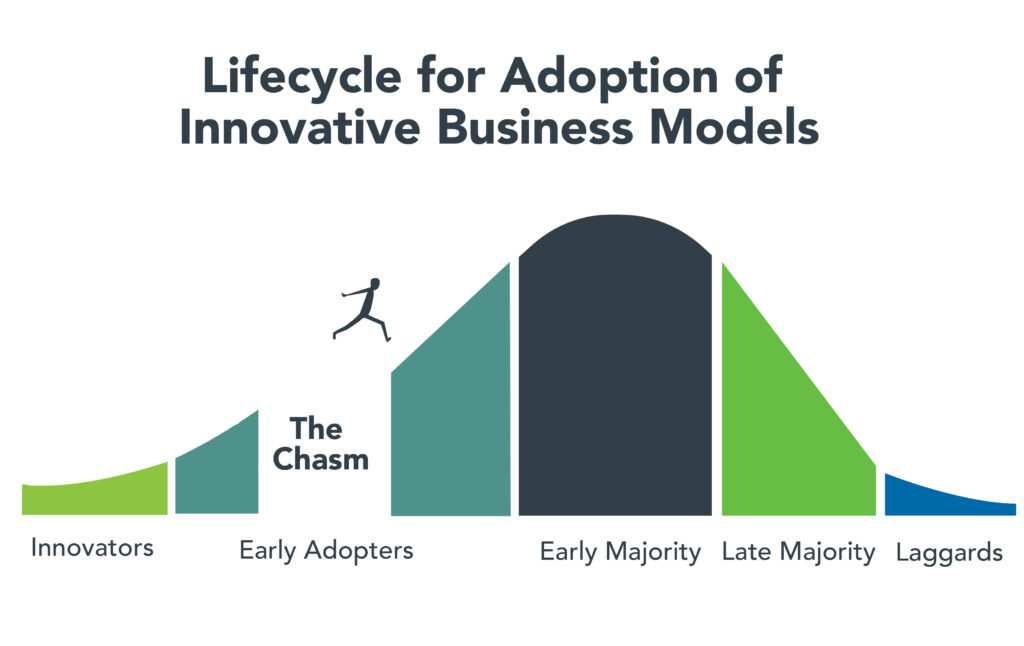
Despite market resistance, “payvider” and digital platform companies are emerging from the proverbial “innovators’ chasm.” More early adopters, including those health systems attending the Nashville conference, are embracing value-creating business models. The chart below illustrates the well-trodden path innovation takes to achieve market penetration.

Ironically, during this period of industry disruption, health systems understand they need to deliver greater value to customers to maintain market relevance. It will require great execution and overcoming legacy practices to develop business platforms that incorporate the following value-creating capabilities:

  • Decentralized care delivery (to make care more accessible and lower cost).
  • Root-cause treatment of chronic conditions.
  • Integrated physical and mental healthcare services.
  • Consistent, high-quality consumer experience.
  • Coordinated service delivery.
  • Standardized protocols that improve care quality and outcomes.
  • A truly patient/customer-centric operating orientation.

It’s not what to do, it’s how to get it done that creates the vexing conundrum. Solutions require collaboration. Platform business models replete with strategic partnerships are emerging. Paraphrasing an African proverb, it’s going to take a village to fix healthcare. That’s why the moment for health systems and PE firms to collaborate is now.

PE to the Rescue?

Private equity has become the dominant investment channel for business growth across industries and nations. According to a recent McKinsey report, PE has more than $11.7 trillion in assets under management globally. This is a massive number that has grown steadily. PE changes markets. It turbocharges productivity. It is a relentless force for value creation.

By investing in a wide spectrum of asset classes, private equity has become a vital source of investment returns for pensions, endowments, sovereign wealth funds and insurance companies. Healthcare, given its size and inefficiencies, is a target-rich environment for PE investment and returns. This explains the PE’s growing interest in working with health systems to develop mutually beneficial, value-creating healthcare enterprises.

Despite reports to the contrary, PE firms must invest for the long term. Unlike the stock market, where investors can buy and sell a stock within a matter of seconds, PE firms do not have that luxury. To generate a return, they must acquire and grow businesses over a period of years to create suitable exit strategies.

Money talks. By definition, all buyers of new companies value their purchase more than the capital required for the acquisition. In making purchase decisions, buyers evaluate businesses’ past performance. They also assess how the new business will perform under their stewardship. PE or PE-backed acquirers also consider which future buyers will be most likely acquire the company after a five-plus year development period.

PE’s investment approach can align well with health systems looking to create sustainable long-term businesses tied to their brands and market positioning. PE firms buy and build companies that attract customers, employees and capital over the long term, far beyond their typical five- to seven-year ownership period. Health systems that partner with PE firms to develop companies are the logical acquirers of those companies if they succeed in the marketplace. In this way, a rising valuation creates value for both health systems and their PE partners.

It is important to note that not all PE are created the same. Like health systems, PE firms differ in size, market orientation, investment theses, experience and partner expectations. Given this inherent diversity, it takes time, effort and a shared commitment to value creation for health systems and PE firms to determine whether to become strategic partners. Not all of these partnerships will succeed, but some will succeed spectacularly.

For health system-PE partnerships to work, the principals must align on strategic objectives, governance, performance targets and reporting guidelines. Trust, honest communication and clear expectations are the key ingredients that enable these partnerships to overcome short-term hurdles on the road to long-term success.

Conclusion: Time to Slay Healthcare’s Dragons

Market corrections are hard. As a nation, the U.S. has invested too heavily in hospital-centric, disease-centric, volume-centric healthcare delivery. The result is a fragmented, high-cost system that fails both consumers and caregivers. The marketplace is working to reallocate resources away from failing business practices and into value-creating enterprises that deliver better care outcomes at lower costs with much less friction.

Progressive health systems and PE firms share the goal of creating better healthcare for more Americans. Cain Brothers is committed to advancing collaboration between health systems and PE-backed companies. In addition to the Nashville conference, the firm has combined its historically separate corporate and non-profit coverage groups to foster idea exchange, expand sector understanding and deliver higher value to clients.

The ability to connect and collaborate effectively with private equity to advance business models will differentiate winning health systems. In a consolidating industry, this differentiation is a prerequisite for sustaining competitiveness. It’s adapt or die time. Health systems that proactively embrace transformation will control their future destiny. Those that fail to do so will lose market relevance.

The future of healthcare is not a zero-sum equation. Markets evolve by creating more complex win-win arrangements that create value for customers. No industry requires restructuring more than healthcare. As a nation and an industry, we have the capacity to fix America’s broken healthcare system. The real question is whether we have the collective will, creativity and resourcefulness to power the transformation. We believe the answer to that question is yes.

Paraphrasing Rev. Theodore Parker, the economic arc of the marketplace is long but it bends toward value. Together, health systems and PE firms can power value-creation and transformation more effectively than either sector can do independently. Each needs the other to succeed. Slaying healthcare’s dragons will not be easy but it is doable. It’s going to take a village to fix healthcare.