‘I’m fighting a war against COVID-19 and a war against stupidity,’ says CMO of Houston hospital

https://www.beckershospitalreview.com/hospital-physician-relationships/i-m-fighting-a-war-against-covid-19-and-a-war-against-stupidity-says-cmo-of-houston-hospital.html?utm_medium=email


After two hours of sleep a night for four months and seeing a member of his team contract the virus, Joseph Varon, MD, is growing exasperated.

“I’m pretty much fighting two wars: A war against COVID and a war against stupidity,” Dr. Varon, MD, CMO and chief of critical care at United Memorial Medical Center in Houston, told NBC News. “And the problem is the first one, I have some hope about winning. But the second one is becoming more and more difficult.”

Dr. Varon noted that whether it’s information backed by science or common sense, people throughout the U.S. are not listening. “The thing that annoys me the most is that we keep on doing our best to save all these people, and then you get another batch of people that are doing exactly the opposite of what you’re telling them to do.”

In an interview with NPR, Dr. Varon said he has woken up at dawn every day for the past four months and has headed to the hospital. There, he spends six to 12 hours on rounds before seeing new admissions. He then returns home to sleep two hours, at most.

He said his staff is physically and emotionally drained. 

UMMC nurse Christina Mathers spoke with NBC News from a hospital bed in the segment, noting that she had recently tested positive for COVID-19 after not feeling well during one of her shifts. “All the fighting, all the screaming, all the finger pointing — enough is enough,” Ms. Mathers told NBC. “People just need to listen to us. We’re not going to lie. Why would we lie?” 

Ms. Mathers has worked every other day since April 29, according to The Atlantic, which created a photo essay of Dr. Varon and the UMMC team at work.


Misinformation on coronavirus is proving highly contagious

https://apnews.com/86f61f3ffb6173c29bc7db201c10f141?utm_source=Sailthru&utm_medium=email&utm_campaign=Newsletter%20Weekly%20Roundup:%20Healthcare%20Dive:%20Daily%20Dive%2008-01-2020&utm_term=Healthcare%20Dive%20Weekender
Misinformation on the coronavirus is proving highly contagious ...

As the world races to find a vaccine and a treatment for COVID-19, there is seemingly no antidote in sight for the burgeoning outbreak of coronavirus conspiracy theories, hoaxes, anti-mask myths and sham cures.

The phenomenon, unfolding largely on social media, escalated this week when President Donald Trump retweeted a false video about an anti-malaria drug being a cure for the virus and it was revealed that Russian intelligence is spreading disinformation about the crisis through English-language websites.

Experts worry the torrent of bad information is dangerously undermining efforts to slow the virus, whose death toll in the U.S. hit 150,000 Wednesday, by far the highest in the world, according to the tally kept by Johns Hopkins University. Over a half-million people have died in the rest of the world.

For most people, the virus causes only mild or moderate symptoms, such as fever and cough. For some older adults and people with existing health problems, it can cause more severe illness, including pneumonia.

Hard-hit Florida reported 216 deaths, breaking the single-day record it set a day earlier. Texas confirmed 313 additional deaths, pushing its total to 6,190, while South Carolina’s death toll passed 1,500 this week, more than doubling over the past month. In Georgia, hospitalizations have more than doubled since July 1.

“It is a real challenge in terms of trying to get the message to the public about what they can really do to protect themselves and what the facts are behind the problem,” said Michael Osterholm, head of the University of Minnesota’s Center for Infectious Disease Research and Policy.

He said the fear is that “people are putting themselves in harm’s way because they don’t believe the virus is something they have to deal with.”

Rather than fade away in the face of new evidence, the claims have flourished, fed by mixed messages from officials, transmitted by social media, amplified by leaders like Trump and mutating when confronted with contradictory facts.

“You don’t need masks. There is a cure,” Dr. Stella Immanuel promised in a video that promoted hydroxychloroquine. “You don’t need people to be locked down.”

The truth: Federal regulators last month revoked their authorization of the drug as an emergency treatment amid growing evidence it doesn’t work and can have deadly side effects. Even if it were effective, it wouldn’t negate the need for masks and other measures to contain the outbreak.

None of that stopped Trump, who has repeatedly praised the drug, from retweeting the video. Twitter and Facebook began removing the video Monday for violating policies on COVID-19 misinformation, but it had already been seen more than 20 million times.

Many of the claims in Immanuel’s video are widely disputed by medical experts. She has made even more bizarre pronouncements in the past, saying that cysts, fibroids and some other conditions can be caused by having sex with demons, that McDonald’s and Pokemon promote witchcraft, that alien DNA is used in medical treatments, and that half-human “reptilians” work in the government.

Other baseless theories and hoaxes have alleged that the virus isn’t real or that it’s a bioweapon created by the U.S. or its adversaries. One hoax from the outbreak’s early months claimed new 5G towers were spreading the virus through microwaves. Another popular story held that Microsoft founder Bill Gates plans to use COVID-19 vaccines to implant microchips in all 7 billion people on the planet.

Then there are the political theories — that doctors, journalists and federal officials are conspiring to lie about the threat of the virus to hurt Trump politically.

Social media has amplified the claims and helped believers find each other. The flood of misinformation has posed a challenge for Facebook, Twitter and other platforms, which have found themselves accused of censorship for taking down virus misinformation.

Facebook CEO Mark Zuckerberg was questioned about Immanuel’s video during an often-contentious congressional hearing Wednesday.

“We did take it down because it violates our policies,” Zuckerberg said.

U.S. Rep. David Cicilline, a Rhode Island Democrat leading the hearing, responded by noting that 20 million people saw the video before Facebook acted.

“Doesn’t that suggest that your platform is so big, that even with the right policies in place, you can’t contain deadly content?” Cicilline asked Zuckerberg.

It wasn’t the first video containing misinformation about the virus, and experts say it’s not likely to be the last.

A professionally made 26-minute video that alleges the government’s top infectious-disease expert, Dr. Anthony Fauci, manufactured the virus and shipped it to China was watched more than 8 million times before the platforms took action. The video, titled “Plandemic,” also warned that masks could make you sick — the false claim Facebook cited when it removed the video down from its site.

Judy Mikovits, the discredited doctor behind “Plandemic,” had been set to appear on the show “America This Week” on the Sinclair Broadcast Group. But the company, which operates TV stations in 81 U.S. markets, canned the segment, saying it was “not appropriate” to air.

This week, U.S. government officials speaking on condition of anonymity cited what they said was a clear link between Russian intelligence and websites with stories designed to spread disinformation on the coronavirus in the West. Russian officials rejected the accusations.

Of all the bizarre and myriad claims about the virus, those regarding masks are proving to be among the most stubborn.

New York City resident Carlos Lopez said he wears a mask when required to do so but doesn’t believe it is necessary.

“They’re politicizing it as a tool,” he said. “I think it’s more to try to get Trump to lose. It’s more a scare tactic.”

He is in the minority. A recent AP/NORC poll said 3 in 4 Americans — Democrats and Republicans alike — support a national mask mandate.

Still, mask skeptics are a vocal minority and have come together to create social media pages where many false claims about mask safety are shared. Facebook has removed some of the pages — such as the group Unmasking America!, which had nearly 10,000 members — but others remain.

Early in the pandemic, medical authorities themselves were the source of much confusion regarding masks. In February, officials like the U.S. surgeon general urged Americans not to stockpile masks because they were needed by medical personnel and might not be effective in everyday situations.

Public health officials changed their tune when it became apparent that the virus could spread among people showing no symptoms.

Yet Trump remained reluctant to use a mask, mocked his rival Joe Biden for wearing one and suggested people might be covering their faces just to hurt him politically. He did an abrupt about-face this month, claiming that he had always supported masks — then later retweeted Immanuel’s video against masks.

The mixed signals hurt, Fauci acknowledged in an interview with NPR this month.

“The message early on became confusing,” he said.

Many of the claims around masks allege harmful effects, such as blocked oxygen flow or even a greater chance of infection. The claims have been widely debunked by doctors.

Dr. Maitiu O Tuathail of Ireland grew so concerned about mask misinformation he posted an online video of himself comfortably wearing a mask while measuring his oxygen levels. The video has been viewed more than 20 million times.

“While face masks don’t lower your oxygen levels. COVID definitely does,” he warned.

Yet trusted medical authorities are often being dismissed by those who say requiring people to wear masks is a step toward authoritarianism.

“Unless you make a stand, you will be wearing a mask for the rest of your life,” tweeted Simon Dolan, a British businessman who has sued the government over its COVID-19 restrictions.

Trump’s reluctant, ambivalent and late embrace of masks hasn’t convinced some of his strongest supporters, who have concocted ever more elaborate theories to explain his change of heart. Some say he was actually speaking in code and doesn’t really support masks.

O Tuathail witnessed just how unshakable COVID-19 misinformation can be when, after broadcasting his video, he received emails from people who said he cheated or didn’t wear the mask long enough to feel the negative effects.

That’s not surprising, according to University of Central Florida psychology professor Chrysalis Wright, who studies misinformation. She said conspiracy theory believers often engage in mental gymnastics to make their beliefs conform with reality.

“People only want to hear what they already think they know,” she said. 


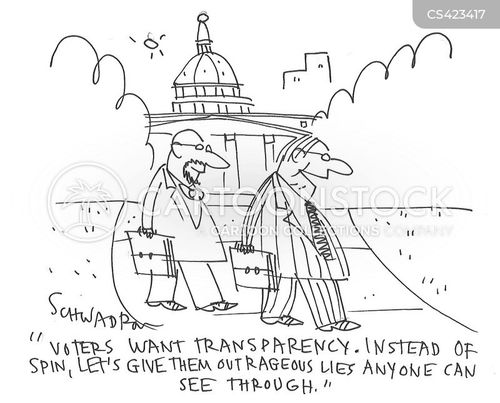
Cartoon – Importance of Transparency

Government Transparency Cartoons and Comics - funny pictures from ...

US coronavirus data will now go straight to the White House. Here’s what this means for the world

https://theconversation.com/us-coronavirus-data-will-now-go-straight-to-the-white-house-heres-what-this-means-for-the-world-142814?utm_medium=email&utm_campaign=Latest%20from%20The%20Conversation%20for%20July%2028%202020%20-%201689316298&utm_content=Latest%20from%20The%20Conversation%20for%20July%2028%202020%20-%201689316298+Version+A+CID_abf5f3d50179e225ba3e81ad0fbb430c&utm_source=campaign_monitor_us&utm_term=US%20coronavirus%20data%20will%20now%20go%20straight%20to%20the%20White%20House%20Heres%20what%20this%20means%20for%20the%20world

US coronavirus data will now go straight to the White House ...

Led by physicians, scientists and epidemiologists, the US Centers for Disease Control and Prevention (CDC) is one of the most reliable sources of knowledge during disease outbreaks. But now, with the world in desperate need of authoritative information, one of the foremost agencies for fighting infectious disease has gone conspicuously silent.

For the first time since 1946, when the CDC came to life in a cramped Atlanta office to fight malaria, the agency is not at the front line of a public health emergency.

On April 22, CDC director Robert Redfield stood at the White House briefing room lectern and conceded that the coronavirus pandemic had “overwhelmed” the United States. Following Redfield at the podium, President Donald Trump said the CDC director had been “totally misquoted” in his warning that COVID-19 would continue to pose serious difficulties as the US moved into its winter ‘flu season in late 2020.

Invited to clarify, Redfield confirmed he had been quoted correctly in giving his opinion that there were potentially “difficult and complicated” times ahead.

Trump tried a different tack. “You may not even have corona coming back,” the president said, once again contradicting the career virologist. “Just so you understand.”

The exchange was interpreted by some pundits as confirmation that the CDC’s venerated expertise had been sidelined as the coronavirus continued to ravage the US.

In the latest development, the New York Times reported this week the CDC has even been bypassed in its data collection, with the Trump administration ordering hospitals to send COVID-19 data directly to the White House.

Diminished role

When facing previous public health emergencies the CDC was a hive of activity, holding regular press briefings and developing guidance that was followed by governments around the world. But during the greatest public health emergency in a century, it appears the CDC has been almost entirely erased by the White House as the public face of the COVID-19 pandemic response.

This diminished role is obvious to former leaders of the CDC, who say their scientific advice has never before been politicised to this extent.

As the COVID-19 crisis was unfolding, several CDC officials issued warnings, only to promptly disappear from public view. Nancy Messonnier, director of the CDC’s National Center for Immunization and Respiratory Diseases, predicted on February 25 that the virus was not contained and would grow into a pandemic.

The stock market plunged and Messonnier was removed from future White House press briefings. Between March 9 and June 12 there was no CDC presence at White House press briefings on COVID-19.

The CDC has erred during the pandemic, most significantly in its initial efforts to develop a test for COVID-19. The testing kits proved to be faulty – a problem compounded by sluggish efforts to rectify the situation – and then by severe delays in distributing enough tests to the public.

But many public health specialists are nevertheless baffled by the CDC’s low profile as the pandemic continues to sweep the globe.

“They have been sidelined,” said Howard Koh, former US assistant secretary for health. “We need their scientific leadership right now.”

What does it mean for the world?

The CDC being bypassed in the collection of COVID-19 data is another body blow to the agency’s standing.

Hospitals have instead been ordered to send all COVID-19 patient information to a central database in Washington DC.

This will have a range of likely knock-on effects. For starters, the new database will not be available to the public, prompting inevitable questions over the accuracy and transparency of data which will now be interpreted and shared by the White House.

The Department of Health and Human Services, which issued the new order, says the change will help the White House’s coronavirus task force allocate resources. But epidemiologists and public health experts around the world fear the new system will make it harder for people outside the White House to track the pandemic or access information.

This affects all nations, because one of the CDC’s roles is to provide sound, independent public health guidance on issues such as infectious diseases, healthy living, travel health, emergency and disaster preparedness, and drug efficacy. Other jurisdictions can then adapt this information to their local context — expertise that has become even more essential during a pandemic, when uncertainty is the norm.

It is difficult to recall a previous public health emergency when political pressure led to a change in the interpretation of scientific evidence.

What happens next?

Despite the inevitable challenges that come with tackling a pandemic in real time, the CDC remains the best-positioned agency – not just in the US but the entire world – to help us manage this crisis as safely as possible.

In the absence of US leadership, nations should start thinking about developing their own national centres for disease control. In Australia’s case, these discussions have been ongoing since the 1990s, stymied by cost and lack of political will.

COVID-19, and the current sidelining of the CDC, may be the impetus needed to finally dust off those plans and make them a reality.


When a winner becomes a loser: Winston Churchill was kicked out of office in the British election of 1945

https://theconversation.com/when-a-winner-becomes-a-loser-winston-churchill-was-kicked-out-of-office-in-the-british-election-of-1945-129746?utm_medium=email&utm_campaign=Latest%20from%20The%20Conversation%20for%20July%2028%202020%20-%201689316298&utm_content=Latest%20from%20The%20Conversation%20for%20July%2028%202020%20-%201689316298+Version+A+CID_abf5f3d50179e225ba3e81ad0fbb430c&utm_source=campaign_monitor_us&utm_term=When%20a%20winner%20becomes%20a%20loser%20Winston%20Churchill%20was%20kicked%20out%20of%20office%20in%20the%20British%20election%20of%201945

When a winner becomes a loser: Winston Churchill was kicked out of ...

The end of World War II in Europe and the defeat of Hitler and Nazi Germany in early May 1945 turned British Prime Minister Winston Churchill into the world’s most eminent statesman. He was feted and celebrated everywhere he went and had an approval rating of 83%.

Yet he suffered a humiliating election defeat in 1945.

Churchill’s electoral fate shows, I believe, that democratic elections are not won due to past achievements, personal glory and celebrity status, but because of a persuasive and realizable program for the next four or five years. Winning parties or candidates need a vision that addresses the genuine concerns and deep anxieties of the voters.

In 1945, it seemed a foregone conclusion that Churchill and his Conservative Party would win the next general election. No election had taken place during the war. The members of the British Parliament, the House of Commons, had been elected as far back as 1935.

While Churchill wanted to delay a general election until the end of the war in Asia, the Labour Party decided to leave Britain’s national unity government soon after victory in Europe was achieved, which sparked an election that took place on July 5, 1945.

Ballots weren’t counted until July 26, to allow votes from soldiers and residents of Britain’s far-flung overseas empire to arrive by mail.

Labour won a landslide victory. As soon as the election result was announced, Churchill went to Buckingham Palace to submit his resignation to King George VI. Labour leader Clement Attlee arrived at the palace within minutes of Churchill’s departure and was appointed new prime minister.

But at first he was greeted by an uncomfortable silence. Attlee finally told the king, “I’ve won the election.” The king, greatly displeased by the socialist Labour Party’s victory, said, “I know. I heard it on the six o’clock news.”

Watershed election

The magnitude of the loss was historic.

The Labour Party received 47.7% of the vote, compared to the Conservatives’ 36.2% and the Liberal party’s 9%.

This was a crushing blow for the Tories. Due to Churchill’s immense personal popularity, he was easily reelected in his Woodford constituency in Essex, but his party was decimated. Labour had a massive majority of 146 seats in the new Parliament.

The Labour government of 1945 would radically change British society by embarking on decolonization, which quickly led to the dissolution of the British Empire, and the creation of a new, progressive social and economic consensus that would last until Margaret Thatcher’s election victory in 1979.

Churchill took the defeat very badly.

He was just short of his 71st birthday, exhausted, in ill health and demoralized. He fell into a deep depression (his “black dog,” as he called it) and spent much time in the south of France to pursue his hobbies of painting and bricklaying.

When the king later offered him the country’s highest honor, The Order of the Garter, Churchill declined, saying that he couldn’t possibly accept such an honor, as the British voters had given him the “order of the boot.”

Churchill now was the official leader of the opposition, but it took him more than a year to overcome his apathy and reengage with politics. It was only U.S. President Harry S. Truman’s invitation to give a speech at Westminster College in Fulton, Missouri, in March 1946 – this was the “Iron Curtain speech” – that revived his political instincts and made him become politically active again.

How to lose an election

Until the last few days before the vote was held, Churchill and much of the country had been firmly convinced that he and his party would be returned to power with a large majority.

On occasion, however, Churchill realized that he had little to contribute to the raging debate about the future of British society.

“I have no message for them,” he said.

As a scholar who has written a book on Churchill’s politics, “Churchill’s Cold War: The Politics of Personal Diplomacy,” I see several reasons for the loss he and his party experienced.

The six-week election campaign in June and July 1945 sought to sway voters exhausted by six devastating years of war. They wanted a view of a bright future.

Soldiers in the field, too, were fed up with fighting and looked forward to a new age of prosperity and peace. Labour proposed a progressive social reform program that would transform the future of British society. The Conservative program was much more vague and focused on Churchill’s leadership.

Churchill and his party also conducted a poor election campaign. Symbolic of this was Churchill’s first campaign broadcast on June 4, 1945, in which he accused Attlee of harboring socialist dictatorial ambitions and even compared him to the Nazis. Outrageously, Churchill declared that Labour “would have to fall back on some sort of a Gestapo” to push through its reforms.

Attlee pointed out that the speech showed Churchill to be ill-suited to being a leader in peaceful times.

Labour had more attractive and persuasive ideas, such as government-supported full employment, the introduction of a free national health service and the nationalization of many key industries such as steel, coal and railways.

And Labour seemed to know how to implement these policies: Churchill had put senior Labour leaders in charge of running the country’s economic ministries during the war.

Housing, full employment, social welfare and the health system stood at the top of the list of most voters’ needs. Foreign affairs and national security policy, which Churchill emphasized, ranked much lower.

Another problem for the Conservatives was their poor image, which Churchill was not immune from. Despite the tremendous esteem he was held in, the elderly Churchill, with his elite background and paternalistic Victorian habits, was seen by many as out of touch with the modern world.

He also had outdated views about race and empire that for many – even back in 1945 – sounded not quite right for the new postwar era. Canadian Prime Minister MacKenzie King, who knew him well, concluded that maintaining “the British Empire and Commonwealth is a religion to him.”

Running on a bad record

Except for the years 1924 and 1929-31, Britain had been led by Conservative governments for more than two decades. The Tories could hardly avoid being seen as responsible for the high unemployment and miserable social and economic conditions of these years, especially because the conditions continued well into the 1950s.

The Conservatives were also viewed as the party of the appeasers who had, in the runup to the war, downplayed the Nazi threat, with Prime Minister Neville Chamberlain even having weakly given in to Hitler’s territorial demands.

Taking all these elements into account, it was little wonder that Churchill and the Tories lost the 1945 election.

But Churchill did not give up. In 1950 Churchill also narrowly lost the next general election. Just over a year later, with the Labour government in deep internal crisis and running out of steam, yet another election was called.

This time Churchill was victorious. In October 1951, he became prime minister again and felt greatly vindicated. He used his remaining four years as peacetime prime minister to reengage with the Soviet Union and attempt to negotiate an early end to the Cold War. Churchill retired in 1955 at the age of 80.


One question still dogs Administration: Why not try harder to solve the coronavirus crisis?

https://www.washingtonpost.com/politics/trump-not-solve-coronavirus-crisis/2020/07/26/7fca9a92-cdb0-11ea-91f1-28aca4d833a0_story.html?utm_source=ActiveCampaign&utm_medium=email&utm_content=Republicans+Roll+Out+%241+Trillion+Coronavirus+Relief+Plan&utm_campaign=TFT+Newsletter+07272020

Questions to ask students in class to help them deal with the ...

Both President Trump’s advisers and operatives laboring to defeat him increasingly agree on one thing: The best way for him to regain his political footing is to wrest control of the novel coronavirus.

In the six months since the deadly contagion was first reported in the United States, Trump has demanded the economy reopen and children return to school, all while scrambling to salvage his reelection campaign.

But allies and opponents agree he has failed at the one task that could help him achieve all his goals — confronting the pandemic with a clear strategy and consistent leadership.

Trump’s shortcomings have perplexed even some of his most loyal allies, who increasingly have wondered why the president has not at least pantomimed a sense of command over the crisis or conveyed compassion for the millions of Americans hurt by it.

People close to Trump, many speaking on the condition of anonymity to share candid discussions and impressions, say the president’s inability to wholly address the crisis is due to his almost pathological unwillingness to admit error; a positive feedback loop of overly rosy assessments and data from advisers and Fox News; and a penchant for magical thinking that prevented him from fully engaging with the pandemic.

In recent weeks, with more than 145,000 Americans now dead from the virus, the White House has attempted to overhaul — or at least rejigger — its approach. The administration has revived news briefings led by Trump and presented the president with projections showing how the virus is now decimating Republican states full of his voters. Officials have also set up a separate, smaller coronavirus working group led by Deborah Birx, the White House coronavirus response coordinator, along with Trump son-in-law and senior adviser Jared Kushner.

For many, however, the question is why Trump did not adjust sooner, realizing that the path to nearly all his goals — from an economic recovery to an electoral victory in November — runs directly through a healthy nation in control of the virus.

“The irony is that if he’d just performed with minimal competence and just mouthed words about national unity, he actually could be in a pretty strong position right now, where the economy is reopening, where jobs are coming back,” said Ben Rhodes, a deputy national security adviser to former president Barack Obama. “And he just could not do it.”

Many public health experts agree.

“The best thing that we can do to set our economy up for success and rebounding from the last few months is making sure our outbreak is in a good place,” said Caitlin Rivers, an epidemiologist at the Johns Hopkins Center for Health Security. “People are not going to feel comfortable returning to activities in the community — even if it’s allowed from a policy perspective — if they don’t feel the outbreak is under control.”

Some aides and outside advisers have tried to stress to Trump and others in his orbit that before he could move on to reopening the economy and getting the country back to work — and life — he needed to grapple with the reality of the virus.

But until recently, the president was largely unreceptive to that message, they said, not fully grasping the magnitude of the pandemic — and overly preoccupied with his own sense of grievance, beginning many conversations casting himself as the blameless victim of the crisis.

In the past couple of weeks, senior advisers began presenting Trump with maps and data showing spikes in coronavirus cases among “our people” in Republican states, a senior administration official said. They also shared projections predicting that virus surges could soon hit politically important states in the Midwest — including Michigan, Minnesota and Wisconsin, the official said.

This new approach seemed to resonate, as he hewed closely to pre-scripted remarks in a trio of coronavirus briefings last week.

“This could have been stopped. It could have been stopped quickly and easily. But for some reason, it wasn’t, and we’ll figure out what that reason was,” Trump said Thursday, seeming to simultaneously acknowledge his predicament while trying to assign blame elsewhere.

In addition to Birx and Kushner, the new coronavirus group guiding Trump includes Kushner advisers Adam Boehler and Brad Smith, according to two administration officials. Marc Short, chief of staff to Vice President Pence, also attends, along with Alyssa Farah, the White House director of strategic communications, and Stephen Miller, Trump’s senior policy adviser.

The working group’s goal is to meet every day, for no more than 30 minutes. It views its mission as half focused on the government’s response to the pandemic and half focused on the White House’s public message, the officials said.

White House spokeswoman Sarah Matthews defended the president’s handling of the crisis, saying he acted “early and decisively.”

“The president has also led an historic, whole-of-America coronavirus response — resulting in 100,000 ventilators procured, sourcing critical PPE for our front-line heroes, and a robust testing regime resulting in more than double the number of tests than any other country in the world,” Matthews said in an email statement. “His message has been consistent and his strong leadership will continue as we safely reopen the economy, expedite vaccine and therapeutics developments, and continue to see an encouraging decline in the U.S. mortality rate.”

For some, however, the additional effort is too little and far too late.

“This is a situation where if Trump did his job and put in the work to combat the health crisis, it would solve the economic crisis, and it’s an instance where the correct governing move is also the correct political move, and Trump is doing the opposite,” said Josh Schwerin, a senior strategist for Priorities USA, a super PAC supporting former vice president Joe Biden, the presumptive Democratic nominee.

Other anti-Trump operatives agree, saying he could make up lost ground and make his race with Biden far more competitive with a simple course correction.

“He’s staring in the mirror at night: That’s who can fix his political problem,” said John Weaver, one of the Republican strategists leading the Lincoln Project, a group known for its anti-Trump ads.

One of Trump’s biggest obstacles is his refusal to take responsibility and admit error.

In mid-March, as many of the nation’s businesses were shuttering early in the pandemic, Trump proclaimed in the Rose Garden, “I don’t take responsibility at all.” Those six words have neatly summed up Trump’s approach not only to the pandemic, but also to many of the other crises he has faced during his presidency.

“His operating style is to double- and triple-down on positions and to never, ever admit he’s wrong about anything,” said Anthony Scaramucci, a longtime Trump associate who briefly served as White House communications director and is now a critic of the president. “His 50-year track record is to bulldog through whatever he’s doing, whether it’s Atlantic City, which was a failure, or the Plaza Hotel, which was a failure, or Eastern Airlines, which was a failure. He can never just say, ‘I got it wrong and let’s try over again.’ ”

Another self-imposed hurdle for Trump has been his reliance on a positive feedback loop. Rather than sit for briefings by infectious-disease director Anthony S. Fauci and other medical experts, the president consumes much of his information about the virus from Fox News and other conservative media sources, where his on-air boosters put a positive spin on developments.

Consider one example from last week. About 6:15 a.m. that Tuesday on “Fox & Friends,” co-host Steve Doocy told viewers, “There is a lot of good news out there regarding the development of vaccines and therapeutics.” The president appears to have been watching because, 16 minutes later, he tweeted from his iPhone, “Tremendous progress being made on Vaccines and Therapeutics!!!”

It is not just pro-Trump media figures feeding Trump positive information. White House staffers have long made upbeat assessments and projections in an effort to satisfy the president. This, in turn, makes Trump further distrustful of the presentations of scientists and reports in the mainstream news media, according to his advisers and other people familiar with the president’s approach.

This dynamic was on display during an in-depth interview with “Fox News Sunday” anchor Chris Wallace that aired July 19. After the president claimed the United States had one of the lowest coronavirus mortality rates in the world, Wallace interjected to fact-check him: “It’s not true, sir.”

Agitated by Wallace’s persistence, Trump turned off-camera to call for White House press secretary Kayleigh McEnany. “Can you please get me the mortality rates?” he asked. Turning to Wallace, he said, “Kayleigh’s right here. I heard we have one of the lowest, maybe the lowest mortality rate anywhere in the world.”

Trump, relying on cherry-picked White House data, insisted that the United States was “number one low mortality fatality rates.”

Fox then interrupted the taped interview to air a voice-over from Wallace explaining that the White House chart showed Italy and Spain doing worse than the United States but countries like Brazil and South Korea doing better — and other countries that are doing better, including Russia, were not included on the White House chart. By contrast, worldwide data compiled by Johns Hopkins University shows the U.S. mortality rate is far from the lowest.

Trump is also predisposed to magical thinking — an unerring belief, at an almost elemental level, that he can will his goals into existence, through sheer force of personality, according to outside advisers and former White House officials.

The trait is one he shares with his late father and family patriarch, Fred Trump. In her best-selling memoir, “Too Much and Never Enough,” the president’s niece, Mary L. Trump, writes that Fred Trump was instantly taken by the “shallow message of self-sufficiency” he encountered in Norman Vincent Peale’s 1952 bestseller, “The Power of Positive Thinking.”

Some close to the president say that when Trump claims, as he did twice last week, that the virus will simply “disappear,” there is a part of him that actually believes the assessment, making him more reluctant to take the practical steps required to combat the pandemic.

Until recently, Trump also refused to fully engage with the magnitude of the crisis. After appointing Pence head of the coronavirus task force, the president gradually stopped attending task force briefings and was lulled into a false sense of assurance that the group had the virus under control, according to one person familiar with the dynamic.

Trump also maintained such a sense of grievance — about how the virus was personally hurting him, his presidency and his reelection prospects — that aides recount spending valuable time listening to his gripes, rather than focusing on crafting a national strategy to fight the pandemic.

Nonetheless, some White House aides insist the president has always been focused on aggressively responding to the virus. And some advisers are still optimistic that if Trump — who trails Biden in national polls — can sustain at least a modicum of self-discipline and demonstrate real focus on the pandemic, he can still prevail on Election Day.

Others are less certain, including critics who say Trump squandered an obvious solution — good governance and leadership — as the simplest means of achieving his other goals.

“There is quite a high likelihood where people look back and think between February and April was when Trump burned down his own presidency, and he can’t recover from it,” Rhodes said. “The decisions he made then ensured he’d be in his endless cycle of covid spikes and economic disruption because he couldn’t exhibit any medium- or long-term thinking.”


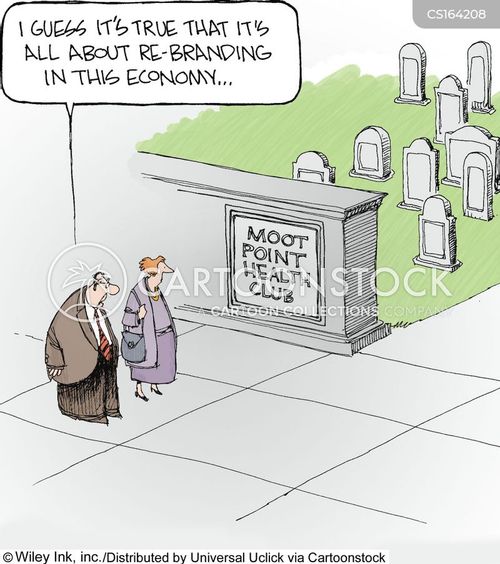
Cartoon – It’s all about Re-Branding in this Economy

Cartoon – It's all about Re-Branding in this economy | HENRY KOTULA

Cartoon – Under Control

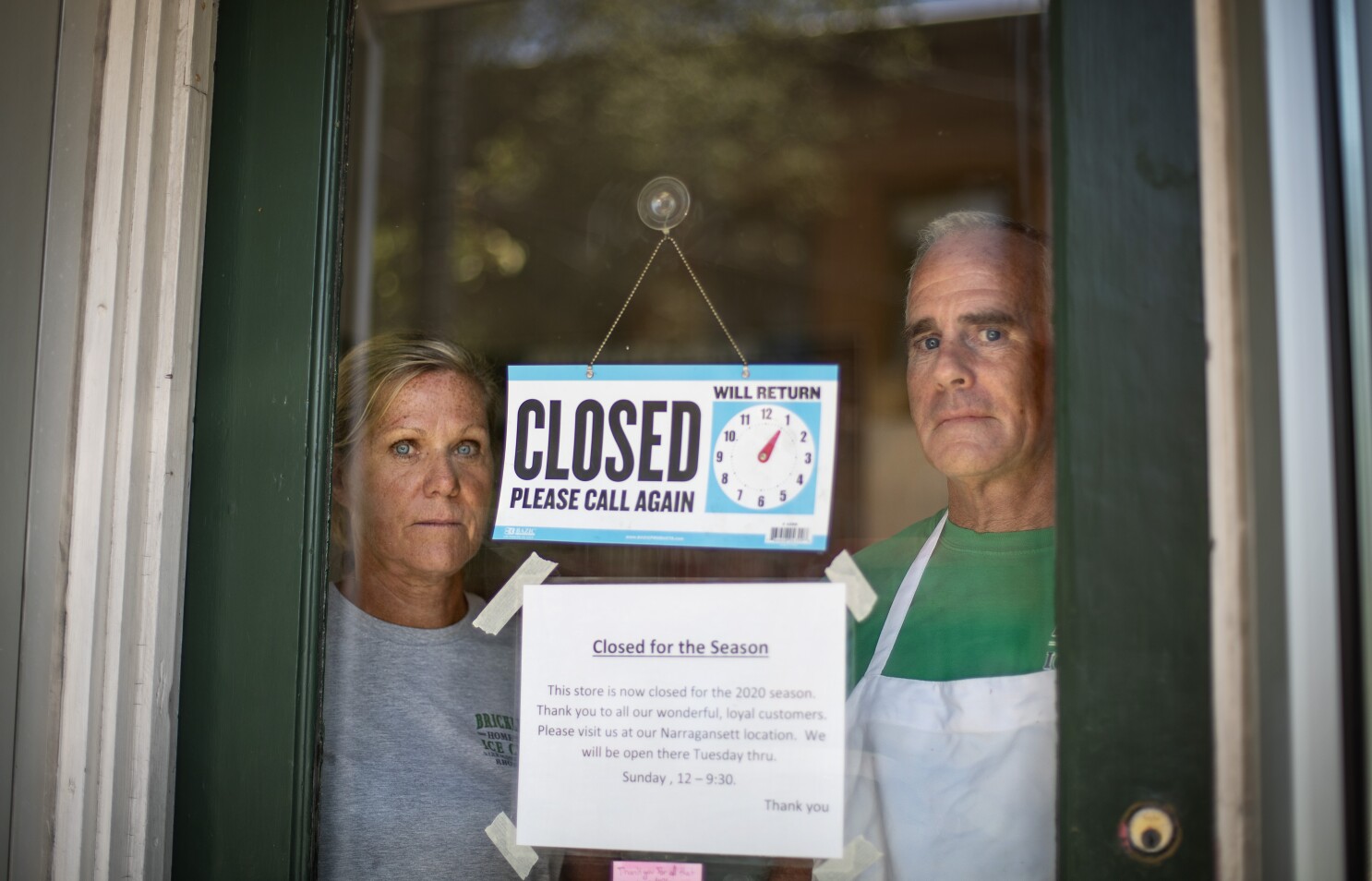
Coronavirus | The Manchester Journal | Manchester Breaking News ...