Trump, Head of Government, Leans Into Antigovernment Message

Trump, Head of Government, Leans Into Antigovernment Message

With his poll numbers fading after a rally-around-the-leader bump, the president is stoking protests against stay-at-home orders.

First he was the self-described “wartime president.” Then he trumpeted the “total” authority of the federal government. But in the past few days, President Trump has nurtured protests against state-issued stay-at-home orders aimed at curtailing the spread of the coronavirus.

Hurtling from one position to another is consistent with Mr. Trump’s approach to the presidency over the past three years. Even when external pressures and stresses appear to change the dynamics that the country is facing, Mr. Trump remains unbowed, altering his approach for a day or two, only to return to nursing grievances.

Not even the president’s re-election campaign can harness him: His team is often reactive to his moods and whims, trying but not always succeeding in steering him in a particular direction. Now, with Mr. Trump’s poll numbers falling after a rally-around-the-leader bump, he is road-testing a new turn on a familiar theme — veering into messages aimed at appealing to Americans whose lives have been disrupted by the legally enforceable stay-at-home orders.

Whether his latest theme will be effective for him is an open question: In an NBC/Wall Street Journal poll released on Sunday, just 36 percent of voters said they generally trusted what Mr. Trump says about the coronavirus.

But the president, who ran as an insurgent in 2016, is most comfortable raging against the machine of government, even when he is the one running the country. And while the coronavirus is in every state in the union, it is heavily affecting minority and low-income communities.

So when Mr. Trump on Friday tweeted “LIBERATE,” his all-capitalized exhortations against strict orders in specific states — including Michigan — were in keeping with how he ran in 2016: saying things that seem contradictory, like pledging to work with governors and then urging people to “liberate” their states, and leaving it to his audiences to hear what they want to hear in his words.

For instance, Mr. Trump did not take the opportunity to more forcefully encourage the protesters when he spoke with reporters on Friday.

“These are people expressing their views,” Mr. Trump said. “They seem to be very responsible people to me.” But he said he thought the protesters had been treated “rough.”

In a webcast with Students for Trump on Friday, a conservative activist and Trump ally, Charlie Kirk, echoed the message, encouraging a “peaceful rebellion against governors” in states like Michigan, according to ABC News.

On Fox News, where many of the opinion hosts are aligned with Mr. Trump and which he watches closely, there have also been discussions of such protests. And Mr. Trump has heard from conservative allies who have said they think he is straying from his base of supporters in recent weeks.

So far, the protests have been relatively small and scattershot, organized by conservative-leaning groups with some organic attendance. It remains to be seen if they will be durable.

But Mr. Trump’s show of affinity for such actions is in keeping with his fomenting of voter anger at the establishment in 2016, a key to his success then — and his fallback position during uncertain moments ever since.

In the case of the state-issued orders, Mr. Trump’s advisers say his criticism of certain places is appropriate.

Stephen Moore, a former adviser to Mr. Trump and an economist with FreedomWorks, an organization that promotes limited government, said he thought protesters ought to be wearing masks and protecting themselves. But, he added, “the people who are doing the protest, for the most part, these are the ‘deplorables,’ they’re largely Trump supporters, but not only Trump supporters.”

On Sunday, Mr. Trump again praised the protesters. “I have never seen so many American flags,” he said.

But Mr. Trump’s advisers are divided about the wisdom of encouraging the protests. At some of them, Gov. Gretchen Whitmer of Michigan, a Democrat, has been compared to Adolf Hitler. At least one protester had a sign featuring a swastika.

One adviser said privately that if someone were to be injured at the protests — or if anyone contracted the coronavirus at large events where people were not wearing masks — there would be potential political risk for the president.

But two other people close to the president, who asked for anonymity in order to speak candidly, said they thought the protests could be politically helpful to Mr. Trump, while acknowledging there might be public health risks.

One of those people said that in much of the country, where the numbers of coronavirus cases and deaths are not as high as in places like New York, New Jersey, California and Washington State, anger is growing over the economic losses that have come with the stringent social-distancing restrictions.

And some states are already preparing to restart their economies. Ohio, where Gov. Mike DeWine, a Republican, took early actions against the spread of the virus, is planning a staged reopening beginning on May 1.

Still, as Mr. Trump did throughout 2016, as when he said “torture works” and then walked back that statement a short time later, or when he advocated bombing the Middle East while denouncing lengthy foreign engagements, he has long taken various sides of the same issue.

Mobilizing anger and mistrust toward the government was a crucial factor for Mr. Trump in the last presidential election. And for many months he has been looking for ways to contrast himself with former Vice President Joseph R. Biden Jr., the presumptive Democratic presidential nominee and a Washington lifer.

The problem? Mr. Trump is now president, and disowning responsibility for his administration’s slow and problem-plagued response to the coronavirus could prove difficult. And protests can be an unpredictable factor, particularly at a moment of economic unrest.

Vice President Mike Pence, asked on NBC’s “Meet the Press” about the president’s tweets urging people to “liberate” states, demurred.

“The American people know that no one in America wants to reopen this country more than President Donald Trump,” Mr. Pence said, “and on Thursday the president directed us to lay out guidelines for when and how states could responsibly do that.”

“And in the president’s tweets and public statements, I can assure you, he’s going to continue to encourage governors to find ways to safely and responsibly let America go back to work,” he said.

With the political campaign halted, Mr. Trump’s advisers have seen an advantage in the frozen-in-time state of the race. Mr. Biden has struggled to fund-raise or even to get daily attention in the news cycle.

But Mr. Trump himself has seemed at sea, according to people close to him, uncertain of how to proceed. His approval numbers in his campaign polling have settled back to a level consistent with before the coronavirus, according to multiple people familiar with the data.

His campaign polling has shown that focusing on criticizing China, in contrast with Mr. Biden, moves voters toward Mr. Trump, according to a Republican who has seen it.

“Trump finally fired the first shot” with his more aggressive stance toward the Chinese government and its leader, Xi Jinping, said Stephen K. Bannon, Mr. Trump’s former chief strategist. “Xi is put on notice that the death, economic carnage and agony is his and his alone,” Mr. Bannon said. “Only question now: What is America’s president prepared to do about it?”

Mr. Trump’s campaign manager, Brad Parscale, has advocated messages that contrast Mr. Trump with Mr. Biden on a number of fronts, including China.

But inside and outside the White House, other advisers to Mr. Trump see an advantage in focusing attention on the presidency.

Kellyanne Conway, the White House counselor, has argued in West Wing discussions that there is a time to focus on China, but that for now, the president should embrace commander-in-chief moments amid the crisis.

Chris Christie, the former governor of New Jersey and a friend of Mr. Trump’s, said on ABC’s “This Week” that he did not think ads criticizing Mr. Biden on China were the right approach for now.

Ultimately, Mr. Trump’s advisers said, most of his team is aware that it can try to drive down Mr. Biden’s poll numbers, but that no matter what tactics it deploys now, the president’s future will most likely depend on whether the economy is improving in the fall and whether the virus’s spread has been mitigated. Those things will remain unknown for months.

“This is going to be a referendum,” Mr. Christie said, “on whether people think, when we get to October, whether or not he handled this crisis in a way that helped the American people, protected lives and moved us forward.”


Testing Falls Woefully Short as Trump Seeks an End to Stay-at-Home Orders

Coronavirus Testing Falls Woefully Short as Trump Seeks to Reopen ...

As President Trump pushes to reopen the economy, most of the country is not conducting nearly enough testing to track the path and penetration of the coronavirus in a way that would allow Americans to safely return to work, public health officials and political leaders say.

Although capacity has improved in recent weeks, supply shortages remain crippling, and many regions are still restricting tests to people who meet specific criteria. Antibody tests, which reveal whether someone has ever been infected with the coronavirus, are just starting to be rolled out, and most have not been vetted by the Food and Drug Administration.

Concerns intensified on Wednesday as Senate Democrats released a $30 billion plan for building up what they called “fast, free testing in every community,” saying they would push to include it in the next pandemic relief package. Business leaders, who participated in the first conference call of Mr. Trump’s advisory council on restarting the economy, warned that it would not rebound until people felt safe to re-emerge, which would require more screening.

And Gov. Andrew M. Cuomo of New York reiterated his call for federal assistance to ramp up testing, both for the virus and for antibodies.

“The more testing, the more open the economy. But there’s not enough national capacity to do this,” Mr. Cuomo, a Democrat, said at his daily briefing in Albany. “We can’t do it yet. That is the unvarnished truth.”

As the governor spoke, a PowerPoint slide behind him said, “WE NEED FEDERAL SUPPORT.”

At his own briefing later in the day, Mr. Trump boasted of having “the most expansive testing system anywhere in the world” and said that some states could even reopen before May 1, the date his task force had tentatively set. Twenty-nine states, he added, “are in good shape.”

From the beginning of the coronavirus crisis, lapses by the federal government have compromised efforts to detect the pathogen in patients and communities. A diagnostic test developed by the Centers for Disease Control and Prevention proved to be flawed. The F.D.A. failed to speed approval for commercial labs to make tests widely available. All of that means that the U.S. has been far behind in combating the virus.

Whether in New York City, with its densely packed 8.4 million residents, or Nebraska, with fewer than two million spread across mostly rural expanses, widespread diagnostic and antibody testing will be crucial for determining a number of factors: How many in a community are infected but asymptomatic? Who has the protective antibodies that might allow them to go about their lives without fear? Are workplaces and schools safe?

“It is great that we are flattening the curve,” said Dr. Mark McClellan, director of the Margolis Center for Health Policy at Duke University, who worked in the George W. Bush administration and is advising state and federal policymakers on the virus response.

“But for this next phase, where we are really aiming to detect and stamp out smaller outbreaks before they get so big, testing is critical for that,” he said. “So we have to plan ahead now for much larger capacity.”

By the end of May, he added, “we will maybe be up to two million tests a week, but we are definitely not at that level now.”

Nationally, an average of 145,000 people have been tested for the virus each day over the past week, according to the Covid Tracking Project, which reported a total of nearly 3.1 million tests across the United States as of Tuesday night.

State health officials and medical providers around the country say they are unable to test as many people as they would like. Many of them say the biggest challenge is getting not the diagnostic tests themselves but the supplies to process them, including chemical reagents, swabs and pipettes. Manufacturers are facing a huge global demand as every country fights the pandemic, with many attempting the widest-scale testing they have ever undertaken.

“We’re at a really critical juncture and the supply chain has not yet caught up,” Scott Becker, chief executive of the Association of Public Health Laboratories, said on Wednesday.

Yet even as people waited hours for drive-through testing in California, Florida, New Jersey and elsewhere, some laboratories reported having ample capacity.

Two weeks ago, officials at University of California San Diego Health rushed to scale up testing, setting up a second laboratory devoted only to Covid-19. “You know the saying, ‘If you build it, they will come’?” said Dr. David T. Pride, director of the molecular microbiology laboratory there. “We built it and nobody has come. ” He said confusion over which laboratories were accepting tests, and “convoluted” systems connecting providers to labs, meant his facilities were running about 200 to 300 tests per day when they could handle 1,000.

Quest Diagnostics, one of the nation’s biggest testing laboratories, said on Wednesday that it could now process more tests than it was receiving, and that it was reaching out to state health departments, doctors and nursing homes. After dealing with backlogs for weeks, the company said it was returning results in less than two days for ordinary patients, and in less than one day for priority patients.

In Nebraska, as of Wednesday afternoon, 11,757 people had been screened for Covid-19, and of those, 901 were positive, according to state health data.

Peter C. Iwen, director of the Nebraska Public Health Laboratory, said that chemicals and equipment needed to run the tests were going to places like New Orleans and New York. “We’re trying to compete with those people, and we’re just not getting the reagents sent to us,” he said in an interview with the Omaha television station KETV.

The nonprofit Community Health of South Florida is operating three drive-through sites in the Miami area and the Florida Keys, where it has provided free testing to 1,300 people.

Tiffani Helberg, the group’s vice president for communications, said a tight supply of testing swabs as well as staffing numbers meant the nonprofit was not screening as many people as it would like.

“Is it a struggle every day? Absolutely,” she said.

The lack of testing is hitting minority communities especially hard, according to Dr. James E.K. Hildreth, president and chief executive of Meharry Medical College in Nashville, one of the nation’s largest historically black medical schools.

“Testing should be a priority for vulnerable populations — that would be prisons, nursing homes, assisted living facilities and, last but not least, minorities and disadvantaged communities,” said Dr. Hildreth, an infectious disease expert. “Because in those communities, we know there are many individuals with underlying conditions, and they are more likely to get severe disease and die.”

But even as short supplies are limiting who can get tests, some laboratories say they have extra capacity.

The American Clinical Laboratory Association, a trade group representing large diagnostic companies like LabCorp and Quest, has recently reported a dip in the daily testing volumes of its members. On Monday, its members processed 43,000 tests, the lowest number since March 20. At one point in early April, members were processing more than 100,000 a day.

“They are reaching out to providers to make sure they know that we have more testing capacity,” said Julie Khani, president of the lab association.

But even as testing for active coronavirus infections is struggling to meet demand, public health officials and major laboratories say they are gearing up for the next wave: antibody testing. A well-designed antibody test will detect whether someone has been exposed to the virus and generated an immune response, and whether the person may be protected from further illness.

“Antibody testing is not a cure-all,” Gov. Doug Ducey of Arizona, a Republican, said on Tuesday as he announced a partnership with the University of Arizona to provide antibody tests for 250,000 health care workers and emergency responders. “But learning more about it is an important step to identifying community exposure, helping us make decisions about how we protect our citizens and getting us to the other side of this pandemic more quickly.”

Most of the available antibody tests can say only whether someone has antibodies, not how many they have or how powerful they are at fighting the virus. Many of the tests are also flawed and signal the presence of antibodies even when there are none. The F.D.A. has granted emergency approval to three companies to begin selling the tests, but dozens more have entered the market after the agency loosened the guidelines in March.

“We have to to make sure it’s an accurate test with good specificity,” said Dr. Rachel Levine, Pennsylvania’s health secretary. “And we really need to know that antibodies are truly protective and how long-lasting they are.”

Dr. Jon R. Cohen, the executive chairman of BioReference Laboratories, which is processing tests at drive-through sites in New York and New Jersey and other locations around the country, said he was still evaluating different antibody tests but planned to begin offering them soon. Other large laboratories said the same.

“It’s a huge factor, we believe, in terms of people regaining confidence and jump-starting the economy,” he said. “To me, it’s an absolute moral imperative.”


Truth dies in silence. Sadly, so do people.

https://www.kevinmd.com/blog/2020/04/truth-dies-in-silence-sadly-so-do-people.html

UNESCO launches “Truth Never Dies” campaign to tackle crimes ...

I have been writing columns for physicians for twenty years.  And year after year, I have had physicians say this: “I’m glad you said what you did. If I said it, I’d be fired.” There are variations on the theme, but they’re much the same.  Twenty years, and far more than 20 years, during which the alleged health care leaders in America have been routinely muzzled because they aren’t supposed to speak the truth.  Open discussions shut down because they might embarrass someone or upset an administrator. Because it might, heaven forbid, shine a light on a genuine problem.

Some years ago, as the mental health crisis was gathering steam across the emergency departments of the land, I was contacted by a news show in France.  The producers wanted to come to South Carolina and follow me on some shifts in my ED. They wanted to see how mental health was working out here. “We have socialized care, but mental health is also a huge problem in our country,” the producer said.

I dutifully, and appropriately, went to administration. “No, we can’t do that,” I was informed. I was given this explanation when everyone knew the mental health system was at the breaking point: “What if they uncover a problem?” Here was a chance for publicity, for potential grant money or to demonstrate that a political solution was in order.  How dare we let in fresh air? How dare we suggest that things were not perfect?

The same thing is happening in the midst of the pandemic.  Physicians, nurses, and other assorted health care professionals are being threatened for wearing masks.  Administrators say, “They make the patients nervous.” Also likely, administrators have realized they don’t have adequate equipment.  Facilities and systems with enormous budgets caught unprepared in a pandemic.

I see the stories of these professionals as I follow online forums.  Physicians, nurses, and others, threatened with firing because they dared to speak out on the issue of PPE (personal protective equipment).

Like police officers without ballistic vests, these physicians don’t want to go into the rooms of COVID-19 patients without the masks and respirators, gloves, gowns, and face shields that will keep them safe. The equipment that will allow them to return home to their loved ones and prevent them from infecting their families.  This isn’t a good look.  A hospital that refuses to acknowledge the concerns and safety of its professionals is a hospital that ultimately doesn’t deserve them.

The same veil of silence pervades dialogue on the treatment of coronavirus.  When I follow discussions, I see a lot of shaming. “There just isn’t enough evidence to try hydroxychloroquine, Zithromax, convalescent plasma, an untried vaccine, HIV drugs, etc.” Those who suggest we might try are considered reckless or ignorant.  As the battle rages and lives are lost, innovation and risk are viewed with disdain.  And our medical establishment is locked into the paradigm of double-blinded, placebo-controlled studies involving tens of thousands of people and lasting years. Here’s a view of the same from the U.K. Unfortunately, to suggest that we may need to react faster is only met with ridicule, and often tied to political views instead of expediency. Worse,  it ignores the deep, fundamental need to offer hope, any hope, to hundreds of millions of professionals and citizens who are living in fear.

There is a tragic irony here; a painful coincidence.  Physicians silenced. Let’s see.  Where did we see that sort of thing resulting in a worldwide pandemic?  Does China come to mind? The Chinese Communist Party threatened (and who knows what else) physicians who dared to speak out about coronavirus, even when they knew its danger.  Even when they knew how easily and widely it spread.

They continued to soft-peddle numbers about total cases and case fatality.  The party continued to allow travel to and from China long after the problem was known. They even suggested that Italians have a “hug a Chinese person” campaign to combat alleged racism; a charge delightfully accepted and repeated by gullible Western journalists in pursuit of a narrative.

Truth dies in silence.  Sadly, so do people.  And certainly when we tell dedicated health care professionals to keep their mouths shut when they have identified problems, offered solutions and simply asked for help.  Whether it’s a private business, a totalitarian government, or anything in between, we should insist that the truth be spoken; freely and without fear of punishment.

Because, for the foreseeable future, lives will depend on it.


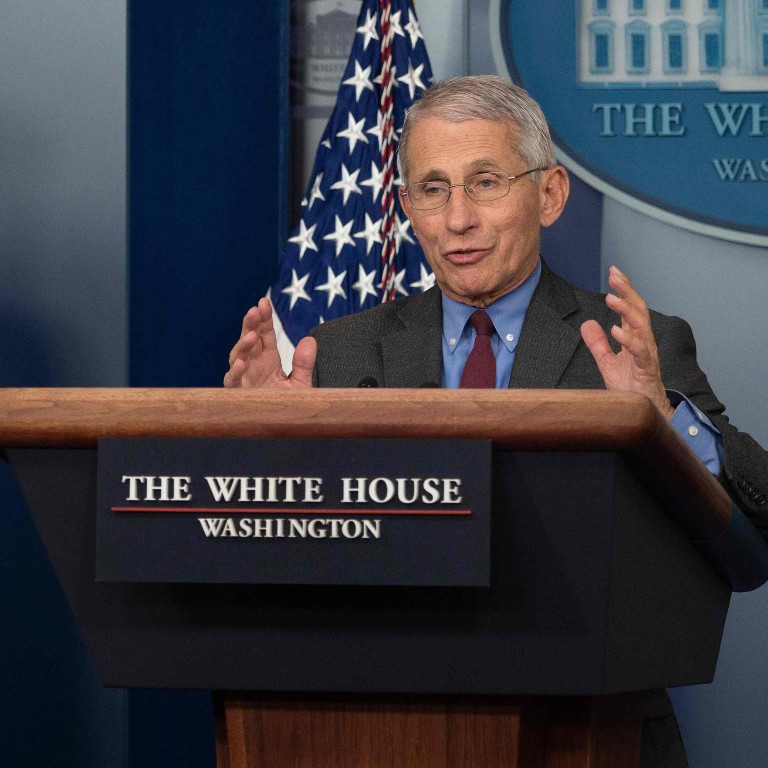
Fauci at center of conservative storm

Fauci at center of conservative storm

Health Official condemns Senator Ron Johnson's false equivalency ...

Criticism of Anthony Fauci from the right has picked up in recent days, with some conservatives calling for Trump to dump the infectious disease expert after he made comments about how imposing social distancing rules earlier could have slowed the spread of the novel coronavirus in the United States.

Fauci has become a national name with his regular presence at the daily coronavirus task force briefings and in other media appearances, and poll numbers show he’s trusted by a majority of Americans. It would set off a political storm if Trump were to sideline him in the middle of a pandemic.

Yet the criticism of Fauci by two conservative lawmakers in a Saturday op-ed and Trump’s own retweet of a conservative’s call to “#FireFauci” were unmistakable signs that the public health official is coming under pressure from some on the right to be loyal to the president. 

Tensions between Fauci and Trump have been evident at times in recent weeks. The doctor put his head in his hand at one March briefing where the president quipped about the “Deep State Department,” and Trump stepped in at a briefing this month before Fauci could give his opinion on hydroxychloroquine.

The president had publicly praised Fauci as “extraordinary” and dismissed speculation about a rift between the two, joking on Friday that Fauci is so popular he could run against Rep. Alexandria Ocasio-Cortez (D-N.Y.) and “win easily.” For the most part Fauci has seemed to successfully walk the line between contradicting Trump without outright criticizing him. 

But Trump’s tweet on Sunday marked a shift and coincided with a fresh groundswell of conservative push-back toward the doctor as Trump comes under intense criticism for his slow response to the virus.

Some of the more pointed criticism of Fauci came after he said on CNN Sunday that more lives could have been saved if stay-at-home measures were implemented earlier than mid-March.

The comments irked Trump allies who viewed them as revisionist history given how Fauci’s own public statements evolved throughout January and February as scientists learned more about the virus and it spread through the U.S.

Jason Miller, a former Trump adviser who now hosts a radio show focused on the pandemic, said Fauci must be careful with how he talks about the crisis, but also described “finger pointing” as media chatter seeking to pull the administration apart.

“This talk of potential removal from the team is unnecessary media chatter trying to draw a divide where one doesn’t exist,” Miller said.

“I think what this is about is about the accuracy with which Dr. Fauci is communicating with both the president and the American people,” he added. “It’s critical as the lead scientist and health expert advising the president on the coronavirus pandemic that he be spot on with his details. I think the recent finger pointing and revisionist history whether intentional or accidental doesn’t help anybody.”

One source close to the administration said, while some inside would like to see Fauci gone, most recognize there is more value to keeping him on.

“I don’t sense there’s a monolithic view,” the person said. “There are some who dislike him and want him out of the [administration] but I think most recognize it’s better for him to be in the tent than outside of it.” 

Fauci’s CNN remarks followed a New York Times article detailing how Trump ignored early warnings about the virus and initially resisted recommendations to implement social distancing recommendations, reporting that Trump has dismissed as “fake.”

One of Trump’s many tweets Sunday night defending his response quoted a former GOP congressional candidate who said it was “time to #FireFauci,” citing his Feb. 29 comments that there was not yet a need for Americans to alter their day-to-day lives.

Fauci has been clear that his realm of expertise is public health, and he has suggested at times that social distancing guidelines will be needed for weeks or months to limit the spread of the virus.

Others inside and outside the administration are advocating that it take steps to open up the economy soon, and emphasizing that health experts can’t be the only voices involved in the decision.

“Anthony Fauci should be deferring to the President when answering questions about timing of economic reopening,” Fox News host Laura Ingraham tweeted on Sunday.

Reps. Andy Biggs (R-Ariz.) and Ken Buck (R-Colo.) penned an op-ed in the Washington Examiner over the weekend arguing that Fauci should not be a primary voice speaking on the coronavirus outbreak after the public health official late last month described social distancing as an “inconvenient” from societal and economic standpoint.

The criticism of Fauci comes amid a concerted effort among Trump and his supporters to shift blame away from the White House for its handling of the coronavirus, which has infected more than 557,000 people in the U.S. and killed more than 22,000 in the country. The president has at various points blamed governors for failing to prepare for the pandemic, deflected criticism toward the World Health Organization (WHO) and accused Democrats of using impeachment as a distraction.

Fauci, director of the National Institute of Allergy and Infectious Diseases since 1984, has been a ubiquitous presence during the coronavirus outbreak, appearing on political talk shows, sports podcasts and Instagram live chats.

He has emerged as something of a beacon for liberals in particular for his willingness to gently correct Trump on matters like a timetable for a vaccine and the efficacy of hydroxychloroquine, an anti-malaria drug the president has touted as a potential treatment for the coronavirus.

But his prominence has made him a target of criticism, so much so that he was given added security at the end of March.

One feature of Trump’s presidency has been his distrust of long-time government officials, particularly those who have served in previous administrations. Another has been Trump’s tendency to tire of aides and advisers who garner more of a spotlight than he does, putting Fauci in a precarious position even at a time when his expertise is most relevant.

Trump would have difficulty firing Fauci, who is not a political appointee, without cause. Attempting to do so would cause a firestorm among even some Republicans who have urged the president to listen to his health experts.

But one former administration official suggested Fauci could see his influence reduced. The official likened it to the way Health and Human Services (HHS) Secretary Alex Azar has been diminished after he warned Trump in January and February about the threat of a pandemic but was dismissed as too alarmist.

“What happens when somebody repeatedly tells the president something he doesn’t want to hear?” said the former administration official, who requested anonymity to speak candidly. “He won’t fire [Fauci], but he’ll just sideline him.”

But doing so could risk damaging public confidence in the administration’s response to the virus. 

Monmouth University poll released last week found that 35 percent of Americans named Fauci when asked who they trust the most among public officials who discuss the outbreak on television, whereas 20 percent named Trump. 

“Regardless of the issue, [Trump is] not always his most disciplined messenger,” said GOP strategist Doug Heye. “The more that he’s able to rely on the expertise of scientists, the more credibility that it gives him in this entire process.”


Trump retweeted a threat to fire Fauci after he said the US’s slow response to COVID-19 has cost lives

https://www.businessinsider.com/trump-retweets-threat-fire-fauci-2020-4

Coronavirus: Trump retweets call to fire Dr Fauci who said US ...

  • On Sunday, President Trump retweeted a call to fire Dr. Anthony Fauci to his 76.8 million followers.
  • Earlier in the day, Fauci had told CNN that “no one is going to deny” that lives could’ve been saved if the US had implemented containment measures earlier in the novel coronavirus outbreak.
  • A week ago, at a White House briefing, Trump stopped Fauci from weighing in on using hydroxychloroquine, a malaria drug, for people with COVID-19, the illness caused by the coronavirus.
  • It’s unclear whether his retweet was more than a vague threat, but Trump has fired several government officials over the past few weeks.

President Donald Trump on Sunday retweeted a call to fire Dr. Anthony Fauci, the US government’s top infectious-disease expert who has so far lasted six presidential administrations, to his 76.8 million followers.

The Trump administration has been in damage-control mode over the slow response to dealing with the coronavirus outbreak. Fauci, who has been the director of the National Institute of Allergy and Infectious Diseases since 1984, helping to tackle AIDS, Zika, and Ebola outbreaks, is one of the top experts on the White House’s coronavirus task force.

The tweet, written by DeAnna Lorraine, a Republican who ran for Congress in California, said: “Fauci is now saying that had Trump listened to the medical experts earlier he could’ve saved more lives. Fauci was telling people on February 29th that there was nothing to worry about and it posed no threat to the US public at large. Time to #FireFauci.”

It’s been about two months since the US’s first coronavirus case was reported. According to data from Johns Hopkins University, as of Sunday night more than 22,000 people had died from the virus in the US and more than 555,300 had been infected.

A week ago, during a White House briefing, Trump stopped Fauci from telling reporters what he thought about using hydroxychloroquine, a antimalaria drug, for people with COVID-19, the illness caused by the virus. Trump has been vocal about his support for the drug — though it is not approved for treating COVID-19 — repeatedly saying, “What do you have to lose?”

It’s unclear whether Trump’s retweet was more than a vague threat, but he has fired several government officials in the past few weeks.

Five days ago, he got rid of Glenn Fine, the acting inspector general at the Department of Defense, who had been tasked with overseeing the implementation of the $2 trillion coronavirus stimulus package. On April 3, he fired Michael Atkinson, the intelligence community inspector general who alerted Congress about the whistleblower complaint that accused Trump of soliciting election interference from Ukraine.

Fauci had spoken to CNN earlier on Sunday, and he was quoted in a New York Times report on Saturday that outlined recommendations he backed on February 21.

The Times reported that — in stark contrast to Lorraine’s tweet — Fauci, along with the Trump administration’s other top public-health experts, said on February 21 that the administration needed to announce aggressive social-distancing policies, even at the cost of disrupting normal life and the US economy.

On Sunday, Fauci said on CNN’s “State of the Union” that “no one is going to deny” that lives could have been saved if the US had implemented containment measures earlier in the novel coronavirus outbreak.

Fauci suggested that fewer people would have died if the Trump administration had announced isolation measures in February instead of in mid-March after warnings from public-health officials.

“As I’ve said many times, we look at it from a pure health standpoint,” he said. “We make a recommendation. Often, the recommendation is taken. Sometimes it’s not. But it is what it is. We are where we are right now.”


The Costly Toll of Not Shutting Down Spring Break Earlier

https://www.yahoo.com/news/costly-toll-not-shutting-down-161107861.html

The Costly Toll of Florida Not Shutting Down Spring Break During ...

You could find Beatriz Diaz at this spring’s Winter Party Festival in Miami Beach, giving out hand sanitizer.

It was early March. She knew the coronavirus was beginning to make its way around the world, but she figured if she kept her hands clean and avoided sweaty people, she would be safe.

“I was thinking, ‘OK, well, hold on, the government did not cancel it, so it should be fine,’” she said.

Within days, reports started popping up on Facebook about a DJ and several partygoers who were suddenly terribly ill. By the end of the month, two people who attended the festival had died.

As of last week, 38 people had reported that they were symptomatic or had tested positive for the coronavirus in the weeks following the event, according to the organizer, the National LGBTQ Task Force. Diaz was among them.

Weeks before Florida ordered people to stay at home, the coronavirus was well into its insidious spread in the state, infecting residents and visitors who days earlier had danced at beach parties and reveled in theme parks. Only now, as people have gotten sick and recovered from — or succumbed to — COVID-19, the disease caused by the coronavirus, has the costly toll of keeping Florida open during the spring break season started to become apparent.

Gov. Ron DeSantis, a Republican, has blamed travelers from New York, Europe and other places for seeding the virus in the state. But the reverse was also true: People got sick in Florida and took the infection back home.

The exact number of people who returned from leisure trips to Florida with the coronavirus may never be known. Cases as far away as California and Massachusetts have been linked to the Winter Party Festival, a beachside dance party and fundraiser for the LGBTQ community held March 4-10. Another California man died after going to Orlando for a conference and then to a packed Disney World. Two people went to Disney and later got relatives sick in Florida and Georgia.

Slow action by Florida’s governor left local leaders scrambling to make their own closure decisions during one of the busiest and most profitable times of the year for a state with an $86 billion tourism economy. The result was that rules were often in conflict, with one city canceling a major event while a neighboring city allowed another event to continue.

The governor, who did not order people to stay home until April 1, has said the state supported local governments that ordered event cancellations and beach closures but that it was not his role to step in first.

“Let’s have tailored approaches, surgical approaches, that are going to work best for those regions,” DeSantis said at a news conference March 24. “These blunt measures — you wouldn’t want to do them on a community where the virus hasn’t spread.”

With little testing available, local officials made decisions blindly. Data that suggested looming trouble, such as rising fever readings from internet-connected thermometers, were ignored, a spokeswoman for Kinsa Health, the company that produces the thermometers, has said.

Only later did the effects become apparent.

Florida has confirmed more than 17,500 coronavirus cases and nearly 400 deaths, with the epidemic still expanding in the state.

A video by data analytics and visualization company Tectonix showed how cellphones that were on one Fort Lauderdale beach at the beginning of March spread across the country — up the Eastern Seaboard and further West — over the next two weeks.

“At the time, there was still this debate: Should we close public beaches? Should we shut down these big public events?” said Mike DiMarco, the company’s chief marketing officer. “When you actually see it visually on a map like that, it brings a ton of awareness to what that really looks like.”

The first festivalgoer to die was Israel Carrera, a 40-year-old Lyft and Uber driver who spent several days in the hospital in Miami Beach before his death March 26. His boyfriend, who also attended, got mildly sick and is now making plans to deliver Carrera’s ashes to his surviving family in Cuba.

Ron Rich, a 65-year-old festival volunteer, died over the weekend of March 28.

The decision to hold the festival five weeks ago came at a different point in the crisis, before a single person had tested positive in Miami-Dade County, said Rea Carey, executive director of the National LGBTQ Task Force. The event ended the day before the World Health Organization declared the virus a pandemic.

“It points to what we didn’t know at the time,” she said. “If we had had the information that is available now, the information that has become available after Winter Party as this pandemic has played out, we would have made a different decision.”

Photos of the festival show hundreds of people crammed in front of a stage under neon lights, dancing, hugging and practicing little social distancing.

Diaz, 42, got a fever March 15. The next day her girlfriend was also sick. By the time Diaz was confirmed positive for COVID-19, she had been grocery shopping, gone to the pharmacy and spent time with her employer’s 80-year-old father and 14-year-old daughter.

“I understand that was my choice to be there; I take full responsibility for that,” Diaz, who lives in Wilton Manors, Florida, said of the Winter Party Festival, which drew about 5,500 people and has been a fixture in the LGBTQ community for more than 25 years.

“I am really upset for the way it was handled,” she said.

Loc Nguyen, a software developer, felt exhausted from the time he returned home to Los Angeles from the festival March 9. He went to work the next day but had to call in sick after that, feeling shortness of breath and such terrible shivers that he wrapped himself in three winter jackets to go to the doctor.

“You’re coughing and gasping for air,” Nguyen said. “You are scared. You can’t breathe.”

His friend who went to the festival with him also tested positive. A third friend got sick but was unable to get a test.

Nguyen knew the risk of attending but said he did not want to lose the money he had spent on tickets. He did not blame organizers for holding the festival and pointed to mixed messages from local officials.

“If one city closes and one city is open, it’s not consistent,” he said. “And therefore you can’t stop this pandemic.”

On March 6, the city of Miami, which is separate from Miami Beach, canceled the Ultra Music Festival, a marquee electronic dance music event that draws tens of thousands of people. Other local leaders criticized the action as too drastic: The Centers for Disease Control and Prevention was not yet recommending mass closures. Florida announced its first confirmed coronavirus case March 1, but it was in the Tampa area.

“We should live our lives normally,” with public health safeguards in place, Mayor Carlos Gimenez of Miami-Dade County said March 5.

By March 12, he had reversed course and canceled the Miami Open tennis tournament and the county youth fair. The fairgrounds now house a field hospital.

“We did what we thought — and I’m sure all cities did what they thought — was the right thing to do at the right time,” Gimenez said last week. “It’s called novel coronavirus for a reason. We don’t really know how it acts.”

Mayor Francis Suarez of Miami, one of the first elected officials in the country to test positive for the coronavirus, said other jurisdictions’ decisions to keep events going proved costly.

“That ended up as a national embarrassment, when you saw what happened with the spring breakers and what happened unfortunately, tragically, with the music festival,” he said, referring to the Winter Party.

Further north, near Orlando, people streamed into the six Disney World theme parks before they closed March 15. Courtney Sheard recalled that the weather was beautiful and that a new ride at Hollywood Studios, Mickey & Minnie’s Runaway Railway, was especially crowded.

After she got back home to Naples, Florida, on March 12, she awoke with a terrible headache and a sore throat. Her 3-year-old daughter, Journey, ran a fever and vomited.

By the time she received a positive test result, Sheard, 30, had been around her sister, her sister’s children, a friend, her parents, beachgoers and diners at a Bonefish Grill.

When Sheard learned that Jeffrey Ghazarian, 34, had died March 19 in California after visiting the theme park, she figured that the coronavirus had been circulating in Disney while he, and then she, were there.

“Think of all the people from around the world, from around the country, that were in Disney and then went home,” she said.

Officials at Walt Disney World did not respond to a request for comment.

Mayor Jerry Demings of Orange County, home to Orlando, said local officials had insufficient guidance to act consistently to slow the spread.

“We were left to our own devices to come up with strategies ourselves because of the lack of direction from the federal government and governor’s office,” he said.

Nicholas Hickman started feeling ill three or four days after returning home to Ringgold, Georgia, on March 11. He had spent five days at Disney with friends who were on spring break. They were also celebrating Hickman’s 20th birthday.

Back home, Hickman came down with a fever, chills and chest pains but struggled to get tested because no one else in his county had received a coronavirus diagnosis.

Hickman has since recovered, but only after getting his mother, and likely his father, sick. He does not blame Disney for his infection.

“If we would have been told not to go to Disney and just avoid going, we would not have gone,” he said. “There’s no way we would have gone.”


Fauci: US could have ‘saved lives’ if social-distancing restrictions were enforced earlier

https://thehill.com/homenews/administration/492411-fauci-us-could-have-saved-lives-if-social-distancing-restrictions

Top doc Fauci admits lives could have been saved if US had shut ...

Anthony Fauci, the U.S. government’s top infectious disease expert, said Sunday that the U.S. would have saved lives had the country enforced firm social-distancing requirements as early as February, but noted that those recommendations were met with pushback at the time.

Speaking on CNN’s “State of The Union,” Fauci addressed a New York Times report that said he and other health experts concluded on Feb. 21 that the Trump administration would need to issue aggressive mitigation measures in order to slow the spread of COVID-19, the disease caused by the novel coronavirus. 

“As I have said many times, we look at it from a pure health standpoint,” Fauci said. “We make a recommendation. Often, the recommendation is taken. Sometimes, it’s not. It is what it is. We are where we are right now.”

Fauci added that “you could logically say, that if you had a process that was ongoing, and you started mitigation earlier, you could have saved lives.”

“Obviously, no one is going to deny that. But what goes into those kinds of decisions is complicated,” he said. “I mean, obviously, if we had, right from the very beginning, shut everything down, it may have been a little bit different. But there was a lot of pushback about shutting things down back then.”

The National Security Council reportedly received intelligence reports in January warning that the COVID-19 outbreak would spread to the U.S. By the third week of February, Dr. Robert Kadlec, the top disaster response official at the Health and Human Services Department (HHS), convened a meeting on whether officials should lock down the country to prevent an outbreak. The group determined that mitigation measures such as school and business closures were necessary despite the devastating economic implications, The Times noted.

The White House issued social-distancing guidelines, including recommendations against gatherings of more than 10 people, in mid-March. President Trump later that month extended those guidelines through the end of April.

The U.S. has reported more than 530,000 confirmed COVID-19 cases and roughly 20,600 deaths caused by it as of Sunday morning, according to a Johns Hopkins University database. 

Asked whether the statistics were a direct cause of the late start on mitigation measures, Fauci said that “it isn’t as simple as that.” While earlier mitigation efforts would have had an impact, Fauci noted that “where we are right now is the result of a number of factors,” including the size of the country and the heterogeneity of the country.

“I think it’s a little bit unfair to compare us to South Korea, where they had an outbreak in Daegu, and they had the capability of immediately, essentially, shutting it off completely in a way that we may not have been able to do in this country,” he said. “So, obviously it would have been nice if we had a better head start, but I don’t think you could say that we are where we are right now because of one factor.”

The Trump administration has faced continued scrutiny over its handling of the outbreak, as state and federal officials raise alarms over testing and medical equipment shortages.

The president on Feb. 28 predicted that the disease would disappear like a “miracle.” Asked about those comments last week, Trump said that “the cases really didn’t build up for a while” and that he was trying to avoid stirring panic. 


Trump suggests doctors complain about lack of coronavirus equipment in order to get on TV

https://www.yahoo.com/news/trump-suggests-doctors-complain-lack-141500695.html

PPE Shortage Endangering Health Workers Worldwide - GineersNow

Donald Trump has implied doctors and elected officials say they do not have enough personal protective equipment (PPE) and other materials to get on television amid the coronavirus crisis.

The US president had a row with Jim Acosta, CNN’s chief White House correspondent, over the shortage of PPE, which includes essential gear such as hand sanitiser, gloves, aprons, and face masks, during his coronavirus press briefing.

Acosta said: “We hear from a lot of people who see these briefings as sort of ‘happy talk’ briefings. And some of the officials don’t paint as rosy a picture of what is happening around the country. If you look at some of these questions – do we have enough masks? No. Do we have enough tests? No. Do we have enough PPE? No.”

Mr Trump interjected: “Why would you say that? The answer is yes. I think the answer is yes.”

Acosta referred to doctors and other medical officials who have vented their frustrations about the dearth of essential equipment on CNN.

The president hit back: “A lot of it is fake news.”

Acosta said: “Doctors and medical officers come on our air and say ‘we don’t have enough tests, we don’t have enough masks’.”

Mr Trump chipped in: “Well yeah, depending on your air they are always going to say that because otherwise, you are not going to put them on.”

The spat comes as doctors and healthcare workers across America are battling against a shortage of face masks which safeguard them against coronavirus – sparking fears doctors will not be able to provide life-saving care if they fall ill.

America has become the first country in the world to record more than 2,000 people dying from coronavirus in one day alone, according to Johns Hopkins University figures.

People who contract coronavirus in the US are at greater risk than those in the UK or Canada due to America not having a national health service.

Americans are at risk of running up bills for coronavirus treatment which force them to fork out tens of thousands of dollars. The situation is exacerbated by the fact many have lost their healthcare insurance due to job losses linked to the pandemic.