29 hospital bankruptcies in 2020

https://www.beckershospitalreview.com/finance/29-hospital-bankruptcies-in-2020.html?utm_medium=email

Hospital Bankruptcy | HENRY KOTULA

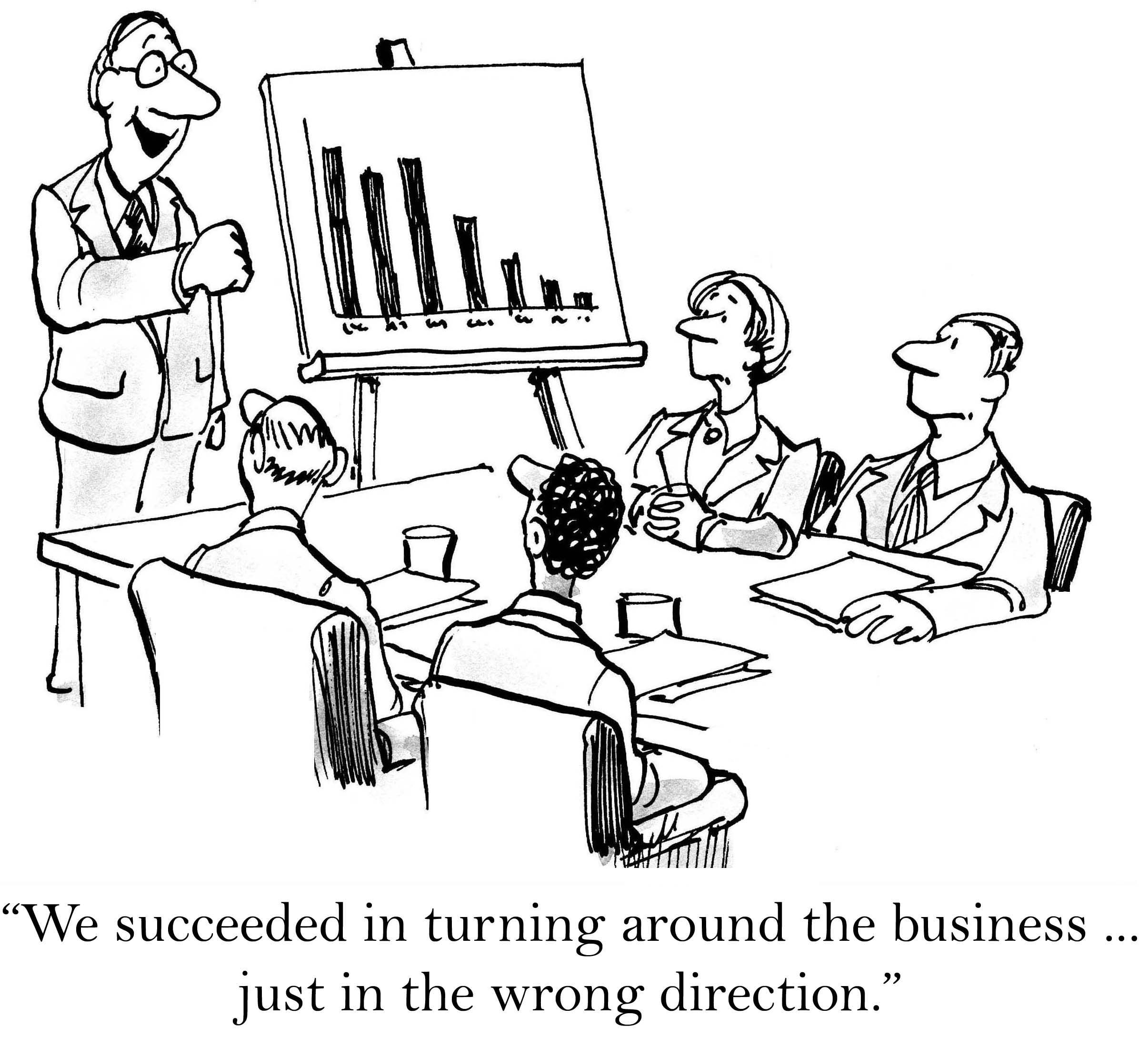
From reimbursement landscape challenges to dwindling patient volumes, many factors lead hospitals to file for bankruptcy. At least 29 hospitals across the U.S. have filed for bankruptcy this year, and the financial challenges caused by the COVID-19 pandemic may force more hospitals to enter bankruptcy in coming months.

COVID-19 has created a cash crunch for many hospitals across the nation. They’re estimated to lose $200 billion between March 1 and June 30, according to a report from the American Hospital Association. More than $161 billion of the expected revenue losses will come from canceled services, including nonelective surgeries and outpatient treatment. Moody’s Investors Service said the sharp declines in revenue and cash flow caused by the suspension of elective procedures could cause more hospitals to default on their credit agreements this year than in 2019.

The hospitals that have filed for bankruptcy this year, which are part of the health systems listed below, have not cited the pandemic as a factor that pushed them into bankruptcy. Though most of the hospitals are operating as normal throughout the bankruptcy process, at least two of the hospitals that entered bankruptcy this year have shut down.

Quorum Health
Brentwood, Tenn.-based Quorum Health and its 23 hospitals filed for Chapter 11 bankruptcy April 7. The company, a spinoff of Franklin, Tenn.-based Community Health Systems, said the bankruptcy filing is part of a plan to recapitalize the business and reduce its debt load.

Randolph Health
Randolph Health, a single-hospital system based in Asheboro, N.C., filed for Chapter 11 bankruptcy March 6. Randolph Health leaders have taken several steps in recent years to improve the health system’s financial picture, and they’ve made progress toward that goal. Entering Chapter 11 bankruptcy will allow Randolph Health to restructure its debt, which officials said is necessary to ensure the health system continues to provide care for many more years.

Faith Community Health System
Faith Community Health System, a single-hospital system based in Jacksboro, Texas, filed for bankruptcy protection on Feb. 29. The health system, part of the Jack County (Texas) Hospital District, entered Chapter 9 bankruptcy — a bankruptcy proceeding that offers distressed municipalities protection from creditors while a repayment plan is negotiated.

Pinnacle Healthcare System
Overland Park, Kan.-based Pinnacle Healthcare System and its hospitals in Missouri and Kansas filed for Chapter 11 bankruptcy on Feb. 12. Pinnacle Regional Hospital in Boonville, Mo., formerly known as Cooper County Memorial Hospital, entered bankruptcy about a month after it abruptly shut down. Pinnacle Regional Hospital in Overland Park, formerly called Blue Valley Hospital, closed about two months after entering bankruptcy.

Thomas Health
South Charleston, W.Va.-based Thomas Health and its two hospitals filed for Chapter 11 bankruptcy on Jan. 10. In an affidavit filed in the bankruptcy case, Thomas Health President and CEO Daniel J. Lauffer cited several reasons the health system is facing financial challenges, including reduced reimbursement rates and patient outmigration. The health system said the bankruptcy process will help it address its long-term debt and pursue strategic opportunities.


Envision Healthcare considering bankruptcy filing

https://mailchi.mp/0d4b1a52108c/the-weekly-gist-april-24-2020?e=d1e747d2d8

KKR-backed Envision Healthcare hires restructuring advisers ...


National physician staffing firm Envision Healthcare is considering filing for bankruptcy, according a report from Bloomberg. Sources say the company, backed by private equity (PE) firm KKR, which acquired Envision for $9.9B in June 2018, has hired restructuring advisors and is working with an investment bank. The abrupt halt to elective surgeries and reduction in emergency room volumes due to COVID-19 has caused Envision’s business to shrink by 65 to 75 percent in just two weeks at its 168 open ambulatory surgery centers (ASCs), compared to the same time period last year.

The Nashville-based company, which employs over 25,000 physicians and advanced practitioners, has already been reducing pay for providers and executives, in addition to implementing temporary furloughs. Envision is also struggling with a debt load of more than $7B, resulting from its 2018 leveraged buyout, and has been unable to convince its bondholders to approve a debt swap.

It remains to be seen whether Envision will be a bellwether for how other PE-backed physician groups will weather the ongoing COVID crisis. While Envision’s composition of mainly hospital- and ASC-based providers, coupled with its huge debt load, leave it on especially shaky financial footing, many PE-backed physician groups will struggle this year to achieve anything close to the 20 percent annual rate of return often promised to investors.

If high-profile PE-backed groups like Envision end up declaring bankruptcy, it will likely impact the calculus of the many independent practices which may have previously looked to PE firms for acquisitionand temper the enthusiasm of investors, who might see physician staffing and practice roll-ups as less attractive as volumes continue to fluctuate.


NEW COVENANT HEALTH CFO AIMS TO LEAD ORGANIZATION’S FINANCIAL TURNAROUND

https://www.healthleadersmedia.com/finance/new-covenant-health-cfo-aims-lead-organizations-financial-turnaround

Image result for turnaround


The Tewksbury, Massachusetts–based health system strives to post its first positive balance sheet in more than five years.

Stephen Forney, MBA, CPA, FACHE, excels in fixing “broken” organizations and he has built a track record of achieving financial turnarounds at seven healthcare facilities, he tells HealthLeaders in a recent interview.

Forney has over three decades of experience as a healthcare executive, with a primary focus on problem-solving. He began his career fixing problems in areas such as information technology and supply chain, an approach and skill he has carried over into financial operations in the C-suite.

“In finance, it wound up being the same thing. Pretty much every organization I’ve gone to has been broken in some way, shape, or form,” Forney says. “I’ve developed a specialty doing turnarounds and this will be my eighth.”

Forney speaks about his new CFO role at the Tewksbury, Massachusetts–based Catholic nonprofit health system Covenant Health, which he joined in mid-September, and how driving revenue and reducing expenses must go hand-in-hand to achieve financial balance.

This transcript has been lightly edited for brevity and clarity.

HealthLeaders: Covenant is coming off its fifth straight year of operating losses. What is contributing to those losses and how do you plan to address those financial challenges?

Forney: The thing is, most turnarounds—to a greater or lesser extent—look a lot alike. With organizations that have [financial] issues, there are obviously always unique aspects to every situation, but virtually every healthcare organization that’s not doing well is because of the same relatively small handful of issues.

[For example,] revenue cycle is probably No. 1. Productivity has not been well attended to; expenses haven’t had a lot of discipline around them in a broad sense. That’s not to say that all decisions are bad, but in a systematic fashion, things haven’t been looked at. Frequently, driving volume and growing the business needs a better focus. 

In the case of Covenant … there has been a plan developed to address all those areas and we are addressing them already, even though we will be posting another operating loss in fiscal [year] 2019. But the trajectory is good and some of the things that we’re now looking at are what I would consider to be phase two–type initiatives. How do we accelerate and move them to the next level?

On October 1, we outsourced our revenue cycle. I’m pleased that we were able to get that accomplished. Obviously, it’s early but, at least anecdotally, initial trends look good.

HL: Where do you fall on the dynamic between focusing on expense control measures or revenue generation?

Forney: I always feel like you need to do both. Expense management and working towards expense strategies is easier, quicker, and more straightforward.

[Revenue growth strategies] take time, take effort, and tend to [have] a much higher degree of uncertainty around the volume projection. Those are necessary and they’re things that we need to invest in because, at some point, you can’t cut any more from your organization, you’ve got to grow the top line. To me, it’s sort of like step one is stabilize your revenue cycle and stabilize your expenses. Then while you’re doing that, work on growth that’s going to take place 12 to 18 months down the road.

HL: Are you optimistic about the federal government’s efforts to move the industry toward value-based care?

Forney: Going back about a decade, I thought the ACE program, which was [the federal government’s] bundled payment program, was a solid step in the right direction. It gave organizations a chance to collaborate in compliant fashion with physicians to bend the cost curve and have beneficiaries participate in the bending of the cost curve as well. I was with one of the pilot health systems that [participated], and it was a remarkable success.

Everybody got to win; CMS, patients, physicians, and systems won by creating value. Yes, I think that the government has a good role to play in [value-based care] because they have such a large group of patients that they’re willing to experiment like that. [The federal government] can come up with potentially novel ways to get people to buy into this.

HL: What is it like to be at the helm of a Catholic nonprofit system and how does it affect your leadership style?

Forney: From a philosophical standpoint, the principle of creating shareholder wealth and good stewardship are not significantly different. You’ve got an end goal in mind, which is, you’re taking care of the patients and a community. In one case, whatever excess is left goes to a private equity fund or shareholders. In the other case, [the excess] stays in your balance sheet and gets reinvested in the community.

HL: Given your three decades of healthcare experience, do you have advice for your fellow provider CFOs, especially some of the younger ones?

Forney: Focus on being that strategic right-hand person to the CEO. In my experience, that has been one of the things that marks a successful CFO from one that isn’t as successful.

CEOs are going to get ideas from everywhere. They’re outward and inward facing. They deal with the doctors and the community, and they’re going to get all sorts of great ideas.

The CFO needs to be that person [who is] grounded and says, ‘Well, what about this?’ That doesn’t mean saying no. The whole idea is how do you make it [sound] like a yes. To me, the CFO role just grounds all the discussions, from working with physicians to working with the community. 

CFOs over the last couple of decades have been operationally oriented. Now they need to start becoming clinically oriented.

There’s a real benefit in being able to sit down and talk with a physician and understand [what] they’re doing. … It winds up becoming a way to help ground the clinicians in the hospital operations because now you’re having a dialogue with them instead of them just saying, ‘You don’t understand. You’re not a clinician.’ That would be something that I would have a young CFO try to stay focused on, even though it’s dramatically outside the comfort zone for people that typically go into accounting.


Critical Steps for a Hospital Turnaround

https://www.modernhealthcare.com/hospitals/critical-steps-hospital-turnaround

Image result for hospital turnaround

Operational changes can improve a hospital’s performance and prospects, but time is of the essence.

The challenges many community hospitals face have become so unrelenting as to threaten long-term financial viability. It’s important that this threat be met with prompt action and operational changes that can improve the immediate situation as well as sustainability. A formal turnaround plan includes analyses and actions, and becomes a roadmap to redirect hospitals and help them stay on track to serve as community resources for years to come.

What prevents some struggling hospitals from getting an earlier start on a turnaround plan?

JK: Leaders from ailing community hospitals sometimes don’t recognize the severity of their problems or that certain indicators call for quick, corrective action. Some common alarm signals that leaders may tune out at first include a downward trend of days cash on hand, shifts in patient volume across the delivery spectrum, medical staff dissatisfaction or defection, and even bond covenant concerns. Recognizing that problems need to be addressed and changes must be made is the first step toward improvement.

Once it’s clear that “business as usual” isn’t working, how does the turnaround process start?

JK: Typically, the process starts with an operational assessment to evaluate strategy, operations, supply chain, revenue cycle and leadership with the aim of reducing costs and increasing revenue—the tried-and-true formula for financial solvency. The analysis includes a review of data and documents, as well as interviews with board, executive and physician leaders. The process reveals any organizational problems or vulnerabilities that aren’t immediately apparent, and it forms the basis for a turnaround plan, including a detailed action plan. An open mind and fresh perspective are important to be able to see options to go beyond operations as they have always been.

What are some of the key areas an operational assessment looks at for potential savings and cost reduction?

JK: Almost every hospital has room to improve staff productivity. Labor is a hospital’s greatest expense, so optimizing productivity by having the right number and mix of staff can make a big impact. Community hospitals that do not have a productivity tool to achieve and maintain the right staffing levels can typically find savings of 15 to 20 percent in salaries and benefits by implementing a tool. In those hospitals where there’s already some productivity monitoring, implementing a more effective tool or improving processes can result in 5 to 10 percent savings. After labor, supply costs are the second highest expense for a hospital, so that’s another key focus area for cost reduction and savings. Industry benchmarks show that many community hospitals have an opportunity to reduce supply costs by as much as 20 percent.

Assessing revenue cycle is also imperative to help identify, monitor and collect every dollar a hospital is due. Gains can be made in this area by renegotiating health plan contracts, streamlining billing for faster payment, auditing medical record coding and reviewing the chargemaster.

Why do the early stages of a turnaround include benchmarking?

JK: Hospitals can potentially identify significant cost-saving opportunities by comparing themselves to hospitals of similar size and volume. Comparing clinical, operational and financial data also identifies areas for improvement and where to allocate time and money for improvement initiatives. For example, a CHC-managed hospital that recently underwent a successful turnaround had discovered through benchmarking that its staff ratios were higher and its benefits were more expensive compared to similar hospitals. This information prompted leaders to take a closer look at the hospital’s situation, and they found it made sense from a sustainability perspective to downsize staff and bring benefit packages to competitive levels. These actions slashed the hospital’s annual expenses by $5.3 million.

To support and sustain a turnaround effort, who needs to be involved?

JK: It’s a collaborative process requiring the participation of the board of trustees, executive leaders, physician leaders, and in many cases an outside management firm to evaluate the situation and develop a specific plan of action. As we discussed, leaders of struggling hospitals usually see the need for improvement but don’t recognize the severity of their situation. Because of that blind spot, it’s often external stakeholders or bondholders who set corrective action in motion by seeking outside assistance.