Sick and struggling to pay, 100 million people in the U.S. live with medical debt

https://www.npr.org/sections/health-shots/2022/06/16/1104679219/medical-bills-debt-investigation

Elizabeth Woodruff drained her retirement account and took on three jobs after she and her husband were sued for nearly $10,000 by the New York hospital where his infected leg was amputated.

Ariane Buck, a young father in Arizona who sells health insurance, couldn’t make an appointment with his doctor for a dangerous intestinal infection because the office said he had outstanding bills.

Allyson Ward and her husband loaded up credit cards, borrowed from relatives, and delayed repaying student loans after the premature birth of their twins left them with $80,000 in debt. Ward, a nurse practitioner, took on extra nursing shifts, working days and nights.

“I wanted to be a mom,” she said. “But we had to have the money.”

The three are among more than 100 million people in America ― including 41% of adults ― beset by a health care system that is systematically pushing patients into debt on a mass scale, an investigation by KHN and NPR shows.

The investigation reveals a problem that, despite new attention from the White House and Congress, is far more pervasive than previously reported. That is because much of the debt that patients accrue is hidden as credit card balances, loans from family, or payment plans to hospitals and other medical providers.

To calculate the true extent and burden of this debt, the KHN-NPR investigation draws on a nationwide poll conducted by KFF (Kaiser Family Foundation) for this project. The poll was designed to capture not just bills patients couldn’t afford, but other borrowing used to pay for health care as well. New analyses of credit bureau, hospital billing, and credit card data by the Urban Institute and other research partners also inform the project. And KHN and NPR reporters conducted hundreds of interviews with patients, physicians, health industry leaders, consumer advocates, and researchers.

The picture is bleak.

Where medical debt hits the hardest in the U.S.

The share of people with medical or dental bills in collections varies widely from one county to another

In the past five years, more than half of U.S. adults report they’ve gone into debt because of medical or dental bills, the KFF poll found.

A quarter of adults with health care debt owe more than $5,000. And about 1 in 5 with any amount of debt said they don’t expect to ever pay it off.

“Debt is no longer just a bug in our system. It is one of the main products,” said Dr. Rishi Manchanda, who has worked with low-income patients in California for more than a decade and served on the board of the nonprofit RIP Medical Debt. “We have a health care system almost perfectly designed to create debt.”

The burden is forcing families to cut spending on food and other essentials. Millions are being driven from their homes or into bankruptcy, the poll found.

Medical debt is piling additional hardships on people with cancer and other chronic illnesses. Debt levels in U.S. counties with the highest rates of disease can be three or four times what they are in the healthiest counties, according to an Urban Institute analysis.

The debt is also deepening racial disparities.

And it is preventing Americans from saving for retirement, investing in their children’s educations, or laying the traditional building blocks for a secure future, such as borrowing for college or buying a home. Debt from health care is nearly twice as common for adults under 30 as for those 65 and older, the KFF poll found.

Perhaps most perversely, medical debt is blocking patients from care.

About 1 in 7 people with debt said they’ve been denied access to a hospital, doctor, or other provider because of unpaid bills, according to the poll. An even greater share ― about two-thirds ― have put off care they or a family member need because of cost.

“It’s barbaric,” said Dr. Miriam Atkins, a Georgia oncologist who, like many physicians, said she’s had patients give up treatment for fear of debt.

Patient debt is piling up despite the landmark 2010 Affordable Care Act.

The law expanded insurance coverage to tens of millions of Americans. Yet it also ushered in years of robust profits for the medical industry, which has steadily raised prices over the past decade.

Hospitals recorded their most profitable year on record in 2019, notching an aggregate profit margin of 7.6%, according to the federal Medicare Payment Advisory Committee. Many hospitals thrived even through the pandemic.

But for many Americans, the law failed to live up to its promise of more affordable care. Instead, they’ve faced thousands of dollars in bills as health insurers shifted costs onto patients through higher deductibles.

Now, a highly lucrative industry is capitalizing on patients’ inability to pay. Hospitals and other medical providers are pushing millions into credit cards and other loans. These stick patients with high interest rates while generating profits for the lenders that top 29%, according to research firm IBISWorld.

Patient debt is also sustaining a shadowy collections business fed by hospitals ― including public university systems and nonprofits granted tax breaks to serve their communities ― that sell debt in private deals to collections companies that, in turn, pursue patients.

“People are getting harassed at all hours of the day. Many come to us with no idea where the debt came from,” said Eric Zell, a supervising attorney at the Legal Aid Society of Cleveland. “It seems to be an epidemic.”

In debt to hospitals, credit cards, and relatives

America’s debt crisis is driven by a simple reality: Half of U.S. adults don’t have the cash to cover an unexpected $500 health care bill, according to the KFF poll.

As a result, many simply don’t pay. The flood of unpaid bills has made medical debt the most common form of debt on consumer credit records.

As of last year, 58% of debts recorded in collections were for a medical bill, according to the Consumer Financial Protection Bureau. That’s nearly four times as many debts attributable to telecom bills, the next most common form of debt on credit records.

But the medical debt on credit reports represents only a fraction of the money that Americans owe for health care, the KHN-NPR investigation shows.

  • About 50 million adults ― roughly 1 in 5 ― are paying off bills for their own care or a family member’s through an installment plan with a hospital or other provider, the KFF poll found. Such debt arrangements don’t appear on credit reports unless a patient stops paying.
  • One in 10 owe money to a friend or family member who covered their medical or dental bills, another form of borrowing not customarily measured.
  • Still more debt ends up on credit cards, as patients charge their bills and run up balances, piling high interest rates on top of what they owe for care. About 1 in 6 adults are paying off a medical or dental bill they put on a card.

How much medical debt Americans have in total is hard to know because so much isn’t recorded. But an earlier KFF analysis of federal data estimated that collective medical debt totaled at least $195 billion in 2019, larger than the economy of Greece.

The credit card balances, which also aren’t recorded as medical debt, can be substantial, according to an analysis of credit card records by the JPMorgan Chase Institute. The financial research group found that the typical cardholder’s monthly balance jumped 34% after a major medical expense.

Monthly balances then declined as people paid down their bills. But for a year, they remained about 10% above where they had been before the medical expense. Balances for a comparable group of cardholders without a major medical expense stayed relatively flat.

It’s unclear how much of the higher balances ended up as debt, as the institute’s data doesn’t distinguish between cardholders who pay off their balance every month from those who don’t. But about half of cardholders nationwide carry a balance on their cards, which usually adds interest and fees.

Bearing the burden of debts large and small

For many Americans, debt from medical or dental care may be relatively low. About a third owe less than $1,000, the KFF poll found.

Even small debts can take a toll.

Edy Adams, a 31-year-old medical student in Texas, was pursued by debt collectors for years for a medical exam she received after she was sexually assaulted.

Adams had recently graduated from college and was living in Chicago.

Police never found the perpetrator. But two years after the attack, Adams started getting calls from collectors saying she owed $130.58.

Illinois law prohibits billing victims for such tests. But no matter how many times Adams explained the error, the calls kept coming, each forcing her, she said, to relive the worst day of her life.

Sometimes when the collectors called, Adams would break down in tears on the phone. “I was frantic,” she recalled. “I was being haunted by this zombie bill. I couldn’t make it stop.”

Health care debt can also be catastrophic.

Sherrie Foy, 63, and her husband, Michael, saw their carefully planned retirement upended when Foy’s colon had to be removed.

After Michael retired from Consolidated Edison in New York, the couple moved to rural southwestern Virginia. Sherrie had the space to care for rescued horses.

The couple had diligently saved. And they had retiree health insurance through Con Edison. But Sherrie’s surgery led to numerous complications, months in the hospital, and medical bills that passed the $1 million cap on the couple’s health plan.

When Foy couldn’t pay more than $775,000 she owed the University of Virginia Health System, the medical center sued, a once common practice that the university said it has reined in. The couple declared bankruptcy.

Illinois law prohibits billing victims for such tests. But no matter how many times Adams explained the error, the calls kept coming, each forcing her, she said, to relive the worst day of her life.

Sometimes when the collectors called, Adams would break down in tears on the phone. “I was frantic,” she recalled. “I was being haunted by this zombie bill. I couldn’t make it stop.”

Nearly half of Americans in households making more than $90,000 a year have incurred health care debt in the past five years, the KFF poll found.

Women are more likely than men to be in debt. And parents more commonly have health care debt than people without children.

But the crisis has landed hardest on the poorest and uninsured.

Debt is most widespread in the South, an analysis of credit records by the Urban Institute shows. Insurance protections there are weaker, many of the states haven’t expanded Medicaid, and chronic illness is more widespread.

Nationwide, according to the poll, Black adults are 50% more likely and Hispanic adults 35% more likely than whites to owe money for care. (Hispanics can be of any race or combination of races.)

In some places, such as the nation’s capital, disparities are even larger, Urban Institute data shows: Medical debt in Washington, D.C.’s predominantly minority neighborhoods is nearly four times as common as in white neighborhoods.

In minority communities already struggling with fewer educational and economic opportunities, the debt can be crippling, said Joseph Leitmann-Santa Cruz, chief executive of Capital Area Asset Builders, a nonprofit that provides financial counseling to low-income Washington residents. “It’s like having another arm tied behind their backs,” he said.

Medical debt can also keep young people from building savings, finishing their education, or getting a job. One analysis of credit data found that debt from health care peaks for typical Americans in their late 20s and early 30s, then declines as they get older.

Cheyenne Dantona’s medical debt derailed her career before it began.

Dantona, 31, was diagnosed with blood cancer while in college. The cancer went into remission, but when Dantona changed health plans, she was hit with thousands of dollars of medical bills because one of her primary providers was out of network.

She enrolled in a medical credit card, only to get stuck paying even more in interest. Other bills went to collections, dragging down her credit score. Dantona still dreams of working with injured and orphaned wild animals, but she’s been forced to move back in with her mother outside Minneapolis.

“She’s been trapped,” said Dantona’s sister, Desiree. “Her life is on pause.”

The strongest predictor of medical debt

Desiree Dantona said the debt has also made her sister hesitant to seek care to ensure her cancer remains in remission.

Medical providers say this is one of the most pernicious effects of America’s debt crisis, keeping the sick away from care and piling toxic stress on patients when they are most vulnerable.

The financial strain can slow patients’ recovery and even increase their chances of death, cancer researchers have found.

Yet the link between sickness and debt is a defining feature of American health care, according to the Urban Institute, which analyzed credit records and other demographic data on poverty, race, and health status.

U.S. counties with the highest share of residents with multiple chronic conditions, such as diabetes and heart disease, also tend to have the most medical debt. That makes illness a stronger predictor of medical debt than either poverty or insurance.

In the 100 U.S. counties with the highest levels of chronic disease, nearly a quarter of adults have medical debt on their credit records, compared with fewer than 1 in 10 in the healthiest counties.

The problem is so pervasive that even many physicians and business leaders concede debt has become a black mark on American health care.

There is no reason in this country that people should have medical debt that destroys them,” said George Halvorson, former chief executive of Kaiser Permanente, the nation’s largest integrated medical system and health plan. KP has a relatively generous financial assistance policy but does sometimes sue patients. (The health system is not affiliated with KHN.)

Halvorson cited the growth of high-deductible health insurance as a key driver of the debt crisis. “People are getting bankrupted when they get care,” he said, “even if they have insurance.”

What the federal government can do

The Affordable Care Act bolstered financial protections for millions of Americans, not only increasing health coverage but also setting insurance standards that were supposed to limit how much patients must pay out of their own pockets.

By some measures, the law worked, research shows. In California, there was an 11% decline in the monthly use of payday loans after the state expanded coverage through the law.

But the law’s caps on out-of-pocket costs have proven too high for most Americans. Federal regulations allow out-of-pocket maximums on individual plans up to $8,700.

Additionally, the law did not stop the growth of high-deductible plans, which have become standard over the past decade. That has forced growing numbers of Americans to pay thousands of dollars out of their own pockets before their coverage kicks in.

Last year the average annual deductible for a single worker with job-based coverage topped $1,400, almost four times what it was in 2006, according to an annual employer survey by KFF. Family deductibles can top $10,000.

While health plans are requiring patients to pay more, hospitals, drugmakers, and other medical providers are raising prices.

From 2012 to 2016, prices for medical care surged 16%, almost four times the rate of overall inflation, a report by the nonprofit Health Care Cost Institute found.

For many Americans, the combination of high prices and high out-of-pocket costs almost inevitably means debt. The KFF poll found that 6 in 10 working-age adults with coverage have gone into debt getting care in the past five years, a rate only slightly lower than the uninsured.

Even Medicare coverage can leave patients on the hook for thousands of dollars in charges for drugs and treatment, studies show.

About a third of seniors have owed money for care, the poll found. And 37% of these said they or someone in their household have been forced to cut spending on food, clothing, or other essentials because of what they owe; 12% said they’ve taken on extra work.

The growing toll of the debt has sparked new interest from elected officials, regulators, and industry leaders.

In March, following warnings from the Consumer Financial Protection Bureau, the major credit reporting companies said they would remove medical debts under $500 and those that had been repaid from consumer credit reports.

In April, the Biden administration announced a new CFPB crackdown on debt collectors and an initiative by the Department of Health and Human Services to gather more information on how hospitals provide financial aid.

The actions were applauded by patient advocates. However, the changes likely won’t address the root causes of this national crisis.

“The No. 1 reason, and the No. 2, 3, and 4 reasons, that people go into medical debt is they don’t have the money,” said Alan Cohen, a co-founder of insurer Centivo who has worked in health benefits for more than 30 years. “It’s not complicated.”

Buck, the father in Arizona who was denied care, has seen this firsthand while selling Medicare plans to seniors. “I’ve had old people crying on the phone with me,” he said. “It’s horrifying.”

Now 30, Buck faces his own struggles. He recovered from the intestinal infection, but after being forced to go to a hospital emergency room, he was hit with thousands of dollars in medical bills.

More piled on when Buck’s wife landed in an emergency room for ovarian cysts.

Today the Bucks, who have three children, estimate they owe more than $50,000, including medical bills they put on credit cards that they can’t pay off.

“We’ve all had to cut back on everything,” Buck said. The kids wear hand-me-downs. They scrimp on school supplies and rely on family for Christmas gifts. A dinner out for chili is an extravagance.

“It pains me when my kids ask to go somewhere, and I can’t,” Buck said. “I feel as if I’ve failed as a parent.”

The couple is preparing to file for bankruptcy.

About This Project

Diagnosis: Debt is a reporting partnership between KHN and NPR exploring the scale, impact, and causes of medical debt in America.

The series draws on the “KFF Health Care Debt Survey,” a poll designed and analyzed by public opinion researchers at KFF in collaboration with KHN journalists and editors. The survey was conducted Feb. 25 through March 20, 2022, online and via telephone, in English and Spanish, among a nationally representative sample of 2,375 U.S. adults, including 1,292 adults with current health care debt and 382 adults who had health care debt in the past five years. The margin of sampling error is plus or minus 3 percentage points for the full sample and 3 percentage points for those with current debt. For results based on subgroups, the margin of sampling error may be higher.

Additional research was conducted by the Urban Institute, which analyzed credit bureau and other demographic data on poverty, race, and health status to explore where medical debt is concentrated in the U.S. and what factors are associated with high debt levels.

The JPMorgan Chase Institute analyzed records from a sampling of Chase credit card holders to look at how customers’ balances may be affected by major medical expenses.

Reporters from KHN and NPR also conducted hundreds of interviews with patients across the country; spoke with physicians, health industry leaders, consumer advocates, debt lawyers, and researchers; and reviewed scores of studies and surveys about medical debt.

KHN (Kaiser Health News) is a national newsroom that produces in-depth journalism about health issues. Together with Policy Analysis and Polling, KHN is one of the three major operating programs at KFF (Kaiser Family Foundation). KFF is an endowed nonprofit organization providing information on health issues to the nation.


It’s time to protect patients from short-term health plans

https://www.lls.org/advocate/protecting-patients-junk-insurance

Leukemia Lymphoma Society (LLS) supports actions that regulate or prohibit “junk insurance” plans that discriminate against people with pre-existing conditions, offer no meaningful coverage in the case of a cancer diagnosis or neglect to cover essential healthcare services like prescription drugs

The problem

LLS advocate Sam Bloechl thought he was doing everything right. After experiencing back pain that wouldn’t go away, he spoke to an insurance broker about upgrading his insurance plan to better cover any treatment he might need. Sam’s broker insisted she had the perfect plan for him. It wasn’t.

A month later, Sam was diagnosed with non-Hodgkin lymphoma. After chemotherapy and radiation, Sam achieved remission. But his health plan refused to cover the bill, leaving Sam with more than $800,000 in medical debt.  It turns out he was sold a short-term, limited-duration plan—a type of “junk insurance.”

Sam isn’t alone. Patients with pre-existing conditions are penalized by low-quality policies, known as “junk insurance” Because such plans are exempt from important consumer protections, they can leave patients vulnerable when they most need timely access to quality, affordable care. 

The patient impact

Most short-term, limited-duration plans leave patients on the hook for thousands of dollars if they face serious health problems—much more than they’d face if they had traditional health insurance, a recent Milliman study funded by LLS reveals. The plans often rely on misleading marketing and are misunderstood by consumers who buy them. And patients have no right to appeal plan decisions.

Moreover, junk plans drive up more than a patient’s out-of-pocket costs—they threaten prices across the health insurance market. As younger and healthier individuals choose these cheaper “junk plans” over comprehensive insurance, premiums for comprehensive insurance are expected to rise.

Solutions

LLS supports actions that regulate or prohibit “junk insurance” plans that discriminate against people with pre-existing conditions, offer no meaningful coverage in the case of a cancer diagnosis or neglect to cover essential healthcare services like prescription drugs. These plans include:

•    Short-term, limited-duration insurance
•    Health care sharing ministries
•    Farm Bureau plans
•    Grandfathered plans
•    Multiple employer welfare arrangements and association health plans
•    Spurious single-employer self-insured group health plans
•    Minimum essential coverage-only plans
•    Excepted benefit plans

report published by 30 patient organizations, including LLS, explains these types of plans in depth—and details how state and federal lawmakers can help protect patients and consumers from these dangerous plans. 

LLS works to stop policy proposals that would allow insurers to reinstitute lifetime limits, eliminate the current cap on patient cost-sharing and cover fewer essential services for cancer patients.

Podcast: All Healthcare Is Politics?

Does Your Vote Affect Your Healthcare?

What role should the federal government play in addressing major healthcare issues? And does the way you vote affect your prospects for a long and healthy life? We talked about it on today’s episode of the 4sight Friday Roundup podcast.

  • David Johnson is CEO of 4sight Health.
  • Julie Vaughan Murchinson is Partner of Transformation Capital and former CEO of Health Evolution.
  • David Burda is News Editor and Columnist of 4sight Health.

Subscribe on Apple PodcastsSpotify, and other services.

Anticipating the end of the public health emergency

https://mailchi.mp/ce4d4e40f714/the-weekly-gist-june-10-2022?e=d1e747d2d8

The Biden administration recently signaled that it will extend the federal COVID-19 public health emergency (PHE), which has been in place for nearly two-and-a-half years, beyond its current July 15 expiration date. As shown in the graphic above, a number of key pandemic-era policies would end if the PHE were discontinued. Hospitals, already experiencing financial challenges, would face an immediate 20 percent reduction in Medicare reimbursement for each hospitalized COVID patient. 

Combined with the end of funding for treating uninsured COVID patients, and with millions of Americans expected to lose Medicaid coverage when eligibility checks restart, the cost of treating COVID patients will fall more heavily on providers. More treatment costs will also be passed on to patients, as most private insurers no longer waive cost-sharing for COVID care.

On the telemedicine front, Congress has temporarily extended some Medicare telehealth flexibilities (including current payment codes and coverage for non-rural beneficiaries) for five months after the PHE ends, while CMS studies permanent coverage options. But further Congressional action will be required to keep current Medicare telehealth coverage in place, and these decisions will surely influence private insurers’ telehealth reimbursement policies. 

Although the Biden administration promises that it will provide sixty days’ notice before terminating the PHE or letting it expire, providers must prepare for the inevitable financial hit when the PHE ends.

Pandemic’s end could surge the number of uninsured kids

The formal end of the pandemic could swell the ranks of uninsured children by 6 million or more as temporary reforms to Medicaid are lifted.

Why it matters: Gaps in coverage could limit access to needed care and widen health disparities, by hitting lower-income families and children of color the hardest, experts say.

The big picture: A requirement that states keep Medicaid beneficiaries enrolled during the public health emergency in order to get more federal funding is credited with preventing a spike in uninsured adults and kids during the crisis.

  • Children are the biggest eligibility group in Medicaid, especially in the 12 states that haven’t expanded their Medicaid programs under the Affordable Care Act.
  • The lifting of the public health emergency, which was just extended to July 15, will lead states to determine whether their Medicaid enrollees are still eligible for coverage — a complicated process that could result in millions of Americans being removed from the program.

What they’re saying: The end of the continuous coverage guarantee puts as many as 6.7 million children at very high risk of losing coverage, per Georgetown University’s Center for Children and Families.

  • That would more than double the number of uninsured kids, which stood at 4.4 million in 2019.
  • “It is a stark, though we believe conservative, estimate,” said Joan Alker, the center’s executive director. “There are a lot of children on Medicaid.”

Between the lines: Not all of the Medicaid enrollees who are removed from the program would become uninsured. But parents and their children could be headed down different paths if their household income has risen even slightly.

  • Adults who’ve returned to work may be able to get insurance through their employer. Others could get coverage through the ACA marketplace, though it’s unclear whether that would come the COVID-inspired extra financial assistance that’s now being offered.
  • Most kids would be headed for the Children’s Health Insurance Program, Alker said — a prospect that can entail added red tape and the payment of premiums or an annual enrollment fee, depending on the state.

What we’re watching: Changes in children’s coverage could be most pronounced in Texas, Florida and Georgia — the biggest non-Medicaid expansion states, which have higher rates of uninsured children than the national average.

  • Congress could still require continuous Medicaid coverage, the way the House did when it passed the sweeping social policy package that stalled in the Senate over cost concerns.
  • CMS’ Office of the Actuary projects a smaller decline in Medicaid enrollment than some health policy experts are predicting — and the Biden administration continues to move people deemed ineligible for Medicaid onto ACA plans, Raymond James analyst Chris Meekins noted in a recent report on the unwinding of the public health emergency.

Biden proposes ACA coverage expansion to include more families

President Joe Biden proposed a change in federal regulations April 5 to expand health coverage to millions of people through the Affordable Care Act.

The proposal aims to close what is known as the “family glitch,” according to a press release.

People who do not have access to affordable health coverage through their employers can qualify for subsidies to purchase coverage through the ACA marketplace. The federal definition of affordable employer-provided coverage is only for single individuals and not for family members, meaning about 5 million people are ineligible for the marketplace subsidy. 

To fix the glitch, the proposal directs the Treasury Department and Internal Revenue Service to allow family members of employees who are offered affordable self-only coverage but unaffordable family coverage to qualify for the subsidies to purchase family health coverage through the ACA marketplace. If the rule is approved, an estimated 200,000 uninsured people would gain coverage, and nearly 1 million would see their coverage become more affordable.

President Biden will also sign an executive order Tuesday directing agencies to find ways to make coverage more affordable for more people.

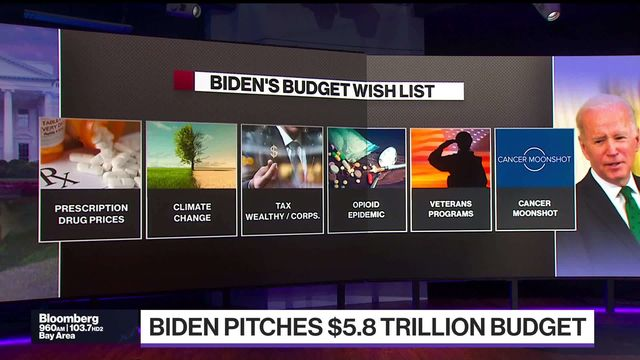
Biden’s $5.8 trillion budget: 9 healthcare takeaways

President Joe Biden proposed a $5.8 trillion budget March 28 for fiscal year 2023, which includes funding for healthcare. 

Nine healthcare takeaways:

1. Pandemic preparedness. The budget calls for a five-year investment of $81.7 billion to plan ahead for future pandemics. The funding would help support research and development of vaccines, improve clinical trial infrastructure and expand domestic manufacturing. 

2. Mental health parity. Under the proposed budget, federal regulators would get the power to levy fines against health plans that violate mental health parity rules. The budget calls for $275 million over 10 years to increase the Labor Department’s capacity to ensure health plans are complying with the requirements and take action against those plans that do not. The budget also proposes funding to bolster the mental healthcare workforce and boost funding for suicide prevention programs. 

3. Vaccines for uninsured adults. The proposed budget calls for establishing a new Vaccines for Adults program that would provide uninsured adults access to recommended vaccines at no cost.

4. Title X funding. The budget proposes providing $400 million in funding for the Title X Family Planning Program, which provides family planning and other healthcare services to low-income individuals.

5. Cancer Moonshot initiative. The budget proposes several investments across the FDA, CDC, National Cancer Institute and Advanced Research Projects Agency for Health to advance President Biden’s Cancer Moonshot initiative. The initiative aims to reduce the cancer death rate by 50 percent over the next 25 years. 

6. Spending to reduce HIV. The proposed budget includes $850 million to reduce new HIV cases by increasing access to HIV prevention services and support services.

7. Veterans Affairs medical care. President Biden’s proposed budget allocates $119 billion, or a 32 percent increase, to medical care for veterans. The money will fully fund inpatient, outpatient, mental health and long-term care services, while also investing in training programs for clinicians to work in the VA.

8. Discretionary funding for HHS. President Biden is asking Congress to approve $127.3 billion in discretionary funding for HHS in fiscal 2023, representing a $26.9 billion increase from the department’s allotment for fiscal 2021.

9. Mandatory spending for the Indian Health Service. The budget request for the Indian Health Service calls for shifting the healthcare agency from discretionary to mandatory funding. The budget calls for $9.1 billion in funding, a 20 percent increase from the amount allocated in fiscal 2021.

Providers will no longer be reimbursed for caring for uninsured COVID patients, as funding runs out

Starting next month, the federal government will stop reimbursing hospitals and other providers for the vaccination, testing, and treatment of uninsured COVID-19 patients. So far, about 50K providers have submitted a total of $20B of claims for COVID-related care for the uninsured.

Congress has yet to authorize more funding for this and other COVID relief programs, after stripping $15.6B from the latest government spending package. Though the White House is asking Congress to authorize $22.5B for further COVID aid and surge preparedness, it’s not clear how much of any new funding would go toward reimbursing care for the uninsured.

The Gist: This news comes as US officials expect a rise in cases driven by the Omicron BA.2 subvariant. Hospitals, already struggling with high labor and supply expenses, will face further margin pressures if a future COVID surge brings increased hospitalizations. 

This will be especially true for safety net hospitals, and for those in states which haven’t expanded Medicaid. At the same time, 15M Americans are also at risk of losing Medicaid coverage when the federal government ends the public health emergency. Lower-income patients and the hospitals that treat them have already shouldered COVID’s worst effects, and the funding stalemate risks further worsening their situation.

Health Agency Preparing for Lapse in Extra ACA Subsidies

https://news.bloomberglaw.com/pharma-and-life-sciences/health-agency-preparing-for-lapse-in-extra-obamacare-subsidies?mkt_tok=ODUwLVRBQS01MTEAAAGDWuGQisFiXP1YU7ldhH-D-v-Qezz0Y7Ol85lQV_EWybFJCX5nhwm1xijPeqwqKvJ4KM_KHbGLJ6Tq5fpqr7aHTFGKPLChP3FMmQbI5dZoOR8W

  • Obamacare enrollment at a record-high 14.5 million
  • Congress may not fund premium subsidies in 2023

The Affordable Care Act marks its 12th anniversary Wednesday, and despite a record 14.5 million enrollees, the Biden administration is preparing for the possibility that millions could lose coverage next year.

The $1.9 trillion pandemic stimulus package (Public Law 117-2), signed March 2021, reduced Obamacare premiums to no more than 8.5% of income for eligible households and expanded premium subsidies to households earning more than 400% of the federal poverty level. The rescue plan also provided additional subsidies to help with out-of-pocket costs for low-income people. As a result, 2.8 million more consumers are receiving tax credits in 2022 compared to 2021.

But without congressional action, the subsidies—and the marketplace enrollment spikes they ushered in—could be lost in 2023. new HHS report released Wednesday, shows an estimated 3.4 million Americans would lose marketplace coverage and become uninsured if the premium tax credits aren’t extended beyond 2022.

In a briefing with reporters Tuesday, Chiquita Brooks-LaSure, administrator for the Centers for Medicare & Medicaid Services, said her agency is “confident that Congress will really understand how important the subsidies were” to enrolling more people this year. The CMS would “pivot quickly,” however, to implement new policies and outreach plans if the subsidies aren’t extended as open enrollment for 2023 begins in November.

“That said, today and tomorrow we are celebrating the Affordable Care Act,” Brooks-LaSure added. “As part of that process, we’ve been reminding ourselves that sometimes it takes some time to pass legislation. And just like the Affordable Care Act took time, we’re confident that Congress is going to address these critical needs for the American people.”

After years of legal and political brawls that turned the landmark legislation into a political football, Obamacare “is at its strongest point ever,” Brooks-LaSure said. The 14.5 million total enrollees—those who extended coverage and those who signed up for the first time—is a 21% increase from last year. The number of new consumers during the 2022 open enrollment period increased by 20% to 3.1 million from 2.5 million in 2021.

This week, the Department of Health and Human Services will highlight the impact of the ACA and the Biden administration’s efforts to strengthen the law. The CMS recently announced a new special enrollment period opportunity for people with household incomes under 150% of the federal poverty level who are eligible for premium tax credits. The new special enrollment period will make it easier for low-income people to enroll in coverage throughout the year.

Troubled times could be around the corner, however, as millions of people with Medicaid coverage could become uninsured after the public health emergency ends. Under the Families First Coronavirus Response Act (Public Law 116-127), signed March 2020, states must maintain existing Medicaid enrollment until the end of the month that the public health emergency is lifted. Once the continuous enrollment mandate ends, states will resume Medicaid redeterminations and disenrollments for people who no longer meet the program’s requirements.

Dan Tsai, deputy administrator and director of the Center for Medicaid and CHIP Services at CMS, said the agency is working with states to make sure people who lose Medicaid coverage can be transferred into low- and no-cost Obamacare coverage.

“A substantial portion of individuals who will no longer be eligible for Medicaid will be eligible for other forms of coverage,” including marketplace coverage, Tsai told reporters Tuesday.

In a statement, President Joe Biden acknowledged the law’s great impact. “This law is the reason we have protections for pre-existing conditions in America. It is why women can no longer be charged more simply because they are women. It reduced prescription drug costs for nearly 12 million seniors. It allows millions of Americans to get free preventive screenings, so they can catch cancer or heart disease early—saving countless lives. And it is the reason why parents can keep children on their insurance plans until they turn 26.”

The Affordable Care Act: Twelve Years and Nine Lives Later

http://healthaffairs.activehosted.com/index.php?action=social&chash=de905148259ea27fa49e2303ef2e0017.5360&s=a9eec07a130d7809d93928ad264a482b

A new spring brings another anniversary of the Affordable Care Act. Twelve (sometimes tumultuous) years later, this remarkably resilient law is on firmer ground than ever before.

So what are some highlights?

The uninsured rate remained stable even in the face of a global pandemic. Congress leveraged parts of the ACA to quickly cover COVID-19 tests and vaccines without cost sharing.

The American Rescue Plan Act supercharged marketplace subsidies, leading to record-high marketplace enrollment.

And there are currently no existential legal threats to the law working their way through federal courts.

In some ways, this rosy report feels unremarkable. Why expect otherwise with the law now in place for more than a decade and baked into every part of the health care system?

But this outcome was far from inevitable.

Just five years ago, Congress tried to repeal as much of the law as possible. When those broader efforts failed, Congress eliminated the much-maligned individual mandate penalty. We appeared to have reached a stalemate: Democrats could not improve the law while Republicans could not repeal it.

Could this be the moment we moved on from ACA politics?!

Enter the courts. In early 2018, Republican attorneys general sued to invalidate the mandate and, with it, the rest of the law. That lawsuit—California v. Texas—was ultimately heard by a new Supreme Court one week after the 2020 election, and the ACA was upheld just last summer.

This marked the third time that the Supreme Court largely rebuffed what could have been a crippling legal challenge to the law. It feels like ancient history now, but it is worth remembering that we were still playing “will they or won’t they?” with the Supreme Court and ACA only one year ago.

In the meantime, the Trump administration tried to undermine access to coverage under the law—except when it didn’t. I won’t list all the relevant Trump-era policies, but they had an impact: the uninsured rate rose, and marketplace enrollment declined until the 2021 plan year.

Ironically, one policy meant to destabilize the market had the opposite effect: so-called “silver loading” led to more generous marketplace subsidies and likely helped stave off even greater coverage losses.

This is the recent history that is top of mind as I reflect on the year ahead—and the work left to do to achieve universal coverage. Here are just some of the major issues facing policymakers:

     • The clock is ticking to extend the American Rescue Plan Act subsidies. If Congress fails to do so, millions will face premium hikes next year and marketplace enrollment will likely drop.

     • More than 2 million low-income people remain stuck in the Medicaid coverage gap in the 12 states that have not yet expanded their Medicaid program.

     • Up to 15 million people, including nearly 6 million children, could lose Medicaid coverage at the end of the COVID-19 public health emergency.

     • There is increasingly an affordability and underinsurance crisis, including for those with job-based coverage: an estimated 87 million people were underinsured in 2018.

Congress and the White House are working to address these challenges, but much uncertainty remains.
“It feels like ancient history now, but it is worth remembering that we were still playing ‘will they or won’t they?’ with the Supreme Court and Affordable Care Act only one year ago.” – Katie Keith

Looking beyond Congress, 2022 will be an important year for regulatory changes. The Biden administration has proposed, but has not yet finalized, major marketplace changes. Other already-identified priorities include fixing the family glitch, limiting short-term limited duration insurance, and enhancing nondiscrimination protections. We could see movement on at least some of these rules soon.

While the Biden administration may be waiting out Congress before initiating some rulemaking, time is of the essence. New rules take many months to adopt and then take effect—followed by more time to deal with the legal challenges that typically follow.

Follow along as I dive deep on these issues and more in a new Health Affairs’ Health Reform newsletter.

We’ll highlight the latest health policy developments—from legislation to litigation—and explain what these changes mean for patients, payers, providers, and other key health care stakeholders.
It’s Your Birthday, Affordable Care Act!
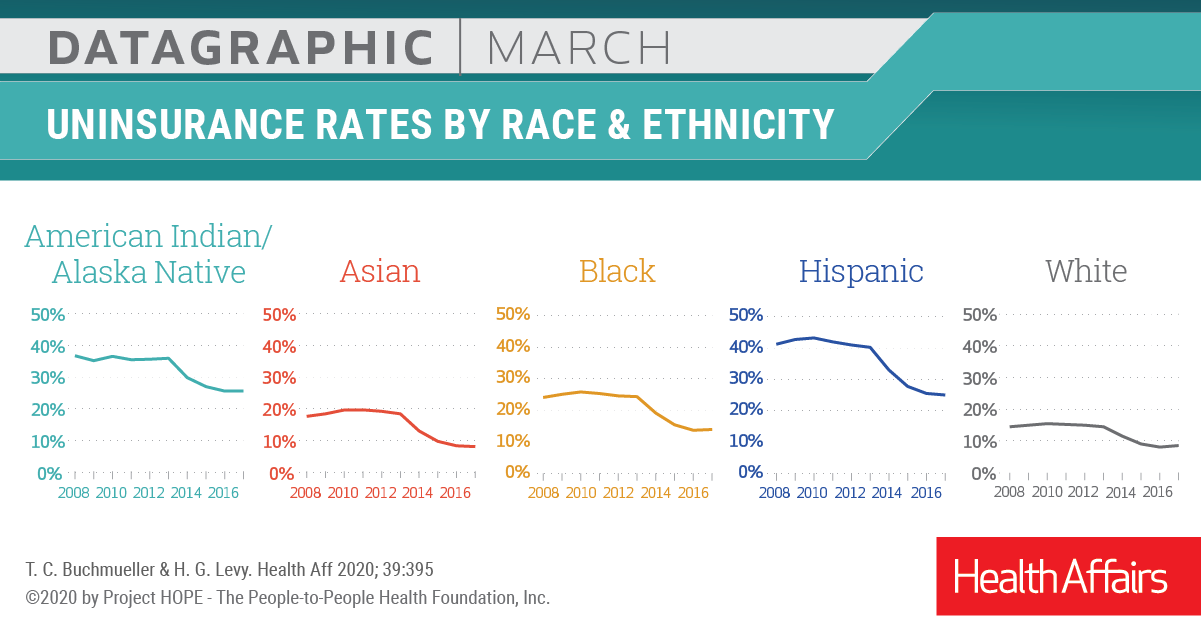
In March 2020, Health Affairs published a theme issue to celebrate the tenth anniversary of the Affordable Care Act. The issue contains many illuminating research articles on the landmark legislation, from its impact on “the cost curve” to Medicaid expansion.

Above is a datagraphic from the issue showing how the ACA affected insurance coverage.