Bill Gates, in rebuke of Trump, calls WHO funding cut during pandemic ‘as dangerous as it sounds’

https://www.washingtonpost.com/nation/2020/04/15/who-bill-gates-coronavirus-trump/?fbclid=IwAR1AY1otbc2PccrdeOWGrWMyb7RznpZJMyGfMaOIe_09pw7WeS5kdvmHUvA&utm_campaign=wp_main&utm_medium=social&utm_source=facebook

Bill Gates: Trump halting funding to World Health Organization ...

Microsoft co-founder Bill Gates criticized President Trump’s decision to suspend funding to the World Health Organization as “dangerous,” saying the payments should continue particularly during the global coronavirus pandemic.

“Halting funding for the World Health Organization during a world health crisis is as dangerous as it sounds,” Gates tweeted early Wednesday. “Their work is slowing the spread of COVID-19 and if that work is stopped no other organization can replace them. The world needs @WHO now more than ever.”

The United States, the organization’s largest donor, has committed to provide the WHO with $893 million during its current two-year funding period, a State Department spokesperson told The Washington Post.

The Bill & Melinda Gates Foundation, the family’s giant philanthropy, is the next biggest donor to WHO after the U.S., accounting for close to 10 percent of the United Nations agency’s funding.

As The Washington Post’s Anne Gearan reported, the president said on Tuesday that the halt in U.S. funding would continue for a period of 60 to 90 days “while a review is conducted to assess the World Health Organization’s role and severely mismanaging and covering up the spread of the coronavirus.”

“We have not been treated properly,” Trump said at the Tuesday news briefing. He added, “The WHO pushed China’s misinformation about the virus.”

It remains unclear whether the United States will cut off money to the main international organization, or if Trump is setting conditions for a resumption of U.S. payments at a later date, The Post reported.

The announcement looms as a potentially devastating blow to the agency during the coronavirus pandemic, as the United States’ donations make up nearly 15 percent of all voluntary donations given worldwide.

The criticism from Gates, whose foundation has committed up to $100 million as part of the global response to the pandemic, comes as Trump has attempted to deflect blame for the administration’s failure to respond vigorously and early to the deadly novel coronavirus.

Also defending the WHO was U.N. Secretary General António Guterres, who, while not naming Trump, said it was “not the time to reduce the resources for the operations of the World Health Organization or any other humanitarian organization in the fight against the virus.”

“Now is the time for unity and for the international community to work together in solidarity to stop this virus and its shattering consequences,” he said.

Others, such as the American Medical Association, called Trump’s announcement to cut WHO funding “a dangerous step in the wrong direction.”

“Cutting funding to the WHO — rather than focusing on solutions — is a dangerous move at a precarious moment for the world,” the organization said in a statement. “The AMA is deeply concerned by this decision and its wide-ranging ramifications, and we strongly urge the President to reconsider.”

While some of Trump’s conservative allies are focusing on the WHO as complicit in a Chinese coverup of the outbreak, others have urged the president to hold off on moving forward on suspending funding.

“If the president wants to genuinely hold the WHO accountable, counter Chinese efforts to shift blame for COVID-19, and reform the WHO to better respond to the next pandemic, he should not cut funding — at least not yet,” wrote Brett D. Schaefer, an expert at the conservative Heritage Foundation and member of the U.N.’s Committee on Contributions.

It isn’t the first time that Gates has questioned the country’s response to the pandemic. In a TED interview last month, Gates, while not mentioning Trump by name, suggested the push to relax social distancing to reopen the country was reckless.

“There really is no middle ground, and it’s very tough to say to people: ‘Hey, keep going to restaurants, go buy new houses, ignore that pile of bodies over in the corner. We want you to keep spending because there’s maybe a politician who thinks GDP growth is all that counts,’” Gates said. “It’s very irresponsible for somebody to suggest that we can have the best of both worlds.”

In a March 31 op-ed for The Post, Gates emphasized that while the U.S. lost valuable time in getting out ahead of its response, there was still a path forward for recovery through decisions made by “science, data and the experience of medical professionals.”

“There’s no question the United States missed the opportunity to get ahead of the novel coronavirus. But the window for making important decisions hasn’t closed,” Gates wrote. “The choices we and our leaders make now will have an enormous impact on how soon case numbers start to go down, how long the economy remains shut down and how many Americans will have to bury a loved one because of covid-19.”


Fauci at center of conservative storm

Fauci at center of conservative storm

Health Official condemns Senator Ron Johnson's false equivalency ...

Criticism of Anthony Fauci from the right has picked up in recent days, with some conservatives calling for Trump to dump the infectious disease expert after he made comments about how imposing social distancing rules earlier could have slowed the spread of the novel coronavirus in the United States.

Fauci has become a national name with his regular presence at the daily coronavirus task force briefings and in other media appearances, and poll numbers show he’s trusted by a majority of Americans. It would set off a political storm if Trump were to sideline him in the middle of a pandemic.

Yet the criticism of Fauci by two conservative lawmakers in a Saturday op-ed and Trump’s own retweet of a conservative’s call to “#FireFauci” were unmistakable signs that the public health official is coming under pressure from some on the right to be loyal to the president. 

Tensions between Fauci and Trump have been evident at times in recent weeks. The doctor put his head in his hand at one March briefing where the president quipped about the “Deep State Department,” and Trump stepped in at a briefing this month before Fauci could give his opinion on hydroxychloroquine.

The president had publicly praised Fauci as “extraordinary” and dismissed speculation about a rift between the two, joking on Friday that Fauci is so popular he could run against Rep. Alexandria Ocasio-Cortez (D-N.Y.) and “win easily.” For the most part Fauci has seemed to successfully walk the line between contradicting Trump without outright criticizing him. 

But Trump’s tweet on Sunday marked a shift and coincided with a fresh groundswell of conservative push-back toward the doctor as Trump comes under intense criticism for his slow response to the virus.

Some of the more pointed criticism of Fauci came after he said on CNN Sunday that more lives could have been saved if stay-at-home measures were implemented earlier than mid-March.

The comments irked Trump allies who viewed them as revisionist history given how Fauci’s own public statements evolved throughout January and February as scientists learned more about the virus and it spread through the U.S.

Jason Miller, a former Trump adviser who now hosts a radio show focused on the pandemic, said Fauci must be careful with how he talks about the crisis, but also described “finger pointing” as media chatter seeking to pull the administration apart.

“This talk of potential removal from the team is unnecessary media chatter trying to draw a divide where one doesn’t exist,” Miller said.

“I think what this is about is about the accuracy with which Dr. Fauci is communicating with both the president and the American people,” he added. “It’s critical as the lead scientist and health expert advising the president on the coronavirus pandemic that he be spot on with his details. I think the recent finger pointing and revisionist history whether intentional or accidental doesn’t help anybody.”

One source close to the administration said, while some inside would like to see Fauci gone, most recognize there is more value to keeping him on.

“I don’t sense there’s a monolithic view,” the person said. “There are some who dislike him and want him out of the [administration] but I think most recognize it’s better for him to be in the tent than outside of it.” 

Fauci’s CNN remarks followed a New York Times article detailing how Trump ignored early warnings about the virus and initially resisted recommendations to implement social distancing recommendations, reporting that Trump has dismissed as “fake.”

One of Trump’s many tweets Sunday night defending his response quoted a former GOP congressional candidate who said it was “time to #FireFauci,” citing his Feb. 29 comments that there was not yet a need for Americans to alter their day-to-day lives.

Fauci has been clear that his realm of expertise is public health, and he has suggested at times that social distancing guidelines will be needed for weeks or months to limit the spread of the virus.

Others inside and outside the administration are advocating that it take steps to open up the economy soon, and emphasizing that health experts can’t be the only voices involved in the decision.

“Anthony Fauci should be deferring to the President when answering questions about timing of economic reopening,” Fox News host Laura Ingraham tweeted on Sunday.

Reps. Andy Biggs (R-Ariz.) and Ken Buck (R-Colo.) penned an op-ed in the Washington Examiner over the weekend arguing that Fauci should not be a primary voice speaking on the coronavirus outbreak after the public health official late last month described social distancing as an “inconvenient” from societal and economic standpoint.

The criticism of Fauci comes amid a concerted effort among Trump and his supporters to shift blame away from the White House for its handling of the coronavirus, which has infected more than 557,000 people in the U.S. and killed more than 22,000 in the country. The president has at various points blamed governors for failing to prepare for the pandemic, deflected criticism toward the World Health Organization (WHO) and accused Democrats of using impeachment as a distraction.

Fauci, director of the National Institute of Allergy and Infectious Diseases since 1984, has been a ubiquitous presence during the coronavirus outbreak, appearing on political talk shows, sports podcasts and Instagram live chats.

He has emerged as something of a beacon for liberals in particular for his willingness to gently correct Trump on matters like a timetable for a vaccine and the efficacy of hydroxychloroquine, an anti-malaria drug the president has touted as a potential treatment for the coronavirus.

But his prominence has made him a target of criticism, so much so that he was given added security at the end of March.

One feature of Trump’s presidency has been his distrust of long-time government officials, particularly those who have served in previous administrations. Another has been Trump’s tendency to tire of aides and advisers who garner more of a spotlight than he does, putting Fauci in a precarious position even at a time when his expertise is most relevant.

Trump would have difficulty firing Fauci, who is not a political appointee, without cause. Attempting to do so would cause a firestorm among even some Republicans who have urged the president to listen to his health experts.

But one former administration official suggested Fauci could see his influence reduced. The official likened it to the way Health and Human Services (HHS) Secretary Alex Azar has been diminished after he warned Trump in January and February about the threat of a pandemic but was dismissed as too alarmist.

“What happens when somebody repeatedly tells the president something he doesn’t want to hear?” said the former administration official, who requested anonymity to speak candidly. “He won’t fire [Fauci], but he’ll just sideline him.”

But doing so could risk damaging public confidence in the administration’s response to the virus. 

Monmouth University poll released last week found that 35 percent of Americans named Fauci when asked who they trust the most among public officials who discuss the outbreak on television, whereas 20 percent named Trump. 

“Regardless of the issue, [Trump is] not always his most disciplined messenger,” said GOP strategist Doug Heye. “The more that he’s able to rely on the expertise of scientists, the more credibility that it gives him in this entire process.”


The Costly Toll of Not Shutting Down Spring Break Earlier

https://www.yahoo.com/news/costly-toll-not-shutting-down-161107861.html

The Costly Toll of Florida Not Shutting Down Spring Break During ...

You could find Beatriz Diaz at this spring’s Winter Party Festival in Miami Beach, giving out hand sanitizer.

It was early March. She knew the coronavirus was beginning to make its way around the world, but she figured if she kept her hands clean and avoided sweaty people, she would be safe.

“I was thinking, ‘OK, well, hold on, the government did not cancel it, so it should be fine,’” she said.

Within days, reports started popping up on Facebook about a DJ and several partygoers who were suddenly terribly ill. By the end of the month, two people who attended the festival had died.

As of last week, 38 people had reported that they were symptomatic or had tested positive for the coronavirus in the weeks following the event, according to the organizer, the National LGBTQ Task Force. Diaz was among them.

Weeks before Florida ordered people to stay at home, the coronavirus was well into its insidious spread in the state, infecting residents and visitors who days earlier had danced at beach parties and reveled in theme parks. Only now, as people have gotten sick and recovered from — or succumbed to — COVID-19, the disease caused by the coronavirus, has the costly toll of keeping Florida open during the spring break season started to become apparent.

Gov. Ron DeSantis, a Republican, has blamed travelers from New York, Europe and other places for seeding the virus in the state. But the reverse was also true: People got sick in Florida and took the infection back home.

The exact number of people who returned from leisure trips to Florida with the coronavirus may never be known. Cases as far away as California and Massachusetts have been linked to the Winter Party Festival, a beachside dance party and fundraiser for the LGBTQ community held March 4-10. Another California man died after going to Orlando for a conference and then to a packed Disney World. Two people went to Disney and later got relatives sick in Florida and Georgia.

Slow action by Florida’s governor left local leaders scrambling to make their own closure decisions during one of the busiest and most profitable times of the year for a state with an $86 billion tourism economy. The result was that rules were often in conflict, with one city canceling a major event while a neighboring city allowed another event to continue.

The governor, who did not order people to stay home until April 1, has said the state supported local governments that ordered event cancellations and beach closures but that it was not his role to step in first.

“Let’s have tailored approaches, surgical approaches, that are going to work best for those regions,” DeSantis said at a news conference March 24. “These blunt measures — you wouldn’t want to do them on a community where the virus hasn’t spread.”

With little testing available, local officials made decisions blindly. Data that suggested looming trouble, such as rising fever readings from internet-connected thermometers, were ignored, a spokeswoman for Kinsa Health, the company that produces the thermometers, has said.

Only later did the effects become apparent.

Florida has confirmed more than 17,500 coronavirus cases and nearly 400 deaths, with the epidemic still expanding in the state.

A video by data analytics and visualization company Tectonix showed how cellphones that were on one Fort Lauderdale beach at the beginning of March spread across the country — up the Eastern Seaboard and further West — over the next two weeks.

“At the time, there was still this debate: Should we close public beaches? Should we shut down these big public events?” said Mike DiMarco, the company’s chief marketing officer. “When you actually see it visually on a map like that, it brings a ton of awareness to what that really looks like.”

The first festivalgoer to die was Israel Carrera, a 40-year-old Lyft and Uber driver who spent several days in the hospital in Miami Beach before his death March 26. His boyfriend, who also attended, got mildly sick and is now making plans to deliver Carrera’s ashes to his surviving family in Cuba.

Ron Rich, a 65-year-old festival volunteer, died over the weekend of March 28.

The decision to hold the festival five weeks ago came at a different point in the crisis, before a single person had tested positive in Miami-Dade County, said Rea Carey, executive director of the National LGBTQ Task Force. The event ended the day before the World Health Organization declared the virus a pandemic.

“It points to what we didn’t know at the time,” she said. “If we had had the information that is available now, the information that has become available after Winter Party as this pandemic has played out, we would have made a different decision.”

Photos of the festival show hundreds of people crammed in front of a stage under neon lights, dancing, hugging and practicing little social distancing.

Diaz, 42, got a fever March 15. The next day her girlfriend was also sick. By the time Diaz was confirmed positive for COVID-19, she had been grocery shopping, gone to the pharmacy and spent time with her employer’s 80-year-old father and 14-year-old daughter.

“I understand that was my choice to be there; I take full responsibility for that,” Diaz, who lives in Wilton Manors, Florida, said of the Winter Party Festival, which drew about 5,500 people and has been a fixture in the LGBTQ community for more than 25 years.

“I am really upset for the way it was handled,” she said.

Loc Nguyen, a software developer, felt exhausted from the time he returned home to Los Angeles from the festival March 9. He went to work the next day but had to call in sick after that, feeling shortness of breath and such terrible shivers that he wrapped himself in three winter jackets to go to the doctor.

“You’re coughing and gasping for air,” Nguyen said. “You are scared. You can’t breathe.”

His friend who went to the festival with him also tested positive. A third friend got sick but was unable to get a test.

Nguyen knew the risk of attending but said he did not want to lose the money he had spent on tickets. He did not blame organizers for holding the festival and pointed to mixed messages from local officials.

“If one city closes and one city is open, it’s not consistent,” he said. “And therefore you can’t stop this pandemic.”

On March 6, the city of Miami, which is separate from Miami Beach, canceled the Ultra Music Festival, a marquee electronic dance music event that draws tens of thousands of people. Other local leaders criticized the action as too drastic: The Centers for Disease Control and Prevention was not yet recommending mass closures. Florida announced its first confirmed coronavirus case March 1, but it was in the Tampa area.

“We should live our lives normally,” with public health safeguards in place, Mayor Carlos Gimenez of Miami-Dade County said March 5.

By March 12, he had reversed course and canceled the Miami Open tennis tournament and the county youth fair. The fairgrounds now house a field hospital.

“We did what we thought — and I’m sure all cities did what they thought — was the right thing to do at the right time,” Gimenez said last week. “It’s called novel coronavirus for a reason. We don’t really know how it acts.”

Mayor Francis Suarez of Miami, one of the first elected officials in the country to test positive for the coronavirus, said other jurisdictions’ decisions to keep events going proved costly.

“That ended up as a national embarrassment, when you saw what happened with the spring breakers and what happened unfortunately, tragically, with the music festival,” he said, referring to the Winter Party.

Further north, near Orlando, people streamed into the six Disney World theme parks before they closed March 15. Courtney Sheard recalled that the weather was beautiful and that a new ride at Hollywood Studios, Mickey & Minnie’s Runaway Railway, was especially crowded.

After she got back home to Naples, Florida, on March 12, she awoke with a terrible headache and a sore throat. Her 3-year-old daughter, Journey, ran a fever and vomited.

By the time she received a positive test result, Sheard, 30, had been around her sister, her sister’s children, a friend, her parents, beachgoers and diners at a Bonefish Grill.

When Sheard learned that Jeffrey Ghazarian, 34, had died March 19 in California after visiting the theme park, she figured that the coronavirus had been circulating in Disney while he, and then she, were there.

“Think of all the people from around the world, from around the country, that were in Disney and then went home,” she said.

Officials at Walt Disney World did not respond to a request for comment.

Mayor Jerry Demings of Orange County, home to Orlando, said local officials had insufficient guidance to act consistently to slow the spread.

“We were left to our own devices to come up with strategies ourselves because of the lack of direction from the federal government and governor’s office,” he said.

Nicholas Hickman started feeling ill three or four days after returning home to Ringgold, Georgia, on March 11. He had spent five days at Disney with friends who were on spring break. They were also celebrating Hickman’s 20th birthday.

Back home, Hickman came down with a fever, chills and chest pains but struggled to get tested because no one else in his county had received a coronavirus diagnosis.

Hickman has since recovered, but only after getting his mother, and likely his father, sick. He does not blame Disney for his infection.

“If we would have been told not to go to Disney and just avoid going, we would not have gone,” he said. “There’s no way we would have gone.”


Trump suggests doctors complain about lack of coronavirus equipment in order to get on TV

https://www.yahoo.com/news/trump-suggests-doctors-complain-lack-141500695.html

PPE Shortage Endangering Health Workers Worldwide - GineersNow

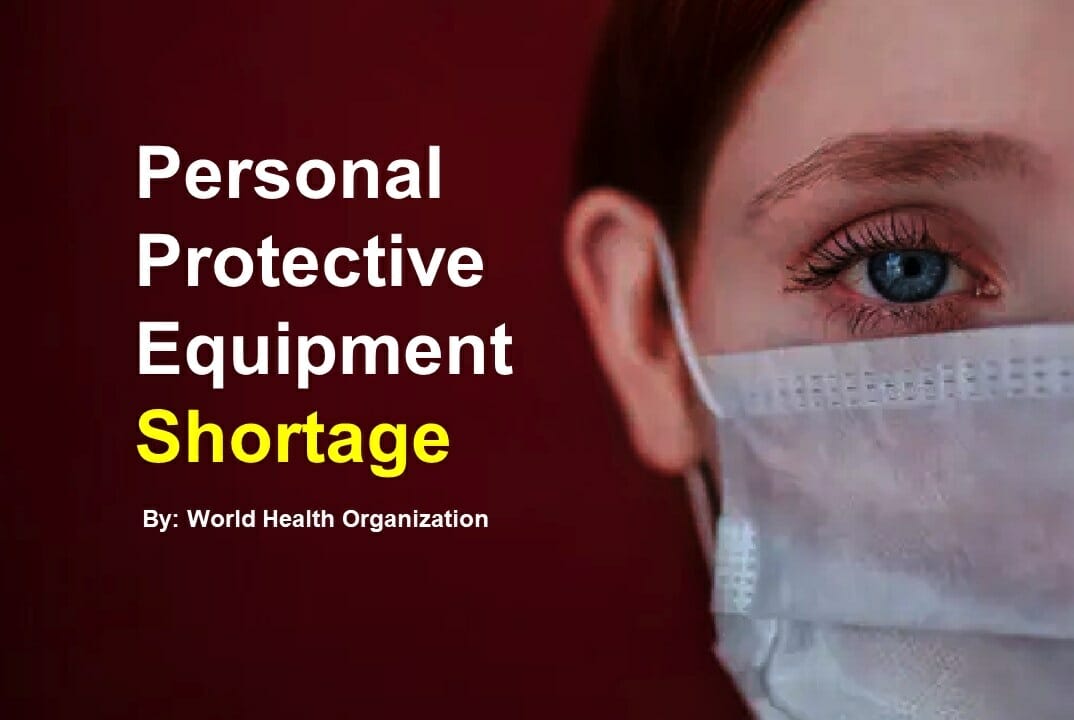
Donald Trump has implied doctors and elected officials say they do not have enough personal protective equipment (PPE) and other materials to get on television amid the coronavirus crisis.

The US president had a row with Jim Acosta, CNN’s chief White House correspondent, over the shortage of PPE, which includes essential gear such as hand sanitiser, gloves, aprons, and face masks, during his coronavirus press briefing.

Acosta said: “We hear from a lot of people who see these briefings as sort of ‘happy talk’ briefings. And some of the officials don’t paint as rosy a picture of what is happening around the country. If you look at some of these questions – do we have enough masks? No. Do we have enough tests? No. Do we have enough PPE? No.”

Mr Trump interjected: “Why would you say that? The answer is yes. I think the answer is yes.”

Acosta referred to doctors and other medical officials who have vented their frustrations about the dearth of essential equipment on CNN.

The president hit back: “A lot of it is fake news.”

Acosta said: “Doctors and medical officers come on our air and say ‘we don’t have enough tests, we don’t have enough masks’.”

Mr Trump chipped in: “Well yeah, depending on your air they are always going to say that because otherwise, you are not going to put them on.”

The spat comes as doctors and healthcare workers across America are battling against a shortage of face masks which safeguard them against coronavirus – sparking fears doctors will not be able to provide life-saving care if they fall ill.

America has become the first country in the world to record more than 2,000 people dying from coronavirus in one day alone, according to Johns Hopkins University figures.

People who contract coronavirus in the US are at greater risk than those in the UK or Canada due to America not having a national health service.

Americans are at risk of running up bills for coronavirus treatment which force them to fork out tens of thousands of dollars. The situation is exacerbated by the fact many have lost their healthcare insurance due to job losses linked to the pandemic.


Timeline: How the U.S. fell behind on the coronavirus

https://www.axios.com/coronavirus-timeline-trump-administration-testing-c0858c03-5679-410b-baa4-dba048956bbf.html

Behind the Curve | Netflix

Early missteps allowed the new coronavirus to spread throughout the U.S for weeks before state and local officials implemented strict lockdowns designed to keep the pandemic from spinning further out of control.

Why it matters: The U.S. missed the boat on the kind of swift, early response that would have been most effective, and has been scrambling to catch up ever since. This timeline, compiled from official sources as well as media reports, shows how that all-important time was lost.

Dec. 31, 2019: China reports the novel coronavirus to the World Health Organization.

Jan. 6: The Centers for Disease Control and Prevention issued a travel notice for Wuhan, China.

Jan. 15: The first U.S. case is confirmed, in a man who traveled from Wuhan.

Jan. 17: The World Health Organization publishes a protocol for manufacturing coronavirus tests.

  • The Centers for Disease Control and Prevention opts to develop its own test instead of using the WHO’s.

Jan. 30: The WHO declares global health emergency.

Jan. 31: The Trump Administration suspended entry into the U.S. for most foreign nationals who had traveled to China in the past 14 days.

Feb. 5: The CDC begins shipping its diagnostic tests to state and local health agencies.

Feb. 8: Labs report problems with the CDC’s tests.

Feb. 24: President Trump tweets: “The Coronavirus is very much under control in the USA. We are in contact with everyone and all relevant countries. CDC & World Health have been working hard and very smart. Stock Market starting to look very good to me!”

Feb. 29: Washington state reports the first COVID-19 death in the U.S.

  • The Food and Drug Administration allows academic labs to develop and begin testing coronavirus testing kits while reviewing pending applications.
  • The WHO reports 86,604 coronavirus cases worldwide.

March 5: LabCorp and Quest Diagnostics launch coronavirus test for commercial use.

March 9: Trump tweets: “So last year 37,000 Americans died from the common Flu. It averages between 27,000 and 70,000 per year. Nothing is shut down, life & the economy go on. At this moment there are 546 confirmed cases of CoronaVirus, with 22 deaths. Think about that!”

  • The WHO reports 114,381 coronavirus cases worldwide.

March 13: Trump declares a national emergency, freeing up $50 billion in federal funds for states and territories.

March 15: 33 states and the District of Columbia closed public schools, according to Education Week. This included the New York City school system, the largest in the country.

March 16: Trump advises Americans to self-isolate for 15 days.

March 19: Trump signed into law an emergency coronavirus relief package for paid sick leave and free testing.

March 23: 9 states had stay-at-home orders.

  • Washington, Oregon, California, Louisiana, Illinois, Ohio, New York, Massachusetts and New Jersey.

March 26: The U.S. now leads world in coronavirus cases.

  • 12 more states issue stay-at-home orders, totaling 21: Idaho, Colorado, New Mexico, Michigan, Wisconsin, Kentucky, Indiana, West Virginia, Hawaii, Connecticut, Vermont and Delaware

March 29: Trump extends social distancing measures to April 30.

March 30: Nine more states issue stay-at-home orders, bringing the total to 30.

  • Governors say testing is still lacking in many states.

March 31: Trump warns of the potential for 100,000 to 240,000 deaths.

April 6: Twelve more states issue stay-at-home orders, bringing the total to 42.


South Korea is winning the fight against covid-19. The U.S. is failing.

https://www.washingtonpost.com/outlook/2020/04/10/south-korea-is-winning-fight-against-covid-19-us-is-failing/?fbclid=IwAR0Fizr7BiOZgPxJVjHpHcuetAnn_UcamZDfmY16V4_RG3xV52rOXryIepk&utm_campaign=wp_main&utm_medium=social&utm_source=facebook

Confucianism Isn't Helping South Korea Beat the Coronavirus

South Korea’s blueprint for victory.

As the coronavirus spreads rapidly around the world, killing thousands and leaving governments scrambling to deal with the fallout, one country has repeatedly drawn praise for its efficiency in dealing with it: South Korea. After the first cases appeared, the South Korean government ramped up testing at a speed almost unimaginable in the United States. Its swift response slowed the spread of the virus and saved thousands of lives. As of April 8, South Korea had suffered 200 deaths due to the virus (4 per 1 million of population) and the number of new cases has slowed, while the United States had suffered 13,000 deaths (39 per 1 million population) with new cases continuing to grow quickly.

How did this happen? For many it is baffling that a relatively small Asian country could succeed where much of the rest of the world tragically failed. Was it South Korea’s experience dealing with another respiratory epidemic illness, Middle East respiratory syndrome, in 2015? Its excellent and affordable health-care system? Its cultural values? Mask-wearing? Some of these factors doubtless accelerated South Korea’s rapid deployment of testing stations and its subsequent efforts to identify and treat patients.

But the efficient South Korean response also hinged on two historically rooted factors: the close cooperation between the state and the private sector, and the South Korean public’s willing and almost enthusiastic embrace of a large-scale medical intervention. The origins of both of these phenomena lie in the South Korean experience of rapid industrialization and nation-building during the Cold War.

After the first cases of covid-19 were reported in South Korea on Jan. 20, the government recognized the need for prompt and comprehensive action. According to Reuters, South Korean Health Ministry officials called a meeting with representatives from medical companies in January when only four cases of the virus had been confirmed. The health officials told the executives that the country needed to have tests ready in short order, and they promised rapid approval by the Korea Centers for Disease Control and Prevention. In scarcely one week, the government had approved a test kit developed by Kogene Biotech and would soon fast-track the approval of test kits developed by several other companies.

The endeavor was so successful that by March, 47 countries were seeking to import South Korean test kits. Compared with President Trump, who has squabbled with 3M and General Motors over the production of masks and ventilators, the government and private sector worked together seamlessly in South Korea. Companies responded quickly to the state’s demands while receiving strong government support.

The private companies’ swift response to an urgent government fiat followed a pattern of state-private sector partnership in the service of the nation that was pioneered by South Korea’s authoritarian ruler Park Chung Hee during the 1960s. When Park seized power in a military coup in 1961, South Korea was among the poorest countries in the world and, from the perspective of many U.S. officials who often called it a “rat hole,” it was hopeless. But Park was driven by an all-consuming determination to achieve double-digit economic growth rates and raise living standards in his impoverished country.

Although Park received much advice from the United States during his 19 years in power, the model of development he came up with did not emulate the American style of free-market capitalism at all. It bound South Korean conglomerates closely to the state, offering them special incentives if they followed state guidance and performed. During the 1960s, Park recognized that to achieve an economic takeoff, he needed to dramatically increase exports. His government made low-interest loans available to companies that were willing to test their mettle exporting textiles, wigs and other light-manufactured goods abroad. Those that succeeded were rewarded with even greater largesse from the state.

This development model had a dark side, of course. The cozy ties between the state and businesses facilitated corruption, strengthened Park’s grip on power and heightened repression. But from a purely economic standpoint, it worked. Exports increased, Korean firms captured a growing share of international markets, and per capita income rose.

Park never strayed far from his military roots. The managerial techniques and soldierly discipline he had learned in his years as an officer informed his approach to development. American aid officials were impressed by how his presentations seemed to come “straight out of the U.S. military briefing manuals.” South Korea’s rapid response to the coronavirus has contained echoes of this military ethos, although the country shifted to more democratic governance in the 1980s and 1990s. “We acted like an army,” one infectious-disease specialist in Korea told Reuters.

Cold War nation-building in South Korea brought not only state-led economic development, but also new kinds of government-led medical interventionsAs historian John P. DiMoia has explained, during the 1950s, many South Koreans were still unfamiliar with Western medicine and did not initially welcome official health programs. This began to change under Park Chung Hee’s rule. The South Korean leader launched public health campaigns that fundamentally changed both the medical profession and the public’s attitude toward it. New professional standards were demanded of doctors and their support staff, while the public was encouraged — and at times coerced — to participate in family planning and other state-organized health interventions.

The swift rollout of coronavirus testing was not South Korea’s first large-scale effort to combat an infectious organism. During the 1960s, according to DiMoia, one of the biggest medical problems plaguing South Korea was parasite infestation. The Park government made a concerted effort to eradicate parasites through a national testing program that targeted elementary school students. For nearly two decades, collecting of stool samples for analysis was a routine part of life for South Korean children. The children that learned — at times grudgingly — to accept government testing for parasites during the 1970s and 1980s are now the adults who willingly line up to be tested for the coronavirus.

Today, the Moon Jae-in government’s response to the virus has not been without flaws and criticism. The South Korean media has blamed him for not moving quickly enough to ban Chinese tourists when the virus began spreading rapidly. Others have criticized the high degree of state surveillance that accompanied the rollout of testing. The government would have had far more difficulty carrying out contact tracing if it could not have closely followed the movement of its citizens through their smartphones and credit cards.

Here, too, there are faint echoes of South Korea’s authoritarian past, which was too often marked by the close monitoring of students, intellectuals and other dissidents by military regimes.

But Moon, who was imprisoned during the 1970s for protesting Park Chung Hee’s authoritarian rule, has been careful to keep his policies within the confines of democratic accountability. Conservative U.S. commentators who claim South Korea has succeeded because it is not a democracy have it wrong. In fact, South Korea has avoided the draconian lockdowns and travel restrictions imposed by the Communist Party of China. Through the use of technology and data, South Korean has been able to keep businesses open to a greater extent than most parts of the United States.

South Korea’s impressive management of the coronavirus only strengthens its rapidly growing cultural influence around the world, which is abundantly clear in the widespread popularity of K-pop and the unprecedented success of the Korean film “Parasite” at the Academy Awards.

The Moon government’s deft handling of a global pandemic that has taken on nightmarish proportions elsewhere has drawn praise from health experts and policymakers worldwide, with many citing it as a model. “Let’s not follow Italy, let’s follow South Korea,” Sen. Mitt Romney (R-Utah) said recently when talking about how the United States should deal with its own swiftly escalating crisis.

Unfortunately, it is too late for the United States to emulate South Korea and avert thousands of deaths. But we could learn from its example, by encouraging better public-private partnerships in manufacturing needed medical equipment and protective gear and by encouraging Americans to embrace public health initiatives, including widespread testing, to save lives.


Updated COVID-19 projections are out: The new peak dates in each state

https://www.beckershospitalreview.com/patient-flow/updated-covid-19-projections-are-out-the-new-peak-dates-in-each-state.html?utm_medium=email

COVID-19 state-by-state forecast | WCHS

Peak demand for hospital resources due to COVID-19 is expected this week in the U.S., according to updated projections from the University of Washington’s Institute for Health Metrics and Evaluation in Seattle. 

The model, first released in late March, presents estimates of predicted health service utilization and deaths due to COVID-19 for each state in the U.S. if social distancing measures are maintained through May. Researchers used state-level hospital capacity data, data on confirmed COVID-19 deaths from the World Health Organization, and observed COVID-19 utilization from select locations.

When IHME first released its model, the only place where the number of daily deaths had already peaked was Wuhan, China. The data from Wuhan formed the basis for IHME’s estimation of the time from implementation of social distancing policies to the peak day of deaths. That estimation is now based on data from Wuhan and seven locations in Spain and Italy where the number of daily deaths appears to be peaking or to have peaked. The model has also been updated to use three different weighting schemes to better approximate the variation in potential policy impact across social distancing mandates.

Projections for peak demand for resources, namely hospital beds and ventilators, also changed after IHME incorporated new data sources into its model and made changes to its analytical framework. Access more information about the changes here.

According to the most recent projections, which use data updated April 8, peak demand for hospital resources will occur at the national level on April 11. However, this varies by state. Below is the projected date of peak demand for hospital beds, ICU beds and ventilators in each state according to the IHME model. 

April 1
Vermont

April 2
Washington

April 4
Louisiana

April 7
Michigan

April 8
Colorado
New York
Ohio

April 9
Delaware
District of Columbia

April 11
Illinois
New Jersey

April 12
Hawaii

April 13
California
Pennsylvania
Wisconsin

April 14
Idaho
Indiana

April 15
North Carolina
West Virginia

April 16
Mississippi
New Hampshire

April 17
Alaska
Maine
Maryland
Nevada
Tennessee

April 20
Alabama
Georgia
Kansas
Massachusetts
Montana
Virginia

April 21
Connecticut
Florida
Kentucky
Missouri
New Mexico
North Dakota

April 22
Arizona
Oregon
Texas

April 23
Minnesota
Oklahoma

April 24
South Carolina

April 25
Arkansas
Rhode Island
Utah

April 26
Nebraska

April 27
Iowa
South Dakota

April 29
Wyoming


Trump considering suspending funding to WHO

https://thehill.com/homenews/administration/491671-trump-considering-suspending-funding-to-who?utm_source=&utm_medium=email&utm_campaign=28856

WHO declares the outbreak of the new coronavirus is a pandemic ...

President Trump said Tuesday that he would consider placing a hold on funding for the World Health Organization (WHO), expressing grievances with its handling of the novel coronavirus.

“They missed the call. They could have called it months earlier. They would have known, and they should have known, and they probably did know,” Trump told reporters at a White House press briefing, suggesting the WHO failed to sufficiently warn the global community about the virus.

“We’re going to be looking into that very carefully, and we’re going to put a hold on money spent to the WHO,” Trump continued. “We’re going to put a very powerful hold on it, and we’re going to see. It’s a great thing if it works, but when they call every shot wrong, that’s not good.”

Pressed later by a reporter on whether it was a good idea to put a hold on funding during a global pandemic, the president clarified that he was considering suspending funding to the WHO.

“I’m not going to say I’m going to do it,” Trump said. “We will look at ending funding.”

The United States is the largest contributor to the WHO’s budget. The president’s fiscal 2021 budget request proposed slashing funding to the WHO, a body of the United Nations responsible for international public health, from $122 million to about $58 million.

The president said the WHO seemed to be “very biased towards China” and accused the organization of disagreeing with his travel restriction on flights coming in from China. He suggested the organization was blind to the extent of the outbreak in Wuhan, the capital of China’s Hubei province, where the virus originated.

The WHO said in early February that widespread travel bans that interfere with international travel and trade were not necessary to prevent the spread of COVID-19, days after the Trump administration announced it would restrict travel coming into the U.S. from China. It did not take particular issue with the president’s travel restriction.

“They actually criticized and disagreed with my travel ban at the time I did it, and they were wrong. They’ve been wrong about a lot of things. They had a lot of information early, and they didn’t — they seemed to be very China-centric. We have to look into it,” Trump told reporters.

When a reporter asked Anthony Fauci, head of the National Institute of Allergy and Infectious Diseases, to answer a question on the WHO, Trump interjected before he answered, saying Fauci “respects the WHO, and I think that’s good.”

“But they did give us some pretty bad play-calling,” Trump said.

The remarks, expanding on a critical tweet he sent earlier Tuesday, come amid growing criticism among conservatives of the WHO’s handling of the coronavirus outbreak. Some have accused the organization of leaving other nations unprepared for the virus.

Sen. Martha McSally (R-Ariz.) last week called on WHO Director-General Tedros Adhanom Ghebreyesus to resign, after reports emerged that the U.S. intelligence community had concluded China underreported its count of coronavirus cases. McSally accused the WHO of helping China conceal the extent of the outbreak.

Trump has faced criticism for at first downplaying the threat from the coronavirus, and his administration has been scrutinized for early delays in testing that hampered the overall response. Trump has often pointed to his early action restricting travel from China as a sign his administration was quick to confront the outbreak.

Ezekiel Emanuel, a special adviser to the director general of the WHO, was critical of Trump’s remarks on the coronavirus at the end of February, saying he found much of what Trump said at his first press briefing on the domestic virus outbreak to be “incoherent.”


‘Between 25% and 50%’ of people who get the coronavirus may show no symptoms but still be contagious, Anthony Fauci said. Here’s the latest research on asymptomatic carriers.

https://www.yahoo.com/news/1-4-people-coronavirus-may-234600518.html

Coronavirus carriers can transmit it without symptoms: What to ...

  • The coronavirus has infected more than 1.2 million people worldwide in just a few months. Scientists are racing to discover how it spreads so quickly.
  • According to Anthony Fauci, “between 25% and 50%” of people may be asymptomatic carriers — people who are contagious but not physically sick.
  • These carriers are thought to play a significant role in the virus’ spread and are the reason US residents have been asked to start covering their faces in public.

At least one-third of the world is under some type of lockdown because of the coronavirus pandemic, as governments urge social distancing to stymie the virus’ spread.

That’s because the COVID-19 virus is insidious.

“There’s significant transmission by people not showing symptoms,” Stephen Morse, an epidemiologist at Columbia University, told Business Insider.

According to Anthony Fauci, the director of the National Institute of Allergy and Infectious Disease, “somewhere between 25% and 50%” of people infected with the new coronavirus may never show symptoms or fall ill — but can still transmit the illness to others.

During a White House briefing on Sunday, Fauci cautioned that this was just an estimate, and said there is disagreement even among his colleagues as to how many people are asymptomatic. He added that antibody tests — which can confirm whether a person has already had COVID-19 — are needed to answer that question “in a scientifically sound way.”

Robert Redfield, director of the Centers for Disease Control and Prevention, gave NPR a similar estimate on Tuesday, saying that as many as 25% of people infected with the new coronavirus may never show symptoms.

These asymptomatic carriers, Redfield added, are most likely contributing to the rapid spread of the coronavirus worldwide — the number of confirmed cases passed 1 million last week — and making it challenging for experts to assess the true extent of the pandemic.

“We don’t know all the unidentified cases out there,” Morse said. “It’s mostly sicker people in hospitals who are being tabulated.”

The prevalence of asymptomatic transmission doesn’t bode well for global containment efforts, as Bill Gates recently wrote in an article published in the New England Journal of Medicine.

“That means COVID-19 will be much harder to contain than the Middle East respiratory syndrome or severe acute respiratory syndrome (SARS), which were spread much less efficiently and only by symptomatic people,” Gates said.

What we know about asymptomatic and presymptomatic transmission

The first confirmation that the novel coronavirus could be transmitted by asymptomatic people came in February, when a case study described a 20-year-old woman from Wuhan, China, who passed the coronavirus to five family members but never got physically sick herself.

World Health Organization report about the coronavirus outbreak in China, also published in February, found few instances in which a person who tested positive never showed any symptoms. Instead, most people who were asymptomatic on the date of their diagnosis (a relatively small group) went on to develop symptoms later.

“The proportion of truly asymptomatic infections is unclear but appears to be relatively rare,” the report authors wrote.

In the WHO study, 75% of people in China who were first classified as asymptomatic later developed symptoms, ProPublica reported. That means, technically, “presymptomatic transmission” is what’s probably common.

Other research has reaffirmed these findings. A CDC study of coronavirus patients in a nursing home in King County, Washington, found that of 23 people who tested positive, only 10 showed symptoms on the day of their diagnosis. Ten people in the other group developed symptoms a week later.

“These findings have important implications for infection control,” the authors wrote, adding that many public-health approaches “rely on presence of signs and symptoms to identify and isolate residents or patients who might have COVID-19.”

The CDC also evaluated coronavirus patients on the Diamond Princess cruise ship, which was quarantined in Japan in February. Of the 3,711 people on board, 712 tested positive, but almost half of them had no symptoms at the time.

Other examples of asymptomatic and presymptomatic transmission abound

Redfield told NPR “it appears that we’re shedding significant virus” about 48 hours before symptoms appear.

“This helps explain how rapidly this virus continues to spread across the country, because we have asymptomatic transmitters and we have individuals who are transmitting 48 hours before they become symptomatic,” he added.

A handful of recent studies and reports suggest that presymptomatic and asymptomatic transmission is not unusual.

  • A small study among Japanese ex-pats evacuated from Wuhan in February found that 31% of people who tested positive showed no symptoms.
  • Research that examined coronavirus cases in Singapore found that of 157 cases acquired locally, 10 involved presymptomatic transmission. The scientists concluded that most presymptomatic transmission exposure occurred one to three days before a person developed symptoms.
  • Research from China in February found that 13% of the 468 confirmed cases studied involved presymptomatic transmission.
  • The Los Angeles Times recently reported that a three-quarters of a group of singers who attended a 60-person choir practice got the COVID-19 virus, even though none showed symptoms at the practice.
  • Last month, 14 NBA players, coaches, and staff tested positive for the coronavirus. Half of them didn’t have symptoms when they received their diagnosis, according to The Wall Street Journal.
  • A biotech company in Iceland that has tested more than 9,000 people found that about half of those who tested positive said they were asymptomatic, the researchers told CNN.

Presymptomatic people are shedding the highest amount of the virus

An especially troubling aspect of presymptomatic transmission is that people seem to shed more coronavirus in the earlier stages of their infection. But the average symptom onset takes five days.

Research that examined 23 coronavirus patients in two Hong Kong hospitals found that people’s viral load — how many viral particles they were carrying and shedding into their environment — peaked during the first week of symptom onset and then gradually declined. A SARS patient, by contrast, sheds the most virus seven days to 10 days after getting visibly sick.

A study from Guangzhou found similar results: Among 94 patients, people were most contagious right when symptoms started to show, or just before.

Children could be asymptomatic carriers

A notable group of asymptomatic carriers could be children. Thus far, children are among those least sickened by the novel coronavirus — but some could be getting very mild infections and then spreading the virus.

Research published March 25 in the journal The Lancet looked at 36 children who tested positive for the coronavirus from January 17 to March 1 in three Chinese hospitals. Half of those children had “mild disease with no presenting symptoms,” the authors wrote.

Another study, published today, looked at more than 2,500 coronavirus cases among children younger than 18 in the US between February 12 and April 2, 2020. The authors found that 73% of patients in this age group had a fever, cough, or shortness of breath, compared to 93% of adults between the ages of 18 and 64.

The researchers concluded that “children do not always have fever or cough as reported signs and symptoms” of COVID-19.

Yet another recent study, which has yet to be peer-reviewed, found that 56% of 700 children infected with COVID-19 in China had mild, if any, symptoms.

John Williams, an expert in pediatric infectious disease at the University of Pittsburgh Medical Center, told ABC that “asymptomatic infection is common in children, occurring in 10-30%” of cases.

Wearing masks could help reduce presymptomatic transmission

On Friday, the CDC recommended that people in the US wear cloth masks when they go out in public, even if they feel healthy.

The policy is different from the agency’s recommendations during the early days of the coronavirus outbreak, when CDC experts said they did not “recommend the use of face masks for the general public” and the US surgeon general urged Americans to stop buying masks.

The prevalence of presymptomatic transmission is a primary reason for the change.

“We have always recommended that symptomatic people wear a mask because if you’re coughing, if you have a fever, if you’re symptomatic, you could transmit disease to other people,” Surgeon General Jerome Adams said at the White House Friday. He added, “we now know from recent studies that a significant portion of individuals with coronavirus lack symptoms. This means that the virus can spread between people interacting in close proximity, for example, coughing, speaking, or sneezing, even if those people were not exhibiting symptoms.”

Face protection for the most part doesn’t benefit the wearer; instead, masks primarily protect others from the wearer’s germs.


When will COVID-19 peak? A state-by-state analysis

https://www.beckershospitalreview.com/patient-flow/when-will-covid-19-peak-a-state-by-state-analysis.html?utm_medium=email

The Covid-19 coronavirus is not the flu. It's worse. - Vox

Peak demand for hospital resources due to COVID-19 is expected by mid-April in the U.S., according to an analysis from the University of Washington’s Institute for Health Metrics and Evaluation in Seattle. 

The study presents estimates of predicted health service utilization and deaths due to COVID-19 for each state in the U.S. if social distancing measures are maintained. Researchers used state-level hospital capacity data, data on confirmed COVID-19 deaths from the World Health Organization, and observed COVID-19 utilization from select locations.

While peak demand for resources, namely hospital beds and ventilators, will occur at the national level in two weeks, this varies by state. About a third of states, including New York, are projected to hit peak capacity in the first half of April, but some states will see the most demand for hospital resources in May.

Below is the projected date of peak hospital resource demand in each state according to the model, which uses data last updated April 1.

April 8
New Jersey

April 9
Louisiana
Michigan
New York
Vermont

April 11
Delaware
Washington

April 15
Alaska
Connecticut
District of Columbia

April 16
Massachusetts

April 17
Alabama
Colorado
Maine
New Hampshire

April 18
Pennsylvania

April 19
Indiana
Ohio
Tennessee

April 20
Illinois
Nevada
Rhode Island

April 21
Mississippi
North Dakota

April 22
Minnesota

April 23
Nebraska
Oklahoma
Utah

April 24
Georgia
New Mexico

April 26
Arkansas
California
Idaho
Montana
North Carolina

April 27
Arizona
Wisconsin

April 28
Kansas
South Carolina

April 29
Maryland

May 1
Iowa

May 3
Florida
Hawaii

May 4
South Dakota
West Virginia
Wyoming

May 5
Oregon

May 6
Texas

May 16
Kentucky

May 20
Virginia

May 21
Missouri