Widely circulating coronavirus variants and persistent hesitancy about vaccines will keep the goal out of reach. The virus is here to stay, but vaccinating the most vulnerable may be enough to restore normalcy.
Early in the pandemic, when vaccines for the coronavirus were still just a glimmer on the horizon, the term “herd immunity” came to signify the endgame: the point when enough Americans would be protected from the virus so we could be rid of the pathogen and reclaim our lives.
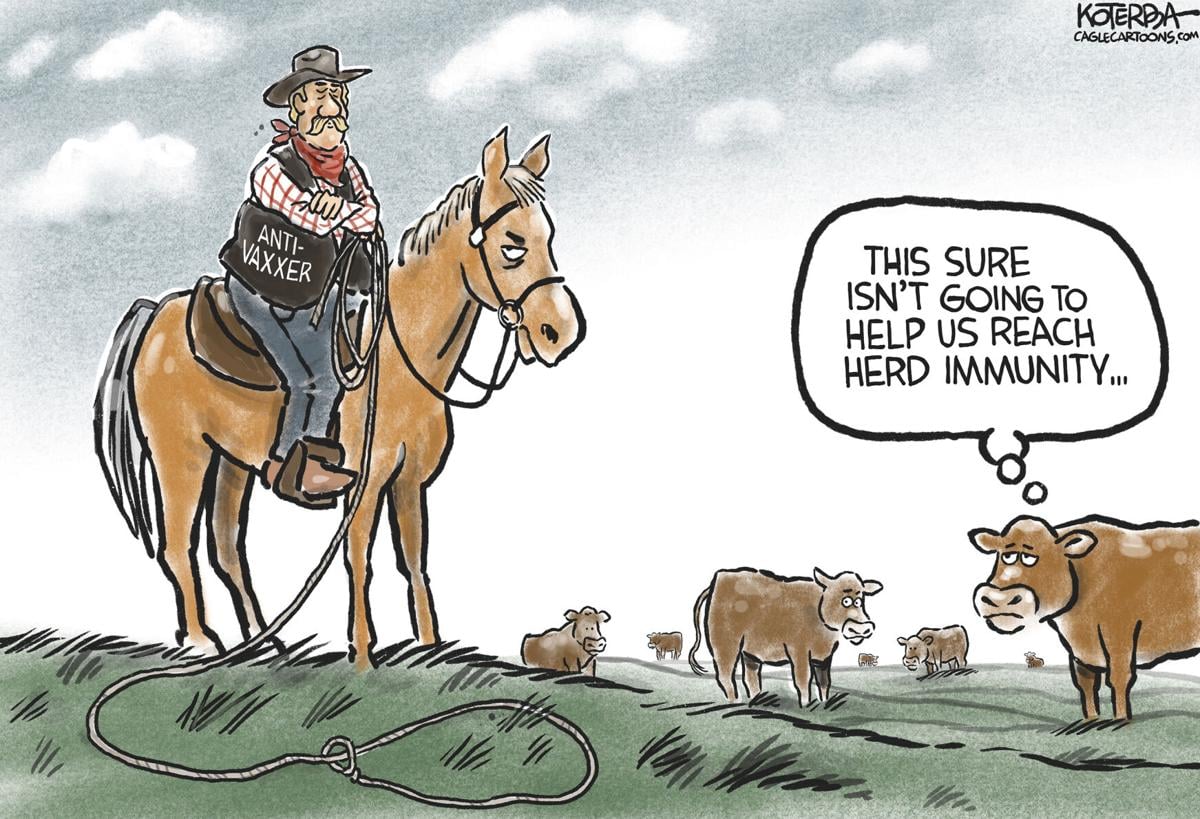
Now, more than half of adults in the United States have been inoculated with at least one dose of a vaccine.But daily vaccination rates are slipping, and there is widespread consensus among scientists and public health experts that the herd immunity threshold is not attainable — at least not in the foreseeable future, and perhaps not ever.
Instead, they are coming to the conclusion that rather than making a long-promised exit, the virus will most likely become a manageable threat that will continue to circulate in the United States for years to come, still causing hospitalizations and deaths but in much smaller numbers.
How much smaller is uncertain and depends in part on how much of the nation, and the world, becomes vaccinated and how the coronavirus evolves. It is already clear, however, that the virus is changing too quickly, new variants are spreading too easily and vaccination is proceeding too slowly for herd immunity to be within reach anytime soon.
Continued immunizations, especially for people at highest risk because of age, exposure or health status, will be crucial to limiting the severity of outbreaks, if not their frequency, experts believe.
“The virus is unlikely to go away,” said Rustom Antia, an evolutionary biologist at Emory University in Atlanta. “But we want to do all we can to check that it’s likely to become a mild infection.”
The shift in outlook presents a new challenge for public health authorities. The drive for herd immunity — by the summer, some experts once thought possible — captured the imagination of large segments of the public. To say the goal will not be attained adds another “why bother” to the list of reasons that vaccine skeptics use to avoid being inoculated.
Yet vaccinations remain the key to transforming the virus into a controllable threat, experts said.
Dr. Anthony S. Fauci, the Biden administration’s top adviser on Covid-19, acknowledged the shift in experts’ thinking.
“People were getting confused and thinking you’re never going to get the infections down until you reach this mystical level of herd immunity, whatever that number is,” he said.
“That’s why we stopped using herd immunity in the classic sense,” he added. “I’m saying: Forget that for a second. You vaccinate enough people, the infections are going to go down.”
Why reaching the threshold is tough
Once the novel coronavirus began to spread across the globe in early 2020, it became increasingly clear that the only way out of the pandemic would be for so many people to gain immunity — whether through natural infection or vaccination — that the virus would run out of people to infect. The concept of reaching herd immunity became the implicit goal in many countries, including the United States.
Early on, the target herd immunity threshold was estimated to be about 60 to 70 percent of the population. Most experts, including Dr. Fauci, expected that the United States would be able to reach it once vaccines were available.
But as vaccines were developed and distribution ramped up through the winter and into the spring, estimates of the threshold began to rise. That is because the initial calculations were based on the contagiousness of the original version of the virus.The predominant variant now circulating in the United States, called B.1.1.7 and first identified in Britain, is about 60 percent more transmissible.
As a result, experts now calculate the herd immunity threshold to be at least 80 percent. If even more contagious variants develop, or if scientists find that immunized people can still transmit the virus, the calculation will have to be revised upward again.
Polls show that about 30 percent of the U.S. population is still reluctant to be vaccinated. That number is expected to improve but probably not enough. “It is theoretically possible that we could get to about 90 percent vaccination coverage, but not super likely, I would say,” said Marc Lipsitch, an epidemiologist at the Harvard T.H. Chan School of Public Health.
Though resistance to the vaccines is a main reason the United States is unlikely to reach herd immunity, it is not the only one.
Herd immunity is often described as a national target. But that is a hazy concept in a country this large.
“Disease transmission is local,” Dr. Lipsitch noted.
“If the coverage is 95 percent in the United States as a whole, but 70 percent in some small town, the virus doesn’t care,” he explained. “It will make its way around the small town.”
Uneven Willingness to Get Vaccinated Could Affect Herd Immunity
In some parts of the United States, inoculation rates may not reach the threshold needed to prevent the coronavirus from spreading easily.
How insulated a particular region is from the coronavirus depends on a dizzying array of factors.
Herd immunity can fluctuate with “population crowding, human behavior, sanitation and all sorts of other things,” said Dr. David M. Morens, a virologist and senior adviser to Dr. Fauci. “The herd immunity for a wealthy neighborhood might be X, then you go into a crowded neighborhood one block away and it’s 10X.”
Given the degree of movement among regions, a small virus wave in a region with a low vaccination level can easily spill over into an area where a majority of the population is protected.
At the same time, the connectivity between countries, particularly as travel restrictions ease, emphasizes the urgency of protecting not just Americans but everyone in the world, said Natalie E. Dean, a biostatistician at the University of Florida in Gainesville. Any variants that arise in the world will eventually reach the United States, she noted.
Many parts of the world lag far behind the United States on vaccinations. Less than 2 percent of the people in India have been fully vaccinated, for example, and less than 1 percent in South Africa, according to data compiled by The New York Times.
“We will not achieve herd immunity as a country or a state or even as a city until we have enough immunity in the population as a whole,” said Lauren Ancel Meyers, the director of the Covid-19 Modeling Consortium at the University of Texas at Austin.
What the future may hold
If the herd immunity threshold is not attainable, what matters most is the rate of hospitalizations and deaths after pandemic restrictions are relaxed, experts believe.
By focusing on vaccinating the most vulnerable, the United States has already brought those numbers down sharply. If the vaccination levels of that group continue to rise, the expectation is that over time the coronavirus may become seasonal, like the flu, and affect mostly the young and healthy.
“What we want to do at the very least is get to a point where we have just really sporadic little flare-ups,” said Carl Bergstrom, an evolutionary biologist at the University of Washington in Seattle. “That would be a very sensible target in this country where we have an excellent vaccine and the ability to deliver it.”
Over the long term — a generation or two — the goal is to transition the new coronavirus to become more like its cousins that cause common colds. That would mean the first infection is early in childhood, and subsequent infections are mild because of partial protection, even if immunity wanes.
Some unknown proportion of people with mild cases may go on to experience debilitating symptoms for weeks or months — a syndrome called “long Covid” — but they are unlikely to overwhelm the health care system.
“The vast majority of the mortality and of the stress on the health care system comes from people with a few particular conditions, and especially people who are over 60,” Dr. Lipsitch said. “If we can protect those people against severe illness and death, then we will have turned Covid from a society disrupter to a regular infectious disease.”
If communities maintain vigilant testing and tracking, it may be possible to bring the number of new cases so low that health officials can identify any new introduction of the virus and immediately stifle a potential outbreak, said Bary Pradelski, an economist at the National Center for Scientific Research in Grenoble, France. He and his colleagues described this strategy in a paper published on Thursday in the scientific journal The Lancet.
“Eradication is, I think, impossible at this stage,” Dr. Pradelski said. “But you want local elimination.”
Vaccination is still the key
The endpoint has changed, but the most pressing challenge remains the same: persuading as many people as possible to get the shot.
Reaching a high level of immunity in the population “is not like winning a race,” Dr. Lipsitch said. “You have to then feed it. You have to keep vaccinating to stay above that threshold.”
Skepticism about the vaccines among many Americans and lack of access in some groups — homeless populations, migrant workers or some communities of color — make it a challenge to achieve that goal. Vaccine mandates would only make that stance worse, some experts believe.
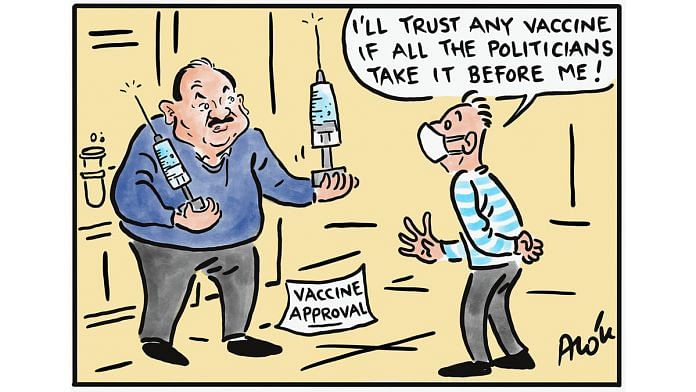
A better approach would be for a trusted figure to address the root cause of the hesitancy — fear, mistrust, misconceptions, ease of access or a desire for more information, said Mary Politi, an expert in health decision making and health communication at Washington University in St. Louis.
People often need to see others in their social circle embracing something before they are willing to try it, Dr. Politi said. Emphasizing the benefits of vaccination to their lives, like seeing a family member or sending their children to school, might be more motivating than the nebulous idea of herd immunity.
“That would resonate with people more than this somewhat elusive concept that experts are still trying to figure out,” she added.
Though children spread the virus less efficiently than adults do, the experts all agreed that vaccinating children would also be important for keeping the number of Covid cases low. In the long term, the public health system will also need to account for babies, and for children and adults who age into a group with higher risk.
Unnerving scenarios remain on the path to this long-term vision.
Over time, if not enough people are protected, highly contagious variants may develop that can break through vaccine protection, land people in the hospital and put them at risk of death.
“That’s the nightmare scenario,” said Jeffrey Shaman, an epidemiologist at Columbia University.
How frequent and how severe those breakthrough infections are have the potential to determine whether the United States can keep hospitalizations and deaths low or if the country will find itself in a “mad scramble” every couple of years, he said.
“I think we’re going to be looking over our shoulders — or at least public health officials and infectious disease epidemiologists are going to be looking over their shoulders going: ‘All right, the variants out there — what are they doing? What are they capable of?” he said. “Maybe the general public can go back to not worrying about it so much, but we will have to.”
Hospitals in Monmouth, Ocean and Middlesex counties will continue to receive New York City-level reimbursement rates from Medicare for another year,avoiding more than $100 million in potential cuts, New Jersey lawmakers said Friday.
The decision by the U.S. Centers for Medicare and Medicaid Services gives the hospitals a year to convince the Biden administration that for them, at least, there is no such thing as Central Jersey.
CMS released its decision as part of its final rules for fiscal 2022. It delayed a Trump-era proposal to move the hospitals out of the New York-Newark-Jersey City region and into the newly crafted New Brunswick-Lakewood core-based statistical area.
Any Central New Jersey designation usually is met locally with pride and joy, but this move came with a steep price. Hospitals’ Medicare reimbursements are tied in part to their labor costs. And the labor costs in their new region are about 17% lower than their old region.
The cuts in reimbursement rates would have saved money for federal taxpayers, but they also would have hit local hospitals hard. The industry during the pandemic was faced with higher expenses and forced to delay lucrative elective procedures.
As a result, 41% of New Jersey hospitals were losing money, according to the New Jersey Hospital Association, a trade group.
The group on Friday thanked the state’s congressional delegation for its help.
“NJHA has strongly advocated for the reversal of this ill-advised policy since it was first implemented last year, and this delay in further cuts in critical health care dollars to our state is welcomed news,” Cathy Bennett, the association’s president and chief executive officer, said.
U.S. Sen. Robert Menendez and U.S. Rep. Bill Pascrell Jr., both Democrats, led the campaign to stop the new classification at least until the 2020 U.S. Census data was released.
In a letter a month ago to U.S. Health and Human Services Secretary Xavier Becerra, the lawmakers said hospitals moved to the new statistical areas would have lost revenue, making it tougher to compete with hospitals in New York and northern New Jersey to attract skilled workers.
“This federal support will benefit patients by allowing our top-notch hospitals to retain and hire the best and the brightest,” Pascrell said in a statement Friday.
When the Centers for Disease Control and Prevention last week issued guidelines for what vaccinated people can safely do, the agency employed the word “risk” 43 times.
The word often carried a modifier, like so: increased risk, residual risk, low risk, potential risk, minimal risk, higher risk. The CDC did not define “low,” “minimal” or “higher,” instead using broad brushstrokes to paint a picture of post-vaccination life.
For example: “Indoor visits or small gatherings likely represent minimal risk to fully vaccinated people.”
On Wednesday, CDC director Rochelle Walensky said she could not give a definitive answer to what a “small” gathering is, because there are too many variables.
“If we define a small- and medium-sized gathering, we actually also have to define the size of the space that it’s in, the ventilation that is occurring, the space between people. And so, I think we should get back to the the general concepts,” Walensky said.
The situation has left people where they’ve been since the start of the pandemic: forced to play the role of amateur epidemiologist.
In the early days of the pandemic, we wondered if we could catch the coronavirus from a passing jogger and if our groceries, fresh from the store and resting on the kitchen counter, threatened to kill us. Science has attenuated some of our earliest fears. But more than a year into this crisis, we’re still trying to perform complicated risk calculations while relying on contradictory research and shifting CDC guidance.
Risk analysis is not something humans are necessarily good at. We rely on anecdotes more than scientific data. The questions we ask rarely have a simple yes or no answer. Risk tends to be on a sliding scale. Outside of self-isolation, there is no obvious way to drive the risk of viral transmission to zero, nor is risky behavior guaranteed to result in a dire outcome. We have no choice but to live probabilistically.
The risk landscape keeps changing as well.The virus is mutating, and there are many different variants in circulation. Many people are now fully vaccinated, some only partially vaccinated (in between shots, for example), some unvaccinated and some armored with a level of immunity through natural infection. Add the extreme variation in disease severity because of age and underlying conditions, and the risk equations get so long we may run out of chalkboard.
The restrictions imposed by governments have sometimes made little sense. Casinos were open before schools in some states. Mask mandates outdoors remained in place even when indoor dining became permitted.
“It seems to me if we are going to have indoor dining, we should have mask-free jogging,” Harvard epidemiologist Marc Lipsitch said in an email.
One thing that is incontrovertibly true: The coronavirus vaccines are remarkably safe and effective, and people should get vaccinated if possible.
“These are off-the-scale good,” said Amesh Adalja, an infectious-disease doctor and senior scholar at the Johns Hopkins Center for Health Security. “These are much better than vaccines that we rely on every year, like the flu vaccine.”
Even for people sold on vaccines, there remain lingering questions about what is and isn’t safe, and what is and isn’t the proper way to go about daily life in an increasingly vaccinated society. Here, we present some answers, with the caveat that our knowledge of the coronavirus, SARS-CoV-2, is still evolving, as is the virus itself.
Q: Why do I still need to wear a mask after I’m fully vaccinated?
A: You don’t need to wear a mask outdoors when fully vaccinated, except in crowds (such as at a sports stadium or a concert), nor do you have to wear one indoors among other vaccinated people or members of your own household.
But there are situations where you still need to mask up. You could still get infected with the coronavirus, and although it would most likely be mild or asymptomatic, you could transmit the virus to another person. Again, the odds of that happening are low, and there is encouraging data from Israel that suggests vaccinations dramatically reduce community spread.
But remember: A vaccination campaign is not simply about protecting the vaccinated individual. The goal is to build immunity broadly. Moreover, many communities still require masks in public settings — so it’s the law. It’s also polite — you don’t want to make people guess if you’ve been vaccinated or not. That probably will change when infection rates plummet and vaccinations are far more widespread.
“It is also a show of solidarity that we are still in this together,” said Maria Van Kerkhove, technical lead for the World Health Organization’s covid-19 response. “It’s about you and your community, your family, your friends, your workplace, your loved ones. It’s not just about you.”
At some point, viral transmission will plummet. We’re a long way from that point. As long as the virus is circulating in our communities, we need to use what we can to limit the spread and drive down the infection rate.
“Because [the vaccines] are not perfect, that’s precisely why we are urging people to be cautious,” Surgeon General Vivek H. Murthy said in a recent White House covid-19 task force news briefing. “We have great confidence in vaccines. We understood they are not perfect.”
Q: If you’re vaccinated, are you definitely protected against the coronavirus?
A: You’re very likely protected from symptomatic illness. That’s why Adalja, echoing the consensus, said, “These vaccines are something that will change your life.”
In clinical trials, the Pfizer and Moderna vaccines were about 95 percent effective in blocking symptomatic illness after two shots. The one-shot Johnson & Johnson vaccine was not quite as effective but just as good at preventing severe illness and death — which is the highest public health priority in a pandemic like this.
Q: But aren’t there also breakthrough infections?
A: As of April 26, the CDC had documented 9,245 breakthrough infections among fully vaccinated people. But look at the denominator: Those cases were among more than 95 million people. That’s fewer than 1 in 10,000 people vaccinated. (The agency noted that this is probably an undercount because of lack of testing and surveillance.) Of those rare breakthrough cases known to the CDC, 27 percent were asymptomatic and only 9 percent required hospitalization.
Adalja said people need to focus on probabilities and not anecdotes.
“This is kind of a cognitive bias that people have with many kinds of risk. It’s just like when there’s a shark attack in Australia. How much coverage does that get?” he said.
Q: Should people who got the Johnson & Johnson vaccine worry about blood clots?
A: If you notice unusual and serious side effects, such as severe headaches, contact your doctor. But the risk is extremely low. Federal regulators reauthorized the use of the vaccine after a 10-day pause, having found 15 cases of a serious clotting disorder among the 7 million people who had received the vaccine at that time. By any calculation, the risk of a bad vaccine reaction is much less than the risk of getting a serious case of covid-19.
Paul A. Offit, a pediatrician at Children’s Hospital of Philadelphia who is an expert on vaccination, suggests that the Johnson & Johnson coronavirus vaccine suffers from bad timing. Had it been approved first, before the Pfizer and Moderna vaccines, its many virtues would have been celebrated and the rare side effects minimized.
He noted that the Johnson & Johnson vaccine is “refrigerator stable” for up to five weeks. The vaccine is appealing to public health officials because it’s one-and-done and can be more easily deployed in remote locations and in places where recipients are homebound.
Q: How long will natural or vaccine-induced immunity last?
A: No one knows, but the initial evidence is encouraging, said Alessandro Sette, a professor of immunology at the La Jolla Institute for Immunology. A research paper published by Sette and fellow researchers in January showed that 90 percent of people who recovered from a coronavirus infection had robust levels of immunity eight months after they became sick. Immunity did not suddenly drop after eight months — that was merely the limit of the research period.
“Ninety percent having a good immune response also means 10 percent don’t. That is a reason for vaccinating and being careful even if you had the disease,” Sette said.
Immunity post-vaccination also appears durable, and there is less variability in levels of antibodies and other immune system cells following a vaccination than following a natural infection, Sette said.
Because this is a novel disease, and vaccines have not been widely deployed for very long, it is too soon to know how long antibodies will last. But Sette pointed out that the immune system has other weapons against invasive viruses, including “killer T-cells,” which continue to be able to recognize infected cells and kill them, preventing viral replication.
Q: Do the vaccines work against these new virus variants? And shouldn’t we be worried about a new variant that has even scarier, vaccine-evading mutations?
A: The immune response generated by vaccines is sufficiently protective against coronavirus variants to prevent most people from getting seriously ill.
Infectious-disease experts do worry about future mutations that could allow the virus to exhibit vaccine evasion. That said, there are limits to how much the virus can mutate — how much it can change its structure — and still function, according to Sette.
“The virus has to walk a tightrope,” he said. The virus can mutate to escape the effect of a specific antibody, but “it can’t change too much.”
He added, “While the virus has surprised us this year in a number of ways, the data we’ve seen so far does not suggest there’s an infinite number of ways the virus can mutate and escape immune recognition and still be as infectious.”
Q: When will we reach herd immunity?
A: No one knows what level of immunity would throttle virus transmission, and it probably varies from one environment to another and from one season of the year to another. But in the United States, at least, vaccinations have already had an effect. The virus increasingly is slamming into immune-system walls. Eventually, with enough vaccinations, most of the people who get infected will be dead-end alleys for the virus.
The virus appears destined to pop up in smaller outbreaks that could be more easily contained. But the virus won’t disappear, especially because it continues to spread at catastrophic rates in many countries that have low levels of vaccination. The only infectious disease-causing virus ever eradicated is smallpox.
For now, successful navigation of the pandemic may simply mean taking steps to reduce the threat of a serious case of covid-19 (as best as anyone can determine it) to the level of other threats that we typically tolerate, and which don’t tend to keep us awake at night.