


Cartoon – State of the Union


Patient volumes were uneven in 2020, and a new report shows volumes will likely remain below pre-pandemic levels in 2021. This indicates challenges for hospitals looking to stabilize their finances — but there are some key strategies that can help.
Though hospital finances recovered to some extent by the end of 2020, the industry is not out of the woods yet. However, with strategic investments, especially in outpatient care and technology, hospitals and health systems can help buoy their finances in this challenging time, industry observers said.
Patient volumes have fluctuated wildly after the Covid-19 pandemic hit as Covid-19 patients flocked to hospitals and those needing or seeking elective surgery and other care staying away. Not surprisingly, this has had a significant impact on health systems’ financial health.
But outpatient settings and digital solutions offer some revenue-generating opportunities for hospitals.
“A number of the major players and some of the bigger regional systems in the country now are in a place where they get more of their revenue from the outpatient side as opposed to the inpatient side,” said Dr. Sanjay Saxena, global healthcare leader, Payers, Providers, Health Care Systems & Services and managing director at Boston Consulting Group, in a phone interview.
In fact, outpatient care was the only healthcare setting that saw an increase in patient volumes in 2020. Though emergency department visits and inpatient volumes were down from July to December last year compared to the same period in 2019, outpatient volumes actually increased by 5%, according to a report by consumer credit reporting agency TransUnion.
Healthcare providers that have well-established and expansive outpatient and ambulatory care businesses will be able to weather patient volume trends better in 2021 than those who do not, said Saxena.
Take HCA Healthcare, for example. The Nashville, Tennessee-based healthcare giant’s revenues jumped to $14.2 billion in the fourth quarter of last year, up from $13.5 billion in the same period in 2019. HCA’s ability to move care outside of the inpatient setting to the ambulatory environment really helped their financial performance, said Saxena.
On the other hand, smaller and more rural hospitals, which depend heavily on ED and inpatient care, may face a challenging year, he added.
Another key investment for hospitals will be in digital solutions to help them manage the ups and downs of patient volume.
“Resilience as a broad topic for provider executives is absolutely top of mind,” said Gurpreet Singh, health services leader at PriceWaterhouseCoopers, in a phone interview. “And resiliency can be achieved in a number of different ways. One way is [figuring out] — can you predict demand a little bit better?”
Patient demand forecasting solutions will be popular, with 74% of health executives recently surveyed by PwC’s Health Research Institute saying their organizations would invest more in predictive modeling in 2021.
Further, hospitals will see savings in some unexpected places. For example, with an increasingly remote and mobile healthcare workforce, hospitals may see cost savings on real estate and facility leases, said Singh.
They can use these savings to invest further in telehealth and at-home care programs to expand care outside of the four walls of the hospital, he added.
The industry has to come to terms with changes brought on by the Covid-19 pandemic, including the shifts in care delivery and patient preferences.
“Some of these things are structurally significant changes,” said Saxena. “Organizations ignore these things…at their peril. Some leading organizations and systems will find a way to embrace [these changes] and leapfrog others in the market coming out of 2021.”

A growing body of research keeps undermining a key tenet of health economics, Axios’ Sam Baker writes — the belief that requiring patients to pay more out of their own pockets will make them smarter consumers, forcing the health care system to deliver value.
Driving the news: Even a seemingly modest increase in out-of-pocket costs will cause many patients to stop taking drugs they need, according to a new working paper from Harvard economist Amitabh Chandra.
Between the lines: This research focuses on Medicare’s drug benefit, but higher cost-sharing is all the rage throughout the system, and there’s little evidence that it has generated “smarter shoppers.”
Go deeper: The “skin in the game” theory of health care hasn’t panned out
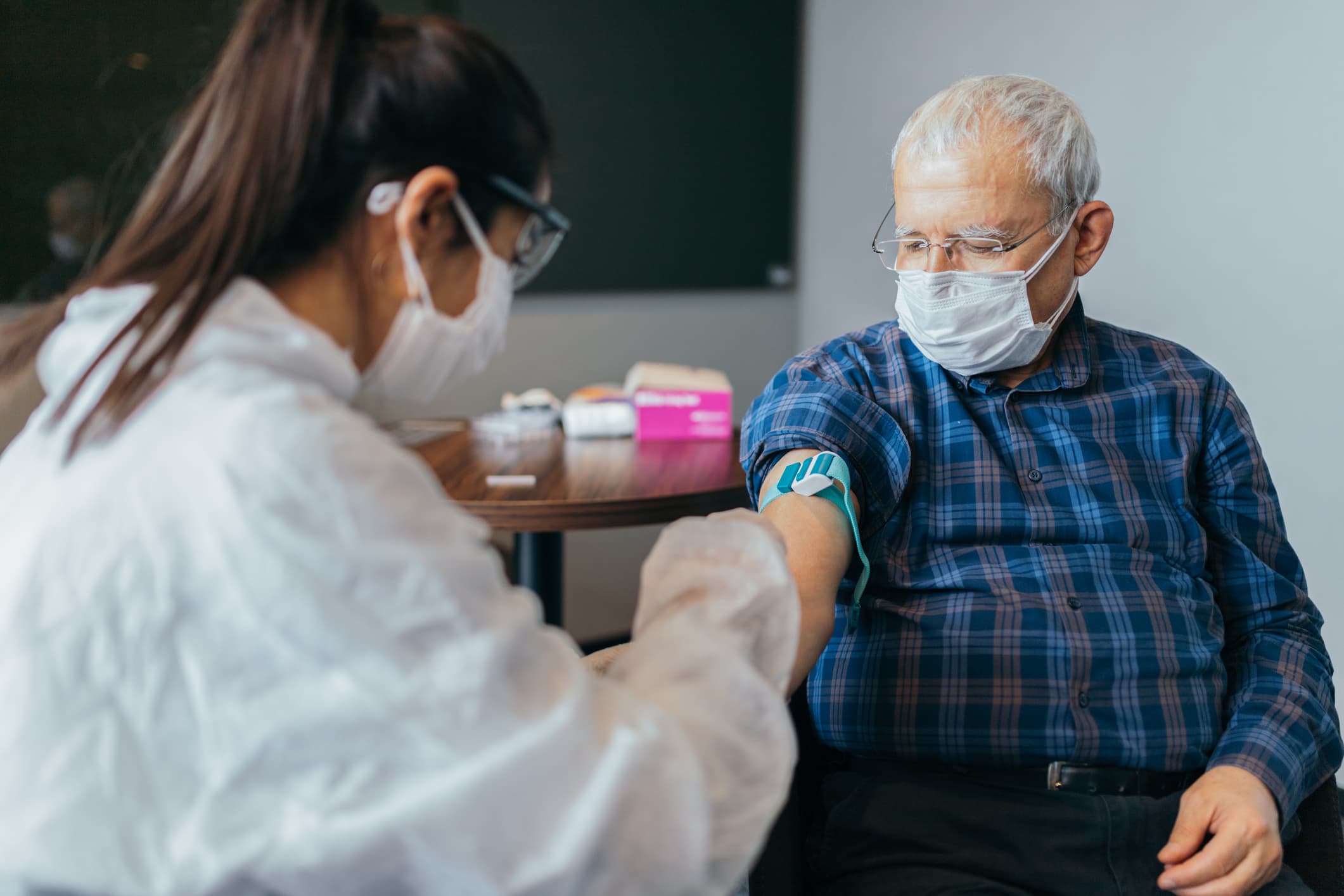
Most seniors have not gotten a COVID-19 vaccine yet, according to an analysis from the Kaiser Family Foundation.
Why it matters: There’s simply not enough vaccine available right now to take on every priority, Axios’ Marisa Fernandez writes.
By the numbers: In the first month of vaccinations, about 29% of recipients were 65 or older, per KFF.
Where it stands: West Virginia has vaccinated the most seniors at 34%, thanks to a focused effort in nursing homes.
Yes, but: Demographic data aren’t available in some states and cities, which will make it hard to track how well the U.S. is addressing high-risk groups as more people become eligible.

In the seven states hit hardest by the pandemic, more than 1 in every 500 residents have died from the coronavirus.
Why it matters: The staggering death toll speaks to America’s failure to control the virus.
Details: In New Jersey, which has the highest death rate in the nation, 1 out of every 406 residents has died from the virus. In neighboring New York, 1 out of every 437 people has died.
States in the middle of the pack have seen a death rate of around 1 in 800 dead.
The bottom line: Americans will keep dying as vaccinations ramp up, and more transmissible variants of the coronavirus could cause the outbreak to get worse before it gets better.

The CEO of a group of Texas-based hospice and home health companies was sentenced Feb. 3 to 15 years in prison for his role in a $150 million healthcare fraud and money laundering scheme, according to the Department of Justice.
Henry McInnis was sentenced more than a year after he was convicted of conspiracy to commit healthcare fraud, conspiracy to commit money laundering, obstruction of justice and healthcare fraud.
From 2009 to 2018, Mr. McInnis and others submitted more than $150 million in false and fraudulent claims for healthcare services. The claims were submitted through Merida Group, a hospice company with dozens of locations in Texas.
Mr. McInnis was CEO of Merida. He had no medical training but acted as the director of nursing for the company. He also enforced a companywide practice of falsifying medical records to conceal the scheme and ordered employees to change medical records to make it appear patients were terminally ill.
Mr. McInnis also paid bribes to physicians to certify unqualified patients for home health and hospice.
Mr. McInnis was sentenced less than two months after the owner of Merida Group, Rodney Mesquias, was sentenced to 20 years in prison and ordered to pay $120 million in restitution.

Tower Health said it is cutting salaries of executives and managers amid financial losses linked to the COVID-19 pandemic.
The West Reading, Pa.-based health system has struggled financially in the last two fiscal years. It recorded an operating loss of $378.2 million in fiscal year 2020, as well as an operating deficit of $178.8 million the year prior. And last November, the health system said it would consider selling six of its Philadelphia-area hospitals, including those it has purchased since 2017 from Franklin, Tenn.-based Community Health Systems, as part of a financial turnaround plan.
To help offset the financial damage, about 400 Tower Health executives and managers will have their pay cut, beginning in their Feb. 19 paychecks, according to The Philadelphia Inquirer, which cites a letter CEO Clint Matthews wrote to staff. Executives will have their pay cut by 15 percent, and directors, senior directors and associate vice presidents will have their pay cut by 10 percent.
In a statement shared with Becker’s on Feb. 8, the health system said it “is undertaking several initiatives as part of a coordinated plan to improve operations, strengthen care delivery and address the ongoing financial impact of COVID-19.”
“These actions include compensation reductions for executives and managerial employees, along with operational improvements to reduce costs and enhance revenue,” according to the Tower Health statement.
The salary cuts will be in effect until June 30, and do not affect front-line clinical or support staff, who received merit increases in January.
Tower Health projects cost savings of about $11.6 million because of the pay cuts.
“Reducing management compensation is a difficult but necessary decision that will stabilize and strengthen our financial performance as we continue to meet the challenges of the COVID-19 pandemic, as well as our ongoing mission of providing compassionate, accessible, high-quality, cost-effective healthcare to our communities,” the health system said.

 HENRY KOTULA