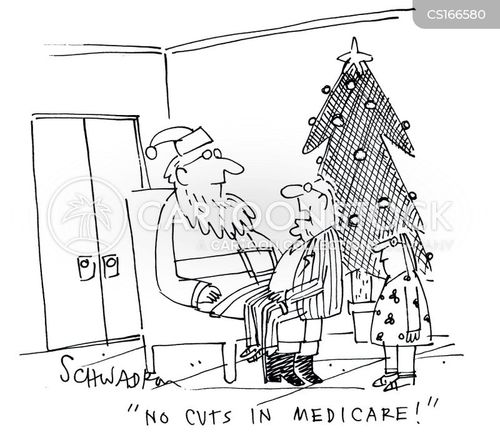
Is a Medicare option for all the only practical means to solve the healthcare insurance crisis?

https://www.beckershospitalreview.com/payer-issues/is-a-medicare-option-for-all-the-only-practical-means-to-solve-the-healthcare-insurance-crisis.html

Image result for health insurance options

From a healthcare consumer perspective, it increasingly strikes one that the healthcare insurance market is a story of haves and have-nots.

The haves include those that work for companies of a certain size, at which the companies can access insurance at very expensive but somewhat rationalized costs (think $16,000 to $20,000 per family per year, with employees contributing roughly $5,500), people on Medicare, and — crazily enough — people on Medicaid. (Again, the concept of a “have” here solely relates to the availability of healthcare coverage. It is by no means meant to understate the challenge of being in such poverty to be eligible for Medicaid.)

The have-nots include a vast number of people trying to buy insurance directly from insurance companies. Here, one increasingly hears that whether one is rich or poor, the costs are horrendous. Family costs for PPO plans seem to fall in the $20,000 to $25,000 range for many families, and even higher for those with preexisting conditions.

From a provider perspective, Medicare is a mixed bag depending on the type of provider. From a hospital’s perspective, it seems to be fine overall. From a physician’s perspective,  many seem to find it woefully inadequate.

One of the great challenges of the ACA is it set up an additional healthcare system of subsidies around insurance markets, mandates and so forth. It added complexity and costs, but also helped provide an additional basket of coverage for a good deal of uninsured Americans.

Regardless of political perspectives, rather than building another healthcare finance system, it seems that a simple approach would be to build on an existing system that, while imperfect, seems to work fairly well.

As an ardent capitalist at heart, the idea over the years of expanding a government program of any sort, including Medicare, has always led me to a negative conclusion. I.e., would it cause the kind of regression in our healthcare system that exists in systems in England or Canada, where care is famously inadequate or requires waiting months for certain types of care?

In contrast, at some point, does the cost of healthcare for those who don’t work for a large company and aren’t eligible for Medicare or Medicaid make the system so expensive that there is good reason to offer a Medicare option for such people? This demographic makes up a large part of the population, and it seems that the private insurance market is offering them only very expensive choices for health plans.

Much of my sense of the cost of private healthcare insurance comes anecdotally — from listening to diverse family and extended family around the Thanksgiving table, for instance. That stated, I do sense the cost of insurance for a family has moved from quite expensive to extremely and back-breakingly expensive. Sadly, I’m losing confidence that the core free market can fix it.


Ambulance trips can leave you with surprising — and very expensive — bills

https://www.washingtonpost.com/national/health-science/ambulance-trips-can-leave-you-with-surprising–and-very-expensive–bills/2017/11/17/6be9280e-c313-11e7-84bc-5e285c7f4512_story.html?tid=ss_tw-bottom&utm_term=.78d3dfa36d97

Image result for high ambulance bill trends


One patient got a $3,660 bill for a four-mile ride. Another was charged $8,460 for a trip from a hospital that could not handle his case to another that could. Still another found herself marooned at an out-of-network hospital, where she’d been taken by ambulance without her consent.

These patients all took ambulances in emergencies and got slammed with unexpected bills. Public outrage has erupted over surprise medical bills — generally out-of-network charges that a patient did not expect or could not control — prompting 21 states to pass laws over the years protecting consumers in some situations. But these laws largely ignore ground ambulance rides, which can leave patients stuck with hundreds or even thousands of dollars in bills and with few options for recourse, finds a Kaiser Health News review of 350 consumer complaints in 32 states.

Patients usually choose to go to the doctor, but they are vulnerable when they call 911 or get into an ambulance. The dispatcher picks the ambulance crew, which may be the local fire department or a private company hired by the municipality. The crew, in turn, often picks the hospital. Moreover, many ambulances are not summoned by patients, but by police or a bystander.

Betsy Imholz, special projects director at the Consumers Union, which has collected more than 700 patient stories about surprise medical bills, said at least a quarter concern ambulances.

“It’s a huge problem,” she said.

Forty years ago, most ambulances were free for patients, provided by volunteers or town fire departments using taxpayer money, said Jay Fitch, president of Fitch & Associates, an emergency services consulting firm. Today, ambulances are increasingly run by private companies and venture capital firms. Ambulance operators now often charge by the mile and sometimes for each “service,” such as providing oxygen. If the ambulance is staffed by paramedics rather than emergency medical technicians, that will result in a higher charge — even if the patient didn’t need paramedic-level services. Charges range from zero to thousands of dollars.

The core of the problem is that ambulance companies and private insurers often can’t agree on a fair price, so the ambulance service doesn’t join the insurer’s network. That leaves patients stuck with out-of-network charges that are not negotiated, Imholz said.

This happens to patients frequently, according to a recent study of more than half a million ambulance trips taken by patients with private insurance in 2014. The study, by two staffers at the Federal Trade Commission, found that 26 percent of these trips were billed on an out-of-network basis.

That figure is “quite jarring,” said Loren Adler, co-author of a recent report on surprise billing.

The KHN review of complaints revealed two common scenarios leaving patients in debt: First, patients get into an ambulance after a 911 call. Second, an ambulance transfers them between hospitals. In both scenarios, patients later learn the fee is much higher because the ambulance was out-of-network, and after the insurer pays what it deems fair, they get a surprise bill for the balance, also known as a “balance bill.”

The Better Business Bureau has received nearly 1,200 consumer complaints about ambulances in the past three years; half were related to billing, and 46 mentioned out-of-network charges, spokeswoman Katherine Hutt said.

While the federal government sets reimbursement rates for patients on Medicare, it does not regulate ambulance fees for patients with private insurance. Those patients are left with a highly fragmented system in which the cost of a similar ambulance trip can vary widely from town to town. There are about 14,000 ambulance services across the country, run by governments, volunteers, hospitals and private companies, according to the American Ambulance Association. (The Washington area reflects that mix.)

For a glimpse into the unpredictable system, consider the case of Roman Barshay. The 46-year-old software engineer, who lives in Brooklyn, was visiting friends in the Boston suburb of Chestnut Hill last November when he took a nasty fall.

Barshay felt a sharp pain in his chest and back, and he had trouble walking. An ambulance crew responded to a 911 call at his friends’ house and drove him four miles to Brigham and Women’s Hospital, taking his blood pressure as he lay down in the back. Doctors there determined he had sprained tendons and ligaments and a bruised foot, and released him after about four hours, he said.

After Barshay returned to Brooklyn, he got a bill for $3,660, or $915 for each mile of the ambulance ride. His insurance had covered nearly half, leaving him to pay the remaining $1,890.50.

“I thought it was a mistake,” Barshay said.

But Fallon Ambulance Service, the private company that brought him to the hospital, was out-of-network for his UnitedHealthcare insurance plan.

“The cost is outrageous,” said Barshay, who reluctantly paid the bill after Fallon sent it to a collection agency. If he had known what the ride would cost, he said, he would at least have been able to refuse the ride and “crawl to the hospital myself.”

In a statement, UnitedHealthcare said: “Out-of-network ambulance companies should not be using emergencies as an opportunity to bill patients excessive amounts when they are at their most vulnerable.”

“You feel horribly to send a patient a bill like that,” said Peter Racicot, senior vice president of Fallon, a family-owned company based outside Boston.

But ambulance firms are “severely underfunded” by Medicare and Medicaid, Racicot said, so Fallon must balance the books by charging higher rates for patients with private insurance.

Racicot said his company has not contracted with Barshay’s insurer because they couldn’t agree on a fair rate. When insurers and ambulance companies can’t agree, he said, “unfortunately, the subscribers wind up in the middle.”

It’s also unrealistic to expect EMTs and paramedics at the scene of an emergency to determine whether their company takes a patient’s insurance, Racicot added.

Ambulance services must charge enough to subsidize the cost of keeping their crews ready around the clock, said Fitch, the ambulance consultant. In a third of the cases where an ambulance crew answers a call, he added, they end up not transporting anyone and the company typically isn’t reimbursed for the trip.

In part, Barshay had bad luck. If his injury had happened just a mile away — inside Boston’s city limits — he could have ridden a city ambulance, which would have charged $1,490, according to Boston EMS, a sum that his insurer probably would have covered in full.

Very few states have laws limiting ambulance charges, and most state laws that protect patients from surprise billing do not apply to ground ambulance rides, according to Brian Werfel, a consultant to the American Ambulance Association. And none of the surprise-billing protections apply to people with self-funded employer-sponsored health insurance plans, which are regulated only by federal law. That’s a huge exception: 61 percent of privately insured employees are covered by self-funded employer-sponsored plans.

Some towns that hire private companies to respond to 911 calls may regulate fees or prohibit balance billing, Werfel said, but each locality is different.

Insurers try to protect patients from balance billing by negotiating rates with ambulance companies, said Cathryn Donaldson, a spokeswoman for America’s Health Insurance Plans. But “some ambulance companies have been resistant to join plan networks” that offer Medicare-based rates, she said.

Medicare rates vary widely by geographic area. On average, ambulance services make a small profit on Medicare payments, according to a report by the Government Accountability Office. If a patient uses a basic life support ambulance in an emergency in an urban area, for instance, Medicare payments range from $324 to $453, plus $7.29 per mile. Medicaid rates tend to be significantly lower.

There’s evidence of waste and fraud in the ambulance industry, Donaldson added, citing a study from the Office of Inspector General at the Department of Health and Human Services. The report concluded that in 2012 Medicare paid more than $50 million in improper ambulance bills, including for supposedly emergency-level transport that ended at a nursing home, not a hospital. One in 5 ambulance services had “questionable billing” practices, said the report, which noted that Medicare spent $5.8 billion on ambulance transport that year.

Most complaints reviewed by Kaiser Health News did not appear to involve fraudulent charges. Instead, patients got caught in a system in which ambulance services can legally charge thousands of dollars for a single trip — even when the trip starts at an in-network hospital.

That’s what happened to Devin Hall, a 67-year-old retired postal inspector in Northern California. While he faces Stage 3 prostate cancer, Hall is also fighting a $7,109.70 bill from American Medical Response, the nation’s largest ambulance provider.

On Dec. 27, 2016, Hall went to a local hospital with rectal bleeding. Because the hospital didn’t have the right specialist to treat his symptoms, it arranged for an ambulance ride to another hospital about 20 miles away. Even though the hospital was in his network, the ambulance was not.

Hall was stunned to see that AMR billed $8,460 for the trip. His federal health plan, the Special Agents Mutual Benefit Association, paid $1,350.30 and held Hall responsible for $727.08, records show. (According to his plan’s explanation of benefits, it paid that amount because AMR’s charges exceeded the plan’s Medicare-based fee schedule, which is based on Medicare rates.) But AMR turned his case over to a debt collector, Credence Resource Management, which sent an Aug. 25 notice seeking the full balance of $7,109.70.

“These charges are exorbitant — I just don’t think what AMR is doing is right,” said Hall, noting that he had intentionally sought treatment at an in-network hospital.

He has spent months on the phone calling the hospital, his insurer and AMR trying to resolve the matter. Given his prognosis, he worries about leaving his wife with a legal fight and a lien on their Brentwood, Calif., house for a debt they shouldn’t owe.

After being contacted by Kaiser Health News, AMR said it pulled Hall’s case from collections while it reviews the billing. After further review, company spokesman Jason Sorrick said the charges were warranted because it was a “critical care transport, which requires a specialized nurse and equipment on board.”

Sorrick faulted Hall’s health plan for underpaying, and said Hall could receive a discount if he qualifies for AMR’s “compassionate care program” based on his financial and medical situation.

“In this case, it appears the patient’s insurance company simply made up a price they wanted to pay,” Sorrick said.

In July, a California law went into effect that protects consumers from surprise medical bills from out-of-network providers, including some ambulance transport between hospitals. But Hall’s case occurred before that, and the state law doesn’t apply to him because of his federal insurance plan.

The consumer complaints reviewed by Kaiser Health News reveal a wide variety of ways that patients are left fighting big bills:

• An older patient in California said debt collectors called incessantly, including on Sunday mornings and at night, demanding an extra $500 on top of the $1,000 that his insurance had paid for an ambulance trip.

• Two ambulance services responded to a New Jersey man’s 911 call when he felt burning in his chest. One of them charged him $2,100 for treating him on the scene for less than 30 minutes — even though he never rode in that company’s ambulance.

• A woman who rolled over in her Jeep in Texas was charged a $26,400 “trauma activation fee” — a fee triggered when the ambulance service called ahead to the emergency department to assemble a trauma team. The woman, who did not require trauma care, fought the hospital to get the fee waived.

In other cases, patients face financial hardship when ambulances take them to out-of-network hospitals. Patients don’t always have a choice in where to seek care; that’s up to the ambulance crew and depends on the protocols written by the medical director of each ambulance service, said Werfel, the ambulance association consultant.

Sarah Wilson, a 36-year-old microbiologist, had a seizure at her grandmother’s house in rural Ohio on March 18, 2016, the day after having hip surgery at Akron City Hospital. When her husband called 911, the private ambulance crew that responded refused to take her back to Akron City Hospital, instead driving her to an out-of-network hospital that was 22 miles closer. Wilson refused care because the hospital was out-of-network, she said.

Wilson wanted to leave. But “I was literally trapped in my stretcher,” without the crutches she needed to walk, she said. Her husband, who had followed by car, wasn’t allowed to see her right away. She ended up leaving against medical advice at 4 a.m. She landed in collections for a $202 hospital bill for a medical examination, a debt that damaged her credit score, she said.

Ken Joseph, chief paramedic of Emergency Medical Transport, the private ambulance company that transported Wilson, said company protocol is to take patients to the “closest appropriate facility.” Serving a large area with just two ambulances, the company has to get each ambulance back to its station quickly so it can be ready for the next call, he said.

Patients such as Wilson are often left to battle these bills alone, because there are no federal protections for patients with private insurance.

Rep. Lloyd Doggett (D-Texas), who has been pushing for federal legislation protecting patients from surprise hospital bills, said in a statement that he supports doing the same for ambulance bills.

Meanwhile, patients do have the right to refuse an ambulance ride, as long as they are older than 18 and mentally capable.

“You could just take an Uber,” said Adler, co-author of the surprise-billing report. But if you need an ambulance, there’s little recourse to avoid unexpected bills, he said, “other than yelling at the insurance company after the fact, or yelling at the ambulance company.”

Why payers are flocking to the Medicare Advantage market

https://www.healthcaredive.com/news/why-payers-are-flocking-to-the-medicare-advantage-market/510589/

Medicare Advantage (MA) and the Affordable Care Act (ACA) exchanges are both federal programs, but they couldn’t be more different in payers’ eyes. Insurance companies are entering or expanding their footprints in the MA market, while simultaneously pulling back or out of the ACA exchanges. They’ve found success in MA. Not so much in the ACA exchanges.

Payers see MA as a stable market. That’s evident in the fact that MA premiums are expected to decrease by 6% next year. Insurance companies like stability. Insurers increase premiums by double digits when there isn’t stability, which is the case with the ACA exchanges.

A large part of the ACA exchanges’ problems is linked to actions and inaction in Washington, D.C. President Donald Trump’s administration stopped paying cost-sharing reduction payments to insurers, cut the exchanges’ open enrollment in half, reduced the exchanges’ advertising budget by 90%, offered proposed rules and executive orders that hurt the ACA and threatened not to enforce the individual mandate that requires almost all Americans to have health insurance.

Congress, meanwhile, has tried and failed to repeal the ACA this year. All of this created an unstable exchanges market, which resulted in payers leaving the exchanges or jacking up premiums by 20% or more for 2018.

Meanwhile, the MA market is a picture of stability and payer success.

  • There is a steady stream of new people eligible for Medicare daily, and many choose MA.
  • People usually don’t switch back from MA plans after leaving traditional Medicare.
  • Payers can easily convert members from traditional Medicare to MA via marketing campaigns.
  • The MA demographics are usually people who once had an employer-based plan, so they know insurance and how healthcare works. That also means they usually don’t have pent-up healthcare needs.
  • The CMS pays MA plans upfront for covering people with high healthcare costs and payers have enjoyed stable MA payments from the CMS.

So, MA members are easier to get and keep, they usually have fewer health needs and payers like the MA payment structure better than the exchanges, which get compensated at the end of the year. All of that equals a stable market for payers.

One-third of Medicare beneficiaries are enrolled in an MA plan this year compared to 25% just six years ago. Enrollment grew by 8% between 2016 and 2017 and the CMS recently announced that MA membership will grow by 9% to 20.4 million members in 2018.

Gretchen Jacobson, associate director with the Kaiser Family Foundation’s (KFF) Program on Medicare Policy, told Healthcare Dive that more than half of those in Medicare will have MA plans in many counties next year.

That growth isn’t expected to slow — especially with Republicans controlling both houses of Congress and the White House, according to Steve Wiggins, founder and chairman of Remedy Partners.

“With Republican control of the federal government, it is conceivable that Medicare Advantage will become a centerpiece of CMS’ strategy to control spending growth,” Wiggins told Healthcare Dive.

What more MA members and payers mean for hospitals and providers

With more MA members expected next year, the continual shift to MA will have mixed benefits for providers. Jacobson said it’s not entirely clear how more MA members will affect hospitals and providers. “One of our studies recently showed that the provider networks for Medicare Advantage plans greatly varies and these networks will become even more important as enrollment in Medicare Advantage plans grows,” she said.

Fred Bentley, vice president at Avalere Health, told Healthcare Dive that MA’s growth will present a whole new set of challenges for hospitals and health systems.

Bentley listed two issues:

  • Narrow networks
  • Tighter utilization management compared to Medicare’s fee-for-service model

recent KFF report found that 35% of MA enrollees were in narrow-network plans in 2015. Payers have increasingly turned to narrow networks to control costs and improve quality of care. To take part in the narrower networks, physicians usually have to agree to payer demands concerning cost and quality.

“Differences across plans, including provider networks, pose challenges for Medicare beneficiaries in choosing among plans and in seeking care, and raise questions for policymakers about the potential for wide variations in the healthcare experience of Medicare Advantage enrollees across the country,” KFF said.

Another issue for hospitals and providers is that more payers involved in capitated plans like MA will result in more pressure on providers and hospitals to focus on the cost of care, Michael Abrams, partner at Numerof & Associates, told Healthcare Dive.

“With Republican control of the federal government, it is conceivable that Medicare Advantage will become a centerpiece of CMS’ strategy to control spending growth.”

There’s also the issue of having too few MA payers in some regions. Aneesh Krishna, partner in McKinsey & Company’s Silicon Valley office, told Healthcare Dive the concentration of MA plans in certain markets is a worry for providers. “This concern would be magnified in markets where there is a similarly high concentration in commercial segments from the same payers, and where overall MA penetration is high,” he said.

There’s also a potential payment issue. MA generally reimburses at a slightly higher level than traditional Medicare, but utilization is managed more tightly. Krishna said providers willing and capable of sharing medical cost savings are “likely to see more benefit from the shift to Medicare Advantage plans.” However, MA networks are often narrow, which means providers will need to weigh the relative price/volume trade-offs of accepting MA.

More MA growth in the coming years

MA will have more payers and members than ever next year and the two largest payers, UnitedHealth and Humana, are expected to increase their footprint. Despite new payers showing interest in the market, Jacobson expects the market break down will look similar in 2018. She said small payers entering the market will offset the plans exiting MA next year.

The Congressional Budget Office (CBO) and HHS both project MA enrollment will continue to grow over the next decade. The CBO estimated that about 41% of Medicare beneficiaries will have an MA plan in 2027. UnitedHealth even predicted half of Medicare beneficiaries will eventually have an MA plan.

MA’s popularity with payers is easy to understand — 10,000 people turn 65 every day. The CBO expects 80 million Americans will be eligible for Medicare by 2035.

There’s also an opportunity in the MA market to sign up members quickly. Rachel Sokol, practice manager of research at Advisory Board, told Healthcare Dive that utilizing a strong marketing engine allows payers to grow MA membership. This is quite different from the employer-based market, which relies on payers working with companies.

Potential MA barriers

The MA market is largely positive for payers, but it does face challenges, including:

  • A small number of payers dominate the market
  • The CMS expects improved efficiency and savings
  • There is increased federal oversight, especially concerning possible overpayments to MA insurers

CMS is all in supporting MA plans and its marketspace. The agency last week proposed a rule with an aim toward improving quality and affordability in contract year 2019. According to the agency, the number of plans available to individuals will increase from about 2,700 to more than 3,100.

The agency is proposing to expand the definition of quality improvement activity to include fraud reduction activities, changing the medical loss ratio (MLR) requirements for Medicare Advantage plans. This change should excite payers because they can add the administrative service to the MLR ratio they are required to spend on healthcare, which is at least 85%. CMS states it believes the service will help combat fraud.

For now, the MA market is consolidated around only a handful of payers. UnitedHealth and Humana have more than 40% of the market. UnitedHealth has one-quarter on its own. KFF said UnitedHealth, Humana and Blue Cross Blue Shield affiliates make up 57% of MA enrollment and the top eight MA payers constitute three-quarters of the market.

Also, CMS is imposing improved efficiency in the traditional Medicare program. This could ultimately affect MA. Accountable care organizations (ACO) and bundled payments will “put downward pressure on the benchmarks used to set payment rates for Medicare Advantage plans,” Wiggins said.

This pressure will result in MA payers needing to either cut costs or trim benefits. “The former is difficult, except through narrow networks, and the latter will diminish the attractiveness of Medicare Advantage plans,” he said.

Then there’s the 800-pound gorilla in the market — potential overpayments. The Department of Justice (DOJ) has joined whistleblower lawsuits against UnitedHealth Group concerning MA overpayments. The lawsuits allege that UnitedHealth changed diagnosis codes to make patients seem sicker, which resulted in higher reimbursements to the insurer. A federal judge threw out one of the lawsuits in October.

The DOJ is investigating other MA payers for the same reason, and Congress is also interested. Sen. Charles Grassley (R-Iowa), chairman of the Senate Judiciary Committee, sent a letter to CMS Administrator Seema Verma in April questioning what CMS is doing to “implement safeguards to reduce score fraud, waste and abuse.” Grassley said there was about $70 billion in improper Medicare Advantage payments between 2008 and 2013 because of “risk score gaming.”

It’s understandable that investigators and Congress have grown interested in MA payers. The federal government paid $160 billion to MA payers in 2014. The CMS estimated about 9.5% of those payments were improper.

The combination of billions being paid to insurers, the potential for fraud and growing membership numbers make MA ripe for oversight. The stability of the market, particularly compared to other options for payers, however, will mean growth continues.


Use of Paid and Unpaid Personal Help by Medicare Beneficiaries Needing Long-Term Services and Supports

http://www.commonwealthfund.org/publications/issue-briefs/2017/nov/paid-unpaid-help-medicare-ltss?omnicid=EALERT1312698&mid=henrykotula@yahoo.com

Abstract

  • Issue: Older adults who reside in communities, as opposed to nursing homes or other residential institutions, are largely dependent on family and unpaid caregivers for assistance with daily activities, like preparing meals or laundry, and self-care tasks like bathing or dressing. For low-income older adults, assistance with such activities, also known as long-term services and supports (LTSS), can also come from Medicaid. These sources of support will be increasingly inadequate as the population ages.
  • Goals: To examine the extent of paid and unpaid personal care assistance used by community-residing people who require LTSS; and to analyze how this differs by demographics and the economic status of Medicare beneficiaries.
  • Methods: Descriptive analyses of the National Health and Aging Trends Study (NHATS), 2015.
  • Findings and Conclusions: Medicare beneficiaries needing LTSS rely predominantly on unpaid care. Hours of unpaid care are not substantially lower when paid care is also received. Findings suggest that public financing of LTSS would not replace but rather supplement the contribution of family and unpaid caregivers to support individuals living independently in the community.

Introduction

Despite the increasing number of adults with functional disabilities and cognitive impairments, financing for long-term services and supports (LTSS) has made little policy progress in the past few decades.1 One possible reason for the impasse is policymakers’ concern about the cost of undertaking such an initiative. Currently, financing for LTSS is split between the federal and state governments through the Medicaid program, which accounts for two-thirds, and private sources, which pay the other one-third. Of the $211 billion spent on LTSS in 2011, $45.5 billion (22%) was paid out of pocket.2 For low-income Medicare beneficiaries who meet income and asset eligibility, as well as the institutional level of need requirement, Medicaid covers some LTSS, although availability and accessibility vary greatly across states.3 As estimated by the Congressional Budget Office (CBO), family caregivers contribute the most care, at an estimated economic value of $234 billion in 2011.4 Many policymakers fear that providing public financial support for LTSS will replace the care that is currently being provided for free by family caregivers. This issue brief uses data from the National Health and Aging Trends Study (NHATS) from 2015 to examine use of paid and unpaid care among community-residing people who need LTSS.

Availability of Help for Older Medicare Beneficiaries Who Need Long-Term Services and Supports

In this first part of our analysis, we focused on the people with probable dementia (see How This Study Was Conducted) or those who have difficulty with activities of daily living (ADLs) or instrumental activities of daily living (IADLs). ADLs are also known as “self-care activities” and include eating, bathing, dressing, transferring in and out of bed, toileting, and walking across the room. IADLs are higher-level activities that allow an individual to continue living independently, such as medication management, meal preparation, grocery shopping, finances, and laundry.

Two of five older adults in this population report not receiving any help. Older men were more likely to report not receiving any help than were older women (49% vs. 37%) (Exhibit 1). Rates of not receiving help were particularly high among blacks and other minority groups (41% and 52% respectively), as well as those who lived alone (50%). Even among those who lived with their spouse, two-fifths of respondents reported not receiving any help.

Conclusion

Long-term services and supports are not covered under Medicare despite many beneficiaries reporting needing help with self-care activities.8 The resistance to a public financing option for LTSS is based largely on the costs of such a program and the concern that it would substitute for care that is already being provided by family caregivers.9 This issue brief confirms that older adults who need LTSS rely heavily on family caregivers. However, this method of providing care is unsustainable, given the increasing numbers of older adults who will require LTSS as well as the declining availability of family caregivers.10 In addition, study results find that significant numbers of community-residing older adults with a need for LTSS do not receive help.

This analysis shows that the amount of unpaid care provided varies little between those who receive both paid and unpaid support and those who receive unpaid support only, suggesting that paid care does not replace unpaid care, but supplements it. Addressing and supporting the need for LTSS can result in savings to individuals and the government through delayed nursing home and Medicaid entry.11 A public LTSS financing solution, like Medicare Help at Home,12 that supports individuals and family caregivers would improve the supply of long-term services and supports and allow for their quality to be monitored to ensure older adults can live safely in the community.


No Limit: Medicare Part D Enrollees Exposed to High Out-of-Pocket Drug Costs Without a Hard Cap on Spending

No Limit: Medicare Part D Enrollees Exposed to High Out-of-Pocket Drug Costs Without a Hard Cap on Spending – Issue Brief

Related image


Introduction

Prescription drugs play an important role in medical care for 59 million seniors and people with disabilities.  Medicare beneficiaries have access to outpatient prescription drug coverage through the Part D prescription drug benefit, which is administered by private stand-alone prescription drug plans (PDPs) and Medicare Advantage drug plans (MA-PDs). Since the start of the Medicare Part D program in 2006, the drug benefit has helped to lower out-of-pocket drug spending for all enrollees. Beneficiaries in Part D plans with low incomes and modest assets are eligible for additional assistance with plan premiums and cost sharing through the Low-Income Subsidy (LIS) program, reducing out-of-pocket costs even further for this population.

The Centers for Medicare & Medicaid Services (CMS) establishes guidelines that all Part D plans must follow for the design of the drug benefit and the value of coverage that must be offered. Plans are allowed to vary, however, along dimensions that affect beneficiaries’ access to and costs for medications, including which drugs are covered and cost-sharing requirements. The standard Part D benefit in 2017 includes a deductible ($400), followed by 25 percent coinsurance for prescriptions up to an initial coverage limit ($3,700 in total costs), and then a coverage gap where enrollees without low-income subsidies pay a larger share of their drug costs until their out-of-pocket drug spending exceeds a catastrophic coverage threshold ($4,950). The Affordable Care Act (ACA) included a provision to phase out the Part D coverage gap by requiring plans to cover a growing share of total drug costs and providing a manufacturer price discount of 50 percent for brand-name drugs filled in the gap, with the amount of the manufacturer discount counting towards the out-of-pocket threshold that triggers catastrophic coverage. Once enrollees’ drug spending reaches the catastrophic threshold, those without the LIS pay up to 5 percent of their total drug costs; those who qualify for the full low-income subsidy pay nothing for their drugs in this phase of the benefit. Plans typically place drugs that cost over $670 per month on a specialty drug tier, with coinsurance that ranges from 25 percent to 33 percent.

Concern has been rising in recent years about the growing cost burden on Medicare and beneficiaries posed by new, unique, and expensive specialty drugs used to treat a range of diseases. The Medicare Boards of Trusteesand the Medicare Payment Advisory Commission have documented this rising cost burden on the Medicare program, which is reflected in higher Part D program spending overall, as well as higher spending for reinsurance of high-cost Part D enrollees who reach the catastrophic coverage phase of the benefit, where Medicare pays for 80 percent of drug costs. Although Part D provides coverage of catastrophic drug expenses, enrollees who do not receive the LIS are still responsible for up to 5 percent of their drug costs in this phase of the benefit. For very high-priced medications, this relatively small coinsurance rate can translate to a significant amount of out-of-pocket costs for beneficiaries who do not receive low-income subsidies.

This analysis examines the out-of-pocket prescription drug cost burden for Medicare beneficiaries in Part D plans who do not receive low-income subsidies, focusing on those enrollees who have drug costs that exceed the catastrophic coverage threshold. We refer to this group as Part D enrollees with high out-of-pocket drug costs. Although these enrollees do not comprise the entire group of enrollees who have high total drug spending that exceeds the catastrophic coverage threshold, they are exposed to a potentially large cost burden because they do not receive the financial protection of the low-income subsidies. We analyze Medicare prescription drug event claims data for 2015, the most recent year of publicly available Medicare claims data, and trends since 2007, the first full year of the Part D drug benefit. For detail on the data and methods, see the Methodology.

Discussion

In recent years, the high and rising cost of prescription drugs has emerged as a pressing issue for consumers, public programs, and private insurers. As our analysis shows, Medicare beneficiaries who do not receive the additional financial protection provided by low-income subsidies are not insulated from this cost burden and can incur substantial out-of-pocket costs for their medications. We find that one million Medicare beneficiaries in Part D plans who were not receiving low-income subsidies had high out-of-pocket costs in 2015—that is, drug spending above the catastrophic coverage threshold—and their annual out-of-pocket spending averaged over $3,000 in 2015.

Our analysis indicates that out-of-pocket costs above the catastrophic threshold represent a growing concern for people with Medicare, and both MedPAC and Medicare’s actuaries have shown that rising spending for catastrophic coverage has placed greater fiscal pressure on Medicare. Our analysis also shows that the number of Part D enrollees who did not receive low-income subsidies and had out-of-pocket spending above the catastrophic threshold has increased over time. Looking to the future, we would expect to see continued increases in the number of enrollees reaching the catastrophic coverage threshold in 2016 and later years, due in part to the ACA changes to the coverage gap as well as the greater availability and use of high-priced drugs. These trends have cost implications both for beneficiaries and, as the Medicare actuaries have projected, for Medicare.

Part D enrollees with high out-of-pocket costs in 2015 spent an average of $1,215 out of pocket on their prescriptions filled above the catastrophic threshold, or $1.2 billion in the aggregate. In other words, Part D enrollees would have collectively saved $1.2 billion if Part D had a hard cap on out-of-pocket spending, rather than requiring enrollees to pay up to 5 percent coinsurance in the catastrophic coverage phase. Placing a hard cap on out-of-pocket spending under Part D would save money for enrollees, but would increase costs to Medicare and would not address underlying concerns related to high-priced drugs.

While Part D has helped make drugs more affordable for people with Medicare, and the ACA has provided additional relief to enrollees with high drug costs by gradually closing the coverage gap, the absence of an annual out-of-pocket spending limit under Part D exposes enrollees to significant costs—unless their incomes and assets are low enough to qualify for low-income subsidies. Various proposals to reduce drug costs—including allowing the federal government to negotiate prices for Medicare beneficiaries, and allowing Americans to import drugs from Canada and other countries—enjoy broad, bipartisan public support. With a growing number of people on Medicare facing high out-of-pocket drug costs, alleviating this burden remains an issue for federal policymakers to address.

Liquid Gold: Pain Doctors Soak Up Profits By Screening Urine For Drugs

https://khn.org/news/liquid-gold-pain-doctors-soak-up-profits-by-screening-urine-for-drugs/

The cups of urine travel by express mail to the Comprehensive Pain Specialists lab in an industrial park in Brentwood, Tenn., not far from Nashville. Most days bring more than 700 of the little sealed cups from clinics across 10 states, wrapped in red-tagged waste bags. The network treats about 48,000 people each month, and many will be tested for drugs.

Gloved lab techs keep busy inside the cavernous facility, piping smaller urine samples into tubes. First there are tests to detect opiates that patients have been prescribed by CPS doctors. A second set identifies a wide range of drugs, both legal and illegal, in the urine. The doctors’ orders are displayed on computer screens and tracked by electronic medical records. Test results go back to the clinics in four to five days. The urine ends up stored for a month inside a massive walk-in refrigerator.

The high-tech testing lab’s raw material has become liquid gold for the doctors who own Comprehensive Pain Specialists. This testing process, driven by the nation’s epidemic of painkiller addiction, generates profits across the doctor-owned network of 54 clinics, the largest pain-treatment practice in the Southeast. Medicare paid the company at least $11 million for urine and related tests in 2014, when five of its professionals stood among the nation’s top billers. One nurse practitioner at the company’s clinic in Cleveland, Tenn., single-handedly generated $1.1 million in Medicare billings for urine tests that year, according to Medicare records.

Dr. Peter Kroll, one of the founders of CPS and its medical director, billed Medicare $1.8 million for these drug tests in 2015. He said the costly tests are medically justified to monitor patients on pain pills against risks of addiction or even selling of pills on the black market. “I have to know the medicine is safe and you’re taking it,” Kroll, 46, said in an interview. Kroll said that several states in which CPS is active have high rates of opioid use, which requires more urine testing.

Kaiser Health News, with assistance from researchers at the Mayo Clinic, analyzed available billing data from Medicare and private insurance billing nationwide, and found that spending on urine screens and related genetic tests quadrupled from 2011 to 2014 to an estimated $8.5 billion a year — more than the entire budget of the Environmental Protection Agency. The federal government paid providers more to conduct urine drug tests in 2014 than it spent on the four most recommended cancer screenings combined.

Yet there are virtually no national standards regarding who gets tested, for which drugs and how often. Medicare has spent tens of millions of dollars on tests to detect drugs that presented minimal abuse danger for most patients, according to arguments made by government lawyers in court cases that challenge the standing orders to test patients for drugs. Payments have surged for urine tests for street drugs such as cocaine, PCP and ecstasy, which seldom have been detected in tests done on pain patients. In fact, court records show some of those tests showed up positive just 1 percent of the time.

Urine testing has become particularly lucrative for doctors who operate their own labs. In 2014 and 2015, Medicare paid $1 million or more for drug-related tests billed by health professionals at more than 50 pain management practices across the U.S. At a dozen practices, Medicare billings were twice that high.

Thirty-one pain practitioners received 80 percent or more of their Medicare income just from urine testing, which a federal official called a “red flag” that may signal overuse and could lead to a federal investigation.

“We’re focused on the fact that many physicians are making more money on testing than treating patients,” said Jason Mehta, an assistant U.S. attorney in Jacksonville, Fla. “It is troubling to see providers test everyone for every class of drugs every time they come in.”

Lawsuit: Epic’s software double-bills Medicare, Medicaid for anesthesia services

https://www.beckershospitalreview.com/finance/lawsuit-epic-s-software-double-bills-medicare-medicaid-for-anesthesia.html

Image result for false claims act

Health IT giant Verona, Wis.-based Epic Systems has been hit with a False Claims Act lawsuit that alleges the company’s software double-bills Medicare and Medicaid for anesthesia services, resulting in the government being overbilled by hundreds of millions of dollars.

The lawsuit, which was filed under the qui tam provision of the False Claims Act in 2015 and made public Thursday, alleges Epic’s billing software’s default protocol is to charge for both the applicable base units for anesthesia provided on a procedure and the actual time taken for the procedure. This results in the provider being reimbursed twice for the base unit component, according to the lawsuit.

The whistle-blower who filed the lawsuit, Geraldine Petrowski, worked at Raleigh, N.C.-based WakeMed Health from September 2008 through June 2014. In her role as supervisor of physician’s coding, Ms. Petrowski served as the hospital liaison for Epic’s implementation of its software at WakeMed Health.

Ms. Petrowski claims she provided examples to Epic representatives illustrating the double-billing practice, and the company initially ignored her complaints. “It was only after relator, Petrowski, reiterated her direction to fix this software setting that [Epic] relented and fixed it only for the WakeMed Health facility,” according to the lawsuit.

The lawsuit alleges the unlawful billing protocol has resulted “in the presentation of hundreds of millions of dollars in fraudulent bills for anesthesia services being submitted to Medicare and Medicaid as false claims.”

In a statement to Healthcare IT News, an Epic spokeswoman said, “The plaintiff’s assertions represent a fundamental misunderstanding of how claims software works.”

The Department of Justice declined to intervene in the case, and the whistle-blower will move forward in the case without the government.