The number of children with covid-19 recently hospitalized in New York City has increased by nearly five times this month, state officials said at a news conference Monday.
For the week from Dec. 5, 22 children with covid-19 were admitted to hospitals in the city. During a five-day period beginning on Dec. 19, that figure rose to 109, reflecting a broader national surge in coronavirus infections driven in part by the omicron variant. Daily case counts in recent days have climbed to levels not seen since last winter, when coronavirus vaccines weren’t widely available, though the total number of hospitalizations is still significantly lower.
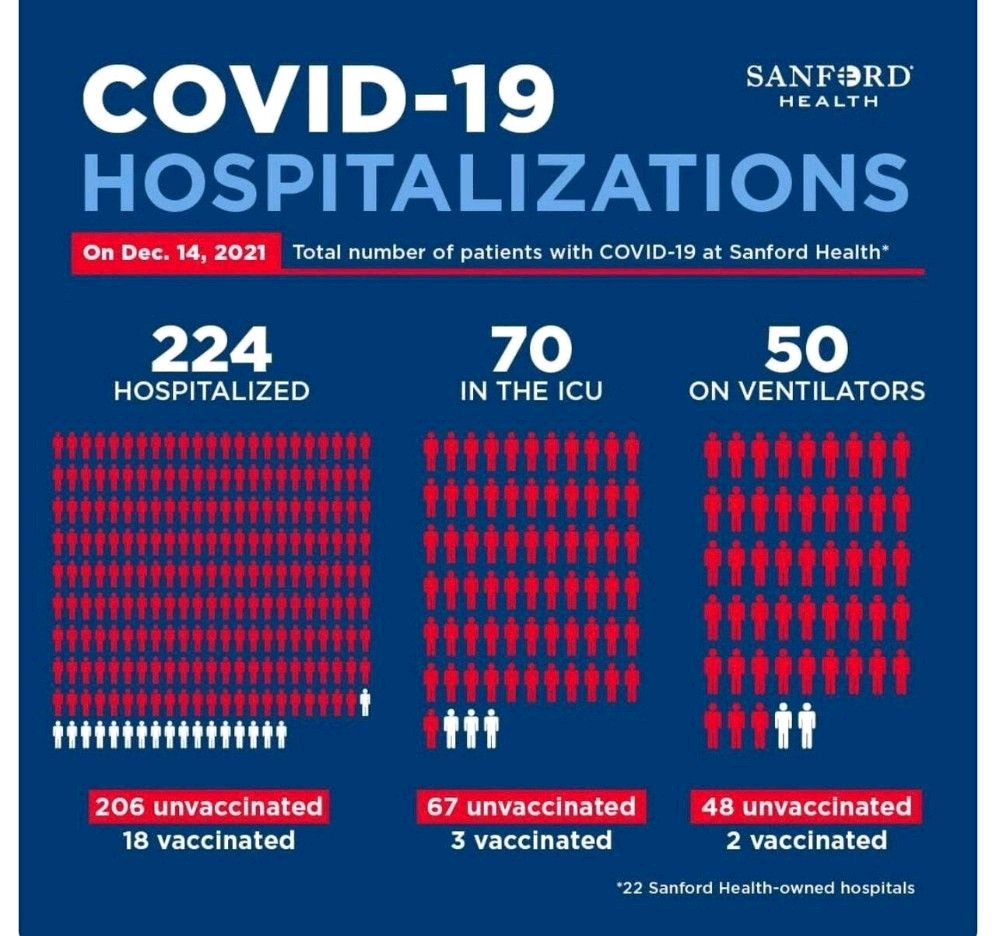
The increase in pediatric covid patients in New York City has been mirrored nationwide. As of last week, nearly 2,000 confirmed or suspected pediatric covid patients were hospitalized nationally, a 31 percent jump in 10 days.
New York City officials are hoping a city mandate that took effect Monday requiring workers at an estimated 184,000 businesses to get at least one vaccine dose will curb infections. “We need more and more people vaccinated,” Mayor Bill de Blasio (D) told reporters. “We need to keep doubling down on vaccination to get out of the covid era once and for all.”
De Blasio’s office announced the mandate earlier this month, just days after health officials disclosed the first case of the more transmissible omicron variant in the United States. But the mayor leaves office in a few days. Kathryn Wylde, president of the Partnership for New York City, a major corporate advocacy group, said she hopes Mayor-elect Eric Adams (D) will show flexibility in enforcement, the Associated Press reported.
Roughly 92 percent of the city’s adult population has received at least one dose of a vaccine, municipal data show, while 83 percent of adults are considered fully immunized. Youth vaccination rates remain lower: Nearly half the children ages 5 to 17 have not yet received a single dose, according to the city government.
For nearly two years, Americans have looked carefully at coronavirus case numbers in the country and in their local states and towns to judge the risk of the disease.
Surging case numbers signaled growing dangers, while falling case numbers were a relief and a signal to let one’s guard down in terms of gathering with friends and families and taking part in all kinds of events.
But with much of the nation’s population vaccinated and boosted and the country dealing with a new COVID-19 surge from omicron — a highly contagious variant that some studies suggest may not be as severe as previous variants — public health officials are debating whether the nation needs to shift its thinking.
Many people are going to get omicron — but those that are vaccinated and boosted are unlikely to suffer dire symptoms.
As a result, hospitalizations and deaths are the markers that government officials need to monitor carefully to ensure the safety of communities as the nation learns to live with COVID-19.
“This is the new normal,” said Leana Wen, a public health professor at George Washington University and former Baltimore health commissioner. “This is what we will have to accept as we transition from the emergency of COVID-19 to living with it as part of the new normal.”
David Dowdy, an epidemiologist at Johns Hopkins Bloomberg School of Public Health, said that Americans all need to shift to focus on hospitalizations over cases as we enter into another year of the pandemic.
“I think that we need to start training ourselves to look, first of all, at hospitalizations. I think hospitalizations are a real-time indicator of how serious things are,” he said.
Rising case numbers still say something about the disease, and the spikes from omicron are leading to real concerns.
Anthony Fauci, the government’s top infectious disease expert, noted on Sunday that even if omicron leads to less severe cases of COVID-19, if it infects tens of millions it will have the potential of straining resources in hospitals.
“If you have many, many, many more people with a less level of severity, that might kind of neutralize the positive effect of having less severity when you have so many more people,” he said during an appearance on ABC’s “This Week.”
At the same time, the nation must get used to dealing with the coronavirus as it would deal with an annual flu season. It’s a challenge for most parts of American life, from schools and businesses that have to consider worker and student safety, to professional sports leagues that must decide how long someone sits out after a positive test — even if the person is vaccinated and not symptomatic.
“Omicron in a way is the first test of what it means to live with COVID-19,” said Wen. “And by that I mean we are going to see many people getting infected but as long as our hospital systems are not overwhelmed and as long as vaccinated people are generally protected against severe outcomes, that is how we end the pandemic phase and switch into the endemic phase.”
The omicron strain is so infectious that once the current surge has faded in the United States, it’s likely a large majority of the population will either have been vaccinated against COVID-19 or have been infected, experts say. At that point, the focus should shift away from preventing infection to preventing serious illness, multiple experts said, a message already being echoed in some corners of the White House.
Many states have been seeing staggering numbers of positive tests and lines for COVID-19 testing that stretch for several blocks. Washington, D.C., and New York state have set records in recent days for the number of new cases reported as omicron barrels through the population.
But even with case totals surpassing last year’s numbers, President Biden and White House officials have been quick to point out that hospitalizations haven’t been as high as the numbers seen in the winter of 2020.
“Because we have so many vaccinated and boosted, we’re not seeing hospitalizations drive as sharply as we did in March of 2020 or even this past fall. America has made progress; things are better,” Biden said on Monday on a White House COVID-19 response team call with the National Governors Association to discuss the administration’s response to the omicron variant.
“But we do know that with rising cases, we still have tens of millions of unvaccinated people and we’re seeing hospitalizations rise,” he added, saying that some hospitals are going to get overrun both in terms of equipment and staff.
The White House pointed to Biden’s remarks last week when asked about whether the president wants Americans and health experts to take the emphasis off of case numbers and put it on hospitalizations.
“Because omicron spreads so easily, we’ll see some fully vaccinated people get COVID, potentially in large numbers. There will be positive cases in every office, even here in the White House, among the vaccinated … from omicron. But these cases are highly unlikely to lead to serious illness,” Biden said on Dec. 21.
Chief of staff Ron Klain on Monday retweeted a CNN report about how hospitalizations are about 70 percent less than what they were around the last peak in September, but that COVID-19 cases in unvaccinated Americans could end up overwhelming health systems.
Health experts have suggested the White House’s shift in messaging away from a focus on the number of cases is a sign of what’s to come as the pandemic eventually becomes endemic.
“For two years, infections always preceded hospitalizations which preceded deaths, so you could look at infections and know what was coming,” Ashish Jha, dean of the Brown University School of Public Health, said Sunday on ABC. “Omicron changes that. This is the shift we’ve been waiting for in many ways.”
Dowdy said positive tests are also up because people are getting tested before visiting relatives.
“If a lot of people are testing positive because they are asymptomatic and wanting to make sure that they can travel etc., having a lot of those kinds of cases is not a big problem,” he said.
“In fact, that’s a good thing. It means that we’re doing the right thing as a country to define those cases,” Dowdy added.
Lawrence Gostin, a professor of global health at Georgetown University, said the shift away from tracking case numbers as a way to measure the pandemic means devoting more resources toward treatment options like the Pfizer antiviral pill.
Gostin also said testing should increasingly be used to self-diagnose so individuals can get proper treatment, rather than testing for the purpose of stopping the spread of the virus.
“The White House has got a very difficult balancing act. Certainly for now it’s going to have to emphasize the idea of masking and distancing for the purpose of protecting the health system,” Gostin said.
“We can’t live our lives in a bubble to prevent us from getting a pathogen that’s so contagious that you can’t avoid it if you’re going to be circulating and living a life in this world,” he continued. “What it means to transition to a normal life or more normal life is you have to focus not so much on preventing cases, but on preventing hospitalizations and deaths.”
Another challenging year defined by the continued COVID-19 fight and vaccination drives has created a unique healthcare landscape. Pandemic-induced telehealth booms, continued strain due to understaffing and pressure from big tech disruptors are just some of the issues that have presented themselves this year.
Here are five major trends that hospitals and health systems may see in 2022. While some present challenges, others present significant opportunities for healthcare facilities.
Workforce pressure
Record numbers of workers have quit their jobs in 2021, with some 4.4 million people quitting in September. That means that 1 in 4 people quit their jobs this year across all industries. Around 1 in 5 healthcare workers have left their positions, creating issues with understaffing and lack of resources in hospitals and health systems. Stress, burnout and lack of balance have all been cited as reasons for staff leaving their roles. An increase in violence toward medical professionals, continued COVID-19 surges and low pay and benefits have contributed to the exodus of healthcare workers. None of those problems seems poised to disappear come 2022, so the new year could bring continued workforce and staffing challenges.
Pressure from disruptors
Big tech and retail giants have continued their push into healthcare this year. Companies like Apple, Amazon and Google stepped up their game in the wearables market. Pharmacy and retail chains Walmart and CVS Health both detailed their intended expansions into primary care. The pandemic also encouraged big corporations outside the healthcare sector, like Pepsi and Delta Airlines, to consider hiring CMOs to make sense of public health regulations guide them on their policy. These moves all mean there is a tightening of competition for the top physicians and hospital executives. Going into 2022, health systems may be under pressure to hang onto top talent and keep patients from using other convenient health services offered by retail giants.
Health equity
The unequal toll of the pandemic on people of color both medically and economically helped shed a light on the rampant inequities in American healthcare and society at large. Indigineous, Black and Hispanic people were much more likely than white or Asian people to suffer severe illness or require hospitalization as a result of COVID-19. Increasing numbers of hospitals, health systems and organizations are starting initiatives to advance health equity and focus on the socioeconomic drivers of health. The American Medical Association launched a language guide to encourage greater awareness about the power of language. Z-code usage has also been encouraged by CMS to increase knowledge and data about the social determinants of health. Next year, the perspective of health as holistic instead of just a part of an individual’s life will continue, with special attention being paid to social drivers.
Telehealth expansion
The pandemic helped the telemedicine industry take off in a big way. Telehealth was often the only healthcare option for many patients during the height of the lockdown measures introduced during the pandemic. Despite a return to in-person visits, telehealth has retained its popularity with patients. Some advocates argue that telehealth can help increase access to healthcare and improve health equity. About 40 percent of patients said that telehealth makes them more engaged and interact more frequently with their providers. However, while Americans see telehealth as the future of healthcare, a majority still prefer in-person visits. Regardless of patient opinion, telehealth will remain a key part of health strategy. In late December, the FCC approved $42.7 million in funding for telehealth for 68 healthcare providers. This suggests that there are investments and subsidies available in the future for health systems to bolster their telehealth services.
Climate change
At the 2021 UN Climate Conference, Cop26, in Glasgow, Scotland, hospitals and health systems acknowledged the role they have to play in mitigating the effects of climate change. Hospitals and health systems shed light on the health-related effects of climate change, such as illness and disease from events like wildfires and extreme weather. Health systems are also becoming more aware of their own contributions to climate change, with the U.S. healthcare system emitting 27 percent of healthcare emissions worldwide. To that end, HHS created an office of climate change and health equity that will work alongside regulators to reduce carbon emissions from hospitals. More health systems too are taking charge and pledging net neutrality and zero carbon emissions goals, including Kaiser Permanente and UnitedHealth group. It’s expected that more systems will follow suit in the coming year and make more concrete plans to address emissions reduction.
Merck antiviral drug molnupiravir received emergency authorization, joining Pfizer’s Paxlovid as the only authorized oral antiviral drugs for treating Covid-19. Though the Merck and Pfizer antivirals appear to work against the omicron variant, FDA officials stressed that these drugs are authorized only for certain patients and they are not a substitute for vaccination.
Merck’s oral antiviral drug molnupiravir now has FDA emergency use authorization for treating mild-to-moderate Covid-19, a Thursday decision that comes one day after the regulator authorized use of a pill from Pfizer. The FDA actions come as the highly infectious omicron variant becomes the dominant strain of the novel coronavirus, fueling a rise in Covid-19 cases that is pushing hospitals to capacity across the country.
The Merck and Pfizer antivirals both work by interfering with the virus’s ability to replicate, though in different ways. Molnupiravir introduces errors into the genetic code of SARS-CoV-2, while Paxlovid targets a key viral enzyme called main protease. Patrizia Cavazzoni, director of the FDA’s Center for Drug Evaluation and Research, said both drugs should work against omicron.
“The available data that we have indicate that both Paxlovid and molnupiravir are effective against omicron,” Cavazzoni said, speaking during a Thursday morning media briefing. “Both drugs interfere with aspects of the virus’s replication apparatus, and that apparatus is preserved across variants.”
Molnupiravir’s authorization, which comes three weeks after an FDA advisory committee meeting for the drug, covers its use in adults diagnosed with Covid-19 who are at a high risk of their disease progressing to hospitalization or death. The Merck drug is to be used when other treatment options are not accessible or appropriate. It can only be prescribed to those 18 and older because the drug can affect bone and cartilage growth.
Authorized use of Pfizer’s antiviral, Paxlovid, extends to pediatric patients. The FDA’s guidelines state the drug may be used for treating Covid-19 patients 12 and older weighing at least 40 kg (about 88 pounds). The FDA did not convene an advisory meeting for the Pfizer drug. John Farley, director of FDA’s Office of Infectious Diseases, said there were no pressing scientific questions about Paxlovid that would benefit from an advisory committee discussion.
Both molunupiravir and Paxlovid are available only by prescription. The FDA said treatment with these drugs should begin as soon as possible after a positive Covid-19 diagnosis, and within five days of the start of symptoms. These drugs aren’t for patients who are already hospitalized. Earlier this year, Merck stopped testing molnupiravir in those who are hospitalized after an early look at Phase 2 trial data indicated that the drug was unlikely to help these patients.
Authorization of Merck’s antiviral is based on a placebo-controlled clinical trial enrolling non-hospitalized adults with Covid-19 who were at high risk of progressing to severe disease or hospitalization. These higher risk patients include those who have a chronic medical condition or those who had not or could not receive a Covid-19 vaccine. The main goal was to measure the percentage of people hospitalized or dead from any cause during the 29 days after the course of treatment. The FDA said that of the 709 people in the study who received molnupiravir, 6.8% were hospitalized or died. By comparison, 9.7% of the 699 people given a placebo were hospitalized or died. During the follow-up period, one patient treated with molnupiravir died compared to nine of those given a placebo. Side effects reported include diarrhea, nausea, and dizziness.
In the clinical trial for Pfizer’s antiviral, Paxlovid led to an 88% reduction in Covid-19-related hospitalization or death from any cause compared to placebo. Of the 1,039 patients treated with Paxlovid, 0.8% of patients were hospitalized or died during the 28-day follow-up period, compared to 6% of those given a placebo.
Farley said that patients should consult with their physician to determine the best treatment. While molnupiravir is indicated for those who don’t have other treatment options, there are some groups of patients in which Paxlovid would not be appropriate. Examples include patients taking other medications that could interact with the Pfizer drug, Farley said. Paxlovid is also not recommended for patients who have severe kidney problems or cirrhosis of the liver. The key feature of both drugs is that they are oral, which enables patients to take these medication at home. Authorized antibody therapies from Regeneron, Eli Lilly, partners Vir Biotechnology and GlaxoSmithKline, and Roche, are infusions that must be administered in a clinical setting.
Patients take Merck’s molnupiravir as four pills, twice a day. Patients prescribed Pfizer’s Paxlovid must take more pills. The drug is taken with ritonavir, a drug that slows the breakdown of Paxlovid and helps it remain in the body for a longer period of time. Dosing of the Pfizer drug requires two tablets of Paxlovid and one of ritonavir, twice daily. The duration of treatment for both the Merck and Pfizer antivirals is five days.
We find the questions, “What makes a great leader?” and “What does great leadership mean in practice?” to be really interesting.
We have seen, for example, the following types of people as leaders: (1) people who appear to have been born to lead and excel as leaders, (2) people anointed as leaders or future leaders who had bold personalities, a certain presence and/or great charisma disappoint completely as leaders, (3) hardworking, organized people without bold personalities who organizations may not have expected to be top leaders grow into their roles and lead organizations to great results.
The greatest leaders leave an organization better than they found it. They leave it in a position to thrive long after they are gone. They have the ability to deliver results today while improving and preparing the organization for tomorrow. Great leaders, as stated by some, have a vision and plan, can build great teams, can motivate the team to pursue and achieve the plan, can take in feedback and adjust the plan as needed.
Here are seven thoughts on great leadership.
1. Great leaders are engaged, excited and passionate about success. Great leaders remain excited about what they are doing and what their team is trying to accomplish. Teams sense whether a leader is engaged or not. It does not take long to detect. It is the unusual leader who can stay enthusiastic and in top form in a position for more than 10 to 20 years; for many, the attention span is less. The phrase “lame duck leader” often applies to those who are still in office despite losing their spark. When leaders find they are losing excitement or engagement, it is time to step down from leadership or take time to rediscover themselves. An excited and engaged leader is critical to success.
We should not confuse passion and excitement with a huge or “rah-rah” personality. A great leader can have a winning personality, and most have excellent people skills, but those two things are only part of the picture. Great leaders are more than mascots or faces of a company — they are engaged with their teams. They are constantly talking to, communicating with, seeing and visiting their teams. They know what is going on with their teams, they know what is going on with their key customers, and they know what is going on with the business.
2. Great leaders build teams and the next level of leaders. The greatest accomplishment of a leader may be building the next level of leadership in a way where the leader is less needed. This is so important to the organization and requires tremendous energy from current leadership, yet it’s not always a leader’s first and foremost goal.
An elite team can go exponentially further and accomplish a great deal more than an elite leader. Anyone who has built an organization beyond a few people understands the importance of great teams and colleagues. When a high-performing team is built, the leader remains important. However, more and more, you can identify a great leader or manager by how special their team is. When a team is magnificent, it is a lot easier to be a great leader or manager. A core concept in Jim Collins’ Good to Great is to build great teams and then set plans. If one has great people, a company or team can then accomplish all kinds of things.
There is a common misconception that leaders welcome their team’s elite performance because it means the leader can work less. We find this could not be further from the truth. Great leaders know that nobody likes working harder than their boss. This adage holds true whether a leader has been in the field for five years or 50. The scope and role of the leader may change as the team grows more adept, elite and accomplished. Exceptional leaders give others space to lead, opportunities to shine and chances to succeed, but this should not be misinterpreted as leaders stepping away out of ambivalence or putting their feet up.
3. Great leaders have big goals and set clear plans. Great leaders set goals for their teams and organizations that are exciting, interesting and far bigger than themselves. The leader needs a goal that one can point to as, “This is what we are trying to be,” or, “This is what we are trying to accomplish.” There’s nothing worse than leaders who transparently appear to get ahead for themselves or accomplish their own goals versus the organization’s or team’s goals.
The late Apple CEO and co-founder Steve Jobs and former GE CEO Jack Welch are examples of great leaders who set big goals. Mr. Welch had the core goal to be No. 1 or No. 2 in any market — or not be in the market at all. It is also critical that the goal is well communicated to the team and that key decisions are consistent with the goal. No plan or strategy is perfect. However, most organizations and teams do far better with a plan and strategy than without. Often, the plan is imperfect but adjusted over time. Either way, in nearly every situation, an imperfect plan is far superior to no plan.
4. Great leaders generally don’t micromanage. High-caliber leaders develop great leaders and teams and allow their teams to excel, perform and grow. They constantly look at benchmarks, hold people accountable and follow up with them. However, on a day-to-day and moment-to-moment basis, their teams are given lots of latitude and autonomy. This is coupled with follow-up and looking at what is accomplished. Warren Buffett may be the world’s best example of a leader who has great CEOs, holds them accountable and doesn’t micromanage them.
Some of the best leaders we have seen recognize when they have an amazing leader working with them. In those situations, the best of leaders can set their egos aside and largely allow the next in line to take credit and lead.
5. Great leaders praise often and recognize contributions. A great leader understands that part of team-building is constantly looking for what people are doing well and encouraging more of it. Great leaders provide praise, recognize what is done well and motivate more of that to be done. They look for what people do exceptionally well, and they look to promote those doing great things. They are constantly looking for the next opportunity for people.
6. Great leaders are not afraid to make hard personnel decisions. The best leaders understand that not everyone is a fit for every job. They are not willing to tolerate mediocrity or toxicity. This doesn’t mean they have a quick trigger. It does mean that they constantly compare current performance to great performance and try to fit people in spots where their performance can excel. For example, someone who is not great at something might be given another try at a different role where they may shine. One of the best leaders I ever witnessed subscribed to the view that it was very hard to change people. He counseled to be fair and patient, but that it was easier to change the person than change a person. In essence, sometimes it’s easier to replace a person than change how a person behaves.
7. Great leaders are emotionally mature. Great leaders do not fly off the handle or make rash decisions, but they do follow their instincts. A remarkable leader does not react to every issue with a great deal of stress. Rather, he or she can take things in, move forward and keep a team on board. A leader’s ability to manage emotions — both his or her own and those of team members — is critical. While great leaders often act with urgency and intent, they too embrace common sense approaches of “sleep on it” or “no sudden movements” when faced with volatility, uncertainty, complexity and ambiguity. They recognize the repercussions of their decisions and movements, and in turn give them the time, thought and reflection they deserve.
The healthcare industry’s staffing shortage crisis has had clear consequences for care delivery and efficiency, forcing some health systems to pause nonemergency surgeries or temporarily close facilities. Less understood is how these shortages are affecting care quality and patient safety.
A mix of high COVID-19 patient volume and staff departures amid the pandemic has put hospitals at the heart of a national staffing shortage, but there is little national data available to quantify the shortages’ effects on patient care.
The first hint came last month from a CDC report that found healthcare-associated infections increased significantly in 2020 after years of steady decline. Researchers attributed the increase to challenges related to the pandemic, including staffing shortages and high patient volumes, which limited hospitals’ ability to follow standard infection control practices.
“That’s probably one of the first real pieces of data — from a large scale dataset — that we’ve seen that gives us some sense of direction of where we’ve been headed with the impact of patient outcomes as a result of the pandemic,” Patricia McGaffigan, RN, vice president of safety programs for the Institute for Healthcare Improvement, told Becker’s. “I think we’re still trying to absorb much of what’s really happening with the impact on patients and families.”
An opaque view into national safety trends
Because of lags in data reporting and analysis, the healthcare industry lacks clear insights into the pandemic’s effect on national safety trends.
National data on safety and quality — such as surveys of patient safety culture from the Agency for Healthcare Research and Quality — can often lag by several quarters to a year, according to Ms. McGaffigan.
“There [have been] some declines in some of those scores more recently, but it does take a little while to be able to capture those changes and be able to put those changes in perspective,” she said. “One number higher or lower doesn’t necessarily indicate a trend, but it is worth really evaluating really closely.”
For example, 569 sentinel events were reported to the Joint Commission in the first six months of 2021, compared to 437 for the first six months of 2020. However, meaningful conclusions about the events’ frequency and long-term trends cannot be drawn from the dataset, as fewer than 2 percent of all sentinel events are reported to the Joint Commission, the organization estimates.
“We may never have as much data as we want,” said Leah Binder, president and CEO of the Leapfrog Group. She said a main area of concern is CMS withholding certain data amid the pandemic. Previously, the agency has suppressed data for individual hospitals during local crises, but never on such a wide scale, according to Ms. Binder.
CMS collects and publishes quality data for more than 4,000 hospitals nationwide. The data is refreshed quarterly, with the next update scheduled for October. This update will include additional data for the fourth quarter of 2020.
“It is important to note that CMS provided a blanket extraordinary circumstances exception for Q1 and Q2 2020 data due to the COVID-19 pandemic where data was not required nor reported,” a CMS spokesperson told Becker’s. “In addition, some current hospital data will not be publicly available until about July 2022, while other data will not be available until January 2023 due to data exceptions, different measure reporting periods and the way in which CMS posts data.”
Hospitals that closely monitor their own datasets in more near-term windows may have a better grasp of patient safety trends at a local level. However, their ability to monitor, analyze and interpret that data largely depends on the resources available, Ms. McGaffigan said. The pandemic may have sidelined some of that work for hospitals, as clinical or safety leaders had to shift their priorities and day-to-day activities.
“There are many other things besides COVID-19 that can harm patients,” Ms. Binder told Becker’s. “Health systems know this well, but given the pandemic, have taken their attention off these issues. Infection control and quality issues are not attended to at the level of seriousness we need them to be.”
What health systems should keep an eye on
While the industry is still waiting for definitive answers on how staffing shortages have affected patient safety, Ms. Binder and Ms. McGaffigan highlighted a few areas of concern they are watching closely.
The first is the effect limited visitation policies have had on families — and more than just the emotional toll. Family members and caregivers are a critical player missing in healthcare safety, according to Ms. Binder.
When hospitals don’t allow visitors, loved ones aren’t able to contribute to care, such as ensuring proper medication administration or communication. Many nurses have said they previously relied a lot on family support and vigilance. The lack of extra monitoring may contribute to the increasing stress healthcare providers are facing and open the door for more medical errors.
Which leads Ms. Binder to her second concern — a culture that doesn’t always respect and prioritize nurses. The pandemic has underscored how vital nurses are, as they are present at every step of the care journey, she continued.
To promote optimal care, hospitals “need a vibrant, engaged and safe nurse workforce,” Ms. Binder said. “We don’t have that. We don’t have a culture that respects nurses.”
Diagnostic accuracy is another important area to watch, Ms. McGaffigan said. Diagnostic errors — such as missed or delayed diagnoses, or diagnoses that are not effectively communicated to the patient — were already one of the most sizable care quality challenges hospitals were facing prior to the pandemic.
“It’s a little bit hard to play out what that crystal ball is going to show, but it is in particular an area that I think would be very, very important to watch,” she said.
Another area to monitor closely is delayed care and its potential consequences for patient outcomes, according to Ms. McGaffigan. Many Americans haven’t kept up with preventive care or have had delays in accessing care. Such delays could not only worsen patients’ health conditions, but also disengage them and prevent them from seeking care when it is available.
Reinvigorating safety work: Where to start
Ms. McGaffigan suggests healthcare organizations looking to reinvigorate their safety work go back to the basics. Leaders should ensure they have a clear understanding of what their organization’s baseline safety metrics are and how their safety reports have been trending over the past year and a half.
“Look at the foundational aspects of what makes care safe and high-quality,” she said. “Those are very much linked to a lot of the systems, behaviors and practices that need to be prioritized by leaders and effectively translated within and across organizations and care teams.”
She recommended healthcare organizations take a total systems approach to their safety work, by focusing on the following four, interconnected pillars:
Culture, leadership and governance
Patient and family engagement
Learning systems
Workforce safety
For example, evidence shows workforce safety is an integral part of patient safety, but it’s not an area that’s systematically measured or evaluated, according to Ms. McGaffigan. Leaders should be aware of this connection and consider whether their patient safety reporting systems address workforce safety concerns or, instead, add on extra work and stress for their staff.
Safety performance can slip when team members get busy or burdensome work is added to their plates, according to Ms. McGaffigan. She said leaders should be able to identify and prioritize the essential value-added work that must go on at an organization to ensure patients and families will have safe passage through the healthcare system and that care teams are able to operate in the safest and healthiest work environments.
In short, leaders should ask themselves: “What is the burdensome work people are being asked to absorb and what are the essential elements that are associated with safety that you want and need people to be able to stay on top of,” she said.
To improve both staffing shortages and quality of care, health systems must bring nurses higher up in leadership and into C-suite roles, Ms. Binder said. Giving nurses more authority in hospital decisions will make everything safer. Seattle-based Virginia Mason Hospital recently redesigned its operations around nurse priorities and subsequently saw its quality and safety scores go up, according to Ms. Binder.
“If it’s a good place for a nurse to go, it’s a good place for a patient to go,” Ms. Binder said, noting that the national nursing shortage isn’t just a numbers game; it requires a large culture shift.
Hospitals need to double down on quality improvement efforts, Ms. Binder said. “Many have done the opposite, for good reason, because they are so focused on COVID-19. Because of that, quality improvement efforts have been reduced.”
Ms. Binder urged hospitals not to cut quality improvement staff, noting that this is an extraordinarily dangerous time for patients, and hospitals need all the help they can get monitoring safety. Hospitals shouldn’t start to believe the notion that somehow withdrawing focus on quality will save money or effort.
“It’s important that the American public knows that we are fighting for healthcare quality and safety — and we have to fight for it, we all do,” Ms. Binder concluded. “We all have to be vigilant.”
Conclusion
The true consequences of healthcare’s labor shortage on patient safety and care quality will become clear once more national data is available. If the CDC’s report on rising HAI rates is any harbinger of what’s to come, it’s clear that health systems must place renewed focus and energy on safety work — even during something as unprecedented as a pandemic.
The irony isn’t lost on Ms. Binder: Amid a crisis driven by infectious disease, U.S. hospitals are seeing higher rates of other infections.
“A patient dies once,” she concluded. “They can die from COVID-19 or C. diff. It isn’t enough to prevent one.”
Job losses from the COVID-19 pandemic are the highest since the Great Depression. A year and a half later, most Americans who lost their health insurance along with their job remain uninsured.
Most Americans who lost their jobs and health insurance more than a year ago remain uninsured.
Over 1,200 Americans who are still unemployed due to COVID-19 were surveyed by AffordableHealthInsurance.com. At least four out of five in all participants don’t have insurance coverage.
To be exact, 56% of Americans who remain unemployed since being laid off due to the COVID-19 pandemic lost their health insurance along with their job. In addition, 23% of workers did not have employer-provided health insurance prior to losing their jobs.
Even before the pandemic, small businesses struggled to absorb the cost of providing health insurance to their employees, said health insurance advisor and nursing consultant Tammy Burns in the Affordable Health Insurance study.
“Companies have cut costs by going with high-deductible plans and sharing less of the cost towards the insurance,” Burns said. “This makes it cheaper for employees to get their own health insurance through the Affordable Care Act (ACA) marketplace. At larger companies, health care costs are growing faster than worker wages, so a large amount of an employee’s check goes to insurance. Therefore, many workers opt out because they can’t afford it.”
Majority of Those Who Lost Health Insurance Still Lack Coverage
Of the 56% of unemployed Americans who lost their health insurance along with their job, 81% are still uninsured.
This lack of coverage is impacting certain groups more than others. There are also several contributing factors to why the number of unemployed Americans without health insurance remains high.
These factors are:
Men more likely to remain uninsured than women
When broken down by gender, men are more likely than women to have lost their health insurance when they lost their jobs at 66% and 44%, respectively. However, women are twice as likely as men to have not had health insurance in the first place at 31% and 16%, respectively.
Currently, men are slightly more likely to still be uninsured. Eighty-four percent of male survey respondents do not currently have health insurance, compared to 75% of women.
Majority of unemployed Millennials, Gen Xers still uninsured
Our survey also found that certain age groups are more likely than others to still be uninsured after a pandemic-related job loss.
Eighty-six percent of individuals ages 35 to 44, and 84% of both 25 to 34 year-olds and 45 to 54 year-olds remain without health insurance after being laid off. Comparatively, 67% of unemployed individuals 18 to 24, and 58% of those older than 55 are still uninsured.
Americans ages 25 to 44 are also the age group most likely to have lost their health insurance when they were let go from their jobs (66%).
Inability to Afford Private Insurance The Top Reason to Remain Uninsured
The high cost of individual insurance is the number one reason Americans still unemployed from the pandemic remain uninsured.
Sixty-seven percent of those uninsured can’t afford private health insurance. Eleven percent of people who still lack health insurance say they did not qualify for government-funded health insurance, despite the fact that a number of states expanded access to Medicaid during the pandemic.
A lack of understanding about how the ACA marketplace works may also play a role in why uninsured Americans are not pursuing all possible avenues to get health insurance.
“People are scared of the ACA because it involves a lot of personal information, like taxes,” Burns said. “I have found that many people are afraid it is ‘the government being in my business.’ There is a lack of knowledge about how helpful and affordable the ACA is now. There needs to be better education about this program.”
One in five uninsured Americans choose not to have health insurance
The survey also found 20% of unemployed Americans who are uninsured choose to forgo health insurance altogether.
This is particularly true for men, 22% of whom are choosing not to have health insurance, compared to 15% of women.
Younger adults are also more likely than older Americans to opt out of health insurance if they are unemployed. Twenty-five percent of 25 to 34 year-olds, and 20% of 25 to 34 year-olds choose not to have health insurance.
Medication, Routine Checkups Skipped Due to Lack of Insurance
A lack of insurance has serious short- and long-term implications for individuals’ health and well-being. The biggest impact: 58% of uninsured individuals are no longer getting routine care, which could hinder their ability to identify more serious underlying issues.
Other impacts include no longer taking doctor-prescribed medication (56%); delaying planned medical procedures (46%); not seeking treatment for chronic issues (44%), and no longer receiving mental health treatment (41%).
Three-quarters of older Americans not getting regular check-ups
Our survey also found that those at greater risk for medical issues, based on age, are the most likely to be skipping their routine check-ups. Three-fourths of uninsured individuals over the age of 55 (76%) say they are not going for regular doctor visits because of their lack of insurance, the highest percentage of any age group.
Meanwhile, 64% of individuals 35 to 44 are not taking doctor-prescribed medication, which can have both short- and long-term negative effects.
Majority of Uninsured Americans “Very likely” to be Financially Devastated by Medical Emergency
Given that so many individuals are already hard-pressed to afford health insurance, it’s not surprising that many of them will also be in a dangerous place financially if there is a medical emergency.
Fifty-nine percent of uninsured people are “very likely” to be financially devastated by a medical emergency, while another quarter are “somewhat likely” to face financial ruin in the event of a medical emergency.