The coronavirus economy could make a Medicare buy-in more popular

https://www.axios.com/coronavirus-economy-unemployment-medicare-health-insurance-85d23c97-4ad6-486d-b081-a46bdd2b894b.html

Coronavirus-driven layoffs may boost calls for a Medicare buy-in ...

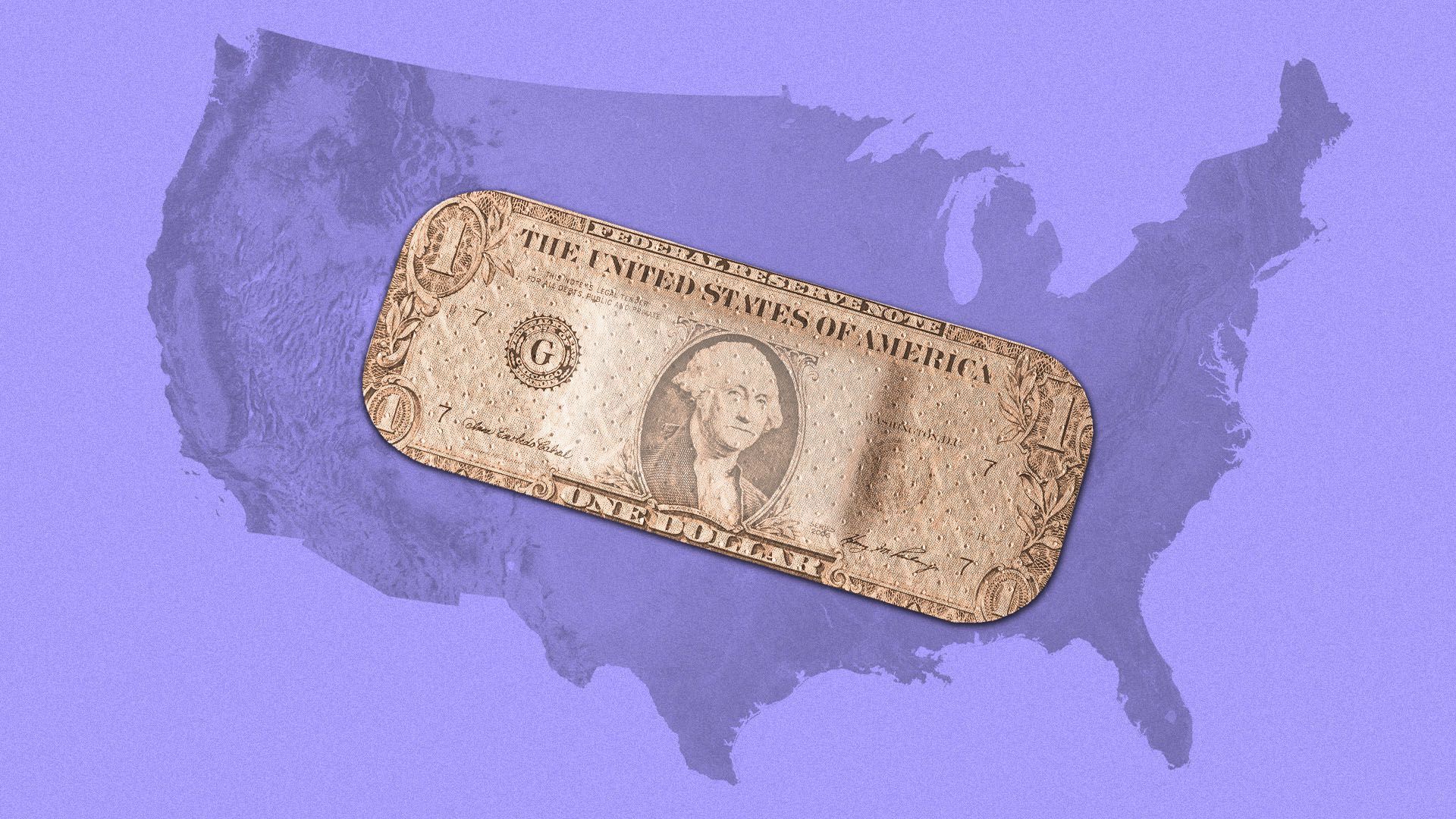
The economic disruption caused by the coronavirus pandemic could help create a much stronger push to let some older Americans buy into Medicare.

By the numbers: 2.4 million adults between the ages of 55 and 64 lost their jobs just since March, bringing the unemployment rate in this group to 12.5% — up from 3.4% in March.

Between the lines: Many of these people will struggle to find affordable coverage, and a slow recovery will leave many without job-based health coverage for a long time.

  • Medicaid will cover many of the newly uninsured, though not in states that haven’t expanded the program. The Affordable Care Act will help many others maintain coverage, but those plans often come with high deductibles. COBRA is available to people who lost jobs that offered insurance, but it’s often prohibitively expensive.

Millions of uninsured 55-65 year-olds could add new urgency to calls for a Medicare buy-in if Democrats control the White House and Congress in 2021.

  • Narrower options consistently poll better than more sweeping expansions of public coverage, and older adults are a politically powerful group.

Where it stands: The leading Medicare buy-in plan in Congress would allow people who are older than 50 to purchase Medicare coverage, with a subsidy for low-income enrollees similar to the subsidies in the Affordable Care Act.

  • Former Vice President Joe Biden has proposed a different twist: He would simply lower Medicare’s eligibility age from 65 to 60, without a buy-in.

Yes, but: All the old fault lines would still be at play if such an effort got serious consideration.

  • Some Democrats prefer Medicare for All. Republicans and hospitals have typically opposed all Medicare expansions.

The bottom line: The more dire the economic and health insurance circumstances of 55-64 year olds turns out to be, the greater the urgency for an early -in to Medicare is likely to become.



AFL-CIO sues feds over coronavirus workplace safety

https://www.axios.com/afl-cio-sues-feds-over-coronavirus-workplace-safety-6de76122-2c75-4f84-92e5-21048c08b44b.html

AFL-CIO sues feds over coronavirus workplace safety - Axios

With states reopening for business and millions of people heading back to work, the nation’s largest labor organization is demanding the federal government do more to protect workers from contracting the coronavirus on the job.

What’s happening: The AFL-CIO, a collection of 55 unions representing 12.5 million workers, says it is suing the federal agency in charge of workplace safety to compel them to create a set of emergency temporary standards for infectious diseases.

Driving the news: The lawsuit against the U.S. Labor Department’s Occupational Safety and Health Administration (OSHA) is expected to be filed on Monday in the U.S. Court of Appeals in Washington, D.C.

  • Citing an urgent threat to “essential” workers and those being called back to work as government-imposed lockdowns are lifted, the AFL-CIO is asking the court to force OSHA to act within 30 days.
  • It wants a rule that would require each employer to evaluate its workplace for the risk of airborne disease transmission and to develop a comprehensive infection control plan that could include social distancing measures, masks and other personal protective equipment and employee training.

The agency has issued guidance, in collaboration with the Centers for Disease Control and Prevention, to protect workers in multiple industries — including dentist offices, nursing homes, manufacturing, meat processing, airlines and retail.

  • But the unions complain these are only recommendations, not requirements, and that mandatory rules should be imposed.
  • OSHA has been considering an infectious disease standard for more than a decade, they note, and has drafted a proposed standard.

U.S. Labor Secretary Eugene Scalia, in a letter to AFL-CIO President Richard Trumka, said employers are already taking steps to protect workers, and that OSHA’s industry-tailored guidelines provide more flexibility than a formal rule for all employers.

Yes, but: OSHA has received more than 3,800 safety complaints related to COVID-19 as of May 4, but it had already close to about 2,200 of them without issuing a single citation, according to the AFL-CIO.

What they’re saying: “It’s truly a sad day in America when working people must sue the organization tasked with protecting our health and safety,” Trumka said.

  • “But we’ve been left no choice. Millions are infected and nearly 90,000 have died, so it’s beyond urgent that action is taken to protect workers who risk our lives daily to respond to this public health emergency.
  • “If the Trump administration refuses to act, we must compel them to.”
  • OSHA could not immediately be reached for comment on the lawsuit.


Most states still aren’t doing enough coronavirus testing

https://www.axios.com/coronavirus-testing-states-still-behind-629973cb-d8ad-4f36-a6fa-d59959fe84a3.html


Most states still aren't doing enough coronavirus testing - Axios


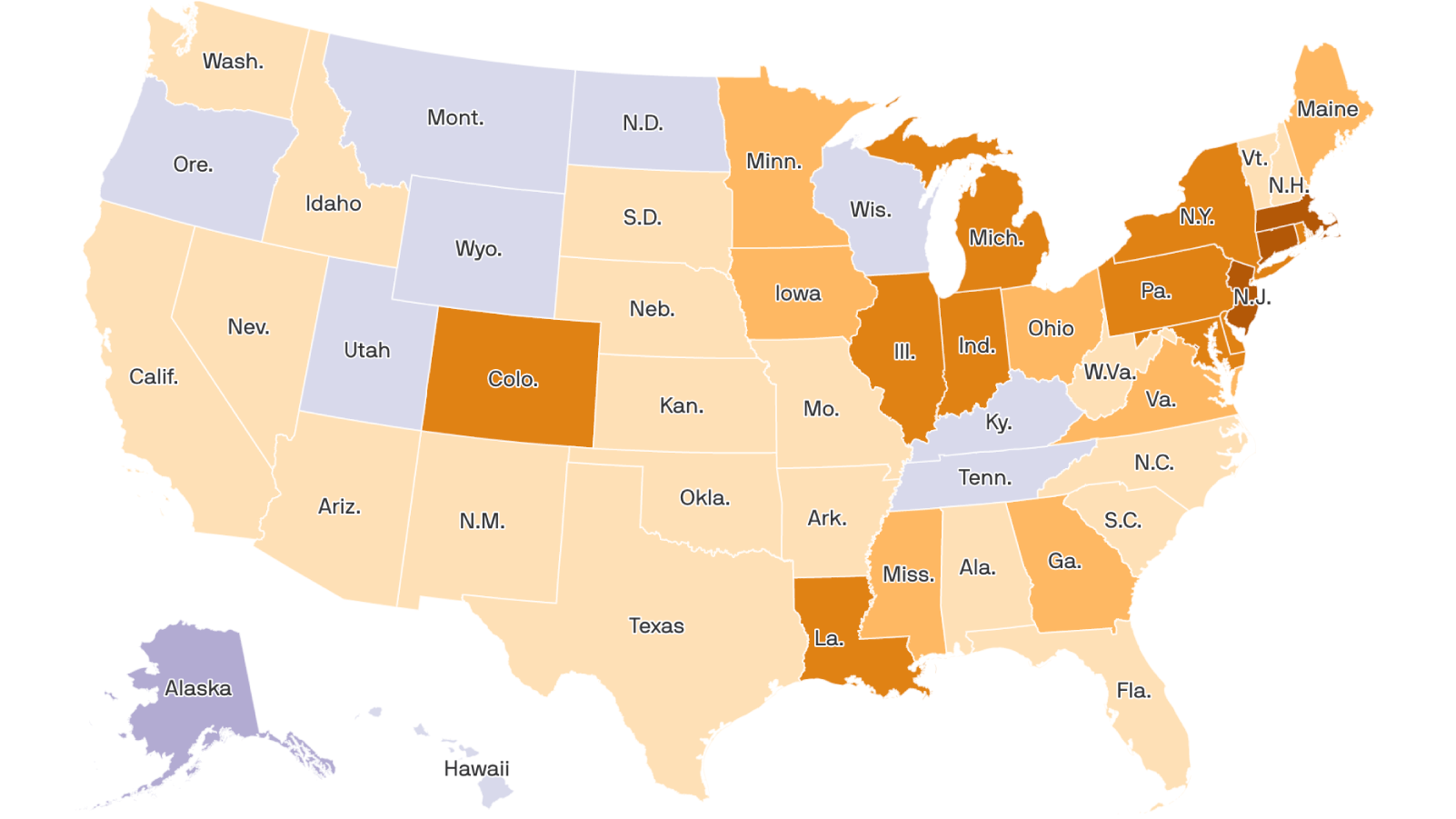
Most states still aren’t doing enough coronavirus testing, especially those that have suffered from larger outbreaks, according to recent testing targets calculated by the Harvard Global Health Institute.

Between the lines: It’s much harder to contain the virus once a lot of people have it — which is why we needed strong social distancing in the first place. But knowing who is infected is the foundation of containment going forward, and most states are still behind.

The big picture: Nationally, the U.S. needs to be doing about 900,000 tests a day, according to the Harvard estimate, which was released earlier this month.

  • But not all states need to be doing the same amount of tests. The goal Harvard suggested for each state — the number of tests they should have done on May 15  was calculated based on the size of its outbreak as of early May.
  • That means that New York needs to be doing a much larger number of tests each day than Wyoming, even after accounting for the states’ huge population discrepancy.

Why it matters: Most states have already begun reopening to some extent, even without key public health tools — like testing and contact tracing — fully built up.

  • That increases the chance that the virus will spread undetected as people begin interacting with one another again.
  • And these premature measures may just increase the number of tests a state needs, especially because the estimates were based on the assumption states would remain closed until May 15.
  • “The moment you relax, the number of cases will start climbing. And therefore, the number of tests you need to keep your society, your state from having large outbreaks will also start climbing,” Harvard’s Ashish Jha warned.


Cartoon – 100% Tax Cut Today

Recruiting. Talent Management | HENRY KOTULA

Cartoon – Economic Stimulus vs. Leadership

Family leadership and organisational leadership: what's the ...