How a restaurant’s ventilation system can affect the spread of the coronavirus

https://www.cbsnews.com/video/how-a-restaurants-ventilation-system-can-affect-the-spread-of-the-coronavirus/?fbclid=IwAR2z-bdgzOxsKeW-cL2szCpc6UzNtyh3yvdI4PQzGyqA6y8Ge-AAc9m8EF0

As some restaurants reopen, model shows how coronavirus can spread ...

Surprising new research may help keep people safe from coronavirus in restaurants, as states begin to loosen rules and reopen. As Omar Villafranca discovered, there’s something important beyond masks and social distancing that restaurants might need to consider: air currents.


Fauci’s warning about reopening may have more influence over Americans than governors

https://www.washingtonpost.com/politics/2020/05/12/faucis-warning-about-reopening-may-have-more-influence-over-americans-than-governors/?fbclid=IwAR0eDoGHpOUI1Ty2RdCoKcxSzwne2NscJfoVGQXnEH8ud2s5MEKIunzXuRA

White House coronavirus expert Dr Anthony Fauci says world may ...

It’s one of those moments that, even as it occurs, seems definitive. The country’s leading infectious-disease expert, Anthony S. Fauci, offering testimony before a Senate committee about a virus that’s infected more than a million Americans — but doing so remotely, because of his own contact with an infected individual. Speaking from quarantine, Fauci will offer a grim warning: Attempting to return economic activity to normal levels too quickly will “result in needless suffering and death” and itself result in negative effects for the economy.

Fauci’s warning stands in obvious contrast to the assertions of his boss, President Trump. As he has so often over the course of the pandemic, Trump waves away questions about whether states are ready to resume normal economic activity, insisting that many places are ready to gear back up. His White House released a set of recommendations for doing so, recommendations to which Fauci will refer. But even as those recommendations were introduced, Trump undercut them. He quickly embraced anti-social-distancing protests in states with blue governors — states where things were not yet ready to return to normal.

The recommendations espoused by Fauci (and, ostensibly, Trump) set an initial baseline of data that states should meet before taking even introductory steps toward reopening their economies. They’re centered on three categories benchmarks: coronavirus symptoms, actual cases and hospital capacity. The initial presentation from the White House explained how those benchmarks could be met:

For the first two, we have publicly available data that allows us to evaluate how states are doing. In the case of demonstrated symptoms, the data are somewhat old, with the most recent metrics reflecting the week of May 2. What’s more, data on the number of people showing up to emergency rooms with symptoms reflecting possible covid-19 cases (the disease caused by the coronavirus) are compiled only by region. Nonetheless, we can get a sense for how many people in each place are showing symptoms as well as up-to-date information on the number of cases and positive tests in each state.

By now, many states appear to meet the benchmarks on these two conditions. (Again, given the limits on the symptomatic data, it’s tricky to say how each fares in the moment.) A number of states that have already begun to reopen, though, don’t. In Texas, for example, the number of new cases is up and the percent of positive tests is flat. In Georgia, the number of new cases is flat and the rate of positive tests has been variable. Both states are nonetheless reopening.

Georgia’s been in the process of reopening for about three weeks, despite missing the basic benchmarks even when that process began. Gov. Brian Kemp (R) made a blanket determination that things could get back to normal, ignoring the sort of regionalized shifts that Trump himself has advocated.

New York, the state hit hardest by the virus, has implemented a deliberate, region-by-region plan for reopening. Gov. Andrew M. Cuomo (D) has outlined seven different criteria in each region of the state before it can resume some normal economic activity (though not all). (Among those? A program sufficient to trace the contacts of individuals with newly confirmed infections.) As of Monday, only three regions met the seven conditions. New York City hit four of the seven.

This is presumably how states are encouraged to reopen to avoid Fauci’s most dire predictions. It’s no guarantee that outbreaks won’t emerge, but New York’s plan is predicated on safety over normalcy while Georgia’s appears to be the opposite.

That’s the important context for Fauci’s testimony. His warnings about moving slowly are not new — though, in the past, they’ve mostly been tempered by the looming physical presence of a president who’s not very interested in diluting his optimistic economic assumptions. Fauci’s language about the ramifications is strong, but the message is consistent.

It also comes a bit too late for states such as Georgia — at least at the official level. One effect of the effort to get the state back to normal is that many Georgians aren’t ready to do so. Economic data shows that, despite businesses being open, they’re often not seeing many customers. The state’s residents are skeptical about getting back to normal. A new Post-Ipsos poll suggests that they are also skeptical of their governor.

Those participating in protests against social distancing are a small minority. Most Americans understand the thrust of Fauci’s concerns and are willing to support continued social distancing measures. While governors are occasionally skipping over the guidelines offered by Fauci and his team, the consumers who can return the economy to normal are still wary — and may be the best audience for Fauci’s warnings.


COVID-19 Tracking Poll: Most Californians Continue to Favor Staying Home Despite Economic Consequences

COVID-19 Tracking Poll: Most Californians Continue to Favor Staying Home Despite Economic Consequences

COVID-19 Tracking Poll: Most Californians Continue to Favor ...

To help Californians and state policymakers understand evolving demands on the state’s health care system during the COVID-19 pandemic, CHCF is working with survey firms on two fronts. CHCF and global survey firm Ipsos are assessing residents’ desire for COVID-19 testing and their access to health care services. CHCF and Truth on Call, a physician market-research firm, are surveying hospital-based critical care, emergency department, and infectious disease physicians about staffing and the availability of testing, personal protective equipment (PPE), intensive care unit beds, and ventilators. Download the charts and data for your own presentations and analyses.

Californians’ support for sheltering in place to curb the spread of coronavirus remains strong, according to a new tracking poll from CHCF and survey firm Ipsos.

For the second time in two weeks, Californians were asked which of the following statements came “closest to your opinion” of the state’s pandemic response:

  • Californians should continue to shelter in place for as long as is needed to curb the spread of coronavirus, even if it means continued damage to the economy.
  • Californians should stop sheltering in place to stimulate the economy even if it means increasing the spread of coronavirus.

This week, 71% of Californians want to continue the statewide order, compared to 75% two weeks ago. The change is within the statistical margin of error. This week, 17% say to stop sheltering in place, and 12% say they don’t know or have no opinion. Seventy-three percent of Californians with incomes at or below 138% of the federal poverty guidelines (PDF) support the stay-at-home orders.

Support for sheltering in place is strong among Californians no matter the setting in which they live. Seventy-three percent of urban residents support continuing to stay at home compared to 72% of rural Californians, and 68% of suburban residents.

As public officials plan greater use of “contact tracing” in future phases of COVID-19 containment efforts, Californians were asked which of the following came closest to their opinion about sharing personal information with public health officials:

  • I am willing to share personal information about my health, movements, and contacts with local and state public health officials in order to help them understand and combat the spread of coronavirus.
  • I am not willing to share personal information about my health, movements, and contacts with local and state public health officials under any circumstances.

Sixty percent of state residents are willing to share personal information to help stop the spread of the coronavirus, while 21% are unwilling to share information under any circumstances, and 18% don’t know or have no opinion. These results have changed little in two weeks. Forty-nine percent of Black Californians (not shown) and 50% of Californians with low incomes are willing to share information.

Public officials are discussing moving from broad shelter-in-place strategies to more targeted quarantine-and-isolate approaches to COVID-19 containment. In this week’s tracking survey, CHCF and Ipsos asked Californians who live with at least one other person about their capacity to physically separate themselves from others in their home. According to the most recent US Census data, 11% of Californians live alone.

Eighty-one percent of those who live with at least one other person say they have access to a separate bedroom at home, and 58% say they have access to both a separate bedroom and a separate bathroom. Among Californians with low incomes, 74% of those who live with at least one other person have access to a separate bedroom, and 38% have access to a separate bedroom and a separate bathroom. Sixteen percent of all Californians surveyed and 22% of Californians with low incomes do not have access to a separate bedroom.

Californians say they continue to engage in recommended behaviors to slow the spread of the new coronavirus. Eighty-four percent say they avoid unnecessary trips out of the home “all of the time” or “most of the time.” With regard to other public health behaviors:

  • 81% of Californians say they routinely wear a mask in public spaces all or most of the time.
  • 93% say they stay at least six feet away from others in public spaces all or most of the time.
  • 93% say they wash their hands frequently with soap and water all or most of the time.

Compared with previous editions of the tracking survey, the percentage of Californians who would like to get tested increased. This week, 17% of those surveyed say they haven’t sought a test but would like to get one, up from 11% in the first survey in March.

As in findings in previous rounds of the tracking survey, 2.7% of Californians report they were tested in the preceding seven days. More Californians with low incomes report trying and failing to get tested than those overall (5.8% vs. 2.4%).

The share of Californians seeing health care providers by phone or video continues to rise. This week, 8% of Californians report seeing a provider by phone or video. The portion of Californians seeing a health care provider in person in the previous week has fallen by half, from 10% to 5% since this poll began in March.

The growth in telehealth appointments is more pronounced for Californians with low incomes, with 11% reporting that they saw a provider by phone or video in the previous seven days compared to 1.7% in late March.

Over the previous seven days, 70% of Californians say their mental health is “about the same” as before. This response is unchanged from two weeks ago. The percentage of respondents saying their mental health has gotten “a little” or “a lot” worse declined from 22% to 18%. This change is within the margin of error.

Less than 1% of Californians say they have lost health insurance coverage in the last month. Fifteen percent are “very” or “somewhat” worried about losing coverage, and among Californians with low incomes, 27% are worried about losing health insurance coverage.


16 latest hospital credit rating downgrades

https://www.beckershospitalreview.com/finance/16-latest-hospital-credit-rating-downgrades-051120.html?utm_medium=email

20 recent hospital, health system outlook and credit rating ...

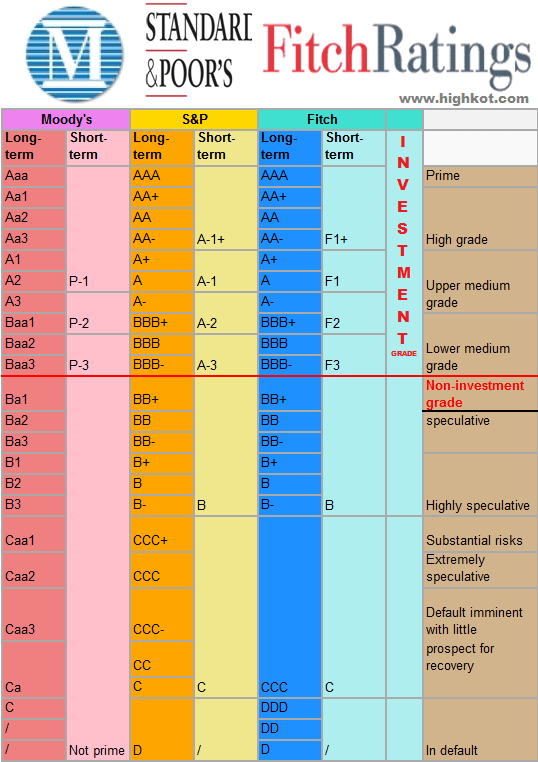
The following 16 hospital and health system credit rating downgrades occurred since March 1. They are listed below in alphabetical order.

1. Boulder (Colo.) Community Health — from “A2” to “A3” (Moody’s Investors Service)

2. Butler (Pa.) Health System — from “Baa1” to “Baa2” (Moody’s Investors Service)

3. Catholic Health System (Buffalo, N.Y.) — from “Baa1” to “Baa2” (Moody’s Investors Service)

4. Catholic Medical Center (Manchester, N.H.) — from “Baa1” to “Baa2” (Moody’s Investors Service)

5. Hutchinson (Kan.) Regional Medical Center — from “Baa3” to “Ba1” (Moody’s Investors Service)

6. Magnolia Regional Health Center (Corinth, Miss.) — from “Ba3” to “B1” (Moody’s Investors Service)

7. Marshall Medical Center (Placerville, Calif.) — from “BBB-” to “BB+” (Fitch Ratings)

8. Prisma Health (Greenville, S.C.) — from “A2” to “A3” (Moody’s Investors Service)

9. Quorum Health (Brentood, Tenn.) — from “Caa2” to “Ca” (Moody’s Investors Service)

10. SoutheastHealth (Cape Girardeau, Mo.) — from “Baa3” to “Ba1” (Moody’s Investors Service)

11. Sutter Health (Sacramento, Calif.) — from “Aa3” to “A1” (Moody’s Investors Service); from “AA-” to “A+” (S&P Global Ratings)

12. University of Vermont Health Network (Burlington) — from “A2” to “A3” (Moody’s Investors Service)

13. UPMC (Pittsburgh) — from “A+” to “A” (Fitch Ratings); from “A1” to “A2” (Moody’s Investors Service)

14. Virginia Mason Medical Center (Seattle) — from “Baa2” to “Baa3” (Moody’s Investors Service)

15. Washington County (Calif.) Health Care District — from “Baa1” to “Baa2”  (Moody’s Investors Service)

16. Wood County Hospital (Bowling Green, Ky.) — from “Ba2” to “Ba3” (Moody’s Investors Service)


Americans hate contact tracing

https://www.axios.com/axios-ipsos-coronavirus-week-9-contact-tracing-bd747eaa-8fa1-4822-89bc-4e214c44a44d.html?utm_source=newsletter&utm_medium=email&utm_campaign=newsletter_axiosvitals&stream=top

Video: Transportation's looming overhaul - Axios

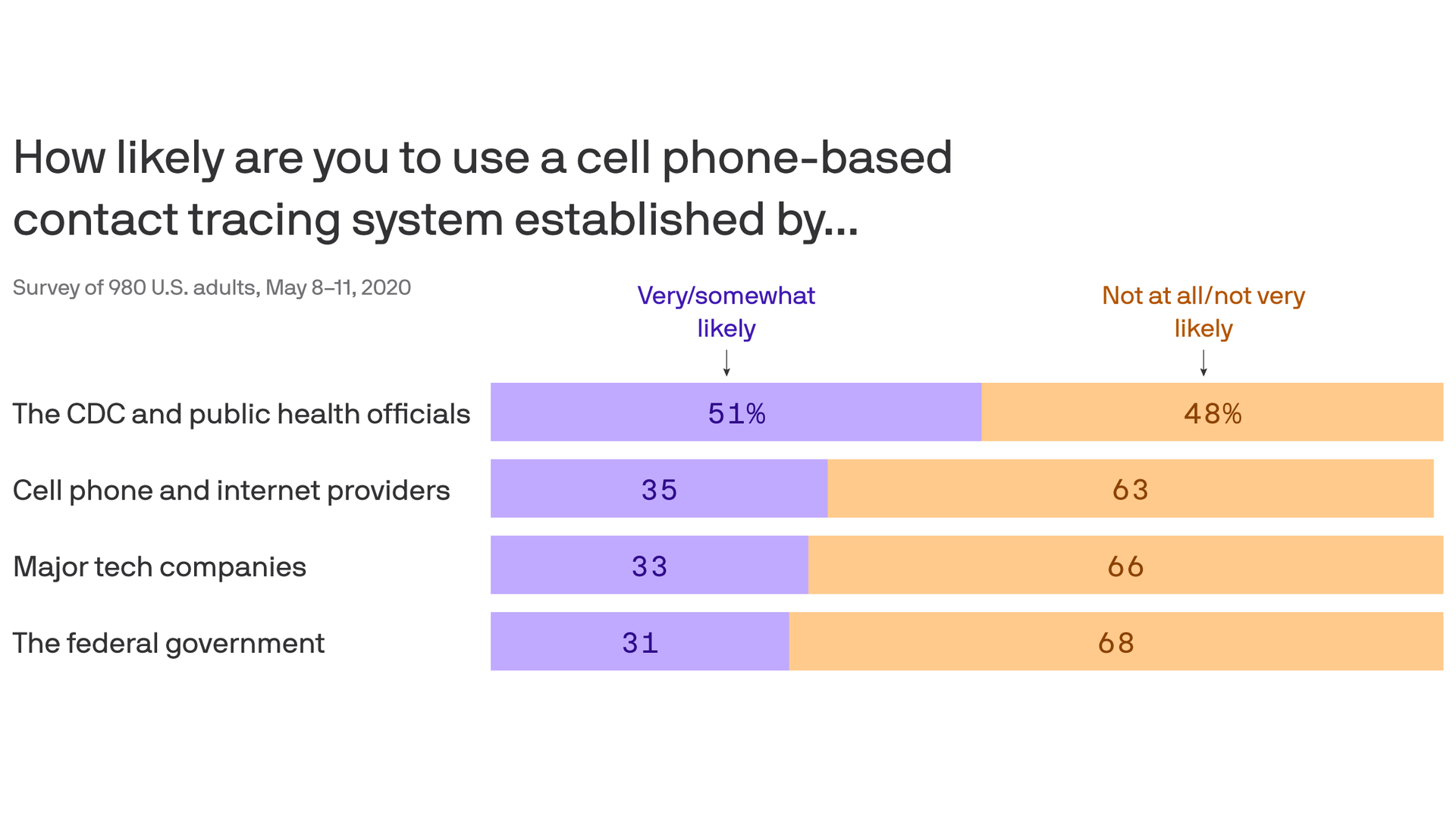
In a best-case scenario, just half of Americans would participate in a voluntary coronavirus “contact tracing” program tracked with cell phones, according to the latest installment of the Axios-Ipsos Coronavirus Index.

Why it matters: A strong contact tracing program — identifying people who have the virus and isolating those who have come into contact with them — is the key to letting other people get back to their lives, according to public health experts.

  • The findings underscore deep resistance to turning over sensitive health information, and mistrust about how it could be used.
  • The only way to get even half of Americans to participate would be for public health officials to run the program, not the White House or tech or phone companies.

What they’re saying: “The whole concept of American democracy is about local control and civil liberties, individual liberties,” said Cliff Young, president of Ipsos U.S. Public Affairs.

  • “At the end of the day, I think there will be an American solution to contact tracing,” but if the survey results are any guide, “it’s not going to be a centralized authority saying, ‘And now we’re going to have contact tracing.'”
  • These findings come as tech companies develop software to try to halt the spread, and public health officials train thousands to conduct the tracing.

The big picture: Even as the death toll rises and infections breach the White House firewall, Week 9 of our national survey also finds more people itching to return to work as they used to know it — and bending guidelines to see family and friends.

  • 64% say returning to their pre-coronavirus lives would be a large or moderate risk. Just 30% say that’s worth the risk right now.
  • But four in 10 say they think returning to their normal place of employment would post only a small risk, or no risk.
  • 63% consider airplane travel or mass transit to be a large risk, down from 73% a month ago.
  • Nine in 10 say they’re still practicing social distancing, but just 36% say they’re self quarantining, down from a peak of 55% in Week 4.
  • 32% say they’ve visited family or friends in the past week, the highest share in seven weeks.

These shifts in behavior come even as growing shares of Americans know people in their own communities who have tested positive and the number of confirmed cases in the U.S. has topped 1.3 million, with roughly 80,000 deaths.

  • About a third know someone who has tested positive — and of those, nearly half say they know a person in their own community who has tested positive.
  • “People are getting antsy,” Young said. “They know there’s this risk, but … people’s mental health and social health are challenged and they’re just feeling restless.”
  • “You can only keep cooped up for so long.”

Between the lines: Most don’t see the virus as an immediate existential threat to themselves. This week, we asked whether people had prepared or updated their wills or living wills since the pandemic began. More than nine in 10 said no.

For contact tracing involving cell phone tracking, Democrats surveyed are more open than Republicans to the notion of opt-in reporting.

  • 68% of Democrats say they’d participate if the Centers for Disease Control and Prevention (CDC) was in charge, compared with 58% of independents and 32% of Republicans.
  • Those numbers plunged if the federal government more broadly were in charge, but Democrats remained the most likely to participate — 39% compared with 34% of independents and 23% of Republicans.
  • That’s despite the fact that Democrats are less trusting than others of the Trump administration to protect their families.
  • Men are slightly more likely than women to trust tech companies with the information.

Be smart: Some reporting initiatives may need to be mandatory or person-to-person to get high enough levels of participation to be worthwhile.