Author Archives: henrykotula
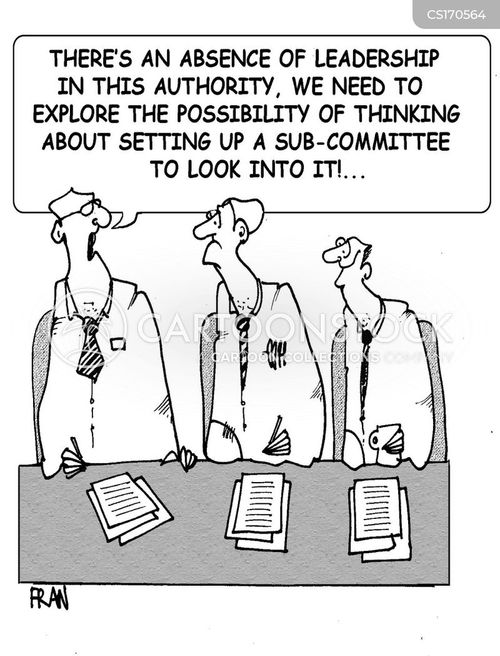
Cartoon – Modern Healthcare Reform
Cartoon – A Panic Alarm
Cartoon – Difference between Good and Great Leaders
Many fear Hahnemann’s story will send a message: Buying a failing hospital pays

Philadelphia Academic Health System, the company that owns Hahnemann University Hospital, is in bankruptcy proceedings, but the hospital’s real estate is not included in the filing. That has sparked outrage from the nurses union, City Council, and even presidential hopeful Bernie Sanders. They say it shows the owner had a plan all along: let the hospital fail, and sell it for its valuable Center City location.
Indeed, California investment banker Joel Freedman, CEO of Philadelphia Academic Health System, separated out the land beneath the hospital and its adjacent, related buildings from the operating business itself, as is common in private equity purchases.
In fact, that’s how private equity is supposed to work: Big firms buy struggling companies with the promise of financial support, and to improve their operations and business strategy. When things go right, the business succeeds, and the private equity firm sells it in a public offering or to another bidder for more than it paid.
In other cases though, the process is not so successful. Private equity firms often load companies up with debt, take dividends out for themselves, sell off valuable real estate, and charge monitoring fees and interest on their loans, leaving a company in a much weaker position than it would have been otherwise, and often on the verge of bankruptcy.
“The house never loses,” said Eileen Applebaum, co-director at the Center for Economic and Policy Research. “The private equity firm makes money whether the company succeeds or it doesn’t.”
Freedman formed Philadelphia Academic Health System to run the hospital. His California private equity firm is called Paladin Healthcare, and he has previously bought and managed hospitals in California and Washington, D.C. At the end of June, Freedman announced that Hahnemann, the 496-bed hospital at the corner of Broad and Vine streets, would close. In early July, Philadelphia Academic Health filed a Chapter 11 bankruptcy petition.
Applebaum, who has taught economics at Temple University and is a native Philadelphian, said that if Paladin Healthcare had really wanted to save the hospital, there are a few things it should have tried.
The most obvious, she said, would have been to diversify its payer mix. One of the reasons Hahnemann failed financially is because two-thirds of its patients were on Medicaid or Medicare — publicly funded insurance plans that reimburse hospitals for care at lower rates than private insurance does. Applebaum said it’s common for hospitals in areas with high rates of patients on public insurance to buy up smaller hospitals in the suburbs, or in other areas that attract more patients on private insurance.
“You see Thomas Jefferson University outpatient-care centers everywhere, you see smaller suburban hospitals that are part of the Thomas Jefferson system,” she said. “Yes, you want to serve the less well-off communities, but you have to balance that with other communities. Everybody knows this, this is not a mystery.”
Because this strategy is common, the fact that Freedman didn’t try it makes Applebaum dubious that he really wanted to save Hahnemann.
“It does not really appear that they made a good-faith effort to turn this hospital around,” she said.
Freedman declined to comment for this story, but he has said in previous statements that he tried to sell the hospital to a nonprofit, and that he asked the city and state for money to keep it open.
The imbalanced payer mix is not as much of an issue at St. Christopher’s, the 188-bed children’s hospital in North Philadelphia that is also run by Philadelphia Academic Health System. It reported a $58 million pretax profit last year and is not closing.
That’s because almost all kids in the United States have insurance through Medicaid or CHIP, a federal program. Even though those reimbursement rates are also lower than private insurance would pay, children’s hospitals are more accustomed to that, and they adjust their operations accordingly.
“Pediatric hospitals, particularly those who serve a low-income population like St. Christopher’s, have learned how to operate on a Medicaid budget, so to speak, and have found ways to be more efficient and work within that coverage in a way that a lot of hospitals that primarily serve adult patients maybe haven’t had to,” said Lisa Bielamowicz, co-founder of Gist Healthcare, a D.C.-based health care consulting firm.
Last week, a judge in U.S. Bankruptcy Court in Wilmington gave the green light for hospital systems to bid on St. Christopher’s. A consortium of four health care systems has already expressed interest.
“There’s also an element of wanting to preserve the competitive dynamic and capacity for that care in the market by preserving St. Christopher’s, so that Philadelphia doesn’t become a one-horse town for specialty children’s care,” said Bielamowicz.
Losing St. Chris would leave only Children’s Hospital of Philadelphia for inpatient pediatric care. In 2018, two-thirds of the revenue at St. Christopher’s was from Medicaid. It was half that amount at CHOP.
Bielamowicz added that it would be in the best interest of the local systems to take on St. Chris, so vulnerable children didn’t end up in those hospitals’ regular emergency rooms, many of which are at capacity, without the proper resources to care for them.
St. Christopher’s will be auctioned off to the highest bidder, and the bankruptcy judge is expected to approve the sale in September. The hospital’s Erie Avenue site also was not included in the bankruptcy filing.
Hahnemann Hospital’s property — owned by Broad Street Healthcare, the holding company set up by Freedman — totals about 1 million square feet and, according to city records, has a market value of $58 million.
Brad Molotsky, a partner with the law firm Duane Morris who formerly worked as general counsel for Brandywine Realty Trust, said the downtown neighborhood shows promise for developers, but only ones with deep pockets.
“If you rebuilt a million square feet at 500 bucks a square foot, that’s a big ticket,” he said.
Applebaum, of the Center for Economic and Policy Research, said she is worried that a separate sale of the Hahnemann property to a developer will lay a road map for private equity firms around the country: Buy older hospital in areas that are gentrifying, separate the hospital from its real estate, let the hospitals go downhill, and then sell the real estate to the developers.
“It won’t matter that they lose money in the bankruptcy on the hospital, because they’re going to make so much money on the real estate,” she said.
Another Democratic presidential candidate, U.S. Sen. Elizabeth Warren, has released a plan that would force private equity firms and funds to share the responsibility for the debt the companies they buy take on in the financial restructuring process. As it stands now, neither Paladin Healthcare, the parent company, or MidCap Financial, which loaned purchase and operating funds to Philadelphia Academic Health System, are on the hook for any of its debt.
“It’s like you bought your neighbor’s house, you got a big mortgage when you bought your neighbor’s house, but it’s your neighbor who has to pay back the mortgage,” said Applebaum.
“So that’s a sweet deal if you can get it.”
In need of a new lens on demographic trends
As we’ve discussed before, our view is the healthcare system faces two fundamental demographic challenges across the next decade.
The first is how to sustainably accommodate 80M Baby Boomers—all of whom will be over 65 within the next ten years and in the Medicare program. This will entail providers learning to care for seniors in a much lower cost, lower intensity way, and payers (the federal government and insurers) to design benefits, networks and reimbursement approaches that support a more appropriate model of care delivery.
The second, often less discussed, is how to adapt traditional delivery approaches for the (even larger) Millennial generation, who will enter their “fix me” years within the next decade, and bring their high-demand, high-information, digitally-oriented consumption behaviors to an industry that has been built for older consumers more accustomed to the “hurry up and wait” model.
Our concern for incumbents, as the graphic suggests, is that they view these two demographic challenges through the lens of their current business models and seek to protect their legacy economics.
We commonly hear provider executives talk about “taking a wait and see attitude” and having a bias toward “no-regrets moves”. Why should we embrace price transparency, destroy demand for our own services, or disrupt ourselves, while we’re still making so much money on fee-for-service medicine?
But self-disruption is becoming an urgent priority as newly-emboldened outsiders look to upend the traditional model. Players like CVS, UnitedHealth Group and others view now as the time to assemble low-cost delivery assets and redesign network and benefit structures to capture the loyalty of those Boomers in Medicare Advantage plans for the next decade or more. And technology companies from Amazon to Google see an immediate opportunity to build new models around consumer loyalty as well, moving at Internet speed.
The sooner incumbents wake up to the reality that these unprecedented demographic forces demand a new approach to doing business, the better their chance of avoiding being outflanked by these kinds of disruptors.
Seventy two percent of all rural hospital closures are in states that rejected the Medicaid expansion
https://www.gq.com/story/rural-hospitals-closing-in-red-states
States that refused Obamacare’s Medicaid expansion are hemorrhaging hospitals in rural areas.
Roughly 20 percent of Americans live in rural areas, including more than 13 million children, according to the last U.S. census. And, according to research and reporting by the Pittsburg Morning Sun and its parent company, GateHouse Media, those people have been steadily losing access to hospitals for years.
In Oklahoma, Georgia, South Carolina, and Mississippi, at least 52 percent of all rural hospitals spent more money than they made between 2011 to 2017. In Kansas, it’s 64 percent, and five hospitals there shut down completely in that time. Since 2010, 106 rural hospitals have closed across the country. (Another 700 are “on shaky ground,” and about 200 are “on the verge of collapse,” according to Gatehouse.) Of those 106 that closed, 77 were in deep red states where local politicians refused the Obama administration’s Medicaid expansion that came about as a result of the Affordable Care Act.
In short, the federal government provided funds to expand coverage for Medicaid, a program that helps pay for health care for low income patients. But the expansion was optional, and 14 Republican-controlled states rejected to take the money. The only state that bucked this trend was Utah, where rural hospitals were among the most profitable in the country thanks to a policy of shifting funds and resources from urban hospitals. Only 14 percent of rural hospitals operated at a loss and none shut down over the same time period.
The number of rural hospitals has been shriveling for some time now: more than 200 rural hospitals closed between 1990 and 2000, according to a report from the Office of Health and Human Services. Since rural areas have been losing hospitals for decades already, every additional closure is more devastating. And even the hospitals that remain open are struggling to stay fully staffed. According to the Health Resources and Services Administration, rural parts of the U.S. need an additional 4,022 doctors to completely close their coverage gaps.
Just refusing the Medicaid expansion alone doesn’t completely account for the hundreds of rural hospital closures across Republican-controlled states. For one thing, medical treatment and technology has gotten more advanced. Dr. Nancy Dickey, president of the Rural and Community Health Institute at Texas A&M, told Gatehouse, “Most of what we knew how to do in the 1970s and 1980s could be done reasonably well in small towns. But scientific developments and advances in neurosurgery, microscopic surgery and the like required a great deal more technology and a bigger population to support the array of technology specialists.” As a result, the number of services that rural hospitals offered started to shrink, while at the same time rural populations dwindled as both jobs and young people moved away. What’s left were older, poorer populations that needed more medical care and had less money to pay for it. In that situation, hospitals can’t generate enough revenue to stay open, let alone enough to pay the salaries of even new doctors, who carry an average of $200,000 in student debt.
Still, if the state legislatures and governors had accepted the money, billions of dollars could have gone to improving insurance coverage and propping up the hospitals’ bottom lines. In a health-care industry where the average CEO pay is $18 million a year, hospitals have to produce a lot of money to justify their existence to shareholders. The Medicaid expansion was one of the few lifelines available to rural Americans, and their politicians snubbed it.
Hospital CEO says more price disclosure won’t bring down healthcare costs
The Trump administration is pushing ahead with a new rule that could require hospitals to reveal the prices they negotiated with insurance companies. The White House says the move could help bring the free market into the murky world of health care.
But the CEO of one of the nation’s largest hospital systems says the rule will just lead to more confusion for consumers.
“You won’t still know what your cost will be even when you look at our prices,” Dr. Kenneth Davis, CEO of the Mount Sinai Health System, told Yahoo Finance’s The First Trade. He says insurers like Cigna (CI), UnitedHealth (UNH), Anthem (ANTM) and Aetna parent CVS Health (CVS) should be the ones to house that information and help customers make sense of it.
“There are so many nuances in the insurance policies that going on our site isn’t going to tell you what you’re really going to pay,” he said. “You need the insurance information, and that’s the information that’s available from the insurance company. They know negotiated prices. So you’re really asking the wrong people to disclose the information.”
The rule could show how widely prices vary between regions and even at hospitals and clinics in the same city. In an interview with the Wall Street Journal, Centers for Medicare and Medicaid Services Administrator Seema Verma called it a “turning point in health care and a turning point to the free market in health care.”
But the hospital industry’s main lobbying group, the American Hospital Association, said in a statement that move could “seriously limit the choices available to patients in the private market and fuel anticompetitive behavior among commercial health insurers in an already highly concentrated insurance industry.”
Hospitals and insurance companies are notoriously secretive about their contract deals, something Dr. Davis attributes to competition between care providers and the insurance companies. Insurers are looking for the best deal, he said, while providers want the highest payment.
“Everyone’s worried about what they will then negotiate with the insurance company,” he said. “The insurance companies are worried, in turn, that other health networks like ours might ask for higher prices.”
Dr. Davis says regulators should be pushing the insurance companies and not the hospitals to disclose pricing.
“We have thousands of items that we would list items on,” he told Yahoo Finance’s Alexis Christoforous and Brian Sozzi. “If I have an insurance policy and I go online, I don’t know — still — what my co-pays and deductibles are going to be. Where that information should be is on the insurance company website.”
“I don’t have a problem disclosing that information,” he said. “I just think it’s important that people be able to use that information validly.
Without knowing what their insurance policy covers, he said, “they won’t know what they’re going to pay anyway.”
Healthcare’s number one financial issue is cybersecurity
The cost of a healthcare breach is about $408 per patient record and that doesn’t include the loss of business, productivity and reputation.
Cyber attacks affect the finances of every hospital and insurer like no other.
“I’ve seen estimates of over $5 billion in costs to the healthcare industry annually,” said Lisa Rivera, a partner at Bass, Berry and Sims who focuses on healthcare security. “That’s enormous and is not going away.”
Beyond the cost to find a solution to fix breaches and to settle any civil complaints are fines from the Department of Health and Human Services Office of Civil Rights. In 2018, OCR issued 10 resolutions that totalled $28 million.
The HHS Office of Civil Rights is stepping up breach enforcement of private health information, according to Rivera, who is a former assistant U.S. Attorney and federal prosecutor handling civil and criminal investigations for the Department of Justice.
What officials want to see is that the hospital or insurer has taken reasonable efforts to avoid a breach.
“There is no perfect cybersecurity,” Rivera said. “They say it’s not perfection, it’s reasonable efforts. That’s going to require an investment up-front to see where data is located, and educating the workforce on phishing incidents.”
Also, hospital finance professionals who are relying more on contractors for revenue cycle management and analytics should take note on the security issues involved in sharing this information.
“Every sector of business has attacks, but healthcare is experiencing the largest growth of cyber attacks because of the nature of its information,” Rivera said. “It’s more valuable on the dark web.”
It’s also not easily fixed.
If an individual’s credit card is stolen, the consumer can cancel his or her credit card. But in health records, the damage is permanent.
THE IMPACT
Despite the number of breaches, healthcare has been behind other sectors in taking security measures. Four to seven percent of a health system’s IT budget is in cybersecurity, compared to about 15% for other sectors such as the financial industry, according to Rivera.
Hospitals are behind because first, it’s a challenge to keep up with the move to more information being in electronic form.
“There’s no hospital that doesn’t have mobile EHR information,” Rivera said. “Then there was this transition with incentives from the government to go to electronic medical records. There were vast routes to doing that without a lot of experience involved in doing it. The push to become electronic began happening with this enormous uptick in cyber attacks.”
Also, the focus of healthcare has always been patient care. The population health explosion also involves the sharing of information.
And consolidation across the healthcare industry can potentially make covered entities more vulnerable to lapses in security during the transition and integration phases.
RECOMMENDATIONS
The number one way to cut costs is to prevent a breach. Once one has happened, hospitals must be able to identify it as soon as possible and then be able to respond to it.
Hospitals should be able to determine where certain data goes off the rail, Rivera said. For instance, large systems doing research have outcome information that may not be within the system of protection.
“You don’t want to learn about a data breach because the FBI saw it on the dark web,” Rivera said. And some hospitals have.
It’s a constant battle of software updates and checks. Criminals are pinging systems thousands of times a day. It’s like locking down doors and windows.
The first thing that’s needed for systems large and small is a risk assessment. This is the first thing the OCR wants to see, she said. Many hospitals use an outside vendor to do the job.
Prices for other cybersecurity measures vary from a software purchase that could be in the millions, to having vendor monitoring.
But the cost of a healthcare breach is about $408 per patient record and that doesn’t include the loss of business, productivity, reputation and the service disruption.
Hospitals can also purchase cyber insurance, which varies in cost and coverage. Some obtain it for purposes of class action lawsuits.
THE LARGER TREND
OCR enforcement activity during 2018 demonstrates the agency’s continued emphasis on enforcing violations of the security risk assessment and risk management requirements, Rivera said.
Covered entities and business associates are required to: conduct a thorough assessment of the threats and vulnerabilities across the enterprise; implement measures to reduce known threats and vulnerabilities to a reasonable and appropriate level; and ensure that any vendor or other organization accessing or storing private health information is security compliant.
The OCR concluded 2018 with an all-time record year for HIPAA enforcement activity. The OCR settled 10 cases and secured one judgment, together totaling $28.7 million. This surpassed the previous record of $23.5 million from 2016.
In addition, OCR also achieved the single largest individual HIPAA settlement of $16 million with Anthem, representing a nearly three-fold increase over the previous record settlement of $5.5 million in 2016. Anthem was held responsible for cyber attacks that stole the protected health information of close to 79 million people.
Anthem again irks docs with latest changes to reimbursement

Anthem is again ruffling the feathers of providers, this time over a new reimbursement policy denying payment for certain follow-up office visits the same day a procedure is performed.
The policy could impact many specialists and primary care doctors. Dermatologists are particularly upset over the change, which they call punitive and unnecessary with the potential to disrupt patient care.
“It is a nuisance. It makes absolutely no sense,” George Hruza, a practicing dermatologist and president of the American Academy of Dermatology, told Healthcare Dive.
It’s the latest in a string of controversial policies from Anthem. The Blue Cross payer that insures 40 million people has taken steps to rein in costs by enforcing different payment policies based on site of care and other factors.
In the past several years, the Indianapolis-based for-profit said that it would no longer pay for emergency room visits if patients show up with minor ailments like the common cold. It also stopped paying for certain imaging tests at outpatient facilities owned by hospitals due to the unexplained wide variation in costs compared with freestanding imaging centers.
And this year, Anthem cut rates paid to hospital-based labs in an attempt to align them with independent labs, a strategy that garnered extensive discussion on lab giant Quest Diagnostic’s second quarter earnings call.
Anthem contends the latest change to office visit payments will prevent duplicative billing for similar visits. The change took effect March 1, according to a previous provider alert. Anthem told Healthcare Dive it’s an update to its claims systems and does not describe it as a new reimbursement policy.
Despite conversations with Anthem, Hruza said his organization hasn’t been given an explanation on what triggered the change and whether it actually addresses a problem or an abuse of the system. He said he understands the need to cut healthcare costs, but wonders how much savings the change will generate as some of the visits are below $100.
The payer proposed an almost identical change last year but later decided to pull it back after intense pushback from the American Medical Association and other provider groups. The newer policy is worse because doctors would receive no payment, and it’s more narrowly tailored to the same diagnosis, Hruza said.
‘Appropriate settings’
Anthem argues the policy is needed to move care to more cost-efficient settings.
“Our efforts to help achieve that goal include a range of initiatives that, among other things, encourage consumers to receive care in the most appropriate setting and also help promote accurate coding and submission of bills by providers,” Anthem said in a statement to Healthcare Dive.
Hruza is worried the latest iteration would cause patients delays in care.
He gave the example of a patient with acne prescribed a medication. He would want to see them for a follow-up in a few weeks. At that second appointment, if he saw the treatment wasn’t working well, he might prescribe a different medication. At the same time, he may drain an acne cyst, a minor procedure. That would trigger a denial, he said, because of the two visits revolving around the same diagnosis with the same-day procedure.
AMA is aware of the policy and has had meetings with Anthem about its concerns, a source for the organization that represents the nation’s doctors told Healthcare Dive.
For providers, the big fear is the change will result in unjustified claim denials and encourage other payers to adopt similar measures. Hruza said there is no recourse for contracted providers, particularly those that work in smaller practices, when these changes are made, given Anthem’s size as the nation’s second-largest insurer.
As deductibles rise and patients are shouldering a greater burden of the cost of care, insurers may be feeling the pressure from employers to wring out costs from the provider side, Sabrina Corlette, a research professor at the Center on Health Insurance Reforms at Georgetown University, told Healthcare Dive.
“Employers are getting more and more wise to the fact that the reason we have a cost problem in this country is because of provider prices,” Corlette said.