New unemployment claims top 1 million. Again.

https://www.washingtonpost.com/business/2020/08/20/august-unemployment-claims/?wpmk=1&wpisrc=al_business__alert-economy&utm_source=alert&utm_medium=email&utm_campaign=wp_news_alert_revere&location=alert&pwapi_token=eyJ0eXAiOiJKV1QiLCJhbGciOiJIUzI1NiJ9.eyJjb29raWVuYW1lIjoid3BfY3J0aWQiLCJpc3MiOiJDYXJ0YSIsImNvb2tpZXZhbHVlIjoiNWI2M2EzNDJhZGU0ZTI3Nzk1NTBjYTFiIiwidGFnIjoid3BfbmV3c19hbGVydF9yZXZlcmUiLCJ1cmwiOiJodHRwczovL3d3dy53YXNoaW5ndG9ucG9zdC5jb20vYnVzaW5lc3MvMjAyMC8wOC8yMC9hdWd1c3QtdW5lbXBsb3ltZW50LWNsYWltcy8_d3Btaz0xJndwaXNyYz1hbF9idXNpbmVzc19fYWxlcnQtZWNvbm9teSZ1dG1fc291cmNlPWFsZXJ0JnV0bV9tZWRpdW09ZW1haWwmdXRtX2NhbXBhaWduPXdwX25ld3NfYWxlcnRfcmV2ZXJlJmxvY2F0aW9uPWFsZXJ0In0.ns8VggWJk95qb-c_2926acWIaHxyFIBXSRn76O7Lrf0

The number of people applying for the first time for unemployment insurance ticked up last week to 1.1 million, from 970,000 the week before, a sign that job losses continue to plague the labor market five months into the coronavirus pandemic.

The weekly jobless claims had sunk slowly in recent months but have remained well above historical highs, averaging about 1.18 million a week for the last four weeks. Economists had predicted last week’s figure to approach the numbers from the previous week, which had fallen below 1 million for the first time in about five months.

Instead, the initial claims and new claims for Pandemic Unemployment Assistance, the program available to gig and self-employed workers, both went up. About 543,000 new claims were filed for PUA for the week that ended on Aug. 15, up from 488,000 the week before.

“The fact that the claims are so high this far into the crisis is concerning,” said AnnElizabeth Konkel, an economist at the job site Indeed. “Yet the depths of the damage remain to be seen. I would definitely call it a canary raising alarms in the economic coal mine.”

Data shows the number of job postings slowly recovering in recent weeks, compared with postings from the year prior. However, last week, postings took a turn for the worse. They had been running about 18 percent below normal and fell to 20.3 percent below normal last week.

“The longer we go into this crisis, the longer people that have been temporarily laid off may not get called back,” Konkel said. “Businesses can only ride out this crisis for so long.”

More than 28 million people were receiving some form of unemployment benefits as of Aug. 1, the most recent week for that statistic, about equal to the previous week.

Job loss from the pandemic remains a singular crisis, without comparison in modern times. The country’s unemployment rate, last calculated in July, was 10.2 percent, and economists have warned that it could go up in August as the virus continues to alter life around the country.

The extra $600 in unemployment benefits that many workers credit with keeping them afloat expired at the end of July. And funds from the $660 billion PPP program, which gave grants and loans to companies to keep workers on payroll, have been running out for many recipients.

Companies announcing layoffs in recent days include Wieland Copper Products, in North Carolina, a Mohegan Sun casino in Wilkes-Barre, Pa., Amsterdam Printing & Litho, a printing company in Upstate, N.Y., and Ohio sales and marketing company Maritz. School districts and local governments are also beginning to experience deep cuts: New York Mayor Bill de Blasio (D) warned last week that as many as 22,000 city workers faced possible layoffs in the fall.


Supreme Court to hear ACA arguments after November election

https://www.healthcaredive.com/news/supreme-court-will-hear-aca-case-after-november-election/583804/?utm_source=Sailthru&utm_medium=email&utm_campaign=Issue:%202020-08-20%20Healthcare%20Dive%20%5Bissue:29204%5D&utm_term=Healthcare%20Dive

Dive Brief:

  • The Supreme Court will hear oral arguments in the Republican-led case seeking to overturn the Affordable Care Act on November 10, exactly one week after the presidential election, according to the court’s online docket on Wednesday.
  • A hearing post-election was the likeliest choice from the outset. The justices’ October schedule did not include the highly anticipated case, leaving just one day for arguments to potentially be heard before the election.
  • Still, Wednesday’s news does not mean the Supreme Court will make a ruling on the case in 2020. Legal experts say a final ruling is still expected next year.


Dive Insight:

The ACA court case has loomed large as the nation has been ravaged by the novel coronavirus pandemic that has sickened millions, killed thousands and severed millions of people from their employer-sponsored health insurance coverage. 

Alternative coverage options introduced or strengthened by the ACA, such as expanded Medicaid coverage or marketplace plans, have served as an important safety net for those who have lost coverage as a result of the pandemic. 

Onlookers have long been waiting for the court to set a date for final arguments in the case against the ACA. Wednesday’s updated docket means the country is one step closer to knowing whether the ACA and its popular provisions, such as protections for pre-existing conditions, will remain the law of the land. 

Waiting to schedule oral arguments until after the election may have been intentional, legal experts say.

The highly unusual decision by the Trump administration’s DOJ to refuse to defend the law is likely to change with the election result, if former Vice President Joe Biden, the Democratic presidential nominee and a staunch ACA backer, wins the White House.

Republicans for years have been trying to dismantle President Barack Obama’s landmark health law, including by eliminating the financial penalty for not holding insurance.

The central argument in the case, brought primarily by a group of red states, is whether the entire law is invalid because it no longer contains the so-called individual mandate. The red states have argued that because Congress lowered the penalty to zero that the individual mandate can no longer be considered a tax and therefore renders the entire law unconstitutional.

Lower courts have ruled in favor of the red state plaintiffs, though the appeals court did not weigh in on whether the rest of the law could be severed from the mandate.


School reopenings with COVID-19 offer preview of chaotic fall

https://thehill.com/policy/healthcare/public-global-health/512824-school-reopenings-with-covid-19-offer-preview-of

When Texas schools reopen, officials planning few required safety ...

Thousands of students and teachers across the country are quarantining just days into the new school year, highlighting the challenges of resuming in-person instruction during a pandemic.

While many schools aren’t scheduled to reopen until later this month or September, those that have are offering a preview of the chaos that awaits districts this fall, particularly in hot spots in the South and Midwest where the virus is spreading uncontrollably.

In Georgia’s Cherokee County School District, where students are not required to wear masks, nearly 2,200 students — mostly high schoolers — are quarantining after coming into contact with one of 116 students or 25 teachers and staff members with COVID-19. Another 53 teachers and staff members are also quarantining.

Those numbers are expected to increase with more test results. In the meantime, three of the district’s six high schools have moved classes online, at least until September.

Experts have warned for weeks that it will be extremely difficult to safely reopen schools in hot spots, but some districts are still charging ahead — some willingly, others after some prodding from state and national leaders.

The results, health officials say, are not surprising, though they are preventable.

“You go in, people get infected — boom, you close them down. So it’s better to ease in, perhaps with virtual, until you see what’s going on when you’re in a really hot zone,” Anthony Fauci said during a livestreamed event Tuesday, referring to schools that have already closed after reopening this year.

“When you’re in a red zone … you really better think twice before you do that because what might happen, is what you’ve seen,” Fauci added.

Schools in states like IndianaLouisianaOklahoma and Tennessee have shut down, at least temporarily, after finding COVID-19 in their hallways and classrooms.

The question of when and how to open schools has moved from a public health debate to a political one, with President Trump and his administration strongly advocating for full-time, in-person instruction, hoping in part that parents can then return to work and revamp an economy that’s been ravaged by the coronavirus recession.

Health experts and administration officials note that the consequences of missing in-person learning can be severe, especially for younger students. Finding a solution that minimizes harm to students while protecting public health has proven difficult.

Annette Anderson, a professor in the school of education at Johns Hopkins University, said there is no proven or agreed-upon approach to holding classes during a pandemic, no set protocols around when to return to in-person instruction or how to conduct testing and contact tracing.

“There’s a wild, wild west approach with all the different types of plans in reopening and because of that, a gold standard would just mean clarity around what schools should do. But we don’t have a tacit agreement about what that actually means,” she said.

Most states are deferring school opening decisions to local school districts. For example, while the Cherokee County School District is offering in-person learning five days a week, Atlanta Public Schools, just one county over, is beginning the year online.

Many school districts are opting for online instruction or pursuing hybrid models in which students alternate which days they are in class to limit the number of people in school buildings at one time.

Others, like some districts in Georgia, Arkansas, Florida and Texas, are moving full speed ahead with in-person learning, despite the challenges posed by cramped buildings and classrooms. Some of those districts also offer online options.

While in-person instruction might work for some states where transmission is relatively low, like New York, which gave districts the green light to fully reopen this year, it will be much harder in hot spots.

Fauci classified hot spots as areas with test positivity rates that exceed 10 percent.

While he didn’t specify any states, several across the country have positivity rates over 10 percent, according to figures compiled by Johns Hopkins University, and have districts pursuing in-person instruction. The list includes Florida, Georgia, Idaho, Iowa, Kansas, Mississippi and Texas.

“There’s one opportunity to do this well, because once you open you want the schools to stay open as much as possible, given how disruptive isolating schools and teachers can be,” said Thomas Tsai, assistant professor in the Department of Health Policy and Management at Harvard T.H. Chan School of Public Health.

He recommended schools consider shutting down if the virus appears to be widespread. If cases appear to be isolated to one cluster in a classroom, the rest of the school can probably remain open, while exposed students isolate at home.

That’s why it’s especially important for students to wear masks and keep their desks at least 6 feet apart, and avoid gatherings outside of classrooms, he said, otherwise the number of contacts per case can quickly grow, resulting in more students and teachers needing to be quarantined.

If there are clusters in multiple classrooms and hundreds of students and teachers need to quarantine, schools might need to consider shutting down, Tsai added.

The Centers for Disease Control and Prevention says in “most instances” a single case of COVID-19 should not warrant a school closure.

But if the spread of COVID-19 at a school is higher than within the community, or if the school is becoming the source of an outbreak, administrators should work with local health officials to determine whether temporary closures are needed.

Mississippi State Health Officer Thomas Dobbs said Monday that 245 teachers and 199 students have tested positive for the coronavirus in 71 of the state’s 82 counties. Almost 600 teachers and more than 2,000 students are now in quarantine, but none of the schools have closed.

Dobbs said many of the teachers and students likely contracted the virus outside of school but unknowingly “brought it with them” to class.

Classes are canceled indefinitely at a school district in Pinal County, Ariz., after more than 100 teachers and staff members refused to come to work, citing a concern with the spread of COVID-19 in the community.

The school district planned to resume in-person learning Monday, despite the county not meeting metrics recommended by the state’s health department for safely reopening, including a drop in the number of new cases, new COVID-19 hospitalizations and the percentage of people testing positive.

In Florida, 13 counties have reopened schools in the past week for in-person instruction; at least three districts have reported COVID-19 cases. In Martin County, more than 300 students and teachers are quarantining after coming into contact with infected classmates.

County officials said some parents are not keeping their kids at home while awaiting the results of COVID-19 tests. Instead, they’re waiting until the test is positive before notifying the school.

And in Florida’s Dade County, about 70 students and staff are quarantining after 11 people in the district tested positive. County officials have said that cases are to be expected and superintendents should call them before making any decisions about closures.

The confusion at all levels of government has frustrated both parents and school officials. In the lead-up to the new school year, Trump has offered mixed messages.

Last month, he said schools in hot spots might need to delay their reopening plans, but in August he renewed his push for a return to in-person instruction by tweeting: “OPEN THE SCHOOLS!!!”


How to make sure your vote counts in November

https://theconversation.com/how-to-make-sure-your-vote-counts-in-november-144476?utm_medium=email&utm_campaign=Latest%20from%20The%20Conversation%20for%20August%2019%202020%20-%201707616486&utm_content=Latest%20from%20The%20Conversation%20for%20August%2019%202020%20-%201707616486+Version+A+CID_ee5f6e1a20d69ba14ac919d3b2025202&utm_source=campaign_monitor_us&utm_term=How%20to%20make%20sure%20your%20vote%20counts%20in%20November

Research on voting by mail says it's safe – from fraud and disease ...


The time is now! Voting in the presidential election will begin in many states in just a few weeks – as early as Sept. 4 in North Carolina. Every state’s regulations and procedures are different, so it is vital that you understand the requirements and opportunities to vote where you live.

Here’s how to make sure you’re ready to vote, and that your vote will count.


Steven Cotterill on Twitter: "108,000,000 eligible voters chose to ...

Check your registration

Make sure that you are registered to vote at your current address. You may not have voted in a while. You may have moved or changed your name. You may have forgotten when you last registered to vote. Calling or visiting your secretary of state’s office or local Board of Elections may be a good place to start.

You can also visit Vote.orgRock the VoteI am a voter or the U.S. Vote Foundation, all nonprofit, nonpartisan websites providing lots of detailed information about voting rights, registration and the process of voting. It took only a few minutes online for me to verify my own registration and voter ID number.

The federal government offers lots of useful voting information, too.

Not registered? Register now!

If you’re not registered – whether you have never registered or your registration is out of date – there is still time. September 22 is National Voter Registration Day, when millions of individuals register to vote.

Each state has its own process and deadlines, and you may be able to register online through Vote.org, which can take less than two minutes.

If you’d rather register to vote on paper, download and print a simple form from the federal government, which asks you to provide some personal information, like your name and address. The instructions give state-specific details and provide the mailing address you need to send the form to.

While you’re at it, encourage your friends to register too.

Make a plan to vote

Not everyone who is registered to vote actually casts a ballot. You’re more likely to actually vote if you make a plan.

You’ll need to find out when to vote in person and where to do it. Election Day is Tuesday, Nov. 3, 2020 – but different cities and towns have different voting hours. Many communities have several polling places, and you need to go to the right one, depending on where you live. Make sure you know where to go.

In some places you can vote in person for some number of days ahead of Election Day, often at the main municipal government building. Your town office – and its website – will likely have the dates and location information prominently displayed.

If you don’t want to vote in person, either because of your work or personal schedule, or because of the pandemic, think about voting by mail. Some states will mail you a ballot automatically, either because they conduct their elections by mail or because they have made special provisions to do so as a result of the pandemic. In other states you have to request one – and sometimes you need to provide a specific excuse for wanting to avoid in-person voting.

If you’re voting by mail, you may need to pay postage to send your ballot back in. Call your local election office and ask how much you’ll need – and get the right postage. You can order postage online for free delivery – and splitting the cost of a book of stamps is another great opportunity to share voting with a friend.

In 2016, nearly one-quarter of U.S. votes were cast by mail. Research and evidence show that it is safe and reliable – though with large numbers of people expected to vote by mail this year, it’s best to mail your ballot back as early as possible to make sure it has plenty of time to arrive before it needs to be counted. The U.S. Postal Service recommends mailing your ballot at least a week before the deadline.

Large amounts of mail also might mean you don’t get your ballot in the mail until just before the election. If it arrives with less than a week to go, call your local Board of Elections or municipal clerk immediately to find out what your options are. You may be able to drop off the ballot rather than mailing it in, and you should also still have the option to vote in person, either on or before Election Day.

If you’re worried about the safety of voting by mail, there are plenty of administrative and legal protections for mailed-in ballots, and steep penalties for those who tamper with election mail.

Set reminders to vote

Many people set reminders for all sorts of important things: medical appointments, friends’ birthdays, bill payment dates and so on. Add voting to your calendar – including alerts to request a mail-in ballot, to vote early, to mail your ballot and certainly for Election Day itself.

Tell your friends and family

Every vote that is cast is a vital contribution to the nation’s future. Encourage everyone you know to vote. You can even invite people to your calendar events – or share your plans on social media, in an email to family and friends. Send texts to people you know. Pledge to call 10 people and ask them to vote, and ask each of them to call 10 more people.

Do not be intimidated or afraid

If you make your plan and follow the requirements of your state and local government, you can cast your ballot and be certain that your vote will count.

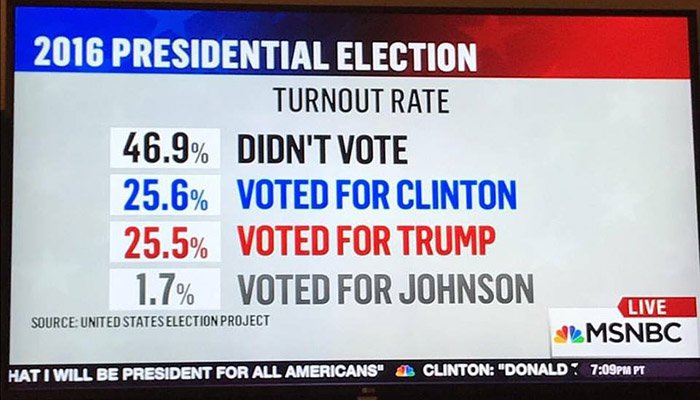
You may encounter people claiming there could be “widespread” voter fraud or that the election is somehow “rigged.” But the biggest problem is that so few people actually vote: In 2016, 40% of eligible American voters didn’t cast a ballot.

It is your right to vote. Exercise that right proudly and make your voice heard.

How to be a smart voter for the 2020 Election – the JTAC

All In: It’s Culture that Drives Results

https://www.leadershipnow.com/leadingblog/2012/04/all_in_its_culture_that_drives.html

IN THE New York TimesStephen I. Sadove, chairman and chief executive of Saks Inc., explains that it is culture that drives results:


It starts with leadership at the top, which drives a culture. Culture drives innovation and whatever else you’re trying to drive within a company — innovation, execution, whatever it’s going to be. And that then drives results.

When I talk to Wall Street, people really want to know your results, what are your strategies, what are the issues, what it is that you’re doing to drive your business. They’re focused on the bottom line. Never do you get people asking about the culture, about leadership, about the people in the organization. Yet, it’s the reverse, because it’s the people, the leadership, the culture and the ideas that are ultimately driving the numbers and the results.


While we know that our most important resource is our people, it’s not so easy to get people “all in”—convincing people to “truly buy into their ideas and the strategy they’ve put forward, to give that extra push that leads to outstanding results.”

All In by Adrian Gostick and Chester Elton explains why some managers are able to get their employees to commit wholeheartedly to their culture and give that extra push that leads to outstanding results and how managers at any level, can build and sustain a profitable, vibrant work-group culture of their own. All In takes the principles found in their previous books—The Orange Revolution and The Carrot Principle—and expands on them and places them in a wider context.


They begin by explaining that it all rests on the “belief factor.” People want to believe, but given the fact that “failure could cost them their future security why shouldn’t they be at least a little dubious about your initiatives?” But belief is key. “As leaders we must first allow people on our teams to feel like valuable individuals, respecting their views and opening up to their ideas and inputs, even while sharing a better way forward. It’s a balancing act that requires some wisdom.”

To have a culture of belief employees must feel not only engaged, but enabled and energized. What’s more, “each element of E+E+E can be held hostage by an imbalance in the other two.”


The authors have created a 7 step guide to develop a culture where people buy-in:

Define your burning platform. “Your ability to identify and define the key “burning” issue you face and separate it from the routine challenges of the day is the first step in galvanizing your employees to believe in you and in your vision and strategy.”

Create a customer focus. “Your organization must evolve into one that not only rewards employees who spot customer trends or problems, but one that finds such challenges invigorating, one that empowers people at all levels to respond with alacrity and creativity.”

Develop agility. “Employees are more insistent than ever that their managers see into the future and do a decent job of addressing the coming challenges and capitalizing on new opportunities.”

Share everything. “When we aren’t sure what’s happening around us, we become distrustful….In a dark work environment, where information is withheld or not communicated properly, employees tend to suspect the worst and rumors take the place of facts. It is openness that drives out the gray and helps employees regain trust in culture.”

Partner with your talent. “Your people have more energy and creativity to give. There are employees now in your organization walking around with brilliant ideas in their pocket. Some will never share them because they don’t have the platform to launch those ideas on their own. Most, however, will never reveal them because they don’t feel like a partner in the organization.”

Root for each other. “Our research shows incontrovertible evidence that employees respond best when they are recognized for things they are good at and for those actions where they had to stretch. It is this reinforcement that makes people want to grow to their full shape and stature.”

Establish clear accountability. “To grow a great culture, you need to cultivate a place where people have to do more than show up and fog a mirror; they have to fulfill promises—not only collectively but individually.” And this has to be a positive idea.

Gostick and Elton explain that the “modern leader provides the why, keeps an ear close to those they serve, is agile and open, treats their people with deference, and creates a place where every step forward is noted and applauded.”

The authors skillfully examine high-performing cultures and present the elements that produce them. A leader at any level can implement these ideas to drive results. A great learning tool.


Five Frequencies That Are Driving Your Culture (for better or worse)

https://www.leadershipnow.com/leadingblog/2020/08/five_frequencies_that_are_driv.html

IS YOUR CULTURE holding you back? Are the signals you are broadcasting as a leader, creating the culture you want—you need?

Culture experts Jeff Grimshaw, Tanya Mann, Lynne Viscio, and Jennifer Landis say in Five Frequencies that to make a good culture great, leaders must deliberately transmit strong and steady signals. Leaders create culture for better or worse, through the signals they are consciously or unconsciously broadcasting over five frequencies. To change a culture, you need to broadcast a strong, steady signal on each of these frequencies:


Their Decisions and Actions

Example is everything—especially when it is inconvenient and costs you something. If it is truly a “value,” what are you willing to pay for it? Think in the long-term. “Go long-term greedy.” “This can mean avoiding ethical shortcuts, hiring people smarter than you, delegating more, and helping prepare high performers for success beyond your team.”


What They Reward and Recognize

Reward the behaviors you want to see more of. “You are responsible for the dysfunctional behaviors that so bother you.” Everyone brings their emotions to work. “Understand and leverage the emotional algorithms that motivate your people.” Understand that it is all relative, scarcity and timing matter, and everyone appreciates being appreciated.


What They Tolerate (Or Don’t)

“Leaders are ultimately defined by what they tolerate.” Be sure the boundaries are clearly defined as well as the consequences. And don’t make excuses because you don’t want to feel bad or you can’t hold a particular star performer accountable, or because it’s really no big deal. It’s all-important, and consistency is vital.

What you tolerate or don’t tolerate is a balance. “When you decide to become more tolerant of some things (like where people work), you must become, if anything, less tolerant of other things (like the work not getting done). As Harvard professor Gary P. Pisano puts it:”


A tolerance for failure requires an intolerance for incompetence. A willingness to experiment requires rigorous discipline. Psychological safety requires comfort with brutal candor. Collaboration must be balanced with individual accountability.


How They Show Up Informally

When you show up, you “bring the weather.” People notice a leader’s tone, mood, and focus. They are weather in any organization. What do kind of weather do you bring?

When considering how you show up, the authors advise you to relinquish your raft. They introduce the concept with a story:


A traveler on an important journey comes to a raging river. It seems there’s no way to cross. And that’s terrible news because this is an important journey. Fortunately, she spots a rickety old raft on the bank, off in the brush. With trepidation, she pushes the raft into the water, hops on, and amazingly, uses it to reach the other side. She’s able to continue her important journey. She thinks: I may encounter other raging rivers down the path, so I must keep this raft. So she carries the raft on her back as she continues her journey. It’s a heavy raft, and it slows her down. When fellow travelers point this out, she’s incredulous: “You don’t understand,” she says. “If it wasn’t for this raft, I wouldn’t be where I am today!” And she’s right. That’s literally true. The problem is: If she doesn’t put down the raft, she may not get to where she needs to go on her important journey.


It’s your baggage. It’s your reactive tendencies that may have worked for you in the past that are no longer getting you where you need to be. Reactive tendencies like going with the flow, control, the need to be the hero, or being overly protective of your ego, eventually bring you diminishing returns.


Their Formal Communications

Formal communications don’t work on their own, but they serve to reinforce the other four frequencies. Approach your communications as a story to make it memorable. And say it over and over. “Go past the puke point because that’s often the turning point where employees are just starting to truly get it.”

Have a backstory. Know where you came from. “Look for stories of people demonstrating the behavior you want to see more of, especially when it’s not easy for them to do so.” Fill the communication vacuums. “Don’t push your people to the black market.”


Know, Feel, Do

To establish a reliable culture, you need to measure where you are and where you need to go. The authors call it Know, Feel, Do: what employees know, what they feel, and what they do.

The authors advise us to work backward and forwards. Looking forward, they ask, “What is the culture that makes this outcome possible and probable? What will employees consistently KNOW? FEEL? DO?” Looking at each of the five signals, what will you need to broadcast to your employees in each of the five signal areas?

It is also necessary to look backward and see where your current culture came from. What did each of the signals contribute to your current culture? It will help you to know what to change in order to close the gap from where to are to where you want to be.


Notre Dame cancels in-person classes after surge of COVID-19 cases

https://www.axios.com/notre-dame-cancels-classes-coronavirus-a7bd3249-f757-44a9-baf8-fb4de0bbefa3.html?stream=health-care&utm_source=alert&utm_medium=email&utm_campaign=alerts_healthcare

The University of Notre Dame announced Tuesday that it is canceling in-person classes for at least two weeks following a spike in coronavirus cases.

Why it matters: Notre Dame is the second prominent university to announce this week that it would revert back to remote learning, following the the University of North Carolina at Chapel Hill on Tuesday. The reversals underscore the challenges facing colleges and universities as more students are set return to campus.

Between the lines: As was the case with UNC, most of the COVID-19 infections at Notre Dame have been linked to off-campus parties.

  • The nearly 12,000 students that returned to Notre Dame were all tested before arriving on campus on Aug. 10, and just 33 tested positive, according to the Journal.
  • Through Monday, 147 of the 927 students who had shown symptoms tested positive for the virus — a sharp uptick in the positivity rate.

What they’re saying: Our contact-tracing analysis indicates that most infections are coming from off-campus gatherings,” said University of Notre Dame President Rev. John Jenkins. “Students infected at those gathering passed it on to others, who in turn have passed the virus on to others, resulting in the positive cases we have seen.”

  • “For your sake and the sake of our community and for continuing our semester on campus, please observe health protocols and avoid behavior that puts yourself or others at risk,” Jenkins added.