Bill Gates: U.S. Needs To ‘Own Up To The Fact That We Didn’t Do A Good Job’

https://www.forbes.com/sites/mattperez/2020/09/20/bill-gates-us-needs-to-own-up-to-the-fact-that-we-didnt-do-a-good-job/?utm_source=newsletter&utm_medium=email&utm_campaign=coronavirus&cdlcid=5d2c97df953109375e4d8b68#54d6544f3fb8

TOPLINE

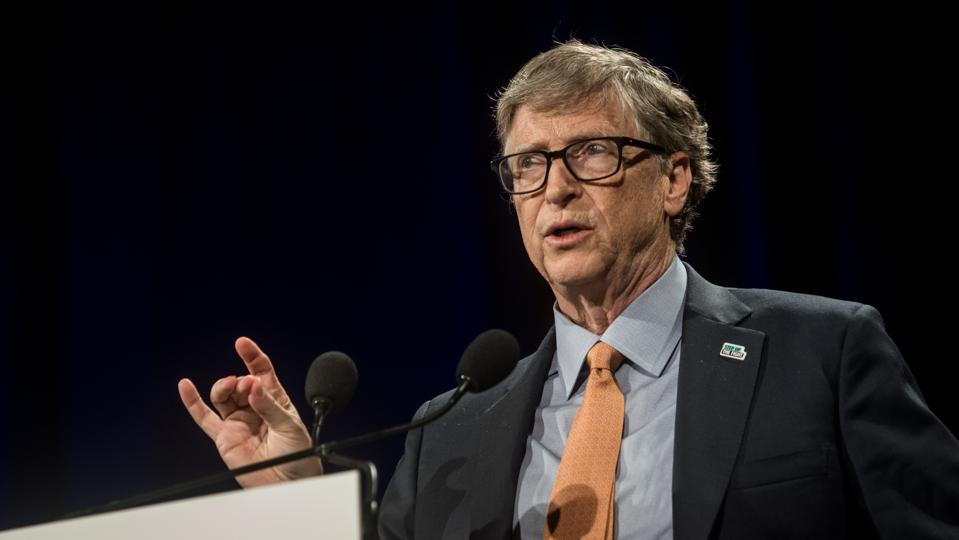
The United States needs to “own up to the fact that we didn’t do a good job” up until this point of the Covid-19 pandemic, billionaire and philanthropist Bill Gates said during a Fox News Sunday interview, adding that the slow turnaround for testing results remains “outrageous.”

KEY FACTS

“Unfortunately we did a very poor job and you can just see that in the numbers,” Gates said.

Despite having around 4% of the world’s population, the U.S. has around 22% of all cases with 6,782,083 and about 21% of all reported deaths with 199,411.

The inability to create a testing structure as seen in countries like South Korea “led to us having not just a bad spring, we’ve had a pretty tough summer and sadly because of the seasonality, until we get these new tools, the fall is looking to shape up as pretty tough as well,” Gates said.

“Part of the reluctance I think to fix the testing system now is that nobody wants to admit that it’s still outrageous,” Gates said, adding, “The U.S. has more of these machines, more capacity than other countries by a huge amount, and so partly the reimbursement system is creating perverse incentive.”

After remaining fairly stagnant through the end of summer into September, the U.S. performed a record 1,061,106 Covid-19 tests on Saturday, according to Johns Hopkins University, but labs are still dealing with supply shortages and delays in results.

“We’ll have time to look at those mistakes, which in February and March were really super unfortunate, but we can’t pretend like we get a good grade even today,” Gates said.

CRUCIAL QUOTE

“Even today, people don’t get their results in 24 hours, which it’s outrageous that we still have that,” Gates said.

BIG NUMBER

4.7%. That’s the average positivity percentage in the past week, according to Johns Hopkins.

TANGENT

President Trump has excused the world-leading cases of the coronavirus as a result of the number of tests performed in the country, even saying that he instructed officials to slow testing down. The Centers for Disease Control and Prevention sparked outrage in August when it published new guidelines on testing, recommending people exposed to the virus but not showing symptoms should not get tested. Reports indicate that the guidance was dictated by the Health and Human Services and Trump administration as opposed to CDC scientists. The guidelines were changed again on Friday.


COVID-19 Goes Viral on College Campuses

COVID-19 Goes Viral on College Campuses

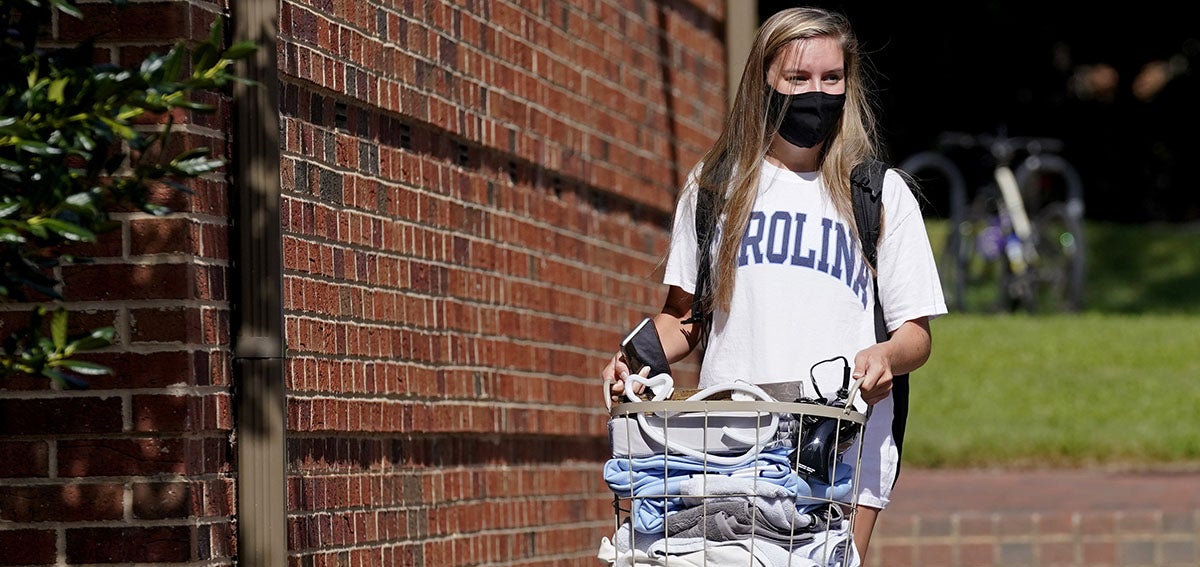
Freshman Sarah Anne Cook carries her belongings as she packs to leave the University of North Carolina at Chapel Hill, on August 18, because of a COVID-19 outbreak. All in-person undergraduate learning was canceled.

On August 10, students at the University of North Carolina at Chapel Hill (UNC) began the fall semester in person. Freshman Jasmine Baker was cautiously optimistic — as an incoming student in the Hussman School of Journalism, she was excited to experience college and get to know her suitemates. But she also worried that the university’s health and safety protocols would not prevent the spread of the coronavirus on campus.

She was right. Just one week after classes started, UNC announced that all undergraduate classes would move to remote learning for an indefinite period following a surge of COVID-19 cases. The case positivity rate on campus jumped from 2.8% to nearly 14%, Colleen Flaherty reported in Inside Higher Ed. After the second week, the positivity rate skyrocketed to 31%.

Baker, an out-of-state student, learned about the change in learning plans while attending an in-person class. “The email was very vague about housing,” she told Slate. “There were no specifics. Everyone kind of started freaking out. . . . We learned about it at the same time the professors did.” To top it off, she and a roommate soon tested positive for COVID-19. “We were all in such close quarters,” Baker said. “I know people that barely left their dorms, and they still ended up catching it.”

The situation at UNC is not unique.New York Times tracker has revealed at least 88,000 COVID-19 cases and 60 deaths at American colleges since the pandemic began. Photos and videos of students flouting public health guidelines at indoor parties or other gatherings have gone viral. Some university administrators have condemned the socializing as “reprehensible” and reprimanded students for “disrespectful, selfish, and dangerous” behavior.

Experts like Julia Marcus, PhD, MPH, an epidemiologist at Harvard Medical School, and Jessica Gold, MD, MS, a psychiatrist at Washington University, saw this coming from a mile away.Students will get infected, and universities will rebuke them for it; campuses will close, and students will be blamed for it,” they warned in the Atlantic over the summer. “Relying on the self-control of young adults, rather than deploying the public-health infrastructure needed to control a disease that spreads easily among people who live, eat, study, and socialize together, is not a safe reopening strategy.”

If you put 10,000 [students] in a small space, eating, sleeping, and socializing together, there’ll be an explosion of cases. . . . I don’t know what colleges were expecting.

—UNC epidemiologist Whitney Robinson

As the Editorial Board of the Daily Tar Heel, UNC’s student newspaper, wrote one week into the semester, “Reports of parties throughout the weekend come as no surprise. Though these students are not faultless, it was the University’s responsibility to disincentivize such gatherings by reconsidering its plans to operate in person earlier on.” The local health department recommended that UNC implement remote learning for the first five weeks of the fall term, but administrators ignored that advice.

Lack of Guidelines for Safe Return

Throughout the summer, even as COVID-19 hot spots emerged across the country, President Donald Trump aggressively pushed for schools to reopen in person. Without federal guidance on how to do this safely, university administrators were left to cobble together their own plans for preventing coronavirus from spreading into the community.

“I don’t think there are two universities that have the same protocol,” Irwin Redlener, director of the Pandemic Resource and Response Initiative at Columbia University, told Politico. “It’s national chaos.

Universities have a strong financial incentive to reopen in person. Many are hoping to recover revenue from housing fees and out-of-state tuition payments that were lost when the pandemic forced them to suspend in-person classes in March. But as many universities have learned in recent weeks, reopening in person comes at a cost to the health of students, faculty members, and the surrounding community.

The New York Times reviewed 203 counties in which college students comprise at least 10% of the population and found that about half experienced their worst weeks of the pandemic after August 1, around the time students returned to campus. An analysis by USA Today revealed that communities with a significant college student population represent 19 of the 25 largest current coronavirus outbreaks in the US.

What has happened on campus hasn’t stayed on campus,” Shawn Hubler and Anemona Hartocollis wrote in the New York Times.

California Fares Better Than Other States

While California is not represented on USA Today’s list of big outbreaks, it is dealing with surges on some campuses. According to the New York Times campus tracker, there are nearly 2,600 coronavirus cases at 57 schools in California. (Because there is no national tracking system for coronavirus cases on college campuses, the New York Times is believed to have the most comprehensive count available.)

I expect this will blow up outbreaks in places that never had outbreaks, or in places that had outbreaks under control.

—Boston University epidemiologist
Eleanor Murray

With 444 confirmed cases, San Diego State University tops the list among California schools, followed by the University of Southern California with 358 cases and UC San Diego with 237. By comparison, North Carolina has nearly 5,200 coronavirus cases at 42 schools, including 1,150 cases at UNC.

California’s relative success at mitigating the spread of COVID-19 on campus can be attributed in part to the conservative reopening plans of many schools. The California State University (CSU) system, California Community Colleges, and University of California (UC) schools moved nearly all fall classes online. UC Berkeley is fully remote for the fall semester. Stanford University planned to have half of its undergraduate students on campus during different quarters, but it switched to mostly remote learning as coronavirus cases continued to rise in the Bay Area over the summer.

Even a hybrid learning model, however, has failed to stave off new coronavirus cases on campuses. Chico State University and San Diego State University, both part of the CSU system, became the first and second California campuses to pause in-person classes after COVID-19 cases spiked, Ashley Smith reported for EdSource.

Resources are a factor in prevention efforts. Chico State’s health center doesn’t have coronavirus tests for students. San Diego State, which has more resources, has two coronavirus testing sites on campus. Across the CSU system, only 2 out of 23 campuses (CSU Maritime Academy and Humboldt State University) have tested all students living in dorms, according to CalMatters. The UC system, which has a budget roughly four times that of the CSU system, is testing all students living in dorms across all 10 campuses. (The UC system has restricted on-campus housing to students who have no alternative housing options.)

An Avoidable Situation

With the academic year off to a rocky start and students being sent home amid coronavirus outbreaks on campuses, experts across the country are nervously tracking the spread of the virus. “I expect this will blow up outbreaks in places that never had outbreaks, or in places that had outbreaks under control,” Eleanor Murray, ScD, MPH, an epidemiologist at Boston University, told Ed Yong in the Atlantic.

COVID-19 surges on college campuses were preventable. “If you put 10,000 [students] in a small space, eating, sleeping, and socializing together, there’ll be an explosion of cases,” Whitney Robinson, PhD, an epidemiologist at UNC, told Yong. “I don’t know what colleges were expecting.”


CDC pulls revised guidance on coronavirus from website

https://thehill.com/policy/healthcare/517387-cdc-says-revised-guidance-on-airborne-coronavirus-transmission-posted-in

National coronavirus updates: CDC provides detailed guidance on reopening -  ExpressNews.com

The Centers for Disease Control and Prevention (CDC) said Monday pulled revised guidance from its website that had said airborne transmission was thought to be the main way the coronavirus spreads, saying it was “posted in error.”

The sudden change came after the new guidance had been quietly posted on the CDC website on Friday.

“CDC is currently updating its recommendations regarding airborne transmission of SARS-CoV-2 (the virus that causes COVID-19),” the CDC wrote. “Once this process has been completed, the update language will be posted.”

The CDC guidance on the coronavirus is now the same as it was before the revisions.

The change and the the reversal comes as the CDC comes under extensive scrutiny over whether decisions by and guidance from government scientists are being affected by politics.

Just last week, President Trump contradicted CDC Director Robert Redfield on the timing of a vaccine and the necessity of wearing masks. 

Public health experts were pleased with the updated guidance, saying evidence shows COVID-19 can be spread through the air and that the public should be made aware of that fact. 

The World Health Organization issued a warning in July, saying that coronavirus could be spread through people talking, singing and shouting after hundreds of scientists released a letter urging it to do so.

The CDC said the guidance posted Friday was a “draft version of proposed changes.”

It is not clear if that draft will eventually become the CDC’s guidance, or if it will go through additional changes.

CNN first reported the new guidance on Sunday.

The now-deleted guidance had noted that the coronavirus could spread through airborne particles when an infected person “coughs, sneezes, sings, talks or breaths.”

“There is growing evidence that droplets and airborne particles can remain suspended in the air and be breathed in by others, and travel distances beyond 6 feet (for example, during choir practice, in restaurants, or in fitness classes),” the agency had written. “In general, indoor environments without good ventilation increase this risk.”

“These particles can be inhaled into the nose, mouth, airways, and lungs and cause infection,” the deleted guidance said. “This is thought to be the main way the virus spreads.”


Administration’s Record on Health Care

President Trump’s Record on Health Care

President Trump's Record on Health Care | KFF

A review of Trump’s health care record so far. Avoiding the problematic issue of Trump’s alleged plan, analysts at the nonpartisan Kaiser Family Foundation released a report this week that examines President Trump’s record on health care over the last three and half years. Some highlights from the overview and the full analysis:

  • On the Affordable Care Act: “From the start of his presidential term, President Trump took aim at the Affordable Care Act, consistent with his campaign pledge leading up to the 2016 election. He supported many efforts in Congress to repeal the law and replace it with an alternative that would have weakened protections for people with pre-existing conditions, eliminated the Medicaid expansion, and reduced premium assistance for people seeking marketplace coverage. While the ACA remains in force, President Trump’s Administration is supporting the case pending before the U.S. Supreme Court to overturn the ACA in its entirety that is scheduled for oral arguments one week after the election.”


  • On Medicare and Medicaid: “The Administration has proposed spending reductions for both Medicaid and Medicare, along with proposals that would promote flexibility for states but limit eligibility for coverage under Medicaid (e.g., work requirements).”


  • On drug prices: “The President has made prescription drug prices a top health policy priority and has issued several executive orders and other proposals that aim to lower drug prices; most of these proposals, however, have not been implemented, other than one change that would lower the cost of insulin for some Medicare beneficiaries with diabetes, and another that allows pharmacists to tell consumers if they could save money on their prescriptions. The Trump Administration has also moved forward with an initiative to improve price transparency in an effort to lower costs, though it is held up in the courts.”


  • On the response to the coronavirus: “The Trump administration has not established a coordinated, national plan to scale-up and implement public health measures to control the spread of coronavirus, instead choosing to have states assume primary responsibility for the COVID-19 response, with the federal government acting as back-up and ‘supplier of last resort.’ The President has downplayed the threat of COVID-19, given conflicting messages and misinformation, and often been at odds with public health officials and scientific evidence.”


President Trump’s Record on Health Care – Issue Brief


America Is Trapped in a Pandemic Spiral

https://www.theatlantic.com/health/archive/2020/09/pandemic-intuition-nightmare-spiral-winter/616204/

America Is Trapped in a Pandemic Spiral - The Atlantic

As the U.S. heads toward the winter, the country is going round in circles, making the same conceptual errors that have plagued it since spring.

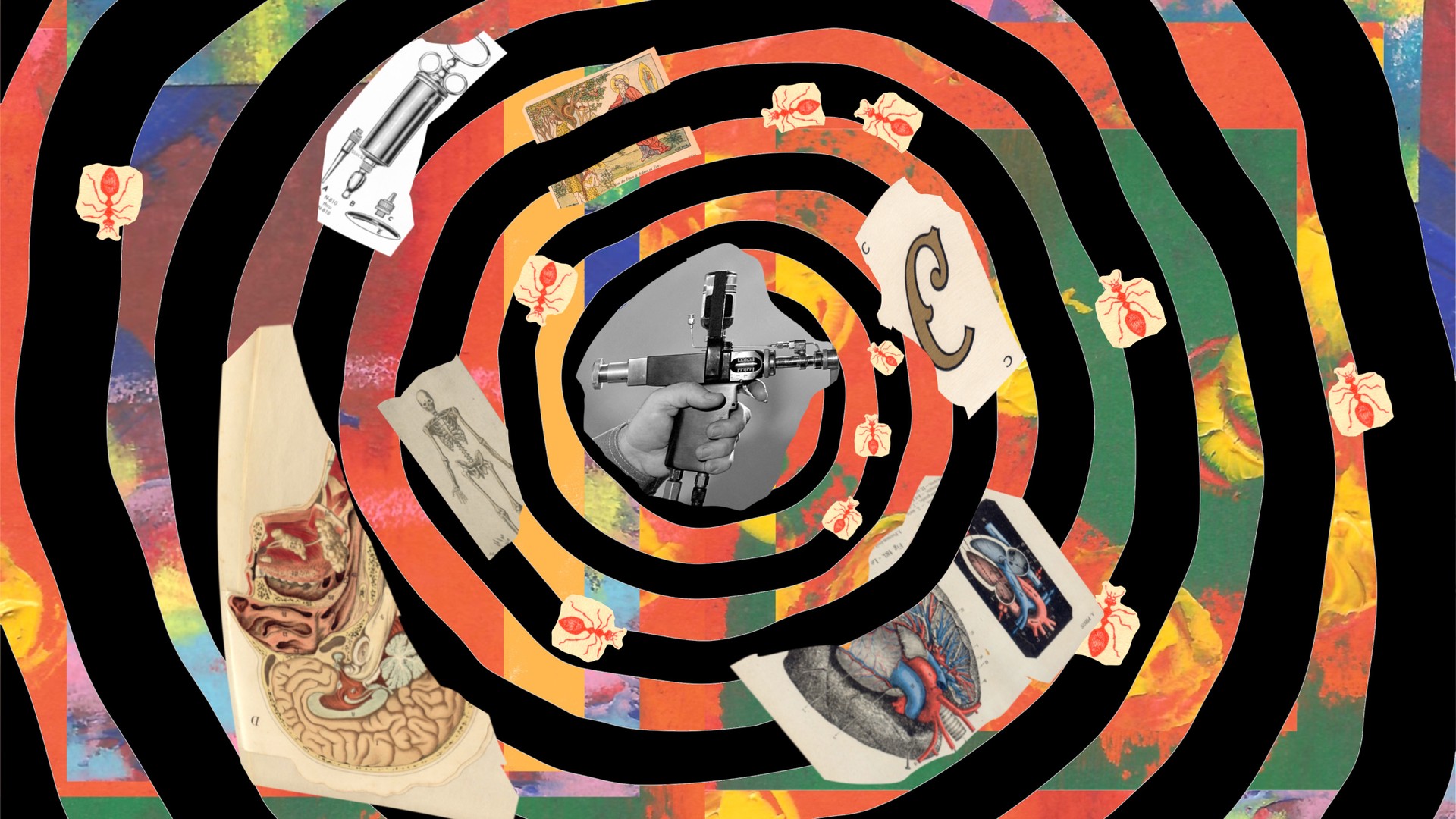
Army ants will sometimes walk in circles until they die. The workers navigate by smelling the pheromone trails of workers in front of them, while laying down pheromones for others to follow. If these trails accidentally loop back on themselves, the ants are trapped. They become a thick, swirling vortex of bodies that resembles a hurricane as viewed from space. They march endlessly until they’re felled by exhaustion or dehydration. The ants can sense no picture bigger than what’s immediately ahead. They have no coordinating force to guide them to safety. They are imprisoned by a wall of their own instincts. This phenomenon is called the death spiral. I can think of no better metaphor for the United States of America’s response to the COVID-19 pandemic.

The U.S. enters the ninth month of the pandemic with more than 6.3 million confirmed cases and more than 189,000 confirmed deaths. The toll has been enormous because the country presented the SARS-CoV-2 coronavirus with a smorgasbord of vulnerabilities to exploit. But the toll continues to be enormous—every day, the case count rises by around 40,000 and the death toll by around 800—because the country has consistently thought about the pandemic in the same unproductive ways.

Many Americans trusted intuition to help guide them through this disaster. They grabbed onto whatever solution was most prominent in the moment, and bounced from one (often false) hope to the next. They saw the actions that individual people were taking, and blamed and shamed their neighbors. They lapsed into magical thinking, and believed that the world would return to normal within months. Following these impulses was simpler than navigating a web of solutions, staring down broken systems, and accepting that the pandemic would rage for at least a year.

These conceptual errors were not egregious lies or conspiracy theories, but they were still dangerous. They manifested again and again, distorting the debate around whether to stay at home, wear masks, or open colleges. They prevented citizens from grasping the scope of the crisis and pushed leaders toward bad policies. And instead of overriding misleading intuitions with calm and considered communication, those leaders intensified them. The country is now trapped in an intuition nightmare: Like the spiraling ants, Americans are walled in by their own unhelpful instincts, which lead them round and round in self-destructive circles.

“The grand challenge now is, how can we adjust our thinking to match the problem before us?” says Lori Peek, a sociologist at the University of Colorado at Boulder who studies disasters. Here, then, are nine errors of intuition that still hamstring the U.S. pandemic response, and a glimpse at the future if they continue unchecked. The time to break free is now. Our pandemic summer is nearly over. Now come fall, the season of preparation, and winter, the season of survival. The U.S. must reset its mindset to accomplish both. Ant death spirals break only when enough workers accidentally blunder away, creating trails that lead the spiraling workers to safety. But humans don’t have to rely on luck; unlike ants, we have a capacity for introspection.

The spiral begins when people forget that controlling the pandemic means doing many things at once. The virus can spread before symptoms appear, and does so most easily through five P’s: people in prolonged, poorly ventilated, protection-free proximity. To stop that spread, this country could use measures that other nations did, to great effect: close nonessential businesses and spaces that allow crowds to congregate indoors; improve ventilation; encourage mask use; test widely to identify contagious people; trace their contacts; help them isolate themselves; and provide a social safety net so that people can protect others without sacrificing their livelihood. None of these other nations did everything, but all did enough things right—and did them simultaneously. By contrast, the U.S. engaged in …

1. A Serial Monogamy of Solutions

Stay-at-home orders dominated March. Masks were fiercely debated in April. Contact tracing took its turn in May. Ventilation is having its moment now. “It’s like we only have attention for only one thing at a time,” says Natalie Dean, a biostatistician at the University of Florida.

As often happens, people sought easy technological fixes for complex societal problems. For months, President Donald Trump touted hydroxychloroquine as a COVID-19 cure, even as rigorous studies showed that it isn’t one. In August, he switched his attention to convalescent plasma—the liquid fraction of a COVID-19 survivor’s blood that might contain virus-blocking antibodies. There’s still no clear evidence that this century-old approach can treat COVID-19 either, despite grossly misstated claims from FDA Commissioner Stephen Hahn (for which he later apologized). More generally, drugs might save some of the very sickest patients, as dexamethasone does, or shorten a hospital stay, as remdesivir does, but they are unlikely to offer outright cures. “It’s so reassuring to think that a magic-bullet treatment is out there and if we just wait, it’ll come and things will be normal,” Dean says.

Other strategies have merit, but are wrongly dismissed for being imperfect. In July, Carl Bergstrom, an epidemiologist and a sociologist of science at the University of Washington, argued that colleges cannot reopen safely without testing all students upon entry. “The gotcha question I’ve handled most from reporters since is: This school did entry testing, so why did they get an outbreak?” he says. It’s because such testing is necessary for a safe reopening, but not sufficient. “If you do it and screw everything else up, you’ll still have a big outbreak,” Bergstrom adds.

This brief attention span is understandable. Adherents of the scientific method are trained to isolate and change one variable at a time. Academics are walled off into different disciplines that rarely connect. Journalists constantly look for new stories, shifting attention to the next great idea. These factors prime the public to view solutions in isolation, which means imperfections become conflated with uselessness. For example, many critics of masks argued that they provide only partial protection against the virus, that they often don’t fit well, or that people wear them incorrectly. But some protection is clearly better than no protectionAs Dylan Morris of Princeton writes, “X won’t stop COVID on its own is not an argument against doing X.” Instead, it’s an argument for doing X along with other measures. Seat belts won’t prevent all fatal car crashes, but cars also come with airbags and crumple zones. “When we layer things, we give ourselves more wiggle room,” Dean says.

Several experts I’ve talked with have been asked: What now? The question assumes that the pandemic lingers because the U.S. simply hasn’t found the right solution yet. In fact, it lingers because the familiar solutions were never fully implemented. Despite claims from the White House, the U.S. is still not testing enough people. It still doesn’t have enough contact tracers. “We have the playbook, but I think there’s a confusion about what we’ve actually tried and what we’ve just talked about doing,” Dean says. A successful response “is never going to be one thing done perfectly. It’ll be a lot of different things done well enough.” That resilience disappears if we create…

2. False Dichotomies

A world of black and white is easier to handle than one awash with grays. But false dichotomies are dangerous. From the start, COVID-19 has been portrayed as a disease that mostly causes mild symptoms in people who quickly recover, and occasionally causes severe illness that leads to hospitalization and death. This two-sided caricature—severe or mild, sick or recovered—has erased the thousands of “long-haulers” who have endured months of debilitating symptoms at home with neither recognition nor care.

Meanwhile, as businesses closed and stay-at-home orders rolled out, “we presumed a trade-off between saving lives and saving the economy,” says Danielle Allen, a political scientist at Harvard. “That was foolishness of the most profound degree.” The two goals were actually aligned: Epidemiologists and economists largely agree that the economy cannot rebound while the pandemic is still raging. By treating the two as opposites, state leaders rushed to reopen, leading a barely contained virus to surge anew.  

Now, as winter looms and the pandemic continues, another dichotomy has emerged: enter another awful lockdown, or let the virus run free. This choice, too, is false. Public-health measures offer a middle road, and even “lockdowns” need not be as overbearing as they were in spring. A city could close higher-risk venues like bars and nightclubs while opening lower-risk ones like retail stores. There’s a “whole control panel of dials” on offer, but “it’s hard to have that conversation when people think of a light switch,” says Lindsay Wiley, a professor of public-health law at American University. “The term lockdown has done a lot of damage.” It exacerbated the false binary between shutting down and opening up, while offering …

3. The Comfort of Theatricality

Stay-at-home orders saved lives by curtailing COVID-19’s spread, and by giving hospitals some breathing room. But the orders were also meant to buy time for the nation to ramp up its public-health defenses. Instead, the White House treated months of physical distancing as a pandemic-ending strategy in itself. “We squandered that time in terms of scaling up testing and contact tracing, enacting policies to protect workers who get infected on the job, getting protective equipment to people in food-processing plants, finding places for people to isolate, offering paid sick leave … We still don’t have those things,” says Julia Marcus, an infectious-disease epidemiologist at Harvard Medical School and regular Atlantic contributor. The country is now facing the fall with many of the same problems that plagued it through the summer.

Showiness is often mistaken for effectiveness. The coronavirus mostly spreads through air rather than contaminated surfaces, but many businesses are nonetheless trying to scrub and bleach their way toward reopening. My colleague Derek Thompson calls this hygiene theater—dramatic moves that appear to offer safety without actually doing so. The same charge applies to temperature checks, which can’t detect the many COVID-19 patients who don’t have a fever. It also applies to the porous and inefficient travel bans that Trump and his allies still tout as policy successes. These tactics might do some good—let’s not conflate imperfect with useless—but they cause harm when they substitute for stronger measures. Theatricality breeds complacency. And by emphasizing solutions that can be easily seen, it exacerbated the American preference for …

4. Personal Blame Over Systemic Fixes

SARS-CoV-2 spread rapidly among America’s overstuffed prisons and understaffed nursing homes, in communities served by overstretched hospitals and underfunded public-health departments, and among Black, Latino, and Indigenous Americans who had been geographically and financially disconnected from health care by decades of racist policies. Without paid sick leave or a living wage, “essential workers” who earn a low, hourly income could not afford to quarantine themselves when they fell ill—and especially not if that would jeopardize the jobs to which their health care is tied. “The things I do to stay safe, they don’t have that as an option,” says Whitney Robinson, a social epidemiologist at the University of North Carolina at Chapel Hill.

But tattered social safety nets are less visible than crowded bars. Pushing for universal health care is harder than shaming an unmasked stranger. Fixing systemic problems is more difficult than spewing moralism, and Americans gravitated toward the latter. News outlets illustrated pandemic articles with (often distorted) photos of beaches, even though open-air spaces offer low-risk ways for people to enjoy themselves. Marcus attributes this tendency to America’s puritanical roots, which conflate pleasure with irresponsibility, and which prize shame over support. “The shaming gets codified into bad policy,” she says. Chicago fenced off a beach, and Honolulu closed beaches, parks, and hiking trails, while leaving riskier indoor businesses open.

Moralistic thinking jeopardizes health in two ways. First, people often oppose measures that reduce an individual’s risk—seat belts, condoms, HPV vaccines—because such protections might promote risky behavior. During the pandemic, some experts used such reasoning to question the value of masks, while the University of Michigan’s president argued that testing students widely would offer a “false sense of security.” These paternalistic false-assurance arguments are almost always false themselves. “There’s very little evidence for overcompensation to the point where safety measures do harm,” Bergstrom says.

Second, misplaced moralism can provide cover for bad policies. Many colleges started their semester with in-person teaching and inadequate testing, and are predictably dealing with large outbreaks. UNC Chapel Hill lasted just six days before reverting to remote classes. Administrators have chastised students for behaving irresponsibly, while taking no responsibility for setting them up to faila pattern that will likely continue through the fall as college clusters inevitably grow. “If you put 10,000 [students] in a small space, eating, sleeping, and socializing together, there’ll be an explosion of cases,” Robinson says. “I don’t know what [colleges] were expecting.” Perhaps they fell prey to …

5. The Normality Trap

In times of uncertainty and upheaval, “people crave a return to familiar, predictable rhythms,” says Monica Schoch-Spana, a medical anthropologist at the Johns Hopkins Center for Health Security. That pull is especially strong now because the pandemic’s toll is largely invisible. There’s nothing as dramatic as ruined buildings or lapping floodwater to hint that the world has changed. In some circles, returning to normal has been valorized as an act of defiance. That’s a reasonable stance when resisting terrorists, who seek to stoke fear, but a dangerous one when fighting a virus, which doesn’t care.

The powerful desire to re-create an old world can obscure the trade-offs necessary for surviving the new one. Keeping high-risk indoor businesses open, for example, helps the virus spread within a community, which makes reopening schools harder. “If schools are a priority, you have to put them ahead of something. What is that something?” says Bill Hanage, an epidemiologist at Harvard. “In an ideal world, they would be the last to close and the first to open, but in many communities, casinos, bars, and tattoo parlors opened before them.” A world with COVID-19 is fundamentally different from one without it, and the former simply cannot include all the trappings of the latter. Cherished summer rituals like camps and baseball games have already been lost; back-to-school traditions and Thanksgiving now hang in the balance. Change is hard to accept, which predisposes people to …

6. Magical Thinking

Back in April, Trump imagined the pandemic’s quick end: “Maybe this goes away with heat and light,” he said. From the start, he and others wondered if hot, humid weather might curb the spread of COVID-19, as it does other coronavirus diseases. Many experts countered that seasonal effects wouldn’t stop the new virus, which was already spreading in the tropics. But, fueled by shaky science and speculative stories, people widely latched on to seasonality as a possible savior, before the virus proved that it could thrive in the Arizona, Texas, and Florida summer.

This brand of magical thinking, in which some factor naturally defuses the pandemic, has become a convenient excuse for inaction. Recently, some commentators have argued that the pandemic will imminently fizzle out for two reasons. First, 20 to 50 percent of people have defensive T-cells that recognize the new coronavirus, because they were previously exposed to its milder, common-cold-causing cousins. Second, some modeling studies claim that herd immunity—whereby the virus struggles to find new hosts, because enough people are immune—could kick in when just 20 percent of the population has been infected.

Neither claim is implausible, but neither should be grounds for complacency. No one yet knows if the “cross-reactive” T-cells actually protect against COVID-19, and even if they do, they’re unlikely to stop people from getting infected. Herd immunity, meanwhile, is not a perfect barrier. Even if the low thresholds are correct, a fast-growing and uncontrolled outbreak will still shoot past themPursuing this strategy will mean that, in the winter, many parts of the U.S. may suffer what New York City endured in the spring: thousands of deaths and an untold number of lingering disabilities. That alone should be an argument against …

7. The Complacency of Inexperience

When illness is averted and lives are spared, “nothing happens and all you have is the miracle of a normal, healthy day,” says Howard Koh, a public-health professor at Harvard. “People take that for granted.” Public-health departments are chronically underfunded because the suffering they prevent is invisible. Pandemic preparations are deprioritized in the peaceful years between outbreaks. Even now, many people who have been spared the ravages of COVID-19 argue that the disease wasn’t a big deal, or associate their woes with preventive measures. But the problem is still the disease those measures prevented: The economy is still hurtingmental-health problems are growing, and educational futures have been curtailed, not because of some fearmongering overreaction, but because an uncontrolled pandemic is still afoot.

If anything, the U.S. did not react swiftly or strongly enough. Nations that had previously dealt with emerging viral epidemics, including several in East Asia and sub-Saharan Africa, were quick to take the new coronavirus seriously. By contrast, America’s lack of similar firsthand experience, combined with its sense of exceptionalism, might have contributed to its initial sloppiness. “One of my colleagues went to Rwanda in February, and as soon as he hit the airport, they asked about symptoms, checked his temperature, and took his phone number,” says Abraar Karan, an internist at Brigham and Women’s Hospital and Harvard Medical School. “In the U.S., I flew in July, and walked out of the airport, no questions asked.”

Even when the virus began spreading within the U.S., places that weren’t initially pummeled seemed to forget that viruses spread. “In April, I was seeing COVID patients in the ER every day,” Karan says. “In Texas, I had friends saying, ‘No one believes it here because we have no cases.’ In L.A., fellow physicians said, ‘Are you sure this is worse than the flu? We’re not seeing anything.’” Three months later, Texas and California saw COVID-19 all too closely. The tendency to ignore threats until they directly affect us has consigned the U.S. to …

8. A Reactive Rut

In March, Mike Ryan at the World Health Organization advised, “Be fast, have no regrets … The virus will always get you if you don’t move quickly.” The U.S. failed to heed that warning, and has repeatedly found itself several steps behind the coronavirus. That’s partly because exponential growth is counterintuitive, so “we don’t understand that things look fine until right before they’re very not fine,” says Beth Redbird, a sociologist at Northwestern. It’s also because the coronavirus spreads quickly but is slow to reveal itself: It can take a month for infections to lead to symptoms, for symptoms to warrant tests and hospitalizations, and for enough sick people to produce a noticeable spike. Pandemic data are like the light of distant stars, recording past events instead of present ones. This lag separates actions from their consequences by enough time to break our intuition for cause and effect. Policy makers end up acting only when it’s too late. Predictable surges get falsely cast as unexpected surprises.

This reactive rut also precludes long-term planning. In April, Michael Osterholm, an epidemiologist at the University of Minnesota, told me that “people haven’t understood that [the pandemic] isn’t about the next couple of weeks [but] about the next two years.” Leaders should have taken the long view then. “We should have been thinking about what it would take to ensure schools open in the fall, and prevent the long-term harms of lost children’s development,” Redbird says. Instead, we started working our way through a serial monogamy of solutions, and, like spiraling army ants, marched forward with no sense of the future beyond the next few footsteps.

These errors crop up in all disasters. But the COVID-19 pandemic has special qualities that have exacerbated them. The virus moved quickly enough to upend the status quo in a few months, deepening the allure of the hastily abandoned past. It also moved slowly enough to sweep the U.S. in a patchwork fashion, allowing as-yet-untouched communities to drop their guard. The pandemic grew huge in scope, entangling every aspect of society, and maxing out our capacity to deal with complexity. “People struggle to make rational decisions when they cannot see all the cogs,” says Njoki Mwarumba, an emergency-management professor at the University of Nebraska at Omaha. Full of fear and anxiety, people furiously searched for more information, but because the virus is so new, they instead spiraled into more confusion and uncertainty. And tragically, all of this happened during the presidency of Donald Trump.

Trump embodied and amplified America’s intuition death spiral. Instead of rolling out a detailed, coordinated plan to control the pandemic, he ricocheted from one overhyped cure-all to another, while relying on theatrics such as travel bans. He ignored inequities and systemic failures in favor of blaming China, the WHO, governors, Anthony Fauci, and Barack Obama. He widened the false dichotomy between lockdowns and reopening by regularly tweeting in favor of the latter. He and his allies appealed to magical thinking and steered the U.S. straight into the normality trap by frequently lying that the virus would go away, that the pandemic was ending, that new waves weren’t happening, and that rising case numbers were solely due to increased testing. They have started talking about COVID-19 in the past tense as cases surge in the Midwest.

“It’s like mass gaslighting,” says Martha Lincoln, a medical anthropologist at San Francisco State University. “We were put in a situation where better solutions were closed off but a lot of people had that fact sneak up on them. In the absence of a robust federal response, we’re all left washing our hands and hoping for the best, which makes us more susceptible to magical thinking and individual-level fixes.” And if those fixes never come, “I think people are going to harden into a fatalistic sense that we have to accept whatever the risks are to continue with our everyday lives.”

That might, indeed, be Trump’s next solution. The Washington Post reports that Trump’s new adviser—the neuroradiologist Scott Atlas—is pushing a strategy that lets the virus rip through the non-elderly population in a bid to reach herd immunity. This policy was folly for Sweden, which is nowhere near herd immunity, had one of the world’s highest COVID-19 death rates, and has a regretful state epidemiologist. Although the White House has denied that a formal herd-immunity policy exists, the Centers for Disease Control and Prevention recently changed its guidance to say that asymptomatic people “do not necessarily need a test” even after close contact with an infected personThis change makes no sense: People can still spread the virus before showing symptoms. By effectively recommending less testing, as Trump has specifically called for, the nation’s top public-health agency is depriving the U.S. of the data it needs to resist intuitive errors. “When there’s a refusal to take in the big picture, we are stuck,” Mwarumba says.

The pandemic is now in its ninth month. Uncertainties abound as fall and winter loom. In much of the country, colder weather will gradually pack people into indoor spaces, where the coronavirus more readily spreads. Winter also typically heralds the arrival of the flu and other respiratory viruses, and although the Southern Hemisphere enjoyed an unusually mild flu season, that’s “because of the severe precautions they were taking against COVID-19,” says Eleanor Murray, an epidemiologist at Boston University. “It’s not clear to me that our precautions will be successful enough to also prevent the flu.”

Schools are reopening, which will shape the path of the pandemic in still-uncertain ways. Universities are more predictable: Thanks to magical thinking and misplaced moralism, the U.S. already has at least 51,000 confirmed infections in more than 1,000 colleges across every state. These (underestimated) numbers will grow, because only 20 percent of colleges are doing regular testing, while almost half are not testing at all. As more are forced to stop in-person teaching, students will be sent back to their communities with COVID-19 in tow. “I expect this will blow up outbreaks in places that never had outbreaks, or in places that had outbreaks under control,” Murray says. Further spikes will likely occur after Thanksgiving and Christmas, as people who yearn to return to normal (or who think that the country overreacted) travel to see their family. Despite that risk, the CDC recently dropped its recommendation that out-of-state travelers should quarantine themselves for 14 days.

But many of the experts I spoke with thought it unlikely that “we’ll have cities going full New York,” as Bergstrom puts it. Doctors are getting better at treating the disease. States like Massachusetts, New York, and New Jersey have managed to avoid new surges over the summer, showing that local leadership can at least partly compensate for federal laxity. A new generation of cheap, rapid, paper-based tests will hit the market and make it easier to work out who is contagious. And despite the spiral of bad intuitions, many Americans are holding the line: Mask use and support for physical distancing are still high, according to Redbird, who has been tracking pandemic-related attitudes since March. “My feeling is that while things are going to get worse, I’m not sure they’ll be catastrophic, because of situational awareness,” Bill Hanage says.

Meanwhile, Trump seems to be teeing up a vaccine announcement in late October, shortly before the November 3 election. Moncef Slaoui, the scientific head of Operation Warp Speed, told NPR that it’s “extremely unlikely” a vaccine will be ready by then, and many scientists are concerned that the FDA will be pressured into approving a product that hasn’t been adequately tested, as Russia and China already have. Many Americans share this concern. A safe and effective vaccine could finally bring the pandemic under control, but its arrival will also test America’s ability to resist the intuitive errors that have trapped it so far. Vaccination has long been portrayed as the ultimate biomedical silver bullet, separating an era when masks and social distancing mattered from a world where normality has returned. This is yet another false dichotomy. “Everyone’s imagining this moment when all of a sudden, it’s all over, and they can go on vacation,” Natalie Dean says. “But the reality is going to be messier.”

This problem is not unique to COVID-19. It’s more compelling to hope that drug-resistant bacteria can be beaten with viruses than to stem the overuse of antibiotics, to hack the climate than to curb greenhouse-gas emissions, or to invest in a doomed oceanic plastic-catcher than to reduce the production of waste. Throughout its entire history, and more than any other nation, the U.S. has espoused “an almost blind faith in the power of technology as panacea,” writes the historian Howard Segal.* Instead of solving social problems, the U.S. uses techno-fixes to bypass them, plastering the wounds instead of removing the source of injury—and that’s if people even accept the solution on offer.

A third of Americans already say they would refuse a vaccine, whether because of existing anti-vaccine attitudes or more reasonable concerns about a rushed development process. Those who get the shot are unlikely to be fully protected; the FDA is prepared to approve a vaccine that’s at least 50 percent effective—a level comparable to current flu shots. An imperfect vaccine will still be useful. The risk is that the government goes all-in on this one theatrical countermeasure, without addressing the systemic problems that made the U.S. so vulnerable, or investing in the testing and tracing strategies that will still be necessary. “We’re still going to need those other things,” Dean says.

Between these reasons and the time needed for manufacturing and distribution, the pandemic is likely to drag on for months after a vaccine is approved. Already, the event is exacting a psychological toll that’s unlike the trauma of a hurricane or fire. “It’s not the type of disaster that Americans specifically are used to dealing with,” says Samantha Montano of Massachusetts Maritime Academy, who studies disasters. “Famines and complex humanitarian crises are closer approximations.” Health experts are burning outLong-haulers are struggling to find treatments or support. But many Americans are turning away from the pandemic. “People have stopped watching news about it as much, or talking to friends about it,” Redbird says. “I think we’re all exhausted.” Optimistically, this might mean that people are becoming less anxious and more resilient. More worryingly, it could also mean they are becoming inured to tragedy.

The most accurate model to date predicts that the U.S. will head into November with 220,000 confirmed deaths. More than 1,000 health-care workers have died. One in every 1,125 Black Americans has died, along with similarly disproportionate numbers of Indigenous people, Pacific Islanders, and Latinos. And yet, a recent poll found that 57 percent of Republican voters and 33 percent of independents think the number of deaths is acceptable. “In order for us to mobilize around a social problem, we all have to agree that it’s a problem,” Lori Peek says. “It’s shocking that we haven’t, because you really would have thought that with a pandemic it would be easy.” This is the final and perhaps most costly intuitive error …

9. The Habituation of Horror

The U.S. might stop treating the pandemic as the emergency that it is. Daily tragedy might become ambient noise. The desire for normality might render the unthinkable normal. Like poverty and racismschool shootings and police brutalitymass incarceration and sexual harassmentwidespread extinctions and changing climate, COVID-19 might become yet another unacceptable thing that America comes to accept.


More cities and states are opening bars and restaurants despite mounting evidence of potential danger

https://www.washingtonpost.com/health/2020/09/14/covid-spread-restaurants-bars/?arc404=true&itid=lk_inline_manual_28&itid=lk_inline_manual_10&itid=lk_inline_manual_9

More cities and states are opening bars and restaurants despite mounting  evidence of potential danger — TodayHeadline

In New York City, diners will be able to have a meal inside a restaurant at the end of the month, something that hasn’t happened there since the coronavirus pandemic began. In some parts of Florida, bars reopened Monday for the first time since late June.

One decision appears to be riskier than the other, according to an analysis of cellphone and coronavirus case data by The Washington Post.

States that have reopened bars experienced a doubling in the rate of coronavirus cases three weeks after the opening of doors, on average. The Post analysis — using data provided by SafeGraph, a company that aggregates cellphone location information — found a statistically significant national relationship between foot traffic to bars one week after they reopened and an increase in cases three weeks later.

The analysis of the cellphone data suggests there is not as strong a relationship between the reopening of restaurants and a rise in cases, nor with bar foot traffic and cases over time, except for a handful of states.

But like with so much in the pandemic, easy answers can prove elusive.

study by the Centers for Disease Control and Prevention of nearly 300 adults who tested positive for the coronavirus found that they were more than twice as likely to have dined at a restaurant in the two weeks before getting sick than people who were uninfected. Those who tested positive and did not have close contact with anyone sick were also more likely to report going to a bar or coffee shop. The same effect was not seen in visits to salons, gyms and houses of worship, or in the use of public transportation.

“You’re sitting there for a long time, everyone’s talking,” said Linsey Marr, an environmental engineer at Virginia Tech. “And that’s just a recipe for spread.”

Few states make their contact-tracing data available, but in two that do — Colorado and Louisiana — bars and restaurants are responsible for about 20 percent of cases traced to a known source. San Diego traced nearly one-third of community outbreaks to restaurants and bars, more than any other setting.

But Louisiana’s experience suggests bar patrons contribute more to the spread of the virus than restaurant diners. There have been 41 outbreaks tied to restaurants and the same number of outbreaks associated with bars, but bar outbreaks appeared to result in more infections, with 480 cases traced to those establishments compared with 180 from restaurants.

Marr said indoor dining can be reasonably safe in a restaurant operating at 25 percent capacity and with a ventilation system that fully recirculates air every 10 minutes. New York City’s policy will allow for only 25 percent capacity at first, with a scheduled increase to 50 percent in November if transmission rates remain low.

Still, Marr said, she “will not eat inside a restaurant until the pandemic is over.” As one of the first scientists to begin emphasizing that the virus was spread primarily by air, she has been concerned about indoor drinking and dining since March.

“People go to restaurants to talk,” she said, “and we know that it’s talking that produces a lot — 10 to 100 times more — aerosols than just sitting.”

Other countries facing outbreaks imposed stricter and longer shutdowns on bars and restaurants. Ireland has yet to open its pubs. Countries that did reopen bars and restaurants have, like American states, scaled back in the face of fresh outbreaks.

Researchers at the Massachusetts Institute of Technology say that because U.S. policies vary by state and county, waves of closures and reopenings may have perversely led to more viral spread, as people traveled to enjoy freedoms not allowed closer to home.

The National Restaurant Association argues that restaurants are safe if they follow proper mitigation guidelines and that the industry has been unfairly maligned by the actions of an irresponsible few.

“Bars become particularly risky,” said Larry Lynch, who handles food science for the restaurant trade group. “Anybody who had been in bars knows that conversations get louder, people get closer.”

But, he said, “we haven’t seen … any kind of systemic outbreaks from people going into a restaurant that’s practicing what we ask them to practice.”

Lynch questioned the methodology of the CDC study, noting it covered only 295 people and did not identify the sources of transmission.

The American Nightlife Association, which represents the bar and nightclub industry, did not respond to a request for comment.

Kristen Ehresmann, director of the Infectious Disease Epidemiology, Prevention and Control Division at the Minnesota Department of Health, agreed that when restaurants and bars abide by guidelines designed to reduce transmission, few cases of the coronavirus have been traced to those establishments.

But there are more than a few bad actors, she said: 1,592 cases of covid-19, the disease caused by the coronavirus, have been tied to 66 bars and restaurants in Minnesota. And in 58 other establishments, cases were reported among only staff members, resulting in 240 illnesses. One bar in St. Cloud, Minn., the Pickled Loon, was the only place visited by 73 people who got sick and was one stop among several for 44 other people.

“The bottom line is, we’re seeing a big chunk of our cases associated with these venues, and those cases go on to get other cases in other settings,” Ehresmann said. “We can’t ignore the impact.”

Iowa’s first big spike in coronavirus cases originated in the meatpacking industry. Then, says University of Iowa epidemiologist Jorge Salinas, came bars in college towns such as Iowa City, where he is based.

“It was very clear,” Salinas said. “We reviewed records for patients, and they all shared that common exposure of having been to a bar in the previous five days or so. Usually, the same bars that tend to be very crowded and very loud, rather than a place you just sit down to go and have a beer.”

He said those bars began closing not because of government intervention, but because so many staff members fell ill. By that point, the young people who got infected at bars had begun spreading the virus to an older population through family and work.

After about two months, the outbreak in Iowa City started to burn out. But then college students started returning to campus.

“It’s just a different group of young people but similar exposures — going to bars, hanging out, going to large parties,” he said.

He said an order from Gov. Kim Reynolds (R) closing bars in Iowa City and five other hard-hit counties was welcome but overdue. In the past two weeks, more than 1,000 young people in the region have become infected.

“Unfortunately, it’s late in the game,” Salinas said. “It would have been better if it had been done to prevent this rather than as a reaction to this.”

Politicians who favor an aggressive approach to containing the coronavirus have been hesitant to shut down bars and restaurants. Expanded federal unemployment benefits lapsed more than a month ago. Loans to small businesses are forgiven only if they can keep workers on the payroll, which is usually impossible while running at reduced capacity.

According to the Bureau of Labor Statistics, 2.5 million jobs in bars and restaurants have been lost since February. Although that’s an improvement from the spring, many restaurant owners say they are barely hanging on.

“Winter is coming, and I’m staring down the barrel of the gun of what’s going to happen,” said Ivy Mix, owner of a restaurant called Leyenda in New York and author of the book “Spirits of Latin America.” Even when indoor dining reopens, Mix said she is not sure she and her staff would be comfortable serving enough people inside her Brooklyn restaurant to make a profit.

“This is almost like being thrown a deflated life-jacket — the action and the symbolism is there, but the actual aid is not,” she said.

That’s why she says the only solution is federal legislation introduced by Rep. Earl Blumenauer (D-Ore.) that would issue $120 billion in grants to independent bars and restaurants. A Senate version would cover some chains as well.

“Eleven million people work for these independent restaurants,” Blumenauer said. “If we don’t do something, the evidence suggests that 85 percent of them are not going to survive this year.”

His office estimates that the legislation would more than pay for itself, generating $186 billion in tax revenue and unemployment savings. He said President Trump was receptive in a meeting with supporters earlier this year, but that in recent weeks the administration “has basically shut down meaningful negotiations.”

Arizona reopened indoor restaurants and some bars at the end of August, after a hasty spring reopening and more than 5,000 deaths.

“We really kind of reaped the whirlwind,” said David Engelthaler, a former state epidemiologist now at the Translational Genomics Research Institute. “A lot of that was driven by people going into bars and nightclubs, typically the 20- to 30-year-old set, interacting, socializing like they did prepandemic. And that just supported a kind of wildfire of cases.”

He said he thinks it is probably feasible to reopen restaurants at reduced capacity, but bars are a different story.

“One thing that all bars have in common is that they create a lowering of inhibition, and I think more than anything, this will cause the spread of covid,” he said. “We get more complacent, more comfortable, covid starts spreading.”

With temperatures still regularly topping 100 degrees in Arizona, the appeal of outdoor food and drink is limited. After a rapid May reopening led to a spike in cases and deaths, the state has just begun trying a more cautious approach.

Under Arizona’s new, more deliberate reopening, businesses must apply to reopen and bars must serve food to qualify. But Saskia Popescu, an epidemiologist based in Phoenix, said it is unclear whether those requirements are sufficiently stringent.

“If you put out two items does that count?” she asked. “I just worry that we’re kind of all doing this at once.” She noted that more than 500 new cases a day continue to be reported in Arizona, about the same as during the first reopening: “We’ll see if we learn from our lessons.”


CDC’s Confession That America’s Covid-19 Tracking Failed

https://www.forbes.com/sites/thomasbrewster/2020/09/15/exclusive-cdcs-confession-that-americas-covid-19-tracking-failed/?utm_source=newsletter&utm_medium=email&utm_campaign=coronavirus&cdlcid=5d2c97df953109375e4d8b68#5a6a4d6a6992

EXCLUSIVE: CDC's Confession That America's Covid-19 Tracking Failed

In mid-June, the post-coronavirus reopening of America was in full swing, even as the number of new cases was rising fast. The Centers for Disease Control and Prevention (CDC) was key to President Trump’s grand reopening, providing local officials with guidance on how to open up safely. But in private officials admitted the country had failed to track the spread of the deadly virus and that the agency thus lacked the vital information it needed to offer such guidance, Forbes can now reveal.

Disease tracing systems across U.S. states had proven ineffective in furnishing the agency with adequate data on how to curtail the deadly virus, the agency had conceded. The number of people who needed tracking had become simply unmanageable, the CDC said, writing: “Most jurisdictions have been forced to abandon monitoring because the number of monitorees exceeds the capacity. . . . As a result, critical data for CDC to inform and guide public health response to Covid-19 is unavailable.”

The CDC’s admittance of the national failure came in a contract description obtained via FOIA request, from a deal signed off in a bid to fix the problem. The health agency gave Mitre Corp., a much-trusted nonprofit contractor that Forbes recently revealed to be heavily involved in secretive FBI and DHS snooping projects, $16.5 million to build out a different kind of surveillance system, dubbed Sara Alert. The hope was that rather than only work for singular states, it could be a national tool to effectively track Americans exposed to the virus, one that had by then infected 2.5 million in the United States. The Mitre-led project was titled: “Building an Enduring National Capability to Contain Covid-19.”

The confession came a day before President Trump claimed the disease was “dying out,” and a month after he’d unveiled his Opening Up America Again plan. In May, the CDC was offering guidance to states on how to follow that plan, even though it knew it didn’t have the requisite data. Since then, the nationwide reopening has continued apace, despite warnings from the likes of Dr Anthony Fauci, director of the National Institute of Allergy and Infectious Diseases, about the risks of opening too soon.

Meanwhile, though they hadn’t openly stated just how ineffective Covid-19 tracing systems had been, CDC officials were stressing why good data on transmission was vital to the country’s response to the pandemic. “I think it’s important that we really have good data at a granular level,” said CDC director Robert Redfield, during a briefing on June 25.

In the same briefing, he noted the agency had handed out $10.2 billion to states “to augment their testing, contact tracing and isolation capability,” whilst bemoaning that “for decades, this nation has underinvested in the core capabilities of public health,” including in data analytics for tracking diseases. CDC has been splashing money on such data analytics tools in its fight against the coronavirus, as Forbes revealed in multiple multimillion-dollar contracts with Palantir, a Silicon Valley giant that has the backing of Trump ally Peter Thiel. But months after signing off on those deals, vital data was still lacking.

President Trump and the CDC are now coming under fire for their push to reopen when they didn’t have adequate information on Covid-19’s spread. Senator Ron Wyden told Forbes it was now clear the health agency was ill-equipped to trace Covid-19 outbreaks, “raising the question of whether the Trump Administration willfully ignored this information while recommending schools and other sectors reopen.”

“As nearly 200,000 Americans have lost their lives, Donald Trump still has no semblance of a national plan to test and trace,” Senator Wyden added.

The CDC hasn’t responded to requests for comment.

Sara to the rescue?

The CDC is now banking on Mitre’s Sara Alert to save the country’s Covid-19 surveillance efforts. Built for free by the nonprofit contractor (one that receives between $1.5 billion and $2 billion every year from Congress), Sara Alert allows public health officials to enroll and monitor individuals and households who are either sick or at risk of being infected. Those who are enrolled are then asked to enter their symptoms daily via text, email, phone or a website. This should help healthcare bodies determine who needs care and who needs to be isolated.

As of July, Sara Alert had only been deployed in a handful of states—including Arkansas, Maine, Pennsylvania and Vermont—and it’s unclear how widely it’s in use today. Nor has any date been set for the national rollout. Mitre had provided neither comment nor updated data at the time of publication.

Those who have put Sara Alert into action have been impressed. They include the Arkansas Department of Health. “This system allows us to more readily identify secondary cases, really establishing a better handle on social clusters, which has been a challenge,” Dr. Mike Cima, chief epidemiologist, told Forbes earlier this year.

Like Dr. Cima, the CDC wants to use Sara Alert in perpetuity for tracking future epidemics. Once refined and scaled out, it will be the de facto national track-and-trace system for diseases, according to the contract description. But before that, a pilot project has to be completed, with an additional five jurisdictions to be added before any national rollout can take place.

Mitre’s been key to various Covid-19 efforts. In March, the DHS Countering Weapons of Mass Destruction office tasked it with developing systems to better support local lawmakers with information on the impact of “non-pharmaceutical” measures like social distancing and mask-wearing. And at the start of this month, HHS Office of the Assistant Secretary for Preparedness and Response handed Mitre a $24.5 million contract for a project entitled: “Strategic Engagement, Education, Outreach and Analytics Support for Covid-19 Convalescent Plasma.” When drawn from those who’ve fought off Covid-19, that plasma contains antibodies that could be transfused to patients who need a boost in fighting the virus. In late August, Trump announced emergency authorization for the use of this plasma to treat infected individuals, in lieu of any vaccine.

The number of infected per day has fallen since peaks of above 70,000 in July, but the figure remains higher in September than in the months leading up to and including June. The Sara Alert should provide better data on just how big a catastrophe Covid-19 has become for the country and how the administration’s response has ameliorated (or exacerbated) the eventual impact.


High numbers of Los Angeles patients complained about coughs as early as December, study says

https://www.washingtonpost.com/science/2020/09/10/los-angeles-patients-covid-coughing/?utm_campaign=wp_main&utm_medium=social&utm_source=facebook&fbclid=IwAR35fvTDN4Tq476ktGM0O8aIT3cvjVP1wP7I104tEQU3bRRgiLZs_nk6PYE

The number of patients complaining of coughs and respiratory illnesses surged at a sprawling Los Angeles medical system from late December through February, raising questions about whether the novel coronavirus was spreading earlier than thought, according to a study of electronic medical records.

The authors of the report, published Thursday in the Journal of Medical Internet Research, suggested that coronavirus infections may have caused this rise weeks before U.S. officials began warning the public about an outbreak. But the researchers cautioned that the results cannot prove that the pathogen reached California so soon, and other disease trackers expressed skepticism that the findings signaled an early arrival.

The debate about the findings underscores just how much remains to be known about the coronavirus, which has killed at least 187,000 people in the United States, according to a Washington Post analysis.

“This is consistent with the growing body of data that suggests that there’s been community spread much earlier than we had anticipated,” said study author Joann G. Elmore, a doctor and epidemiologist at the David Geffen School of Medicine at the University of California at Los Angeles.

The researchers examined six years of electronic health records, representing nearly 10 million patients, at the UCLA health system from July 2014 through February. That included patient visits to three UCLA hospitals and to nearly 200 associated outpatient clinics.

Health agencies have surveillance systems in place to detect the early signals of disease outbreaks, such as a rise in patients with fever checking into hospitals. But medical records were an under-tapped resource, Elmore said. “People weren’t paying attention to the outpatient setting,” she said.

The study authors searched outpatient and emergency department reports that used the word “cough,” and tallied the number of people hospitalized for acute respiratory failure.

That approach revealed an uptick in patients that began the week of Dec. 22 and remained elevated for 10 weeks. The number of extra people exceeded the researchers’ predictions by 50 percent, totaling about 1,000 more patients compared with the previous five flu seasons.

Influenza cannot be ruled out as a cause of the increase, Elmore said. “And, you know, we did see a bad bout of flu this year,” she said. But what gave her pause was the consistent, weeks-long trend found only in this most recent season and not others.

Some experts said they doubted that coronavirus infections were the likely cause of respiratory problems in California so far back in time. “The data countywide would suggest that it really began to spread in March,” said Brad Spellberg, chief medical officer at the Los Angeles County+USC Medical Center, who was not involved with the new research.

Although the virus may have infected a small number of people sooner than previously reported, Spellberg said he doubted that “meaningful transmission” occurred in December or January.

Using data from emergency departments that reported patients with flu-like illnesses, Spellberg and his colleagues observed two peaks in patients in December and February, as they reported in JAMA this spring.

Those increases were consistent with a severe flu season, Spellberg said. Los Angeles’s third spike in flu-like illnesses, this time caused by the coronavirus, came later.

What’s more, between March 2 and March 18, only 5 percent of 131 patients with flu-like illnesses tested positive for the coronavirus in the JAMA study. Spellberg said that if the virus had an earlier foothold in California, he would have expected that percentage to be higher. “You would have seen an explosion of cases,” he said.

Understanding how long the virus circulated within a population helps refine epidemiological models of transmission. Infectious-disease scientists and doctors in many pockets of the world are eager to uncover when the coronavirus first spread outside of China.

In late December 2019, Chinese health officials identified clusters of viral pneumonia in Wuhan. Researchers sequenced the culprit’s genome, describing the new coronavirus strain, in early January. The first officially reported U.S. case of coronavirus, a man who traveled home from Wuhan, occurred two weeks later.

A few observations indicate that the virus may have traveled farther, earlier, before it flared into a global pandemic. A study of Italian sewage revealed traces of the virus in December. When researchers retested a nasal swab from a man hospitalized near Paris dating to Dec. 27, they detected the coronavirus.

Genetic sequencing of coronavirus samples in New York suggests that the virus was spreading there by the end of January. In April, two autopsies in Santa Clara County, Calif., pushed back the first U.S. covid-19 deaths from late to early February.

Study author Judith Currier, a UCLA infectious-disease physician, said that when it comes to people who wonder whether they were exposed to the virus many months ago, she does not recommend “antibody testing for people who never had a symptomatic illness,” citing guidelines from the Centers for Disease Control and Prevention.

“If someone had a compatible clinical illness but never had testing for covid during that time, antibody testing could help to confirm,” she said. “Although we don’t know how long the antibodies last, so it would not be definitive.”


A New Front in America’s Pandemic: College Towns

The coronavirus is spiking around campuses from Texas to Iowa to North Carolina as students return.

Last month, facing a budget shortfall of at least $75 million because of the pandemic, the University of Iowa welcomed thousands of students back to its campus — and into the surrounding community.

Iowa City braced, cautious optimism mixing with rising panic. The university had taken precautions, and only about a quarter of classes would be delivered in person. But each fresh face in town could also carry the virus, and more than 26,000 area residents were university employees.

“Covid has a way of coming in,” said Bruce Teague, the city’s mayor, “even when you’re doing all the right things.”

Within days, students were complaining that they couldn’t get coronavirus tests or were bumping into people who were supposed to be in isolation. Undergraduates were jamming sidewalks and downtown bars, masks hanging below their chins, never mind the city’s mask mandate.

Now, Iowa City is a full-blown pandemic hot spot — one of about 100 college communities around the country where infections have spiked in recent weeks as students have returned for the fall semester. Though the rate of infection has bent downward in the Northeast, where the virus first peaked in the U.S., it continues to remain high across many states in the Midwest and South — and evidence suggests that students returning to big campuses are a major factor.

In a New York Times review of 203 counties in the country where students comprise at least 10 percent of the population, about half experienced their worst weeks of the pandemic since Aug. 1. In about half of those, figures showed the number of new infections is peaking right now.

Despite the surge in cases, there has been no uptick in deaths in college communities, data shows. This suggests that most of the infections are stemming from campuses, since young people who contract the virus are far less likely to die than older people. However, leaders fear that young people who are infected will contribute to a spread of the virus throughout the community.

The surge in infections reported by county health departments comes as many college administrations are also disclosing clusters on their campuses.

*Brazos County, Tex., home to Texas A&M University, added 742 new coronavirus cases during the last week of August, the county’s worst week so far, as the university reported hundreds of new cases.

*Pitt County, N.C., site of East Carolina University, saw its coronavirus cases rise above 800 in a single week at the end of August. The Times has identified at least 846 infections involving students, faculty and staff since mid-August.

*In South Dakota’s Clay and Brookings counties, ballooning infections in the past two weeks have reflected outbreaks at the state’s major universities. In McLean County, Ill., the virus has been spreading as more than 1,200 people have contracted the virus at Illinois State University.

*At Washington State University and the University of Idaho, about eight miles apart, combined coronavirus cases have risen since early July to more than 300 infections. In the surrounding communities — rural Whitman County, Wash., and Latah County, Idaho — cases per week have climbed from low single-digits in the first three months of the pandemic, to double-digits in July, to more than 300 cases in the last week of August.

The Times has collected infection data from both state and local health departments and individual colleges. Academic institutions generally report cases involving students, faculty and staff, while the countywide data includes infections for all residents of the county.

It’s unclear precisely how the figures overlap and how many infections in a community outside of campus are definitively tied to campus outbreaks. But epidemiologists have warned that, even with exceptional contact tracing, it would be difficult to completely contain the virus on a campus when students shop, eat and drink in town, and local residents work at the college.

The potential spread of the virus beyond campus greens has deeply affected the workplaces, schools, governments and other institutions of local communities. The result often is an exacerbation of traditional town-and-gown tensions as college towns have tried to balance economic dependence on universities with visceral public health fears.

In Story County, Iowa, a local outcry following a burst of new Iowa State University cases pressured the university on Wednesday to reverse plans to welcome 25,000 football fans for its Sept. 12 opener against the University of Louisiana at Lafayette. In Monroe County, Indiana, the health department quarantined 30 Indiana University fraternity and sorority houses, prompting the university to publicly recommend that members shut them down and move elsewhere.

In Johnson County, where the University of Iowa is located, cases have more than doubled since the start of August, to more than 4,000. Over the past two weeks, Iowa City’s metro area added the fourth-most cases per capita in the country. The university has recorded more than 1,400 cases for the semester.

With a population of roughly 75,000, Iowa City relies on the university as an economic engine. The University of Iowa is by far the community’s largest employer, and its approximately 30,000 students are a critical market. Hawkeye football alone brings $120 million a year into the community, said Nancy Bird, executive director of the Iowa City Downtown District.

When the pandemic first hit in March, the university sent students home and pivoted to remote instruction, like most of the country’s approximately 5,000 colleges and universities. That exodus, heightened by health restrictions, has been an existential challenge for many downtown businesses, Ms. Bird said.

Jim Rinella, who owns The Airliner bar and restaurant, said the 76-year-old landmark across the street from campus “had zero revenue the whole month of April.” May was almost as scant, he said, and in June, he shut down after a couple of employees became infected.

By the time he reopened after July 4, too few students were in town to come close to making up the losses. He and his wife, Sherry, had hoped the campus reopening in August might be a lifeline.

The Rinellas live in Detroit, where they have other businesses, and Mr. Rinella said he was out of town when crowds jammed downtown on the weekend before the Aug. 24 start of classes. He said he immediately called his manager to make sure they were following state and local health rules.

But the photos taken by the local press from outside his establishment and others were damning. In an open letter, the university president lashed out, saying he was “exceedingly disappointed” in the failure of local businesses to keep students masked and socially distanced. Days later, the governor cited high infection rates among young people as she closed bars and restricted restaurants in Johnson County and five other counties with high concentrations of students.

Now The Airliner — where a booth is named for the University of Iowa’s most famous dropout, Tom Brokaw, and a modeling scout is said to have discovered Ashton Kutcher — has to close at 10 p.m. as well as require customers to buy a meal and sit far apart if they want to drink there.

“I’m at a pain point,” Mr. Rinella said. “If my grandfather hadn’t started the place, I’d question whether I want to be in the restaurant business.” A recent lunch hour visit found one customer at the bar drinking a beer.

The rise in local case counts reverberated at the county’s community college, which decided to start its fall semester with continued online instruction. Iowa City’s K-12 schools followed suit, which also meant canceling extracurricular activities, including sports, until students come back to the classroom in person.

“This is one of our last chances for college coaches to see us play or to get recent films sent out to college coaches. For some of us, playing in college is a goal we have been working toward since we were 11 or 12,” Lauren Roman, a 17-year-old high school volleyball player, told the school board last month. She burst into tears as she explained that she has waited since March for college recruiters to see her play. “Some of us really do need that scholarship money.”

“This sucks,” the board vice-president Ruthina Malone, agreed at the same meeting, choking up as she described emails she had received from families of children whose education relies on in-person instruction. But, she told the board, “we do not operate in isolation.” Her husband, she said, is an art teacher who would like nothing more than to teach again in person, and she works at the university.

The pandemic has hurt colleges’ finances in multiple ways, adding pressure on many schools to bring students back to campus. It has caused enrollment declines as students have opted for gap years or chosen to stay closer to home, added substantial costs for safety measures, reduced revenue from student room and board and canceled money-generating athletic events.

Governments have not always stepped into the breach: In Iowa, the state cut $8 million from its higher education appropriation even after the Board of Regents, which oversees the state’s universities, requested an $18 million increase. Over the summer, the University of Iowa announced a salary freeze and other significant cuts. This was before the Big Ten Conference postponed fall competition, erasing more than $60 million from the university’s athletics program.

When the university announced its plans for reopening with a combination of in-person and virtual instruction, it did not mention its finances as a factor, though it froze tuition rather than reduce it, as some universities have done. It also mandated mask wearing inside buildings and said it would test students with symptoms or who had been exposed to the virus.

Still, its decision to hold in-person classes drew criticism from some faculty. “We’re scared for our health and yours,” one group of instructors wrote in an open letter to students in July.

And its decision not to test asymptomatic students unless they had been exposed unnerved some city officials. Dr. Dan Fick, the campus health officer, said the university wanted to avoid a false sense of security.

But Janice Weiner, who represented the City Council in meetings with the business community and campus, questioned the approach. “We have a robust and capable medical community, we have good public health officials, we have everything we need,” she said. “But then the university didn’t require everyone coming back to campus to be tested.”

Iowa City is a blue town in a state with a pro-Trump Republican governor, Kim Reynolds, who has clashed with the state’s cities over masks and Covid policies.

Though the governor in March restricted large gatherings, closed Iowa schools and banned indoor operations of many businesses, she began relaxing those orders in May and has argued that face-mask mandates couldn’t be legally enforced.

Several municipalities have nonetheless passed ordinances requiring face masks, including Johnson County and Iowa City — largely in preparation for the return of students. But because state health rules have become a patchwork, not all returning students come from places where mask wearing is required, said Ms. Weiner. And, she said, the inconsistency offers an excuse to those who don’t want to wear them.

Interviews with students suggested that concern had at least some justification.

“If people get sick, they get sick — it happens,” Mady Hanson, a 21-year-old exercise science major, said last week on campus. She added that she and her family had survived Covid-19 and that she resented the city’s “ridiculous” restrictions.

“We’re all farmers and don’t really care about germs, so if we get it, we get it and we have the immunity to it.”

Both university and city officials said they believe the spike in cases has been a wake-up. “When we look back,” said Dr. Fick, “I think we’ll be proud that when students got the message, a majority stepped up.”

On the City Council, Ms. Weiner was less upbeat.

“There’s not a whole use in placing blame — we have to figure out a way forward,” she said. “But it’s going to take a herculean effort here for our numbers to start to go down.”


The coronavirus and a $12 billion motorcycle rally

https://www.axios.com/newsletters/axios-vitals-9f3757d6-dde4-4b75-a994-9572837e9d3f.html?utm_source=newsletter&utm_medium=email&utm_campaign=newsletter_axiosvitals&stream=top

The coronavirus outbreak tied to the annual motorcycle rally in Sturgis, South Dakota, ended up generating more than $12 billion in public health costs, according to a new discussion paper.

Why it matters: The analysis puts a point on just how bad these superspreader events can be — and the difficulty of preventing them solely with voluntary policies.

Background: The annual rally was held this year over 10 days in August, and included a Smash Mouth concert. The nearly 500,000 attendees came from all over the country, and social distancing and mask-wearing were mostly optional.

By the numbers: The rally led to 266,796 additional cases, or 19% of the new cases in the U.S. between Aug. 2 and Sept. 2., the paper found.

  • The event led to a 35% increase in cases in South Dakota. In counties that are home to the highest number of rally attendees, cases rose by 10.7% compared to counties without any attendees.
  • If each coronavirus case costs $46,000, that’s an additional $12.2 billion added on to the pandemic’s price tag.

The other side: “Overall, I think the ‘Sturgis Effect’ that the authors document is in large part just a Midwest surge that took place during this time period. There is likely still a small Sturgis Effect … but the results are likely biased upward,” tweeted Devin Pope, a professor at the University of Chicago.

The big picture: Given the state of contact tracing in the U.S. (bad), we’ll never know how many coronavirus cases were actually tied to the Sturgis rally.

  • But it’s a reminder that it takes collective action to contain the virus: As Sturgis revelers head back home, this South Dakota-centered outbreak has the potential to infect people who never went anywhere near Sturgis and thought they were doing everything right.