With August just around the corner, COVID-19 cases surging and the U.S. Centers for Disease Control and Prevention (CDC) again recommending indoor masking for many vaccinated people, parents and health officials are gearing up for tough choices around school reopening.
My colleague Tara Law has a new story on an issue that may foreshadow what’s to come for schools: COVID-19 outbreaks at summer camps.
Tara focused on a camp in Galveston County, Texas, which has been linked to 157 COVID-19 cases. The camp, which was for kids in grades six through 12, reportedly did little to enforce social distancing and few campers wore masks—even though pediatric vaccination rates in the area are low. The outbreak was likely the result of “a partially vaccinated group of people all getting together and everyone acting…like they were all vaccinated,” one expert told Tara.
That statement has big implications for schools trying to reopen this coming fall. With vaccines still not authorized for children younger than 12, and less than half of 12- to 17-year-olds nationwide fully vaccinated, there will be millions of unprotected children returning to school soon.
With the Delta variant spreading, the CDC and the American Academy of Pediatrics say all students and staff should wear masks in school. (The CDC initially said in guidance published July 9 that vaccinated people could go without masks, but the agency reversed that decision yesterday.) But, as camp outbreaks show, it can be difficult to enforce those policies to the letter, particularly in states—like Texas—where elected officials have barred public schools from requiring any students to wear masks.
“Because actually following rules is an important piece of prevention, schools have the advantage of being more controlled environments than camps,” Tara says. We’ll see this fall how well they do.
The month of July has seen Covid-19 cases in the United States increase at the fastest pace since last winter, marking the start of the latest wave of infections to afflict the nation. A new STAT analysis of Covid-19 case data reveals this new wave is already outpacing the spring and summer waves of 2020.
There are many metrics that governments, scientists, and media outlets have used to try and reckon with the Covid-19 pandemic. One of the most popular ways of visualizing Covid data has been to track the weekly average of new cases. This is pictured below.
J. EMORY PARKER/STAT
The number represented by the line could be thought of as the velocity of cases in the U.S. It tells us how fast case counts are increasing or decreasing and does a good job of showing us the magnitude of each wave of cases.
The chart, however, fails to show the rate of acceleration of cases. This is the rate at which the number of new cases is speeding up or slowing down.
As an analogy, a car’s velocity tells you how fast the car is going. Its acceleration tells you how quickly that car is speeding up.
Using Covid-19 case data compiled by the Center for Systems Science and Engineering at Johns Hopkins University and Our World in Data, combined with data from the Centers for Disease Control and Prevention, STAT was able to calculate the rate of weekly case acceleration, pictured below.
J. EMORY PARKER/STAT
In this chart, we see how quickly the weekly average of new cases is changing. When the values are positive, new case counts are increasing, and when the values are negative, new case counts are falling. Highlighted in red, we can see each previous wave’s intensity and duration.
Looking at the data this way is useful because the rate at which cases increase is a reasonable indicator of how intense that wave might be and how long it might last. For example, case acceleration in the U.S. reached a peak in November 2020, closer to the start of the nation’s deadly winter wave than to when cases reached their zenith in January of 2021.
This view of the data reveals that the United States is currently in the midst of a fifth wave of cases and that this new wave is growing faster than the first and second waves from spring and summer of 2020.
STAT also calculated case acceleration rates for each state and major territory in the U.S., revealing where cases are increasing the fastest.
J. EMORY PARKER/STAT
In the last two weeks, new case counts in Louisiana accelerated the fastest in the nation at an average rate of 444 cases per week per day (2.38 cases per 100,000 people per week per day). Only 36% of the state’s residents are vaccinated, making it among the least vaccinated in the country.
J. EMORY PARKERJ. EMORY PARKER/STAT
By looking at the state’s case acceleration rate, we can see that cases in Louisiana are currently increasing faster than they did at the start of last winter’s wave.
Likewise, in the state of Florida, the case acceleration rate has outpaced that state’s 2020 summer wave.
J. EMORY PARKER/STATJ. EMORY PARKER/STAT
In Florida, about 48% of residents are fully vaccinated against Covid-19.
Cases are increasing in nearly every region of the country, but they are not increasing at the same rate everywhere. Vaccination rates likely help explain these variations.
The five states where cases are accelerating the fastest all have vaccination rates below the national average. But consider the state of Massachusetts, where about 63% of the population is fully vaccinated.
The New York Times’ Covid Dashboard reports the state has an alarming 351% increase in cases over the last 14 days, the highest such percentage change in the nation. Looking at Massachusetts’ case acceleration paints a different picture.
J. EMORY PARKER/STATJ. EMORY PARKER/STAT
While cases in Massachusetts are increasing, the rate at which case reports are accelerating is much lower than it has been for any of the state’s previous waves, and is below the national average for case acceleration.
Forty percent of all new cases this week have been recorded in Florida, Texas and Missouri, White House pandemic response coordinator Jeff Zients revealed at a press briefingThursday.
Florida alone accounts for 20 percent of all new cases nationally, Zients pointed out, a trend that has stretched into its second week.
Zients added that “virtually all” hospitalizations and deaths — a full 97 percent — are among unvaccinated people. “The threat is now predominantly only to the unvaccinated,” he said. A few vaccinated people do experience so-called breakthrough infections, but they tend to experience only mild COVID-19 illness, or no illness at all.
Encouragingly, Zients said the five states that have experienced the most significant rise in infections — Arkansas, Louisiana, Florida, Nevada and Missouri — all also saw vaccination rates beat the national average for a second week in a row. But because immunity takes two weeks to develop, and the Delta variant spreads so rapidly, the benefits of the increased uptake of vaccinations may not be evident right away.
Singling out the three states where infections are now spiking could have the effect of putting pressure on elected officials there to do more to encourage vaccinations.
Florida’s governor, Ron DeSantis, is a Donald Trump loyalist who is widely expected to seek the presidency in 2024. His handling of the pandemic is coming under new scrutiny with the recent rise in cases.
As the pandemic has surged back in parts of the country, other Republicans have deviated from that approach. The governor of Arkansas, Asa Hutchinson — a Republican who, like DeSantis and Abbott, is rumored to have presidential ambitions of his own — has recently pushed for more vaccinations in his state.
Rep. Steve Scalise, a member of Republican leadership in the House of Representatives and a close Trump ally, rolled up his sleeve last Sunday and was vaccinated. Scalise represents a district in Louisiana, another state with a low rate of vaccination that is experiencing a surge in new cases.
There were 46,318 new cases of the coronavirus reported nationwide on Tuesday, Centers for Disease Control and Prevention Director Rochelle Walensky said at Thursday’s briefing. That is a marked increase from the lows of late May and early June. Hospitalizations and deaths are also rising, after plummeting earlier this summer.
“If you are not vaccinated,” Walensky said, “please take the Delta variant seriously.”
Exactly 300 years ago, in 1721, Benjamin Franklin and his fellow American colonists faced a deadly smallpox outbreak. Their varying responses constitute an eerily prescient object lesson for today’s world, similarly devastated by a virus and divided over vaccination three centuries later.
As a microbiologist and a Franklin scholar, we see some parallels between then and now that could help governments, journalists and the rest of us cope with the coronavirus pandemic and future threats.
Smallpox strikes Boston
Smallpox was nothing new in 1721. Known to have affected people for at least 3,000 years, it ran rampant in Boston, eventually striking more than half the city’s population. The virus killed about 1 in 13 residents – but the death toll was probably more, since the lack of sophisticated epidemiology made it impossible to identify the cause of all deaths.
What was new, at least to Boston, was a simple procedure that could protect people from the disease. It was known as “variolation” or “inoculation,” and involved deliberately exposing someone to the smallpox “matter” from a victim’s scabs or pus, injecting the material into the skin using a needle. This approach typically caused a mild disease and induced a state of “immunity” against smallpox.
Even today, the exact mechanism is poorly understood and not muchresearch on variolation has been done. Inoculation through the skin seems to activate an immune response that leads to milder symptoms and less transmission, possibly because of the route of infection and the lower dose. Since it relies on activating the immune response with live smallpox variola virus, inoculation is different from the modern vaccination that eradicated smallpox using the much less harmful but related vaccinia virus.
The inoculation treatment, which originated in Asia and Africa, came to be known in Boston thanks to a man named Onesimus. By 1721, Onesimus was enslaved, owned by the most influential man in all of Boston, the Rev. Cotton Mather.
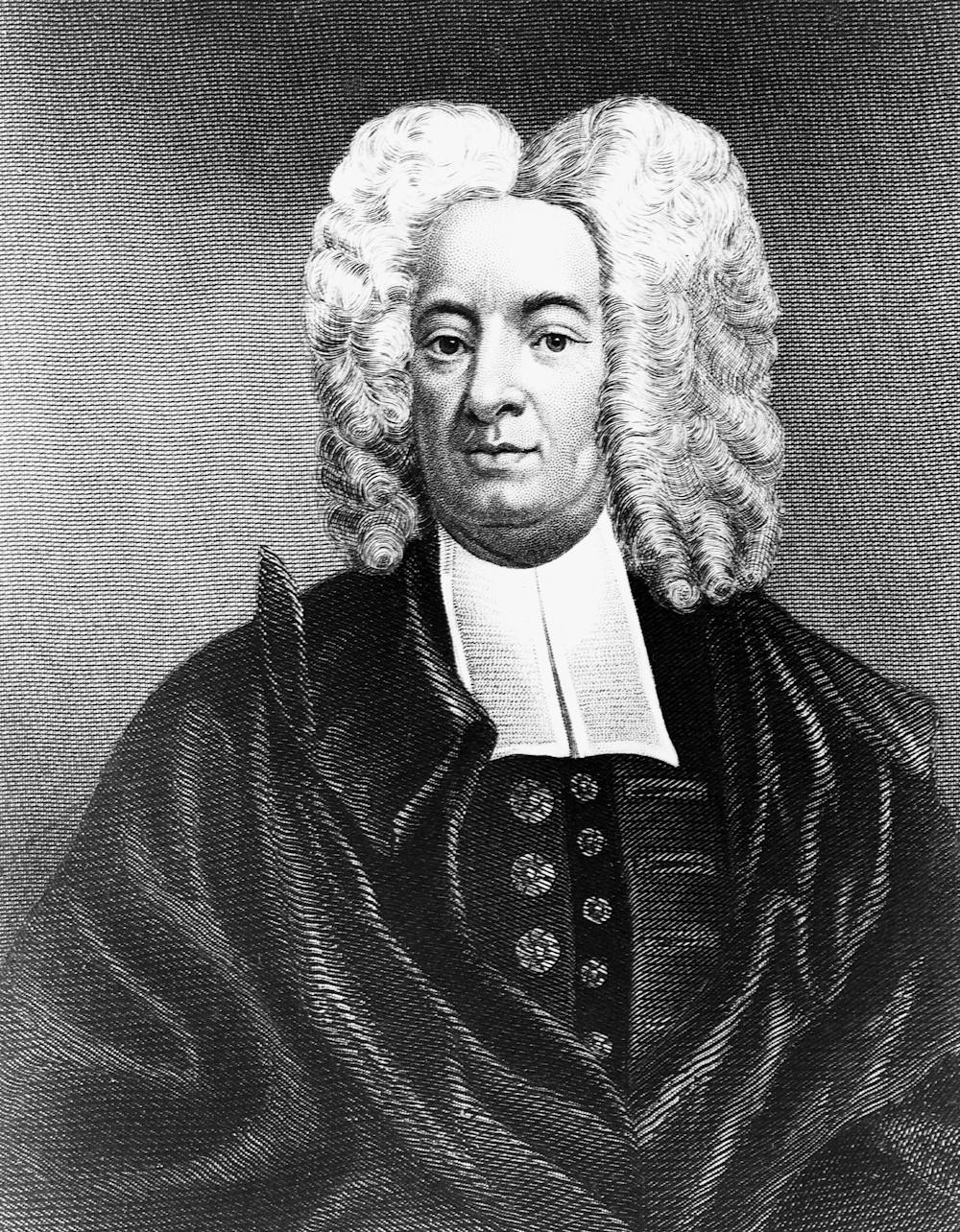
Cotton Mather heard about variolation from an enslaved West African man in his household named Onesimus. Bettman via Getty Images
Known primarily as a Congregational minister, Mather was also a scientist with a special interest in biology. He paid attention when Onesimus told him “he had undergone an operation, which had given him something of the smallpox and would forever preserve him from it; adding that it was often used” in West Africa, where he was from.
Inspired by this information from Onesimus, Mather teamed up with a Boston physician, Zabdiel Boylston, to conduct a scientific study of inoculation’s effectiveness worthy of 21st-century praise. They found that of the approximately 300 people Boylston had inoculated, 2% had died, compared with almost 15% of those who contracted smallpox from nature.
The findings seemed clear: Inoculation could help in the fight against smallpox. Science won out in this clergyman’s mind. But others were not convinced.
Stirring up controversy
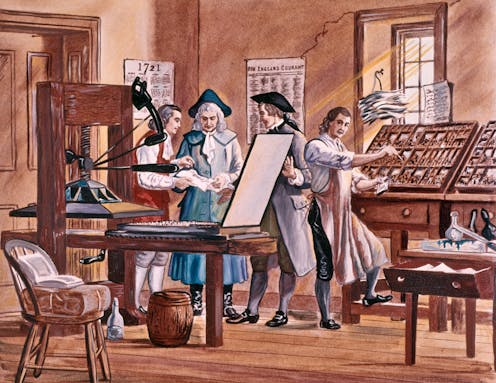
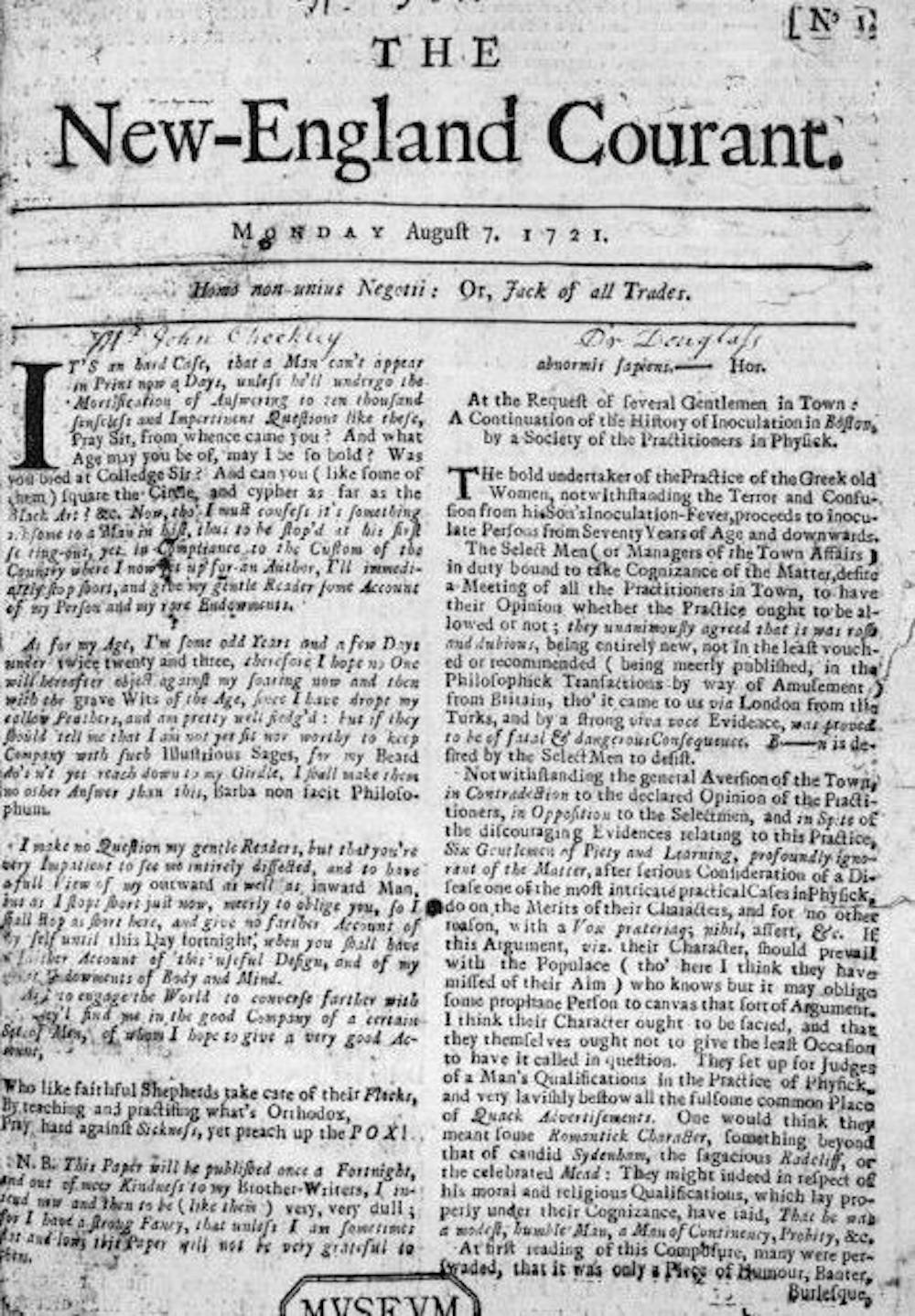
A local newspaper editor named James Franklin had his own affliction – namely an insatiable hunger for controversy. Franklin, who was no fan of Mather, set about attacking inoculation in his newspaper, The New-England Courant.
From its first edition, The New-England Courant covered inoculation. Wikimedia Commons
One article from August 1721 tried to guilt readers into resisting inoculation. If someone gets inoculated and then spreads the disease to someone else, who in turn dies of it, the article asked, “at whose hands shall their Blood be required?” The same article went on to say that “Epidemeal Distempers” such as smallpox come “as Judgments from an angry and displeased God.”
In contrast to Mather and Boylston’s research, the Courant’s articles were designed not to discover, but to sow doubt and distrust. The argument that inoculation might help to spread the disease posits something that was theoretically possible – at least if simple precautions were not taken – but it seems beside the point. If inoculation worked, wouldn’t it be worth this small risk, especially since widespread inoculations would dramatically decrease the likelihood that one person would infect another?
Franklin, the Courant’s editor, had a kid brother apprenticed to him at the time – a teenager by the name of Benjamin.
Historians don’t know which side the younger Franklin took in 1721 – or whether he took a side at all – but his subsequent approach to inoculation years later has lessons for the world’s current encounter with a deadly virus and a divided response to a vaccine.
That he was capable of overcoming this inclination shows Benjamin Franklin’s capacity for independent thought, an asset that would serve him well throughout his life as a writer, scientist and statesman. While sticking with social expectations confers certain advantages in certain settings, being able to shake off these norms when they are dangerous is also valuable. We believe the most successful people are the ones who, like Franklin, have the intellectual flexibility to choose between adherence and independence.
Perhaps the inoculation controversy of 1721 had helped him to understand an unfortunate phenomenon that continues to plague the U.S. in 2021: When people take sides, progress suffers. Tribes, whether long-standing or newly formed around an issue, can devote their energies to demonizing the other side and rallying their own. Instead of attacking the problem, they attack each other.
Franklin, in fact, became convinced that inoculation was a sound approach to preventing smallpox. Years later he intended to have his son Francis inoculated after recovering from a case of diarrhea. But before inoculation took place, the 4-year-old boy contracted smallpox and died in 1736. Citing a rumor that Francis had died because of inoculation and noting that such a rumor might deter parents from exposing their children to this procedure, Franklin made a point of setting the record straight, explaining that the child had “receiv’d the Distemper in the common Way of Infection.”
Writing his autobiography in 1771, Franklin reflected on the tragedy and used it to advocate for inoculation. He explained that he “regretted bitterly and still regret” not inoculating the boy, adding, “This I mention for the sake of parents who omit that operation, on the supposition that they should never forgive themselves if a child died under it; my example showing that the regret may be the same either way, and that, therefore, the safer should be chosen.”
A scientific perspective
A final lesson from 1721 has to do with the importance of a truly scientific perspective, one that embraces science, facts and objectivity.
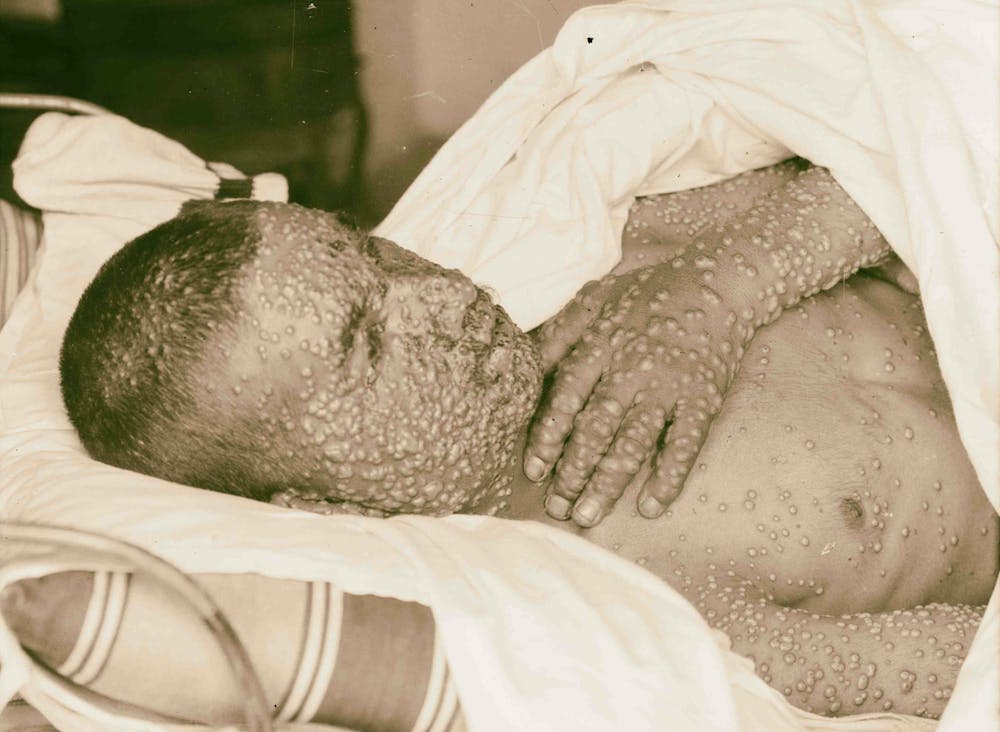
Smallpox was characterized by fever and aches and pustules all over the body. Before eradication, the virus killed about 30% of those it infected, according to the U.S. Centers for Disease Control and Prevention. Sepia Times/Universal Images Group via Getty Images
Inoculation was a relatively new procedure for Bostonians in 1721, and this lifesaving method was not without deadly risks. To address this paradox, several physicians meticulously collected data and compared the number of those who died because of natural smallpox with deaths after smallpox inoculation. Boylston essentially carried out what today’s researchers would call a clinical study on the efficacy of inoculation. Knowing he needed to demonstrate the usefulness of inoculation in a diverse population, he reported in a short book how he inoculated nearly 300 individuals and carefully noted their symptoms and conditions over days and weeks.
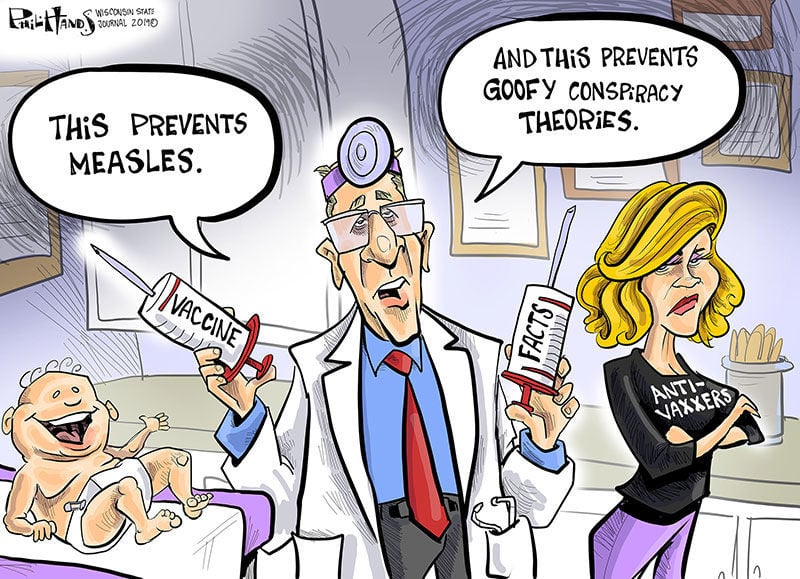
The recent emergency-use authorization of mRNA-based and viral-vector vaccines for COVID-19 has produced a vast array of hoaxes, false claims and conspiracy theories, especially in various social media. Like 18th-century inoculations, these vaccines represent new scientific approaches to vaccination, but ones that are based on decades of scientific research and clinical studies.
We suspect that if he were alive today, Benjamin Franklin would want his example to guide modern scientists, politicians, journalists and everyone else making personal health decisions.Like Mather and Boylston, Franklin was a scientist with a respect for evidence and ultimately for truth.
When it comes to a deadly virus and a divided response to a preventive treatment, Franklin was clear what he would do. It doesn’t take a visionary like Franklin to accept the evidence of medical science today.
An argument for humility in the face of pandemic forecasting unknown unknowns.
“Are we battling an unprecedented pandemic or panicking at a computer generated mirage?” I asked at the beginning of the COVID-19 pandemic on March 18, 2020. Back then the Imperial College London epidemiological model’s baseline scenario projected that with no changes in individual behaviors and no public health interventions, more than 80 percent of Americans would eventually be infected with novel coronavirus and about 2.2 million would die of the disease. This implies that 0.8 percent of those infected would die of the disease. This is about 8-times worse than the mortality rate from seasonal flu outbreaks.
Spooked by these dire projections, President Donald Trump issued on March 16 his Coronavirus Guidelines for America that urged Americans to “listen to and follow the directions of STATE AND LOCAL AUTHORITIES.” Among other things, Trump’s guidelines pressed people to “work or engage in schooling FROM HOME whenever possible” and “AVOID SOCIAL GATHERINGS in groups of more than 10 people.” The guidelines exhorted Americans to “AVOID DISCRETIONARY TRAVEL, shopping trips and social visits,” and that “in states with evidence of community transmission, bars, restaurants, food courts, gyms, and other indoor and outdoor venues where people congregate should be closed.”
Let’s take a moment to recognize just how blindly through the early stages of the pandemic we—definitely including our public health officials—were all flying at the time. The guidelines advised people to frequently wash their hands, disinfect surfaces, and avoid touching their faces. Basically, these were the sort of precautions typically recommended for influenza outbreaks. On July 9, 2020, an open letter from 239 researchers begged the World Health Organization and other public health authorities to recognize that COVID-19 was chiefly spread by airborne transmission rather than via droplets deposited on surfaces. The U.S. Centers for Disease Control and Prevention (CDC) didn’t update its guidance on COVID-19 airborne transmission until May 2021. And it turns out that touching surfaces is not a major mode of transmission for COVID-19.
The president’s guidelines also advised, “IF YOU FEEL SICK, stay home. Do not go to work.” This sensible advice, however, missed the fact that a huge proportion of COVID-19 viral transmission occurred from people without symptoms. That is, people who feel fine can still be infected and, unsuspectingly, pass along their virus to others. For example, one January 2021 study estimated that “59% of all transmission came from asymptomatic transmission, comprising 35% from presymptomatic individuals and 24% from individuals who never develop symptoms.”
The Imperial College London’s alarming projections did not go uncontested. A group of researchers led by Stanford University medical professor Jay Bhattacharya believed that COVID-19 infections were much more widespread than the reported cases indicated. If the Imperial College London’s hypothesis were true, Bhattacharya and his fellow researchers argued, that would mean that the mortality rate and projected deaths from the coronavirus would be much lower, making the pandemic much less menacing.
The researchers’ strategy was to blood test people in Santa Clara and Los Angeles Counties in California to see how many had already developed antibodies in response to coronavirus infections. Using those data, they then extrapolated what proportion of county residents had already been exposed to and recovered from the virus.
Bhattacharya and his colleagues preliminarily estimated that between 48,000 and 81,000 people had already been infected in Santa Clara County by early April, which would mean that COVID-19 infections were “50-85-fold more than the number of confirmed cases.” Based on these data the researchers calculated that toward the end of April “a hundred deaths out of 48,000-81,000 infections corresponds to an infection fatality rate of 0.12-0.2%.” As I optimistically reported at the time, that would imply that COVID-19’s lethality was not much different than for seasonal influenza.
Bhattacharya and his colleagues conducted a similar antibody survey in Los Angeles County. That study similarly asserted that COVID-19 infections were much more widespread than reported cases. The study estimated 2.8 to 5.6 percent of the residents of Los Angeles County had been infected by early April. That translates to approximately 221,000 to 442,000 adults in the county who have had the infection. “That estimate is 28 to 55 times higher than the 7,994 confirmed cases of COVID-19 reported to the county by the time of the study in early April,” noted the accompanying press release. “The number of COVID-related deaths in the county has now surpassed 600.” These estimates would imply a relatively low infection fatality rate of between 0.14 and 0.27 percent.
Unfortunately, from the vantage of 14 months, those hopeful results have not been borne out. Santa Clara County public health officials report that there have been 119,712 diagnosed cases of COVID-19 so far. If infections were really being underreported by 50-fold, that would suggest that roughly 6 million Santa Clara residents would by now have been infected by the coronavirus. The population of the county is just under 2 million. Alternatively, extrapolating a 50-fold undercount would imply that when 40,000 diagnosed cases were reported on July 11, 2020, all 2 million people living in Santa Clara County had been infected by that date.
Los Angeles County reports 1,247,742 diagnosed COVID-19 cases cumulatively. Again, if infections were really being underreported 28-fold, that would imply that roughly 35 million Angelenos out of a population of just over 10 million would have been infected with the virus by now. Again turning the 28-fold estimate on its head, that would imply that all 10 million Angelenos would have been infected when 360,000 cases had been diagnosed on November 21, 2020.
COVID-19 cases are, of course, being undercounted. Data scientist Youyang Gu has been consistently more accurate than many of the other researchers parsing COVID-19 pandemic trends. Gu estimates that over the course of the pandemic, U.S. COVID-19 infections have roughly been 4-fold greater than diagnosed cases. Applying that factor to the number of reported COVID-19 cases would yield an estimate of 480,000 and 5,000,000 total infections in Santa Clara and Los Angeles respectively. If those are ballpark accurate, that would mean that the COVID-19 infection fatality rate in Santa Clara is 0.46 percent and is 0.49 percent in Los Angeles. Again, applying a 4-fold multiplier to take account of undercounted infections, those are both just about where the U.S. infection fatality rate of 0.45 percent is now.
The upshot is that, so far, we have ended up about half-way between the best case and worst case scenarios sketched out at the beginning of the pandemic.





 HENRY KOTULA
