Worried About Breakthrough Infections? Here’s How to Navigate This Phase of the Pandemic.

Many people are seeking definitive answers about what they can and can’t do after being vaccinated against Covid-19. Is it OK to travel? Should I go to a big wedding? Does the Delta variant make spending time with my vaccinated grandmother more risky?

But there’s no one-size-fits-all answer to those questions because risk changes from one individual to the next, depending on a person’s overall health, where they live and those they spend time with.

The bottom line is that vaccines are highly protective against serious illness, and, with some precautions, will allow people to return to more normal lives, experts say. A recent study in Los Angeles County showed that while breakthrough infections can happen, the unvaccinated are 29 times as likely to end up hospitalized from Covid-19 as a vaccinated person.

Experts say anxiety about breakthrough infections remains pervasive, fueled in part by frightening headlines and unrealistic expectations about the role of vaccines.

“There’s been a lot of miscommunication about what the risks really are to vaccinated people, and how vaccinated people should be thinking about their lives,” said Dr. Ashish K. Jha, dean of the Brown University School of Public Health. “There are people who think we are back to square one, but we are in a much, much better place.”

While the Delta variant is causing a surge in infections in various hot spots around the country, including Florida and Louisiana, there will eventually be an end to the pandemic. Getting there will require ongoing precautions in the coming months, but vaccinated people will have more freedom to enjoy life than they did during the early lockdowns. Here are answers to some common questions about the road ahead.

To understand why there is no simple answer to this question, think about another common risk: driving in a snowstorm. While we know that tens of thousands of people are injured or killed each year on icy roads, your individual risk depends on local conditions, the speed at which you travel, whether you’re wearing a seatbelt, the safety features on your car and whether you encounter a reckless driver on the road.

Your individual risk for Covid after vaccination also depends on local conditions, your overall health, the precautions you take and how often you are exposed to unvaccinated people who could be infected.

“People want to be told what to do — is it safe if I do this?” said Dr. Sharon Balter, director of the division of communicable disease control and prevention at the Los Angeles County Department of Public Health. “What we can say is, ‘These are the things that are more risky, and these are the things that are less risky.’”

Dr. Balter’s team has recently collected surveillance data that give us a clearer picture of the difference in risk to the vaccinated and unvaccinated as the Delta variant surged from May 1 through July 25. They studied infections in 10,895 fully vaccinated people and 30,801 unvaccinated people. The data showed that:

  • The rate of infection in unvaccinated people is five times the rate of infection in vaccinated people. By the end of the study period, the age-adjusted incidence of Covid-19 among unvaccinated persons was 315.1 per 100,000 people over a seven-day period compared to 63.8 per 100,000 incidence rate among fully vaccinated people. (Age adjustment is a statistical method used so the data are representative of the general population.)
  • The rate of hospitalization among the vaccinated was 1 per 100,000 people. The age-adjusted hospitalization rate in unvaccinated persons was 29.4 per 100,000.
  • Older vaccinated people were most vulnerable to serious illness after a breakthrough infection. The median age of vaccinated people who were hospitalized for Covid was 64 years. Among unvaccinated people who were hospitalized, the median age was 49.
  • The Delta variant appears to have increased the risk of breakthrough infections to vaccinated people. At the start of the study, before Delta was dominant, unvaccinated people became infected 10 times as often as vaccinated people did. By the end of study period, when Delta accounted for almost 90 percent of infections, unvaccinated people were five times as likely to get infected as vaccinated people.

While unvaccinated people are by far at highest risk for catching and spreading Covid-19, it’s also possible for a vaccinated person to become infected and transmit the illness to others. A recent outbreak in Provincetown, Mass., where thousands of people gathered in bars and restaurants, showed that vaccinated people can sometimes spread the virus.

Editors’ Picks

Even so, many experts believe the risk of getting infected from a vaccinated person is still relatively low. Dr. Jha noted that after an outbreak among vaccinated and unvaccinated workers at the Singapore airport, tracking studies suggested that most of the spread by vaccinated people happened when they had symptoms.

“When we’ve seen outbreaks, like those among the Yankees earlier in the year and other cases, almost always people are symptomatic when they’re spreading,” Dr. Jha said. “The asymptomatic, pre-symptomatic spread could happen, but we haven’t seen it among vaccinated people with any frequency.”

Another study from Singapore looked at vaccinated and unvaccinated people infected with the Delta variant. The researchers found that while viral loads in vaccinated and unvaccinated workers are similar at the onset of illness, the amount of virus declines more rapidly in the vaccinated after the first week, suggesting vaccinated people are infectious for a shorter period of time.

In many cases it will be safe, but the answer depends on a number of variables. The risk is lower with a few close family members and friends than a large group of people you don’t know. Outdoor gatherings are safer than indoor gatherings. What’s the community transmission rate? What’s the ventilation in the room? Do you have underlying health issues that would make you vulnerable to complications from Covid-19? Do any of the vaccinated people have a fever, sniffles or a cough?

“The big question is can five people sit around a table unmasked if we know they’re all vaccinated,” Dr. Jha said. “I think the answer is yes. The chances of anybody spreading the virus in that context is exceedingly low. And if someone does spread the virus, the other people are not going to get super sick from it. I certainly think most of us should not fear breakthrough infections to the point where we won’t tolerate doing things we really value in life.”

For larger gatherings or even small gatherings with a highly vulnerable person, rapid antigen testing using home testing kits can lower risk. Asking people to use a test a few days before the event, and then the day of the event, adds another layer of protection. Opening windows and doors or adding a HEPA air cleaner can also help.

Children under 12 probably will not be eligible for vaccination until the end of the year. As a result, the best way to protect them is to make sure all the adults and older kids around them are vaccinated. A recent report from the C.D.C. found that an unvaccinated elementary schoolteacher who didn’t wear a mask spread the virus to half of the students in a classroom.

Studies show that schools have not been a major cause of Covid-spreading events, particularly when a number of prevention measures are in place. A combination of precautions — masking indoors, keeping students at least three feet apart in classrooms, keeping students in separate cohorts or “pods,” encouraging hand washing and regular testing, and quarantining — have been effective. While many of those studies occurred before the Delta variant became dominant, they also happened when most teachers, staff and parents were unvaccinated, so public health experts are hopeful that the same precautions will work well this fall.

Dr. Balter noted that masking in schools, regular testing and improving ventilation will keep children safer, and that parents should be reassured by the data.

“The level of illness in children is much less than adults,” she said. “You do weigh all these things, but there are also a lot of consequences to not sending children to school.”

In many cases it will be relatively safe for vaccinated people to spend time, unmasked, with an older relative. But the risk depends on local conditions and the precautions the visitor has taken in the days leading up to the visit. In areas where community vaccination rates are low and overall infection rates are high, meeting outdoors or wearing a mask may be advised.

If you’re vaccinated but have been going to restaurants, large gatherings or spending time with unvaccinated people, it’s a good idea to practice more social distancing in the days leading up to your visit with an older or vulnerable person. Home testing a few days before the visit and the day of the visit will add another layer of protection.

Gregg Gonsalves, an assistant professor of epidemiology at the Yale School of Public Health, said he recently visited his 87-year-old mother and did not wear a mask. But that is because both of them are vaccinated and he still works mostly from home, lives in a highly vaccinated area and has low risk for exposure. He is also investing in home testing kits for reassurance that he is not infectious.

“If I just came back from a big crowded gathering, and I had to go see my mom, I would put on a mask,” he said.

The answer depends on the precautions your workplace has taken. Does the company require proof of vaccination to come into the office? Are unvaccinated people tested regularly? What percentage of people in the office are unvaccinated? What steps did your company take to improve indoor air quality? (Upgrading the filters in ventilation systems and adding stand-alone HEPA air cleaners are two simple steps that can reduce viral particles in the air.)

Offices that mandate vaccination will be safer, but vaccination rates need to exceed 90 percent. Even an 85-percent vaccination rate is not enough, Dr. Jha said. “It’s not going to work because one of those 15-percent unvaccinated is going to cause an outbreak for every single person in that room,” he said. “You do not want a bunch of unvaccinated people running around your offices.”

The people who have the most to gain from booster shots are older people, transplant patients, people with compromised immune systems or those with underlying conditions that put them at high risk for complications from Covid. People who received the single-dose Johnson & Johnson vaccine may also be good candidates for a second dose.

But many experts say healthy people with normal immune systems who received a two-dose mRNA vaccine from Pfizer or Moderna won’t get much benefit right now from a third shot because their vaccine antibodies still offer strong protection against severe illness. That said, the Biden administration appears to be moving ahead with offering booster shots to the general public starting as soon as the week of Sept. 20.

Hospital mergers and acquisitions are a bad deal for patients. Why aren’t they being stopped?

Contrary to what health care executives advertise, hospital mergers and acquisitions aren’t good for patients. They rarely improve access to health care or its quality, and they don’t reduce prices. But the system in place to stop them is often more bark than bite.

During 2019 and 2020, hospitals acquired an additional 3,200 medical practices and 18,600 physicians. By January 2021, almost half of all U.S. physicians were employed by a hospital or health system.

In 2018, the last year for which complete data are available, 72% of hospitals and more than 90% of hospital beds were affiliated with a health care system. Mergers and acquisitions are increasing the number of health care systems while decreasing the number of independently operated hospitals.

When hospitals buy provider practices, it leads to more unnecessary care and more expensive care, which increases overall spending. The same thing happens when hospitals merge or acquire other hospitals. These deals often increase prices and they don’t improve care quality; patients simply pay more for the same or worse care.

Mergers and acquisitions can negatively affect clinician morale as well. Some argue they lead to providers’ loss of autonomy and increase the emphasis on financial targets rather than patient care. They can also contribute to burnout and feeling unsupported.

Considerable machinery is in place at both the federal and state levels to stop “anticompetitive” mergers before they happen. But that machinery is limited by a lack of follow through.

The Federal Trade Commission (FTC) and the U.S. Department of Justice have always had broad authority over mergers. By law, one or both of these entities must review for any antitrust concerns proposed deals of a certain size before the deals are finalized. After a preliminary review, if no competition issues are identified, the merger or acquisition is allowed to proceed. This is what happens in most cases. If concerns are raised, however, the involved parties must submit additional information and undergo a second evaluation.

Some health care organizations seem willing to challenge this process. Leaders involved in a pending merger between Lifespan and Care New England in Rhode Island — which would leave 80% of the state’s inpatient market under one company’s umbrella — are preparing to move forward even if the FTC deems the deal anticompetitive. The companies will simply ask the state to approve the merger despite the FTC’s concerns.

The reality is that the FTC’s reach is limited when it comes to nonprofits, which most hospitals are. While the FTC can oppose anticompetitive mergers involving nonprofits, it cannot enforce action against them for anticompetitive behavior. So if a merger goes through, the FTC has limited authority to ensure the new entity plays fairly.

What’s more, the FTC has acknowledged it can’t keep up with its workload this year. It modified its antitrust review process to accommodate an increasing number of requests and its stagnant capacity. In July, the Biden administration issued an executive order about economic competition that explicitly acknowledges the negative impact of health care consolidation on U.S. communities. This is encouraging, signaling that the government is taking mergers seriously. Yet it’s unclear if the executive order will give the FTC more capacity, which is essential if it is to actually enforce antitrust laws.

At the state level, most of the antitrust power lies with the attorney general, who ultimately approves or challenges all mergers. Despite this authority, questionable mergers still go through.

In 2018, for example, two competing hospital systems in rural Tennessee merged to become Ballad Health and the only source of care for about 1.2 million residents. The deal was opposed by the FTC, which deemed it to be a monopoly. Despite the concerns, the state attorney general and Department of Health overrode the FTC’s ruling and approved the merger. (This is the same mechanism the Rhode Island hospitals hope to employ should the FTC oppose their merger.) As expected, Ballad Health then consolidated the services offered at its facilities and increased the fees on patient bills.

It’s clear that mechanisms exist to curb potentially harmful mergers and promote industry competition. It’s also clear they aren’t being used to the fullest extent. Unless these checks and balances lead to mergers being denied, their power over the market is limited.

Experts have been raising the alarm on health care consolidation for years. Mergers rarely lead to better care quality, access, or prices. Proposed mergers must be assessed and approved based on evidence, not industry pressure. If nothing changes, the consequences will be felt for years to come.

The Truth about Facts

May be an image of 1 person and text that says '"Facts do not cease to exist because they are ignored." -Aldous Huxley'

How the delta variant took over the US

How the delta variant took over the US

3 Things You Need to Know About the Delta Variant - COVID-19, Featured,  Health Topics - Hackensack Meridian Health

The delta variant has overtaken the U.S. in a matter of weeks as it spreads around the world in what President Biden’s chief medical adviser Anthony Fauci called a “global outbreak” of the strain.

The highly contagious variant of COVID-19 is considered at least two times more contagious than the previously dominant alpha strain, and experts say the increased transmissibility has likely fueled the surge in COVID-19 cases, hospitalizations and deaths nationwide.

But much is still unknown about delta as scientists scramble to better understand the strain.

Here’s what we know about the delta strain and how it blunted earlier momentum in the fight against the coronavirus.


Delta is more transmissible than previous COVID-19 strains

Delta’s contagiousness is considered key to its domination, having spread to at least 117 countries after first being detected in India. Like other viruses, COVID-19 is evolving, particularly through unplanned mutations.

A study from the United Kingdom in May suggested the delta strain could be 60 percent more transmissible than the alpha variant, which was already more contagious than the original strain.

But experts are split on that figure, with some saying delta could be more transmissible and others saying it could be less.

“You don’t necessarily want to attribute that all to the virus. You know, a lot of it may reflect the people as well,” said David Dowdy, an associate professor of epidemiology at the Johns Hopkins Bloomberg School of Public Health.

Researchers aren’t certain about what makes the delta variant more transmissible, but there are some clues.

Michael Farzan, head of the Department of Immunology and Microbiology at Scripps Research, said one of the variant’s advantages is that it can more strongly attach to a certain receptor when spreading in the body.

“This is one of the reasons why the virus … in a person gets made at a higher level, meaning that there’s a lot more being spit out or coughed out, meaning that it’s more likely to hit the next person,” he said.

The Centers for Disease Control and Prevention (CDC) has its own figures illustrating how the strain became so prevalent this summer. The agency’s latest projection is that 97.4 percent of all coronavirus cases come from all the different lineages of the delta variant, as of the week ending last weekend.

That marks an astronomical increase from the 1.6 percent estimated at the beginning of May and the 14.1 percent from the beginning of June.

Most people infected with COVID-19 at this point won’t know for sure whether they contracted the delta strain since available testing doesn’t make the distinction between strains — it only shows whether the virus itself is present.


It has a higher magnitude of viral loads

Health experts are examining the delta variant’s viral load, the measure of how much virus a person carries and can potentially transmit, compared to previous COVID-19 strains.

A study from China suggested that the strain’s viral load could be more than 1,000 times higher than the original strain, which Fauci on Thursday said “is a mechanistic reason why you have such a tremendous increase in transmissibility.”

Basically a higher viral load can make it more likely that an infected person can “shed” the virus, allowing someone nearby to contract it.

“If a little droplet that you sent out, it has more particles and that means it’s more likely to infect the next person over and it’s more likely to infect the next person over more times,” Farzan said.

Dowdy of Johns Hopkins cautioned that other variables, including people’s behavior, may be influencing how scientists understand delta’s viral load. With more people relaxing their COVID-19 precautions and interacting with others indoors, those same people could contract more of the virus than they might otherwise.

A study of a Massachusetts outbreak indicated that delta led to fully vaccinated people having a similar viral load compared to the unvaccinated, sparking the CDC to update its mask guidance late last month.

The outbreak on Cape Cod, where nearly three-quarters of confirmed cases were among fully vaccinated people, suggested that vaccinated people could potentially transmit and spread the delta variant. But researchers said at the time that microbiological studies would be needed to confirm whether vaccinated individuals can transmit the strain.


Vaccines are still effective against delta

Studies have found that at least five vaccines, including all three used in the U.S., are effective against the delta variant in lab and real-world settings, Fauci said on Thursday.

It was previously unclear whether the Johnson & Johnson vaccine, which requires only one dose instead of two, was equally effective. But a study released last week found the immune response lasted at least eight months, resulting in the first real-world data for the vaccine, Fauci said.

Recent studies have indicated that vaccines may see a very slight dip in effectiveness against symptomatic versions of the coronavirus caused by the delta variant. The COVID-19 vaccines, like any other, are also not perfect at preventing all delta infection and illness.

But scientists agree that studies have demonstrated that the vaccinated population is less likely to get infected and much less likely to be hospitalized or die from the delta variant than the unvaccinated.

“The only reason our case numbers are lower now than they were back in December is because half of our population has been fully vaccinated,” Dowdy said.


Still more to learn
 

Experts acknowledge there is much more to learn about the delta variant.

“A big thing is we still don’t know how much of what we’re seeing is due to the virus versus due to behavior,” Dowdy said. “That makes a big difference because things that are due to the virus, we can’t really change as a society.”

Although there’s a growing number of studies, not all scientists are certain that the variant itself necessarily causes more serious illness among the unvaccinated, leading to more hospitalizations and deaths. It’s also unclear whether the strain is sparking more severe illness among children as pediatric hospital admissions have picked up.

Additionally, scientists have more analysis to do on under-researched mutations that may give the virus more of an advantage, Farzan said.

Driven by the Delta Variant, the Fourth Wave of COVID-19 in the U.S. Could Be Worse Than the Third. In Some States, It Already Is

Why the delta variant is hitting kids hard in the U.S. and how we can  prevent that in Canada | CBC News

Just a month ago, even as signs of a fourth wave of COVID-19 infections in the U.S. were blossoming in the lower Midwest, the memory of a long, miserable winter kept us warm. Even places with burgeoning case rates were far below their catastrophic peaks over the holidays, when a combination of cold weather and defiant travelers contributed to a third wave in infections and deaths that drowned out the previous two spikes in April and July of 2020.

This is regrettably no longer the case. In four states—Hawaii, Louisiana, Mississippi and Florida—the current number of daily new COVID-19 infections, averaged across seven days, has surpassed that winter peak, even with a substantial percentage of the population having received a complete dosage of the COVID-19 vaccine (though not nearly as many as public officials would prefer).

Hawaii is something of an anomaly, as its winter peak was not nearly as high as in colder, more accessible regions. But several other states threaten to join this quartet in the near future. Oregon’s daily rate of new infections is at 36.5 per 100,000 residents, or 99% of the peak value on Dec. 3, 2020. Nationwide, the rate is 37.7, just under 50% of the winter peak of 76.5.

While plenty of states remain far below the winter peaks, as the Delta variant tears across the country, we can expect more and more states to experience a fourth wave that crests higher than the third, even as new outbreaks are inspiring more vaccine holdouts to hold out their biceps and breakthrough infections, while frightening and non-trivial, remain reasonably rare.

What is perhaps most sobering about this surge is that COVID-19-related deaths, which typically lag behind case surges by about two weeks, are starting to rise again. No state has yet surpassed the winter peak in deaths, but at 65%, Louisiana very well may. That figure is still 15% nationwide, well below the Jan. 13, 2021 peak of 1.04 fatalities per 100,000 people. It is currently at 0.16.

When it comes to the pandemic, no one wants to sound like Chicken Little. The sky might not be falling. But neither is the national case rate, or the number of people dying.

Story of Two Chest X-Rays

Dr. Jesse O’Shea, an infectious disease physician, posted this x-ray showing the difference between two of his patients; one with and one without the vaccination. Very telling and compelling visual, and we wanted to share.

To follow his page, please visit: https://www.instagram.com/jesseosheamd“A Story of Two Chest X-Rays. One patient with a vaccine and one patient without. Version 2—for the crowd that wants specifics without violating patient privacy (these are published cases).

The top picture is a 47-year-old man who received Pfizer vaccine (1) and developed COVID19 2 weeks after. He was overweight (BMI = 29), but without any known comorbidities. He had runny nose, mild body aches, mild cough. His chest X ray is relatively normal.

The bottom picture is a 50-year-old active female patient without obesity and not on medications. Her chest X-ray shows diffuse opacities, consolidations in both lungs with lung damage (all the fluffy white) and a pattern that looks like the worst feared complication of COVID19—acute respiratory distress syndrome (ARDS). She needed intubation, mechanical ventilation, and ECMO (extra-corporal membrane oxygenation) – the most life support we can offer.

The mRNA vaccines are effective at preventing severe disease and death— even with the Delta variant.

Our ICUs are starting to fill up with unvaccinated COVID19 patients again.

“To my fellow healthcare workers, keep your head up!”

Hot vax summer is turning out to be a damp squib

https://mailchi.mp/ef14a7cfd8ed/the-weekly-gist-august-6-2021?e=d1e747d2d8

Pandemic of the Unvaccinated - YouTube

With US COVID case counts hitting levels not seen since February, hospitalizations climbing rapidly in many states—topping the number seen nationally during last summer’s surge—and mortality figures beginning to edge worrisomely upward, it’s increasingly clear that talk of a “hot vax summer” was premature at best.

While this week the nation crested President Biden’s July 4th goal of 70 percent of Americans getting at least one dose of the vaccine, attention has now turned in earnest to the need to dramatically accelerate vaccinations the face of the highly contagious Delta variant.

Of particular concern: a report from the Centers for Disease Control and Prevention (CDC) suggesting that vaccinated people who become infected with the variant may be able to spread the disease at a greater rate than previously thought.

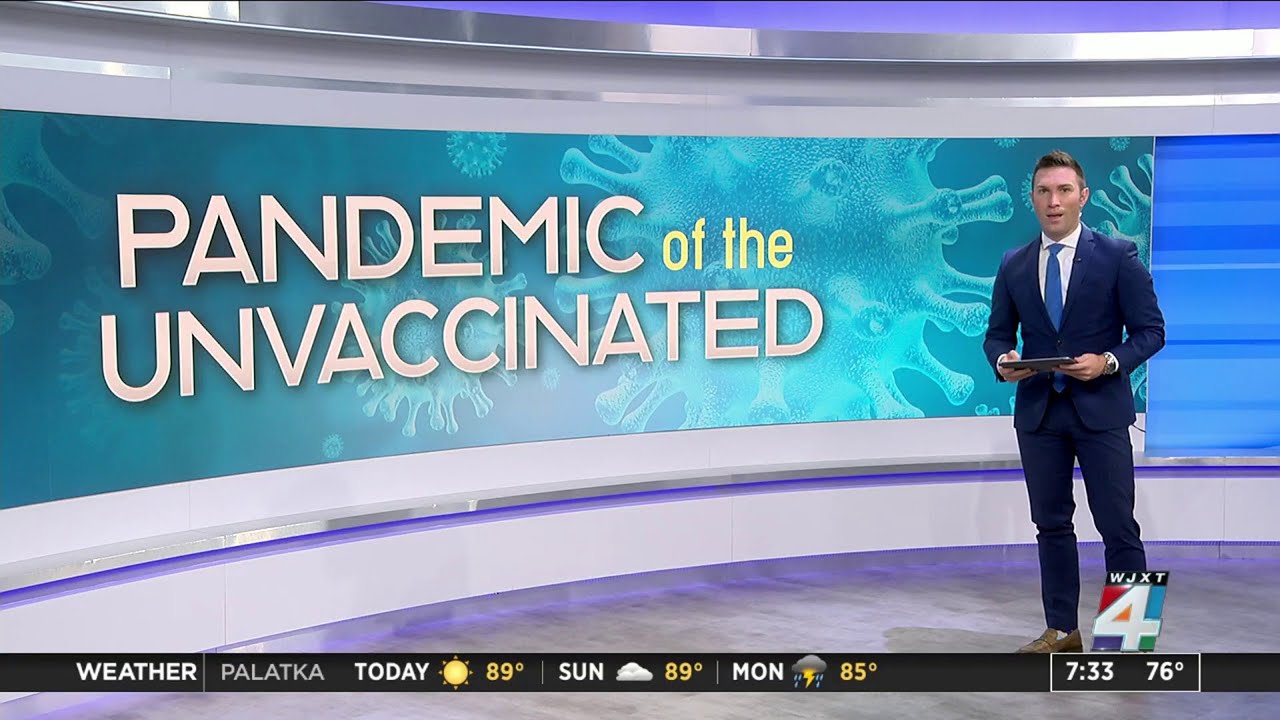
Although it’s clear that we’re largely experiencing a “pandemic of the unvaccinated” at this point, it wasn’t reassuring to learn that the CDC has been citing pre-Delta data (from January to July) on hospitalizations to bolster its reassurances to vaccinated Americans about the low numbers of “breakthrough” cases in hospitals, nor to hear (as we have, anecdotally) from hospital leaders that vaccinated patients now account for 15 percent of COVID admissions.

Attention has rapidly turned to the need for booster shots, with the Food and Drug Administration (FDA) reported to be readying a plan for early September, focused on the over-65 population and those whose immune systems are compromised. Already, Zuckerberg San Francisco General Hospital has begun supplemental mRNA boosters for those who received the one-dose Johnson & Johnson shot earlier this year.

Meanwhile, in an attempt to reassure those still harboring concerns about getting an “experimental” vaccine, the FDA is fast-tracking its full approval process for Pfizer’s vaccine, which can’t come soon enough. 

The ticking clock: students of all ages, vaccinated or otherwise, return to school in less than a month. Will we be ready?

About 99.999% of fully vaccinated Americans have not had a deadly Covid-19 breakthrough case, CDC data shows

https://www.cnn.com/2021/07/31/health/fully-vaccinated-people-breakthrough-hospitalization-death/index.html?fbclid=IwAR0zCYf_qFiMcaHs0D0HbdHNrWkHzt4j6mmxWgfDD_-r5GkmJA9tm-MgaAU

About 99.999% of fully vaccinated Americans have not had a deadly Covid-19  breakthrough case, CDC data shows

More than 99.99% of people fully vaccinated against Covid-19 have not had a breakthrough case resulting in hospitalization or death, according to the latest data from the US Centers for Disease Control and Prevention.The data highlights what leading health experts across the country have highlighted for months: Covid-19 vaccines are very effective at preventing serious illness and death from Covid-19 and are the country’s best shot at slowing the pandemic down and avoiding further suffering.The CDC reported 6,587 Covid-19 breakthrough cases as of July 26, including 6,239 hospitalizations and 1,263 deaths. At that time, more than 163 million people in the United States were fully vaccinated against Covid-19.

Divide those severe breakthrough cases by the total fully vaccinated population for the result: less than 0.004% of fully vaccinated people had a breakthrough case that led to hospitalization and less than 0.001% of fully vaccinated people died from a breakthrough Covid-19 case.

Most of the breakthrough cases — about 74% — occurred among adults 65 or older.

Since May, the CDC has focused on investigating only hospitalized or fatal Covid-19 cases among people who have been fully vaccinated. The agency says the data relies on “passive and voluntary reporting” and is a “snapshot” to “help identify patterns and look for signals among vaccine breakthrough cases.”

“To date, no unexpected patterns have been identified in the case demographics or vaccine characteristics among people with reported vaccine breakthrough infections,” according to the CDC.

The agency shared a study this week that showed the Delta variant produced similar amounts of virus in vaccinated and unvaccinated people if they get infected. Experts continue to say that vaccination makes it less likely you’ll catch Covid-19 in the first place. But for those who do, the findings suggest they could have a similar tendency to spread it as unvaccinated people. That study also convinced CDC leaders to update the agency’s mask guidance on Tuesday, recommending that fully vaccinated people also wear masks indoors when in areas with “substantial” and “high” Covid-19 transmission to prevent further spread of the Delta variant. Guidance for unvaccinated people remains to continue masking until they are fully vaccinated. Beyond severe cases, an analysis of official state data from the Kaiser Family Foundation showed that breakthrough cases of any kind are also extremely rare.vAbout half of states report data on Covid-19 breakthrough cases, and in each of those states, less than 1% of fully vaccinated people had a breakthrough infection, ranging from 0.01% in Connecticut to 0.9% in Oklahoma.

The KFF analysis also found that more than 90% of cases — and more than 95% of hospitalizations and deaths — have been among unvaccinated people. In most states, more than 98% of cases were among the unvaccinated.

Pace of vaccinations is going up

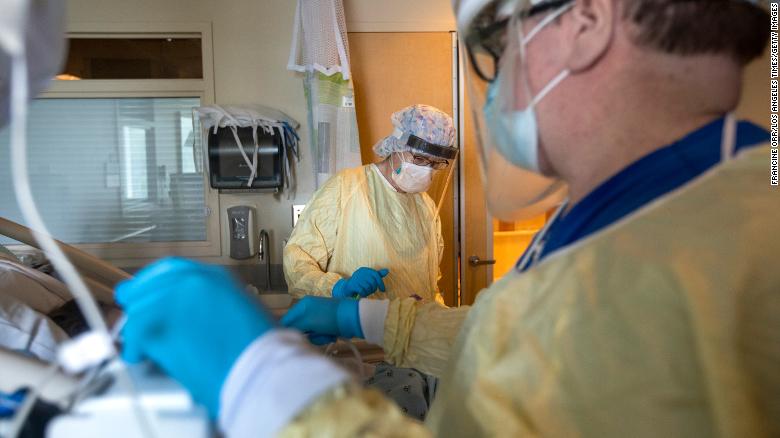
Health care workers assist a patient in the ICU inside Little Company of Mary Medical Center on July 30, 2021 in Torrance, California

But experts say those vaccinated, while they may be able to transmit the virus, remain very well protected against getting seriously ill. Amid the latest surge of Covid-19 cases nationwide fueled by the Delta variant, local leaders across the US are reporting that the majority of new infections and hospitalizations are among unvaccinated people. The Delta variant is now so contagious, one former health official recently warned that people who are not protected — either through vaccination or previous infection — will likely get it. Amid concerns over the rising cases and the dangerous strain, the country has seen a steady rise in the pace of vaccinations in the past three weeks — and an even sharper increase in states that had been lagging the most, according to a CNN analysis of CDC data.

The seven-day average of new doses administered in the US is now 652,084, up 26% from three weeks ago. The difference is even more striking in several southern states: Alabama’s seven-day average of new doses administered is more than double what it was three weeks ago. The state has the lowest rate of its total population fully vaccinated in the US, at roughly 34%. Arkansas, with just 36% of its population fully vaccinated, has also seen its average daily rate of doses administered double in the last three weeks. Louisiana, which had by far the most new Covid-19 cases per capita last week and has only fully vaccinated 37% of its population, saw daily vaccination rates rise 111% compared to three weeks ago.

Meanwhile, Missouri, which has been among the hardest-hit states in the latest Covid-19 surge, now has a daily average of new vaccinations 87% higher than three weeks ago.

Roughly 57.5% of the US population has received at least one Covid-19 vaccine dose and about 49.5% is fully vaccinated, CDC data shows.

Cartoon – Covid Brain Fog Logic

Covid-19 Ward' | Kaiser Health News

The Southern Pandemic

https://view.newsletters.time.com/?qs=b30eec7a6d02a7e20c01aca4b8e56821af061113f7bf190d94622834c95fdc029a33b175fe02efd0b70cadd267cdc0e72ee0db92cafa93af6570013e356c664dc1c4170d6dba1f77fb29dee1f7b89d3a

Any COVID-19 uptick is a tragedy, but the first major U.S. surge since the start of the vaccination rollout has been uniquely painful to watch because it likely could have been prevented. The Delta variant has driven up cases across the country, with the worst outbreaks in southern states where vaccination rates fall far short of that of the country as a whole, which is nearly half vaccinated. A few examples:

  • In Louisiana, 37.1% of the population is fully vaccinated and the seven-day average of new cases is 4,622, up from 1,426 two weeks ago.
  • In Arkansas, 36.6% of the population is fully vaccinated and the seven-day average of new cases has nearly doubled over the last two weeks to 1,900 new cases a day.
  • In Alabama, 34.4% of the population is fully vaccinated and the seven-day average for daily cases has tripled over the last two weeks to 2,400 new cases a day.
  • In Mississippi—which has the country’s lowest vaccination rate, at 34.5%—the number of new cases has nearly tripled in the last two weeks; it’s now reporting a seven-day average of nearly 1,700 daily cases.

These surges have left many people scrambling to protect themselves, with several hard-hit states reporting an increase in vaccine uptake. In Louisiana, for example, about 52,000 doses were administered during the week ending July 31, compared to about 20,000 the week ending July 10. Unfortunately, people getting vaccinated now won’t be fully protected for another two to four weeks, depending on the shot they receive, meaning the virus will likely continue to spread for some time.

At least some southern governors are taking steps to prevent that, turning to tried and true methods like masking to contain viral spread. Louisiana governor John Bel Edwards (D), for instance, issued an order yesterday mandating face masks in many indoor public settings, including businesses, schools and churches. “I cannot in good conscience sit by while our hospitals lose the capacity to deliver life-saving care to COVID patients and non-COVID patients alike,” Edwards said when announcing the new rules, which begin tomorrow and are currently set to expire Sept. 1.

However, the leaders of other badly hit states are not following suit. Mississippi governor Tate Reeves (R), for instance, has rejected the U.S. Centers for Disease Control and Prevention’s (CDC) updated guidance calling for indoor masking in areas with substantial viral spread, calling it “foolish.” The state may continue to pay the price; Mississippi hospitals are reportedly struggling to find enough nurses to care for patients, even as the state health officer warned last week that new hospitalizations are “skyrocketing” (as of July 27, Mississippi’s seven-day average for new hospitalizations was 126, compared to about 20 on July 1).

The best anyone can do in these states now is get vaccinated, mask up, and socially distance whenever possible. Delta burned hot but fast in India and the United Kingdom, and it’s possible it will do the same in the States as well.


TODAY’S CORONAVIRUS OUTLOOK

Over 400.6 million doses of the COVID-19 vaccine have been shipped to various U.S. states as of this afternoon, of which some 347 million doses had been administered, according to TIME’s vaccine tracker. About 49.7% of Americans had been completely vaccinated.

Nearly 198.9 million people around the world had been diagnosed with COVID-19 as of 1 a.m. E.T. today, and more than 4.2 million people have died. On August 2, there were 556,672 new cases and 7,784 new deaths confirmed globally.

Here’s how the world as a whole is currently trending:

Here’s where daily cases have risen or fallen over the last 14 days, shown in confirmed cases per 100,000 residents:

And here’s every country that has reported over 3 million cases:

The U.S. had recorded more than 35.1 million coronavirus cases as of 1 a.m. E.T. today. Nearly 614,000 people have died. On August 2, there were 127,976 new cases and 451 new deaths confirmed in the U.S.

Here’s how the country as a whole is currently trending:

Here’s where daily cases have risen or fallen over the last 14 days, shown in confirmed cases per 100,000 residents: