The pandemic shaping the future

https://www.axios.com/newsletters/axios-future-trends-0eb404e7-34a3-40ac-af56-8fefba59535c.html?utm_source=newsletter&utm_medium=email&utm_campaign=newsletter_axiosfuturetrends&stream=top

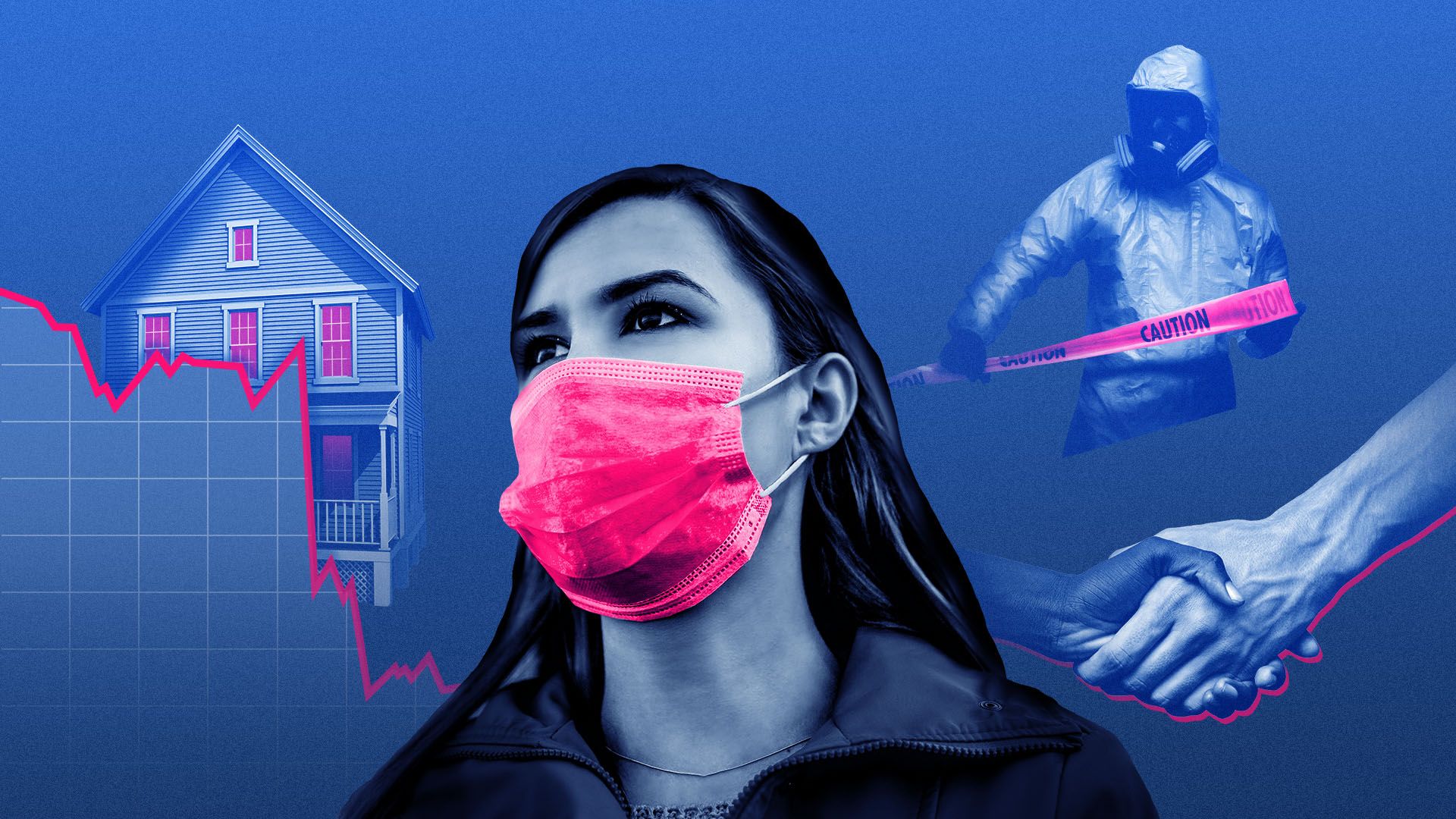
Illustration of a woman in a medical mask surrounded by a falling trend line, a house, a person in a hazmat suit with caution tape, and two hands shaking

The world that emerges from the coronavirus pandemic will be fundamentally different, Axios Future correspondent Bryan Walsh writes.

  • Why it matters: This crisis may prove to be as significant as the 2008 financial meltdown or even 9/11.
  • So the choices that businesses and governments are making now will have enormous social and economic ramifications.

The intrigue: U.S. health and government officials are facing the epidemiological equivalent of the “fog of war,” worsened by a massive American failure to act on weeks of warnings as the virus spread in China.

  • The Trump administration declared a national emergency yesterday, seven weeks after the first U.S. case was announced by the Centers for Disease Control and Prevention.
  • By failing to rapidly scale up testing, U.S. officials have added an additional — and partly unnecessary — layer of uncertainty about how to respond.
  • Harvard epidemiologist Michael Mina calls it “the most daunting virus that we’ve contended with in half a century or more.”

Flashback: As recently as the 1918 influenza pandemic, scientists lacked the ability to rapidly respond to an infectious disease outbreak.

  • Today, scientists can sequence a virus in days, develop rapid tests that can determine infection before obvious symptoms, and use complex mathematical models to predict future spread.

What we’ll find out in coming days:

  • The actual fatality rate of the virus.
  • How contagious it is, and the precise role that children — who seem outwardly unaffected by the disease — may play in transmission.
  • If the outbreak will naturally slow down when the weather warms, as tends to happen with influenza.

What’s next: For now, distance becomes the first line of defense. Schools and companies are shifting online — with potential consequences.

  • If companies are able to function relatively well with a largely remote workforce, expect lower levels of business travel.
  • After decades of emphasizing the efficiency of supply chains — which often meant complex international linkages and just-in-time inventories — businesses will look to build resilient supply chains.

The bottom line: The mobility — of people, capital and products — that we’ve taken for granted may not outlast the virus.


Pelosi, Trump strike deal on coronavirus response package

Pelosi, Trump strike deal on coronavirus response package
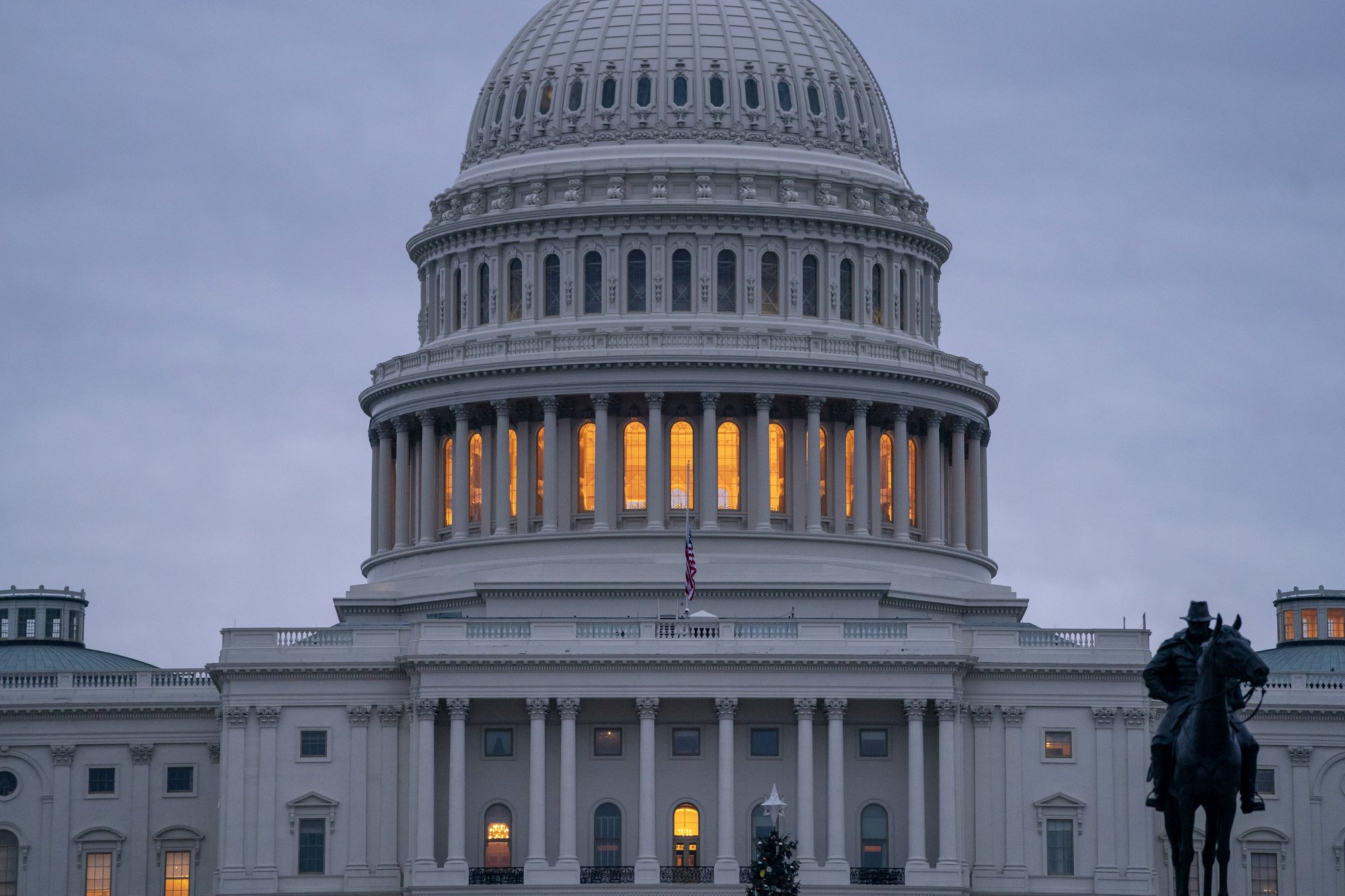
Image result for coronavirus response deal

Speaker Nancy Pelosi (D-Calif.) and President Trump have struck a deal on a multibillion-dollar stimulus package aimed at assisting millions of Americans directly hurt by the coronavirus outbreak.

Pelosi announced the deal on Friday evening after days of roller-coaster negotiations that put the outcome in doubt, as the nation’s leaders raced to ease public anxiety and stabilize volatile markets. Trump said on Twitter that he looked forward to signing the legislation.

“I have directed the Secretary of the Treasury and the Secretary of Labor to issue regulations that will provide flexibility so that in no way will Small Businesses be hurt. I encourage all Republicans and Democrats to come together and VOTE YES!” Trump wrote in a series of tweets.

Just hours before the deal was announced, Trump said in a Rose Garden address that he wasn’t on board, suggesting a bipartisan deal was out of reach even as the number of cases in the U.S. approached 2,000.

And even after Pelosi’s announcement, there was widespread confusion across the Capitol about whether Trump had endorsed the package. Several GOP lawmakers said no agreement had been secured, and even House Majority Leader Steny Hoyer (D-Md.) suggested Friday evening that the talks were still in flux.

Yet Treasury Secretary Steven Mnuchin, who has been leading the negotiations with Pelosi, seemed to put the confusion to rest just before 8 p.m. when he told Fox Business that there was, in fact, a deal.

“We have an agreement that reflects what the president talked about in his speech the other night. He’s very focused on making sure that we can deal with the coronavirus,” he said.

The frantic, eleventh-hour talks that brought the sides together highlight the urgency facing leaders from both parties to take aggressive actions to contain the fast-moving virus, for reasons of both public health and national morale.

“As Members of Congress, we have a solemn and urgent responsibility to take strong, serious action to confront and control this crisis and to put Families First and stimulate the economy,” Pelosi wrote in a letter to Democratic members announcing the deal.

The deadly pandemic has roiled the stock market, upended small businesses and large industries alike, and cancelled major sporting and political events around the country. Millions of Americans could lose income — or their jobs entirely — due to mass public closures, work-from-home orders and the economic downturn sure to follow.

The agreement announced Friday aims to ease some of the economic stress by providing financial assistance to those most directly affected by the crisis, including unemployment and paid leave benefits. Perhaps more importantly, the deal aims to calm some of the public trepidation and market turmoil of recent weeks by demonstrating that Washington policymakers can put aside partisan differences and unite quickly behind an emergency response befitting — at least in rhetoric — the severity of the crisis.

On Friday, Pelosi and Mnuchin spoke no fewer than 13 times by phone as they neared an agreement, aides said.

To get there, they had to iron out a small handful of stubborn wrinkles that threatened to sink the entire package — disagreements that were finally resolved late Friday evening.

Republicans, for instance, had insisted on the inclusion of language, known as the Hyde Amendment, explicitly barring the use of federal funds for abortions. Democrats conceded and threw it in.

Republicans also balked at Democrats’ initial paid leave provision, which would have required employers to provide the benefit not only for the coronavirus, but for all future public health emergencies. The final compromise bill removed the permanent language, limiting the benefit to the current outbreak.

In addition, Republicans were concerned about the effects of the paid-leave expansion on small businesses. The final bill provides subsidies to businesses with 500 employees or fewer, Mnuchin said.

“Obviously, we expect the bigger corporations to pick up these costs,” he told Fox.

The deal comes on the heels of an initial $8.3 billion package, signed by Trump last week, that focused largely on the most immediate health concerns surrounding the crisis, including a  boost in the nation’s efforts to locate victims, treat them and stop the spread of the deadly epidemic.

The second round of relief focuses more squarely on mitigating the economic fallout of the coronavirus, giving priority to those most directly affected by the outbreak.

House lawmakers are now set to vote on the bipartisan package late Friday night, before heading home for a 10-day break. The Senate has canceled its recess plans for next week and will take up the House-passed measure then.

The fast-moving events reflect the heightened urgency facing lawmakers as they try to assess the scope of the coronavirus and contain its economic fallout around the country and the world.

Early in the week, House leaders signaled they would pass a Democratic bill on Thursday and then leave town for their pre-scheduled 10-day recess, pushing the bipartisan negotiations to the week of March 23.

But leaders sped up their timeline for talks amid a chaotic 48-hour stretch that saw broad changes in American society.

Trump put sharp restrictions on travel from parts of Europe. The NBA and NHL suspended their seasons. The NCAA nixed March Madness. Disneyland shuttered its doors. Officials closed the U.S. Capitol to the public after a Hill staffer tested positive. One of America’s most beloved actors, Tom Hanks, and his wife Rita Wilson, announced they had tested positive for the virus. And the Dow Jones Industrial Average plunged roughly 15 percent over the course of two days, including Thursday’s 2,300-point drop, which marked its worst day in more than 30 years.

Also on Thursday, lawmakers in both chambers had been briefed behind closed doors by public health experts and other administration officials leading the coronavirus response. Many lawmakers emerged from those meetings exasperated that, weeks after the first case was diagnosed in the U.S., test kits have been slow to be analyzed and the number of cases remains anyone’s guess.

“There’s too many basic numbers that they don’t have,” said a frustrated Rep. Pramila Jayapal (D-Wash.), who represents much of hard-hit Seattle. “Lab capacity. It doesn’t matter how many kits are out there; if you don’t have the lab capacity to process those tests, then it means nothing.”

The crush of calamities put pressure on leaders of both chambers to roll up their sleeves and secure an agreement, prodded by vulnerable lawmakers wary of facing voters in their districts without doing so first.

While House and Senate Republicans had objected to the Democrats’ initial bill, Trump’s support for the revised package is likely to convince many Republicans in both chambers to get on board.

Central to the package are provisions to provide paid sick leave for affected workers; bolster unemployment insurance for those who lose their jobs as a result of the crisis; expand federal food aid for low-income families and children; and ensure free coronavirus testing.

Pelosi said Friday that it’s the last provision that’s the most crucial.

“We can only defeat this outbreak if we have an accurate determination of its scale and scope, so that we can pursue the precise, science-based response that is necessary,” she said.


Taking a look at the Biden healthcare plan

https://mailchi.mp/325cd862d7a7/the-weekly-gist-march-13-2020?e=d1e747d2d8


Now that the Democratic primary campaign has produced a clear front runner, it’s worth examining Joe Biden’s healthcare plan, which aims to expand the Affordable Care Act (ACA) by increasing access and affordability. As the graphic above highlights, former Vice President Biden has a broad—if at this point, still fairly high-level—proposal that includes a Medicare-like public option along with a variety of other ACA tweaks that aim to offer consumers more options and lower their healthcare costs.

These include allowing individuals in states without Medicaid expansion to join the pubic option premium-free, providing unlimited subsidy eligibility, and limiting drug price increases to the level of consumer inflation.

An independent analysis projects Biden’s plan would cost $2.25T and add an additional $800B to the deficit over 10 years. While large at first blush, these costs pale in comparison to Sen. Bernie Sanders’ Medicare for All plan, which would add a projected $12.95T to the deficit over the same period.

Of course, there are still many unanswered questions in Biden’s proposal, including how much consumers would pay under the public option, how much the public option plan would reimburse providers as a percentage of Medicare, and how the public option would impact competition among private insurers.

A public option offered at a significant discount has the potential to drive private plans out of business, which some project could eventually result in Medicare for All as an ultimate consequence. The devil will, as always, be in the details.


“Beyond containment”: sobering predictions for coronavirus spread

https://mailchi.mp/325cd862d7a7/the-weekly-gist-march-13-2020?e=d1e747d2d8


As of today, over 132K cases of coronavirus, or COVID-19, have been diagnosed worldwide, with nearly 1,300 cases confirmed in the United States. As the number of American cases begins to grow, the New York Times detailed sobering “worst case” projections from the Centers of Disease Control (CDC). CDC scientists evaluated four different scenarios of how the virus could progress, based on virus characteristics, transmissibility and severity of illness, finding that between 160M and 214M Americans could be infected, and as many as 200K to 1.7M could die. The analysis also highlighted a potentially devastating gap in needed hospital capacity, estimating that 2.4M to 21M people could require hospitalization. If these patients were to surge into emergency departments over a short period of time, the nation’s hospitals, which operate only 925,000 staffed beds, could be overwhelmed.

News from Italy, now with over 15K coronavirus patients, shows that intensive care capacity is even more important than free hospital bedsReports from the country’s epicenter in Milan and surrounding regions paint a picture of “wartime” medicine, with exhibition centers turned into ICUs and doctors, facing a shortage of ventilators, forced to decide who lives and who dies. (Read these two Twitter feeds from Italian clinicians to understand the dire situation and stress on providers in their hospitals.) As we show in the graphic below, while the US has more ICU beds per capita than Italy and many other countries, we still fall short of the number of ventilators that could be needed at peak coronavirus infection rates, or even a severe flu pandemic.

As conditions worsened in Italy, the number of new cases diagnosed in China and South Korea dropped dramatically, suggesting that both have figured out a way to stop the spread of the virus (China’s new infection rate has slowed to just a few dozen cases diagnosed daily). Both countries have mounted a similar response to contain spread. In addition to essentially shutting down all gatherings and movement of people in affected areas, both implemented widespread testing of anyone with symptoms, and aggressive tracing and screening of anyone who may have had contact with an infected patient. (This week, South Korea was testing 15,000 patients per day, while the US had performed fewer than half that number of tests in total.) China’s and South Korea’s processes of managing patients have likely been even more critical to their success in curbing spread.

Both have established dedicated “fever centers” separate from hospitals to screen patients. Once patients are determined to have a fever, they are quarantined in mass units and separated from family, which continues if a patient is confirmed to have the virus. This is in stark contrast to Italy’s directive that infected patients and their contacts quarantine at home, which has been much less effective.

According to infectious disease and public health experts, the United States is at a turning point in working to stop the virus, with the country now past the hope of containing the virus, and the goal shifting to slowing spread. The US has been very slow to increase availability to testing, due to a host of reasons ranging from regulatory red tape and political indecision, to supply chain challenges. Efforts announced by the Trump administration today to ramp up testing, and establish dedicated testing centers separate from doctors’ offices and hospitals, are a step in the right direction. So are moves this week to cancel large gatherings, close schools, and encourage telework.

While government-enforced quarantine measures of the level proven effective in China and South Korea are unlikely to be palatable here, we must all embrace the difficult work of strict social distancing and changing how we work and interact with each other. This may be the key to ensuring we can control spread and slow the rate of infection so we can continue to provide the best care to all severely ill patients.

Confronting a national emergency over coronavirus

https://mailchi.mp/325cd862d7a7/the-weekly-gist-march-13-2020?e=d1e747d2d8

Image result for national emergency

President Trump declared a national emergency today, in response to the growing spread of coronavirus across the country. The administration had come under sharp criticism for its sluggish response to the coronavirus crisis, in particular the widespread shortage of tests. Dr. Antony Fauci, director of the National Institute of Health’s infectious disease branch, told Congress on Thursday that the government’s response on testing was “not really geared to what we need right now…That’s a failing. Let’s admit it.”

In response, the administration today announced a series of emergency steps to increase testing capacity, turning to private labs to support the effort. The emergency status frees up $50B in federal emergency funding. Trump also announced that the Health and Human Services (HHS) Secretary will be able to waive regulations around telemedicine licensing, critical access hospital bed requirements and length of stay, and other measures to provide hospitals with added flexibility. House Speaker Nancy Pelosi and Treasury Secretary Steven Mnuchin have negotiated a sweeping aid package that would strengthen safety net programs, and offer sick leave for American workers affected by the virus.

Meanwhile, the American economy likely entered a recession, as consumers continued to pull back on spending on airline travel, entertainment, and other discretionary areas, while financial markets experienced the worst one-day drop in more than 30 years. Many school districts and universities shut down and announced plans to convert to online instruction for the foreseeable future. Employers imposed broad travel restrictions on their employees, moved to teleworking where possible, and even began to lay off workers as demand for services cratered. Shoppers stocked up on staples, cleaning supplies, and (inexplicably) toilet paper, as shelves ran bare in many stores.

Epidemiologists and disease experts urged broad adoption of “social distancing”, restricting large gatherings and reducing the ability of the virus to spread person-to-person. The objective: “flattening the curve” of transmission, so that the healthcare delivery system does not become overwhelmed as the virus spreads exponentially.


The Impacts of the Coronavirus Pandemic

http://connect.brookings.edu/the-impacts-of-the-coronavirus-pandemic?ecid=ACsprvt-3HcA2vsUW0LnSP3fTMVxIuh63w-XOlyQsQ1aObmBrsBe2PiYGLK1FUBp2-0UoJGoVdLX&utm_campaign=brookings-comm&utm_source=hs_email&utm_medium=email&utm_content=84702540

As the coronavirus outbreak continues to spread, Brookings experts are working to keep the public and policymakers informed with nonpartisan, fact-based research and policy recommendations to address the crisis. Below, read a selection of their recent work, including proposals to offset an economic downturn and analyses on the impact on schools, industries, and key countries.

Brookings has also taken new measures to protect our staff, visitors, and the greater community. As we continue to analyze the impact of this global pandemic, you can find the latest work on our coronavirus topic page and stay connected with us via TwitterFacebook, and newsletters.

The economics of the crisis

A U.S. fiscal response. While we still don’t know exactly how the coronavirus outbreak will impact the economy, Jay Shambaugh explains how Congress can help reassure people that there will be support in the event of a downturn. In addition, Shambaugh joined Alan Blinder and David Wessel for a conversation on ways to limit economic harm.

Possible effects on the world economy. New research from Warwick McKibbin outlines seven scenarios for how COVID-19 could impact the global economy. McKibbin also joined the Dollar & Sense podcast to discuss how the epidemic compares to SARS and why it will cause complications for the recent U.S.-China trade deal.

Food security is economic security. To alleviate economic hardship and stimulate the U.S. economy during this time of uncertainty, Lauren Bauer and Diane Whitmore Schanzenbach call on Congress to provide additional resources for improving food security.

How the pandemic compares to the 2008 financial crisis. While there are significant differences between the crises, the Great Recession offers some important lessons for policymakers as they prepare an economic response to the coronavirus, Louise Sheiner discusses.

The oil price collapse. With oil prices plummeting in the wake of the pandemic, Morgan Bazilian and Samantha Gross assess the impacts on the U.S. economy and global energy markets.

The impact on education

How should schools prepare? This week, the Brown Center on Education Policy at Brookings hosted a discussion with health and education leaders on the many issues that may arise as schools decide to close. Watch the video here.

The critical gaps in school emergency preparedness. Many schools have some sort of plan to deal with natural disasters, armed violence, the flu, and other emergencies, but the vast majority have not planned for long school closures. Allison Anderson discusses how to protect students and teachers, while also continuing quality education.

The case for summer school and summer teacher pay. Studies of online learning suggest that students learn less in online environments than in the classroom. Douglas Harris highlights how summer school can prevent students from falling further behind.

The impact on China’s classrooms. Last month, Rebecca Winthrop spoke with Jin Chi, a former Brookings Echidna Global Scholar and professor at Beijing Normal University about the situation for China’s education community.

The international response

Italy’s coronavirus outbreak. Italy is the European country hardest hit by COVID-19. Giovanna De Maio explains why the situation will be a major stress test for Europe and Federica Saini Fasanotti outlines several lessons learned so far.

The effect on China-Japan relations. “The coronavirus has done what few observers thought possible: quell generations of China-Japan antagonism. And for the immediate future, both countries are now bound together in the same public health crisis,” write Cheng Li and Ryan McElveen.

COVID-19 may rewrite the Shinzo Abe era in Japan. The coronavirus crisis stands to deal a severe blow to the Japanese economy and has raised significant questions about the government’s ability to deal with a pandemic, Mireya Solís argues.

The virus is exposing populism’s limits. “Over the past decade, the world has grown more authoritarian, nationalistic, xenophobic, unilateralist, anti-establishment, and anti-expertise. The current state of politics and geopolitics has exacerbated, not stabilized, the crisis,” Thomas Wright and Kurt Campbell write.

What the crisis means for international relations. While the pandemic could strengthen nationalism and isolationism, it also has the potential to spur a new wave of international cooperation, Kemal Derviş and Sebastian Strauss contend.

To learn more about what the coronavirus crisis means for key countries and sectors, see this roundup of commentary from Brookings Foreign Policy experts.


This is the coronavirus math that has experts so worried: Running out of ventilators, hospital beds

https://www.washingtonpost.com/health/2020/03/13/coronavirus-numbers-we-really-should-be-worried-about/?utm_campaign=wp_post_most&utm_medium=email&utm_source=newsletter&wpisrc=nl_most

Image result for This is the coronavirus math that has experts so worried: Running out of ventilators, hospital beds

For weeks now, America’s leaders and its public have been obsessed with one set of numbers: How many people have died? How many confirmed cases? And in what states?

But to understand why experts are so alarmed and what may be coming next, the public needs to start paying attention to a whole other set of numbers: How many ventilators do we have in this country? How many hospital beds? How many doctors and nurses? And most importantly, how many sick people can they all treat at the same time?

Consider the ventilators

For those severely ill with a respiratory disease such as covid-19, ventilators are a matter of life or death because they allow patients to breathe when they cannot on their own.

In a report last month, the Center for Health Security at Johns Hopkins estimated America has a total of 160,000 ventilators available for patient care (with at least an additional 8,900 in the national stockpile).

planning study run by the federal government in 2005 estimated that if America were struck with a moderate pandemic like the 1957 influenza, the country would need more than 64,000 ventilators. If we were struck with a severe pandemic like the 1918 Spanish flu, we would need more than 740,000 ventilators — many times more than are available.

The math on hospital beds isn’t any better

The United States has roughly 2.8 hospital beds per 1,000 people. South Korea, which has seen success mitigating its large outbreak, has more than 12 hospital beds per 1,000 people. China, where hospitals in Hubei were quickly overrun, has 4.3 beds per 1,000 people. Italy, a developed country with a reasonably decent health system, has seen its hospitals overwhelmed and has 3.2 beds per 1,000 people.

The United States has an estimated 924,100 hospital beds, according to a 2018 American Hospital Association survey, but many are already occupied by patients at any one time. And the United States has 46,800 to 64,000 medical intensive-care unit (ICU) beds, according to the AHA. (There are an additional 51,000 ICU beds specialized for cardiology, pediatrics, neonatal, burn patients and others.)

A moderate pandemic would mean 1 million people needing hospitalization and 200,000 needing intensive care, according to a Johns Hopkins Center for Health Security report last month. A severe pandemic would mean 9.6 million hospitalizations and 2.9 million people needing intensive care.

Now, factor in how stretched-thin U.S. hospitals already are during a normal, coronavirus-free week handling usual illnesses: patients with cancer and chronic diseases, those walking in with blunt-force trauma, suicide attempts and assaults. It’s easy to see why experts are warning that if the pandemic spreads too widely, clinicians could be forced to ration care and choose which patients to save.

No one knows how bad it will be

This is where we need to say that no one knows how bad this is going to get. But, as many experts have pointed out, that is part of the problem.

“The problem with forecasting is you have to know where you are before you know where you’re going and because of the problems with testing, we’re only starting to know where we are,” said Caitlin Rivers, an epidemiologist at the Johns Hopkins Center for Health Security.

The speed at which the number of U.S. cases is rising hints we are headed in a bad direction.

But because so much is still unknown, exactly how bad could range widely. It will depend largely on two things: The number of Americans who end up getting infected and the virus’s still-unknown lethality (its case-fatality rate).

One forecast, developed by former CDC director Tom Frieden, found that infections and deaths in the United States could range widely. In a worst-case scenario, but one that is not implausible, half the U.S. population would get infected and more than 1 million people would die. But his model’s results varied widely from 327 deaths (best case) to 1,635,000 (worst case) over the next two or three years.

This is why experts have been yelling so much about testing, social distancing and hand washing

“Slowing it down matters because it prevents the health service becoming overburdened,” said Bill Hanage, an epidemiologist at the Harvard T.H. Chan School of Public Health. “We have a limited number of beds; we have a limited number of ventilators; we have a limited number of all the things that are part of supportive care that the most severely affected people will require.”

The sooner you interrupt the virus’s chain of transmission, experts say, the more you limit its climb toward exponential growth. It’s similar to the compounding interest behind all those mottos about invest when you’re young. Early action can have profound effects.

That math is also why so many health officials, epidemiologists and experts have expressed frustration, anger and alarm over how slowly America as a country has moved and is still moving to prepare for the virus and to blunt its spread.


California accuses healthcare sharing ministry of misleading consumers

https://www.healthcaredive.com/news/california-accuses-healthcare-sharing-ministry-of-misleading-consumers/573900/

Image result for California accuses healthcare sharing ministry of misleading consumers

Dive Brief:

  • The California Department of Insurance issued a cease and desist order to a major Christian group Wednesday for misleading consumers about their health insurance plans and acting as a payer without proper certification, joining a handful of other states scrutinizing the limited coverage.
  • Deceptive marketing by Aliera Healthcare, which sells health ministry plans, and Trinity, which runs them, led to roughly 11,000 Californians belonging to the unapproved “lookalike” plans that don’t cover pre-existing conditions and other required benefits, with no guarantees their claims will be paid, the state’s insurance regulator said.
  • Healthcare sharing ministries (HCSMs) are organizations where members share a common set of religious or ethical beliefs and agree to share the medical expenses of other members. They’re increasingly controversial, as policy experts worry the low-cost insurance attracts healthier individuals from the broader insurance market, creating smaller and sicker risk pools in plans compliant with the Affordable Care Act.

Dive Insight:

Aliera, founded in 2011 and based in Georgia, and Trinity allegedly trained sales agents to promote misleading advertisements to consumers, peddling products that don’t cover pre-existing conditions, abortion, or contraception. The shoddy coverage also doesn’t comply with the federal Mental Health Parity and Addiction Equity Act and the ACA.

The deceptive advertising could have pressured some Californians to buy a health sharing ministry plan because they believed they missed the deadline for buying coverage through Covered California, the state’s official insurance marketplace.

“Consumers should know they may be able to get comprehensive coverage through Covered California that will protect their health care rights,” California Insurance Commissioner Ricardo Lara said in a statement.

HCSMs, which began cropping up more than two decades ago as a low-cost alternative approach to managing growing medical costs, operate either by matching members with those who need help paying medical bills or sharing costs on a voluntary basis. They’re often cheaper than traditional insurance, but they don’t guarantee payment of claims, rarely have provider networks, provide limited benefits and usually cap payments, which can saddle beneficiaries with unexpected bills.

About 1 million Americans have joined the groups, according to the Alliance of Health Care Sharing Ministries.

At least 30 states have exempted HCSMs from state regulation, according to the Commonwealth Fund, meaning the ministries don’t have to comply with health insurance requirements. California does not exempt the religious-based groups from the state insurance code.

In January, Aliera and its subsidiaries, which includes Trinity, were banned from marketing HCSMs in Colorado after being accused of acting as an unlicensed insurer. One month later, Maryland issued a revocation order against Aliera for trying to sell an unauthorized plan in the state. Earlier this month, Connecticut issued a cease and desist order for conducting an insurance business illegally.

Aliera argues states are limiting the choices available to consumers, telling Healthcare Dive it was “deeply disappointing to see state regulators working to deny residents access to more affordable programs.”

“We will utilize all available opportunities to address the false claims being made about the support and management services we provide to Trinity HealthShare and other health care ministries we represent,” Aliera said.

However, Aliera and Trinity don’t meet the Internal Revenue Code’s definition of a health sharing ministry, according to California’s cease and desist, meaning their beneficiaries don’t meet California’s state individual insurance mandate.

The state can impose a fine of up to $5,000 a day for each day the two continue to do business, along with other financial penalties.


White House to Walk Back 3 Policy Announcements

https://www.axios.com/trump-coronavirus-oval-office-speech-e0f6685f-ffd4-4e28-9794-0e16ee71321b.html

Image result for u turn

The White House had to walk back three policy announcements from President Trump’s Oval Office announcement Wednesday that are causing more confusion than comfort during the coronavirus outbreak.

Why it matters: COVID-19 is already here in the U.S., and in some communities, it’s spreading rapidly. Trump’s travel restrictions won’t stop the infection in states where person-to-person spread is rampant.


1) Europe travel ban: Trump said Americans will be exempt “who have undergone appropriate screenings.”

  • His words caused people in Europe to buy tickets at premium prices back to the U.S. in a panic, per the Washington Post.
  • But it will only apply to foreign nationals who have been in the Schengen region of Europe within 14 days of arrival in the U.S. It does not apply to permanent U.S. residents, citizens or immediate family of citizens, per the Department of Homeland Security.


2) Health insurers: “Have agreed to waive all copayments for coronavirus treatments,” Trump said.

  • But insurers have agreed to wave copayments for testing, not treatment.


3) Trade: The White House walked back Trump’s statement that the travel restrictions “apply to the tremendous amount of trade and cargo, but various other things as we get approval.”


The big picture: Although Trump spent extra time making sure businesses knew he’d ease economic uncertainty, stocks fell more than 8% on Thursday morning and halted briefly for the second time this week.

  • What to watch: More mayors and governors are handling outbreaks by limiting mass gatherings of a certain size. In Seattle, that’s no more than 250 people. In San Francisco and Washington, D.C., it’s no more than 1,000.


Congressional doctor predicts 70 million-150 million U.S. coronavirus cases

https://www.axios.com/congressional-physician-predicts-75-150-million-us-coronavirus-cases-fec69e77-1515-4fbc-8340-c53b65c22c53.html?utm_source=newsletter&utm_medium=email&utm_campaign=newsletter_axiosvitals&stream=top

Image result for Congressional doctor predicts 70 million-150 million U.S. coronavirus cases

Congress’ in-house doctor told Capitol Hill staffers at a close-door meeting this week that he expects 70-150 million people in the U.S. — roughly a third of the country — to contract the coronavirus, two sources briefed on the meeting tell Axios.

Why it matters: That estimate, which is in line with other projections from health experts, underscores the potential seriousness of this outbreak even as the White House has been downplaying its severity in an attempt to keep public panic at bay.

Dr. Brian Monahan, the attending physician of the U.S. Congress, told Senate chiefs of staff, staff directors, administrative managers and chief clerks from both parties on Tuesday that they should prepare for the worst, and offered advice on how to remain healthy.

Between the lines: Forecasting the spread of a virus is difficult, and the range of realistic possibilities is wide.

  • But other estimates, including statistical modeling from Harvard epidemiologist Marc Lipsitch, have said that somewhere between 20% and 60% of adults worldwide might catch the virus.

Yes, but: These estimates include people who will get sick and make a full recovery, and many people will catch the virus without ever feeling seriously ill.

  • Monahan told staffers that about 80% of people who contract coronavirus will ultimately be fine, one of the sources said.
  • Monahan’s office declined to comment.

Meanwhile, Democratic and Republican leaders on Capitol Hill have told lawmakers they have no immediate plans to close Congress, despite it being a potential petri dish for the virus.

  • Many lawmakers fit high-risk profiles because they’re over 60, have underlying health conditions and are mixing in close quarters with visitors, staff and reporters.