Finances of older Americans being dinged by high health costs, survey finds

https://www.healthcaredive.com/news/finances-older-americans-being-dinged-high-health-costs-survey-finds/625545/

Dive Brief:

  • Healthcare costs are becoming an increasing source of stress for older Americans, leading to some paring back on treatment, medicines or other spending on food and utilities — or skipping them altogether — to cover medical costs, according to new research conducted by Gallup in partnership with West Health.
  • The survey of U.S. adults released Wednesday found that almost half of adults aged 50 to 64 and more than a third of adults 65 and older are concerned they won’t be able to pay for needed healthcare services in the next year. That’s nearly 50 million older Americans.
  • About 80 million adults above age 50 see healthcare costs as a financial burden. Becoming eligible for Medicare seems to assuage those worries slightly, however: 24% of adults aged 50 to 64, who are not yet eligible for the federal health insurance, said health costs were a major burden. That percentage fell to 15% for those aged 65 and above.

Dive Insight:

The West Health-Gallup survey, conducted in September and October of 2021, is the latest vignette of how exorbitant healthcare costs in the U.S. are increasingly impacting the financial stability of Americans, especially those of retirement age who are more likely to have expensive medical needs.

Out-of-pocket healthcare expenses for adults aged 65 and older increased 41% from 2009 to 2019, according to HHS data. That population spends on average almost double their total expenditures on healthcare costs compared with the general population, despite Medicare coverage.

That cost problem is only likely to worsen amid surging inflation raising the cost of groceries, gas and other needed items. Additionally, U.S. demographics shifts are an added stressor. By 2030, the percentage of Americans 65 years and older will outweigh those under the age of 18, a first in the country’s history, according to Census Bureau projections.

The resulting stress on the Medicare program could impact benefits and cost for beneficiaries.

As sizable numbers of Americans 65 and older face tangible tradeoffs to pay for healthcare, many more Americans in the next decade will incur health and financial consequences because of high costs,” researchers wrote in the report.

The West Health-Gallup poll found about one in four adults aged 65 and above cut back on food, utilities, clothing or medication to cover healthcare costs. That’s compared to three in 10 for adults aged 50 to 64.

Older women and Black adults were more likely to forgo basic necessities to pay for healthcare than other demographics.

More than 20 million Americans aged 50 years and above said there was a time within the last three months when they or a family member was sick, but didn’t seek treatment due to cost.

More than 15 million Americans said they or a family member skipped a pill or dose of prescribed medicine in order to save money.

Researchers urged policymakers to act to improve efficiency and reduce the costs of medical care and prescription drugs in the U.S. Congress has yet to take meaningful action to lower medical costs, despite rising support for government intervention and high-profile proposals from the Biden administration.

Democrats revive legislation to lower prescription drug prices

https://mailchi.mp/9e0c56723d09/the-weekly-gist-july-8-2022?e=d1e747d2d8

Senate Democrats have reached a deal to give Medicare the power to negotiate drug prices, starting next year. The legislation includes provisions similar to those in the Build Back Better (BBB) Act, such as capping seniors’ out-of-pocket drug costs to $2,000 per year and limiting how fast drugmakers can raise prices.

This smaller package has support from moderate Senator Joe Manchin (D-WV), who blocked passage of the BBB last year. Manchin is reportedly open to using some of the estimated $1T in revenue from prescription drug negotiations to fund an extension of Affordable Care Act (ACA) insurer tax credits, which are set to expire this year. 

The Gist: With a closely divided Senate and competing priorities, Democrats have been unable to pass significant healthcare reform since taking control in 2021. 

If all 50 Senate Democrats can coalesce around this deal, it could pass under reconciliation rules without Republican support, allowing the party to deliver on its longstanding promise to lower prescription drug prices. 

It would also help Democrats avoid a problematic “October surprise”: consumers receiving notices that their health insurance and drug plan premiums will be increasing just weeks ahead of the midterm elections. 

Study finds Medicare could save billions buying generic drugs from Mark Cuban’s pharmacy

https://mailchi.mp/3390763e65bb/the-weekly-gist-june-24-2022?e=d1e747d2d8

 An analysis published in the Annals of Internal Medicine finds that if Medicare had purchased 77 common generic drugs from Mark Cuban’s Cost-Plus Pharmacy in 2020, it would have saved $3.6B dollars. That translates to more than a third of the $9.6B Medicare spent on generic drugs that year. 

In January, Dallas Mavericks owner and billionaire Cuban launched the generic drug company as a transparency play, cutting out pharmacy benefit managers (PBMs), negotiating directly with manufacturers, and selling drugs at a flat 15 percent markup.

The Gist: This isn’t the first study to find that Medicare overpays for generic drugs, as it’s unable to negotiate drug prices under current law. Another recent analysis found that Costco can offer consumers lower prices than Medicare drug plans for half of the most common generic drugs.

The fact that both Costco’s and Cuban’s pharmacies, neither of which accepts health insurance, can offer consumers cheaper generics is another indication of how PBMs’ perverse incentives and opaque pricing and rebate models lead to consumers being steered to higher priced drugs. We’re hopeful that the FTC’s new investigation into PBMs will shed light on their pricing practices, and create a path for lawmakers to finally address unsustainably high prescription drug prices.  

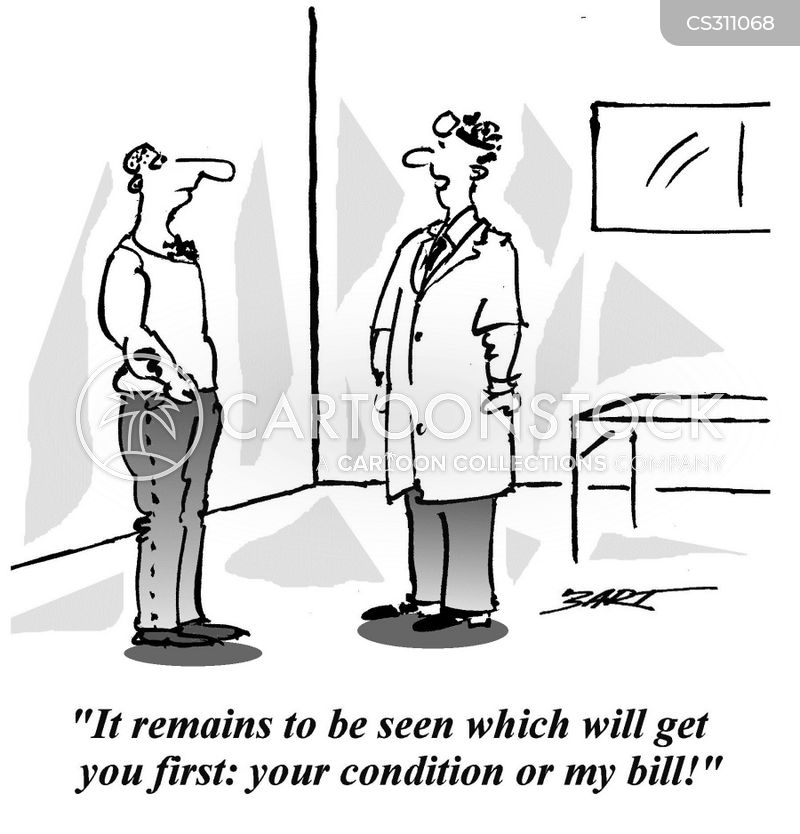
Cartoon – It remains to be seen which will get you first

Out-of-pocket limits aren’t silver bullets

Part of the reason why medical debt is so high is because many Americans don’t have enough savings to pay their deductibles and other out-of-pocket costs, according to a second KFF analysis.

Driving the news: Health insurance plans’ out-of-pocket limits prevent enrollees from paying limitless sums of money for medical care. But that doesn’t mean they protect people from having to pay several thousands of dollars — which not everyone has lying around.

  • Deductibles alone, which people must pay before coverage for most services kicks in, are frequently thousands of dollars and can exceed the amount of liquid assets a household has.

By the numbers: Over 40% of multi-person households can’t cover a mid-range employer family plan deductible of $4,000, and 61% don’t have enough to cover a high-range deductible.

  • The ability to pay out-of-pocket costs varies significantly by income.

America’s giant medical debt

Americans owe at least $195 billion of medical debt, despite 90% of the population having some kind of health coverage, according to new research from the Peterson Center on Healthcare and the Kaiser Family Foundation.

Why it matters: People are spending down their savings and skimping on food, clothing and household items to pay their medical bills, Adriel writes.

About 16 million people, or 6% of U.S. adults, owe more than $1,000 in medical bills, and 3 million people owe more than $10,000.

  • The financial burden falls disproportionately on people with disabilities, those in generally poor health, Black Americans and people living in the South or in non-Medicaid expansion states, per the research.

Go deeper: 16% of privately-insured adults say they would need to take on credit card debt to meet an unexpected $400 medical expense, while 7% would borrow money from friends or family, per the research, which focused on adults who reported having more than $250 in unpaid bills as of December 2019. 

It’s not yet clear how much the pandemic and the recession factor into the picture, in part because many people delayed or went without care. There also was a small shift from employer-based coverage to Medicaid, which has little or no cost-sharing.

  • While the new federal ban on surprise billing limits exposure to some unexpected expenses, it only covers a fraction of the large medical bills many Americans face, the researchers say.

Mark Cuban’s pharmacy started with a cold email

A Dallas-based generic drug startup bearing Mark Cuban's name just came out  of stealth

The Mark Cuban Cost Plus Drug Co. launched its online pharmacy in January, offering low-cost versions of high-cost generic drugs. And it all started with a cold email. 

Alex Oshmyansky, MD, PhD, fired off an email to Mr. Cuban with a simple subject line: “Cold pitch.” The then 33-year-old radiologist told Mr. Cuban about work he was doing in Denver with a compounding pharmacy and the business plan behind a company he founded in 2018, Osh’s Affordable Pharmaceuticals. 

I asked him a simple question, because this was when the whole pharma bro thing was going down,” Mr. Cuban said on NPR podcast The Limits, referring to convicted felon Martin Shkreli. “I was like, ‘Look, if this guy can jack up the prices 750 percent for lifesaving medicines, can we go the opposite direction? Can we cut the pricing? Are there inefficiencies in this industry that really allow us to do it and really make a difference?'”

Dr. Oshmyansky answered yes. Their weekly email correspondence continued for months. The Mark Cuban Cost Plus Drug Co. was quietly founded in May 2020, and Dr. Oshmyansky now serves as its CEO. The company is organized as a public-benefit corporation, meaning it is for-profit but claims its social mission of improving public health is just as important as the bottom line.

“We basically created a vertically integrated manufacturing company that will start with generic drugs,” Mr. Cuban told NPR. A major component of the strategy is to bypass pharmacy benefit managers, which Mr. Cuban likens to bouncers at a club.

They’re the ones who say, ‘Hey, I’m controlling access to all the big insurance companies. If you want this insurance company to sell your drug, you’ve got to pay the cover charge. All these drugs pay the cover charge to these PBMs through rebates, and because they’re paying the cover charges, the prices are jacked up,” Mr. Cuban told NPR. “We said we’re going to create our own PBM, we’re going to work directly with the manufacturers, and we’re not going to charge the cover charge.”

The Mark Cuban Cost Plus Drug Co. marks the prices of its drugs up 15 percent, charges a $3 pharmacy fee to pay the pharmacists it works with, and a fee for shipping. “That’s it,” Mr. Cuban said on NPR. “There’s no other added costs. The manufacturers love what we’re doing for that reason.”

Others have set out before to disrupt pharma the way Mr. Cuban and Dr. Oshmyansky intend, but their downfall is cooperating or giving in to the PBMs, the entrepreneur noted

“People always ask, well why didn’t somebody do this before? The reality is there’s so much money there, it’s hard not to be greedy,” Mr. Cuban said on the podcast. “If you get to any scale at all, those PBMs will start throwing money at you and saying, ‘Look, just play the game.’” 

Mr. Cuban has indicated he has no intention to play the game. 

“I could make a fortune from this,” Mr. Cuban told Texas Monthly last fall. “But I won’t. I’ve got enough money. I’d rather f— up the drug industry in every way possible.”

The prescription drug pricing paradox

Net prices of brand-name drugs have increased significantly over the last decade. But savings from generics have driven average prescription prices down in Medicare and Medicaid, Axios’ Caitlin Owens writes about a new analysis by the Congressional Budget Office.

Why it matters: The analysis reiterates that the generic market is largely working as it’s intended to.

By the numbers: The average net price of a prescription fell from $57 in 2009 to $50 in 2018 in Medicare Part D, and from $63 to $48 in Medicaid.

  • The drop is largely attributable to the growing use of generics, which jumped from 75% to 90% of all prescriptions nationally during that time frame. The average price for a generic prescription also fell in both programs.
  • But the average net brand-name prescription price more than doubled in Part D and increased by 50% in Medicaid, per the analysis. These increases were driven by higher launch prices for new drugs and price increases for drugs already on the market.