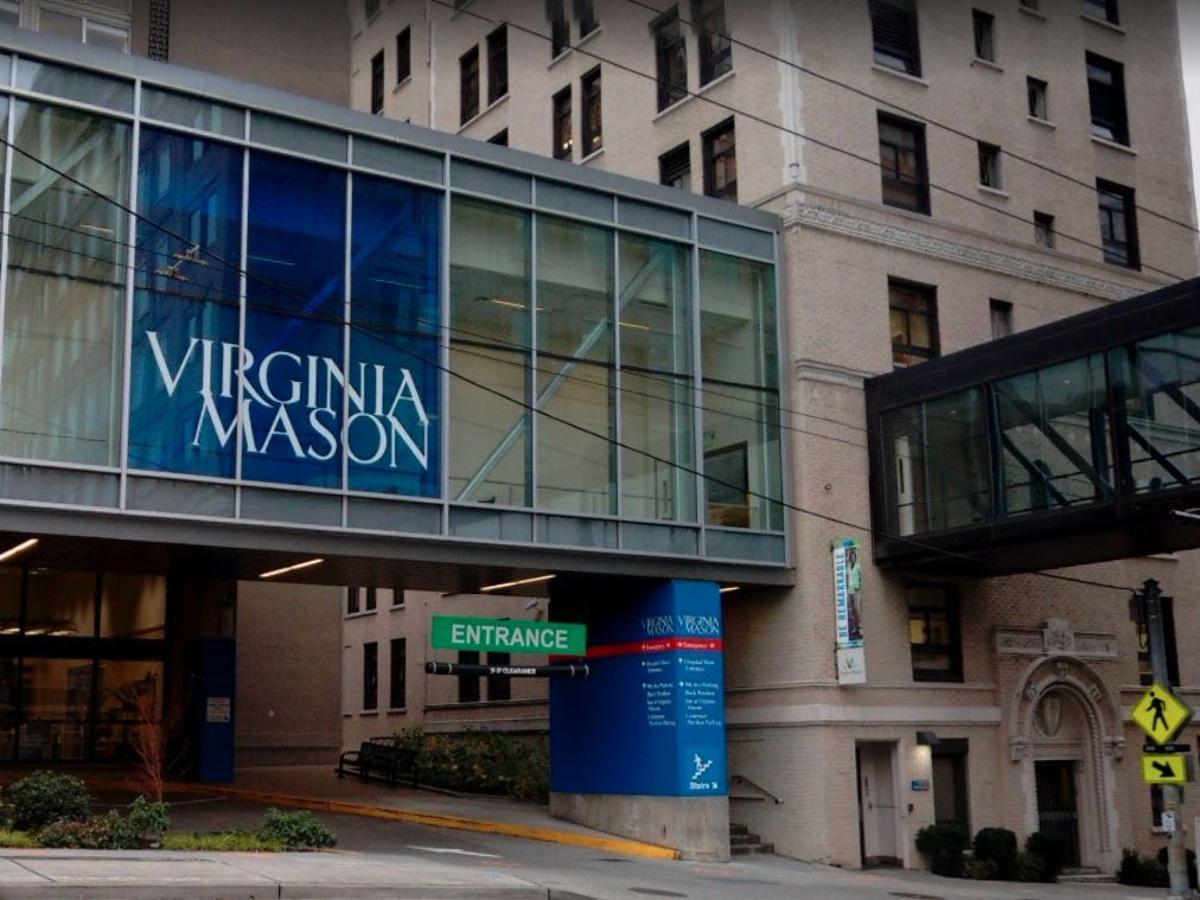
CHI Franciscan and Virginia Mason officially formed an 11-hospital health system Jan. 5. The system, Virginia Mason Franciscan Health, will be part of Chicago-based CommonSpirit Health.
Five things to know:
1. The merger comes as Virginia Mason Memorial in Yakima, Wash., ended its affiliation with Virginia Mason. The Yakima hospital’s board said it wanted to become an “independent, local healthcare system” instead of joining a larger system. The board’s decision came after a group of retired physicians affiliated with Virginia Mason Memorial argued a merger would result in fewer specialty services, fewer specialized physicians and lower quality patient care. Virginia Mason health system officials disagreed, arguing the merger could improve healthcare locally.
2. The combined Virginia Mason Franciscan Health will have more than 300 care sites in western Washington. That includes primary and specialty care clinics, surgery centers, the Benaroya Research Institute, the Bailey-Boushay House and the Virginia Mason Institute.
3. The organization will initially be led through a dyad CEO model by Ketul Patel and Gary Kaplan, MD. Mr. Patel’s title is CEO of Virginia Mason Franciscan Health and president of the Pacific Northwest Division of CommonSpirit Health. Dr. Kaplan’s title is CEO of Virginia Mason Franciscan Health. More details about the new system’s leadership team will be released in coming weeks, the executives said in a Jan. 4 phone interview with Becker’s Hospital Review.
4. The combination will bring Virginia Mason under the CommonSpirit umbrella, which is a Catholic health system. During the Jan. 4 interview, Dr. Kaplan said the merger will mean two services will end at the newly combined Virginia Mason Franciscan Health: elective abortions and “Death with Dignity” services. All other comprehensive aspects of end-of-life and palliative care, as well as access to women’s and LGBTQ+ services, will remain available, Dr. Kaplan said.
5. The deal, announced in July 2020, will result in a health system with more than 18,000 workers, including almost 5,000 employed physicians and affiliated providers. CHI Franciscan is based in Tacoma, Wash., and Virginia Mason is based in Seattle.
Paramedics in Southern California are being told to conserve oxygen and not to bring patients to the hospital who have little chance of survival as Los Angeles County grapples with a new wave of COVID-19 patients that is expected to get worse in the coming days.
The Los Angeles County Emergency Medical Services Agency issued a directive Monday that ambulance crews should administer supplemental oxygen only to patients whose oxygen saturation levels fall below 90%.
In a separate memo from the county’s EMS Agency, paramedic crews have been told not to transfer patients who experience cardiac arrest unless spontaneous circulation can be restored on the scene.
Both measures announced Monday, which were issued by the agency’s medical director, Dr. Marianne Gausche-Hill, were taken in an attempt to get ahead of an expected surge to come following the winter holidays.
Many hospitals in the region “have reached a point of crisis and are having to make very tough decisions about patient care,” Dr. Christina Ghaly, the LA County director of health services, said at a briefing Monday.
“The volume being seen in our hospitals still represents the cases that resulted from the Thanksgiving holiday,” she said.
“We do not believe that we are yet seeing the cases that stemmed from the Christmas holiday,” Ghaly added. “This, sadly, and the cases from the recent New Year’s holiday, is still before us, and hospitals across the region are doing everything they can to prepare.”
Speaking to the CBS affiliate in Los Angeles, Gausche-Hill said personnel would continue to do everything possible to save the lives of patients, both at the scene and in the hospital.
“We are not abandoning resuscitation,” she said. “We are absolutely doing best practice resuscitation and that is do it in the field, do it right away.”
“[We] are emphasizing the fact that transporting these patients arrested leads to very poor outcomes. We knew that already and we just don’t want to impact our hospitals,” she added.
Meanwhile, the state is looking for ways to increase its supply of oxygen for use in treating COVID-19 patients, Gov. Gavin Newsom said, according to the Los Angeles Times.
“We’re just looking at the panoply of oxygen support … across the spectrum and looking how we can utilize more flexibility and broader distribution of these oxygen units all up and down the state, but particularly in these areas — San Joaquin Valley and Los Angeles, the larger Southern California region — that are in particular need and are under particular stress,” Newsom said.
Los Angeles County remains the worst-hit county in the U.S. for both confirmed COVID-19 cases and deaths from the disease. Johns Hopkins University listed more than 818,000 confirmed coronavirus cases and more than 10,700 deaths from complications from the virus in Los Angeles County by late Monday.
Last week, the new highly contagious coronavirus strain from the U.K. was discovered in Southern California. Experts have said it spreads faster than the common strain.
The first month of the pandemic was also supposed to be the month I got pregnant, but my clinic closed and plans changed. Doctors and nurses needed personal protective equipment to tend to patients with covid-19, not women with recurrent miscarriages.
When the clinic reopened several months later, it turned out my husband and I had only been delaying yet another loss: In late August, he obeyed the medical center’s strict coronavirus protocols by waiting anxiously in the car while I trudged inside, masked and hand-sanitized, to receive a miscarriage diagnosis alone. I searched the ultrasound screen for the rhythmic beat of a heart, and then accepted that whatever had once been there was now gone.
But that was 2020 for you, consistent only in its utter crappiness. For every inspiring video of neighbors applauding a shift change at the hospital, another video of a bone-tired nurse begging viewers to believe covid was real, it wasn’t a hoax, wear a mask.
For every protest organized by activists who understood racism is also a long-term crisis, an appearance by the Proud Boys; for every GoFundMe successfully raising money for a beloved teacher’s hospital bills, a bitter acknowledgment that online panhandling is our country’s version of a safety net.
Millions of citizens stood in line for hours to vote for the next president and then endured weeks of legal petitions arguing that their votes should be negated. The basis for these legal actions were conspiracy theories too wild to be believed, except that millions of other citizens believed them.
And that was 2020 for you, too: accepting the increasingly obvious reality that the country was in peril, built on iffy foundations that now buckled under pressure. My loved ones who worked as waiters or bartenders or physical therapists were choosing between health and paychecks, and even from the lucky safety of my work-from-home job, each day began to feel like watching America itself arrive at a hospital in bad shape, praying that doctors or clergy could find something they were able to save.
Is there a heartbeat?
You want the answer to be yes, but even so, it was hard to imagine how we would come back from this.
What kind of delusional person would even try to get pregnant in this world? In my case it would never be a happy accident; it would always be a herculean effort. And so it seemed I should have some answers.
How do you explain to a future child: Sorry, we can’t fix climate change; we can’t even get people to agree that we should wear masks in grocery stores? How do you explain the frustration of seeing brokenness, and then the wearying choice of trying to fix it instead of abandoning it? How do you say, Love it anyway. You’re inheriting an absolute mess, but love it anyway?
I found myself asking a lot of things like this in 2020, but really they were all variations of the same question: What does it mean to have hope?
But in the middle of this, scientists worked quietly in labs all over the world. They applied the scientific method with extraordinary discipline and speed. A vaccine was developed. Tens of thousands of volunteers rolled up their sleeves and said, Try it out on me.
It was approved, and a nurse from Long Island was the first American televised receiving it. Her name was Sandra Lindsay, an immigrant from Jamaica who had come to the United States 30 years ago and who had spent the last year overseeing critical care teams in back-to-back shifts. She said she had agreed to go first to show communities of color, long abused, brushed-off or condescended to by the medical system, that the vaccine was safe.
Here was hope. And more than that, here was hope from a woman who had more reason than most to be embittered: an exhausted health-care worker who knew too well America’s hideous racial past and present, who nonetheless also knew there was only one way out of the tunnel. Here she was, rolling up her own sleeve, and there were the lines of hospital employees ready to go after her, and there were the truck drivers ferrying shipments of syringes.
I can’t have been the only person to watch the video of those early inoculations, feeling elated and tired, and to then burst into tears. I can’t have been the only person to realize that even as 2020 revealed brokenness, it also contained such astounding undercurrents of good.
The scientific method works whether you accept it or not. Doctors try to save you whether you respected public-health guidelines or not. Voter turnout was astronomical because individual citizens realized they were all, every one of them, necessary pieces in a puzzle, even if they couldn’t see what the final picture was supposed to look like.
The way to believe in America is to believe those things are passed down, too.
Sometime in October, a couple of months after my last miscarriage — when the country was riding up on eight months of lonely and stoic birthdays, graduations, deaths and weddings — I went into the bathroom and saw a faint second line on a First Response pregnancy test. It was far from my first rodeo, so I knew better than to get excited. I mentioned it to my husband with studied nonchalance, I told him that I’d test again in a few days but that we should assume the worst would happen.
Two weeks after that, I had a doctor’s appointment, and then another a week later, each time assuming the worst, but each time scheduling another appointment anyway, until eventually I was further along than I’d ever gotten before — by one day, then three days, then thirty.
I am not a superstitious person. I don’t believe that good things always come to those who deserve them. I believe that stories regularly have sad endings and that it’s often nobody’s fault when they do, and that we should tell more stories with sad endings so that people who experience them know that they’re not alone.
But 2020 has taught me that I am, for better or worse, someone who wants to hope for things. To believe in the people who developed vaccines. In the people who administered them. In Sandra Lindsay. In the people who delivered groceries, who sewed masks, who have long cursed America’s imperfect systems and long fought to change them, who still donate $10 to a sick teacher’s GoFundMe.
At my most recent appointment, the doctor’s office was backed up in a holiday logjam. I sat in the exam room for nearly three hours while my husband again waited anxiously in the car. I texted him sporadic updates and tried to put hope in a process that so far had not seemed to warrant my hope.
It all felt precarious. The current reality always feels precarious.
And yet there we all are together, searching for signs of life, hoping that whatever we emerge to can be better than what we had before, and that whatever we build will become our new legacy. The sonographer finally arrived and turned on the machine.
A hospital employee outside Milwaukee deliberately spoiled more than 500 doses of coronavirus vaccine by removing 57 vials from a pharmacy refrigerator, hospital officials announced Wednesday, as local police said they were investigating the incident with the help of federal authorities.
Initiating an internal review on Monday, hospital officials said they were initially “led to believe” the incident was caused by “inadvertent human error.” The vials were removed Friday and most were discarded Saturday, with only a few still safe to administer, according to an earlier statement from the health system. Each vial has enough for 10 vaccinations but can sit at room temperature for only 12 hours.
Two days later, the employee acknowledged having “intentionally removed the vaccine from refrigeration,” the hospital, Aurora Medical Center in Grafton, Wis., said in a statement late Wednesday.
The employee, who has not been identified, was fired, the hospital said. Its statement did not address the worker’s motives but said “appropriate authorities” were promptly notified.
Wednesday night, police in Grafton, a village of about 12,000 that lies 20 miles north of Milwaukee, said they were investigating along with the FBI and the Food and Drug Administration. In a statement, the local police department said it had learned of the incident from security services at Aurora Health Care’s corporate office in Milwaukee. The system serves eastern Wisconsin and northern Illinois, and includes 15 hospitals and more than 150 clinics.
Leonard Peace, an FBI spokesman in Milwaukee, would not comment on the Bureau’s involvement but said of the episode, “We’re aware of it.” The FDA did not immediately respond to a request for comment.
The tampering will delay inoculation for hundreds of people, Aurora Health officials said, in a state where 3,170 new cases were reported and 40 people died Wednesday of covid-19, the disease caused by the coronavirus, according to The Washington Post’s coronavirus tracker.
“We are more than disappointed that this individual’s actions will result in a delay of more than 500 people receiving the vaccine,” the health system said in a statement.
The Wisconsin incident comes as states continue to grapple with a bumpy rollout of the first doses of the Moderna and Pfizer-BioNTech vaccines, which were approved less than a month ago and prioritized for health-care workers and residents and staff of long-term care facilities. So far, distribution has lagged well behind federal projections, raising doubts about whether the outgoing administration will meet its already revised goal of 20 million vaccines distributed by the end of the year.
As of Wednesday, the Centers for Disease Control and Prevention said 12.4 million doses of the vaccine had been distributed across the United States, but only 2.6 million of those had been administered.(This means that just 1 in 125 Americans has received the first dose of the vaccine.) Trump administration officials have said these numbers lag behind the actual pace of vaccination, which they also vowed would accelerate starting next week.
The Moderna and Pfier-BioNTech vaccines, the first two regimens to gain regulatory approval for emergency use, are two-shot protocols with intricate logistical requirements. Moderna’s vaccine doesn’t require subarctic temperatures, as does the Pfizer product, but it does need to be kept cold. It can be stored at freezer temperatures for six months, the company says, and kept at regular refrigerated conditions for 30 days. It can be maintained at room temperature for only 12 hours, though, and can’t be refrozen once thawed.
Complex storage requirements are among the reasons state officials are imploring providers to administer vaccine quickly once it is received.
In its original statement, Aurora Health said it had successfully vaccinated about 17,000 people over the previous 12 days. Its initial review, it said, had found that the 57 vials were simply not returned to the refrigerator after “temporarily being removed to access other items.”
The hospital apologized, saying, “We are clearly disappointed and regret this happened.”
It is not clear what motive the employee may have had to spoil the vaccine doses. The hospital said it would release more details about its investigation Thursday.
Banner Health will pause elective surgeries Jan. 1, the Phoenix-based system announced Dec. 30.
The health system is suspending nonurgent elective surgeries that can reasonably be postponed for 30 to 60 days without a negative impact on the patient’s health, according to TV station CBS 5.
Banner’s hospitals are facing a surge of COVID-19 patients. As of Dec. 29, the system was at 104 percent licensed bed capacity, Banner Chief Clinical Officer Marjorie Bessel, MD, said Dec. 30, according to TV station ABC 15. Some Banner hospitals have exceeded 120 percent licensed bed capacity.
Because of a backlog of patients, some Banner hospitals are diverting incoming ambulance transports.
“This diversion activity is an early indication that triage may soon be necessary if volumes continue to increase like they did this past week,” Dr. Bessel said, according to CBS 5. “What triage would look like, would be that we might, if we got to that point, be unable to care for everybody.”
New Jersey lawmakers approved an unusual measure last week that requires many nonprofit hospitals to pay per-bed fees to their local governments, while preserving their increasingly contested property-tax exemptions.
The legislation, which requires hospitals to pay a fee of $3 a day for each licensed bed, is in response to a landmark 2015 New Jersey Tax Court ruling involving Morristown Medical Center that “the operation and function of nonprofit hospitals do not meet the criteria for property tax exemption” under state law. A 300-bed hospital subject to the fee would pay $328,500 a year.
The New Jersey Legislature passed a similar per-bed payment system four years ago, soon after the Morris County tax-court decision, but Gov. Chris Christie vetoed it. In the meantime, at least 40 of New Jersey’s 60 or so nonprofit hospitals have been taken to tax court. Some have reached settlements and agreed to help pay for municipal services.
Murphy’s office has not responded to emails this week requesting comment on whether he intends to sign the legislation.
Cathy Bennett, chief executive of the New Jersey Hospital Association, described the legislation as the result of cooperation by the legislature, municipalities, and the hospital industry.
“I think people realized, we can’t allow this property tax issue to spiral out of control and result in policy that would drain hospital finances, particularly now, where we’ve seen the impact to the bottom line,” Bennett said, referring to the financial hit hospitals have taken from the coronavirus pandemic. “Hospitals are operating with [negative] margins that we haven’t seen since the late ’90s,” she said.
Bennett estimated that per-bed payments, plus an additional $300 per day payments for satellite emergency departments, would total $22 million a year, including $6.9 million in southern New Jersey. Other states have assessments on hospitals, typically to help pay for care for the poor, but Bennett said she didn’t know of any other states with assessments that support municipal services.
The New Jersey League of Municipalities has urged its members to ask Murphy to veto the legislation because the “community service contribution” called for in the legislation amounts in aggregate to far less than it would be if the hospitals were taxed fairly.
The association favors a legislative fix for the problem of modern hospitals not qualifying for property tax exemption, but would prefer a complete reexamination of New Jersey’s tax-exemption law, said Frank Marshall, associate general counsel at the league.
“It hasn’t been modernized in a long time. It needs to be updated to reflect the current business practices of every industry, not just hospitals, but any other nonprofits or not-for-profits that are exempt from property taxes,” he said.
The question of whether nonprofits deserve property-tax exemptions is an increasingly contested area of the law, especially in towns that are hard-pressed to pay for services.
Qualifying as a charity under section 501(c)(3) of the federal tax code — as a religious, educational, or charitable organization, for example — is not enough to automatically receive a local property-tax exemption. A key aspect to federal nonprofit income-tax exemptions is that profits must be put back into the charitable enterprise instead of benefiting private shareholders.
All states allow nonprofits to be eligible for property-tax exemptions, but each sets its own rules for how to qualify.
In New Jersey, a 1984 Supreme Court decision established a three-part test for whether a property should be tax exempt. The owner must be organized exclusively for a tax-exempt purpose, the property must be used for that purpose, and the activities there must not be conducted for profit.
The last prong of that test tripped up Morristown Medical Center, owned by Atlantic Health System, which is based in Morristown. The hospital’s operations were too entangled with for-profit physicians groups and other for-profit subsidiaries of the hospital’s owner to meet the third requirement for property-tax exemption, Tax Court Judge Vito Bianco ruled.
“This commingling of effort and activities with for-profit entities was significant, and a substantial benefit was conferred upon for-profit entities as a result,” he wrote.
That decision, which resulted in a $15 million settlement between Morristown and the medical center to be paid over 10 years through 2025, spurred cases throughout the state.
Among the most significant cases still pending are those between Vineland and Inspira and between Plainsboro Township and Princeton Healthcare System, which the University of Pennsylvania Healthcare System acquired in 2016.
Those cases will be moot if Murphy signs the legislation, which also calls for the formation of a Nonprofit Hospital Community Service Contribution Study Commission.
Hospitals, such as AtlantiCare Regional Medical Center in Galloway Township, that already have a deal in place to help pay for municipal services, will have to pay the greater amount of the new fees or the amounts due under earlier agreements, which will be allowed to run their course.
AtlantiCare’s 2017 agreement with Galloway called for increasing per-bed payments each year through 2022. This year the amount was $274,000. The health system will have to pay more under the new system. Since 2016 AtlantiCare has been in tax litigation with Atlantic City.
It is difficult to calculate the number of beds that would be subject to the fee. The count excludes skilled nursing, psychiatric, sub-acute, and newborn beds, plus an undefined set of “acute-care beds not commissioned for use.”
The legislation carves out the 89-bed Deborah Heart & Lung Center in Browns Mills, Burlington County, from having to pay the per-bed fees. That’s because Deborah meets two requirements, involving patient billing and the value of community benefits that the hospital provides.
First, Deborah does not bill patients, but rather accepts whatever its patients’ insurance companies pay or provides charity care to those who qualify. Second, its community benefit, as calculated on its 990 tax return, amounts to more than the required 12% of expenses. Deborah’s community benefit was close to 18% in 2018, according to its tax return.
Christine Carlson-Glazer, vice president for government relations at Deborah Heart & Lung, said Browns Mills had not sued it in tax court, but Deborah still wanted to preserve its charitable mission. She said Shriners Hospitals for Children and St. Jude Children’s Research Hospital are two others that do not bill patients.
“It’s not a mission that a lot of other places embrace,” Carlson-Glazer said.
Hospitals in Southern California will need to start rationing care if more action isn’t taken by the community to mitigate the spread of COVID-19, Chris Van Gorder, president and CEO of Scripps Health, wrote in a Dec. 28 op-ed for The San Diego Union-Tribune.
As of Dec. 29, 20,642 California residents were hospitalized with COVID-19. The state’s hospital bed capacity is 72,511. In San Diego County, where Scripps is headquartered, 18 intensive care unit beds were available as of Dec. 28, “not even enough to handle a single mass casualty incident,” Mr. Van Gorder wrote. Out of Scripps’ 173 ICU beds, seven staffed beds were available as of Dec. 28.
“This past weekend, one of our community hospitals ran out of room in their morgue. We are nearing the point where we have to make the decision of who gets care and who does not,” Mr. Van Gorder wrote.
He pleaded with the San Diego and California community to adhere to mask-wearing and social distancing guidelines, especially as the New Year’s Day holiday approaches. He called on residents to stay home for New Year’s, wear a mask, wash their hands, and not eat or drink with people who aren’t in their immediate family household.
Mr. Van Gorder’s commentary comes as Kaiser Permanente hospitals in Northern California are suspending elective, non-urgent procedures through Jan. 4 as they continue to face a surge in COVID-19 hospitalizations. The Oakland, Calif.-based system announced the suspension Dec. 26, days after Chair and CEO Greg Adams said during a news conference, “We simply will not be able to keep up if the COVID surge continues to increase. We’re at or near capacity everywhere.”
As the coronavirus sickens tens of thousands of Americans while pressuring the bottom lines of medical providers, analysts worry the pandemic could also hit pause on the decades-long march toward value-based care, as hospitals and doctors look to recoup revenue in the short-term instead of putting more dollars at risk.
Massive health systems and independent physician offices alike are diverting funds to shore up resources like personal protective equipment, ventilators and staff to prepare for an expected influx of COVID-19 patients or to cope with those already there. Expenses are skyrocketing as providers halt non-essential visits including lucrative elective procedures like joint replacements, winnowing down a major source of revenue.
Clinicians in value-based payment arrangements face higher levels of financial risk than their fee-for-service counterparts. Money spent preparing for the coronavirus and treating COVID-19 patients will be a sunk cost and they could be dinged financially again at the end of the year when their spending and performance is evaluated.
Already, the coronavirus is leading providers to think about exiting the models.
A survey published this week of more than 220 accountable care organizations nationwide found almost 60% are likely to drop out of their risk-based model to avoid financial losses. Some 77% are “very concerned” about the coronavirus’ impact on their 2020 performance.
“The value-based movement is at a critical juncture,” wrote National Association of ACOs CEO Clif Gaus in a letter to CMS Administrator Seema Verma last month.
Fee-for-service still dominates — roughly 40% of healthcare payments made in 2018 were under fee-for-service, according to the Health Care Payment Learning & Action Network (LAN) — but it’s been on the downswing. One in three healthcare payments currently flows through some sort of alternative payment model, and that has been projected to grow.
Among the four main types of value-based arrangements — shared risk, global capitation, bundled care and shared savings — most require an upfront financial commitment. And providers are unlikely to put more capital at risk given the current economic situation, analysts told Healthcare Dive, instead focusing on making up the losses they sustained during the outbreak by ramping up capacity.
Doctor’s offices and hospitals will reschedule delayed procedures and even operate on weekends to recapture as much revenue as possible before they’re likely to consider taking on more risk.
“Even if you’re not in the hotspots, you are preparing right now. This puts on hold a lot of the initiatives that have been on the value-based side of things,” Jefferies senior healthcare analyst Brian Tanquilut told Healthcare Dive. “I don’t think the value-based discussion goes away, but I think it will take a recovery of the hospital system before it can go there.”
Pleas for loss waivers
The National Association of ACOs told CMS in mid-March that ACOs in Medicare’s flagship ACO program the Shared Savings Program, along with other shared risk models like the Next Generation ACO model and the upcoming Direct Contracting initiative, could face losses beyond their control because of the pandemic.
CMS did pause some reporting requirements for value-based initiatives late last month. The agency pushed back the deadline for groups participating in the Medicare ACO program, Merit-based Incentive Payment System and the Hospital Readmissions Reduction Program to report quality data, or waived reporting entirely for the fourth quarter of 2019. The relaxation was framed as a way to help value-based organizations free up time and resources amid the pandemic.
But provider groups including NAACOS and the American Hospital Association have lobbied aggressively for the Trump administration to forgive all ACO losses for 2020. CMS is reviewing their request.
But all normal rules have gone out the window, experts say, and it’s almost impossible to move the needle toward value in the future when providers are facing a tsunami of patients now.
“This is not about managing a population. This is about doing everything you can to keep these people alive,” Dean Ungar, vice president of Moody’s Investors Service, told Healthcare Dive. “Coronavirus is really a five-alarm fire. But if your building’s on fire, that doesn’t really tell you how to maintain your business in normal circumstances.”
Silver lining?
Some, however, are more optimistic that the unique financial challenges brought on by the pandemic highlight the problems with the traditional fee-for-service model and could even nudge providers toward value-based arrangements down the line.
“If all of your revenue is based on patients walking in the door, when they can’t walk in the door anymore, you’re kind of up the creek without a paddle,” Dan Bowles, SVP of growth and network operations at accountable care organization Aledade told Healthcare Dive. “You need to find a way to create non-visit-based revenue.”
Some hope the pandemic could help the value-based movement in the long term as practices look for ways to uncouple revenue from patient volume. And, as medical costs continue to rise, accounting for 19% of the country’s GDP, any pause in the shift to value-based care due to the coronavirus is likely to be a short detour, not a complete derailment.
“Maybe some providers are going to see it in a different light when their business kind of dries up — see that there’s a benefit to it,” Ungar said. “Ultimately, it’s a trend of where things are going, but it’s a big ship and it’s moving slowly.”
And value-based care arrangements were built predominantly for the populations being hit hardest by the coronavirus: those with serious underlying medical conditions like chronic lung disease or severe obesity.
If those vulnerable patients were being treated in value-based arrangements, it’s possible more COVID-19 cases could have been caught earlier before they became life-threatening, Moody’s analyst Stefan Kahandaliyanage told Healthcare Dive. That could renew industry’s focus on managing the health of those most at-risk from novel infectious diseases in the future.
“Costs are very high and there’s been a pandemic,” Kahandaliyanage said. “Let’s get more healthy before the next pandemic comes.”
Five hospitals recently sued HHS over its calculation of Medicare Part A disproportionate share hospital payments for patients who were enrolled in Medicare Advantage plans under Part C of the Medicare Act.
The federal lawsuit was filed Dec. 21 by Duke Raleigh (N.C.) Hospital, Durham (N.C.) Regional Hospital, Geisinger Medical Center in Danville, Pa., Geisinger Wyoming Valley Medical Center in Wilkes-Barre, Pa., and The Washington (Pa.) Hospital.
The hospitals’ lawsuit takes issue with a Medicare policy change, adopted in 2004, that included a new methodology for allocating Medicare Part C days in the disproportionate share hospital formula. The appeals court has ruled against HHS in three actions challenging its attempts to apply its Part C days policy to deny DSH payments to hospitals. However, the hospitals argue that HHS is disregarding those decisions and a decision by the U.S. Supreme Court.
“The agency has continued to apply the Part C days policy adopted in the now-vacated 2004 rule in violation of these decisions, including in the payment determinations at issue for the plaintiff hospitals in this case, in a recently issued proposed rule seeking to re-adopt the same 2004 policy retroactively, and in a ruling that would leave undisturbed the payment determinations from which hospitals have appealed and, as construed by the agency’s administrative Board, not permit further administrative or judicial review of those determinations,” the complaint filed Dec. 21 states.
The hospitals argue that HHS’ attempts to apply the policy should be rejected. The hospitals are asking the court to declare the final payment determinations reflecting the policy change invalid.
Twenty-one Kaiser Permanente hospitals in Northern California are suspending elective, non-urgent procedures through Jan. 4 as they continue to face a surge in COVID-19 hospitalizations, according to The Mercury News.
The Oakland, Calif.-based system announced the suspension Dec. 26, days after Chairman and CEO Greg Adams said during a news conference, “We simply will not be able to keep up if the COVID surge continues to increase. We’re at or near capacity everywhere.”
California reported a record-high 20,059 current COVID-19 hospitalizations Dec. 27, a 13 percent increase from one week prior, according to The COVID Tracking Project.
Find a running list of other health systems that have adjusted their elective surgery timelines, organized by state, here.









 HENRY KOTULA