
I’m Glad I’m not a California Hospital or Practice Administrator…

On January 1st, 2024 #AB1076 and #SB699, two draconian noncompete laws go into effect. It could put many #employedphysicians in a new position to walk away from #employeeremorse.

AB1076 voids non-compete contracts and require the employer to give written notice by February 14th, 2024 that their contract is void.

Is this a good or bad thing? It depends.

If the contract offers more protections and less risk to the employed physician, and the contract is void – does that mean the whole contract is void? Or is the non-compete voidable?

But for the hospital administrator or practice administrator, we’re about to witness the golden handcuffs come off and administrators will have to compete to retain talent that could be lured away more easily than in the past. But the effect of the non-compete is far more worrisome for an administrator because of the following:

The physicians many freely and fairly compete against the former employer by calling upon, soliciting, accepting, engaging in, servicing or performing business with former patients, business connections, and prospective patients of their former employer.

It could also give rise to tumult in executive positions and management and high value employees like managed care and revenue cycle experts who may have signed noncompete contracts.

If the employer does not follow through with the written notice by February 14th, the action or failure to notify will be “deemed by the statute to be an act of unfair competition that could give rise to other private litigation that is provided for in SB699.

The second law, SB699, provides a right of private action, permitting the former employees subject to SB699 the right to sue for injunctive relief, recovery of actual damages, and attorneys fees. It also makes it a civil violation to enter into or enforce a noncompete agreement. It further applies to employees who were hired outside California but now work in or through a California office.

What else goes away?

Employed physicians can immediately go to work for a competitor and any notice requirement or waiting period (time and distance provisions) are eliminated by the laws. So an administrator could be receiving “adios” messages on January 2nd, and watch market share slip through their fingers like a sieve starting January 3rd.

And what about the appointment book? Typically, appointments are set months in advance, especially for surgeons – along with surgery bookings, surgery block times, and follow up visits.

Hospitals may be forced to reckon with ASCs where the surgeons could not book cases under their non-compete terms and conditions. They could up and move their cases as quickly as they can be credentialed and privileged and their PECOS and NPPES files updated and a new 855R acknowledged as received.

Will your key physicians, surgeons and APPs leave on short notice?

APPs such as PAs and NPs could also walk off and bottleneck appointment schedules, surgical assists, and many office-based procedures that were assigned to them. They could also walk to a new practice or a different hospitals and also freely and fairly compete against the former employer by calling upon, soliciting, accepting, engaging in, servicing or performing business with former patients, business connections, and prospective patients of their former employer.

Next, let’s talk about nurses and CRNAs. If they walk off and are lured away to a nearby ASC or hospital, or home health agency, that will disrupt many touchpoints of the current employer.

Consultants’ contracts are another matter to be reckoned with. In all my California (and other) contracts, contained within them are anti-poaching provisions that state that I may not offer employment to one of their managed care, revenue cycle, credentialing, or business development superstars. Poof! Gone!

The time to conduct a risk assessment is right now! But many of the people who would be assigned this assessment are on holiday vacation and won’t be back until after January 1st. But then again, they too could be lured away or poached.

What else will be affected?

Credentialing and privileging experts should be ready for an onslaught of applications that have to be processed right away. They will not only be hit with new applications, but also verification of past employment for the departing medical staff.

Billing and Collections staff will need to mount appeals and defenses of denied claims without easy access they formerly had with departing employed physicians.

Medical Records staff will need to get all signature and missing documentation cleared up without easy access they formerly had with departing employed physicians.

Managed Care Network Development experts at health plans and PPOs and TPAs will be recredentialing and amending Tax IDs on profiles of former employed physicians who stand up their own practice or become employed or affiliated with another hospital or group practice. This comes at an already hectic time where federal regulations require accurate network provider directories.

The health plans will need to act swiftly on these modifications because NCQA-accredited health plans must offer network adequacy and formerly employed physicians who depart one group but cannot bill for patient visits and surgeries until the contracting mess is cleared up does not fall under “force majeure” exceptions. If patients can’t get appointments within the stated NCQA time frames, the health plan is liable for network inadequacy. I see that as “leverage” because the physician leaving and going “someplace else” (on their own, to a new group or hospital) can push negotiations on a “who needs whom the most?” basis. Raising a fee schedule a few notches is a paltry concern when weight against loss of NCQA accreditation (the Holy Grail of employer requirements when purchasing health plan benefits from a HMO) and state regulator-imposed fines. All it takes to attract the attention of regulators and NCQA are a few plan member complaints that they could not get appointments timely.

Health plans who operate staff model and network model plans that employ physicians, PAs and NPs (e.g., Kaiser and others who employ the participating practitioners and own the brick and mortar clinics where they work) are in for risk of losing the medical staff to “other opportunities.” These employment arrangements are at a huge risk of disruption across the state.

Workers Compensation Clinics that dot the state of California and already have wait times measured in hours as well as Freestanding ERs and Freestanding Urgent Care Clinics could witness a mass exodus of practitioners that disrupt operations and make their walk in model inoperative and unsustainable in a matter of a week.

FQHCs that employ physicians, psychotherapists, nurse practitioners and physician assistants could find themselves inadequately staffed to continue their mission and operations. Could this lead to claims of patient abandonment? Failed Duty of Care? Who would be liable? The departing physician or their employer?

And then, there are people like me – consultants who help stand up new independent and group practices, build new brands, rebrand the physicians under their own professional brands, launch new service lines like regenerative medicine and robotics, cardiac and vascular service lines, analyze managed care agreements, physician, CRNA, psychotherapist, and APP employment agreements. There aren’t many consultants with expertise in these niches. There are even fewer who are trained as paralegals, and have practical experience as advisors or former hospital and group practice administrators (I’ve done both) who are freelancers. I expect I will become very much in demand because of the scarcity and the experience. I am one of very few experts who are internationally-published and peer-reviewed on employment contracts for physicians.

From -10.6% to 11.1%: 34 systems ranked by operating margins

Hospitals began 2023 with a median operating margin of -0.9%, but that figure has increased steadily month over month to hit 2% in November — the ninth consecutive month of positive margins. Despite a modest positive turning point for some hospitals and health systems this year, Fitch Ratings projects 2024 to be another “make or break” year for a significant portion of the sector.

Editor’s note: Operating margins are based on health systems’ most recent financial documents and vary by reporting periods, such as the three months ending Sept. 30, the nine months ending Sept. 30 and the 12 months ending Sept. 30.

1. Tenet Healthcare (Dallas)
*For the three months ending Sept 30

Revenue: $5.1 billion
Expenses: $4.99 billion
Operating income/loss: $568 million
Operating margin: 11.1%

2. HCA Healthcare (Nashville, Tenn.)
*For the three months ending Sept 30

Revenue: $16.21 billion
Expenses: $14.58 billion
Operating income/loss: $1.63 billion
Operating margin: 10.1%

3. Universal Health Services (King of Prussia, Pa.)
For the three months ending Sept. 30 

Revenue: $3.6 billion
Expenses: $3.3 billion
Operating income/loss: $285.4 million
Operating margin: 7.9%

4. Mayo Clinic (Rochester, Minn.)
*For the three months ending Sept 30

Revenue: $4.5 billion
Expenses: $4.2 billion 
Operating income/loss: $302 million
Operating margin: 6.7%

5. Stanford Health Care (Palo Alto, Calif.)
*For the 12 months ending Aug. 31

Revenue: $7.87 billion
Expenses: $7.46 billion
Operating income/loss: $414.9 million 
Operating margin: 5.3%

6. Community Health Systems (Franklin, Tenn.)
*For the three months ending Sept 30

Revenue: $3.09 billion
Expenses: $2.91 billion
Operating income/loss: $173 million
Operating margin: 5.6%

7. Christus Health (Irving, Texas) 
*For the 12 months ending June 30 

Revenue: $7.8 billion
Expenses: $7.5 billion
Operating income/loss: $324.5 million
Operating margin: 4.2%

8. Northwestern Medicine (Chicago) 
*For the 12 months ending Sept. 30

Revenue: $8.7 billion
Expenses: $8.4 billion
Operating income/loss: $352.3 million
Operating margin: 4.1%

9. IU Health (Indianapolis)
*For the three months ending Sept 30

Revenue: $2.12 billion
Expenses: $2.06 billion
Operating income/loss: $59.6 million
Operating margin: 2.8%

10. Sanford Health (Sioux Falls, S.D.)
*For the nine months ending Sept. 30

Revenue: $5.39 billion
Expenses: $5.27 billion
Operating income/loss: $123.2 million
Operating margin: 2.3%

11. BJC HealthCare (St. Louis)
*For the nine months ending Sept. 30

Revenue: $5.17 billion
Expenses: $5.06 billion
Operating income/loss: $113.2 million
Operating margin: 2.2%

12. Vanderbilt University Medical Center (Nashville, Tenn.)
*For the three months ending Sept 30

Revenue: $1.8 billion
Expenses: $1.77 billion
Operating income/loss: $28 million
Operating margin: 1.6%

13. Banner Health (Phoenix)
*For the nine months ending Sept. 30

Revenue: $10.3 billion
Expenses: $10.2 billion
Operating income/loss: $149.4 million
Operating margin: 1.5%

14. Intermountain Health (Salt Lake City)
*For the nine months ending Sept. 30

Revenue: $11.9 billion
Expenses: $11.2 billion
Operating income/loss: $157 million
Operating margin: 1.3%

15. Prisma Health (Greenville, S.C.)*For the 12 months ending Sept. 30

Revenue: $6 billion
Expenses: $5.9 billion
Operating income/loss: $67.1 million
Operating margin: 1.1%

16. Kaiser Permanente (Oakland, Calif.)
*For the three months ending Sept. 30 2023

Revenue: $24.9 billion
Expenses: $24.7 billion
Operating income/loss: $156 million
Operating margin: 0.6%

17. Advocate Health (Charlotte, N.C.)
*For the nine months ending Sept. 30

Revenue: $22.83 billion
Expenses: $22.75 billion
Operating income/loss: $79.4 million
Operating margin: 0.4%

18. Mercy (St. Louis-based)
*For the 12 months ending June 30 

Revenue: $8.02 billion
Expenses: $8.01 billion
Operating income/loss: $11.8 million
Operating margin: 0.1%

19. OSF HealthCare (Peoria, Ill.) 
*For the 12 months ending Sept. 30

Revenue: $4.1 billion
Expenses: $4.1 billion
Operating income/loss: $1.2 million
Operating margin: 0%

20. Northwell Health (New Hyde Park, N.Y.) 
*For the three months ending Sept. 30 

Revenue: $4.1 billion
Expenses: $4.2 billion
Operating income/loss: ($11.6 million)
Operating margin: (0.3%)

21. Mass General Brigham (Boston)
*For the 12 months ending Sept. 30

Revenue: $18.8 billion (includes $143 million revenue related to federal COVID-19 relief) 
Expenses: $18.7 billion
Operating income/loss: ($48 million)
Operating margin: (0.3% margin)

22. Cleveland Clinic
*For the three months ending Sept. 30 2023

Revenue: $3.6 billion
Expenses: $3.4 billion
Operating income/loss: ($14.9 million)
Operating margin: (0.4%)

23. Montefiore (New York City) 
*For the nine months ending Sept. 30

Revenue: $5.61 billion
Expenses: $5.64 billion
Operating income/loss: ($28.6 million)
Operating margin: (0.5%)

24. SSM Health (St. Louis)
*For the three months ending Sept 30

Revenue: $2.61 billion
Expenses: $2.63 billion
Operating income/loss: ($21.1 million) 
Operating margin: (0.8%)

25. UPMC (Pittsburgh)
*For the nine months ending Sept. 30

Revenue: $20.6 billion
Expenses: $20.8 billion
Operating income/loss: ($177 million)
Operating margin: (0.9%)

26. Scripps Health (San Diego) 
*For the 12 months ending Sept. 30

Revenue: $4.3 billion
Expenses: $4.3 billion
Operating income/loss: ($36.6 million)
Operating margin: (0.9%)

27. Trinity Health (Livona, Mich.) 
*For the three months ending Sept 30

Revenue: $5.6 billion
Expenses: $5.7 billion
Operating income/loss: ($58.6 million)
Operating margin: (1%)

28. UnityPoint Health (West Des Moines, Iowa)
*For the three months ending Sept 30

Revenue: $1.16 billion
Expenses: $1.18
Operating income/loss: ($16.4 million)
Operating margin: (1.4%)

29. Novant Health (Winston-Salem, N.C.) 
*For the three months ending Sept. 30

Revenue: $1.94 billion
Expenses: $1.97 billion
Operating income/loss: (28.6 million)
Operating margin: (1.5%)

30. Geisinger (Danville, Pa.)
*For the nine months ending Sept. 30

Revenue: $5.66 billion
Expenses: $5.76 billion
Operating income/loss: ($104.4 million)
Operating margin: (1.8%)

31. CommonSpirit (Chicago) 
*For the three months ending Sept. 30

Revenue: $8.58 billion
Expenses: $9.02 billion
*Adjusted operating income/loss: ($291 million)
Operating margin: (3.4%)

32. Tower Health (West Reading, Pa.)
*For the three months ending Sept. 30 

Revenue: $457.4 million
Expenses: $476.5 million
Operating income/loss: $19.1 million
Operating margin: (4.2%)

33. Providence (Renton, Wash.) 
*For the three months ending Sept. 30

Revenue: $7.18 billion
Expenses: $7.49 billion
Operating income/loss: ($310 million)
Operating margin: (4.3%)

34. Ascension (St. Louis)
*For the 12 months ending June 30 

Revenue: $28.35 billion
Expenses: $29.9 billion
Operating income/loss: ($3 billion)
Operating margin: (10.6%)

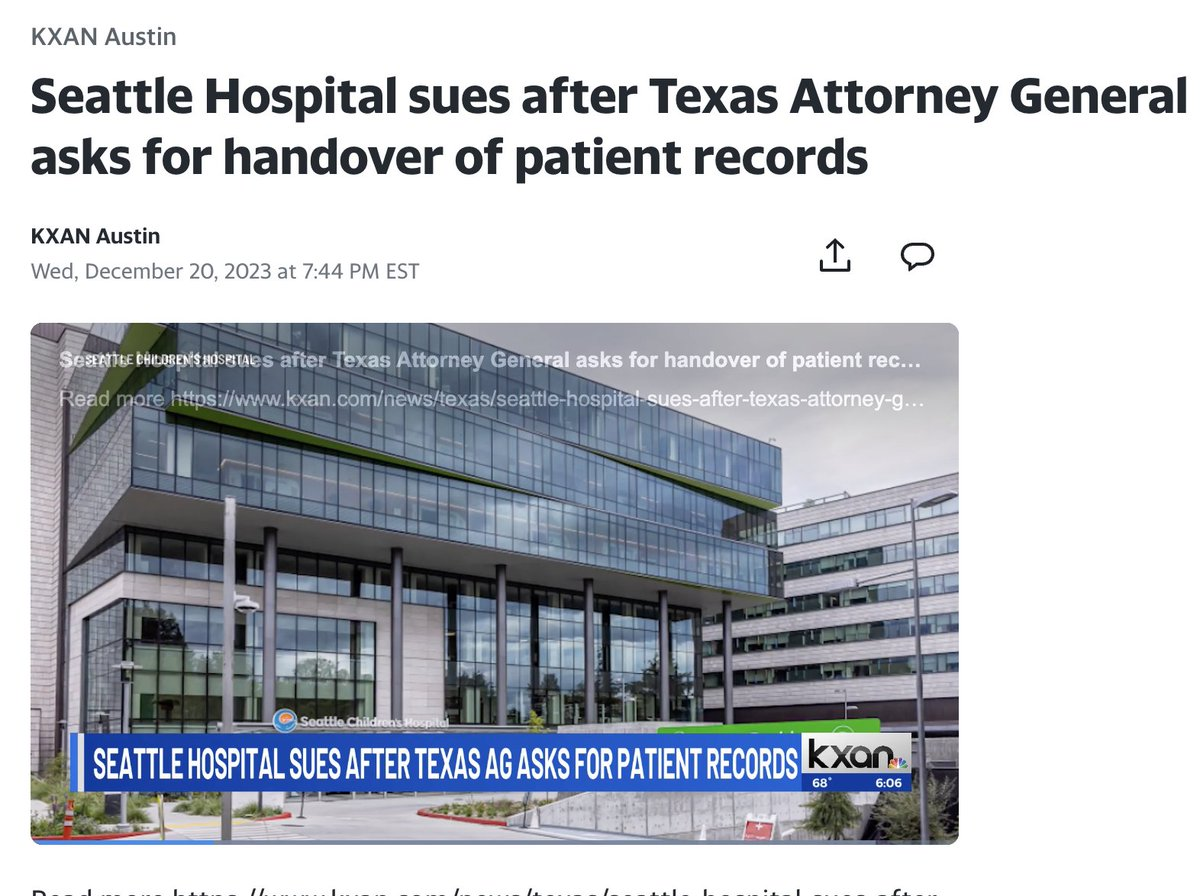
Seattle Children’s sues Texas attorney general

Seattle Children’s Hospital has filed a lawsuit against the Texas Office of the Attorney General after the agency requested documents related to gender transition policies and such care provided to Texas children, NBC affiliate KXAN reported Dec. 20.  

In a lawsuit filed Dec. 7, Seattle Children’s argues that the Texas attorney general does not have the jurisdiction to demand patient records from the hospital. It also states that Washington’s Shield Law, signed by Gov. Jay Inslee on April 27, protects it from requests made by states that “restrict or criminalize reproductive and gender-affirming care,” according to the report. 

The Shield Law creates a cause of action for interference with protected healthcare services, which protects against lawsuits filed in other states related to reproductive or gender-affirming care that is lawful in Washington. Those harmed by such out-of-state lawsuits can also file a countersuit in Washington for damages and recover their costs and attorneys’ fees.

The Texas attorney general said it is investigating misrepresentations involving gender transitioning and reassignment treatments and procedures that allegedly violated the Texas Deceptive Trade Practices-Consumer Protection Act. It has demanded that Seattle Children’s provide the following documents:

  • All medications prescribed by the hospital to Texas children
  • The number of Texas children treated by the hospital
  • Diagnosis for every medication provided by the hospital to Texas children
  • Texas labs that performed tests for the hospital before prescribing medications
  • Protocol/guidance for treating Texas children diagnosed with gender identity disorder, gender dysphoria or endocrine disorders
  • Protocol/guidance on how to “wean” a Texas child off gender transitioning care

Seattle Children’s maintains that it does not have property, accounts, nor employees who provide gender-affirming care or administrative services for that care in Texas, according to affidavits obtained by KXAN. Hospital leaders also said that Seattle Children’s has not marketed or advertised this type of care in Texas either. 

Attorneys for the hospitals argue that the demands are an “improper attempt” to enforce Texas’ SB 14 bill — signed June 2 by Gov. Greg Abbott — and investigate healthcare services that did not occur in Texas.

“Seattle Children’s took legal action to protect private patient information related to gender-affirming care services at our organization sought by the Texas attorney general,” a spokesperson for the hospital told Becker’s. “Seattle Children’s complies with the law for all healthcare services provided. Due to active litigation, we cannot comment further at this time.”

The Texas attorney general’s office did not respond to Becker’s request for comment.  

Healthcare’s trap of overqualified workers

The post-pandemic labor force has 1.5 million fewer individuals with some post-secondary education short of a bachelor’s degree. This shortfall is hitting healthcare hardest, affecting wages and qualification levels among jobholders. 

Job vacancies requiring a post-secondary certificate or associate degree, particularly in healthcare, remain high. The mismatch between the supply of workers with this education level and the ongoing demand for them is leading to increased wages and greater reliance on more educated workers, according to a December 2023 bulletin from the Federal Reserve Bank of Kansas City. 

Five takeaways from the bank’s report: 

1. Before the pandemic, job openings across educational groups moved together and subsequently peaked together in mid-2022. Since then, while vacancies for most groups have fallen, the number of job vacancies requiring some college education remains 60% above its pre-pandemic level. 

2. Vacancies for jobs requiring some college education are concentrated in healthcare. As of August 2023, about 50% of all open jobs posted in 2023 that required an associate degree or non-degree certificate were in healthcare.  

3. As a result of the high demand, healthcare employers are turning to more educated workers to fill positions with requirements for some college education. Healthcare employment among workers with some college education has dropped by about 400,000 since 2019; healthcare employment among workers with a bachelor’s degree or more has increased by 600,000.

4. Combined, these factors can place upward pressure on healthcare wages. The supply-demand mismatch can lead employers to offer higher wages to competitively attract qualified workers. Employers turning to workers with more education, who are generally more expensive, will increase the average wage in these occupations.

5. From 2019 to 2023, overall wages for healthcare workers rose by nearly 25%, an increase the bank partially attributes to both increased wages within educational groups and composition effects. The shift in employment toward higher-educated workers accounts for an additional 2.7 percentage points of the total wage increase, for instance. 

Will health system M&A soar or dive?

The health system deal market heated up in 2023.

Big, industry-shaking acquisitions including Oakland, Calif.-based Kaiser Permanente’s purchase of Danville, Pa.-based Geisinger, could redefine healthcare delivery with an eye toward value. Regional deals, such as Detroit-based Henry Ford Health’s planned joint venture with Ascension Michigan and St. Louis-based BJC HealthCare’s plan to acquire Saint Luke’s Health System to create a $10 billion organization, have also made waves.

There were 18 hospital and health system transactions announced in the third quarter, up from 10 transactions over the same time period in 2022, according to Kaufman Hall’s third quarter M&A report. Financial pressures with inflation catapulting staffing and supply costs, and reimbursement rates growing much more slowly, have forced some systems to look for a buyer while others aim to increase market share.

Academic health systems are also seeking community partners at a higher rate than in the past, according to the Kaufman Hall report.

But not all announced deals have gone according to plan.

The Federal Trade Commission is scrutinizing deals more closely than ever before to ensure costs don’t increase after an acquisition in some cases. In other cases, the two partners aren’t able to agree upon the details after announcing their plans. The dissolved merger between Sioux Falls, S.D.-based Sanford Health and Minneapolis-based Fairview Health Services fell apart amid contention in Minnesota, and West Des Moines, Iowa-based UnityPoint Health’s plans to merge with Presbyterian Healthcare Services in Albuquerque, N.M., was halted without a publicly stated reason.

Will there be more or fewer health system deals in the next three years?

Seth Ciabotti, CEO of MSU Health Care at Michigan State University in East Lansing, thinks so, at least when it comes to academic medical centers.

“There will be more consolidation to mitigate risk,” he told Becker’s. “I believe we are heading down a path of having only a dozen or so non-academic medical centers/health systems being left in the near future in the U.S.”

Mark Behl, president and CEO of NorthBay Health in Fairfield, Calif., has a similar outlook for the next three years.

“I suspect we will see more mergers and acquisitions with a continued desire to grow larger and remain relevant,” he told Becker’s. “Independent regional health systems will fight for relevance, and sometimes survival.”

And health systems won’t be the only buyers. Private equity, health insurers and non-traditional owners are on the hunt for health systems. General Catalyst has strengthened its healthcare presence recently and announced it plans to acquire a system in the near future.

“I believe that over the next three years, the landscape of acquisitions, divestitures and joint ventures will continue to reshape the healthcare industry,” said Dennis Sunderman, system director of HR M&A, non-employee and provider services at CommonSpirit Health, told Becker’s. “Current and proposed legislation, the continued evolution of ownership groups, nonprofit, for profit, and private equity, and the drive to hire and retain exceptionally talented teams, will lead to new innovations and an enhanced focus on the associates affected by the transaction.”

Health systems will need to optimize their operations to expand their value-based care efforts and digital transformation, including telehealth and remote patient monitoring services. Not all systems have the expertise and resources to fully make this transition, but with the right partners and strategic alignments, they can accelerate care transformation.

“There will likely be more collaborations and partnerships to expand services and increase access versus brick and mortar acquisitions,” said Cliff Megerian, MD, CEO of University Hospitals in Cleveland. “Innovative thinking is critical for success and quite frankly survival in our industry, so health systems should already be investing in growing in-house expertise dedicated to ideating new models of care, but in three years, these efforts should be producing tangible results.”

Michelle Fortune, BSN, CEO of Atrium St. Luke’s Hospital in Columbus, N.C., pointed to recent collaborations between Mercy, Microsoft and Mayo Clinic as examples of how health systems can partner on important initiatives such as improved data sharing, generative AI, digital transformation and more.

“I expect to see an increase in collaborations and connections between health systems to a degree that has never existed before as part of the focus on bringing the right care to people across the full continuum, when and where they need it,” she said.

Kaufman Hall sees more minority ownership deals ahead, which allows the smaller system to maintain near-autonomy while benefiting from the resources of a larger system.

“Health systems are also engaging in creative transaction structures that allow partners to maintain their independence while building strategic alliances that enhance access to care,” the report notes. “Announced transactions in Q3 included [Charlottesville, Va.-based] UVA Health’s acquisition of 5% ownership interest in [Newport News, Va.-based] Riverside Health System as part of a strategic alliance design ‘to expand patient access to innovative care for complex medical conditions, transplantation, and the latest clinical trials.'”

3 Philadelphia hospitals reportedly up for grabs

Three Philadelphia-based hospitals are reportedly up for sale, according to an email notice from Los Angeles-based investment bank Xnergy, The Philadelphia Inquirer reported Dec. 19.

The names of three hospitals are not confirmed. And the notice, which was obtained by the publication, did not name an owner of the hospitals. However, it did describe the hospitals’ owner as one that has acute care facilities with an average of 136 beds. 

Three Philadelphia-area hospitals fit the bed parameters in the notice: Bristol-based Lower Bucks Hospital, Philadelphia-based Roxborough Memorial Hospital, and Norristown-based Suburban Community Hospital. All three are owned by Ontario, Calif.-based Prime Healthcare Services, The Philadelphia Inquirer reported.

Roxborough and Lower Bucks were acquired by Prime in 2012, with Suburban acquired by Prime’s nonprofit affiliate Prime Healthcare Foundation in 2016. The hospitals have also seen significant annual operating loss over the last five years with a 43% combined inpatient volume drop, from 3,795 discharges in 2018 to 2,250 discharges in 2022, the publication shared.

Members of the Pennsylvania Association of Staff Nurses & Allied Professionals at both Suburban and Lower Bucks are also set to launch five-day strikes Dec. 22 due to ongoing labor contract negotiations for things like increased wages and important benefits, a union spokesperson told Becker’s.

“Prime Healthcare’s mission is to always do what’s best for our communities and patients, however, we do not comment on strategic merger and acquisition initiatives,” Elizabeth Nikels, vice president of communications and public relations for Prime Healthcare, said in an email response to Becker’s regarding the sale. 

386 hospitals now owned by private equity firms: 6 things to know

Private equity firms have drawn significant policy interest and scrutiny amid recent reports of surprise billing, rising out-of-pocket costs for patients and increased healthcare spending in the U.S., according to Health Affairs

The Private Equity Stakeholder Project has found at least 386 hospitals in the U.S. that are owned by private equity firms.

Six things to know:

1. The 386 private equity–owned hospitals represent 9% of all private hospitals and 30% of all proprietary for-profit hospitals.

2. Thirty-four percent of private equity-owned hospitals serve rural populations.

3. Texas is the state with the most private equity-owned hospitals (85).

4. While New Mexico has fewer private equity-owned hospitals (17), it has the highest proportion of private equity-backed hospitals compared to all private non-government hospitals at 43%.

5. More than 24% of private equity-owned facilities are psychiatric hospitals.

6. A few private equity firms dominate the list, according to the Private Equity Stakeholder Project:

  • Apollo Global Management (LifePoint Health (Brentwood, Tenn.) and ScionHealth (Louisville, Ky.): 177 hospitals combined)
  • Equity Group Investments (Ardent Health Services (Nashville, Tenn): 30 hospitals)
  • One Equity Partners (Ernest Health (Albuquerque, N.M.): 27 hospitals) 
  • GoldenTree Asset Management and Davidson Kempner (Quorum Health (Brentwood, Tenn.): 21 hospitals) 
  • Bain Capital (Surgery Partners (Brentwood, Tenn.): 19 hospitals)
  • Webster Equity Partners (Oceans Healthcare (Plano, Texas): 18 hospitals)
  • Patient Square Capital (Summit Behavioral Health (Franklin, Tenn.): 11 hospitals)

Jefferson, Lehigh Valley Health plan to merge into 30-hospital system

Pennsylvania health systems Jefferson and Lehigh Valley Health Network have signed a non-binding letter of intent to combine.

Philadelphia-based Jefferson and Allentown, Pa.-based LVHN announced the letter Dec. 19 in a news release, with expectations to close the transaction in 2024. Combined, Jefferson and LVHN would form a system with 30 hospitals, more than 700 sites of care and more than 62,000 employees. 

Jefferson CEO Joseph Cacchione, MD, will serve as CEO of the expanded system — dubbed for now as Jefferson Enterprise — and LVHN President and CEO Brian Nester, DO, will serve as its executive vice president and COO. Dr. Nester will also serve as president of the legacy LVHN, reporting directly to Dr. Cacchione. An integrated board of trustees and leadership team will be made up of members from both systems, specifics of which are expected in the definitive agreement.

“The healthcare landscape and our communities’ needs are changing; it is critical leading systems evolve and make investments in the future of care and wellness — growing and protecting access to enhanced, affordable, high-quality and innovative care, particularly for historically underserved patients,” Dr. Cacchione said in the release. 

The merger is another development out of Jefferson, which has seen a year of change. Dr. Cacchione assumed the CEO post in September 2022, and the system has since welcomed a new president, CFO, and dean of its medical school and physicians group. Earlier this year, Jefferson rolled out a reorganization plan to operate as three divisions instead of five, which involved layoffs affecting executives and a later workforce reduction of about 400 positions.  

Cost-cutting has been in effect at LVHN, too. The 13-hospital system, which includes nearly 3,000 physicians and advanced practice clinicians, eliminated approximately 240 positions as part of restructuring this fall. 

“In Jefferson, we have found an ideal partner that shares our culture and commitment to excellence in clinical care and a learning environment, and that has done a fabulous job in establishing a highly successful health plan with a sharp focus on the well-being of Medicaid and Medicare beneficiaries,” Dr. Nester said. “The expertise derived from these operations is becoming a crucial competency for health systems to deliver on their mission, and Jefferson Health Plans will help drive improvements in health outcomes, especially in vulnerable populations. We are also very excited about the opportunity to expand academic and talent development programs that will further bolster our provider pipeline and enhance our ability to attract and retain top talent to the benefit of the communities we both serve.”

Sweeping health reform takes a back seat for this election cycle

https://mailchi.mp/79ecc69aca80/the-weekly-gist-december-15-2023?e=d1e747d2d8

After a presentation this week, a senior physician from the audience of our member health systems reached out to discuss a well-trod topic, the future of health reform legislation. But his question led to a more forward-looking concern: 

“You talked very little about politics, even though we have an election coming up next year. Are you anticipating that Medicare for All will come up again? And what would the impact be on doctors?” 

As we’ve discussed before, we think it’s unlikely that sweeping health reform legislation like Medicare for All (M4A) would make its way through Congress, even if Democrats sweep the 2024 elections—and it’s far too early for health systems to dedicate energy to a M4A strategy.

Healthcare is not shaping up to be a campaign priority for either party, and given the levels of partisan division and expectations that slim majorities will continue, passing significant reform would be highly unlikely. 

Although there is bipartisan consensus around a limited set of issues like increasing transparency and limiting the power of PBMs, greater impact in the near term will come from regulatory, rather than legislative, action. 

For instance, health systems are much more exposed by the push toward site-neutral payments. How large is the potential hit? One mid-sized regional health system we work with estimated they stand to lose nearly $80M of annual revenue if site-neutral payments are fully implemented—catastrophic to their already slim system margins.

Preparing for this inevitable payment change or the long-term possibility of M4A both require the same strategy: serious and relentless focus on cost reduction.

This still leaves a giant elephant in the room: the long-term impact on the physician enterprise. 

As referral-based economics continue to erode, health systems will find it increasingly difficult to maintain current physician salaries, further driving the need to move beyond fee-for-service toward a health system economic model based on total cost of care and consumer value, while building physician compensation around those shared goals.

Providers threaten to leave MA networks amid contentious negotiations  

https://mailchi.mp/79ecc69aca80/the-weekly-gist-december-15-2023?e=d1e747d2d8

This week’s graphic highlights increasing tensions between health systems and Medicare Advantage (MA) plans as they battle over what providers see as unsatisfactory payment rates and insurer business practices.

On paper, many providers have negotiated rates with MA plans that are similar to traditional fee-for-service Medicare, but find MA patients are subject to more prior authorizations and denials, as well as delayed discharges to postacute care, which increases inpatient length of stay and hospital costs. 

A number of health system leaders have reported their revenue capture for MA patients dropped to roughly 80 percent of fee-for-service Medicare rates due to an increase in the mean length of stay for MA patients, caused by carriers narrowing postacute provider networks.

As a result, a growing number of health systems and medical groups have either already exited, or plan to exit, MA networks due to what they see as insufficient reimbursement. 

Health systems with a strong regional presence may be able to leverage their market share to get MA payers to play ball. But for health systems in more competitive markets, these hardline negotiation tactics run the risk of payers merely directing their patients elsewhere. 

Regardless of market dynamics, providers exiting insurance plans is extremely disruptive for patients, who won’t understand the dynamics of payer-provider negotiations—but will feel frustrated when they can’t see their preferred physicians.