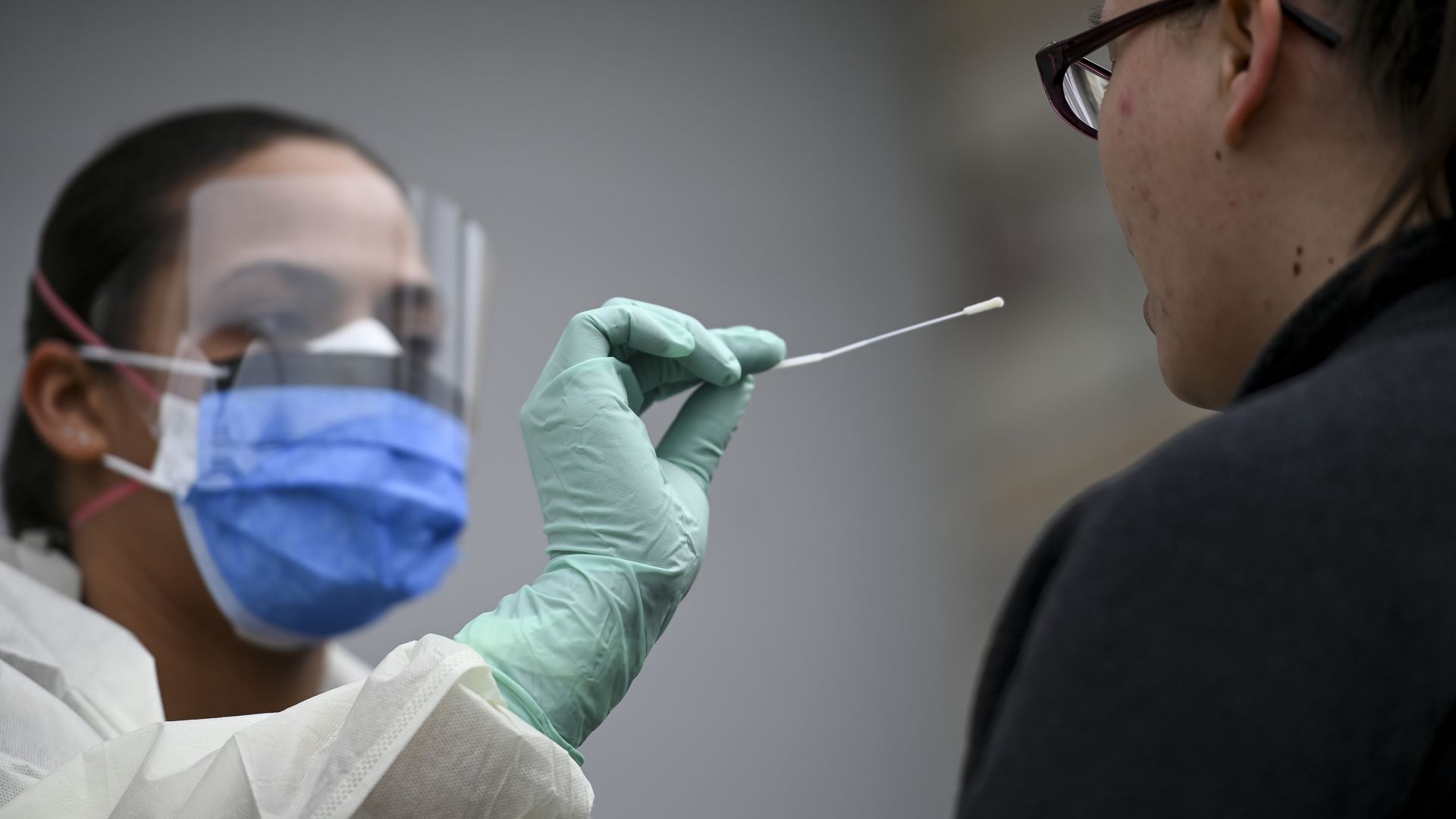
Seattle Coronavirus Care: Short in Staff, Supplies and Space

https://www.governing.com/now/Seattle-Coronavirus-Care-Short-in-Staff-Supplies-and-Space.html?utm_term=READ%20MORE&utm_campaign=Pandemic%20Provides%20Defining%20Moment%20for%20Government%20Leaders&utm_content=email&utm_source=Act-On+Software&utm_medium=email

Image result for Seattle Coronavirus Care: Short in Staff, Supplies and Space

At ground zero of America’s coronavirus outbreak, Seattle is overwhelmed by patients needing care. Social distancing and persistent hand washing is no longer enough. “The next step is to start thinking about alternate care systems.”

Amid the first signs that the novel coronavirus was spreading in the Seattle area, a senior officer at the University of Washington Medical Center sent an urgent note to staffers.

“We are currently exceptionally full and are experiencing some challenges with staffing,” Tom Staiger, UW Medical Center’s medical director, wrote on Feb. 29. He asked hospital staff to “expedite appropriate discharges asap,” reflecting the need for more beds.

That same day, health officials announced King County’s — and the nation’s — first death from the coronavirus. Now as cases of virus-stricken patients suffering from COVID-19 multiply, government and hospital officials are facing the real-life consequences of shortcomings they’ve documented on paper for years.

Medical supplies have run low. Administrators are searching for ways to expand hospital bed capacity. Health care workers are being asked to work extra shifts as their peers self-isolate.

And researchers this week made stark predictions for COVID-19’s impact on King and Snohomish counties, estimating 400 deaths and some 25,000 infections by April 7 without social-distancing measures.

“If you start doing that math in your head, based on every person who was infected infecting two other people, you can see every week you have a doubling in the number of new cases,” state health oficer Dr. Kathy Lofy said.

Hand-washing, staying home from work and other measures were no longer enough to sufficiently slow the virus, Lofy said.

Hospital administrators are rapidly changing protocols as the outbreak stresses the system, while frontline health care workers are beginning to feel the effects of disruptions to daily life. UW Medicine on Thursday told employees it would begin postponing elective procedures, beginning March 16.

“We’ve seen what has happened in other countries where they’ve had really rapid spread. The health care system has become overwhelmed,” Lofy said. “We want to do everything we can to prevent that from happening here.”

“We’re Always Full”

King and Snohomish counties offer some 4,900 staffed hospital beds, of which about 940 are used for critical care, according to the researchers — with the Institute for Disease Modeling, the Bill & Melinda Gates Foundation and the Fred Hutchinson Cancer Research Center — who modeled the outbreak’s potential growth. “… This capacity may quickly be filled,” they wrote.

Some of Seattle’s largest hospitals were already near capacity before the outbreak. Harborview Medical Center in downtown Seattle operated at 95 percent of its capacity in 2019, based on its licensed 413 beds and the days of patient care it reported to the Department of Health.

Of 81 hospitals that reported data for all of 2019, excluding psychiatric hospitals, the median hospital operated at 50 percent of its licensed capacity, according to a Seattle Times analysis. Many hospitals staff fewer beds than the maximum their license allows for, so the actual occupancy rate is likely higher.

Katharine Liang, a psychiatry resident physician who works rotations for Seattle-area hospitals, said requests for UW Medicine staffers to discharge patients in a timely fashion are not uncommon as administrators seek extra beds.

“The safety net hospitals, we’re always full,” Liang said, referring to medical centers that care for patients without insurance or means to pay.

Susan Gregg, a spokeswoman for UW Medicine, which operates UW Medical Center, Harborview Medical Center, Valley Medical Center and Northwest Hospital, said that each hospital had a surge-capacity plan being adapted for the outbreak.

“Our daily planning sessions monitor our available beds, supply usage and human resources,” Gregg said in a statement.

While Washington state has a robust system for detecting and monitoring infectious diseases, it has struggled to build the capacity to respond to emergencies like the coronavirus outbreak, according to a review of public data and interviews.

On a per-person basis, the state lags most others in nurses and hospital rooms designed to isolate patients with infectious, airborne diseases, according to a nationwide index of health-security measures.

The U.S. Centers for Disease Control and Prevention launched this initiative — called the National Health Security Preparedness Index — in 2013 to comprehensively evaluate the nation’s readiness for public health emergencies.

The state’s greatest strength, according to the index, is in its ability to detect public-health threats and contain them — scoring 8.5 points out of a possible 10, above the national average.

“It’s a leading state now in terms of how testing capabilities are playing out” for COVID-19, said Glen Mays, a professor at the Colorado School of Public Health who directs the index work.

With the scope of the outbreak becoming clear, the focus is turning to an area that is the state’s weakest on the index: providing access to medical care during emergencies.

When it comes to nurses per 100,000 people, Washington state ranked near the bottom — 46th among states and the District of Columbia — in 2018. It ranked 43rd nationally in the number of hospital isolation rooms — commonly referred to as “negative pressure” rooms, which draw in air to prevent an airborne disease from spreading — per 100,000 people and in neighboring states.

“It’s an area of concern,” Mays said of the state’s health care delivery capacity.

This vulnerability is well known to state policymakers. John Wiesman, Washington state’s health secretary, serves on the national advisory committee of the index and has championed its use as a tool for improvement, Mays said. He recalled Washington seeking lessons from other states that have been more successful and building a “medical reserve corps,” another area where the state has lagged.

The state scored 2.5 points for managing volunteers in an emergency in 2013. In 2018, it had improved to just 2.6.

Health Workers Strained

Less than a week after diagnosed cases of COVID-19 grew rapidly in the Seattle area, administrators at several area hospitals had to hunt for additional medical supplies and called for rationing. They also established fast-shifting isolation policies for sick or potentially exposed staffers.

“Hospitals are being very vigilant. If you have the slightest signs of illness, don’t come to work,” said Alexander Adami, a UW Medicine resident, on Monday.

On March 6, UW Medicine directed employees who tested positive for COVID-19, the illness caused by coronavirus, to remain isolated at home for a minimum of seven days after symptoms developed, according to internal UW documents. Hospital workers told workers with symptoms who hadn’t been tested to remain isolated until they were three days without symptoms. Those who tested negative, or had influenza, could return after 24 hours.

Quarantines for sick workers means others must backfill.

“Programs are having to pull residents in other blocks in other hospitals and other clinics to fill gaps,” Adami said. “There simply aren’t enough people.”

School closures further complicate staffing.

Liang, the resident physician who works rotations for several area hospitals, said she had been pulled into an expanded backup pool on short notice to cover shifts.

Liang is the mother of a 1-year-old. On Wednesday, her family’s day care closed, as it typically does when Seattle schools close. Gov. Jay Inslee has ordered all schools in King, Pierce and Snohomish counties to close until late April.

“I’m not really sure what we’re going to do going forward,” Liang said. “My demands at home are increasing, and now, at the same time because of the same problem, my demands at the hospital are increasing as well.”

Adami, a second-year internal medicine resident, said residents were used to taxing hours, and demands had not been much more excessive than usual, but he remained concerned for the future.

“I would be worried about: We eventually get to the point where there are so many health care workers who become sick we have to accept things like saying, All right: Do you have a fever? No? Take a mask and keep working, because there are people to care for,” he said.

One sign of demand: Some hospitals are asking workers at greater risk of COVID-19 to continue in their roles, even after public health officials encouraged people in these at-risk groups among the broader public to stay home.

Staff over the age of 60 “should continue to work per their regular schedules,” a UW Medicine policy statement said. People who are pregnant, immunocompromised or over 60 and with underlying health conditions were “invited to talk to their team leader or manager about any concerns,” noting that hospital workers’ personal protective equipment would minimize exposure risks.

A registered nurse at Swedish First Hill who is over 60 and who has a history of cardiac issues said she told a manager last week of her concern about working with potential or confirmed COVID-19 patients.

She said a manager adjusted her schedule for an initial shift, but couldn’t guarantee that she would be excused from caring for these patients.

Hours later, the nurse said she suffered a cardiac event and was later admitted to another hospital with a stress-induced cardiomyopathy. The nurse did not want to be named for fear of reprisal by Swedish.

“I’m afraid for my life to work in there,” the nurse said. “I don’t think we’re being adequately protected.”

The nurse is now on medical leave.

In a statement, Swedish said it could not comment on an individual caregiver’s specific circumstances, but that employees at a higher risk are able to request reassignment and if it can not be accommodated, they can take a leave of absence.

“Providing a safe environment for our caregivers and patients is always our top priority, but especially during the current COVID-19 outbreak,” according to the statement.

Anne Piazza, senior director of strategic initiatives for the the Washington State Nurses Association said she had heard from a “flood” of nurses with similar concerns.

Additionally, “we are seeing increased demand for nurse staffing and that we do have reports of nurses being required to work mandatory overtime.”

Wuhan was Overwhelmed

China might provide an example of what could happen to the U.S. hospital system if the pace of transmission escalates, according to unpublished work from researchers with Johns Hopkins University, Harvard University and other institutions.

In Wuhan, the people seeking care for COVID-19 symptoms quickly outpaced local hospitals’ ability to keep up, the researchers found. Even after the city went on lockdown in late January, the number of people needing care continued to rise.

Between Jan. 10 and the end of February, physicians served an average of 637 intensive-care unit patients and more than 3,450 patients in serious condition each day.

But by the epidemic’s peak, nearly 20,000 people were hospitalized on any given day. In response, two new hospitals were built to exclusively serve COVID-19 patients; in all, officials dedicated more than 26,000 beds at 48 hospitals for people with the virus. An additional 13,000 beds at quarantine centers were set aside for patients with mild symptoms.

The researchers analyzed what might happen if a Wuhan-like outbreak happened here.

“Our critical-care resources would be overwhelmed,” said Caitlin Rivers, an epidemiologist at Johns Hopkins Center for Health Security who helped lead the study.

“The lesson here, though, is we have an opportunity to learn from their experience and to intervene before it gets to that point.”

Preparing For The Worst

Hospital administrators are stretching to make the most of their staff, avoid burnout and find space for patients flooding into hospitals.

As of Thursday afternoon, there hadn’t been an unusual uptick in hospitals asking emergency responders to divert patients elsewhere, according to Beth Zborowski, a spokeswoman for the Washington State Hospital Association.

Zborowski said administrators are getting creative to deal with shortages of supplies, staff and space, such as potentially hiring temporary workers.

The state is trying to reduce regulations to help scale up staffing.

The state health department’s Nursing Commission said last Friday it would give “top priority” to reviewing applications for temporary practice permits for nurses to help during the COVID-19 crisis.

After the governor’s emergency proclamation, the Department of Health also said it was allowing volunteer out-of-state health practitioners who are licensed elsewhere to practice without a Washington license.

All the doctors with UW Medicine have been trained, or are being trained on how to care for patients via telemedicine. The number of people using the service has increased tenfold since public health officials urged patients to not visit emergency rooms or visit clinics for minor issues, said Dr. John Scott, director of digital health at UW Medicine.

Some hospitals are creating wards for COVID-19 patients. EvergreenHealth, in Kirkland, converted its 8th floor for the use of these patients.

King County officials last week purchased a motel, which could allow patients to recover outside a clinical setting and free up beds.

“These are places for people to recover and convalesce who are not at grave medical risk, and therefore do not need to be in a hospital,” said Alex Fryer, spokesperson for King County Executive Dow Constantine.

Supply problems are ongoing, even after the federal government fulfilled a first shipment that included tens of thousands of N95 respirator masks, surgical masks and disposable gowns from a federal stockpile.

Piazza said the nursing association continues to receive reports that members at area hospitals are being asked to reuse or share personal protective equipment, wear only one mask a shift or conserve masks for use exclusively with COVID-19 confirmed patients.

“We need to address the safety of frontline caregivers,” Piazza said.

State officials placed a second order for supplies last weekend.

Casey Katims, director of federal affairs for Inslee, said three trucks of medical supplies from the federal stockpile arrived Thursday morning, including 129,380 N-95 respirators; 308,206 surgical masks; 58,688 face shields; 47,850 surgical gowns; and 170,376 glove pairs.

If the measures taken now aren’t enough, state officials have contingency plans they’ve been working on “for a while now,” said Lofy, the state health officer.

“The next step is to start thinking about alternate care systems or alternate care facilities. These are facilities that could potentially be used outside the clinic or the health care system walls.”


“Beyond containment”: sobering predictions for coronavirus spread

https://mailchi.mp/325cd862d7a7/the-weekly-gist-march-13-2020?e=d1e747d2d8


As of today, over 132K cases of coronavirus, or COVID-19, have been diagnosed worldwide, with nearly 1,300 cases confirmed in the United States. As the number of American cases begins to grow, the New York Times detailed sobering “worst case” projections from the Centers of Disease Control (CDC). CDC scientists evaluated four different scenarios of how the virus could progress, based on virus characteristics, transmissibility and severity of illness, finding that between 160M and 214M Americans could be infected, and as many as 200K to 1.7M could die. The analysis also highlighted a potentially devastating gap in needed hospital capacity, estimating that 2.4M to 21M people could require hospitalization. If these patients were to surge into emergency departments over a short period of time, the nation’s hospitals, which operate only 925,000 staffed beds, could be overwhelmed.

News from Italy, now with over 15K coronavirus patients, shows that intensive care capacity is even more important than free hospital bedsReports from the country’s epicenter in Milan and surrounding regions paint a picture of “wartime” medicine, with exhibition centers turned into ICUs and doctors, facing a shortage of ventilators, forced to decide who lives and who dies. (Read these two Twitter feeds from Italian clinicians to understand the dire situation and stress on providers in their hospitals.) As we show in the graphic below, while the US has more ICU beds per capita than Italy and many other countries, we still fall short of the number of ventilators that could be needed at peak coronavirus infection rates, or even a severe flu pandemic.

As conditions worsened in Italy, the number of new cases diagnosed in China and South Korea dropped dramatically, suggesting that both have figured out a way to stop the spread of the virus (China’s new infection rate has slowed to just a few dozen cases diagnosed daily). Both countries have mounted a similar response to contain spread. In addition to essentially shutting down all gatherings and movement of people in affected areas, both implemented widespread testing of anyone with symptoms, and aggressive tracing and screening of anyone who may have had contact with an infected patient. (This week, South Korea was testing 15,000 patients per day, while the US had performed fewer than half that number of tests in total.) China’s and South Korea’s processes of managing patients have likely been even more critical to their success in curbing spread.

Both have established dedicated “fever centers” separate from hospitals to screen patients. Once patients are determined to have a fever, they are quarantined in mass units and separated from family, which continues if a patient is confirmed to have the virus. This is in stark contrast to Italy’s directive that infected patients and their contacts quarantine at home, which has been much less effective.

According to infectious disease and public health experts, the United States is at a turning point in working to stop the virus, with the country now past the hope of containing the virus, and the goal shifting to slowing spread. The US has been very slow to increase availability to testing, due to a host of reasons ranging from regulatory red tape and political indecision, to supply chain challenges. Efforts announced by the Trump administration today to ramp up testing, and establish dedicated testing centers separate from doctors’ offices and hospitals, are a step in the right direction. So are moves this week to cancel large gatherings, close schools, and encourage telework.

While government-enforced quarantine measures of the level proven effective in China and South Korea are unlikely to be palatable here, we must all embrace the difficult work of strict social distancing and changing how we work and interact with each other. This may be the key to ensuring we can control spread and slow the rate of infection so we can continue to provide the best care to all severely ill patients.

This is the coronavirus math that has experts so worried: Running out of ventilators, hospital beds

https://www.washingtonpost.com/health/2020/03/13/coronavirus-numbers-we-really-should-be-worried-about/?utm_campaign=wp_post_most&utm_medium=email&utm_source=newsletter&wpisrc=nl_most

Image result for This is the coronavirus math that has experts so worried: Running out of ventilators, hospital beds

For weeks now, America’s leaders and its public have been obsessed with one set of numbers: How many people have died? How many confirmed cases? And in what states?

But to understand why experts are so alarmed and what may be coming next, the public needs to start paying attention to a whole other set of numbers: How many ventilators do we have in this country? How many hospital beds? How many doctors and nurses? And most importantly, how many sick people can they all treat at the same time?

Consider the ventilators

For those severely ill with a respiratory disease such as covid-19, ventilators are a matter of life or death because they allow patients to breathe when they cannot on their own.

In a report last month, the Center for Health Security at Johns Hopkins estimated America has a total of 160,000 ventilators available for patient care (with at least an additional 8,900 in the national stockpile).

planning study run by the federal government in 2005 estimated that if America were struck with a moderate pandemic like the 1957 influenza, the country would need more than 64,000 ventilators. If we were struck with a severe pandemic like the 1918 Spanish flu, we would need more than 740,000 ventilators — many times more than are available.

The math on hospital beds isn’t any better

The United States has roughly 2.8 hospital beds per 1,000 people. South Korea, which has seen success mitigating its large outbreak, has more than 12 hospital beds per 1,000 people. China, where hospitals in Hubei were quickly overrun, has 4.3 beds per 1,000 people. Italy, a developed country with a reasonably decent health system, has seen its hospitals overwhelmed and has 3.2 beds per 1,000 people.

The United States has an estimated 924,100 hospital beds, according to a 2018 American Hospital Association survey, but many are already occupied by patients at any one time. And the United States has 46,800 to 64,000 medical intensive-care unit (ICU) beds, according to the AHA. (There are an additional 51,000 ICU beds specialized for cardiology, pediatrics, neonatal, burn patients and others.)

A moderate pandemic would mean 1 million people needing hospitalization and 200,000 needing intensive care, according to a Johns Hopkins Center for Health Security report last month. A severe pandemic would mean 9.6 million hospitalizations and 2.9 million people needing intensive care.

Now, factor in how stretched-thin U.S. hospitals already are during a normal, coronavirus-free week handling usual illnesses: patients with cancer and chronic diseases, those walking in with blunt-force trauma, suicide attempts and assaults. It’s easy to see why experts are warning that if the pandemic spreads too widely, clinicians could be forced to ration care and choose which patients to save.

No one knows how bad it will be

This is where we need to say that no one knows how bad this is going to get. But, as many experts have pointed out, that is part of the problem.

“The problem with forecasting is you have to know where you are before you know where you’re going and because of the problems with testing, we’re only starting to know where we are,” said Caitlin Rivers, an epidemiologist at the Johns Hopkins Center for Health Security.

The speed at which the number of U.S. cases is rising hints we are headed in a bad direction.

But because so much is still unknown, exactly how bad could range widely. It will depend largely on two things: The number of Americans who end up getting infected and the virus’s still-unknown lethality (its case-fatality rate).

One forecast, developed by former CDC director Tom Frieden, found that infections and deaths in the United States could range widely. In a worst-case scenario, but one that is not implausible, half the U.S. population would get infected and more than 1 million people would die. But his model’s results varied widely from 327 deaths (best case) to 1,635,000 (worst case) over the next two or three years.

This is why experts have been yelling so much about testing, social distancing and hand washing

“Slowing it down matters because it prevents the health service becoming overburdened,” said Bill Hanage, an epidemiologist at the Harvard T.H. Chan School of Public Health. “We have a limited number of beds; we have a limited number of ventilators; we have a limited number of all the things that are part of supportive care that the most severely affected people will require.”

The sooner you interrupt the virus’s chain of transmission, experts say, the more you limit its climb toward exponential growth. It’s similar to the compounding interest behind all those mottos about invest when you’re young. Early action can have profound effects.

That math is also why so many health officials, epidemiologists and experts have expressed frustration, anger and alarm over how slowly America as a country has moved and is still moving to prepare for the virus and to blunt its spread.


California hospital secures $20M to stave off closure

https://www.beckershospitalreview.com/finance/california-hospital-secures-20m-to-stave-off-closure.html?utm_medium=email

Image result for seton medical center daly city

The San Mateo County (Calif.) Board of Supervisors voted March 10 to allocate $5 million annually over the next four years to keep Seton Medical Center in Daly City, Calif., open, according to Bay City News.

The county supervisors voted 4-1 to give $20 million in funding to the company that buys the hospital from El Segundo, Calif.-based Verity Health. The funding package will come with conditions, including that the purchaser must keep the hospital open and fully functional.

Verity entered Chapter 11 bankruptcy in August 2018. In January, the health system closed St. Vincent Medical Center, a 366-bed hospital in Los Angeles, after a deal to sell four of its hospitals fell through. The system had been planning to close Seton Medical Center as soon as this week, according to the report.

There are currently two companies bidding to purchase the hospital in Daly City and Seton Coastside in Moss Beach, Calif. The funding will help ensure Seton Medical Center, which sees roughly 27,000 patients per year, keeps its doors open.


Congressional doctor predicts 70 million-150 million U.S. coronavirus cases

https://www.axios.com/congressional-physician-predicts-75-150-million-us-coronavirus-cases-fec69e77-1515-4fbc-8340-c53b65c22c53.html?utm_source=newsletter&utm_medium=email&utm_campaign=newsletter_axiosvitals&stream=top

Image result for Congressional doctor predicts 70 million-150 million U.S. coronavirus cases

Congress’ in-house doctor told Capitol Hill staffers at a close-door meeting this week that he expects 70-150 million people in the U.S. — roughly a third of the country — to contract the coronavirus, two sources briefed on the meeting tell Axios.

Why it matters: That estimate, which is in line with other projections from health experts, underscores the potential seriousness of this outbreak even as the White House has been downplaying its severity in an attempt to keep public panic at bay.

Dr. Brian Monahan, the attending physician of the U.S. Congress, told Senate chiefs of staff, staff directors, administrative managers and chief clerks from both parties on Tuesday that they should prepare for the worst, and offered advice on how to remain healthy.

Between the lines: Forecasting the spread of a virus is difficult, and the range of realistic possibilities is wide.

  • But other estimates, including statistical modeling from Harvard epidemiologist Marc Lipsitch, have said that somewhere between 20% and 60% of adults worldwide might catch the virus.

Yes, but: These estimates include people who will get sick and make a full recovery, and many people will catch the virus without ever feeling seriously ill.

  • Monahan told staffers that about 80% of people who contract coronavirus will ultimately be fine, one of the sources said.
  • Monahan’s office declined to comment.

Meanwhile, Democratic and Republican leaders on Capitol Hill have told lawmakers they have no immediate plans to close Congress, despite it being a potential petri dish for the virus.

  • Many lawmakers fit high-risk profiles because they’re over 60, have underlying health conditions and are mixing in close quarters with visitors, staff and reporters.


5 numbers that show the dominance of Epic

https://www.beckershospitalreview.com/ehrs/5-numbers-that-show-the-dominance-of-epic.html?utm_medium=email

Image result for epic ehr market share dominance


Here are five quick notes on Epic and the EHR market.

1. More than 250 million patients have electronic records in Epic.

2. Epic has 28 percent of the acute care hospital market, according to a KLAS report.

3. There were 163 hospitals with 500-plus beds that used Epic in 2018, the most recent year reported. The second most-used EHR in that group was Cerner, with 77 hospitals that have 500 or more beds.

4. Epic implementation among small practices is increasing as those practices with one to 10 physicians join or affiliate with larger organizations. Among those groups, 93 percent said Epic Community Connect is part of their organization’s long-term plans and 93 percent said they would purchase the software again, according to KLAS.

5. Over the past five years, at least 11 hospitals and health systems switched from Cerner to Epic, including most recently AdventHealth in Florida and Atrium Health in North Carolina.


619-bed California hospital to join Cedars-Sinai Health System

https://www.beckershospitalreview.com/hospital-transactions-and-valuation/619-bed-california-hospital-to-join-cedars-sinai-health-system.html?utm_medium=email

Image result for 619-bed California hospital to join Cedars-Sinai Health System

Huntington Hospital in Pasadena, Calif., has signed a letter of intent to join Los Angeles-based Cedars-Sinai Health System.

The organizations signed the agreement March 9 after a strategic review by a special committee of Huntington Hospital’s board of directors. The letter of intent calls for investments in 619-bed Huntington Hospital’s information technology, ambulatory services and physician development.

“Huntington Hospital’s longstanding commitment to the community, its reputation for quality and its outstanding physicians, nurses and other staff make it a very good fit for Cedars-Sinai Health System,” Vera Guerin, chair of Cedars-Sinai Health System’s board of directors, said in a news release. “Collaborations and sharing of resources throughout the health system will further strengthen Huntington’s ability to serve the community for decades to come.”

Leaders said Cedars-Sinai Health System and Huntington Hospital are working toward finalizing a definitive agreement. The transaction is subject to closing conditions and regulatory approvals.


Winners and losers of the HHS interoperability final rule

https://www.beckershospitalreview.com/ehrs/winners-and-losers-of-the-hhs-interoperability-final-rule.html?utm_medium=email

Image result for HHS interoperability final rule

HHS released its much-anticipated final rules on EHR interoperability, ruling against “information blocking” tactics by EHR vendors and giving patients more control over their medical records.

The new rule will be applied over the next two years and will make patient records downloadable to smartphones using consumer apps. Overall, members of the healthcare industry applaud these efforts to make patient information more accessible to improve healthcare delivery. However, there are privacy concerns around how patient data can be used once downloaded to third-party consumer apps that weren’t addressed in the final rule.

Here is a brief list of a few potential winners and losers of the new rule.


WINNERS

Patients. Patients now have more control over their medical records and will be able to access them through third-party apps for free, which will make it easier for them to take their medical records to new providers outside of their previous provider’s system. As a result, they will have more choice in where they go for healthcare.

Hospitals and physicians. The lengthy process of trying to convert a patient’s medical records will be unnecessary. Patients will no longer need to have their medical records faxed between healthcare facilities in different networks and the rule will streamline workflow around gathering patient data to provide the best possible care. Hospitals participating in Medicare and Medicaid will also be able to send electronic notifications to other facilities or providers when a patient is admitted, transferred or discharged under its new “Coordination of Participation” rule.

App developers and health IT startups. App developers that allow patients to store their health data and medical information will have access to that data, a virtual gold mine. The federal privacy protections limiting how providers and insurers share medical records do not apply when patients transfer data to consumer apps, according to the New York Times.

Apple and Microsoft. Healthcare providers will be required to send medical data in a format that is compatible on third-party apps including Apple Health Records. Microsoft is also working to sell technology in the health sector, and the new rule will make it easier, according to CNBC.


LOSERS

Patients. While the rule has many benefits to patients, there is also potential for disaster. Patients who download their medical information on consumer apps may find their information shared or sold. There could also be additional security issues if those apps are hacked. Finally, some patients may become confused by their medical records and notes if the information isn’t stated clearly, causing further anxiety around their care.

Hospitals and clinics. Patient leakage may become more common if it’s easier for patients to take their medical records with them. Healthcare organizations will also need to prepare for an influx of patient data and have strong governance procedures in place as they partner with payers and other organizations to incorporate clinical data with patient-gathered data and potentially social determinants of health data.

EHR vendors. EHR companies must now adopt application programming interfaces so their systems can communicate with third-party apps. EHR companies have two years to comply and face up to $1 million per violation for engaging in “information blocking.” The new focus on interoperability may also pave the way for competitors to gain market share over the two most dominant players, Epic and Cerner.

Epic. Epic was a notable opponent to the HHS interoperability rules, citing patient privacy concerns. If forced to collaborate with other companies, Epic could potentially lose its edge over competitors, according to an op-ed written by former HHS Secretary Tommy Thompson in the Wisconsin State Journal. He contended Epic would have to “give its trade secrets away to venture capitalists, Big Tech, Silicon Valley interests and overseas competitors for little or no compensation.” Epic is also the most dominant EHR, holding 28 percent of the acute care hospital market, which could be threatened by greater interoperability. However, in response to the final rule’s release, Epic issued a statement saying that it would focus on “standards-based scope for meaningful interoperability.”


The latest on the coronavirus

https://www.axios.com/newsletters/axios-vitals-f4216088-ea87-4fb4-ae0b-ab76f9368c8d.html?utm_source=newsletter&utm_medium=email&utm_campaign=newsletter_axiosvitals&stream=top

Image result for united states Confirmed U.S. cases of COVID-19

In less than three months, the novel coronavirus has spread from an unknown pathogen located in a single Chinese city to a global phenomenon that is affecting nearly every part of society.

U.S. stocks closed more than 7% lower on Monday, after a wild day that saw a rare halt in trading, Axios’ Courtenay Brown reports.

  • Why it matters: The sell-off reflects serious fears that the coronavirus could help drive the economy into a recession.

Italy’s prime minister announced that the government has extended internal travel restrictions to the entire country until April 3 and that all public gatherings and sporting events would be banned.

  • Why it matters: It’s an extreme measure that effectively locks down 60 million people in one of the most populated countries in Europe, where more people have tested positive for the coronavirus than in any country outside of China.

Hospitals are reporting that their supplies of critical respirator masks are quickly dwindling, the New York Times reports.

  • Why it matters: Keeping health care workers healthy will be critical as hospitals and other facilities see a surge in patients as the coronavirus spreads.


The Velvet Rope Economy: How Inequality Became Big Business

https://mailchi.mp/9e118141a707/the-weekly-gist-march-6-2020?e=d1e747d2d8

Image result for Velvet Rope

FROM THE GIST BOOKSHELF

Feed your head—read this.

Income inequality has become a central topic in our national political debate in the wake of the financial crisis. The gap between the “haves” and “have nots” has grown steadily, and addressing that gap has become a key priority for a new generation of politicians, economists, and policymakers. But inequality has also become a lucrative business opportunity in many parts of the economy, a phenomenon that New York Times economics reporter Nelson Schwartz entertainingly (and unsettlingly) describes in his new book, The Velvet Rope Economy: How Inequality Became Big Business.

Based on a series of Times articles by Schwartz from the past several years, the book describes life on both sides of the “velvet rope”: how services have become faster, better, and higher quality for those with the ability to pay extra, and how the rest of us are getting left behind. He describes how the familiar amusement-park “Fast Pass” approach has pervaded other parts of our lives, from school sports to social services to travel, and yes, to healthcare.

Across the economy, businesses increasingly cater to the top tier of customers, providing privileged access, concierge services, and special perks. As Schwartz describes it, “This pattern—a Versailles-like world of pampering for a privileged few on one side of the velvet rope, a mad scramble for basic service for everyone else—is being repeated in one sphere of American society after another.”

It’s a phenomenon we see in healthcare every day, as rural hospitals are shuttered, access to care is restricted for Medicaid patients, and wait times for new primary care appointments soar to six weeks or more, while concierge physician practices and cash-based, on-demand services proliferate. Most troubling, in Schwartz’s view: this intentional, class-based separation causes those on one side of the “velvet rope” to misunderstand, and even denigrate, those on the other.

That aptly describes our current political dynamic—Schwartz provides a useful (and highly readable) window into how businesses seek to profit from that division. Worth a read.