Minneapolis Fed president: ‘The worst is yet to come on the job front’

https://thehill.com/homenews/sunday-talk-shows/497006-minneapolis-fed-president-the-worst-is-yet-to-come-on-the-job?rnd=1589121753

Minneapolis Fed president: 'The worst is yet to come on the job ...

The president of the Federal Reserve Bank of Minneapolis said Sunday that the “worst is yet to come” after a record of 20 million people lost their jobs amid furloughs and layoffs sparked by the coronavirus pandemic in April. 

“I mean the worst is yet to come on the job front, unfortunately,” Neel Kashkari said on ABC’s “This Week.”

“We may be in an environment of gradual relaxing and then having to clamp back down again around the country as the virus continues to spread,” he added. “To solve the economy, we must solve the virus. Let’s never lose sight of that fact.”

Kashkari also contradicted White House economic adviser Larry Kudlow’s prediction for a financially strong half of 2020 and full 2021 when ABC’s George Stephanopoulos asked if that was realistic.

“You know, I wish it were,” he responded. “What I’ve learned in the last few months, unfortunately, this is more likely to be a slow, more gradual recovery.”

The Minneapolis Fed president said a “robust economy” would require a breakthrough in vaccines, testing and therapies. 

“I don’t know when we’re going to have that confidence,” he said, adding, “and ultimately, the American people are going to decide how long the shutdown is.”

The Department of Labor reported last week that the unemployment rate had reached 14.7 percent, which is the highest since the U.S. began tracking in 1948. More than 33 million people have applied for unemployment claims since mid-March. 

Speaking earlier Sunday on “This Week,” Kudlow acknowledged that “very difficult” unemployment numbers could likely be reported in May. But he added that there is a “glimmer of hope” within the unemployment data, with 80 percent of the claims involving those who were furloughed or going through temporary layoffs. 


White House adviser says unemployment may climb to 20 percent

https://thehill.com/homenews/administration/497003-white-house-advisor-says-unemployment-may-climb-to-20-percent?rnd=1589120557

White House economic adviser expects unemployment rate to climb ...

White House adviser Kevin Hassett said Sunday the U.S. unemployment rate could reach 20 percent in May. 

“I think just looking at the flow of initial claims, it looks like we’re probably going to get close to 20 percent in the next report,” Hassett said on CNN’s “State of the Union.”

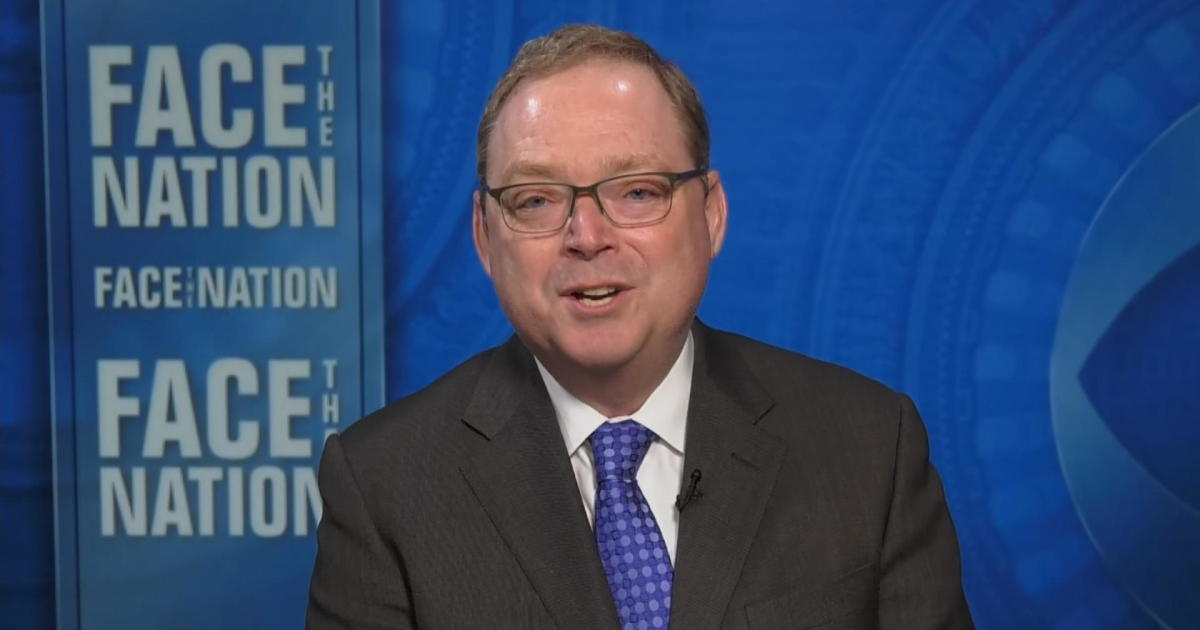
He made similar comments on CBS’s “Face the Nation,” saying the low point could reach 20 percent around May or June.

Hassett said on CNN the unemployment rates depend on whether the virus “has really abated” and if economies are “really going again.” 

“I would guess middle of summer is when we’re going to start to go into the transition phase,” he said, adding that he hopes there will be “very strong” growth in the third and fourth quarters.

The unemployment in April rate rose to 14.7 percent from 4.4 percent in March, according to the latest jobs report released by the Bureau of Labor Statistics on Friday. 

The U.S. lost 20.5 million jobs in April amid the coronavirus pandemic, breaking the record for the largest one-month increase in the unemployment rate.


Reopening with a wary eye on troubling virus trends

https://mailchi.mp/aa7806a422dd/the-weekly-gist-may-8-2020?e=d1e747d2d8

Apex man diaries 13-day struggle with cough, fever, wait for ...

With most states either reopening or planning to reopen shortly, the coronavirus showed few signs of loosening its grip on the US this week. Daily death totals continued to hover near 2,000, with more than 77,000 Americans having succumbed to COVID-19—a statistic that almost surely undercounts the true toll of the virus. While the situation continues to improve in “hot-spot” areas hit early like New York City and Detroit, the number of newly confirmed cases is still rising in other parts of the country, including in many of the states that have already begun to reopen.

In testimony before the House appropriations subcommittee on Wednesday, a senior infectious disease researcher from the Johns Hopkins Center for Health Security said that no state now reopening meets recommended benchmarks for declining cases, sufficient testing and contact tracing, and adequate protective equipment for healthcare workers.

The White House sent mixed signals this week in response to states’ efforts to reopen ahead of the gating criteria it set in its Opening Up America Again plan, delaying the release of detailed CDC guidelines designed help businesses returning to work, denying the validity of leaked internal projections showing the likelihood of increasing infections and deaths, and oscillating between sidelining, and then refocusing, its coronavirus task force.

However, there was some good news this week in the battle with coronavirus. There are now 108 candidate vaccines under investigation, with a handful in clinical trials. One, a messenger RNA-based vaccine developed by drug company Moderna, was approved by Food and Drug Administration (FDA) to enter Phase 2 trials on Thursday. Coronavirus testing, critical to the country’s ability to reopen safely, continued to ramp up as well, and the closely-watched “positivity rate” (an indicator of how widespread testing is—lower is better) fell nationwide.

After last week’s FDA emergency use authorization for Gilead Sciences’ promising antiviral drug remdesivir, the company began ramping up production, although frustration mounted after only about two dozen hospitals were chosen by the government to receive scarce existing supplies. Meanwhile, the federal government began to share data on which providers have received bailout money from CARES Act funding—relief sorely needed given the massive economic hit caused by the shutdown.

With the release of April unemployment numbers on Friday—showing a staggering 14.7 percent unemployment rate—the disastrous impact of the virus on the healthcare industry became more apparent. The sector lost 1.4M jobs last month, mostly on the ambulatory side. With each passing week, it becomes clearer that the recovery from the coronavirus’ assault on America will be lengthy, uneven, and difficult.


Cartoon – What are the Odds?

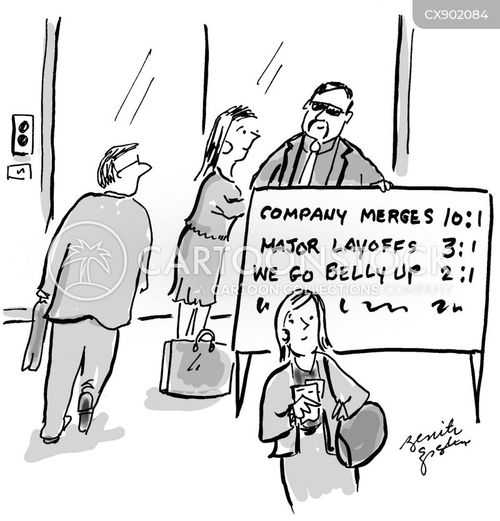
Layoffs Cartoons and Comics - funny pictures from CartoonStock

Administration’s Handling of Coronavirus Threatens a Long Unemployment Crisis

https://www.americanprogress.org/issues/economy/news/2020/05/07/484795/trump-administrations-handling-coronavirus-threatens-long-unemployment-crisis/
The Trump Administration's Handling of Coronavirus Threatens a ...

On Friday, the Bureau of Labor Statistics will release employment numbers for April that are expected to show a tragic and historic increase in unemployment. Consensus estimates anticipate more than 20 million jobs lost and an unemployment rate of 16 percent—a figure that may well be an underestimate given that millions of people may not be looking for jobs, effectively exiting the labor force and reducing the labor force participation rate. Moreover, state-level unemployment claims data show that this economic pain is being felt across the country, with sharp rises in joblessness in every state. And Thursday’s jobless claims release suggests that job losses have continued at high levels since the April unemployment survey was taken.

While the immediate cause of this spike in joblessness is, of course, the necessary stay-at-home orders and social distancing measures taken to respond to the crisis, the rise in unemployment—and how long it lasts—cannot be separated from choices made by the Trump administration. In understanding the state of the economy, as well as what comes next, the following three elements of this crisis must be understood:

  1. The economic crisis we are facing—and the economic pain we expect in the months ahead—is the result of a failed public health response. The Trump administration ignored early warnings, misled the public, and made the coronavirus crisis worse. The fact that the administration bungled the testing regime early on in the crisis meant that the United States could never contain the virus, as other countries such as South Korea, New Zealand, and Taiwan have done. As a consequence of that failure, the United States has had to engage in social distancing that has meant economic shock in order to avoid significantly greater levels of infections and deaths. The depth and scope of the economic pain being felt is a consequence of the administration’s delayed response and complete failure take leadership during this crisis.
  2. The administration’s inability to put in place appropriate public health measures going forward—combined with its insistence that efforts to contain the virus should be lifted in the absence of those measures—is likely to not only prolong the public health crisis but also extend the economic pain. Rather than provide workers, businesses, and families the confidence that they can return to activity safely, the administration is taking steps that try to ignore the risk of infection, such as absolving employers of responsibility for worker safety through a liability shield or forcing workers to return to work even when they have concerns about their health. In this environment, we are likely to see decreased demand for some time to come because people will have little confidence in individual state reopening strategies disconnected from science—as we are already seeing across the country.
  3. By rejecting efforts that would support families, workers, and communities during this crisis, the administration and its allies in Congress are putting us on a path for continued double-digit unemployment even after the pandemic finally ends. Indeed, the Congressional Budget Office (CBO) projects that the unemployment rate—absent additional action—will be near 10 percent at the end of 2021, several months after they project social distancing as a result of the health crisis abates. By opposing efforts to provide sufficient aid to states and localities; relief to families and unemployed workers; and assistance to those struggling the most, President Donald Trump, Majority Leader Mitch McConnell (R-KY), and their allies are insisting on making this extended period of double-digit unemployment a reality.

There is an alternative path, however: Taking the necessary steps to address the public health crisis and ensure that people can go back to work safely and doing what is needed to address the immediate economic pain and avoid prolonged unemployment. As Congress and the administration consider an additional stimulus package, they should put in place necessary public health protections while providing robust aid to families, workers, and communities for as long as the crisis lasts. This will allow us to avoid double-digit unemployment from being a devastating reality for American families for the next year and a half or more.

Public health failures has driven unemployment up

The rise in unemployment over the past two months is a direct consequence of the public health crisis—one that could have taken a far less severe toll under an administration that had been better prepared for it and that had approached it more wisely. The Trump administration has failed to develop an evidence-based plan to end the coronavirus crisis. Instead, its mismanagement has resulted in widespread fear and uncertainty as to when it might be appropriate to reopen parts of the economy. President Trump did not take the pandemic seriously when cases first emerged in the United States; his administration failed to use the month of April—when the nation was largely shut down—to ramp up the testing, contact tracing, and other pieces necessary for the public health response. And now, Trump is pushing states to reopen too soon. Before people feel comfortable enough to once again venture out of their homes and reengage in work and other economic activities, we need to ensure the country has developed the necessary health infrastructure to allow us to gradually reopen our economy without sparking a second wave of infections.

The economic crisis cannot end until public health crisis is solved

The Trump administration and its allies are arguing that the way to solve the economic crisis is to open up the country, ending stay-at-home orders and engaging in aggressive efforts to force business to return to normal. But in the absence of public health measures that actually allow activity to return safely, the administration’s strategy appears to be one of “ignore and press on,” with potentially devastating results for workers and communities. This strategy includes:

  • Pushing communities to lift stay-at-home orders and other public health measures before sufficient testing, tracing, isolation and ongoing surveillance is in place
  • Forcing workers back on the job, even without sufficient personal protective equipment or workplace safety protections—whether by removing unemployment insurance for those who are recalled to unsafe situations or through executive actions such as those taken for the meatpacking industry
  • Proposing to absolve employers of the responsibility to keep workers and communities safe through blanket immunity from liability—a measure that would do nothing to keep workers safe or build confidence in economic reopening

These steps reflect an acceptance of elevated risks of transmission, and ultimately, death. And despite the president’s rhetoric, it will make it less likely that the economy can return faster.

First, it is clear that the public isn’t going to feel safe to return to normal economic activity absent additional public health measures. A recent Washington Post-University of Maryland poll found that “67 percent say they would be uncomfortable shopping at a retail clothing store, and 78 percent would be uncomfortable eating at a sit-down restaurant.” These results were similar both in states that had loosened restrictions and those that had not and is consistent with other data. As long as people are anxious that returning to normal activities could put them at risk of contracting the virus, the economy will be unable to recover.

Second, a strategy that fails to put in place the necessary protections against spreading the virus will increase transmission among the public, and especially workers, in ways that may force additional shutdowns and prolong the period of public health crisis. In sum, prolonged public health crisis equals a prolonged state of economic distress—extending the number of months with a job market like April’s. The best approach—an approach adopted by other countries who are faring better both with their health outcomes and their economic impacts—is a national plan to fight the virus that is based on testing, tracing, and isolation.

After the pandemic ends, double-digit unemployment will persist under the current course

The CARES act provided large, necessary relief to most Americans, including assistance for workers, families, and small businesses. But this assistance will run out before the economic emergency is behind us, forcing the economy into unnecessarily prolonged hardship.

Indeed, the measures in the CARES Act both leave important gaps and will expire long before the economy is expected to return to normal. States and localities are facing extreme budget shortfalls. If action is not taken before state budget deadlines on July 1, states are likely to begin implementing layoffs of teachers and first responders and service cuts in the coming months that will cause additional job loss. Expanded unemployment insurance benefits expire at the end of July, removing an important lifeline for those out of work. While the direct payments in the CARES Act provided important assistance to families, the $1,200 per person payment will not be enough to sustain households through a prolonged crisis. The initial Paycheck Protection Program (PPP) support for small businesses has run out, and a second round of funding may soon run out too. And in important areas such as housingfood assistancechild care, and health coverage, among others, the CARES Act failed to do enough to address the hardship being felt today, let alone over a prolonged crisis—even as it provided generous aid to corporations.

As a result, under baseline projections—those that assume no further action on the part of the government—double-digit unemployment is expected to be a feature of the economy for at least the next year and a half. As noted above, the CBO estimates that the unemployment rate will remain near 10 percent at the end of 2021—many months after they predict that social distancing due to the pandemic itself ends.

Yet the Trump administration and congressional Republicans have indicated that they are prepared to accept this reality, or at best, offer solutions that do nothing to shift it. White House economic adviser Kevin Hassett said that another round of coronavirus relief legislation might not be necessary, and chief economic adviser Larry Kudlow said on Sunday that nothing has been decided yet and that “there’s kind of a pause period right now” and that “we will wait and see.” Senator McConnell has dismissed state and local aid as a “blue state bailout,” despite pain being felt in all states.

To the extent the administration or its allies have signaled a desire to act, they have focused on measures that would be woefully insufficient to address the economic challenges we face. Aside from the liability shield, Trump has signaled a push for poorly targeted corporate tax cuts or a payroll tax cut that would fail to benefit those who are out of work. An illustrative example of Trump’s approach is his call for removing limits on corporate deductions for meals and entertainment—effectively allowing companies to deduct expenses for sports tickets, golf trips, or visits to casinos—which would provide a benefit to corporations and their wealthiest executives but do little to help put money in the hands of those who need it.

A better path: a response that meets the public health and economic challenge

As it considers another package to address this crisis, Congress has the opportunity to take a path that rejects double-digit unemployment as a lasting feature of this crisis. The approach Congress should take would allow economic activity to restart safely and ensure that, as the economy restarts, we are actually getting people back to work rather than accepting a recession that keeps millions unemployed.

First, that requires a sufficient public health response. The purpose of stay-at-home orders in the first place was to suppress transmission to low levels and buy time to put in place extensive testing and contact tracing programs, but we have yet to meet those goals. Nationally, we still need to increase our testing capacity and reach at least 500,000 tests a day; scale up contact tracing—both manually and by apps that meet privacy standards—in order to isolate people who test positive as well as their contacts; and have in place a far more robust disease surveillance system.

And second, it requires an economic response that offers relief that both addresses immediate pain that families, small businesses, and communities are facing and is sufficient to build back to a stronger economy.

In particular, the package must be:

  1. At a scale necessary to address the crisis. We need to pursue a fiscal response that is proportional to both the public health and economic threat posed by COVID-19. The economic consequences of this crisis are staggering. Children are going hungry; households are piling massive debts; millions of homeowners are delaying their mortgage payments; small businesses in hard hit states received fewer loans than others; minority small business owners are struggling to stay open; and state and local governments are preparing for significant layoffs of teachers and first responders in the absence of federal aid. Action needs to be sufficiently large to both address the immediate hardship that families are facing and get the economy back to work. This big push for aid has to be coordinated at the national, state, and local levels. An important lesson form the Great Recession was that austerity at the level of states and localities was a key factor in delaying economic recovery for years, since states were in austerity mode from 2008 until 2012, contributing to lower GDP growth. And, in contrast to concerns raised by some congressional Republicans—concerns that were absent during the passage of nearly $2 trillion in tax cuts in 2017—we have the fiscal capacity to respond robustly, especially with interest rates near zero. Indeed, evidence suggests that increased fiscal stimulus may increase fiscal sustainability.
  2. Sustained for the duration of the crisis. Relief must be sustained, automatic, and available with certainty for as long as it is needed. We should learn from the Great Recession, when stimulus was insufficient and removed too soon. During that crisis, unemployment insurance expired for many workers long before the crisis had passed; fiscal aid ended long before state and fiscal budget cuts ceased being a drag on the recovery. Key measures to support the economy, such as unemployment insurance, state and local aid, and direct relief to families, should automatically extend for the duration of the economic crisis—ensuring that we are providing sufficient relief and necessary stimulus as long as is needed to support a robust recovery.
  3. Targeted to all the areas where Americans are feeling economic hardship. There is no silver bullet that will bring the economy back. We need a multilayered attack that addresses the root cause of the problem—the spread of the virus—and ameliorates its symptoms in the form of hardship for families, workers, small businesses, and communities. Building off the CARES Act, additional aid needs to make sure it is reaching those who have been excluded. That requires ensuring that aid is more completely available—for example, ensuring that immigrant families can access needed relief or closing loopholes that prevent workers from having access to paid leave. It also means providing much needed assistance in areas such as food assistance, child care, housing, and for people with disabilities—areas that would both address concentrated harm and support the economy going forward. Finally, the package should be designed so that—rather than exacerbating structural problems in our economy that benefited corporations over workers—it puts us on a path for a stronger economy once the crisis ends.

The administration and its allies appear content to accept a prolonged period of public health and economic harm that is a result of the mismanagement of the COVID-19 crisis to date—essentially condemning the nation to a greater toll from the virus itself and a much longer period of economic distress. It must be clear that the harsh reality of the April jobs report—and the much broader pain that has been felt over recent weeks—was the result of both failed policy decisions and mismanagement. By the same token, we have the choice going forward as to whether we accept further pain or take steps that would both keep people healthy and get Americans back to work.


1.4 million healthcare jobs lost in April

https://www.beckershospitalreview.com/workforce/1-4-million-healthcare-jobs-lost-in-april.html?utm_medium=email

1.4 million health-care workers lost their jobs due to the ...

Healthcare lost 1.4 million jobs in April amid the COVID-19 pandemic, primarily in ambulatory healthcare services, according to the latest jobs report from the U.S. Bureau of Labor Statistics.

The April count compares to 43,000 healthcare jobs lost in March.

Within ambulatory healthcare services, April job losses included offices of dentists (503,300), offices of physicians (243,300), and offices of other healthcare practitioners (205,100).

Hospitals lost 134,900 jobs last month, compared to the 200 positions they added to the U.S. economy in March.

The April jobs report marks the second consecutive month that healthcare employment did not grow. In the 12 months prior to March — the month the World Health Organization declared the COVID-19 spread a pandemic — industry employment had grown by 374,000, according to the bureau.

Bloomberg reported the number of healthcare workers has doubled to 16 million in the last three decades, and until March, the industry has lost jobs in only four months during that period.

Overall, the U.S. lost 20.5 million jobs in April, and the unemployment rate reached 14.7 percent, the highest since the Great Depression, according to the bureau.

The unemployment rate does not reflect Americans still working who have had their hours or pay reduced, The New York Times noted.


States face economic death spiral from Coronavirus

https://www.axios.com/coronavirus-states-economy-295ac091-9dc2-4852-be67-d070ec268d8c.html

YEAR-OVER-YEAR CHANGE IN STATE TAX REVENUES

April 2020 vs. April 2019, select states

States face economic death spiral from coronavirus - Business Insider


Early numbers show how significantly the coronavirus is devastating states’ revenue streams — and could force choices between raising taxes or gutting services and laying off public employees.

Why it matters: Even as some states move toward reopening, the economic ramifications of having shut down will haunt them far into the future.

  • When states can reopen, and how quickly industries are able to bounce back, could either worsen or improve projections.

What to watch: Sens. Bob Menendez (D-N.J.) and Bill Cassidy (R-La.) plan to introduce bipartisan legislation as soon as next week that would create a $500 billion fund designed to help struggling state and municipality budgets in the wake of COVID-19.

  • “If there was another way to do this, I’d rather do it the other way,” Cassidy tells Axios. “But what I don’t want to happen is all this money spent for families and for employers to go to waste because cities cannot provide essential services.”
  • Menendez tells Axios: “This is the time to step up to the plate.”

By the numbers: The Urban Institute has been compiling lost revenue data as states make it publicly available. So far, there are figures for about one in four states that compare this April’s state income and sales tax revenue collections against those from April 2019.

  • The data shows collections dropping between 20% and more than 50%, depending on the state, senior researcher Lucy Dadayan tells Axios — and those figures could get worse as new data comes in.
  • South Dakota is an outlier in the states the Urban Institute has tracked so far, in that revenues actually appear up for April. That may be largely because it is one of very few states that did not issue a stay at home order. But experts expect to see revenue declines next month.
  • Although it has not yet released April sales tax numbers to enable a year-over-year comparison, California’s staggering tax revenue loss due to COVID-19 has led to an expected $54.3 billion budget shortfall through FY 2021 — including a $13.4 billion shortfall this fiscal year, the governor announced Thursday. That’s with a $21 billion surplus last year.
  • New York also has yet to release April tax revenue data, but its latest budget projection has the state short as much as $13.3 billion in FY 2021, according to Dadayan’s analysis of most recent state budget projections. Illinois is looking at a more than $4.6 billion shortfall for next fiscal year.
  • Arizona is projecting to be short more than half a billion dollars for this fiscal year.
  • The projected shortfalls for FY 2020, which ends at the end of June for most states, is arguably a bigger problem because there isn’t much time left to make changes, per Axios’ Dan Primack.

The big picture: Democratic-leaning cities have seen the highest case and death rates. But red and blue states alike are facing serious budget shortfalls.

  • That’s why some Republican senators are getting behind efforts to provide federal dollars to help states balance budgets.
  • Even after accounting for state emergency savings accounts — which in many states were at an all-time high — 33 states will likely need to fill budget gaps of 5% or more, according to a recent analysis by Moody’s Analytics.
  • 21 states would need to fill gaps of 10% or more.
  • “Anybody is going to be overwhelmed by this — even states who were well prepared,” Dan White, director of government consulting and fiscal policy research at Moody’s Analytics, tells Axios.

Between the lines: Much of the burden will likely be pushed on struggling local governments’ plates, White said.

  • Cities have also lost smaller revenue sources such as hotel occupancy fees, inspection fees and construction fees.
  • Some could be forced to lay off public workers needed to combat the virus and keep the public safe — such as firefighters, paramedics, public hospital workers.
  • It’s either that or raise taxes in the midst of high unemployment and financial insecurity. “That’s the death spiral,” said Menendez, who has been talking with mayors across his state.
  • New York City Mayor Bill de Blasio has already said he may have to start furloughing municipal employees if the city doesn’t receive federal funds to help fill budget gaps.

Some state and local governments will wait to make tough budget decisions in the hopes that they get needed funds from Congress, which is in heated negotiations around the fourth stimulus package.

Republican lawmakers have been hesitant to provide this much federal help to states, but they’ve been warming to the idea.

  • Menendez says he expects several Republican senators besides Cassidy to sign on to their proposal.


The New Culture War

American Identity Is The New Culture War - Auburn Seminary

You’re either a liberal snowflake controlled by big government or a greedy conservative willing to sacrifice Grandma for the economy. It took less than two months for Americans to get here.

Wear a mask? You’re a liberal snowflake controlled by big government. Want to reopen restaurants? You’re a greedy conservative willing to sacrifice Grandma for the economy.

It took less than two months for the coronavirus pandemic to become just the latest battle in the culture wars.

With the country still in the firm grip of the coronavirus pandemic, conservatives are on social media and Fox News stoking protests that argue masks, stay-at-home orders and social distancing violate constitutional rights and are causing unacceptable harm to the economy.

Liberals, at the same time, say personal liberties must be sacrificed for public health, even as millions file for unemployment and more than a quarter of the work force is jobless in some states.

Take a look at what two governors — one from a reliably Republican state and another from a reliably Democratic state — said this week.

“We have a public health crisis in this country, there’s no doubt about it,” Gov. Tate Reeves of Mississippi said in an appearance on “Fox News Sunday.” “But we also have an economic crisis.”

“We have turned the corner and we are on the decline,” Gov. Andrew M. Cuomo said, citing an article showing that the death rate has fallen by half in New York City, in his daily briefing on Wednesday. “To me, that vindicates what we are doing here in New York, which says: Follow the science, follow the data, put the politics aside and the emotion aside. What we’re doing here shows results.”

The problem with all these politics? Epidemiology.

So far, the virus has hit Democratic states the hardest, with the most cases per capita in five deeply Democratic states — New York, New Jersey, Massachusetts, California and Illinois. Cities have borne the brunt of the caseload. And African-Americans and Latinos — a key part of the Democratic coalition — are getting sick and dying of the virus at higher rates.

But anyone who believes this virus is fading away — or somehow contained to urban areas — is engaging in some serious magical thinking.

At least 25,000 new coronavirus cases are identified almost daily, meaning that the total in the United States — which has the highest number of known cases in the world — is expanding daily by 2 to 4 percent.

New York Times analysis found that 18 of the states that are reopening had an increase of daily average cases over the last two weeks. Fifteen of those states are led by Republican governors.

Three of the top five states where the virus is spreading the fastest — Texas, Georgia and Ohio — have Republican governors and Republican-controlled legislatures. All three have moved toward reopening.

In the Midwest and South, smaller towns and more rural areas have suddenly been hit hard as the virus tears through nursing homes, meatpacking plants and prisons.

The nation’s highest per capita infection rate can be found in Trousdale County, Tenn., a rural county where a prison has become a hot spot. Businesses in the county are reopening this week.

In the Trump era, rural counties like Trousdale have represented the backbone of the Republican base. In Trousdale, nearly 67 percent of the county supported President Trump in 2016. Over all, the average margin of victory in rural counties won by Republicans was nearly 47 percent in 2016.

Rural areas tend to be older and have a larger share of the population with pre-existing medical conditions, making them far more vulnerable to the worst health effects of the virus.

Republican governors and conservative activists may think the coronavirus is an urban problem. Or a density problem. Or, quite frankly, a Democratic problem.

They may soon find out that it’s not.


Another 3.169 million Americans file for unemployment benefits

https://finance.yahoo.com/news/jobless-claims-another-3-million-americans-expected-to-have-filed-for-unemployment-benefits-170914685.html

Jobless claims: Another 3.169 million Americans file for ...

Market participants got another pulse check on the U.S. labor market Thursday, as the world continues to grapple with the COVID-19 pandemic and ahead of the highly-anticipated April jobs report.

Another 3.169 million Americans filed for unemployment benefits in the week ending May 2, exceeding economists expectations for 3 million initial jobless claims. The prior week’s figure was revised higher to 3.846 million from the previously reported 3.839 million. So far over the past seven weeks, more than 33 million Americans have filed unemployment insurance claims.

Continuing claims, which lags initial jobless claims data by one week, totaled a record 22.65 million in the week ending April 25. The prior week’s 17.99 million continuing claims was revised higher to 18.01 million.

The weekly number of jobless claims has been steadily declining even as the cumulative number remains high.

“Jobless claims in the U.S. slowed again last week, but not as much as hoped. As the economy re-opens more broadly this process should accelerate, but the economic pain resulting from mass unemployment will restrain the recovery process,” ING economist James Knightley said in a note Thursday.

“This report tells us nothing about hiring though, which is likely to remain weak for some time to come given the economically depressing effects of social distancing, consumer caution relating to Covid-19 fears, travel restrictions and the legacy of tens of millions of people being out of work,” Knightley added.

map

Certain states got hit harder than others last week, as backlogs continue to get processed. California saw the highest number of initial jobless claims at an estimated 318,000 on an unadjusted basis, down from 325,000 in the prior week. Texas reported 247,000, down from 254,000 in the previous week. Georgia had an estimated 227,000 and New York reported 195,000. Florida, which had the highest number of claims in the prior week, reported 173,000 in the week ending May 2, down considerably from 433,000.

Thursday’s weekly claims report comes ahead of the Bureau of Labor Statistic’s April jobs report and on the heels of the ADP employment report. Wednesday morning, the U.S. private sector lost 20.23 million jobs in April and was the worst loss in the report’s history, according to ADP.

“Job losses of this scale are unprecedented. The total number of job losses for the month of April alone was more than double the total jobs lost during the Great Recession,” ADP Research Institute Co-Head Ahu Yildirmaz said in a statement.

“Additionally, it is important to note that the report is based on the total number of payroll records for employees who were active on a company’s payroll through the 12th of the month. This is the same time period the Bureau of Labor and Statistics uses for their survey,” Yildirmaz added.

Though the ADP report is not always a reliable indicator of what the BLS report will illustrate, it does provide a bit of insight into the health of employment in the U.S.

“The report is a bit light on details of any potential methodological problems this month. The ADP counts anyone on the active payroll rather than just people who were paid during the month, which is the official non-farm payroll definition. Within many people put on temporary layoff, that could have created a discrepancy, with those people still on the active payroll, but not counted in the official non-farm payroll figures and also qualifying as unemployed in the other official household survey,” Capital Economics said in a note Wednesday.

Economists polled by Bloomberg expect 21.3 million jobs losses in April when the BLS releases its report Friday morning, down significantly from 701,000 job losses in March. The unemployment rate is estimated to have surged to 16% from 4.4% in the prior month.

“April jobs report should go down in infamy,” Bank of America economists said in a note Wednesday. “The April employment report will reveal unprecedented job losses as the economy has been shutdown to control the spread of COVID-19.” The firm projects 22 million job losses during the month amid the global pandemic.  

One important thing to note with April’s jobs report is that there might be some discrepancies in the two surveys. A furloughed person, who is not working but has not been laid off, will be classified as unemployed or temporarily laid off in the household survey. However, if they were paid at any point during the establishment survey period, they will be classified as employed.

As of Thursday morning, there were 3.7 million confirmed coronavirus cases and 264,000 deaths globally, according to Johns Hopkins University data. In the U.S., there were 1.2 million cases and 73,000 deaths.


9 states seek $36B in federal advances for unemployment claims

https://www.politico.com/states/california/story/2020/05/05/9-states-seek-36b-in-federal-advances-for-unemployment-claims-1282530?utm_source=The+Fiscal+Times&utm_campaign=f343554e9c-EMAIL_CAMPAIGN_2020_05_06_09_42&utm_medium=email&utm_term=0_714147a9cf-f343554e9c-390702969

9 states seek $36B in federal advances for unemployment claims

Nine states have told the Department of Labor they plan to ask for $36 billion in federal advances to cover the astronomical cost of unemployment payouts amid the coronavirus pandemic, according to new information provided to POLITICO Tuesday night by federal officials.

Illinois, which had fiscal problems before the coronavirus, tops the list with an $11 billion request in May and June.

California, the first state to borrow, plans to seek the next-highest amount over the same two months: $8 billion.

Texas will ask for advances totaling $6.4 billion in May, June and July and New York will ask for $4.4 billion in the same three months.

Connecticut, Hawaii, Massachusetts, Ohio and West Virginia have also signaled an intent to borrow between May and July to fund their unemployment systems. Some of the states, like Illinois and California, only requested advances for May and June.

There is no approval process for the advances, a department spokesperson said. States notify the Departments of Labor and Treasury of their needs, the spokesperson said, and the Department of Labor certifies those amounts to the Treasury Department.

States are able to draw down advances as they need them, but won’t necessarily end up using the full amounts.

California took out its first $348 million unemployment insurance loan last week, slipping into the red just two years after repaying the $65 billion it borrowed from the federal government during and after the Great Recession. It was one of about three dozen states that took out federal loans to weather the last downturn, a scenario likely to repeat itself in the coming weeks and months as unemployment numbers soar nationwide.

The latest national figures last week showed that more than 30 million had filed jobless claims since mid-March.

California’s unemployment insurance system, funded by payroll taxes, was barely solvent before the pandemic blindsided the economy, with less of a cushion than any other state or territory except for the U.S. Virgin Islands, according to the Department of Labor’s Trust Fund Solvency Report.

Besides Hawaii, all of the states requesting advances also fell well below the department’s recommended solvency level.

Since mid-March, California Gov. Gavin Newsom said Monday, the state has issued $7.8 billion in unemployment relief, and more than 4.1 million people have filed claims — about 21 percent of the state’s pre-pandemic workforce.

Newsom stressed that the state was “good for our word,” but called for direct federal aid. “This pandemic is bigger than even the state of California,” he said. “The economic consequences of this pandemic are such that we can balance our budgets without substantial cuts, unless we get additional federal support.”

States won’t accrue interest on these federal loans through Dec. 31, under the federal Families First Coronavirus Response Act. But the last round of unemployment fund borrowing cost California $1.4 billion in interest payments, according to the state’s Department of Finance.