Kaiser Permanente built on 2023’s strong start with $2.08 billion of net income during the quarter ended June 30, bringing its midyear total to about $3.29 billion, the integrated system announced late Friday.
Operating income was also strong at $741 million (2.9% margin) and raised the organization’s six-month performance to $974 million (1.9% margin).
The numbers are both a sequential improvement and a stark turnaround from 2022. By the midpoint of that year, Kaiser Permanente was reporting a $1.3 billion net loss for the quarter and an $89 million operating gain (0.4% margin). Across 2022’s first half, the system had been down a total of $2.26 billion and added just $17 million from operations (0.0% margin).
The Oakland, California-based nonprofit is likely safe from repeating the nearly $4.5 billion net loss and $1.3 billion operating loss of full-year 2022.
Leadership, however, noted that the integrated system historically sees higher operating margins during the first half of the year “due in part to the annual enrollment cycle and seasonal care.”
“Our second-quarter financial results reflect operational improvements that, together with our ongoing expense reduction efforts, will help us face additional financial pressures in the second half of the year,” Kathy Lancaster, executive vice president and chief financial officer at Kaiser Permanente, said in a release. “The process of building our financial performance back to pre-pandemic levels requires that we continue to redesign our cost structure to support investments in our facilities, technology and people while staying competitive in a dynamic healthcare marketplace.”
Kaiser Permanente reported $25.17 billion in operating revenues for the second quarter, a 7.2% increase year over year. Operating expenses increased 4.5% year-over-year to $24.42 billion.
“Like all health systems, Kaiser Permanente is experiencing ongoing cost headwinds and volatility driven by inflation, labor shortages, and the lingering effects of the pandemic on access to care and service,” the system wrote in a release.
Kaiser Permanente’s membership has increased by more than 81,000 members since the start of the year and sits at almost 12.7 million as of June 30. The organization noted that it has kicked off an outreach campaign for Medicaid members “to ensure they have critical enrollment information as states go through the mandated process of eligibility redetermination.”
The largest impact on Kaiser Permanente’s bottom line came from investments. Owing to “favorable financial market conditions,” the organization recorded $1.34 billion in “other income and expense,” nearly a full reversal of the $1.39 billion loss on the same line item it’d logged during the same period last year.
The system’s capital spending reached $824 million for the quarter, which was up from $789 million during the second quarter of 2022 but a pullback from the first quarter of 2023’s $930 million.
“The post-pandemic financial pressures have led many in the industry to cut back on care and service,” CEO Greg Adams said in an accompanying statement. “At Kaiser Permanente, we remain focused on improving access and affordability for our patients, members and communities, which requires continued investment in care and coverage. … I want to thank all employees and physicians for turning the disruptions and challenges of the past three years into opportunities to make our healthcare system stronger and more equitable, with improved outcomes for all.”
Kaiser Permanente is the largest nonprofit health system in the country by revenue with more than $95 billion in annual revenues. As of June 30, it spanned 39 hospitals, 622 medical offices and 43 clinics in addition to its millions of covered health plan members.
Earlier in the year the system highlighted efforts to trim administrative and discretionary spending as well as a workforce push that improved clinical hiring by 15% year over year. It is in the midst of negotiating a new labor contract covering 85,000 unionized healthcare workers who are seeking workforce development investments and higher staffing levels across clinical settings.
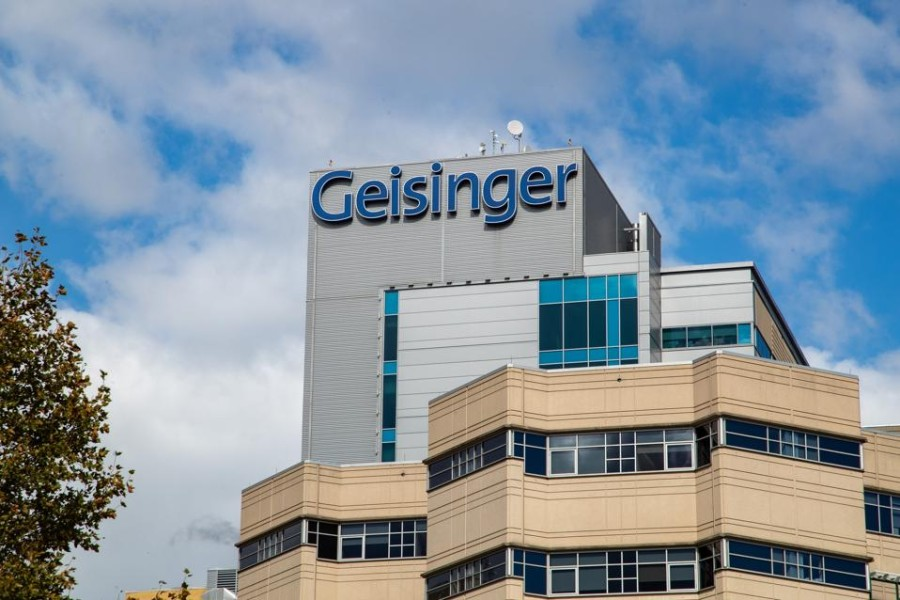
The organization is also working toward its high-profile acquisition of fellow integrated nonprofit Geisinger Health, which Kaiser Permanente said would be the first step toward a cross-country value-based care organization called Risant Health.
For decades, research studies and news stories have concluded the American system is ineffective,
too expensive and falling further behind its international peers in important measures of performance: life expectancy, chronic-disease management and incidence of medical error.
As patients and healthcare professionals search for viable alternatives to the status quo, a recent mega-merger is raising new questions about the future of medicine.
In April, Kaiser Permanente acquired Geisinger Health under the banner of newly formed Risant Health. With more than 185 years of combined care-delivery experience, Kaiser and Geisinger have long been held up as role models of the value-based care movement.
Eyeing the development, many speculated whether this deal will (a) ignite widespread healthcare transformation or (b) prove to be a desperate attempt at relevance (Kaiser) or survival (Geisinger).
Whether incumbents like Kaiser Permanente and Geisinger can lead a national healthcare transformation or are displaced by new entrants will depend largely on whether they can deliver value-based care on a national scale.
In Search Of Healthcare’s Holy Grail
Value-based care—the simultaneous provision of high quality, convenient and affordable medical care—has long been the aim of leading health systems like Kaiser, Geisinger, Mayo Clinic, Cleveland Clinic and dozens more.
But results to-date have often failed to match the vision.
The need for value-based care is urgent. That’s because U.S. health and economic problems are expected to get worse, not better, over the next decade. According to federal governmental actuaries, healthcare expenditures will rise from $4.2 trillion today to $7.2 trillion by 2031. At that time, these costs are predicted to consume an estimated 19.6% of the U.S. Gross Domestic Product.
Put simply: The U.S. will nearly double the cost of medical care without dramatically improving the health of the nation.
For decades, health policy experts have pointed out the inefficiencies in medical care delivery. Research has estimated that inappropriate tests and ineffective procedures account for more than 30% of all money spent on American medical care.
This combination of troubling economics and untapped opportunity explain why value-based care has become medicine’s holy grail. What’s uncertain is whether the transformation in healthcare delivery and financing will be led from inside or outside the healthcare system.
Where The Health-System Hopes Hang
For years, Kaiser Permanente has led the nation in clinical quality and patient outcomes based on independent, third-party research via the National Committee for Quality Assurance (NCQA) and Medicare Star ratings. Similarly, Geisinger was praised by President Obama for delivering high-quality care at a cost well below the national average.
And yet, these organizations, and many other highly regarded national and regional health systems, are extremely vulnerable to disruption, especially when their strategy and operational decisions fail to align.
Kaiser, for its part, has struggled with growth while Geisinger’s care-delivery strategy has proven unsuccessful in recent years. Failed expansion efforts forced KP to exit multiple U.S. markets, including New York, North Carolina, Kansas and Texas. More recently, several of its existing regions have failed to grow market share and weakened financially.
Meanwhile, Geisinger has fallen on hard times after decades of market domination. As Bob Herman reported in STAT News: “Failed acquisitions, antitrust scrutiny, leadership changes, growing competition from local players, and a pandemic that temporarily upended how patients got care have forced Geisinger to abandon its independence. The system is coming off a year in which it lost $240 million from its patient care and insurance operations.”
Putting the pieces together, I believe the Kaiser-Geisinger deal represents an industry undergoing massive change as health systems face intensifying pressure from insurers and a growing threat from retailers like Amazon, CVS and Walmart. This upcoming battle over the future of value-based care represents a classic conflict between incumbents and new entrants.
Can The World’s Largest Companies Disrupt U.S. Healthcare?
Retail giants, including Amazon, Walmart and CVS, are among the nation’s 10 largest companies based on annual revenue.
They have a broad geographic presence and strong relationships with almost all self-funded businesses. Nearly all have acquired the necessary healthcare pieces—including clinicians, home-health services, pharmacies, insurance arms and electronic medical record systems—to replace the current medical system.
And yet, while these companies expand into medical care and financing, their core businesses are struggling, resulting in announced store closures and layoffs. As newcomers to the healthcare market, they have been forced to pay premium dollars to acquire parts of the delivery system. All have a steep learning curve ahead of them.
The Challenge Of Healthcare Transformation
American medicine is a conglomerate of monopolies(insurers, hospitals, drug companies and private-equity-owned medical practices). Each works to maximize its own revenue and profit. All are unwilling to innovate in ways that benefit patients when doing so comes at the sacrifice of financial performance.
One problem stands at the center of America’s soaring healthcare costs: the way doctors, hospitals and drug companies are paid.
The dominant payment methodology in the United States, fee-for-service, rewards healthcare providers for charging higher prices and increasing the number (and complexity) of services offered—even when they provide no added value.
The message to doctors and hospitals is clear: The more you do, and the greater market control you have, the higher your income and profit. This is the antithesis of value-based care.
The alternative to fee-for-service payments, capitation, involves paying a single, up-front sum to the providers of care (doctors and hospitals) to cover the total annual cost for a population of patients. This model, unlike fee-for-service, rewards effectiveness and efficiency. Capitation creates incentives to prevent disease, reduce complications from chronic illness, and diminish the inefficiencies and redundancies present in care delivery. Capitated health systems that can prevent heart attacks, strokes and cancer better than others are more successful financially as a result.
However, it’s harder than it sounds to translate what’s best for patients into everyday decisions and actions. It’s one thing to accept a capitated payment with the intent to implement value-based care. It’s another to put in place the complex operational improvements needed for success. Here are the roadblocks that Kaiser-Geisinger will face, followed by those the retail giants will encounter.
3 Challenges For Kaiser-Geisinger:
Involving Clinical Experts. Kaiser Permanente is a two-part organization and when the insurance half (Kaiser) decided to acquire Geisinger, it did so without input or involvement from the half of the organization responsible for care-delivery (Permanente). This spells trouble for Geisinger, which must navigate a complex turnaround without the operational expertise or processes from Permanente that, in the past, helped Kaiser Permanente grow market share and lead the nation in clinical quality.
Going All In. To meet the healthcare needs of most its patients, Geisinger relies on community doctors who are paid on a fee-for-service basis. Generally, the fee-for-service model is predicated on the assumption that higher quality and greater convenience require higher prices and increased costs. With Geisinger’s distributed model, it’ll be very difficult to deliver consistent, value-based care.
Inspired Leadership. Major improvements in care delivery require skilled leadership with the authority to drive clinical change. In Kaiser Permanente, that comes through the medical group and its physician CEO. In Geisinger’s hybrid model, independent doctors have no direct oversight or central accountability structure. Although Risant Health could be an engine for value-based medical care, it’s more likely to serve the role of a “holding company,” capable of recommending operational improvements but incapable of driving meaningful change.
3 Challenges For The Retail Giants:
More Medical Offerings. Amazon, Walmart and CVS are successfully acquiring primary care (and associated telehealth) services. But competing with leading health systems will require a more wholistic, system-based approach to keep medical care affordable. This won’t be easy. To avoid ineffective, expensive specialty and hospital services, they will need to hire their own specialists to consult with their primary care doctors. And they will have to establish centers of excellence to provide heart surgery, cancer treatment, orthopedic care and more with industry-leading outcomes. But to meet the day-to-day and emergent needs of patients, they also will have to establish contracts with specialists and hospitals in every community they serve.
Capitalizing On Capitation. Already, the retail giants have acquired organizations well-versed in delivering patient care through Medicare Advantage, a capitated alternative to traditional (fee-for-service) Medicare plans. It’s a good start. But the retailers must do more than dip a toe in value-based care models. They must find ways to gain sufficient experience with capitation and translate that success into value-based contracts with self-funded businesses, which insure tens of millions of patients.
Defining Leadership. Without an effective and proven clinical leadership structure, the retail giants will be no more effective than their mainstream competitors when it comes to implementing improvements and shifting the culture of medicine to one that is customer- and service-focused.
Be they incumbents or new entrants, every contender will hit a wall if they cling to today’s failing care delivery model. The secret ingredient, which most lack and all will need to embrace in the future, is system-ness.
For all of the hype surrounding value-based care, fragmentation and fee-for-service are far more common in American healthcare today than integration and capitation.
Part two of this article will focus on how these different organizations—one set inside and one set outside of medicine—can make the leap forward with system-ness. And, in the end, you’ll see who is most likely to emerge victorious.
Healthcare’s most recent billion-dollar deal took the industry by surprise, leaving medical experts and hospital leaders grappling to comprehend its implications.
In case you missed it, California-based Kaiser Foundation Health Plan and Hospitals, which make up the insurance and facilities half of Kaiser Permanente, announced the acquisition of Geisinger, a Pennsylvania-based health system once acknowledged by President Obama for delivering “high-quality care.”
Upon regulatory approval, Geisinger will become the first organization to join Risant Health, Kaiser Foundation’s newly created $5 billion subsidiary. According to Kaiser, the aim is to build “a portfolio of likeminded, nonprofit, value-oriented, community-based health systems anchored in their respective communities.”
Having spent 18 years as CEO of The Permanente Medical Group, the half of Kaiser Permanente responsible for the delivery of medical care, I took great interest in the announcement. And I wasn’t alone. My phone rang off the hook for weeks with calls from reporters, policy experts and healthcare executives.
After hundreds of conversations, here are the three most common questions I received about the acquisition—and the implications for doctors, insurers, health-system competitors and patients all over the country.
Question 1: Why did Kaiser acquire Geisinger?
Most callers wanted to know about Kaiser’s motivation, figuring there must’ve been more to the acquisition than the press release indicated. Although I don’t have inside information, I believe they were right. Here’s why:
Kaiser Permanente has a long and ongoing reputation for delivering nation-leading care. The organization has consistently earned the highest quality and patient-satisfaction rankings from the National Committee for Quality Assurance (NCQA), Leapfrog Group, JD Power and Medicare.
And yet, despite a 78-year history, dozens of hospitals and 13 million members across eight states, Kaiser Permanente is still considered a coastal—not national—health system. It maintains a huge market share in California and a strong presence in the Mid-Atlantic states, yet the organization has failed repeatedly to replicate that success in other geographies.
With that context, I see two compelling reasons why the Kaiser Foundation Health Plan and Hospitals wish to become a national brand:
Influence. Elected officials and regulatory bodies often turn to healthcare’s biggest players to set legislative agendas and carve out national policy. At that table, there are a limited number of seats. By shedding its reputation as a “local” health system, Kaiser could earn one.
Survival. In recent years, companies like Amazon, CVS and Walmart have been scooping up organizations that provide primary care, telehealth, home health and specialty care services. These “retail giants” are spending up to $13 billion per acquisition. And they’re consuming already-successful healthcare companies like One Medical, Oak Street Health, Signify, Pill Pack and many others. Like an army preparing for war, these corporate behemoths are amassing the components needed to battle the traditional healthcare incumbents and ultimately oust them entirely.
The Geisinger deal expands Kaiser’s footprint, adding 600,000 patients, 10 hospitals and 100 specialty and primary care clinics. These assets lend gravitas, even though Geisinger also comes with a 2022 operating loss of $239 million.
The lesson to draw from this first question is clear: size matters. The days of solo physicians and stand-alone hospitals are over. Nostalgia for medicine’s folksy, home-spun past is understandable but futile. To survive, healthcare players must get bigger quickly or team up with someone who can. That insight leads to the next question and lesson.
Question 2: How much value will Kaiser give Geisinger?
Almost everyone I’ve spoken with understands Kaiser’s desire for greater national influence, but they’re less sure how this deal will affect Geisinger Health.
Geisinger’s Pennsylvania-based hospitals and clinics have been locked in territorial battles for years with surrounding health systems. More recently, the pandemic, combined with staffing shortages and national inflation, have challenged Geisinger’s clinical performance and eroded its bottom line.
Assuming Kaiser plans to invest roughly $1 billion in each of the four to five health systems it’s planning to acquire, that surge in cash inflow will provide Geisinger with temporary financial safety. But the bigger question is how will Kaiser improve Geisinger’s value-proposition enough to grow its market share?
In public comments, Kaiser leaders spoke of the acquisition as an opportunity for Risant to “improve the health of millions of people by increasing access to value-based care and coverage, and raising the bar for value-based approaches that prioritize patient quality outcomes.”
Many of the experts I spoke with understand Kaiser’s value intent. But they question how Kaiser can could deliver on that promise since The Permanente Medical Group (TPMG) wasn’t involved in the deal.
If, hypothetically, Kaiser and Permanente leaders were to strike a deal to collaborate in the future, TPMG’s physician leaders could bring tremendous knowledge, experience and expertise to the table. Otherwise, I agree with those who’ve expressed doubt that Kaiser, alone, will be able to significantly improve Geisinger’s clinical performance.
Health plans and insurance companies play an important role in financing medical care. They possess rich data on performance and can offer incentives that boost access to higher-quality care. But insurers don’t work directly with individual doctors to coordinate medical care or advance clinical solutions on behalf of patients. And without strong physician leadership, the pace of positive change slows to a crawl. As a example, research conducted within The Permanente Medical Group found that it takes only three years to turn a proven clinical advance into standard practice—that’s nearly six times faster than the national average.
For decades, the secret sauce for Kaiser Permanente has been the cohesive success of its three parts: Kaiser Health Plan, Kaiser Foundation Hospitals and The Permanente Medical Group.
And KP’s results speak for themselves:
90% control of hypertension for members (compared to 60% for the rest of the country)
30% fewer deaths from heart attack and stroke (compared to the rest of the country)
20% fewer deaths from colon cancer
The big lesson: insurance, by itself, doesn’t drive major improvements in medicine. It must be a combined effort between forward-looking insurers and innovative, high-performing clinicians.
But there’s another takeaway here for doctors everywhere: now is the time to join forces with other clinicians in your community. Together, you can collaborate to improve clinical quality. You can augment access and make care more affordable for patients. Simultaneously, this is the time for the insurers and the retail giants to figure out which medical groups can deliver the best care and make the best partners. Neither side will flourish alone. And this leads to a third question and lesson.
Question 3: Will the deal work?
Almost all of my conversations ended with this query. I say it’s too early to tell. But as I look years down the road, one part of the deal, in particular, gives me doubt.
Today, Geisinger uses a hybrid reimbursement model—blending both “value-based” care payments with traditional “fee-for-service” insurance plans. In addition to offering its own coverage, it contracts with a variety of other insurance companies. Rarely have I seen this scattered approach succeed.
Most healthcare observers understand the inherent flaw in the “fee for service” (FFS) model is also its greatest appeal to providers: the more you do the more you earn. FFS is how nearly all financial transactions take place in America (i.e., provide a service, earn a fee). In medicine, however, this financial model results in frequent over-testing and over-treatment with minimal if any improvement in clinical outcomes, according to researchers.
The “value-based” alternative to FFS involves prepaying for care—a model often referred to as “capitation.” In short, capitation involves a single fee, paid upfront for all the medical care provided to a defined population of patients for one year based on their age and health status. The better an organization at preventing disease and avoiding complications from chronic illness, the greater its success in both clinical quality and affordability.
Within the small world of capitated healthcare payments, there’s an important element that often gets overlooked. It makes a big difference who receives that lump-sum payment.
In the case of Kaiser Permanente, capitated payments are made directly to the medical group and the physicians who are responsible for providing care. In almost every other health system, an insurance company collects capitated payments but then pays the medical providers on a fee-for-service basis. Even though the arrangement is referred to as capitated, the incentives are overwhelmingly tied to the volume of care (not the value of that care).
In a mixed-payment model, doctors and hospitals invariably prioritize the higher paying FFS patients over the capitated ones. When I think about these conflicting incentives, I’m reminded of a prominent medical group in California. It had a main entrance for its fee-for-service patients and a second, smaller one off to the side for capitated patients.
I doubt the time spent with the patient—or the overall care provided—was equal for both groups. When income is based on quantity of care, not quality, clinicians focus more on treating the complications of chronic disease and medical errors rather than preventing them in the first place. Geisinger has walked this tightrope in the past, but as economic pressures mount, I fear doctors will find the two sets of incentives conflicting and difficult to navigate.
The big lesson: as financial pressures mount, the most effective approaches of the past will likely fail in the future. All healthcare organizations will need to make a decision: keep trying to drive volume and prices up through FFS or shift to capitation. Getting caught in the middle is a prescription for failure.
Examining the healthcare acquisitions made by Amazon and CVS, it’s clear these giants have decided to move aggressively toward a model more like Kaiser Permanente’s—one that brings insurance, pharmacy, physicians and sophisticated IT systems under one roof. These companies, along with Walmart, are aggressively marching down a path toward capitation, focusing on Medicare Advantage (the value-based option for Americans 65+) as an entry point.
So far, Geisinger has hedged its bets by maintaining a hybrid revenue stream. I doubt they can do so successfully in the future. That brings us to a final question.
The biggest question remaining
Over the next decade, hospital systems, insurers and retailers will battle for healthcare supremacy. The most recent Kaiser-Geisinger deal reflects an industry that’s undergoing massive change as health systems face intensifying pressure to remain relevant.
The most important issue to resolve is whether these shifts will ultimately help or harm patients. I’m optimistic for a positive outcome.
Whether or not the retail giants displace the incumbents, they will redefine what it takes to win. For all their faults, companies like Amazon and Walmart care a lot about meeting the needs of customers—a mindset rarely found in today’s healthcare world. As these companies grow ever larger, they’ll place consumer-oriented demands on doctors and hospitals. This will require care providers to deliver higher quality care at more affordable prices.
The retailers will only do deals with the best of the best. And they’ll kick the underachievers to the curb. They’ll use their sophisticated IT systems to better coordinate and innovate medical care. Insurers, hospitals and doctors who fail to keep up will be left behind.
Over time, patients will find themselves with far more choices and control than they have today. And I’m optimistic that will be good for the health of our nation.
As Danville, Pa.-based Geisinger Health awaits the closure of a deal that will make it the first health system to join Kaiser Permanente’s new nonprofit organization, Risant Health, President and CEO Jaewon Ryu, MD, said the system must remain focused on driving its strategy forward with “the same rigor to address the challenging headwinds our industry and our communities continue to face.”
Oakland-based Kaiser said in a May 15 financial report that it expects its deal to acquire Geisinger to close in 2024, pending regulatory approval.
The newly created Risant Health, which will be headquartered in Washington, D.C., aims to “expand and accelerate the adoption of value-based care in “diverse, multipayer, multiprovider, community-based health system environments.”
Dr. Ryu will transition to the role of Risant Health CEO as the deal approaches closure. He recently connected with Becker’s about why Geisinger joined Risant and how the new organization will measure success.
Editor’s note: Responses have been lightly edited for brevity and clarity.
Q: Geisinger is the first health system to join Risant Health. How did Geisinger get involved and why did it decide to be the first to join?
Dr. Jaewon Ryu: This came on the heels of strategic planning work that we had started over four years ago, when we were looking at ways that we might accelerate our goal — to make better health easier for the communities we serve. This path with Kaiser Permanente through Risant Health presented a great way to join with a fellow nonprofit, mission-aligned organization that is like minded and focused on improving health outcomes, affordability and access. Kaiser Permanente has been a best-in-class organization of this approach for quite some time, often viewed as the gold standard in value-based care, with operations across eight states and the District of Columbia, 39 hospitals, and top-notch physician groups. And Geisinger has been similarly committed to advancing innovation and value-based care models, partnering with other payers and other physician groups and health systems to do so.
Being part of Risant Health will allow Geisinger to access tools, capabilities and investments required to accelerate our charitable mission and strategy and continue to expand our impact to our communities.
Q: What is the most exciting aspect of joining Risant?
JR: In addition to accelerating our ability to deliver on our mission and carrying forth the vision of our founder Abigail Geisinger, we’re excited to have a broader impact in healthcare.
We’ve always believed Geisinger’s model in Pennsylvania — with a focus on value-based care leveraging multipayer and multiprovider capabilities — could be scaled to other places and benefit more people and communities. This “pluralistic” approach to value-based care, across communities less dense than more urban areas, is a capability that complements Kaiser Permanente’s other capabilities. Through Risant Health, we see an opportunity to further enhance our model and add to the suite of Risant Health capabilities so that more communities can benefit. As the first health system to become part of Risant Health, Geisinger will participate in building out the organization’s strategy and operational model. Working with Kaiser Permanente and connecting with like-minded health systems through Risant Health will allow us to be a part of the solution for the industry’s challenges in a rapidly changing healthcare environment.
Q: The deal is now awaiting regulatory approval. As that process unfolds, what is Geisinger doing to prepare for the transition?
JR: Geisinger remains focused on delivering on our mission of making better health easier for the communities that we serve. In other words, our good work continues. Should the acquisition be approved, Risant Health’s model will be designed to support local ownership over operations and regional strategy while also preserving strong community engagement. This local ownership means that while we await a regulatory decision, but even beyond, we must remain focused on driving our strategy forward with the same rigor to address the challenging headwinds our industry and our communities continue to face.
Q: You will be transitioning into the role of Risant CEO. Will that be in addition to your role at Geisinger, or will the system be getting a new CEO? If the latter, is there a succession plan in place?
JR: I’m focused on my role as the president and CEO of Geisinger, ensuring our organization is delivering on our stated mission. Should we receive the necessary state and federal regulatory approvals, I will transition from my current role to serve as CEO of Risant Health as the transaction nears completion. While no definitive plans have been made, there will be a formal process to select a new CEO at the appropriate time, just as we have with prior leadership transitions.
Q: How will joining Risant benefit or enhance Geisinger’s health plan?
JR: Geisinger will deliver the same quality care programs, benefits coverage and prevention support. We will enhance our capabilities over time in areas such as digital tools that make things easier for our members, or using augmented data and analytic tools that help target care programs at the right time so that we can address clinical needs before disease worsens. So while Geisinger’s approach to care will remain one anchored around outcomes and caring, how we go about this work will be bolstered with these and other capabilities.
Q: How will the success of Risant Health be measured?
JR: Through Risant Health, Kaiser Permanente has shared its desire to seek out like-minded entities that are committed to quality care and improving access and affordability by promoting value-based care models through a “pluralistic” chassis, as mentioned earlier. In a very simple sense, success will be evaluated through better measures of health across more populations. For example, success could be lower blood sugars in diabetic patients, fewer ER or hospital visits for those with congestive heart failure or earlier detection of cancers through more effective preventive screening rates.
Kaiser Permanente on Wednesday announced it is acquiring Geisinger Health, and Geisinger will operate independently under a new subsidiary of Kaiser called Risant Health.
Deal details
The combination of the two companies will need to be reviewed by federal and state agencies, but if approved, the two companies will have more than $100 billion in combined annual revenue.
Geisinger will operate independently as part of Risant Health, which will be headquartered in Washington, D.C. and will be led by Geisinger president and CEO Jaewon Ryu. The health systems said they intend to acquire four or five more hospital systems to fold into Risant in an effort to reach $30 billion to $35 billion in total revenue over the next five years.
In an interview, Ryu and Kaiser chair and CEO Greg Adams said Risant will specifically target hospital systems already working to move into value-based care.
According to Adams, Risant Health “is a way to really ensure that not-for-profit, value-based community health is not only alive but is thriving in this country.”
“If we can take much of what is in our value-based care platform and extend that to these leading community health systems, then we extend our mission,” Adams said. “We reach more people, we drive greater affordability for health care in this country.”
Why we’re ‘cautiously optimistic’ about this acquisition
Just when you thought healthcare couldn’t get more interesting, Kaiser and Geisinger announce their union through newly established Risant Health. At first pass, it is hard to see a downside with this deal — and that’s something that raises my “spidey-senses.”
Kaiser and Geisinger are coming together through a vehicle that could allow them to clear an increasingly skeptical Federal Trade Commission. It affords two health systems — both in comparatively weaker financial positions than before the pandemic — the ability to get bigger through the merger. Its pitch is decidedly hospital- (and in the future provider) led, with Geisinger retaining its brand and elevating its CEO to the head of Risant. It also gives Geisinger and future partners the latitude to pursue their own payer relationships.
In addition, it is ostensibly a play to increase providers’ control over the nature and pace of value-based care (VBC) adoption. In its press release, Kaiser acknowledges that its closed network model of care management hasn’t scaled well to other markets. And Geisinger, with its own health plan and a track-record of developing its own VBC incentives, is no neophyte and brings a clear wealth of expertise.
Without a doubt, the offer to future partners is compelling: “Come for the size and stay for the value-based care.” But like all things in life, it’s all in the details. And that’s where my “spidey-sense” kicks in.
Partnership and affiliation models alone do not make the hard work of VBC easier. While this emerging group could become a valuable, provider-led clearing house for VBC concepts, applying them in communities remains a stubborn challenge that requires individual work and leadership.
The true test of the concept will come when the first new partner joins. How they decide to participate and whether the model has the right mix of scale and flexibility is what I’ll be watching closely. The overall objective and success measure of this endeavor remains somewhat opaque, but I would say that the concept has real legs here. Right now, I’m leaning toward “cautiously optimistic.”
Members of the California Nurses Association have reached a tentative agreement with Kaiser Permanente, averting a planned two-day strike by more than 21,000 registered nurses and nurse practitioners in Northern California.
Both sides announced the tentative agreement Nov. 17.
Union members at Kaiser Northern California facilities have been in negotiations since June, according to a CNA news release. Registered nurses and nurse practitioners in Northern California were set to strike Nov. 21 and Nov. 22.
The four-year tentative deal boosts wages for Northern California nurses by 22.5 percent over the life of the contract, according to a statement Oakland, Calif.-based Kaiser shared with Becker’s. Kaiser had previously proposed 21.25 percent in wage increases over four years.
“The tentative agreement is driven by the changing economy, including inflation, significant changes in the marketplace and our commitment to providing our employees with excellent pay and benefits to attract and retain the best nurses,” Kaiser’s statement says.
According to both sides, the tentative agreement also includes:
An agreement to add more than 2,000 new registered nurse and nurse practitioner positions.
Increased tuition reimbursement for nurses’ education.
The creation of a new regional equity, diversity and inclusion committee.
Language including agreement that healthcare is a human right.
“We are very pleased with this new contract, which will help us recruit new nurses and retain experienced RNs and nurse practitioners,” CNA President Cathy Kennedy, RN, said in a news release. “We not only won the biggest annual raises in 20 years, but we have also added more than 2,000 positions across our Northern California facilities. This will ensure safe staffing and better patient care.”
Ms. Kennedy also praised Kaiser’s commitment “to a workplace that is free from racism and discrimination” and the health system’s agreement “that we must fight racial and ethnic disparities in healthcare outcomes.”
“The tentative agreement honors our Northern California nurses with a market-based economic package that accounts for inflation, accelerates our investments in staffing, and addresses workplace safety, diversity and equity, remote work, and other key matters in a way that is sustainable and benefits our members and patients as well,” Kaiser’s statement reads.
Union members in Northern California will vote on approving the new four-year contract over the next few weeks. Registered nurses at Kaiser Permanente Los Angeles Medical Center also reached a tentative agreement and will vote on the deal Nov. 22.
Oakland, Calif.-based Kaiser Foundation Health Plan, Kaiser Foundation Hospitals and their subsidiaries reported a net loss of $1.5 billion for the quarter ending Sept. 30, according to a Nov. 4 financial report.
The company posted total operating revenues of $24.3 billion and total operating expenses of $24.3 billion for the quarter. Total operating revenues of $23.2 billion and total operating expenses of $23.1 billion for the same period in 2021.
Additionally, there was an operating loss of $75 million in the third quarter compared to an operating income of $38 million in the third quarter of 2021, according to a Nov. 4 news release.
“I am proud of our ability to navigate the challenges of the past few years, including a global economic crisis, the high cost of goods and services, supply chain issues, labor shortages, and the pandemic while serving our 12.6 million members,” said Greg Adams, chair and CEO of Kaiser Permanente.
The net loss of $1.5 billion in the third quarter of 2022 compares to a $1.6 billion net income in the third quarter of 2021. Capital spending totaled $2.5 billion year-to-date.
“We are grateful to our extraordinary people whose commitment and compassion allow us to continue to fulfill our mission of providing high-quality and affordable care and improving the health of our communities,” said Tom Meier, corporate treasurer of Kaiser Permanente.
For the quarter ending March 31, 2022, Kaiser Foundation Health Plan, Inc., Kaiser Foundation Hospitals, and their respective subsidiaries (KFHP/H) reported total operating revenues of $24.2 billion and total operating expenses of $24.3 billion compared to total operating revenues of $23.2 billion and total operating expenses of $22.2 billion in the same period of the prior year. There was an operating loss of $0.07 billion, or (0.3%) of total operating revenues, for the first quarter of the year compared to operating income of $1.0 billion, or 4.4%, in the first quarter of 2021.
During the first quarter of 2022, a surge in COVID-19 cases — the steepest since the start of the pandemic — led to a substantial increase in the demand for related care and testing. COVID-19 expenses drove an additional $1.4 billion in expenses. Those expenses, along with the costs of providing care to our members that was deferred earlier in the pandemic, were the primary drivers of additional expenses. In the first quarter of 2022, Kaiser Permanente cared for more than 688,000 patients with COVID-19, including more than 26,000 hospitalized patients, performed 2.5 million COVID-19 diagnostic tests, supplied 1.3 million COVID-19 home tests, and administered 1.4 million vaccine doses. In addition, like the rest of the industry, Kaiser Permanente experienced significant increases in labor costs during the first quarter of 2022, compared to the same period last year and when compared to year-end 2021.
“I am incredibly proud of the extraordinary people of Kaiser Permanente, who have stepped up time and time again to provide high-quality care and service to our members and communities during unparalleled challenges,” said chair and chief executive officer Greg A. Adams. “While in the first quarter, the ongoing effects of the pandemic strained our workforce, communities, and operations, our operating model, which provides both care and coverage, enabled us to continue providing that care even in the face of an unprecedented omicron surge and industrywide labor shortage. Our underlying operating performance remains solid and aligned with expectations.”
In the category of other income and expense, the quarterly loss totaled $889 million, driven largely by investment losses, compared to $1.0 billion in income in the same period of the prior year. For the quarter, there was a net loss of $961 million compared to net income of $2.0 billion in 2021.
Capital spending
Capital spending in the first quarter totaled $872 million compared to $906 million in the same period of the prior year. During the first 3 months of 2022, Kaiser Permanente opened a new, 220,000-square-foot medical facility in Timonium, Maryland, that features 24-hour advanced urgent care and a 24-hour pharmacy, along with an ambulatory surgery center.
“While the increase in pandemic-related expenses, overall rising costs, and investment market losses impacted our finances this quarter, Kaiser Permanente navigated this challenging time providing high-quality care and continued investing in our integrated model including ongoing capital investments to best serve our members. We controlled discretionary spending, optimized COVID-19 testing, addressed surgical backlogs, and managed outside medical expenses,” said executive vice president and chief financial officer Kathy Lancaster. “As we face the ongoing uncertainty and prolonged effects the pandemic is having on the health care industry, we are well positioned to continue delivering high-quality, affordable care and remain vigilant stewards of resources entrusted to us in this dynamic environment.”
Membership
Membership as of March 31, 2022, was 12.6 million, reflecting a growth of more than 88,000 members since December 31, 2021. Medicaid enrollees accounted for almost 33,000 of Kaiser Permanente’s new members.
Driven by strong investment gains, Oakland, Calif.-based Kaiser Permanente recorded a net income of $8.1 billion in 2021, an increase of $1.7 billion from 2020, according to its financial results released Feb. 11. However, its operating income fell sharply.
For the 12 months ended Dec. 31, the integrated healthcare provider with 39 hospitals recorded an operating revenue of $93.1 billion, up from $88.7 billion recorded last year. Additionally, Kaiser saw its expenses rise 6.9 percent to $92.5 billion in 2021.
In 2021, Kaiser saw its operating income fall to $611 million, an operating margin of 0.7 percent. This compares to a $2.2 billion operating income in 2020 and an operating margin of 2.5 percent.
Kaiser attributed the sharp decrease in operating income to an increase in care delivery expenses due to COVID-19 surges.
Total other income and expenses, which includes investment income, reached $7.5 billion in 2021. In 2020, Kaiser saw a gain of $4.1 billion.
“Our financial performance underscores the strength of our integrated model, which allows us to weather unexpected challenges such as the COVID-19 pandemic while continuing to serve our members,” said Kathy Lancaster, Kaiser Permanente executive vice president and CFO.
In 2021, Kaiser also said its health plan membership grew by 185,000 members. It now has more than 12.5 million members.









 HENRY KOTULA