The Inside Story Of How The Bay Area Got Ahead Of The COVID-19 Crisis

https://khn.org/news/the-inside-story-of-how-the-bay-area-got-ahead-of-the-covid-19-crisis/

The Inside Story Of How The Bay Area Got Ahead Of The COVID-19 ...

Sunday was supposed to be a rare day off for Dr. Tomás Aragón after weeks of working around-the-clock.

Instead, the San Francisco public health officer was jolted awake by an urgent 7:39 a.m. text message from his boss.

“Can you set up a call with San Mateo and Santa Clara health officers this a.m., so we can discuss us all getting on the same page this week with aggressive actions, thanks,” said the message from Dr. Grant Colfax, director of San Francisco’s Department of Public Health.

“Will do, getting up now,” Aragón responded.

It was March 15, two days before St. Patrick’s Day, a heavy partying holiday and nightmare scenario for public health officials.

The novel coronavirus was spreading stealthily across the San Francisco Bay Area and public health officials were alarmed by the explosion of deaths in Italy and elsewhere around the globe. Silicon Valley would be next, case counts indicated.

Until then, they had primarily focused on banning mass gatherings. But they knew more had to be done — and wanted to present a united front.

Within a few hours of the text, Bay Area public health leaders jumped on a series of calls to debate options, including the most dramatic — a lockdown order that would shutter businesses, isolate families and force millions of residents to stay home.

They decided they had no choice. And they were able to move swiftly because they had a secret weapon: a decades-long alliance seeded in the early days of the AIDS epidemic that shields them from political blowback when they need to make difficult decisions.

Together, they would issue the nation’s first stay-at-home order, likely saving thousands of lives and charting the course for much of the country. Three days later, Gov. Gavin Newsom followed with his own order for California. New York came next, as have dozens of states since.

“This was one exhausting and difficult day for all of us,” Aragón later wrote in his journal. “We all wish we did not have to do this.”

Now, officials nationwide are weighing how to lift isolation orders as the rate of COVID-19 transmission slows — and protests against the orders mount. The Bay Area is again poised to lead, but with a warning: All of this could be for naught if it isn’t done right.

The coalition of county public health officers didn’t set out to lock down the Bay Area that fateful Sunday morning in mid-March. But as they discussed the exponential increase in Santa Clara County cases, where the hospitals were becoming overwhelmed by infected patients falling ever sicker, what they needed to do “started to crystalize,” said Dr. Sara Cody, the county’s public health officer.

“It felt huge to me,” she recalled, “because I knew how disruptive it would be.”

Elsewhere in the region, diagnosed cases were sparse. But decades of experience had shown the health officers that while they represent different jurisdictions, they are one region when it comes to infectious diseases. “We knew that it would be a matter of time before that was our experience,” said Dr. Matt Willis, Marin County’s public health officer, who contracted COVID-19 days later.

Cody told her colleagues that Italy was under siege, and her county was just two weeks away from a similar fate. If she could have locked down sooner, she told them, she would have.

“That was compelling,” said Dr. Lisa Hernandez, the public health officer for the city of Berkeley, which had not yet recorded any cases of community transmission. “We knew there was going to be St. Patrick’s Day parades and celebrations, so the timing was critical.”

Dr. Scott Morrow, California’s longest-serving public health officer, who heads operations in San Mateo County, said he also felt the urgency. “We thought, ‘Yes, the clock is ticking,’” he recalled.

County health officers in California have immense power to act independently in the interest of public health, including the authority to issue legally binding directives. They don’t need permission from the governor or mayors or county supervisors to act.

Even for this group, though, with all its collective strength, telling millions of Californians to shelter in place seemed risky at first. But the health officers involved had grown to trust one another, even if they don’t always see eye to eye.

For instance, they currently disagree on whether to require residents to wear face coverings. Some counties, including San Francisco and Marin, are requiring them in public, while others, like Santa Clara, are not.

On the first Sunday morning call, Aragón floated the idea of developing a coordinated recommendation that Bay Area residents stay at home. By the next confab, Cody, Santa Clara County’s health official, made the case that for social distancing to work, it had to be an order.

“Sara Cody was the courageous leader!” Aragón later wrote in his journal.

So forceful a move can be unpopular, but evidence shows it can also be the most effective, in the absence of treatment or a vaccine. “Here’s the rub on these methods — they only work if you do it really early,” said Dr. Howard Markel, a medical historian at the University of Michigan and an expert on the 1918 flu pandemic.

“When you do a quarantine, you stop the commerce, you stop the flow of money,” he said. “But on the other side of that are those whose lives are saved.”

This isn’t the group’s first pandemic. The alliance, formally called the Association of Bay Area Health Officials, was born in 1985 in the early days of the AIDS epidemic.

Dr. David Werdegar, who became health officer for San Francisco that year, was analyzing AIDS data for surrounding counties and asked their health officers to join him for dinner at Jack’s, an old bordello-turned-political hangout in the city that has since shuttered.

Most of the infectious disease research was happening in San Francisco at the time, but HIV was spreading, and one city couldn’t fight it alone.

“It was important that we share all the information we had,” said Werdegar, now in his 80s and retired.

Dr. Robert Melton, a former Monterey County health officer, said that working for nearly two decades with Bay Area public health giants taught him tremendous lessons. “Camaraderie is important in maintaining the energy to be able to focus on the common good, through good and bad,” he said.

That close-knit relationship among the 13 health officers — representing counties stretching across a large swath of Northern California from Napa to Monterey — continues to this day. Collectively, their public health actions touch about 8.5 million people.

They meet monthly and communicate regularly on Slack, a messaging app. Their diverse backgrounds and expertise, especially in an era of funding cuts, provide a deep well of public health knowledge from which to draw. Together, the group has joined forces to combat youth vaping, air pollution and measles outbreaks.

And they have also tackled various influenza scares, which is why they had an emergency response blueprint at the ready when cases of what would later be called COVID-19 first cropped up in Wuhan, China.

“We spent a couple years as a region thinking about pandemic planning, and that really helped us come a long way thinking about these policies for COVID-19,” said Dr. Erica Pan, the interim health officer for Alameda County.

So when they jumped on the call that Sunday, they were already in mid-conversation about how to respond. They brought their lawyers and, working into the predawn hours, translated their lockdown plan into legalese, one that would be enforceable with fines and misdemeanor charges.

They would make prime-time announcements across the region the next day, alongside elected officials. “This is not the moment for half-measures,” said San Jose Mayor Sam Liccardo. “History won’t forgive us for waiting an hour more.”

At first, the stay-at-home order applied just to the “Big Seven” counties surrounding the San Francisco Bay, whose officers peeled off from the larger group to issue it first. They shared their model ordinance with the others, who quickly followed.

Dr. Gail Newel, an OB-GYN and Santa Cruz County’s health officer, is not an infectious disease expert. She has relied heavily on the group’s expertise throughout her career, and especially now.

“It’s this incredible bank of knowledge and wisdom and experience that’s freely shared among the members,” she said. “And the whole Bay Area benefits by that shared knowledge bank.”

Roughly one month after they made the unprecedented decision to close the local economy, the risk seems to have paid off. It will be years before researchers have fully analyzed its impact, but officials across the Bay Area are cautiously optimistic. Others haven’t been so lucky.

Though there are important differences between the two regions, New York City, which issued a stay-at-home order four days after the Bay Area, saw its hospitals completely overwhelmed and had recorded more than 14,600 deaths as of Monday.

By comparison, the counties represented by the alliance have documented more than 215 deaths and hospitals haven’t been overtaken by a surge. In fact, hospitals brought online specifically to accommodate an overflow of patients are sitting largely empty.

Even within California, communities that waited to issue lockdown orders have emerged as COVID-19 hot spots, including Los Angeles, where Mayor Eric Garcetti followed suit three days after the Bay Area.

Internally, some of the Bay Area health officials have wondered if they made the right call. But “anytime I have any doubt, I just read another news report from New York or Detroit or New Orleans,” said Dr. Chris Farnitano, Contra Costa County’s health officer.

And the close-knit band is already undertaking its next task: reopening the economy without causing another spike in cases.

Before the orders are lifted, the officials say there must be rapid, widespread testing across the population. They want to hire disease investigators by the hundreds, if not the thousands, to trace the virus and quarantine those who have been infected. And until there is a vaccine, they may ask people to wear masks in public and continue social distancing, even in bars, restaurants and schools when they reopen.

“I was concerned that we might get a lot of resistance and it might get interpreted as alarmist and overreach,” said Marin County’s Willis. “Time has shown that it was really a vital step to take when we took it.”


Cartoon – Sending Our Medical Warriors to Battle

Marshall Ramsey: PPE | Mississippi Today

A D.C. protest without people: Activists demand PPE for health care workers on front line of coronavirus pandemic

https://www.washingtonpost.com/local/a-dc-protest-without-people-activists-demand-ppe-for-health-care-workers-on-front-line-of-coronavirus-pandemic/2020/04/17/e4a915b4-80d6-11ea-a3ee-13e1ae0a3571_story.html?fbclid=IwAR25nXMi24JerZwm0uFL47exQtEkyWEPh5-tFp1eFO2O4zfzUmdltOfpd3A&utm_campaign=wp_main&utm_medium=social&utm_source=facebook


Activists in D.C. demand PPE for healthcare workers on frontline ...

Spaced six feet apart on the West Lawn of the Capitol, the faces of front-line health-care workers looked out over the nation’s capital. Some wore masks. Others held signs imploring lawmakers for more personal protective equipment.

But these workers were not there in the flesh. Friday’s protest was peopleless.

With mandatory social distancing guidelines and stay-at-home orders in effect throughout the region, and given the grueling demands of their jobs as the deadly coronavirus continues to spread, it would have been nearly impossible to assemble 1,000 health-care workers outside Congress this week.

Instead, volunteers put up 1,000 signs to stand on the lawn in their absence.

Activists who are used to relying on people power to amplify messages and picket lawmakers have been forced to use alternative protest tactics amid the pandemic.

Half a dozen volunteers with liberal activist group MoveOn pressed lawn signs into the grass outside the Capitol as the sun peaked over the Statue of Freedom.

On each sign was a message.

Some, bearing the blue Star of Life seen on the uniforms of doctors, first responders and emergency medical technicians, reiterated a hashtag that has made the rounds on social media for weeks, accompanying posts from desperate front-line workers who say they are running out of necessary protective equipment: #GetUsPPE.

Others showed photos of medical workers in scrubs and hair nets and baseball caps. Some wore face shields and plastic visors. Others donned gloves.

One barefaced doctor in a white lab coat held up a hand-drawn sign. “Trump,” it said. “Where’s my mask?”

Health-care providers in hospitals, clinics, nursing homes, assisted-living facilities and rehabilitation centers have for weeks begged for more PPE to protect themselves and their vulnerable patients.

States and hospitals have been running out of supplies and struggling to find more. The national stockpile is nearly out of N95 respirator masks, face shields, gowns and other critical equipment, the Department of Health and Human Services announced last week.

“Health-care workers are on the front lines of this crisis, and they’re risking their lives to save ours every day, and our government, from the very top of this administration on down, has not used the full force of what they have with the Defense Production Act to ensure [workers] have the PPE they need and deserve,” said Rahna Epting, the executive director of MoveOn. “We wanted to show that these are real people who are demanding that this government protect them.”

Unlike protests that have erupted from Michigan to Ohio to Virginia demanding that states flout social distancing practices and reopen the economy immediately, organizers with MoveOn said they wanted to adhere to health guidelines that instruct people not to gather in large groups.

“Normally, we’d want everyone down here,” said MoveOn volunteer Robby Diesu, 32, as he looked out over the rows of signs. “We wanted to find a way to show the breadth of this problem without putting anyone in harm’s way.”

A large white sign propped at the back of the display announced in bold letters: “Social distancing in effect. Please do not congregate.”

The volunteers who put up the signs live in the same house and have been quarantining under the same roof for weeks. Still, as they worked, several wore masks over their face to protect passersby — even though there were few.

A handful of joggers stopped to take pictures as the sun rose.

One man, who spoke on the condition of anonymity because he is a government employee, said he supported the idea.

“I’m so used to seeing protests out here by the Capitol that it really is bizarre to see how empty it is,” he said. “But this is really impressive to me.”

By sharing images and video on social media of front-line workers telling their stories, MoveOn organizers said they hope to galvanize people in the same way as a traditional rally with a lineup of speakers.

Activists planned to deliver a petition to Sen. Chris Murphy (D-Conn.) with more than 2 million signatures urging Congress to require the delivery of more PPE to front-line workers. Murphy has been a vocal critic of the Trump administration’s coronavirus task force and its reliance on private companies to deliver an adequate amount of critical gear, such as N95 respirator masks, medical gowns, gloves and face shields, to health-care workers.

“In this critical hour, FEMA should make organized, data-informed decisions about where, when, and in what quantities supplies should be delivered to states — not defer to the private sector to allow them to profit off this pandemic,” the senator wrote last week in a letter to Vice President Pence, co-signed by 44 Democratic and two independent senators.

Organizers said the signs would remain on the Capitol lawn all day, but that the demonstration was only the beginning of a spate of atypical ones the group expects to launch this month.

Epting described activists’ energy as “more intense” than usual as the pandemic drags on.

“The energy is very high, the intensity is very high,” she said. “That’s forcing us to be creative and ingenuitive in order to figure out how to protest in a social distancing posture and keep one another safe at the same time.”


To save lives, social distancing must continue longer than we expect

https://www.washingtonpost.com/outlook/2020/04/08/save-lives-social-distancing-must-continue-longer-than-we-expect/?fbclid=IwAR0mNfbcEn9yfF8wfYRsWX9pufLcaArlhqXc8ETSOeSN3_2VdAob0V7WPYQ

To save lives, social distancing must continue longer than we ...

The lessons of the 1918 flu pandemic.

After weeks of quarantine, school closures and binge-watching movies, Americans are getting restless. In a recent interview on “The View,” California Gov. Gavin Newsom (D) warned that complacency and cabin fever were his biggest concerns, and he urged audiences to “stick with this.”

He is right. More than 100 years ago, during the worst contagious crisis in human history (so far), the influenza epidemic of 1918-1919 took 40 million to 100 million lives worldwide and inspired a huge implementation of social distancing measures such as school closures, bans on public gatherings, isolation and quarantine.

But the experience of 1918 also reminds us that early, layered (i.e., more than one at the same time) and lengthy mitigation measures are the best strategy. For social distancing to work, it must be sweeping and enforced across a wide swath of the community. Essential businesses will, of course, need to continue. All other places where people congregate should cease operations for the time being. In 1918, social distancing measures were kept in place for many weeks, if not months, even if people and businesses did not always support them. But the key lesson: This approach worked.

By now, many have read of the comparisons between St. Louis, where a decisive health commissioner reacted with amazing rapidity to implement sweeping public health orders, and Philadelphia, which chose to stay open, even going ahead with plans for a huge parade.

St. Louis was rewarded with one of the best outcomes of any large U.S. city. Philadelphia’s fateful decision to carry on with its immense Liberty Loan Parade resulted in a massive spike in influenza cases in the days immediately following. The city endured some of the worst numbers of cases and deaths in the United States as a result.

Philadelphia was hardly alone, however. In Baltimore, the health commissioner dragged his feet when a group of physicians requested that the city ban public gatherings. “We do not consider such drastic steps necessary in view of the extreme low civilian death rate in the city,” he told them. More than 4,100 Baltimoreans lost their lives to the epidemic.

In Atlanta, the mayor sided with business interests and reopened the city after just three weeks of closures, over the vocal objections of his Board of Health. When the board predicted that Atlanta’s epidemic peak would not occur for another nine days, the mayor dismissed the science, arguing that there was no way to foretell future conditions. The city health officer sided with the mayor, mistakenly declaring that the peak had passed. It had not, and Atlanta’s fall wave of the epidemic raged on, unchecked, through the end of 1918. “The influenza situation in Atlanta is up to the people themselves,” the Public Safety Committee declared.

Atlanta may be a more extreme example, but its experience was hardly singular. In every city we studied from this era there was public pressure to quit the social distancing measures as soon as the epidemic seemed to peak and then ebb. Thinking that the proverbial coast was clear, many communities lifted social distancing measures before the battle was truly over. After weeks of being denied their usual social outlets, people were eager to return to a life of normalcy, and they did so in one giant rush. In city after city, masses lined up for movie houses and performance theaters, crowds packed into dance halls and cabarets, and throngs flocked to downtown shopping districts, often on the very day that the closure orders were lifted.

The result? Cases and deaths resurged. Most cities closed their schools once again. But the political, economic and social will to issue another round of sweeping business closures and gathering bans had evaporated as people grew weary of the dislocations of social distancing. In some cities, most notably Denver, Kansas City, Milwaukee and even the vaunted St. Louis, this second peak was even deadlier than the first.

Lastly, 1918 teaches us how quickly an unchecked epidemic can overwhelm our health-care infrastructure. Philadelphia had to erect 32 temporary hospitals just to handle its massive number of influenza cases. On a single day in mid-October, 10 trucks were needed to carry the bodies of indigent victims to the city’s potter’s field. Some of the deceased had to be buried in temporary graves until more permanent plots could be dug.

In Pittsburgh, the epidemic grew so bad that a local sporting club had to donate its tents to use as field hospitals. One San Antonio hospital had to rely on 18 student nurses to tend to hundreds of influenza patients; the 12 regular nurses were all sick with influenza themselves. Nashville’s City Hospital was overrun with cases in a single day. These cities, unfortunately, were not alone in their experiences.

Today we have two notable advantages over those in 1918: We know the causative agent of covid-19, and our medical care is far more advanced. In 1918, scientists believed the epidemic was caused by a bacterium, and the influenza virus would not be discovered for another quarter-century. The standard medical treatment for influenza victims in 1918 consisted of little more than propping patients up to prevent them from choking on their sputum. Today, it is only a matter of time before researchers discover pharmaceutical therapies and develop an effective vaccine against the disease. In 2020, physicians have the ability to drive down the fatality rate of this epidemic through the use ventilators and intensive care units — as long as such lifesaving machines are available.

Our health-care system can only do this, however, if we don’t allow our already-taxed hospitals, physicians and nurses to be overrun with cases. That means that, until an effective vaccine can be developed and deployed, we must “flatten the curve.” This will not be accomplished in a week, or even a month. We must implement and coordinate sweeping non-pharmaceutical interventions on a national level and keep these measures in place as long as necessary. These measures are not perfect. They are slow and plodding. They are socially and economically disruptive. They fracture the routines of our daily lives in myriad ways, large and small. They do not magically end epidemics. But they can save lives.

As we all endure the hardships of the covid-19 pandemic and dislocations of social distancing, we can take heart that together we will save lives. Just as our forebears did a century ago.

And that is the most important lesson of 1918.


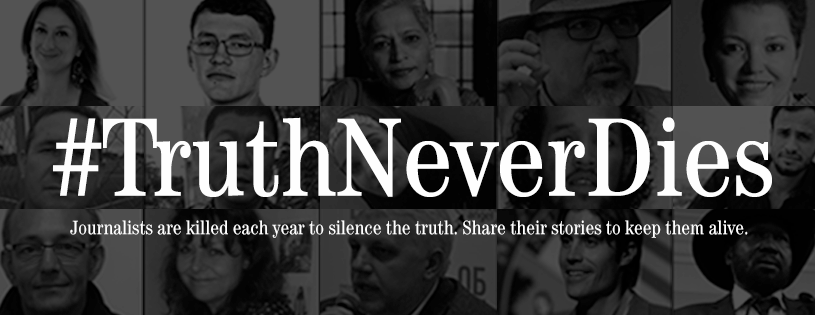
Truth dies in silence. Sadly, so do people.

https://www.kevinmd.com/blog/2020/04/truth-dies-in-silence-sadly-so-do-people.html

UNESCO launches “Truth Never Dies” campaign to tackle crimes ...

I have been writing columns for physicians for twenty years.  And year after year, I have had physicians say this: “I’m glad you said what you did. If I said it, I’d be fired.” There are variations on the theme, but they’re much the same.  Twenty years, and far more than 20 years, during which the alleged health care leaders in America have been routinely muzzled because they aren’t supposed to speak the truth.  Open discussions shut down because they might embarrass someone or upset an administrator. Because it might, heaven forbid, shine a light on a genuine problem.

Some years ago, as the mental health crisis was gathering steam across the emergency departments of the land, I was contacted by a news show in France.  The producers wanted to come to South Carolina and follow me on some shifts in my ED. They wanted to see how mental health was working out here. “We have socialized care, but mental health is also a huge problem in our country,” the producer said.

I dutifully, and appropriately, went to administration. “No, we can’t do that,” I was informed. I was given this explanation when everyone knew the mental health system was at the breaking point: “What if they uncover a problem?” Here was a chance for publicity, for potential grant money or to demonstrate that a political solution was in order.  How dare we let in fresh air? How dare we suggest that things were not perfect?

The same thing is happening in the midst of the pandemic.  Physicians, nurses, and other assorted health care professionals are being threatened for wearing masks.  Administrators say, “They make the patients nervous.” Also likely, administrators have realized they don’t have adequate equipment.  Facilities and systems with enormous budgets caught unprepared in a pandemic.

I see the stories of these professionals as I follow online forums.  Physicians, nurses, and others, threatened with firing because they dared to speak out on the issue of PPE (personal protective equipment).

Like police officers without ballistic vests, these physicians don’t want to go into the rooms of COVID-19 patients without the masks and respirators, gloves, gowns, and face shields that will keep them safe. The equipment that will allow them to return home to their loved ones and prevent them from infecting their families.  This isn’t a good look.  A hospital that refuses to acknowledge the concerns and safety of its professionals is a hospital that ultimately doesn’t deserve them.

The same veil of silence pervades dialogue on the treatment of coronavirus.  When I follow discussions, I see a lot of shaming. “There just isn’t enough evidence to try hydroxychloroquine, Zithromax, convalescent plasma, an untried vaccine, HIV drugs, etc.” Those who suggest we might try are considered reckless or ignorant.  As the battle rages and lives are lost, innovation and risk are viewed with disdain.  And our medical establishment is locked into the paradigm of double-blinded, placebo-controlled studies involving tens of thousands of people and lasting years. Here’s a view of the same from the U.K. Unfortunately, to suggest that we may need to react faster is only met with ridicule, and often tied to political views instead of expediency. Worse,  it ignores the deep, fundamental need to offer hope, any hope, to hundreds of millions of professionals and citizens who are living in fear.

There is a tragic irony here; a painful coincidence.  Physicians silenced. Let’s see.  Where did we see that sort of thing resulting in a worldwide pandemic?  Does China come to mind? The Chinese Communist Party threatened (and who knows what else) physicians who dared to speak out about coronavirus, even when they knew its danger.  Even when they knew how easily and widely it spread.

They continued to soft-peddle numbers about total cases and case fatality.  The party continued to allow travel to and from China long after the problem was known. They even suggested that Italians have a “hug a Chinese person” campaign to combat alleged racism; a charge delightfully accepted and repeated by gullible Western journalists in pursuit of a narrative.

Truth dies in silence.  Sadly, so do people.  And certainly when we tell dedicated health care professionals to keep their mouths shut when they have identified problems, offered solutions and simply asked for help.  Whether it’s a private business, a totalitarian government, or anything in between, we should insist that the truth be spoken; freely and without fear of punishment.

Because, for the foreseeable future, lives will depend on it.


Bill Gates says the world is entering ‘uncharted territory’ because it wasn’t prepared for a pandemic like COVID-19

https://www.businessinsider.com/bill-gates-warns-world-is-entering-uncharted-territory-coronavirus-2020-4

5 Books Bill Gates Wants You to Read This Summer | Time

  • Microsoft cofounder Bill Gates said the world was entering into “uncharted territory” because it was not prepared for a pandemic like COVID-19, the disease caused by the novel coronavirus.
  • Speaking to “BBC Breakfast” by video chat on Sunday, Gates said the world should’ve invested more in mitigating a global health crisis.
  • “There is the period where the virus shows up in those first few months,” he said. “Were the tests prepared? Did countries think through getting their ICU and ventilator capacity up?”
  • He added that once the crisis is over “very few countries are going to get an A grade” for their handling of the outbreak.

Microsoft cofounder Bill Gates said the world was entering into “uncharted territory” because it was not prepared for a pandemic like COVID-19, the disease caused by the novel coronavirus.

Gates, who has been warning about the risk of a pandemic disease for years and who has poured millions into fighting the new coronavirus outbreak, told “BBC Breakfast” on Sunday that the world should have invested more into mitigating a global health crisis.

“Well, there was a period when I and other health experts were saying that this was the greatest potential downfall the world faced,” he told the BBC in an interview on Sunday, highlighting his previous warnings against the possibility of a deadly pandemic.

“So we definitely will look back and wish we had invested more,” he said, “so that we could quickly have all the diagnostics, drugs, and vaccines. We underinvested,” he said.

The 67-year-old billionaire warned that in the period before COVID-19 became a public-health crisis, countries could have better prepared their testing capabilities and made sure hospitals were stocked with ventilators and other necessary health supplies.

“There is the period where the virus shows up in those first few months,” he said. “Were the tests prepared? Did countries think through getting their ICU and ventilator capacity up?”

He added that once the crisis is over “very few countries are going to get an A grade” for their handling of the outbreak.

“Now, here we are, we didn’t simulate this, we didn’t practice,” he said. “So both in health policies and economic policies, we find ourselves in uncharted territory.”

Gates has become an outspoken advocate for preparing for a global health crisis like COVID-19.

Speaking to the Financial Times earlier this month, Gates said that COVID-19 was the “biggest event that people will experience in their entire lives” and world leaders and global policymakers have “paid many trillions of dollars more than we might have had to if we’d been properly ready.”

He told FT he was confident that lessons learned from this outbreak would encourage people to better prepare for next time but lamented that the cost this time around was too high.

“It shouldn’t have required a many trillions of dollars loss to get there,” he said. “The science is there. Countries will step forward.”


US Navy evacuates over 80% of USS Theodore Roosevelt crew as nearly 600 carrier sailors test positive for coronavirus

https://www.businessinsider.com/coronavirus-navy-evacuates-roughly-80-of-uss-theodore-roosevelt-crew-2020-4

Coronavirus updates: US Navy evacuates USS Theodore Roosevelt crew ...

  • The Navy revealed Sunday that nearly 600 sailors aboard the USS Theodore Roosevelt have tested positive for coronavirus.
  • In its battle with the virus, the service has evacuated almost 4,000 sailors, more than 80 percent of the crew, airwing and embarked staffs ashore in Guam, where the carrier is in port.
  • The carrier’s former captain had pleaded with the Navy to remove the majority of the crew in response to the virus. He was relieved of his command after a letter he wrote leaked to the media.

The US Navy has evacuated the majority of the aircraft carrier USS Theodore Roosevelt, aboard which hundreds of sailors have tested positive for the coronavirus.

In an update Sunday, the Navy revealed that 585 sailors have tested positive, and 3,967 sailors have been moved ashore in Guam, where the carrier is in port. Now, over 80 percent of the ship’s roughly 4,800 crew, staff and squadrons are off the ship, which deployed in January. Some of the crew has to stay aboard to guard the ship and to maintain its two nuclear reactors.

Sailors evacuated from the ship are put in isolation for 14 days in local hotels and other available facilities. At least one USS Theodore Roosevelt sailor who tested positive has been hospitalized.

The first three coronavirus cases aboard the USS Theodore Roosevelt were announced on March 24.

On April 2, the day he fired the aircraft carrier’s commanding officer, then-acting Navy Secretary Thomas Modly said that there were 114 cases on the ship, adding that he expected that number to rise. “I can tell you with great certainty there’s going to be more. It will probably be in the hundreds,” he told reporters at the Pentagon.

His prediction turned out to be accurate.

On March 30, Capt. Brett Crozier, then the USS Theodore Roosevelt’s commanding officer, wrote a letter warning that “the spread of the disease is ongoing and accelerating.” In his plea, he called on the Navy to take decisive action and evacuate the overwhelming majority of the crew.

Crozier was relieved of his command after the letter leaked to the media.

Modly, who flew out to the carrier at a cost of $243,000 to taxpayers, bashed the captain to the crew after firing him. He apologized and then later resigned.

Speaking to CNN Friday, Vice Adm. Bill Merz, the commander of 7th Fleet, revealed that some sailors are “upset” and “struggling.”

Having personally visited the USS Theodore Roosevelt, he said that “there was lots of anxiety about the virus,” adding that “as you can imagine, the morale covers the spectrum, considering what they have been through.”

The coronavirus has created a lot of unexpected challenges for not just the Navy, but the military overall.

“What we have to do is we have to figure out how to plan for operations in these kind of COVID environments,” Vice Chairman of the Joint Chiefs of Staff Gen. John Hyten said Thursday. “This’ll be a new way of doing business that we have to focus in on, and we’re adjusting to that new world as we speak today.”


Resilience, dedication, conviction: Hospital CEOs write thank-you notes to staff

https://www.beckershospitalreview.com/hospital-management-administration/resilience-dedication-conviction-hospital-ceos-write-thank-you-notes-to-staff.html?utm_medium=email

Words of appreciation: Thank-you notes from 15 health system CEOs ...

Healthcare workers have been on the front lines of the COVID-19 pandemic, providing care to ill patients and battling the public health crisis from various angles. In honor of these workers, Becker’s asked hospital and health system CEOs to share notes to their staff and team members.

Michael Apkon, MD, PhD
President and CEO
Tufts Medical Center & Floating Hospital for Children (Boston)

At Tufts Medical Center, we see some of the sickest people in Boston. Our teams routinely surround each of these patients with the extraordinary care and services they need to get well.

This pandemic is unprecedented.  I know our staff are balancing the concerns that we all have for our families and friends, our own health, as well as the changes to our lives outside of work at the same time they do everything they can to provide the level of care people have come to trust from our organization. I can tell you that over my 30 years in this industry, I have not seen more dedication, innovation and willingness to help than I have during these past few months, as we fight a largely unknown enemy.

I could not be more proud of our doctors, nurses, technologists, transporters, housekeepers, cooks, public safety officers and all others who have been vital to the care of all of our patients, including those with a COVID-19 diagnosis. I know that people are coming together across our industry in nearly every city and town. Many thanks to each of our team members and to the healthcare workers around our country as well as to their families, who have had to worry day after day about their loved one on the front lines. Please know your partners, mothers, fathers, sister, brother, sons or daughters have played a critical role in saving lives, and we are doing everything we can to keep them safe.

Marna Borgstrom
CEO Yale New Haven (Conn.) Health

During these unprecedented times I welcome the opportunity to reflect on all that our staff at Yale New Haven Health are doing for each other and for our communities. We have a team of more than 27,000 hardworking and talented people to care for communities in Connecticut, New York and Rhode Island. I am truly humbled and honored to work alongside these amazing individuals.

Our staff, like healthcare workers everywhere, are being tasked in seemingly conflicting ways during this pandemic. Not only are they continuing to do their jobs by caring for the sickest patients, but they are also managing extremely challenging issues at home. Children of all ages are home from school, some need to be home-schooled. Businesses are closed, impacting many spouses and other family members. Staff worry that they may not have an adequate amount of protective equipment and supplies while at work.

But Yale New Haven Health staff are strong, they are resilient and most of all they are caring. As we do everything in our power to keep our staff safe, they are doing everything in their power to care for very ill patients in a world where new information is coming in real time and changing rapidly. We all hope and pray that this pandemic will end soon, but until it does, we are all in this together. I have never been more proud to work with this this wonderful Yale New Haven Health team.

Audrey Gregory, PhD, RN
CEO of the Detroit Medical Center

We know that the current situation around COVID-19 is unnerving, and as things continue to change rapidly every day, it can also be overwhelming.

I want to take this opportunity to thank all the front-line staff at every level in our organization and at healthcare facilities all across the country.

I also would like to say thank you to all of the providers, including residents, fellows and advanced practice providers. I recognize the commitment that you have to provide care to our patients. Not only do I want to acknowledge that, I never want to take that for granted. As healthcare workers, this is the time that we courageously stay on the front lines.

Please be safe and do your part to protect each other. If you have any flu-like symptoms such as fever, cough, sore throat, body aches or shortness of breath, please stay home. I know that as healthcare workers we have a tendency to ignore symptoms, and work through them, so that we do not let the team down. This is the time that I implore you not to do so.

Thank you for your commitment and dedication to the patients and families that depend on us during this challenging time.

R. Guy Hudson, MD
CEO of Swedish Health Services (Seattle)

As we come together to fight this unprecedented pandemic, I am continually impressed by the resilience, professionalism and dedication of our community’s healthcare workers, first responders and other providers of essential services. Without their selfless commitment to serving others, we would not be able to weather this crisis.

Though we have yet to see the full costs that COVID-19 will exact on our region, I am confident that our community will continue to come together, support each other and manage through this situation with resolve.

I am grateful to the community’s outpouring of support for healthcare providers on the front lines, including the 13,000 dedicated caregivers at Swedish. It is often in times of crisis that our humanity, resilience and compassion shine brightest.

The pandemic poses the greatest risk to the most vulnerable members of our community. There are hundreds of nonprofits and other organizations that are doing heroic work to help our neighbors who struggle with mental illness, housing instability, food insecurity and other challenges. Their efforts are more critical than ever and need our support.

In this unchartered territory, I find strength in the dedication and conviction of the caregivers I have the privilege to work alongside. Providing care to our community in a time like this is exactly why we chose careers in healthcare. In the face of this pandemic, we will continue to serve the needs of our community, and we will not waver in our commitment to our patients.

To all our Swedish caregivers: I am proud to work with you.

Alan Kaplan, MD
CEO of UW Health (Madison, Wis.)

We find ourselves in an unprecedented time. We are preparing for a global pandemic, an insidious virus, that is already at our doorstep. To do this, the physicians and staff at UW Health are adjusting every aspect of our standard service to care for those who need us now, to prevent the spread of COVID-19 and to save as many lives as possible.

Despite these dire circumstances, I remain optimistic and proud. The faculty and staff at UW Health, from our diligent technicians to our expert physicians and nurses, are all working incredibly hard to ensure we are doing everything in our power to care for the communities we serve. Your early actions and quick flexibility gave our health system the best chance to manage this crisis. I am especially impressed by the ongoing collaboration, because it shows how much we are capable of accomplishing together. This work is highly valued and deeply appreciated, both within our walls and beyond.

I know this is a trying time for everyone in our organization and so many others around the world. Much of our specialty care has been put on hold, clinics have closed, and regular schedules are nonexistent. I appreciate the long hours and commitment it takes to serve patients and the public good in a time like this. For those on the frontlines of COVID-19, know that our entire organization and our community are proud of the work you are doing.

Finally, I hope you all do what you can to stay healthy, refresh and take time for yourself and to be with loved ones however possible during this new and challenging time. Thank you for everything you do. You are a daily inspiration.

Sarah Krevans
President and CEO of Sutter Health (Sacramento, Calif.)

The healthcare profession attracts those who want to make a difference in the lives of others. They all have a higher calling and always rise to the challenges in front of them. This happens every day, but it’s very apparent during this time in our history. There is no part of our organization that is untouched by this public health emergency. And yet, our teams stand tall. They don’t back down. From front-line health workers, to food and nutrition services staff, to information services personnel — they are committed to keeping our communities safe. Words will never be able to adequately thank them for their dedication, their perseverance and their heart, but all of us across our organization are forever grateful.

Jody Lomeo
President and CEO of Kaleida Health (Buffalo, N.Y.)

As we face these historic and challenging times, it is vitally important that we come together and stick together as a community. It’s just as important that we remain unified as the Kaleida Health family.

That said, let me thank everyone for their incredible dedication and teamwork this past week.

This is an unprecedented issue for healthcare providers to have to deal with; yet the response by the organization as a whole is what we have come to expect: nothing short of remarkable and solely focused on taking care of our community.

On behalf of a grateful community, the board of directors and the Kaleida Health leadership team, we thank you all for your incredible dedication these past few weeks. I have said it numerous times this week: You are the true heroes of this pandemic. And while our way of life has been forever changed, one constant that remains the same: the outstanding work that is done by the Kaleida Health team!

A special note of gratitude goes out to all of those who have volunteered to care for COVID-19 patients within their respective hospitals and across the Kaleida Health system. We could not do this without you!

In closing, thanks again. Stay healthy, stay safe.

We remain #KaleidaStrong.

Elizabeth Nabel, MD
President of Brigham Health (Boston)

We face an unprecedented challenge — possibly the greatest we will ever experience in our careers, maybe even our lifetimes. I am inspired by the indomitable dedication, courage and innovative spirit of our medical and scientific community as we navigate through these most trying events. From providers working on the front lines of patient care to investigators racing to discover an effective treatment for COVID-19, we are surrounded by countless demonstrations of commitment, collaboration and compassion. We will get through this together and come out on the other side stronger than ever.