


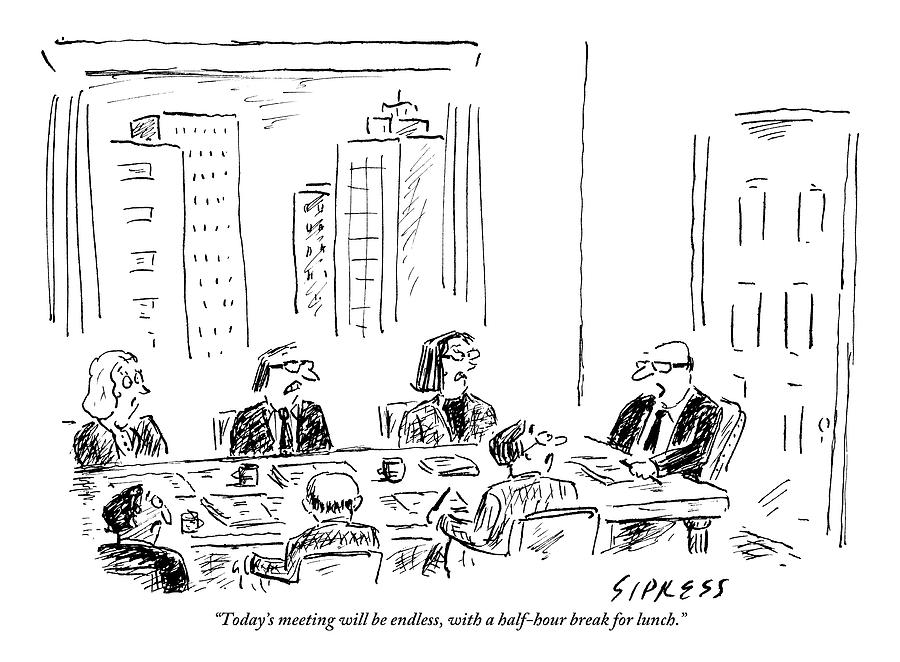
Cartoon – Betting on Management
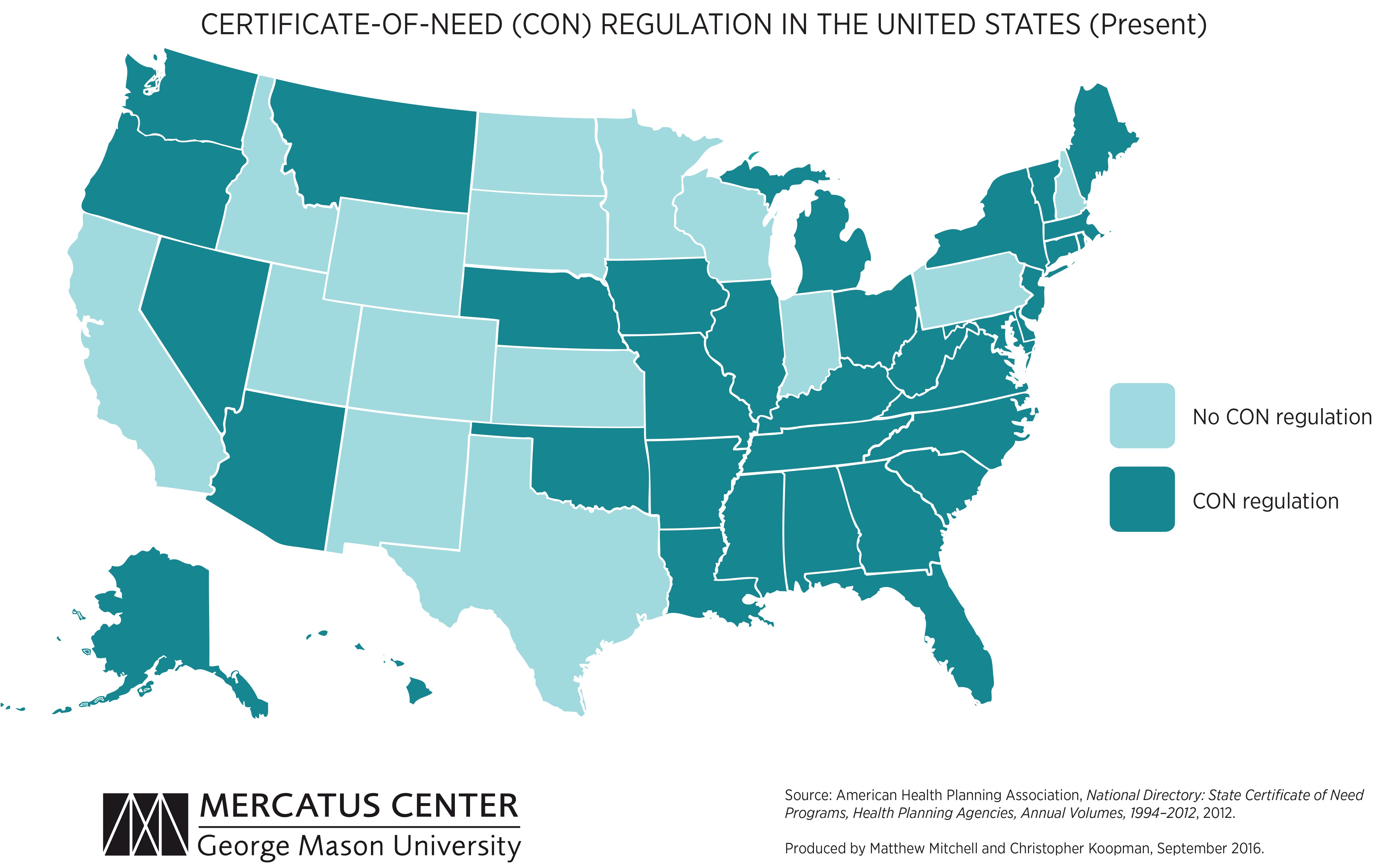
We’re picking up on a growing concern among health system leaders that many states with “certificate of need” (CON) laws in effect are on the cusp of repealing them. CON laws, currently in place in 35 states and the District of Columbia, require organizations that want to construct new or expand existing healthcare facilities to demonstrate community need for the additional capacity, and to obtain approval from state regulatory agencies. While the intent of these laws is to prevent duplicative capacity, reduce unnecessary utilization, and control cost growth, critics claim that CON requirements reduce competition—and free market-minded state legislators, particularly in the South and Midwest, have made them a target.
One of our member systems located in a state where repeal is being debated asked us to facilitate a scenario planning session around CON repeal with system and physician leaders. Executives predicted that key specialty physician groups would quickly move to build their own ambulatory surgery centers, accelerating shift of surgical volume away from the hospital.
The opportunity to expand outpatient procedure and long-term care capacity would also fuel investment from private equity, which have already been picking up in the market. An out-of-market health system might look to build microhospitals, or even a full-service inpatient facility, which would be even more disruptive.
CON repeal wasn’t all downside, however; the team identified adjacent markets they would look to enter as well. The takeaway from our exercise: in addition to the traditional response of flexing lobbying influence to shape legislative change, the system must begin to deliver solutions to consumers that are comprehensive, convenient, and competitively priced—the kind of offerings that might flood the market if CON laws were lifted.

Your fences need to be horse-high, pig-tight and bull-strong.
Keep skunks, bankers, and politicians at a distance.
Life is simpler when you plow around the stump.
A bumble bee is considerably faster than a John Deere tractor.
Words that soak into your ears are whispered, not yelled.
The best sermons are lived, not preached.
Forgive your enemies; its what GOD says to do.
If you don’t take the time to do it right, you’ll find the time to do it twice.
Don’t corner something that is meaner than you.
Don’t pick a fight with an old man. If he is too old to fight, he’ll just kill you.
It don’t take a very big person to carry a grudge.
You cannot unsay a cruel word.
Every path has a few puddles.
When you wallow with pigs, expect to get dirty.
Don’t be banging your shin on a stool that’s not in the way.
Borrowing trouble from the future doesn’t deplete the supply.
Most of the stuff people worry about ain’t never gonna happen anyway.
Don’t judge folks by their relatives.
Silence is sometimes the best answer.
Don‘t interfere with somethin’ that ain’t botherin’ you none.
Timing has a lot to do with the outcome of a rain dance.
If you find yourself in a hole, the first thing to do is stop diggin’.
Sometimes you get, and sometimes you get got.
The biggest troublemaker you’ll ever have to deal with watches you from the mirror every mornin’.
Always drink upstream from the herd.
Good judgment comes from experience, and most of that comes from bad judgment.
Lettin’ the cat outta the bag is a whole lot easier than puttin’ it back in.
If you get to thinkin’ you’re a person of some influence, try orderin’ somebody else’s dog around.
Live a good, honorable life. Then when you get older and think back, you’ll enjoy it a second time.
Live simply. Love generously. Care deeply. Speak kindly. Leave the rest to God.
Most times, it just gets down to common sense.
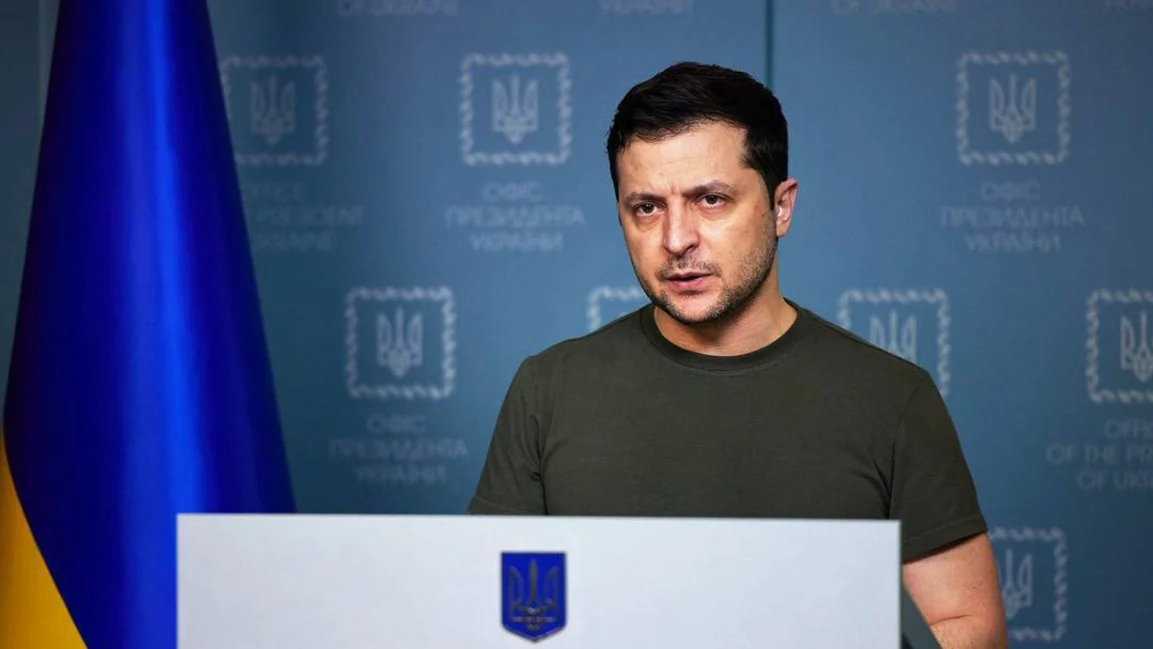
In recent years, I’ve written and spoken a lot about consequential leadership. History has presented us with far too many examples to share here: Abraham Lincoln, Ernest Shackleton, Rosa Parks, Amelia Earhart, and John Lewis are a few names that immediately come to mind.
As we watch Russia’s unprovoked invasion of Ukraine unfold night by night, attack by attack, and tweet by tweet, the gut-wrenching and heartbreaking scenes expose an unimaginable magnitude of inhumanity. At the same time, we’re witnessing an unforeseen spirit of resilience, patriotism, and heroism emerge that reveals the best of humanity.
No one personifies the consequential leadership we are observing more than Ukrainian President Volodymyr Zelenskyy. It has been said that a crisis doesn’t build character—it reveals it. The heroic response to this crucible has demanded much of Zelenskyy and his people. But it has revealed even more about the character of this unfamiliar leader and country than any of us ever expected.
As I reflect on this past week, there are five virtues of consequential leadership Zelenskyy and his brave comrades are illuminating for us we can learn from.
Conviction: Consequential leaders know—and honor—their purpose. They recognize their responsibility to use the talent, health, education, opportunities, and influence they are blessed with to solve big problems and do really hard things. And in rare circumstances—like Zelenskyy’s— they are called to do things no person should ever have to do. While most of us devote our lives to preparing to be the leader we want to be, in moments of consequence, we must become the leaders the world needs us to be.
Courage: Consequential leaders have the fearlessness to live their purpose—even under life-threatening conditions. It’s easy for us to talk about our convictions when times are good from the comfort and safety of our corporate suites and government offices. But how many of us and our political leaders would, or could, summon the primal valor we’re seeing Zelenskyy and his lieutenants model?
Composure: Consequential leaders thrive under fire and in times of great uncertainty. There is no blueprint for moments of consequence like the one Zelenskyy is facing. There is no playbook for responding to the unprovoked invasion of your country by a neighboring world superpower. However, leaders of consequence like Zelenskyy don’t panic. They stay calm, rational, and in control. They know that panic fuels fear and that composure catalyzes confidence.
Communication: Consequential leaders communicate frequently, authentically, and truthfully. They speak to our minds, move our hearts, and have the intuition to know when and how to deliver the hard truth as well as realistic hope. Consequential leaders like Zelenskyy are brutally blunt about the abundance of resources they are lacking, but they also remind us of the prosperity of blessings we have—things like family, friends, country, and faith.
Compassion: Finally, consequential leaders put serving others ahead of serving themselves. Zelenskyy and leaders like him put the public interest ahead of their self-interest. While most leaders measure their success in the world, consequential leaders measure their significance on the world. It is never too late for any of us to rethink how we gauge our leadership impact.
It is unclear how the battle over Ukraine will play out. But it is unambiguously clear this moment will redefine leadership for generations. As in all moments of great consequence, history will judge Zelenskyy and Putin, as well as other world leaders, by how they acted–and the consequences of their humanity and inhumanity.
As New York Times columnist David Brooks tweeted yesterday: “Would you be Zelenskyy? Would I? What a high and heroic standard that guy has set for us in the years ahead.”

 HENRY KOTULA