


Cartoon – History Repeating


https://mailchi.mp/9f24c0f1da9a/the-weekly-gist-june-5-2020?e=d1e747d2d8

Continuing our series of Gist member convenings to discuss the “Brave New World” that awaits in the post-pandemic era, we brought together a group of senior human resources and nursing executives this week for a Zoom roundtable.
Several themes emerged from the discussion. First, there was general consensus that the COVID crisis exposed a workforce that had become over-specialized and inflexible. Said one chief nursing officer, “Our workforce is much more brittle than we thought.” A key lesson learned is the need for increased cross-training—especially for nurses, and especially in critical care. Systems should work now to increase the supply of nurses comfortable in an ICU environment to enable hospitals to flex staff across settings and roles to deal with future waves of the virus.
Not surprisingly, layoffs were top-of-mind for many. Executives were of one mind on the need to safeguard clinical staff as much as possible, and many systems are now considering deep cuts to management and administrative ranks: “It’s easier to stand in front of your clinical staff and be able to say you’ve stripped millions from administration before turning to clinical cuts.”
There was broad consensus for the potential for artificial intelligence and robotic process automation to enable greater reliability and productivity at lower cost in areas such as billing, coding, and even some clinical functions—and that the pandemic will accelerate plans to implement these solutions.
On a more optimistic note, one executive shared that “relationships between clinicians and administrators have never been stronger. The pandemic has forced us to have difficult and constructive conversations we would have never had the courage to have before.”
Another noted the pandemic has spotlighted new leadership talent who might otherwise have been overlooked, and plans are now in place to formally recognize and retain newly crisis-tested talent for the work of restructuring the system.
On the whole, the discussion was far more upbeat that we had expected—as difficult as the crisis has been for many teams, the opportunity to rethink old ways of doing business seems to have created renewed enthusiasm even in the face of daunting financial and operational challenges ahead.
https://mailchi.mp/9f24c0f1da9a/the-weekly-gist-june-5-2020?e=d1e747d2d8
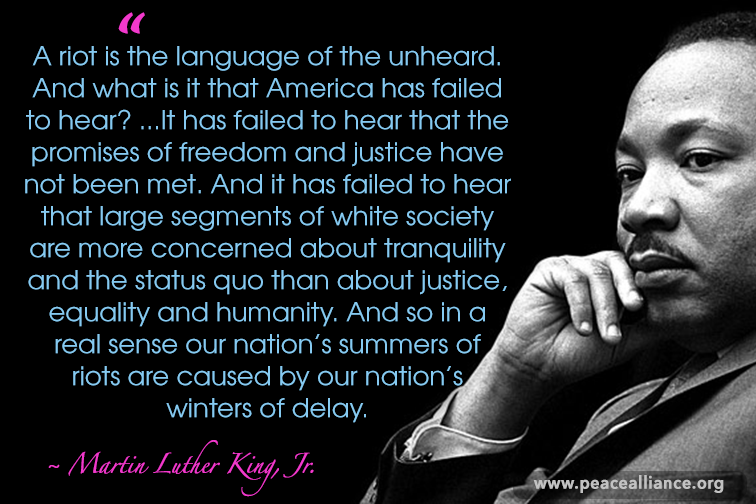
“What is it that America has failed to hear?” asked Dr. Martin Luther King, Jr. in March of 1968, calling riots the “language of the unheard”. “It has failed to hear that the promises of freedom and justice have not been met.” Stubbornly, shamefully, we continue to turn a deaf ear: to structural racism; to institutionalized inequality; to a pandemic of police brutality and bigotry that chokes off the breath of black Americans as surely as a virus in the lungs or a boot on the neck. But the sound in the streets is thunderous.
We in healthcare must listen. We must hear that what killed George Floyd, and Breonna Taylor, and Eric Garner, and Tamir Rice, and Philando Castile, and Trayvon Martin, and Ahmaud Arbery, and countless others, as surely as the terrible actions of any single person, was the pervasive, insidious virus of racism, long since grown endemic in our country.
This week’s protests are a kind of ventilator, providing emergency breath for a national body in crisis. We must work—urgently—on the therapeutics of structural change and the vaccines of education and understanding.
At Gist Healthcare we are listening, and learning. As a team, we’ve committed to each other to be attentive, invested, empathetic allies, and to dedicate our individual and collective time, talents and treasure to antiracist work, in healthcare and beyond. Our contribution may not be large, and it will never be enough, but at least we hope it will be positive. We’d like to hear your thoughts and suggestions as well. For the moment, and for our colleagues, friends, and families, we stand with the protestors.
Black Lives Matter.

At least 13 hospitals in Oklahoma have closed or experienced added financial distress under the management of private companies. Some companies charged hefty management fees, promising to infuse millions of dollars that never materialized.
Revenues soared at some rural hospitals after management companies introduced laboratory services programs, but those gains quickly vanished when insurers accused them of gaming reimbursement rates and halted payments. Some companies charged hefty management fees, promising to infuse millions of dollars but never investing. In other cases, companies simply didn’t have the hospital management experience they trumpeted.
Click on link above for examples of rural hospitals that pinned their hopes on private management companies that left them deeper in debt. They are based on interviews, public records and financial information from the Centers for Medicare and Medicaid Services and the American Hospital Directory.




 HENRY KOTULA