Biden’s Broader Vision For Medicaid Could Include Inmates, Immigrants, New Mothers

https://www.npr.org/sections/health-shots/2021/06/23/1009251576/bidens-broader-vision-for-medicaid-could-include-inmates-immigrants-new-mothers

Hospitals, health care advocates launch campaign to authorize Medicaid  expansion through statewide vote

The Biden administration is quietly engineering a series of expansions to Medicaid that may bolster protections for millions of low-income Americans and bring more people into the program.

Biden’s efforts — which have been largely overshadowed by other economic and health initiatives — represent an abrupt reversal of the Trump administration’s moves to scale back the safety-net program.

The changes could further boost Medicaid enrollment — which the pandemic has already pushed to a record 80.5 million. Some of the expansion is funded by the COVID-19 relief bill that passed in March, including coverage for new mothers.

Others who could also gain coverage under Biden are inmates and undocumented immigrants. At the same time, the administration is opening the door to new Medicaid-funded services such as food and housing that the government insurance plan hasn’t traditionally offered.

“There is a paradigm change underway,” said Jennifer Langer Jacobs, Medicaid director in New Jersey, one of a growing number of states trying to expand home-based Medicaid services to keep enrollees out of nursing homes and other institutions.

“We’ve had discussions at the federal level in the last 90 days that are completely different from where we’ve ever been before,” Langer Jacobs said.

Taken together, the Medicaid moves represent some of the most substantive shifts in federal health policy undertaken by the new administration.

“They are taking very bold action,” said Rutgers University political scientist Frank Thompson, an expert on Medicaid history, noting in particular the administration’s swift reversal of Trump policies. “There really isn’t a precedent.”

The Biden administration seems unlikely to achieve what remains the holy grail for Medicaid advocates: getting 12 holdout states, including Texas and Florida, to expand Medicaid coverage to low-income working-age adults through the Affordable Care Act.

And while some of the recent expansions – including for new mothers — were funded by close to $20 billion in new Medicaid funding in the COVID relief bill Biden signed in March, much of that new money will stop in a few years unless Congress appropriates additional money.

The White House strategy has risks. Medicaid, which swelled after enactment of the 2010 health law, has expanded further during the economic downturn caused by the pandemic, pushing enrollment to a record 80.5 million, including those served by the related Children’s Health Insurance Program. That’s up from 70 million before the COVID crisis began.

The programs now cost taxpayers more than $600 billion a year. And although the federal government will cover most of the cost of the Biden-backed expansions, surging Medicaid spending is a growing burden on state budgets.

The costs of expansion are a frequent target of conservative critics, including Trump officials like Seema Verma, the former administrator of the Centers for Medicare & Medicaid Services, who frequently argued for enrollment restrictions and derided Medicaid as low-quality coverage.

But even less partisan experts warn that Medicaid, which was created to provide medical care to low-income Americans, can’t make up for all the inadequacies in government housing, food and education programs.

“Focusing on the social drivers of health … is critically important in improving the health and well-being of Medicaid beneficiaries. But that doesn’t mean that Medicaid can or should be responsible for paying for all of those services,” said Matt Salo, head of the National Association of Medicaid Directors, noting that the program’s financing “is simply not capable of sustaining those investments.”

Restoring federal support

However, after four years of Trump administration efforts to scale back coverage, Biden and his appointees appear intent on not only restoring federal support for Medicaid, but also boosting the program’s reach.

“I think what we learned during the repeal-and-replace debate is just how much people in this country care about the Medicaid program and how it’s a lifeline to millions,” Biden’s new Medicare and Medicaid administrator, Chiquita Brooks-LaSure, told KHN, calling the program a “backbone to our country.

The Biden administration has already withdrawn permission the Trump administration had granted Arkansas and New Hampshire to place work requirements on some Medicaid enrollees.

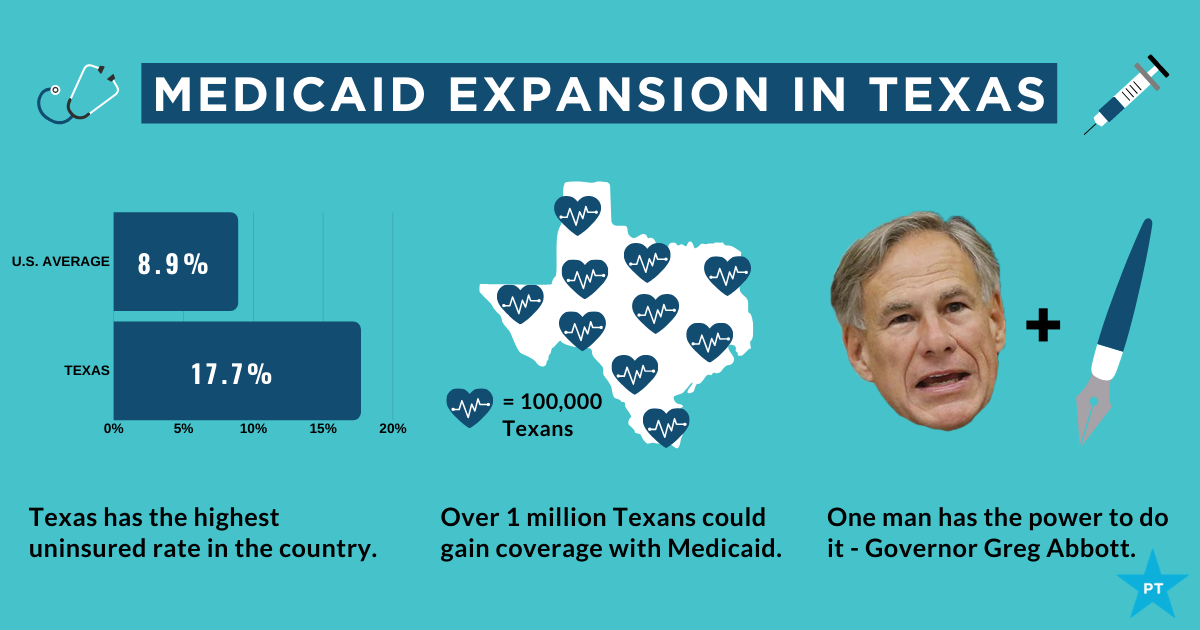
In April, Biden blocked a multibillion-dollar Trump administration initiative to prop up Texas hospitals that care for uninsured patients, a policy that many critics said effectively discouraged Texas from expanding Medicaid coverage through the Affordable Care Act, often called Obamacare. Texas has the highest uninsured rate in the nation.

The moves have drawn criticism from Republicans, some of whom accuse the new administration of trampling states’ rights to run their Medicaid programs as they choose.

“Biden is reasserting a larger federal role and not deferring to states,” said Josh Archambault, a senior fellow at the conservative Foundation for Government Accountability.

But Biden’s early initiatives have been widely hailed by patient advocates, public health experts and state officials in many blue states.

“It’s a breath of fresh air,” said Kim Bimestefer, head of Colorado’s Department of Health Care Policy and Financing.

Chuck Ingoglia, head of the National Council for Mental Wellbeing, said: “To be in an environment where people are talking about expanding health care access has made an enormous difference.”

Mounting evidence shows that expanded Medicaid coverage improves enrollees’ health, as surveys and mortality data in recent years have identified greater health improvements in states that expanded Medicaid through the 2010 health law versus states that did not.

Broadening eligibility

In addition to removing Medicaid restrictions imposed by Trump administration officials, the Biden administration has backed a series of expansions to broaden eligibility and add services enrollees can receive.

Biden supported a provision in the COVID relief bill that gives states the option to extend Medicaid to new mothers for up to a year after they give birth. Many experts say such coverage could help reduce the U.S. maternal mortality rate, which is far higher than rates in other wealthy nations.

Several states, including Illinois and New Jersey, had sought permission from the Trump administration for such expanded coverage, but their requests languished.

The COVID relief bill — which passed without Republican support — also provides additional Medicaid money to states to set up mobile crisis services for people facing mental health or substance use emergencies, further broadening Medicaid’s reach.

And states will get billions more to expand so-called home and community-based services such as help with cooking, bathing and other basic activities that can prevent Medicaid enrollees from having to be admitted to expensive nursing homes or other institutions.

Perhaps the most far-reaching Medicaid expansions being considered by the Biden administration would push the government health plan into covering services not traditionally considered health care, such as housing.

This reflects an emerging consensus among health policy experts that investments in some non-medical services can ultimately save Medicaid money by keeping patients out of the hospital.

In recent years, Medicaid officials in red and blue states — including Arizona, California, Illinois, Maryland and Washington — have begun exploring ways to provide rental assistance to select Medicaid enrollees to prevent medical complications linked to homelessness.

The Trump administration took steps to support similar efforts, clearing Medicare Advantage health plans to offer some enrollees non-medical benefits such as food, housing aid and assistance with utilities.

But state officials across the country said the new administration has signaled more support for both expanding current home-based services and adding new ones.

That has made a big difference, said Kate McEvoy, who directs Connecticut’s Medicaid program. “There was a lot of discussion in the Trump administration,” she said, “but not the capital to do it.”

Other states are looking to the new administration to back efforts to expand Medicaid to inmates with mental health conditions and drug addiction so they can connect more easily to treatment once released.

Kentucky health secretary Eric Friedlander said he is hopeful federal officials will sign off on his state’s initiative.

Still other states, such as California, say they are getting a more receptive audience in Washington for proposals to expand coverage to immigrants who are in the country without authorization, a step public health experts say can help improve community health and slow the spread of communicable diseases.

“Covering all Californians is critical to our mission,” said Jacey Cooper, director of California’s Medicaid program, known as Medi-Cal. “We really feel like the new administration is helping us ensure that everyone has access.”

The Trump administration moved to restrict even authorized immigrants’ access to the health care safety net, including the “public charge” rule that allowed immigration authorities to deny green cards to applicants if they used public programs such as Medicaid. In March, Biden abandoned that rule.

Five takeaways on the Supreme Court’s Obamacare decision

Obamacare Returns as Galvanizing Issue After Ginsburg Death and Barrett  Nomination - The New York Times

In what has become something of a Washington tradition, the Supreme Court again upheld the Affordable Care Act on Thursday, in the third major case from Republican challengers to reach the high court. 

The margin this time was larger, 7-2, as the High Court appears less and less interested in revisiting the health care law through the judiciary. 

Democrats hailed the ruling as a boost to their signature law, and Republicans were left to figure out a path forward on health care amid another defeat. 

Here are five takeaways:

This could be the last gasp of repeal efforts

It is impossible to ever fully rule out another lawsuit challenging the health law or another repeal push if Republicans win back Congress. 

But after more than 10 years of fighting the Affordable Care Act, GOP efforts at fighting the law are seriously deflated, as many Republicans themselves acknowledge. 

“It’s been my public view for some time that the Affordable Care Act is largely baked into the health care system in a way that it’s unlikely to change or be eliminated,” said Sen. Roy Blunt (Mo.), a member of Senate GOP leadership. 

Asked if he still wanted to repeal and replace the law, which was the GOP rallying cry for years, Sen. Chuck Grassley (R-Iowa) said instead, “I think I want to make sure it works,” before attacking former President Obama’s promises about the law’s benefits. 

Even Sen. Josh Hawley (R-Mo.), who helped bring the lawsuit against the health law as attorney general of Missouri, said Thursday that the Supreme Court had made clear “they’re not going to entertain a constitutional challenge to the ACA.”

Supporters of the law said it is now even more entrenched, despite years of GOP attacks

“The war appears to be over and the Affordable Care Act has won,” said Stan Dorn, senior fellow at the health care advocacy group Families USA. 

Still, not all Republicans are throwing in the towel on at least verbally attacking the law. 

“The ruling does not change the fact that Obamacare failed to meet its promises and is hurting hard-working American families,” said House GOP leaders Kevin McCarthy (Calif.), Steve Scalise (La.) and Elise Stefanik (N.Y.). 

And there is at least one ACA-related lawsuit still working its way through the lower courts. Kelley v. Becerra challenges provisions of the health law around insurance plans covering preventive care including birth control.

The Supreme Court was fairly united 

The margin of victory for the health law was fairly large, with even more conservative justices such as Clarence ThomasAmy Coney BarrettBrett Kavanaugh and John Roberts ruling to uphold the law, joining the opinion from liberal Justice Stephen Breyer

The court’s other two liberals, Sonia Sotomayor and Elena Kagan, also joined the majority of seven. Two conservatives, Justices Samuel Alito and Neil Gorsuch, dissented and would have struck down the law. 

Through the three major Supreme Court cases on ObamaCare, the margin of victory has risen from 5-4 to 6-3 to 7-2. 

“There’s a real message there about the Supreme Court’s willingness to tolerate these kinds of lawsuits,” Andy Pincus, a visiting lecturer at Yale Law School, said of the growing margin of victory. 

The case was decided on fairly technical grounds. The Court ruled that the challengers did not have standing to sue, given that the penalty for not having health insurance at the center of the case had been reduced to zero, so it was not causing any actual harm that could be the basis for a lawsuit. 

Republicans did get some vindication in that Democrats had fiercely attacked Barrett during her confirmation hearings for being a vote to overturn the health law, when in fact she ended up voting to maintain the law. 

The ACA is stabilizing

The early years of the Affordable Care Act were marked with the turbulence of a website that failed at launch, premium increases, and major insurers dropping out of the markets given financial losses. 

Now, though, the markets are far more stable. For example, 78 percent of ACA enrollees now have the choice of three or more insurers, up from 57 percent in 2017, according to the Kaiser Family Foundation. 

Democrats, now in control of the House, Senate and White House, were able to pass earlier this year expansions of the law’s financial assistance to help further bring down premium costs. 

The Biden administration announced earlier this month that a record 31 million people were covered under the ACA, including both the private insurance marketplaces and the expansion of Medicaid. 

“We are no longer in the Affordable Care Act, ‘How’s it going to go? Is it going to survive?’ mode,” said Frederick Isasi, executive director of Families USA. “We really are in a whole new phase. It really is: ‘How do we improve it?’”

Republicans face questions on their health care message

The Republican health care message for years was summed up with the simple slogan “repeal and replace.

But now those efforts have failed in Congress, in 2017, and have failed for a third time in the courts. 

That leaves uncertainty about what the Republican health care message is. The party has famously struggled to unite around an alternative to the ACA, so there is no consensus alternative for the party to turn to. 

The statement from McCarthy, Scalise, and Stefanik calling the ACA “failed,” shows that party leaders are not fully ready to accept the law.

The leaders added that “House Republicans are committed to actually lowering health care costs,” which has been a possible area for the party to focus that is not simply about repealing the ACA. 

But any discussion of health care costs is fraught with complications. Republicans, for example, overwhelmingly oppose House Democrats’ legislation to allow the government to negotiate lower drug prices, arguing it would harm innovation from the pharmaceutical industry. 

Grassley reached a bipartisan deal on somewhat less sweeping drug pricing legislation with Sen. Ron Wyden (D-Ore.) in 2019, but that bill went too far for many Republicans as well. 

Democrats want to go farther, but face an uphill climb

With the ACA further entrenched, and control of the House, Senate and White House, Democrats are looking at ways to build on the health law. 

The main health care proposal from the presidential campaign, a government-run “public option” for health insurance, has faded from the conversation and is not expected to be a part of a major legislative package on infrastructure and other priorities Democrats are pushing for this year. 

While the health care industry has largely made its peace with the ACA, pushing for a public option or lowering health care costs means taking on a fight with powerful industry groups. 

Progressives like Sen. Bernie Sanders (I-Vt.) have instead poured their energy into expanding Medicare benefits to include dental, vision, and hearing coverage, and lowering the eligibility age to 60. 

Allowing the government to negotiate lower drug prices also could make it into the package.

“Now, we’re going to try to make it bigger and better — establish, once and for all, affordable health care as a basic right of every American citizen,” said Senate Majority Leader Charles Schumer (N.Y.). “What a day.”

Medicaid insurers at heart of Nevada public option plan

Nevada Plans To Launch Their “Public Option” Medical Coverage By 2026 – Dr.  Daliah

The state will bid out the business to private insurance carriers instead of doing the work in-house. Medicaid managed care organizations will be required to submit a bid.

Nevada’s plan to launch a public option health plan hinges on participation from the state’s Medicaid managed care organizations.

After passing both houses of the legislature, Democratic Gov. Steve Sisolak told reporters Tuesday he will sign the bill that will likely crown Nevada as the second state to pass a public option — a government-run plan that promises to lower premiums and increase access to care by creating an additional insurance option for residents.

To achieve its aims, Nevada’s public option plan requires premiums to be 5% lower than the benchmark silver Affordable Care Act plan in each ZIP code and, ultimately, premiums must be reduced by 15% over a four-year period. At the same time, reimbursement to providers must not go below Medicare rates.

Coverage under the public option would begin in 2026. The bill is just the beginning of a process in which Nevada will seek a waiver from the federal government to enact the public option plan. In short, the state is asking to capture the savings it may generate for the federal government.

Similar to other public health programs, the state of Nevada will bid out the public option business to insurance carriers instead of doing the work in-house. The state will rely heavily on Medicaid managed care organizations, at least at first, as it tries to spur participation.

“As a condition of continued participation in any Medicaid managed care program,” Medicaid MCOs will be forced to offer a public option plan if they want a Medicaid contract with the state, according to the bill sponsored by a Democratic state senator and Nevada’s majority leader, Nicole Cannizzaro, which passed the body earlier this week.

The bill says Medicaid MCOs must submit a “good faith proposal,” in response to an eventual RFP.

Sabrina Corlette, a research professor at Georgetown’s Center on Health Insurance Reforms, said she “assumed they wanted a guaranteed pool of potential bidders for the public option. Maybe they were afraid that if they didn’t require some bidders, they might not get any.”

Currently, there are three Medicaid MCOs in the state of Nevada: Centene, UnitedHealthcare and Anthem Blue Cross Blue Shield.

None of the companies responded to a request for comment.

The Nevada bill comes at a time when there is a renewed interest at the federal level for a public option plan, and a push from a handful of other states interested in creating an affordable health plan option for residents who have found themselves ineligible for Medicaid but unable to afford a marketplace plan.

Washington was the first state to implement a public option plan, which went live this year. 

President Joe Biden is a proponent of a public option plan — instead of “Medicare for All” — as it would build on the ACA, a law he helped usher in under former President Barack Obama, instead of dismantle it.

The insurance lobby is strongly opposed to a public option and previously expressed concern over Nevada’s plan via an opposition letter dated May 3 and addressed to Cannizzaro and the state’s Health and Human Services Committee.

AHIP, America’s Health Insurance Plans, took aim at the way in which the bill requires premiums for the public option plan to be lower than certain competitive plans on the exchange. AHIP characterized it as arbitrary “government rate setting.”

The tactic of prodding insurers into offering a separate business line in a specific state is not new.

The exchanges, launched under the ACA, relied on insurers to voluntarily sell plans to a relatively new market. At times, some counties were at risk of having no exchange plan at all. Some states tried to alleviate this problem by creating incentives for Medicaid MCOs if they also offered an exchange plan.

In a more extreme example, New York banned insurers from providing plans to any other program, including Medicaid, if they exited the exchange, according to a 2017 executive order from Gov. Andrew Cuomo.

Over time, the exchanges have become a core business for Medicaid MCOs.

Selling exchange plans is a complementary business for Medicaid MCOs that traditionally contract with states to care for Medicaid-eligible members. By selling exchange plans, Medicaid MCOs attempt to attract the Medicaid members they were serving as they churn off the program as their income fluctuates. It’s a key strategy for players like Centene.

However, if they’re forced to participate in the public option plan they will have to undercut their own premium prices on the exchange.

In Nevada, UnitedHealthcare and Centene command the largest market share on the exchange, according to the Kaiser Family Foundation.

Missouri backtracks on Medicaid expansion

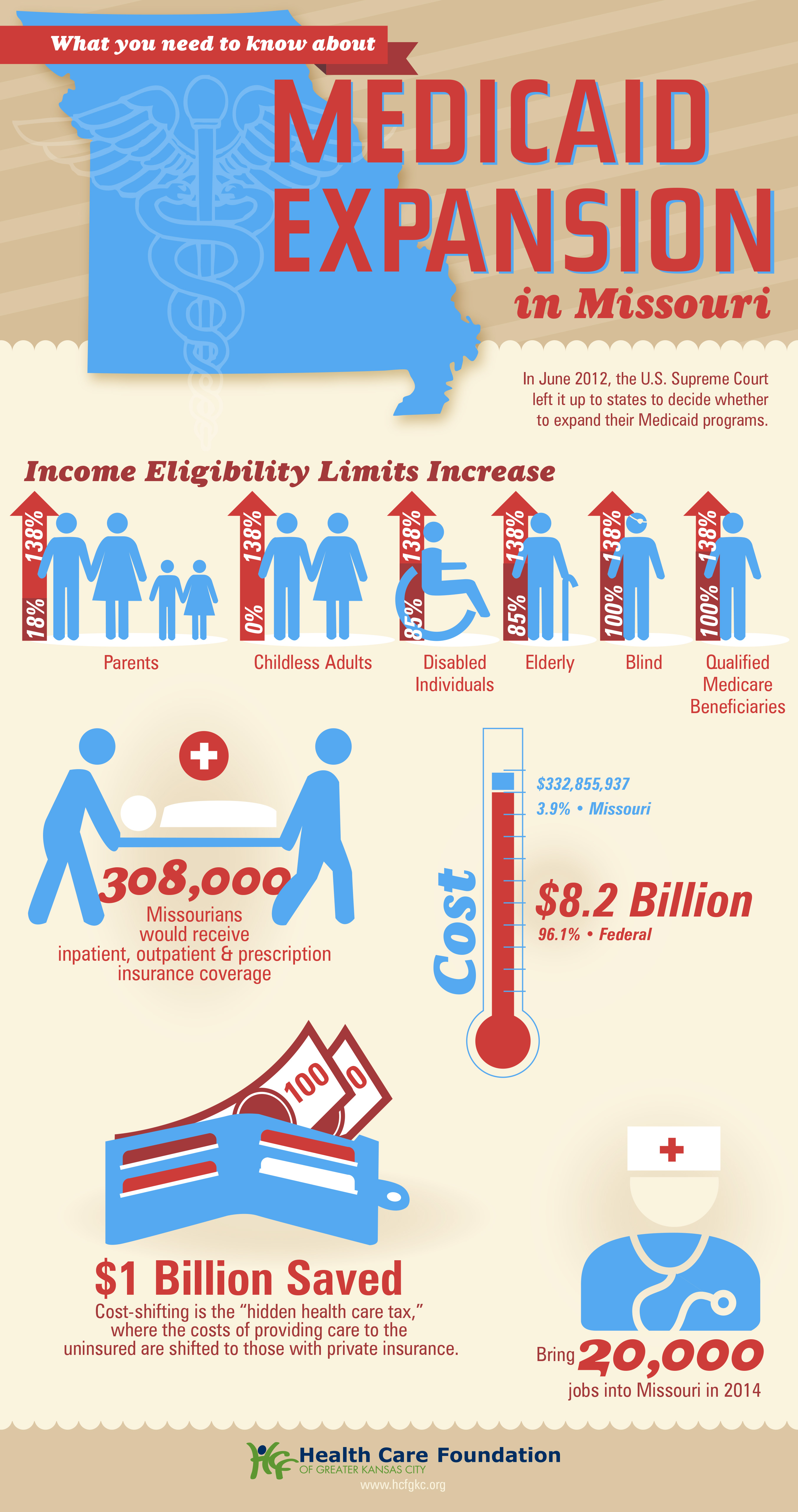
What You Need to Know About Medicaid Expansion in Missouri - Health Forward  Foundation

Missouri Gov. Mike Parson announced Thursday that his state would not expand Medicaid coverage to 275,000 residents who will become eligible on July 1st, despite a 2020 ballot initiative in which a majority of the state’s voters approved the expansion. Because the Missouri legislature has blocked funding for the expansion, Parson declared that the state’s Medicaid program, MO HealthNet, would run out of money if it moved forward.

The legislature’s decision to block funding was bolstered by an appeals court opinion last year, which challenged the expansion because the ballot initiative did not include a funding mechanism for widening coverage.

Under the Affordable Care Act (ACA), the federal government would have picked up 90 percent of the cost of expanding Medicaid in the state, in addition to boosting funding for existing Medicaid enrollees by 5 percent, thanks to a measure in the recent American Rescue Plan Act. 

The governor’s decision leaves in place one of the strictest Medicaid eligibility standards in the nation: a family of three in Missouri must earn less than 21 percent of the federal poverty level—$5,400 per year—in order to qualify for coverage. The expansion measure would have opened the program to childless adults, and raised the eligibility limit to 138 percent of the federal poverty level.

The Missouri Hospital Association called the decision an “affront” to voters, pointing out that the state is currently running a budget surplus, and could easily allocate funds for the expansion. The status of Medicaid expansion in Missouri, which would become the 38th state to undertake expansion since the ACA’s passage, will ultimately be decided by court ruling, according to observers.

Meanwhile, like other states (mostly in the Southeast) that have resisted Medicaid expansion, Missouri will continue to see tax dollars flow out of the state to fund benefits in states that have expanded eligibility—despite the express will of voters. Given ample evidence that Medicaid expansion boosts access to care, health status, and health system sustainability, it’s nearly unfathomable that the politics of “Obamacare” continue to complicate the extension of this critical safety-net program.

President Biden lays out his sweeping legislative agenda

https://mailchi.mp/097beec6499c/the-weekly-gist-april-30-2021?e=d1e747d2d8

Legislative Agenda

In his first address to a joint session of Congress, delivered on the eve of his 100th day in office, President Biden laid out his vision for two major legislative proposals to follow the $1.9T stimulus package he signed into law last month.

The first, described as an “infrastructure” bill, focuses largely on investing in transportation-related improvements, building projects, and “green” upgrades to the nation’s energy grid, along with a $400B investment in home-based care for the elderly and people with disabilities—which amounts to over 17 percent of the package’s $2.3T price tag.

The second, which he unveiled in Wednesday’s speech, is a $1.8T “families” bill, is largely aimed at expanding childcare subsidies, early childhood education, paid family and medical leave, and educational investments. Included in that package is $200B to extend the temporary subsidies—approved as part of last month’s stimulus law—for those seeking health insurance coverage on the individual marketplaces created by the Affordable Care Act (ACA).

Notably absent from either proposal were two categories of healthcare reform that received much focus and airtime during last year’s election campaign: reducing the cost of prescription drugs and lowering the eligibility age for Medicare to 60 or below. Given the closely divided makeup of the new Congress, and the relatively moderate position staked out by the Biden administration on healthcare issues (with a bias toward bolstering the ACA rather than pursuing sweeping changes), we’re not surprised to see the Medicare expansion go unmentioned. 

But the bipartisan popularity of lowering prescription drug costs seems like a missed opportunity for Biden, who encouraged the Congress to return to it separately, later in the year. We’ll see. For now, with even some Democrats expressing concern about the $4.1T price tag of Biden’s proposals, we would be surprised if all $600B of the healthcare-related spending makes it to the final legislation. In particular, our guess is that some portion of the home-care spending will get traded away in favor of other components of the package. Expect negotiations to be intense.
 

A Texas-sized showdown on Medicaid expansion

https://mailchi.mp/da8db2c9bc41/the-weekly-gist-april-23-2021?e=d1e747d2d8

Medicaid expansion could give insurance to over one million Texans |  Progress Texas

The showdown between the Biden administration and the state of Texas over Medicaid expansion continued to escalate this week. Sen. John Cornyn (R-TX) said he planned to place a hold on the confirmation of Chiquita Brooks-LaSure to become Administrator of the Centers for Medicare & Medicaid Services (CMS), until his concerns over the agency’s move last week to rescind a waiver extension previously granted by the Trump administration were addressed.

The so-called “1115 waiver”—worth more than $11B annually—would have extended by a decade Texas’ ability to use Medicaid funds to cover hospital costs for uninsured residents, rather than expanding Medicaid coverage under the Affordable Care Act (ACA). In rescinding the waiver extension, the Biden administration cited the lack of a public notice process before the waiver was granted, and said that the state’s existing waiver would instead expire next year, as previously scheduled.

Sources inside the administration told the Washington Post last week that the move was intended to force Texas’ hand on Medicaid expansion; the state is one of 12 that have not expanded Medicaid, leaving it with the largest share of uninsured residents of any state, with eligibility currently limited to pregnant women, children, people with disabilities, and families with monthly incomes under $300 per month, or 13.6 percent of the federal poverty level.
 
Enticing the dozen remaining holdout states to expand Medicaid is an important policy priority for the new administration. A key component of the recently passed American Rescue Plan Act is a package of enhanced incentives for those states to expand eligibility, offering an extended 90 percent federal match, in addition to increased funding for existing Medicaid populations.

Although none of the non-expansion states have budged yet, there has been renewed focus among state lawmakers on Medicaid expansion, including in Texas, where the idea had garnered bipartisan support. However, on Thursday, the Texas legislature voted down a proposal aimed at pushing the state toward expanding coverage for the uninsured, by an 80-68 margin. Meanwhile, the rescission of Texas’ waiver has angered the state’s Republican leadership, along with the Texas Hospital Association, whose members have benefited from the waiver’s use of funds to reimburse them for delivering uncompensated care.

While Cornyn’s hold will not ultimately stop the confirmation of the new CMS leader, the escalation on both sides over the past several days surely makes finding a compromise solution less likely. The Biden health policy team is said to be developing a new proposal, as part of an upcoming legislative package, to use the ACA marketplace to offer coverage to people in non-expansion states who might otherwise be eligible for Medicaid—yet another attempt to address one of the longest-standing points of contention stemming from the 2010 health reform law.

The Medicaid showdown is far from over.

One-third of small businesses say health insurance is a top concern during COVID-19: survey

Dive Brief:

  • Small businesses are struggling to cover the high costs of healthcare for their employees after a year of COVID-19, according to a new poll sponsored by the Small Business Majority and patient advocacy group Families USA.
  • More than one in three small businesses owners said it’s a challenge getting coverage for themselves and their workers. That pain is particularly acute among Black, Asian American and Latino businesses, which have fewer resources than their White counterparts, SBMfound.
  • As a result, small businesses want policymakers to expand coverage access and lower medical costs, beyond the temporary fixes included in the sweeping $1.9 trillion American Rescue Plan passed by Congress earlier this month.

Dive Insight:

Providing health insurance can be pricey for small employers, a challenge that’s been exacerbated by the pandemic and its subsequent economic downturn.

Accessing health insurance has been a major barrier over the course of COVID-19, the national survey of 500 businesses with 100 employees or fewer in November found. The poll, conducted by Lake Research Partners for SBM and Families USA, found many such businesses have had to slash benefits during the pandemic. Among small business owners that have reduced insurance benefits, 36% have trimmed their employer contribution for medical premiums and 56% switched to a plan with a lower premium.

Additionally, one in five small business owners say they plan to change or lower coverage in the next few months, while only about a quarter have been able to maintain coverage for temporarily furloughed employees.

The situation is bleaker for minority-owned small businesses. Overall, 34% say accessing health insurance has been a top barrier during COVID-19, but that figure rises to 50%, 44% and 43% for Black, Asian American and Latino business respondents, SBM, which represents some 80,000 small businesses nationwide, said.

That’s in line with past SBM polling finding non-white entrepreneurs are more likely to face temporary or permanent closure in the next few months than their white counterparts, and are also more likely to struggle with rent, mortgage or debt repayments.

Though employers expect a more stabilized business environment starting in the second quarter, many are still reeling from difficult economic circumstances last year. COVID-19 capsized normal efforts to calculate medical cost trends for 2021, complicating financial planning for the year ahead — especially for fragile small businesses.

Washington did allocate a significant amount of financial aid for small businesses last year, and the ARP includes numerous provisions including increased subsidies for health insurance premiums for two years, and extended COBRA coverage for laid off employees through September.

But respondents to this latest polling urged for more long-term support.

The most popular policy proposal was bringing down the cost of prescription drugs, with 90% of businesses saying they supported the measure and 54% saying they were in strong support. Protecting coverage for people with pre-existing conditions was also popular, with 87% of small business owners in total support and 51% strongly supporting.

Three-fourths of small business owners strongly support a public health insurance option, while 73% support expanding Medicaid eligibility in all states and 66% support letting people buy into Medicare starting at age 55.

Both a public option and lower age of eligibity for Medicare are key tenets of President Joseph Biden’s healthcare plan — though getting both through Congress is unlikely. And long-time business groups like the Chamber of Commerce and the National Federation for Independent Business hold major sway on such issues and tend to be more recalcitrant on progressive policy changes.

Still, calls have been mounting for employers, which insure more than half of the U.S., to do more to move the needle on medical costs, as price increases outpace overall inflation.

A survey of large to mid-size employers from the National Alliance of Healthcare Purchaser Coalitions published Wednesday found at least three-fourths of employers support drug price regulation, surprise billing regulation, hospital price transparency and hospital rate regulation.

Selling Medicaid expansion to the holdout states

https://mailchi.mp/d88637d819ee/the-weekly-gist-march-19-2021?e=d1e747d2d8

The American Rescue Plan stimulus package just sweetened the deal for the twelve holdout states that haven’t yet expanded Medicaid. In exchange for expanding eligibility to the roughly four million adults with incomes up to 133 percent of the federal poverty level, new expansion states will also be eligible for a five percent increase in the federal matching rate for their entire traditional Medicaid population for a two-year period.

The graphic above shows the cumulative fiscal impact for holdout states, should all Medicaid-eligible individuals enroll. Since the traditional Medicaid population is so much larger than the expansion population, the temporary increase more than offsets states’ cost to cover their share of the expansion, resulting in an estimated net fiscal benefit of almost $10B. While the net benefit would vary from state to state, a Kaiser Family Foundation analysis found the two most populous non-expansion states, Texas and Florida, could net up to $1.9B and $1.8B respectively across the two-year period.
 
Medicaid expansion has had a significant positive financial impact on hospitals, reducing uncompensated care and increasing overall operating margin by an average of 1.7 percent.

A recent analysis by the Center on Budget and Policy Priorities found uncompensated care costs as a share of hospital expenses fell an average of 45 percent in Medicaid expansion states between 2013 and 2017. So far, only two states eligible for the enhanced expansion, Alabama and Wyoming, have signaled interest in taking advantage of the new deal. Convincing the remaining ten to follow suit will require intense and coordinated advocacy efforts from the healthcare and business communities. Making the financial case for expansion should prove straightforward, compared to overcoming long-entrenched political opposition. 

Becerra squeaks through confirmation vote to become HHS secretary

Becerra squeaks through confirmation vote to become HHS secretary - The  Washington Post

Xavier Becerra narrowly won confirmation Thursday to lead the Department of Health and Human Services, the agency pivotal to President Biden’s urgent goal of defeating the coronavirus pandemic and expanding access to health care.

Becerra, a congressman from Los Angeles for two dozen years and then California attorney general, squeaked by on a vote of 50 to 49, the closest margin for any of the Biden cabinet members the Senate has confirmed so far.

He becomes the first Latino secretary of HHS, the largest federal department in terms of spending. The department includes agencies at the core of the federal response to the pandemic that has infected more than 29.5 million people in the United States and killed more than 535,000. They include the National Institutes of Health, the Centers for Disease Control and Prevention, the vaccine-approving Food and Drug Administration, and the Centers for Medicare and Medicaid Services, which oversees the country’s vast public insurance programs.

Sen. Ron Wyden (D-Ore.), chairman of the Senate Finance Committee, which considered the nomination, said that “after four years of going in reverse,” Becerra will make it “possible to go to drive and actually make progress for the American people, progress in terms of lowering the cost of health care.”

Republican Sen. John Barrasso (Wyo.), countered that Becerra is “an aggressive culture warrior from the radical left,” who is “out of touch with the views of the American people.” Barrasso noted that, as state attorney general, Becerra sued the Trump administration more than 150 times over immigration, environmental and health policies.

“In this time of crisis, our secretary of Health and Human Services may be the single most important member of the president’s cabinet,” Barrasso said, contending that “the president has chosen a nominee, no public health experience, extremely partisan record.”

Sen. Susan Collins (R-Maine) was the only member of the GOP to vote for Becerra’s confirmation along with a solid wall of Senate Democrats.

During his confirmation hearing last month before the Senate Finance Committee, Becerra said, “The mission of HHS — to enhance the health and well-being of all Americans — is core to who I am.”

In keeping with Biden’s emphasis on portraying his administration’s top rung as diverse and having working-class roots like his own, Becerra told the senators his immigrant parents had insurance through his father’s laborers union, making his family more fortunate when he was a boy than many of their neighbors.

As a longtime member of the House Ways and Means Committee, Becerra testified, he worked on several major pieces of health-care legislation, including the Children’s Health Insurance Program created in the late 1990s and changes to the way Medicare is run and financed, as well as the Affordable Care Act.

He did not mention that he was a longtime advocate of a single-payer health-care system, akin to the Medicare-for-all proposals backed by several Democratic candidates in last year’s presidential election, but rejected by Biden. Becerra has renounced his previous support since his nomination, echoing the president’s view that affordable insurance coverage should be widened by building upon the ACA.

Becerra, 63, became a lightning rod for conservatives immediately after Biden announced his selection in early December.

Senate Republicans targeted his defense of abortion rights. They contended he is unqualified because he is not a physician, though few HHS secretaries have had medical training. And they have denounced his previous advocacy of a larger government role in health insurance.

An undercurrent running through opposition to his nomination was Becerra’s leadership in recent years of a coalition of Democratic attorneys general fighting to preserve the ACA. Republicans, including President Donald Trump, are seeking to overturn the 2010 law in a case now before the Supreme Court.

Sen. James Inhofe (R-Okla.) lambasted Becerra, saying he has “an appalling track record disrespecting the sanctity of life. . . . He has no shame when it comes to his pro-abortion beliefs.”

Inhofe also criticized Becerra’s support last year for California’s ban on indoor worship services as part of the state’s efforts to slow the cornavirus’s spread. And the senator criticized Becerra’s position that undocumented immigrants should be allowed public benefits, such as Medicaid.

Senate Majority Leader Charles E. Schumer (D-N.Y.) said Republicans’ arguments against Becerra “almost verge on the ridiculous.”

Schumer said Republicans challenging Becerra’s qualifications for the job had embraced the nomination of Alex Azar as Trump’s second HHS secretary, though he was a pharmaceutical executive who also was an attorney and had no medical training.

In addition to working to tame the pandemic, which Biden has identified as the government’s job number one for now, Becerra will face many major decisions at the helm of the sprawling department over whether to continue or reverse policies established by the Trump administration.

CMS has already announced it was rescinding a significant Medicaid policy of the Trump era that had allowed states to require some residents to hold a job or be preparing for work to qualify for the safety-net insurance program. HHS officials are reviewing other Trump-era Medicaid policies.

Another HHS agency, the Administration for Children and Families, oversees the nation’s policies regarding welfare and unaccompanied children coming across the country’s borders — a flashpoint during the Trump administration.

The CDC, the government’s public-health agency, has been working to regain its footing and scientific moorings after repeated intrusions into its advice to the public by the Trump White House. The agency has been involved in the largest mass vaccination campaign in U.S. history to immunize the public against the coronavirus. And it is developing guidance on aspects of American life — and ongoing public safety measures — as research findings evolve for the virus and vaccine’s effects.

The FDA is in the thick of decisions about coronavirus vaccines, developed in record time, as additional manufacturers, such as AstraZeneca, have devised them and tested their safety and effectiveness. The three vaccines being given to about 2 million Americans a day — by Pfizer-BioNTech, Moderna and Johnson & Johnson — are being allowed so far for emergency use and have not yet secured full FDA approval.

Becerra almost certainly will continue to face hostility from social conservatives after his swearing in, expected Friday.

Roger Severino, who led HHS’s Office for Civil Rights during the Trump administration and created a division to promote “conscience and religious freedom,” is building an “HHS Accountability Project” within the conservative Ethics and Public Policy Center.

While at HHS, Severino tangled directly with Becerra during his tenure as attorney general of the nation’s most populous state, twice citing him in violation of federal laws for upholding California statutes involving abortion rights.

Severino said this week he believes those on the right might find common ground with Biden health officials on disability rights. But on matters of abortion and deference to religion, Severino said, “We will be watching.”

The ARP comes to the rescue of the ACA, for now

https://mailchi.mp/b0535f4b12b6/the-weekly-gist-march-12-2021?e=d1e747d2d8

ACA Enrollment is BACK, BIGTIME! Here's *10* important things to remember  to help you #GetCovered! | ACA Signups

On Thursday, President Biden signed the American Rescue Plan (ARP) Act of 2021 into law, committing nearly $1.9T of federal spending to boost the nation’s recovery from the coronavirus pandemic. In addition to direct payments to American families, extension of unemployment benefits, several anti-poverty measures, and aid to state and local governments, the plan also contains several key healthcare measures.

Approved by Congress on a near party-line vote using the budget reconciliation process, the law includes the broadest expansion of the 2010 Affordable Care Act (ACA) to date. It extends subsidies for upper-middle income individuals to purchase coverage on the Obamacare exchanges, caps premiums for those higher earners at a substantially lower level, and boosts subsidies for those at the lower end of the income scale.

The Congressional Budget Office (CBO) estimates that expanded ACA subsidies in the ARP will result in 2.5M more Americans gaining coverage in the next two years. Fully subsidized COBRA coverage for workers who lost their jobs due to COVID is also extended through the end of September, which the CBO estimates will benefit an additional 2M unemployed Americans.

The ARP also puts in place new support for Medicaid, enhancing coverage for home-based care, maternity services, and COVID testing and vaccination, and providing new incentives for the 12 states which haven’t yet expanded Medicaid eligibility under the ACA to do so. In addition to the ACA’s 90 percent match for those states’ Medicaid expansion populations, the lucky dozen will also receive a 5 percent bump to federal matching for the rest of their Medicaid populations should they choose to expand.
 
Three policy changes of keen interest to providers were left out of the final version of the bill. First, while a special relief fund of $8.5B was created for rural providers, there was no additional allocation of relief funds for hospitals and other providers, similar to the $178B allocated by the CARES Act, despite initial proposals of up to $35B in additional funding. (Around $25B of the initial round of provider relief is still unspent.) Second, the ARP did not extend or alter the repayment schedule for advance payments to providers made last year, in spite of industry pressure to implement more favorable repayment conditions. Finally, the new law does not extend last year’s pause on sequester-related cuts to Medicare reimbursement, although the House is expected to consider a separate measure to address that issue next week.

Notably, the coverage-related provisions of the ARP are only temporary, lasting through September of next year. That sets up the 2022 midterm elections as yet another campaign cycle dominated by promises to uphold and protect the Affordable Care Act—by then a 12-year-old law bolstered by this week’s COVID recovery legislation.