Last Thursday, the Senate Finance Committee heard testimony from experts who offered damning testimony about hospital consolidation (excerpts below). Committee Chair Ron Wyden (D-OR) gaveled the session to order with this commentary:
“I’d like to talk about health care costs and quality. Advocates for proposed mergers often say they will bring lower health costs due to increased efficiency. Time after time, it’s simply not proven to be the case. When hospitals merge, prices go up, not down. When insurers merge, premiums go up, not down. And quality of care is not any better with this higher cost. “
Ranking Member Mike Crapo (R-ID) offered a more conciliatory assessment in his opening statement: “In exploring and addressing these problems, we have the opportunity to build on our efforts to improve medication access and affordability by taking a broader look at the health care system through a similarly bipartisan, consensus-based lens…We need to examine the drivers of consolidation, as well as its effects on care quality and costs, both for patients and taxpayers. We also need to develop focused, bipartisan and bicameral solutions that reduce out-of-pocket spending while protecting access to lifesaving services.”
Congress’ concern about consolidation in healthcare is broad-based. Pharmacy benefits managers and health insurers face similar scrutiny. Drug price control referenda have passed in several states and a federal cap was included in the Inflation Reduction Act.
The reality is this: the entire U.S. health system is on trial in the court of public opinion for ‘careless disregard for affordability’. And hospitals are seen as part of the problem justifying consolidation as a defense mechanism.
What followed in this 3-hour hearing was testimony from 3 experts critical of hospital consolidation, a Colorado community hospital CEO who opined to competition with big hospital systems and a Peterson Foundation spokesperson who offered that data access and transparency are necessary to mitigate consolidation’s downside impact.
None of their testimony was surprising. Nor were questions from the 25 members of the committee. It’s a narrative that played out in House Energy and Commerce and Ways and Means Committee hearings last month. It’s likely to continue.
Often, Congressional Hearings on healthcare issues amount to little more than political theatre. In this one, four key themes emerged:
Consolidation among hospitals has adversely impacted quality of care and affordability of healthcare. Prices have gone up without commensurate improvements in quality harming consumers.
Larger organizations use horizontal and vertical integration to strengthen their positions relative to smaller competitors. Physician employment by hospitals is concerning. Rural and safety net hospitals are impaired most.
Anti-trust efforts, price transparency mandates, data sharing and value-based programs have not been as effective as anticipated.
Physicians are victims of consolidation and corporatization in U.S. healthcare. They’re paid less because others are paid more.
While committee members varied widely in the intensity of their animosity toward hospitals, a consensus emerged that the hospital status quo is not working for voters and consumers.
My take:
Consolidation is part of everyday life. Last Tuesday’s bombshell announcement of the merger of the PGA Tour and the Saudi Arabia’s Public Investment Fund caught the golfing world by surprise. Anti-trust issues and monopolistic behaviors are noticed by voters and lawmakers. Hospital consolidation is no exception festering suspicions among lawmakers and voters that the public’s good is ill-served. And studies showing that charity care among not-for-profit hospitals is lower than for-profit confuse and complicate.
As I listened to the hearing, I had questions…
Were all relevant perspectives presented?
Was the information provided by witnesses and cited in Committee member questioning accurate?
Will meaningful action result?
But having testified before Congressional Committees, I find myself dismissive of most hearings which seem heavy on political staging but light on meaningful insight. Many are little more than political theatre. Hospital consolidation seems different. There seems to be growing consensus that it’s harmful to some and costly to all.
Sadly, this hearing is the latest evidence that the good will built by hospital heroics in the pandemic is now forgotten. It’s clear hospital consolidation is an issue that faces strong and increased headwinds with evidence mounting—accurate or not– showing more harm than good.
Many health system mergers today are “all about leverage” when negotiating with payers, rather than significant cost savings or increasing market share, Charlie Shields, CEO of Kansas City, Mo.-based University Health, told the Kansas City Business Journal.
Mr. Shields’ comments came after Kansas City-based St. Luke’s Health System and St. Louis-based BJC HealthCare signed a letter of intent to form an integrated academic health system.
The proposed merger is not about reducing costs — since the two systems have been part of a buying collective for a decade —- and is not about a rapid gain in market share, since St. Luke’s and BJC will largely stick to their respective areas, Mr. Shields told the Journal in a June 1 article. Instead, he argues, the merger, and similar ones like it, aims to leverage a better seat at the table when negotiating care rates with payers.
BJC and St. Luke’s operate the three top hospitals in Missouri, according to U.S. News & World Report. Together, they would pool $10 billion in revenue to serve more than 6 million residents across Missouri, Illinois and Kansas.
The transaction is expected to close by the end of 2023, pending regulatory review.
A recent chat with a former physician entrepreneur who recently sold his practice to a large health system highlighted the fact that “hospital-physician integration” can sometimes be a misnomer. “I feel like we were sold a bill of goods,” he told us, referring to his ten-person primary care group.
“We worked hard to build this practice, and the health system CEO made a lot of promises about the value of bringing us in, and the investments they’d make in our growth.” Instead, the group has experienced a different reality: little meaningful integration, an unclear bureaucracy to navigate, zero transparency into the finances of the medical group or system, leadership turnover, and a lack of strategic vision.
“We would never sign this deal again,” he said, “and we’re not the only ones—they might not realize it, but this system is on the precipice of a full-on physician mutiny.”
Of course, there are two sides to every story, but the anecdote reinforced in our minds the importance of careful planning and attention to integration following practice acquisitions. There needs to be a plan, it needs to be clear, and it needs to be resourced.
Otherwise, systems risk ending up with unhappy, disengaged doctors—a situation to be avoided at all costs.
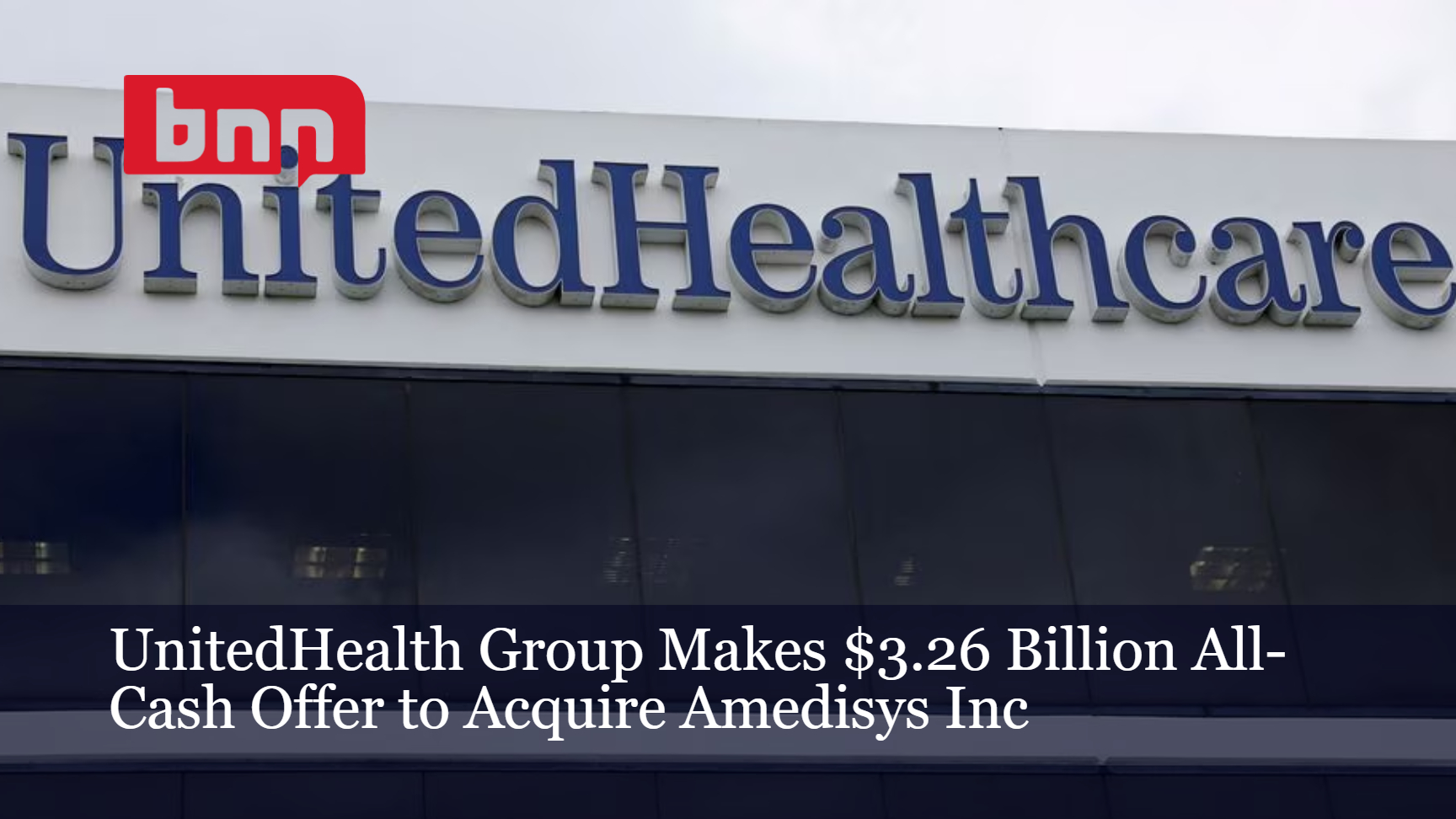
On Monday, Minnetonka, MN-based UHG’s Optum division made a $3.3B all-cash offer to acquire Baton Rouge, LA-based Amedisys, one of the country’s largest home health companies.
Optum’s bid came several weeks after Bannockburn, IL-based Option Care Health, a home health company specialized in drug and infusion services, offered to purchase Amedisys in an all-stock transaction valued at $3.6B. Amedisys itself acquired hospital-at-home company Contessa Health for $250M in 2021. While its Board of Directors is now evaluating whether UHG has made a “Superior Proposal”, a UHG acquisition of Amedisys would likely be subject to significant regulatory oversight, as the payer recently closed on its purchase of home health company and Amedisys-competitor LHC Group in a deal that was heavily scrutinized by the Federal Trade Commission.
The Gist: UHG, the nation’s largest health insurer, is on a tear to bring the country’s largest home health providers under its Optum umbrella—and it has the deep pockets to outbid nearly anyone else trying to do the same.
While some questioned the value of an Option Care-Amedisys combination, UHG would get to plug another asset into its scaled continuum of home-based care, allowing it to steer beneficiaries away from high-cost post acute care and continue to increase profitable intercompany eliminations.
If UHG’s bid for Amedisys is accepted, it would also gain its first hospital-at-home asset in Contessa, providing it with the opportunity to fully redirect—and reduce—its inpatient care spend.
BJC HealthCare of St. Louis and Saint Luke’s Health System of Kansas City are exploring a merger that would yield a 28-hospital, $10 billion, integrated, academic health system, the nonprofits announced Wednesday.
The two have signed a nonbinding letter of intent and “are working toward reaching a definitive agreement in the coming months” with a targeted close before the end of the year, they said. The cross-market deal would be subject to regulatory review and other customary closing conditions.
“Together with Saint Luke’s, we have an exciting opportunity to reinforce our commitment to providing extraordinary care to Missourians and our neighboring communities,” BJC HealthCare President and CEO Richard Liekweg said in the announcement. “Amid the rapidly changing health care landscape, this is the right time to build on our established relationship with Saint Luke’s. With an even stronger financial foundation, we will further invest in our teams, advance the use of technologies and data to support our providers and caregivers and improve the health of our communities.”
Both systems are based in Missouri but “serve distinct geographic markets,” they said.
St. Louis-based BJC Healthcare’s footprint is spread across the greater St. Louis, southern Illinois and southeast Missouri regions. It comprises 14 hospitals including two (Barnes-Jewish and St. Louis Children’s) affiliated with Washington University School of Medicine. It also operates multiple health service organizations providing home health, long-term care, workplace health and other offerings.
Kansas City, Missouri-based Saint Luke’s is a faith-based system with 14 hospitals and more than 100 offices throughout western Missouri and parts of Kansas. It also provides home care and hospice, adult and children’s behavioral care and a senior living community.
Should the deal close, both systems would continue to serve their existing markets and maintain their branding. The joined organization would be run from dual headquarters with BJC’s Liekweg as CEO but an initial board chair hailing from Saint Luke’s.
The organizations said their combination will expand the services available to patients and provide an estimated $1 billion in annual community benefits. The arrangement would also fuel clinical and academic research while supporting greater workforce investment.
“Our integrated health system, with complementary expertise and team of world-class physicians and caregivers, will set a new national standard for medical education and research,” Saint Luke’s President and CEO Melinda Estes, M.D., said in the announcement. “Through our decade-long relationship as a member of the BJC Collaborative, we’ve established mutual trust and respect, so the opportunity to come together as a single integrated system that can accelerate innovation to better serve patients is a logical next step.”
Years of health system consolidation have led to increased scrutiny from regulators and lawmakers, who have worried that mergers can harm competition. To date, however, efforts to block announced deals have been limited to situations where the parties are operating in the same geographic markets.
Larger, cross-market deals like BJC and Saint Luke’s have become more common in the past year, potentially due to the opportunity to distribute operational risks with limited regulatory scrutiny, analysts have noted.
Multiple health policy researchers have warned that these deals are relatively understudied and, according to some prior analyses, very rarely translate to the quality and consumer cost savings often touted by health systems.
Healthcare’s most recent billion-dollar deal took the industry by surprise, leaving medical experts and hospital leaders grappling to comprehend its implications.
In case you missed it, California-based Kaiser Foundation Health Plan and Hospitals, which make up the insurance and facilities half of Kaiser Permanente, announced the acquisition of Geisinger, a Pennsylvania-based health system once acknowledged by President Obama for delivering “high-quality care.”
Upon regulatory approval, Geisinger will become the first organization to join Risant Health, Kaiser Foundation’s newly created $5 billion subsidiary. According to Kaiser, the aim is to build “a portfolio of likeminded, nonprofit, value-oriented, community-based health systems anchored in their respective communities.”
Having spent 18 years as CEO of The Permanente Medical Group, the half of Kaiser Permanente responsible for the delivery of medical care, I took great interest in the announcement. And I wasn’t alone. My phone rang off the hook for weeks with calls from reporters, policy experts and healthcare executives.
After hundreds of conversations, here are the three most common questions I received about the acquisition—and the implications for doctors, insurers, health-system competitors and patients all over the country.
Question 1: Why did Kaiser acquire Geisinger?
Most callers wanted to know about Kaiser’s motivation, figuring there must’ve been more to the acquisition than the press release indicated. Although I don’t have inside information, I believe they were right. Here’s why:
Kaiser Permanente has a long and ongoing reputation for delivering nation-leading care. The organization has consistently earned the highest quality and patient-satisfaction rankings from the National Committee for Quality Assurance (NCQA), Leapfrog Group, JD Power and Medicare.
And yet, despite a 78-year history, dozens of hospitals and 13 million members across eight states, Kaiser Permanente is still considered a coastal—not national—health system. It maintains a huge market share in California and a strong presence in the Mid-Atlantic states, yet the organization has failed repeatedly to replicate that success in other geographies.
With that context, I see two compelling reasons why the Kaiser Foundation Health Plan and Hospitals wish to become a national brand:
Influence. Elected officials and regulatory bodies often turn to healthcare’s biggest players to set legislative agendas and carve out national policy. At that table, there are a limited number of seats. By shedding its reputation as a “local” health system, Kaiser could earn one.
Survival. In recent years, companies like Amazon, CVS and Walmart have been scooping up organizations that provide primary care, telehealth, home health and specialty care services. These “retail giants” are spending up to $13 billion per acquisition. And they’re consuming already-successful healthcare companies like One Medical, Oak Street Health, Signify, Pill Pack and many others. Like an army preparing for war, these corporate behemoths are amassing the components needed to battle the traditional healthcare incumbents and ultimately oust them entirely.
The Geisinger deal expands Kaiser’s footprint, adding 600,000 patients, 10 hospitals and 100 specialty and primary care clinics. These assets lend gravitas, even though Geisinger also comes with a 2022 operating loss of $239 million.
The lesson to draw from this first question is clear: size matters. The days of solo physicians and stand-alone hospitals are over. Nostalgia for medicine’s folksy, home-spun past is understandable but futile. To survive, healthcare players must get bigger quickly or team up with someone who can. That insight leads to the next question and lesson.
Question 2: How much value will Kaiser give Geisinger?
Almost everyone I’ve spoken with understands Kaiser’s desire for greater national influence, but they’re less sure how this deal will affect Geisinger Health.
Geisinger’s Pennsylvania-based hospitals and clinics have been locked in territorial battles for years with surrounding health systems. More recently, the pandemic, combined with staffing shortages and national inflation, have challenged Geisinger’s clinical performance and eroded its bottom line.
Assuming Kaiser plans to invest roughly $1 billion in each of the four to five health systems it’s planning to acquire, that surge in cash inflow will provide Geisinger with temporary financial safety. But the bigger question is how will Kaiser improve Geisinger’s value-proposition enough to grow its market share?
In public comments, Kaiser leaders spoke of the acquisition as an opportunity for Risant to “improve the health of millions of people by increasing access to value-based care and coverage, and raising the bar for value-based approaches that prioritize patient quality outcomes.”
Many of the experts I spoke with understand Kaiser’s value intent. But they question how Kaiser can could deliver on that promise since The Permanente Medical Group (TPMG) wasn’t involved in the deal.
If, hypothetically, Kaiser and Permanente leaders were to strike a deal to collaborate in the future, TPMG’s physician leaders could bring tremendous knowledge, experience and expertise to the table. Otherwise, I agree with those who’ve expressed doubt that Kaiser, alone, will be able to significantly improve Geisinger’s clinical performance.
Health plans and insurance companies play an important role in financing medical care. They possess rich data on performance and can offer incentives that boost access to higher-quality care. But insurers don’t work directly with individual doctors to coordinate medical care or advance clinical solutions on behalf of patients. And without strong physician leadership, the pace of positive change slows to a crawl. As a example, research conducted within The Permanente Medical Group found that it takes only three years to turn a proven clinical advance into standard practice—that’s nearly six times faster than the national average.
For decades, the secret sauce for Kaiser Permanente has been the cohesive success of its three parts: Kaiser Health Plan, Kaiser Foundation Hospitals and The Permanente Medical Group.
And KP’s results speak for themselves:
90% control of hypertension for members (compared to 60% for the rest of the country)
30% fewer deaths from heart attack and stroke (compared to the rest of the country)
20% fewer deaths from colon cancer
The big lesson: insurance, by itself, doesn’t drive major improvements in medicine. It must be a combined effort between forward-looking insurers and innovative, high-performing clinicians.
But there’s another takeaway here for doctors everywhere: now is the time to join forces with other clinicians in your community. Together, you can collaborate to improve clinical quality. You can augment access and make care more affordable for patients. Simultaneously, this is the time for the insurers and the retail giants to figure out which medical groups can deliver the best care and make the best partners. Neither side will flourish alone. And this leads to a third question and lesson.
Question 3: Will the deal work?
Almost all of my conversations ended with this query. I say it’s too early to tell. But as I look years down the road, one part of the deal, in particular, gives me doubt.
Today, Geisinger uses a hybrid reimbursement model—blending both “value-based” care payments with traditional “fee-for-service” insurance plans. In addition to offering its own coverage, it contracts with a variety of other insurance companies. Rarely have I seen this scattered approach succeed.
Most healthcare observers understand the inherent flaw in the “fee for service” (FFS) model is also its greatest appeal to providers: the more you do the more you earn. FFS is how nearly all financial transactions take place in America (i.e., provide a service, earn a fee). In medicine, however, this financial model results in frequent over-testing and over-treatment with minimal if any improvement in clinical outcomes, according to researchers.
The “value-based” alternative to FFS involves prepaying for care—a model often referred to as “capitation.” In short, capitation involves a single fee, paid upfront for all the medical care provided to a defined population of patients for one year based on their age and health status. The better an organization at preventing disease and avoiding complications from chronic illness, the greater its success in both clinical quality and affordability.
Within the small world of capitated healthcare payments, there’s an important element that often gets overlooked. It makes a big difference who receives that lump-sum payment.
In the case of Kaiser Permanente, capitated payments are made directly to the medical group and the physicians who are responsible for providing care. In almost every other health system, an insurance company collects capitated payments but then pays the medical providers on a fee-for-service basis. Even though the arrangement is referred to as capitated, the incentives are overwhelmingly tied to the volume of care (not the value of that care).
In a mixed-payment model, doctors and hospitals invariably prioritize the higher paying FFS patients over the capitated ones. When I think about these conflicting incentives, I’m reminded of a prominent medical group in California. It had a main entrance for its fee-for-service patients and a second, smaller one off to the side for capitated patients.
I doubt the time spent with the patient—or the overall care provided—was equal for both groups. When income is based on quantity of care, not quality, clinicians focus more on treating the complications of chronic disease and medical errors rather than preventing them in the first place. Geisinger has walked this tightrope in the past, but as economic pressures mount, I fear doctors will find the two sets of incentives conflicting and difficult to navigate.
The big lesson: as financial pressures mount, the most effective approaches of the past will likely fail in the future. All healthcare organizations will need to make a decision: keep trying to drive volume and prices up through FFS or shift to capitation. Getting caught in the middle is a prescription for failure.
Examining the healthcare acquisitions made by Amazon and CVS, it’s clear these giants have decided to move aggressively toward a model more like Kaiser Permanente’s—one that brings insurance, pharmacy, physicians and sophisticated IT systems under one roof. These companies, along with Walmart, are aggressively marching down a path toward capitation, focusing on Medicare Advantage (the value-based option for Americans 65+) as an entry point.
So far, Geisinger has hedged its bets by maintaining a hybrid revenue stream. I doubt they can do so successfully in the future. That brings us to a final question.
The biggest question remaining
Over the next decade, hospital systems, insurers and retailers will battle for healthcare supremacy. The most recent Kaiser-Geisinger deal reflects an industry that’s undergoing massive change as health systems face intensifying pressure to remain relevant.
The most important issue to resolve is whether these shifts will ultimately help or harm patients. I’m optimistic for a positive outcome.
Whether or not the retail giants displace the incumbents, they will redefine what it takes to win. For all their faults, companies like Amazon and Walmart care a lot about meeting the needs of customers—a mindset rarely found in today’s healthcare world. As these companies grow ever larger, they’ll place consumer-oriented demands on doctors and hospitals. This will require care providers to deliver higher quality care at more affordable prices.
The retailers will only do deals with the best of the best. And they’ll kick the underachievers to the curb. They’ll use their sophisticated IT systems to better coordinate and innovate medical care. Insurers, hospitals and doctors who fail to keep up will be left behind.
Over time, patients will find themselves with far more choices and control than they have today. And I’m optimistic that will be good for the health of our nation.
Marco Fernandez, M.D., says he was blindsided in 2021 when his anesthesiology group, Midwest Anesthesia Partners in Arlington Heights, Illinois, lost two hospital contracts in two weeks to private equity-owned anesthesiology groups. What was more surprising to Fernandez, the group’s president, was that the person contracting on behalf of the private-equity group was an executive board member for the American Society of Anesthesiologists. “I was in disbelief,” Fernandez said.
Fernandez and his colleagues at Midwest Anesthesia Partners and three other anesthesiology groups subsequently started the Association for Independent Medicine (AIM) to push back against private equity-owned takeovers. Take Medicine Back was formed by emergency medicine physicians for similar reasons.
Private-equity firms are investing in or buying healthcare providers across the spectrum —nursing homes, home health agencies, hospitals and physician practices. “It’s in every aspect of health,” Eileen O’Grady, research and campaign director for healthcare at the Private Equity Stakeholder Project, said during a session about private equity at the Association of Health Care Journalists’ annual meeting in March.
Private-equity firms share common characteristics, O’Grady told the journalists. They typically want to double or triple their investment before selling in four to seven years, she said. They often rely on leveraged buyouts and heavy debt to finance their purchase. Another common tactic is to buy small companies and “roll them up” up into larger organizations.
Some private-equity firms use the sale-leaseback model, which involves selling an organization’s real estate and leasing it back to the organization. It may provide an infusion of cash from the sale, but real estate is often a healthcare organization’s biggest asset. O’Grady said she is most troubled by the practice of dividend recapitalizations, which she called “one of the most inexcusable practices of PE (private-equity) firms.” Dividend recapitalizations involve the organization taking on a loan secured by its healthcare business and using some proceeds to pay the private-equity firm a cash dividend, O’Grady explained. This is expensive, as loan funds must be repaid with interest. She shared one example: A hospital system took out a $1.2 billion loan, paying the private equity firm $457 million in dividends. “The hospitals were on the hook to pay that back, while the hospitals were also suffering profound quality issues. There was no value to anyone but the private- equity firm with this transaction.”
Fernandez said that when private equity takes over medical practices, quality suffers. “The cost of care is not going down. The quality is not going up. It’s quite the reverse,” he said. He is hoping AIM can help physicians who want to stay independent. When private- equity firms buy up practices or takes contracts, “there are very few options. You either have to leave the city or just work for them.”
Kaiser Permanente on Wednesday announced it is acquiring Geisinger Health, and Geisinger will operate independently under a new subsidiary of Kaiser called Risant Health.
Deal details
The combination of the two companies will need to be reviewed by federal and state agencies, but if approved, the two companies will have more than $100 billion in combined annual revenue.
Geisinger will operate independently as part of Risant Health, which will be headquartered in Washington, D.C. and will be led by Geisinger president and CEO Jaewon Ryu. The health systems said they intend to acquire four or five more hospital systems to fold into Risant in an effort to reach $30 billion to $35 billion in total revenue over the next five years.
In an interview, Ryu and Kaiser chair and CEO Greg Adams said Risant will specifically target hospital systems already working to move into value-based care.
According to Adams, Risant Health “is a way to really ensure that not-for-profit, value-based community health is not only alive but is thriving in this country.”
“If we can take much of what is in our value-based care platform and extend that to these leading community health systems, then we extend our mission,” Adams said. “We reach more people, we drive greater affordability for health care in this country.”
Why we’re ‘cautiously optimistic’ about this acquisition
Just when you thought healthcare couldn’t get more interesting, Kaiser and Geisinger announce their union through newly established Risant Health. At first pass, it is hard to see a downside with this deal — and that’s something that raises my “spidey-senses.”
Kaiser and Geisinger are coming together through a vehicle that could allow them to clear an increasingly skeptical Federal Trade Commission. It affords two health systems — both in comparatively weaker financial positions than before the pandemic — the ability to get bigger through the merger. Its pitch is decidedly hospital- (and in the future provider) led, with Geisinger retaining its brand and elevating its CEO to the head of Risant. It also gives Geisinger and future partners the latitude to pursue their own payer relationships.
In addition, it is ostensibly a play to increase providers’ control over the nature and pace of value-based care (VBC) adoption. In its press release, Kaiser acknowledges that its closed network model of care management hasn’t scaled well to other markets. And Geisinger, with its own health plan and a track-record of developing its own VBC incentives, is no neophyte and brings a clear wealth of expertise.
Without a doubt, the offer to future partners is compelling: “Come for the size and stay for the value-based care.” But like all things in life, it’s all in the details. And that’s where my “spidey-sense” kicks in.
Partnership and affiliation models alone do not make the hard work of VBC easier. While this emerging group could become a valuable, provider-led clearing house for VBC concepts, applying them in communities remains a stubborn challenge that requires individual work and leadership.
The true test of the concept will come when the first new partner joins. How they decide to participate and whether the model has the right mix of scale and flexibility is what I’ll be watching closely. The overall objective and success measure of this endeavor remains somewhat opaque, but I would say that the concept has real legs here. Right now, I’m leaning toward “cautiously optimistic.”
Given the somewhat frantic pace at which transactions are happening in healthcare these days, with insurers buying up primary care assets, private equity firms rolling up specialty practices, hospital systems looking to consolidate, and everyone circling around digital players, it’s little surprise that we’ve begun to hear some angst among health system executives about their ability to keep pace.
“Some of these disruptors are focused entirely on M&A strategies,” one CEO told us recently. “My team still has to run a complex health system at the same time. It takes us forever to get deals done.”
The concern is legitimate: for many health systems, M&A has been a one-at-a-time proposition. Evaluating and completing an acquisition takes many months, if not a year or more—and the integration of even a relatively small entity into a larger health system often takes longer.
There is a growing sentiment that the pace of single, sequential mergers and acquisitions will not allow health systems to keep pace.
One CFO shared, “We did a large merger a decade ago, and we’re just at the point of feeling like we act as a single system. We’re looking at one or two others, and we can’t delay the next opportunity because we’re still working to integrate the last.”
His strategy: systems aiming to build a super-regional organization should “rapidly build the network and integrate it once you have all the pieces”. It’s a strategy, he said, that is serving vertically integrated payers like CVS and UHG well. To keep pace in a consolidating market, health systems must maintain a pipeline of potential partners that fit with their vision. But we’re also wary of “saving” all the integration until the deals are done.
Rather, health systems looking to rapidly expand must be able to “parallel process” multiple acquisitions and integration. With smaller financial reserves compared to payer behemoths, health systems need mergers to generate value more quickly. And moreover, as providers are held to a higher standard by regulators, new partnerships will benefit from demonstrating value to consumers and communities.
The University of South Alabama Health Care Authority has announced plans to acquire Providence Health System from St. Louis-based Ascension. The transaction is subject to routine regulatory approval as well as customary closing conditions and is expected to close in the fall of 2023.
About the Transaction
USA Health engaged Cain Brothers, a division of KeyBanc Capital Markets, to serve as their strategic financial advisor based on its deep academic medicine and health system sector knowledge. USA Health and Providence have a longstanding relationship and the transaction will help the organizations enhance access to high quality healthcare in the Mobile community and further USA Health’s ability to fulfill its tripartite mission of education, research, and clinical care. The transaction expands USA Health’s footprint in the greater Mobile market, ensuring that the community has access to sustainable, quality healthcare long into the future.
About USA Health
USA Health is located in Mobile, AL, and stands as the only academic health system along the upper Gulf Coast. The system is comprised of nearly 30 care delivery locations, including USA Health University Hospital, the USA Health Mitchell Cancer Institute, USA Health Children’s & Women’s Hospital, a Level I trauma center, a comprehensive stroke center, and a Level III NICU. USA Health employs 3,900 clinical and nonclinical staff members, including 180 academic physicians who serve dual roles treating patients and teaching the next generation of medical doctors.
About Providence Health System
Mobile, AL-based Providence Hospital, which was founded in 1854 by the Daughters of Charity, is a full-service 349 bed hospital with 24/7 emergency care, a Level III trauma center, an outpatient diagnostic center, and a freestanding rehabilitation and wellness center. In addition to the hospital, Providence operates related sites of care throughout the greater Mobile community, including the physician practices of Ascension Medical Group. Providence became part of Ascension in 1999 when the Daughters of Charity and Sisters of St. Joseph Health System merged to form Ascension.
About Ascension
Ascension is one of the nation’s leading not-for-profit and Catholic health systems, with a mission of delivering compassionate, personalized care to all with special attention to persons living in poverty and those most vulnerable. Ascension includes approximately 37,000 aligned providers and operates more than 2,600 sites of care – including 138 hospitals in 19 states.











 HENRY KOTULA