Whistleblower alleges Trump administration ignored coronavirus warnings

https://www.axios.com/coronavirus-rick-bright-whistleblower-f48cc9c6-8e6e-4662-a127-03e51f323288.html?stream=health-care&utm_source=alert&utm_medium=email&utm_campaign=alerts_healthcare

Whistleblower alleges Trump administration ignored coronavirus ...

Rick Bright, the former director of the U.S. Biomedical Advanced Research and Development Authority (BARDA), filed a whistleblower complaint Tuesday alleging that the Department of Health and Human Services failed to take early action to mitigate the threat of the novel coronavirus.

Flashback: Bright said last month he believes he was ousted after clashing with HHS leadership over his attempts to limit the use of hydroxychloroquine to treat the coronavirus.

What’s new: In his complaint, Bright claims he was excluded from an HHS meeting on the coronavirus in late January after he “pressed for urgent access to funding, personnel, and clinical specimens, including viruses” to develop treatments for the coronavirus should it spread outside of Asia.

  • Bright alleges it “became increasingly clear” in late January that “HHS leadership was doing nothing to prepare for the imminent mask shortage.”
  • Bright claims he “resisted efforts to fall into line with the Administration’s directive to promote the broad use of chloroquine and hydroxychloroquine and to award lucrative contracts for these and other drugs even though they lacked scientific merit and had not received prior scientific vetting.”
  • He adds that “even as HHS leadership began to acknowledge the imminent shortages in critical medical supplies, they failed to recognize the magnitude of the problem, and they failed to take the necessary urgent action.”

The White House declined to comment. HHS did not immediately respond to a request for comment.

https://www.documentcloud.org/documents/6882494-NEW-R-Bright-OSC-Complaint-Redacted.html


White House plans to scale back coronavirus task force

https://thehill.com/homenews/administration/496211-white-house-signals-it-will-wind-down-coronavirus-task-force

Anthony Fauci - Axios

The White House is in the early stages of winding down its coronavirus task force, Vice President Pence’s office confirmed Tuesday.

The surprise decision comes as most states are preparing to loosen restrictions meant to slow the spread of the virus, while a number of areas continue to see increases in new COVID-19 cases and deaths.

Pence’s office confirmed to The Hill that the vice president told reporters at a limited briefing that his plan is to scale back the task force’s role by Memorial Day. Pence has been leading the task force since late February.

Members are likely to return to their respective departments and manage the coronavirus response from there.

Dr. Deborah Birx, who was brought in from the State Department to coordinate the White House virus response, will “continue to review and analyze data and work with the departments in agencies to help that data inform their decision making processes,” a spokesman for Pence’s office said.

The New York Times first reported on the expected demise of the task force.

The task force, which includes nearly two dozen officials from various government agencies, held near-daily press briefings for more than a month but has been less visible in recent weeks as President Trump and others transition their focus to the economic consequences of the pandemic.

There have been no coronavirus task force briefings in more than a week, and the daily meetings have become less frequent. The group was scheduled to meet Tuesday afternoon.

But the decision to formally disband the task force is sure to raise concern among public health experts who have warned the coronavirus will likely be part of life in the U.S. until there is a widely available vaccine, which could take a year or longer to develop.


The Health 202: Social distancing hasn’t been as effective in stemming U.S. coronavirus deaths as policymakers had hoped.

https://www.washingtonpost.com/news/powerpost/paloma/the-health-202/2020/05/05/the-health-202-social-distancing-hasn-t-been-as-effective-in-stemming-u-s-coronavirus-deaths-as-policymakers-had-hoped/5eb04b6d88e0fa594778ea5e/

Social distancing isn’t having the effects many had hoped for.

Despite encouraging signs on the nation’s East and West coasts, daily diagnosed cases of the novel coronavirus appear to still be on the rise in about 20 states. A number of rural counties have become unexpected hot spots in recent weeks, including in the Black Belt region of Mississippi and Alabama and in communities throughout Iowa and northern Texas around the Oklahoma panhandle. The country’s overall daily figures of diagnoses and deaths have plateaued, worrying health policymakers as many states move to reopen parts of their economy.

That steep curve of covid-19 cases in March and April isn’t receding the way it rose.

Hot spots are shifting geographically from New York City to areas around the country. For the past month, the figures have hovered around 30,000 diagnosed cases and around 2,000 deaths every day, former Food and Drug Administration commissioner Scott Gottlieb noted in a Wall Street Journal op-ed.

“Everyone thought we’d be in a better place after weeks of sheltering in place and bringing the economy to a near standstill,” he wrote. “Mitigation hasn’t failed; social distancing and other measures have slowed the spread. But the halt hasn’t brought the number of new cases and deaths down as much as expected or stopped the epidemic from expanding.”

President Trump, who last week suggested the novel coronavirus would disappear even without a vaccine, has now upgraded his prediction of fatalities to as many as 100,000 people. Nonetheless, he said in a New York Post interview yesterday that Americans are “starting to to feel good now. The country’s opening again. We saved millions of lives, I think.”

A leaked government report, still in draft version, predicts a spike in cases and deaths beginning on May 14.

The report, which the Centers for Disease Control quickly disavowed as an unfinished projection, suggests new cases could surge to 200,000 per day and daily American deaths could number more than 3,000 by June 1. That’s far more than what other models predict, but the Johns Hopkins epidemiologist who prepared it told my colleagues William Wan, Lenny Bernstein, Laurie McGinley and Josh Dawsey that 100,000 new cases per day by the end of the month isn’t out of the realm of possibility.

Former FDA commissioner Scott Gottlieb:

University of Michigan professor Justin Wolfers:

That’s not the only model showing discouraging figures for the month of May. A model out of the University of Washington, relied upon heavily by the administration, yesterday upgraded its U.S. fatality predictions for the virus’s first wave from 72,433 deaths to 134,475 deaths by Aug. 4.

These aren’t the trends many policymakers had hoped to see, after most Americans spent seven weeks at home under an unprecedented lockdown that has torched the once-booming economy and thrust millions into economic uncertainty. Protests against extended lockdowns are starting to mount around the country, and many governors have assembled and even embarked upon gradual plans to reopen businesses, schools and other public areas.

Nonetheless, a new Washington Post-University of Maryland poll out this morning shows sizable majority of Americans oppose the reopening of restaurants, retail stores and businesses.

Executive producer of 7News WHDH in Boston:

Social distancing did accomplish some important objectives. It undoubtedly saved the health-care system from being crushed by an overwhelming caseload of sick patients all at once.

And the United States is still outranked by half a dozen European countries when it comes to deaths per capita. The U.S. death rate is about 206 deaths per million people. That figure is 538 in Spain, 372 in France, 481 in Italy, 432 in the United Kingdom and 207 in Switzerland, according to a tally by Mother Jones.

But distancing clearly hasn’t been enough — at least the way it’s been carried out — to halt the spread of the highly contagious virus in some places.

New cases and deaths across the whole U.S. are about where they were 20 days ago, my colleague Philip Bump reports. He created a graphic where you can view the three-day averages of cases, deaths and tests performed by state (check it out here).

“The back of the mountain doesn’t look the way the front did,” Philip writes. “We saw a steady, exponential rise in confirmed cases and deaths each day for several weeks. But particularly with daily case totals, the period after the peak nationally has looked more like a plateau than a downward slide.”

Daily cases appear to be rising significantly in Delaware, Illinois, Indiana, Minnesota and Virginia. They’re also trending upward in Arizona, Colorado, D.C., Iowa, Kansas, Maryland, Mississippi, Nebraska, New Hampshire, New Mexico, North Carolina, Tennessee, Texas, Utah and Wisconsin.

Andy Slavitt, former head of the Centers for Medicare and Medicaid Services:

“There are so many emerging areas still throughout the country that our group has been trying to wave our hands about,” Marynia Kolak, a health and spatial data science researcher at the University of Chicago, told me.

Kolak and her colleagues are tracking covid-19 cases and deaths at the county level. They’ve been increasingly spotting clusters of the disease in rural areas. Kaiser Family Foundation researchers have also found that rural areas are experiencing a faster growth in cases, even as their total numbers remain far below those seen in urban settings.

One example: Five counties in Minnesota with significant meat-processing plants. State officials said about a quarter of cases reported over the weekend came from those counties.

One is Nobles County, home to a JBS USA pork processing plant in Worthington, with a population of around 22,000. It is scheduled to partially reopen this week, under an order by Trump to keep meat plants open.

The outbreaks in counties with meat-processing plants “illustrates how powerfully situations can change at the community level,” said Jan Malcolm, commissioner of Minnesota’s Department of Health.

Malcolm stressed how hard it is to stem the spread of the virus in these types of facilities.

“These are particularly challenging investigations,” Malcolm said. “Many of the workers involved don’t have phones, don’t provide phone numbers, aren’t answering calls. It’s been a very labor-intensive, shoe-leather kind of an approach.”


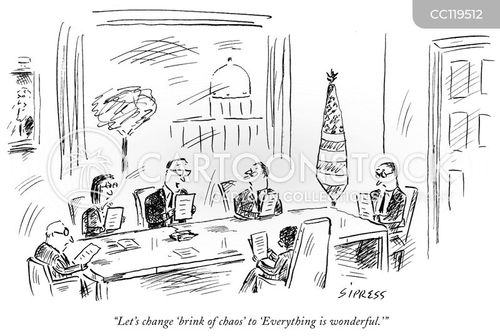
Cartoon – Let’s Change “Brink of Chaos” to “Everything is Wonderful”

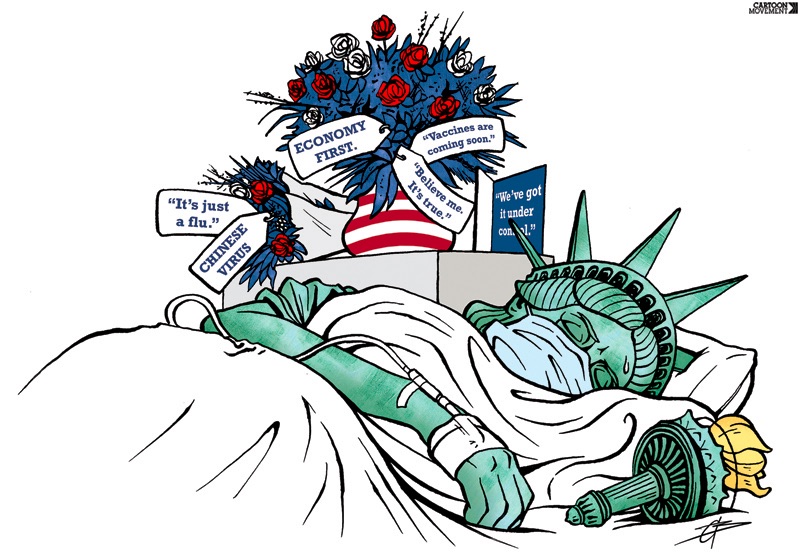
Cartoon – Status Update | HENRY KOTULA

Trump Moves to Replace Watchdog Who Identified Critical Medical Shortages

Trump Moves to Replace Watchdog Who Identified Critical Medical ...

The president announced the nomination of an inspector general for the Department of Health and Human Services, who, if confirmed, would replace an acting official whose report embarrassed Mr. Trump.

President Trump moved on Friday night to replace a top official at the Department of Health and Human Services who angered him with a report last month highlighting supply shortages and testing delays at hospitals during the coronavirus pandemic.

The White House waited until after business hours to announce the nomination of a new inspector general for the department who, if confirmed, would take over for Christi A. Grimm, the principal deputy inspector general who was publicly assailed by the president at a news briefing three weeks ago.

The nomination was the latest effort by Mr. Trump against watchdog offices around his administration that have defied him. In recent weeks, he fired an inspector general involved in the inquiry that led to the president’s impeachment, nominated a White House aide to another key inspector general post overseeing virus relief spending and moved to block still another inspector general from taking over as chairman of a pandemic spending oversight panel.

Mr. Trump has sought to assert more authority over his administration and clear out officials deemed insufficiently loyal in the three months since his Senate impeachment trial on charges of abuse of power and obstruction of Congress ended in acquittal largely along party lines. While inspectors general are appointed by the president, they are meant to be semiautonomous watchdogs ferreting out waste, fraud and corruption in executive agencies.

The purge has continued unabated even during the coronavirus pandemic that has claimed about 65,000 lives in the United States. Ms. Grimm’s case in effect merged the conflict over Mr. Trump’s response to the outbreak with his determination to sweep out those he perceives to be speaking out against him.

Her report, released last month and based on extensive interviews with hospitals around the country, identified critical shortages of supplies, revealing that hundreds of medical centers were struggling to obtain test kits, protective gear for staff members and ventilators. Mr. Trump was embarrassed by the report at a time he was already under fire for playing down the threat of the virus and not acting quickly enough to ramp up testing and provide equipment to doctors and nurses.

“It’s just wrong,” the president said when asked about the report on April 6. “Did I hear the word ‘inspector general’? Really? It’s wrong. And they’ll talk to you about it. It’s wrong.” He then sought to find out who wrote the report. “Where did he come from, the inspector general? What’s his name? No, what’s his name? What’s his name?”

When the reporter did not know, Mr. Trump insisted. “Well, find me his name,” the president said. “Let me know.” He expressed no interest in the report’s findings except to categorically reject them sight unseen.

After learning that Ms. Grimm had worked during President Barack Obama’s administration, Mr. Trump asserted that the report was politically biased. In fact, Ms. Grimm is not a political appointee but a career official who began working in the inspector general office late in President Bill Clinton’s administration and served under President George W. Bush as well as Mr. Obama. She took over the office in an acting capacity when the previous inspector general stepped down.

Mr. Trump was undaunted and attacked her on Twitter. “Why didn’t the I.G., who spent 8 years with the Obama Administration (Did she Report on the failed H1N1 Swine Flu debacle where 17,000 people died?), want to talk to the Admirals, Generals, V.P. & others in charge, before doing her report,” he wrote, mischaracterizing the government’s generally praised response the 2009 epidemic that actually killed about 12,000 in the United States. “Another Fake Dossier!”

To take over as inspector general, Mr. Trump on Friday night named Jason C. Weida, an assistant United States attorney in Boston. The White House said in its announcement that he had “overseen numerous complex investigations in health care and other sectors.” He must be confirmed by the Senate before assuming the position.

Among several other nominations announced on Friday was the president’s choice for a new ambassador to Ukraine, filling a position last occupied by Marie L. Yovanovitch.

Ms. Yovanovitch was ousted a year ago because she was seen as an obstacle by the president’s advisers as they tried to pressure the government in Kyiv to incriminate Mr. Trump’s Democratic rivals. That effort to solicit political benefit from Ukraine, while withholding security aid, led to Mr. Trump’s impeachment largely along party lines in December.

Mr. Trump selected Lt. Gen. Keith W. Dayton, a retired 40-year Army officer now serving as the director of the George C. Marshall European Center for Security Studies in Germany. Mr. Dayton speaks Russian and served as defense attaché in Moscow. More recently, he served as a senior United States defense adviser in Ukraine appointed by Jim Mattis, Mr. Trump’s first defense secretary.


The pandemic didn’t come out of nowhere. The U.S. ignored the warnings.

https://www.washingtonpost.com/opinions/global-opinions/the-pandemic-didnt-come-out-of-nowhere-the-us-ignored-the-warnings/2020/04/21/3bf37566-7db3-11ea-a3ee-13e1ae0a3571_story.html?utm_campaign=wp_opinions&utm_medium=email&utm_source=newsletter&wpis

The pandemic didn't come out of nowhere. The U.S. ignored the ...

“CAME OUT of nowhere,” President Trump said March 6 of the coronavirus pandemic. “I just think this is something . . . that you can never really think is going to happen.” A few weeks later, he added, “I would view it as something that just surprised the whole world.” Mr. Trump also said, “Nobody knew there would be a pandemic or epidemic of this proportion.”

Of course, no one can pinpoint the exact moment that lightning will strike. But a global pandemic? Experts have predicted it, warned about the preparedness gaps and urged action. Again and again and again.

Just look at 2019. In January, the U.S. intelligence community issued its annual global threat assessment. It declared, “We assess that the United States and the world will remain vulnerable to the next flu pandemic or large-scale outbreak of a contagious disease that could lead to massive rates of death and disability, severely affect the world economy, strain international resources, and increase calls on the United States for support. . . . The growing proximity of humans and animals has increased the risk of disease transmission. The number of outbreaks has increased in part because pathogens originally found in animals have spread to human populations.”

In September, the Johns Hopkins Center for Health Security issued a report titled “Preparedness for a High-Impact Respiratory Pathogen Pandemic.” The report found that if such a pathogen emerged, “it would likely have significant public health, economic, social, and political consequences. . . . The combined possibilities of short incubation periods and asymptomatic spread can result in very small windows for interrupting transmission, making such an outbreak difficult to contain.” The report pointed to “large national and international readiness gaps.”

In October, the Nuclear Threat Initiative, working with the Johns Hopkins center and the Economist Intelligence Unit, published its latest Global Health Security Index, examining open-source information about the state of health security across 195 nations, and scoring them. The report warned, “No country is fully prepared for epidemics or pandemics, and every country has important gaps to address.” The report found that “Fewer than 5 percent of countries scored in the highest tier for their ability to rapidly respond to and mitigate the spread of an epidemic.”

In November, the Center for Strategic and International Studies published a study by its Commission on Strengthening America’s Health Security. It warned, “The American people are far from safe. To the contrary, the United States remains woefully ill-prepared to respond to global health security threats. This kind of vulnerability should not be acceptable to anyone. At the extreme, it is a matter of life and death. . . . Outbreaks proliferate that can spread swiftly across the globe and become pandemics, disrupting supply chains, trade, transport, and ultimately entire societies and economies.” The report recommended: “Restore health security leadership at the White House National Security Council.”

Came out of nowhere? Not even close. The question that must be addressed in future postmortems is why all this expertise and warning was ignored.


U.S. with 1/3 of Confirmed Coronavirus Cases with Less Than 2% of Population Tested

https://coronavirus.jhu.edu/map.html

Coronavirus outbreak affecting some Durham high school students ...

By the numbers: The coronavirus has infected over 2.9 million people and killed over 200,000, Johns Hopkins data shows. More than 829,000 people have recovered from COVID-19. The U.S. has reported the most cases in the world (more than 940,000 from 5.1 million tests), followed by Spain (over 223,000).


‘Sadness’ and Disbelief From a World Missing American Leadership

Sadness' and Disbelief From a World Missing American Leadership ...

The coronavirus pandemic is shaking bedrock assumptions about U.S. exceptionalism. This is perhaps the first global crisis in more than a century where no one is even looking for Washington to lead.

As images of America’s overwhelmed hospital wards and snaking jobless lines have flickered across the world, people on the European side of the Atlantic are looking at the richest and most powerful nation in the world with disbelief.

“When people see these pictures of New York City they say, ‘How can this happen? How is this possible?’” said Henrik Enderlein, president of the Berlin-based Hertie School, a university focused on public policy. “We are all stunned. Look at the jobless lines. Twenty-two million,” he added.

“I feel a desperate sadness,” said Timothy Garton Ash, a professor of European history at Oxford University and a lifelong and ardent Atlanticist.

The pandemic sweeping the globe has done more than take lives and livelihoods from New Delhi to New York. It is shaking fundamental assumptions about American exceptionalism — the special role the United States played for decades after World War II as the reach of its values and power made it a global leader and example to the world.

Today it is leading in a different way: More than 840,000 Americans have been diagnosed with Covid-19 and at least 46,784 have died from it, more than anywhere else in the world.

As the calamity unfolds, President Trump and state governors are not only arguing over what to do, but also over who has the authority to do it. Mr. Trump has fomented protests against the safety measures urged by scientific advisers, misrepresented facts about the virus and the government response nearly daily, and this week used the virus to cut off the issuing of green cards to people seeking to emigrate to the United States.

“America has not done badly, it has done exceptionally badly,” said Dominique Moïsi, a political scientist and senior adviser at the Paris-based Institut Montaigne.

The pandemic has exposed the strengths and weaknesses of just about every society, Mr. Moïsi noted. It has demonstrated the strength of, and suppression of information by, an authoritarian Chinese state as it imposed a lockdown in the city of Wuhan. It has shown the value of Germany’s deep well of public trust and collective spirit, even as it has underscored the country’s reluctance to step up forcefully and lead Europe.

And in the United States, it has exposed two great weaknesses that, in the eyes of many Europeans, have compounded one another: the erratic leadership of Mr. Trump, who has devalued expertise and often refused to follow the advice of his scientific advisers, and the absence of a robust public health care system and social safety net.

“America prepared for the wrong kind of war,” Mr. Moïsi said. “It prepared for a new 9/11, but instead a virus came.”

“It raises the question: Has America become the wrong kind of power with the wrong kind of priorities?” he asked.

Ever since Mr. Trump moved into the White House and turned America First into his administration’s guiding mantra, Europeans have had to get used to the president’s casual willingness to risk decades-old alliances and rip up international agreements. Early on, he called NATO “obsolete” and withdrew U.S. support from the Paris climate agreement and the Iran nuclear deal.

But this is perhaps the first global crisis in more than a century where no one is even looking to the United States for leadership.

In Berlin, Germany’s foreign minister, Heiko Maas, has said as much.

China took “very authoritarian measures, while in the U.S., the virus was played down for a long time,” Mr. Maas recently told Der Spiegel magazine.

“These are two extremes, neither of which can be a model for Europe,” Mr. Maas said.

America once told a story of hope, and not just to Americans. West Germans like Mr. Maas, who grew up on the front line of the Cold War, knew that story by heart, and like many others in the world, believed it.

But nearly three decades later, America’s story is in trouble.

The country that helped defeat fascism in Europe 75 years ago next month, and defended democracy on the continent in the decades that followed, is doing a worse job of protecting its own citizens than many autocracies and democracies.

There is a special irony: Germany and South Korea, both products of enlightened postwar American leadership, have become potent examples of best practices in the coronavirus crisis.

But critics now see America failing not only to lead the world’s response, but letting down its own people as well.

“There is not only no global leadership, there is no national and no federal leadership in the United States,” said Ricardo Hausmann, director of the Growth Lab at Harvard’s Center for International Development. “In some sense this is the failure of leadership of the U.S. in the U.S.”

Of course, some countries in Europe have also been overwhelmed by the virus, with the number of dead from Covid-19 much higher as a percentage of the population in Italy, Spain and France than in the United States. But they were struck sooner and had less time to prepare and react.

The contrast between how the United States and Germany responded to the virus is particularly striking.

While Chancellor Angela Merkel has been criticized for not taking a forceful enough leadership role in Europe, Germany is being praised for a near-textbook response to the pandemic, at least by Western standards. That is thanks to a robust public health care system, but also a strategy of mass testing and trusted and effective political leadership.

Ms. Merkel has done what Mr. Trump has not. She has been clear and honest about the risks with voters and swift in her response. She has rallied all 16 state governors behind her. A trained physicist, she has followed scientific advice and learned from best practice elsewhere.

Not long ago, Ms. Merkel was considered a spent force, having announced that this would be her last term. Now her approval ratings are at 80 percent.

“She has the mind of a scientist and the heart of a pastor’s daughter,” Mr. Garton Ash said.

Mr. Trump, in a hurry to restart the economy in an election year, has appointed a panel of business executives to chart a course out of the lockdown.

Ms. Merkel, like everyone, would like to find a way out, too, but this week she warned Germans to remain cautious. She is listening to the advice of a multidisciplinary panel of 26 academics from Germany’s national academy of science. The panel includes not just medical experts and economists but also behavioral psychologists, education experts, sociologists, philosophers and constitutional experts.

“You need a holistic approach to this crisis,” said Gerald Haug, the academy’s president, who chairs the German panel. “Our politicians get that.”

A climatologist, Mr. Haug used to do research at Columbia University in New York.

The United States has some of the world’s best and brightest minds in science, he said. “The difference is, they’re not being listened to.”

“It’s a tragedy,” he added.

Some cautioned that the final history of how countries fare after the pandemic is still a long way from being written.

A pandemic is a very specific kind of stress test for political systems, said Mr. Garton Ash, the history professor. The military balance of power has not shifted at all. The United States remains the world’s largest economy. And it was entirely unclear what global region would be best equipped to kick-start growth after a deep recession.

“All of our economies are going to face a terrible test,” he said. “No one knows who will come out stronger at the end.”

Benjamin Haddad, a French researcher at the Atlantic Council, wrote that while the pandemic was testing U.S. leadership, it is “too soon to tell” if it would do long-term damage.

“It is possible that the United States will resort to unexpected resources, and at the same time find a form of national unity in its foreign policy regarding the strategic rivalry with China, which it has been lacking until now,” Mr. Haddad wrote.

There is another wild card in the short term, Mr. Moïsi pointed out. The United States has an election in November. That, and the aftermath of the deepest economic crisis since the 1930s, might also affect the course of history.

The Great Depression gave rise to America’s New Deal. Maybe the coronavirus will lead the United States to embrace a stronger public safety net and develop a national consensus for more accessible health care, Mr. Moïsi suggested.

“Europe’s social democratic systems are not only more human, they leave us better prepared and fit to deal with a crisis like this than the more brutal capitalistic system in the United States,” Mr. Moïsi said.

The current crisis, some fear, could act like an accelerator of history, speeding up a decline in influence of both the United States and Europe.

“Sometime in 2021 we come out of this crisis and we will be in 2030,” said Mr. Moïsi. “There will be more Asia in the world and less West.”

Mr. Garton Ash said that the United States should take an urgent warning from a long line of empires that rose and fell.

“To a historian it’s nothing new, that’s what happens,” said Mr. Garton Ash. “It’s a very familiar story in world history that after a certain amount of time a power declines.”

“You accumulate problems, and because you’re such a strong player, you can carry these dysfunctionalities for a long time,” he said. “Until something happens and you can’t anymore.”


Cartoon – At last a Sport We can Watch

KAL's cartoon | The world this week | The Economist

Cartoon – State of the Union

iroon.com: Cartoons