A Mississippi town welcomed students back to school last week. Now 116 are home in quarantine.

https://www.washingtonpost.com/nation/2020/08/06/school-coronavirus-outbreak-mississippi/?utm_campaign=wp_main&utm_medium=social&utm_source=facebook&fbclid=IwAR058o-kJ0UCs1SRJFdJ-bWJylbuVn1Q2QkYnhMpmWH4s6NVx9yN2CA6lNE

Over 100 students quarantined in Mississippi school district after ...

Last week, schools in Corinth, Miss., welcomed back hundreds of students. By Friday, one high-schooler tested positive for the novel coronavirus. By early this week, the count rose to six students and one staff member infected. Now, 116 students have been sent home to quarantine, a spokeswoman for the school district confirmed.

Despite the quick fallout, the district’s superintendent said he has no plans to change course.

As districts around the country debate the merits of in-person classes vs. remote learning amid an escalating novel coronavirus pandemic, the Corinth School District’s early experience shows how quickly positive tests can lead to larger quarantines.

Other districts that have welcomed teachers or students back have faced similar challenges. After teachers returned to plan lessons in Georgia’s largest district, 260 district employees were barred from reentering schools because of either testing positive for the coronavirus or being in close contact with someone who had. In southeast Kansas, six school administrators tested positive after attending a three-day retreat. And within hours of opening, a school in Greenfield, Ind., was informed by the health department that a student had the virus.

Some health officials in the Trump administration, which has pushed for schools to fully reopen, are now urging communities with high rates of the virus to rethink in-person classes. On Sunday, Deborah Birx, the White House’s top coronavirus coordinator, said on CNN’s “State of the Union” that in hard-hit areas, “we are asking people to distance-learn at this moment so we can get this epidemic under control.”

Mississippi has been among the hardest-hit states in the South and could overtake Florida as the top state for cases per capita, according to researchers at Harvard University. The state has had more than 63,000 coronavirus cases and more than 1,800 deaths to date.

On Tuesday, Gov. Tate Reeves (R) said in a Facebook post that he would delay school opening for seventh to 12th grades in hot spots. The governor also mandated masks in schools and ordered a two-week mask requirement for public gatherings.

In Corinth, the school district gave families an option of either sending their children to school buildings or doing distance learning from home.

“We made the decision that even though we had seen a spike in those numbers, that schools needed to reopen and at the same time, schools need to remain open,” Childress said in the Facebook Live broadcast.

According to the district’s reopening plan, students and teachers are screened daily, with their temperatures taken upon arrival at school and checked for symptoms including coughing, difficulty breathing, and loss of taste and smell. Childress said that the district will start midday temperature checks.

When the schools learned of positive coronavirus cases, they used contact tracing and notified students who had been “within 6 feet of an infected person for 15 minutes or more,” said a memo posted Wednesday on Facebook informing the community of the cases. Seating charts helped the school determine who needed to quarantine, Childress said in the Facebook Live broadcast.

Those students will have to self-quarantine for 14 days and continue school online.

Despite the positive tests and quarantines, Childress said he remained optimistic about the school district’s plans. He encouraged the families to wear masks, and he urged everyone with children in quarantine to stay home until getting their test results.

“We’ve had a good start of school,” Childress said. “We’re going to have some more positive cases. We know that. We know it will happen. We’re going to have to deal with it, and I can assure that we will deal with it and when we impose quarantines on students and staff, we are doing that for a reason.”


For 20th straight week, more than 1 million Americans filed jobless claims even as enhanced benefits expired

https://www.washingtonpost.com/business/2020/08/06/20th-straight-week-more-than-1-million-americans-filed-jobless-claims-even-enhanced-benefits-expired/?utm_campaign=wp_main&utm_medium=social&utm_source=facebook&fbclid=IwAR2i4HqZnx_L6zRMf81cWUKPOQYNCp7iqWWvw0eMcwVzw1Q_3yUy5j7F0Ok

Stocks fall as weekly unemployment claims show a 'slowing' pace of ...

1.2 million Americans sought the benefits last week, down slightly from the week before.

The number of newly filed unemployed insurance claims dropped last week after two straight weeks of rising, but it remains well above historic pre-pandemic levels, according to Labor Department data.

It marked the 20th straight week that more than 1 million Americans filed jobless claims.

A total of 1.19 million people filed new claims last week, down from 1.43 million the week previously. The numbers of new claimants have come down from their peak in March of more than six million, but they are still well above the pre-pandemic record of 695,000 from 1982.

Another 656,000 new claims were filed for Pandemic Unemployment Assistance, the benefits offered to gig and self-employed workers.

The number of people continuing traditional unemployment claims, from the week ending July 25, was 16.1 million, down about 844,000 from the week prior. (The statistic lags by a week.) When including the PUA, more than 32.1 million Americans are currently receiving some form of unemployment benefits.

“It is promising that the initial unemployment numbers have ticked down,” said AnnElizabeth Konkel, an economist at Indeed Hiring Lab. “But we aren’t out of the woods yet. The claims are still much higher than the pre-covid era, so it’s still pointing to a lot of economic pain.”

The numbers come during what many economists say is an inflection point for the country’s economy.

Congress continues to wrangle over an extension to the extra $600 a week in unemployment benefits that many laid off workers say have helped stabilize their finances — and stave off a deeper crisis from an economy hollowed by evictions, mortgage and credit card defaults, and plunging consumer demand. Those benefits expired last week.

Funds from the Paycheck Protection Program, the $660 billion federal aid program that was meant to help small businesses keep workers on the payroll, are in the process of running out, as well. And the coronavirus’ frightening march since mid-June has added to uncertainty about when — or even if — the country can expect a return in the near future to what was considered a normal way of life and doing business not that long ago.

There are many indications that workers are getting laid off for a second time in just a few short months. In California, for example, which has one of the highest rates of workers on unemployment insurance, an analysis by the University of California, Los Angeles, and the California Employment Development Department found that more than half — 57 percent — of initial unemployment claims filed during the week ending July 25th were from workers re-opening older claims, a large majority of which had been filed early in the crisis.

The unemployment rate for July, as well as the number of jobs added or lost, will be released Friday by the Bureau of Labor Statistics, from a survey taken early in the month. Many economists expect the country’s unemployment rate to drop from the 11.1 percent it was at in June; but due to the survey’s lag, many caution that the release will not register more recent economic developments that have emerged in recent weeks as the the pandemic has caught up with the country’s economic rebound.

Companies announcing layoffs in the last week include: NBCUniversalJohn DeereFujitsu Network Communications, and hotel and tourism based businesses like retailer DFS Group and Wyndham Vacation Ownership.


Fauci says family has faced threats, harassment amid pandemic

Fauci says family has faced threats, harassment amid pandemic

Fauci says family has faced threats, harassment amid pandemic ...

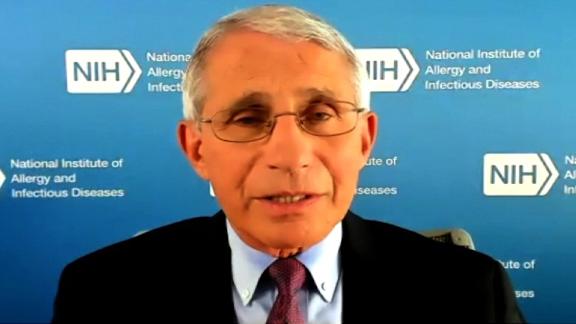
Dr. Anthony Fauci, the nation’s top infectious disease expert, said he and his family are getting death threats because people don’t like what he says about COVID-19.

“Getting death threats for me, and my family, and harassing my daughters, to the point where I have to get security is just — I mean, it’s amazing,” Fauci said during an interview with CNN’s Sanjay Gupta on Wednesday.

“I wouldn’t have imagined in my wildest dreams that people who object to things that are pure public health principles, are so set against it and don’t like what you and I say, namely in the world of science, that they actually threaten you.”

He noted that crises like COVID-19 has brought out the best of people but also the worst of people.

Fauci’s notoriety has been elevated by COVID-19, as he is often on TV offering a blunt portrayal of the state of the pandemic in the U.S.

Fauci, 79, is one of the world’s most respected infectious disease experts, having advised six presidents on HIV/AIDS, Ebola, Zika and other health crises. He has earned a reputation for being blunt and willing to correct the president.

Fauci has had a security detail since at least April.

Fauci also reflected on what he says is a degree of “anti-science” sentiment in the U.S. that is making it difficult to get people to do things to slow the spread of COVID-19 like wearing masks.

“There is a degree of anti-science feeling in this country, and I think it is not just related to science. It’s almost related to authority and a mistrust in authority that spills over,” he told Gupta.

“Because in some respects, scientists, because they’re trying to present data, may be looked upon as being an authoritative figure, and the pushing back on authority, the pushing back on government is the same as pushing back on science.”

He said the scientific community should be more transparent and reach out to people to underscore the importance of science and evidence-based policy.

“I know when I say that if we follow these five or six principles, we can open up we don’t have to stay shut…There are some people that just don’t believe me or don’t pay attention to that. And that’s unfortunate because that is the way out of this,” he said.

President Trump has repeatedly undermined Fauci, questioning the White House coronavirus task force member on Twitter and in interviews with the media.

Over the weekend, Trump tweeted out a video of a portion of Fauci’s testimony explaining why the U.S. has recorded more cases than European cases and called it “wrong.” Trump has falsely claimed several times that the U.S. has more cases because it is doing more testing.

Trump has also retweeted multiple messages that question Fauci’s expertise, including one last week that said he had “misled the American public.”


Consultant Rues ‘Big Mistake’ That Led to Family’s COVID Infections

California GOP Consultant Rues ‘Big Mistake’ That Led to Family’s COVID Infections

California GOP Consultant Rues 'Big Mistake' That Led to Family's ...

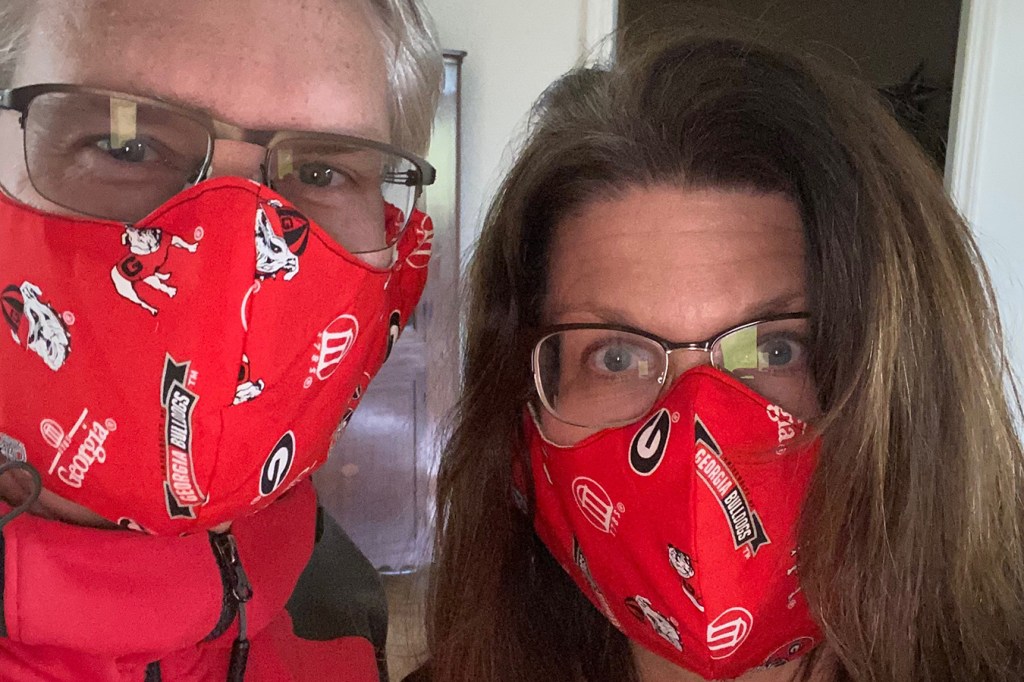
The tweet Richard Costigan posted July 23 was bluntly honest: “We tried our best to limit exposure to #COVID19 but we slipped up somewhere.”

Costigan tweeted while waiting anxiously in the parking lot of a hospital outside Sacramento. The veteran Republican political consultant had just dropped his wife, Gloria, off at the emergency room. He wasn’t allowed to go in with her.

His thoughts traveled back to the small family gathering they had attended in Georgia nearly two weeks before with their 23-year-old daughter, Emma, and 17-year-old son, Andrew. They had planned it so carefully. Nobody wanted to get Gloria’s 88-year-old mother sick.

But here they were, Costigan’s wife battling for breath in the ER, and Costigan sitting in his car coughing.

The family’s journey since then has been one of sleeplessness, pain and worry about the future. And it’s one that Costigan, who worked as deputy chief of staff for Republican Gov. Arnold Schwarzenegger, is taking to social media and his 4,400 Twitter followers.

Looking back, Costigan, 54, doesn’t think he and Gloria, 53, contracted the virus on their separate flights to Georgia, where the family owns a home. The flights were nearly empty and the passengers and crew wore masks, he said.

In Georgia, the family continued its regimen of social distancing and wore masks whenever they left the house — protocols they had followed for months at home in California. And when they gathered with their relatives on that sunny Saturday in July, they were careful to space the chairs 6 feet apart in the backyard.

But they didn’t wear masks, he said, and family members went in and out of the house to grab drinks and use the restroom. “We thought we’d done everything right, and we screwed up,” Costigan said in a July 29 phone interview. “We made a big mistake.”

Now seven of the 10 family members who attended that backyard gathering are sick. Emma and Andrew don’t have any symptoms but haven’t been tested. Exactly who introduced COVID-19 to the group is unclear. No one showed signs of sickness at the time. The first person to become sick was Gloria’s sister, then her niece — then her mom.

Gloria Costigan became sick after they returned to Sacramento, spent a night in the hospital, needed an oxygen machine at home and developed COVID-related pneumonia. By Saturday, however, she no longer needed supplemental oxygen.

Costigan’s reputation as a straight shooter, respected and liked by both Democrats and Republicans, could help change minds about the virus, said Barbara O’Connor, emeritus director of the Institute for the Study of Politics and Media at California State University-Sacramento.

“I think that Richard is being very honest about what’s going on,” said O’Connor, who has known Costigan for decades. “It’s not political. It’s really human.”

Lawmakers who have responded on Twitter with messages of support include state Controller Betty Yee, and state Sens. Richard Bloom and Steve Glazer, all Democrats. Sen. Richard Pan (D-Sacramento), a physician who chairs the Senate Health Committee, has texted well wishes to Costigan.

For his followers, Costigan’s chronicles of the virus remain grim.

“I can’t go very far without needing to lay down,” he wrote in a July 25 tweet. “Been sleeping constantly last two days and the joint pain is intense.”

In another tweet two days later, the symptoms were the same:

Gloria’s 88-year-old mom is at home with a cough, he said.

Costigan talked to California Healthline about his family’s disease odyssey and what he hopes people will take away from his COVID-19 Twitter chronicles. The interview has been edited for length and clarity.

Q: You have tweeted in such detail about the horrible symptoms you experienced. How do you feel now?

My ribs just hurt with the coughing and the fatigue, and my joints hurt. I have the sweats and vivid dreams. I sleep on the floor because it’s more comfortable than the bed.

This thing just hits like a ton of bricks. It’s also the nervousness of it. How long is it going to last? Who are we going to expose to it? I just don’t know what the end game is.

Q: What is it like at your house now?

I wear a mask inside, Gloria wears a mask inside, and Andrew wears a mask. Gloria is sleeping in Emma’s old bedroom, I’m in our bedroom, and Andrew stays upstairs. When I’m hacking, you can see the spit come out. I’m worried about getting pneumonia. That’s something I’m worried about giving to my kid. It’s not just COVID.

Our daughter can only stand on our front porch. She delivers food to us. She puts it by the door, rings the bell and stands 6 feet back.

Q: You suspect you got COVID from the family gathering in Georgia. How do you trace it to that event?

When we looked at everybody that was at the gathering, we were trying to figure it out. It started with my sister-in-law getting sick. Out of 10 of us, seven of us are sick.

We never thought of our family being the one to harm us. Sometimes, you can’t control your anger. You want to be mad at someone. Gloria and I just decided we’re not going to blame anyone. We just don’t know who had it.

Q: How has this experience been so far for you and your family?

It’s been a bizarre week. I went to Kaiser Thursday night. You drop your significant other off. You can’t go in. Off they go to the tented area and I wait in the parking lot. She is admitted. Her oxygen levels are low. She gets a CT, she gets a shot in her stomach for possible blood clots. She gets out Friday and they send oxygen tanks to your house. … She’s in her early 50s and doesn’t have any health issues [otherwise].

Saturday, my son is doubling over in pain. I end up in the ER with my son, and I start coughing. I’m getting the side eye from everyone. Thankfully, he had a kidney stone.

Q: What kind of precautions have you and your family taken these past few months?

We hadn’t been anywhere for months. It was: Stay home. Work from home. No school.

Going to the store was extremely stressful. You go to the store, mask up, glove up, you bleach your shoes when you come home, spray down your car, wash your hands, use a towel to dry your hands, the towel goes straight into the washing machine.

Our son got frustrated with us because we wouldn’t let him see his friends. He saw photos of friends of his partying at Folsom Lake. We were the hardcore parents.

Q: In posts on social media, you are asking people to wear a mask. Why do you think it’s become a political issue?

I’ve been taking flak from friends of mine because I’ve been posting “wear a mask.” Wearing a mask — somehow it has become a freedom issue. It’s not a grand conspiracy. Wearing a mask is a simple thing to do to prevent someone else from getting sick. I do not understand how this has turned into a political issue. The government has a role to play. This is a health care crisis.

Q: How do you move forward in this pandemic?

We’re locking down. Nobody is coming into our circle. I don’t want it again. To see my wife this way is hard.

I want folks to realize this thing is non-discriminatory. It doesn’t matter who you are.


40% of Americans still putting off care

https://www.axios.com/newsletters/axios-vitals-65b6b9b9-ee8e-4b89-9688-c43c0146c4d6.html?utm_source=newsletter&utm_medium=email&utm_campaign=newsletter_axiosvitals&stream=top

40% of Americans continue to put off medical care - Axios

Roughly 40% of Americans have postponed getting medical care due to the coronavirus outbreak. That number has stayed around 40% in all 12 weeks of the Census Bureau’s Household Pulse Survey.

Why it matters: Hospitals and doctors started rescheduling surgeries and other appointments as early as mid-May, and many patient volumes are mostly back to pre-pandemic numbers, Axios’ Bob Herman writes.

  • But this data suggests there is still a major backlog of Americans who need care — a phenomenon that existed well before the pandemic.


Admininstration believes Coronavirus is “under control”

https://www.axios.com/newsletters/axios-vitals-65b6b9b9-ee8e-4b89-9688-c43c0146c4d6.html?utm_source=newsletter&utm_medium=email&utm_campaign=newsletter_axiosvitals&stream=top

Daily confirmed COVID-19 cases, rolling 3-day average - Our World ...

President Trump said in an interview with “Axios on HBO” that he thinks the coronavirus is as well-controlled in the U.S. as it can be, despite dramatic surges in new infections over the course of the summer and more than 150,000 American deaths.

  • “They are dying, that’s true. And you have — it is what it is. But that doesn’t mean we aren’t doing everything we can. It’s under control as much as you can control it. This is a horrible plague,” he told Axios’ Jonathan Swan.

Reality check: The U.S. is averaging roughly 65,000 new cases and 1,000 deaths per day, Axios’ Sam Baker writes. The virus has already killed nearly 150,000 Americans, and it spread largely unchecked through almost the entire country throughout June and July.

The big picture: In the interview, which took place last Tuesday, Trump returned to familiar themes and areas where the U.S. really has made significant progress. He cited the dramatic increase in ventilator production, the ramp-up in testing and treatment that has reduced the overall fatality rate from the virus.

  • Yes, but: He painted a far rosier picture of the pandemic than most data would support.

On testing, Trump said, “You know there are those that say you can test too much” — a view that no experts have advocated.

  • The U.S. is experiencing long turnaround times for coronavirus testing, as Trump acknowledged, because of the high demand for testing. But that is largely a function of the country’s high caseload and the number of people at risk of infection.

He also returned to his mantra that “because we’ve done more tests, we have more cases.”

  • The cases the U.S. has, we would have had with or without testing. We know we have them because of testing, but the massive outbreak here would be a massive outbreak whether we chose to know about it (through testing) or ignore it by not testing.


The Mask Slackers of 1918

As the influenza pandemic swept across the United States in 1918 and 1919, masks took a role in political and cultural wars.

The masks were called muzzles, germ shields and dirt traps. They gave people a “pig-like snout.” Some people snipped holes in their masks to smoke cigars. Others fastened them to dogs in mockery. Bandits used them to rob banks.

More than a century ago, as the 1918 influenza pandemic raged in the United States, masks of gauze and cheesecloth became the facial front lines in the battle against the virus. But as they have now, the masks also stoked political division. Then, as now, medical authorities urged the wearing of masks to help slow the spread of disease. And then, as now, some people resisted.

In 1918 and 1919, as bars, saloons, restaurants, theaters and schools were closed, masks became a scapegoat, a symbol of government overreach, inspiring protests, petitions and defiant bare-face gatherings. All the while, thousands of Americans were dying in a deadly pandemic.

The first infections were identified in March, at an Army base in Kansas, where 100 soldiers were infected. Within a week, the number of flu cases grew fivefold, and soon the disease was taking hold across the country, prompting some cities to impose quarantines and mask orders to contain it.

By the fall of 1918, seven cities — San Francisco, Seattle, Oakland, Sacramento, Denver, Indianapolis and Pasadena, Calif. — had put in effect mandatory face mask laws, said Dr. Howard Markel, a historian of epidemics and the author of “Quarantine!

Organized resistance to mask wearing was not common, Dr. Markel said, but it was present. “There were flare-ups, there were scuffles and there were occasional groups, like the Anti-Mask League,” he said, “but that is the exception rather than the rule.”

At the forefront of the safety measures was San Francisco, where a man returning from a trip to Chicago apparently carried the virus home, according to archives about the pandemic at the University of Michigan.

By the end of October, there were more than 60,000 cases statewide, with 7,000 of them in San Francisco. It soon became known as the “masked city.”

“The Mask Ordinance,” signed by Mayor James Rolph on Oct. 22, made San Francisco the first American city to require face coverings, which had to be four layers thick.

Resisters complained about appearance, comfort and freedom, even after the flu killed an estimated 195,000 Americans in October alone.

Alma Whitaker, writing in The Los Angeles Times on Oct. 22, 1918, reviewed masks’ impact on society and celebrity, saying famous people shunned them because it was “so horrid” to go unrecognized.

“The big restaurants are the funniest sights, with all the waiters and diners masked, the latter just raising their screen to pop in a mouthful of food,” she wrote.

When Ms. Whitaker herself declined to wear one, she was “forcibly taken” to the Red Cross as a “slacker,” and ordered to make one and put it on.

The San Francisco Chronicle said the simplest type of mask was of folded gauze affixed with elastic or tape. The police went for gauze masks, which resembled an unflattering “nine ordinary slabs of ravioli arranged in a square.”

There was room for creativity. Some of the coverings were “fearsome looking machines” that lent a “pig-like aspect” to the wearer’s face.

The penalty for violators was $5 to $10, or 10 days’ imprisonment.

On Nov. 9, 1,000 people were arrested, The San Francisco Chronicle reported. City prisons swelled to standing room only; police shifts and court sessions were added to help manage.

“Where is your mask?” Judge Mathew Brady asked offenders at the Hall of Justice, where sessions dragged into night. Some gave fake names, said they just wanted to light a cigar or that they hated following laws.

Jail terms of 8 hours to 10 days were given out. Those who could not pay $5 were jailed for 48 hours.

On Oct. 28, a blacksmith named James Wisser stood on Powell and Market streets in front of a drugstore, urging a crowd to dispose of their masks, which he described as “bunk.”

A health inspector, Henry D. Miller, led him to the drugstore to buy a mask.

At the door, Mr. Wisser struck Mr. Miller with a sack of silver dollars and knocked him to the ground, The San Francisco Chronicle reported. While being “pummeled,” Mr. Miller, 62, fired four times with a revolver. Passers-by “scurried for cover,” The Associated Press said.

Mr. Wisser was injured, as were two bystanders. He was charged with disturbing the peace, resisting an officer and assault. The inspector was charged with assault with a deadly weapon.

That was the headline for a report published in The Los Angeles Times when city officials met in November to decide whether to require residents to wear “germ scarers” or “flu-scarers.”

Public feedback was invited. Some supported masks so theaters, churches and schools could operate. Opponents said masks were “mere dirt and dust traps and do more harm than good.”

“I have seen some persons wearing their masks for a while hanging about their necks, and then apply them to their faces, forgetting that they might have picked up germs while dangling about their clothes,” Dr. E.W. Fleming said in a Los Angeles Times report.

An ear, nose and throat specialist, Dr. John J. Kyle, said: “I saw a woman in a restaurant today with a mask on. She was in ordinary street clothes, and every now and then she raised her hand to her face and fussed with the mask.”

Suffragists fighting for the right to vote made a gesture that rejected covering their mouths at a time when their voices were crucial.

At the annual convention of the Illinois Equal Suffrage Association, in October 1918, they set chairs four feet apart, closed doors to the public and limited attendance to 100 delegates, the Chicago Daily Tribune reported.

But the women “showed their scorn” for masks, it said. It’s unclear why.

Allison K. Lange, an associate history professor at Wentworth Institute of Technology, said one reason could have been that they wanted to keep a highly visible profile.

“Suffragists wanted to make sure their leaders were familiar political figures,” Dr. Lange said.

San Francisco’s mask ordinance expired after four weeks at noon on Nov. 21. The city celebrated, and church bells tolled.

A “delinquent” bent on blowing his nose tore his mask off so quickly that it “nearly ruptured his ear,” The San Francisco Chronicle reported. He and others stomped on their masks in the street. As a police officer watched, it dawned on him that “his vigil over the masks was done.”

Waiters, barkeeps and others bared their faces. Drinks were on the house. Ice cream shops handed out treats. The sidewalks were strewn with gauze, the “relics of a torturous month,” The Chronicle said.

The spread had been halted. But a second wave was on the horizon.

By December, the San Francisco Board of Supervisors was again proposing a mask requirement, meeting with testy opposition.

Around the end of the year, a bomb was defused outside the office of San Francisco’s chief health officer, Dr. William C. Hassler. “Things were violent and aggressive, but it was because people were losing money,” said Brian Dolan, a medical historian at the University of California, San Francisco. “It wasn’t about a constitutional issue; it was a money issue.”

By the end of 1918, the death toll from influenza had reached at least 244,681, mostly in the last four months, according to government statistics.

In January, Pasadena’s city commission passed a mask ordinance. The police grudgingly enforced it, cracking down on cigar smokers and passengers in cars. Sixty people were arrested on the first day, The Los Angeles Times reported on Jan. 22, in an article titled “Pasadena Snorts Under Masks.”

“It is the most unpopular law ever placed on the Pasadena records,” W.S. McIntyre, the chief of police, told the paper. “We are cursed from all sides.”

Some mocked the rule by stretching gauze across car vents or dog snouts. Cigar vendors said they lost customers, though enterprising aficionados cut a hole in the cloth. (They were still arrested.) Barbers lost shaving business. Merchants complained traffic dropped as more people stayed home.

Petitions were circulated at cigar stands. Arrests rose, even of the powerful. Ernest May, the president of Security National Bank of Pasadena, and five “prominent” guests were rounded up at the Maryland Hotel one Sunday.

They had masks on, but not covering their faces.

As the contagion moved into its second year, so did the skepticism.

On Dec. 17, 1918, the San Francisco Board of Supervisors reinstituted the mask ordinance after deaths started to climb, a trend that spilled over into the new year with 1,800 flu cases and 101 deaths reported there in the first five days of January.

That board’s decision led to the creation of the Anti-Mask League, a sign that resistance to masks was resurfacing as cities tried to reimpose orders to wear them when infections returned.

The league was led by a woman, E.J. Harrington, a lawyer, social activist and political opponent of the mayor. About a half-dozen other women filled its top ranks. Eight men also joined, some of them representing unions, along with two members of the board of supervisors who had voted against masks.

“The masks turned into a political symbol,” Dr. Dolan said.

On Jan. 25, the league held its first organizational meeting, open to the public at the Dreamland Rink, where they united behind demands for the repeal of the mask ordinance and for the resignations of the mayor and health officials.

Their objections included lack of scientific evidence that masks worked and the idea that forcing people to wear the coverings was unconstitutional.

On Jan. 27, the league protested at a Board of Supervisors meeting, but the mayor held his ground. There were hisses and cries of “freedom and liberty,” Dr. Dolan wrote in his paper on the epidemic.

Repeal came a few days later on Feb. 1, when Mayor Rolph cited a downturn in infections.

But a third wave of flu rolled in late that year. The final death toll reached an estimated 675,000 nationwide, or 30 for every 1,000 people in San Francisco, making it one of the worst-hit cities in America.

Dr. Dolan said the story of the Anti-Mask League, which has drawn renewed interest now in 2020, demonstrates the disconnect between individual choice and universal compliance.

That sentiment echoes through the century from the voice of a San Francisco railway worker named Frank Cocciniglia.

Arrested on Kearny Street in January, Mr. Cocciniglia told the judge that he “was not disposed to do anything not in harmony with his feelings,” according to a Los Angeles Times report.

He was sentenced to five days in jail.

“That suits me,” Mr. Cocciniglia said as he left the stand. “I won’t have to wear a mask there.”


Graph of the Day: Daily Confirmed Covid-19 Cases (Rolling 3-day average)

Daily confirmed COVID-19 cases, rolling 3-day average - Our World ...

‘I’m fighting a war against COVID-19 and a war against stupidity,’ says CMO of Houston hospital

https://www.beckershospitalreview.com/hospital-physician-relationships/i-m-fighting-a-war-against-covid-19-and-a-war-against-stupidity-says-cmo-of-houston-hospital.html?utm_medium=email


After two hours of sleep a night for four months and seeing a member of his team contract the virus, Joseph Varon, MD, is growing exasperated.

“I’m pretty much fighting two wars: A war against COVID and a war against stupidity,” Dr. Varon, MD, CMO and chief of critical care at United Memorial Medical Center in Houston, told NBC News. “And the problem is the first one, I have some hope about winning. But the second one is becoming more and more difficult.”

Dr. Varon noted that whether it’s information backed by science or common sense, people throughout the U.S. are not listening. “The thing that annoys me the most is that we keep on doing our best to save all these people, and then you get another batch of people that are doing exactly the opposite of what you’re telling them to do.”

In an interview with NPR, Dr. Varon said he has woken up at dawn every day for the past four months and has headed to the hospital. There, he spends six to 12 hours on rounds before seeing new admissions. He then returns home to sleep two hours, at most.

He said his staff is physically and emotionally drained. 

UMMC nurse Christina Mathers spoke with NBC News from a hospital bed in the segment, noting that she had recently tested positive for COVID-19 after not feeling well during one of her shifts. “All the fighting, all the screaming, all the finger pointing — enough is enough,” Ms. Mathers told NBC. “People just need to listen to us. We’re not going to lie. Why would we lie?” 

Ms. Mathers has worked every other day since April 29, according to The Atlantic, which created a photo essay of Dr. Varon and the UMMC team at work.


Nope, Kids Not ‘Almost Immune’ to COVID-19 at Georgia Camp

https://www.medpagetoday.com/infectiousdisease/covid19/87849?xid=fb_o&trw=no&fbclid=IwAR2HZ0s8huLi4I5pgLbA-21a4g65bl1kH6j1r_cWfJpyOwvkJrfHJMFCKEU

Nope, Kids Not 'Almost Immune' to COVID-19 at Georgia Camp ...

Even with mitigation measures, attack rates outpaced the Diamond Princess cruise ship.

President Trump’s repeated statements that children are “almost immune” to COVID-19 got a fact check from state and federal public health investigators examining an outbreak at a Georgia summer camp.

Among 597 Georgia residents, including campers, staff members, and trainees, the attack rate was 44%, reported Christine M. Szablewski, DVM, of the Georgia Department of Public Health, and colleagues.

The attack rate was highest among staff members (56%). Younger children ages 6-10 had a rate of 51%, those ages 11-17 had a rate of 44%, and those ages 18-21 had a rate of 33%, the authors wrote in an early edition of the Morbidity and Mortality Weekly Report.

By contrast, 19% of Diamond Princess cruise ship passengers tested positive for COVID-19 in February and March.

Among 136 cases with symptom information available, 26% reported no symptoms, with the authors specifically characterizing asymptomatic transmission as “common.” The flip side of that figure, however, is that a minimum of 100 children did develop symptoms. The report did not address symptom severity, outcomes, or transmission after leaving camp, as the investigation is still continuing, the authors indicated.

“This investigation adds to the body of evidence demonstrating that children of all ages are susceptible to SARS-CoV-2 infection and, contrary to early reports, might play an important role in transmission,” Szablewski and colleagues wrote.

Until recently, data on U.S. children contracting COVID-19, a key point in the argument to reopen schools, were scarce and conflicting. But recent evidence chipped away at the claim that kids are unaffected, with new research emerging this week about the association between school closures and declines in number of cases and deaths. Researchers also found children under age 5 may have far more SARS-CoV-2 viral nucleic acid in their noses than adults, which raises questions about their ability to transmit the virus.

While sleepover camps are not schools, and staff members are not teachers, the authors said the camps adopted CDC guidelines for youth and summer programs. All trainees, staff members, and campers provided documentation of a negative test for SARS-CoV-2. Cloth masks were required for staff members, though not campers, and the camp did not open doors and windows for increased ventilation, as recommended. Campers engaged in “a variety of indoor and outdoor activities,” including “daily vigorous singing and cheering,” they said.

The session was scheduled for June 21-27, and on June 23, a teenage staff member left after developing chills one day prior. The staff member tested positive for SARS-CoV-2. On June 24, campers were sent home, and on June 27, the camp was closed.

However, the damage was done. After excluding out-of-state attendees, researchers examined data from 597 Georgia residents at the camp. Campers were a median age of 12, and 53% were girls, while staff members were a median age of 17, and 59% were girls.

Of the 344 available testing results, 76% were positive for SARS-CoV-2. Not surprisingly, they found attack rates increased with increased time spent at the camp. Average occupancy was 15 per cabin, with a median attack rate of 50% among 28 cabins with one or more positive cases.

Among 100 patients reporting symptom data, two-thirds had fever, about 60% had headache, and 46% had a sore throat.

While the researchers said “consistent and correct” use of cloth masks, as well as physical distancing measures, should be emphasized to mitigate transmission in “congregate settings,” they acknowledged that “the multiple measures adopted by the camp were not sufficient to prevent an outbreak in the context of substantial community transmission.”

“An ongoing investigation will further characterize specific exposures associated with infection, illness course, and any secondary transmission to household members,” the group added.