Wall Street’s roil has stabilized somewhat in recent days, with the S&P 500 brushing up against its 200-day moving average and rising more than 10 percent since its October lows, as of publication time.
The index’s 50-day moving average is trending up, according to financial data firm Refinitiv. But it still must climb another 7.4 percent to form a “golden cross,” which is when a stock or index’s short-term moving average rises above one of its longer-term moving averages. The S&P 500’s 20-day and 100-day moving averages are closer to the milestone, only needing increases of 5 percent and 1.2 percent, respectively.
The Dow Jones Industrial Average has already formed a small golden cross: its 20-day moving average is 1.2 percent higher than its 200-day moving average.
Investors Optimistic about Healthcare Sector
– Investors are most optimistic about the Healthcare sector, which is trading close to its 3-year average “price to earnings-per-share” ratio of 48.1x, according to Simply Wall Street.
– Analysts are expecting an annual earnings growth of 13.4 percent, higher than the sector’s past year earnings growth of 5 percent.
– Merck and Johnson & Johnson were among last week’s top gainers driving the market.
Inflation Appears to be Slowing
– The recent lower-than-expected inflation figures could indicate it is slowing.
– The Fed may continue raising rates, considering the strength in recent labor market and retail sales data.
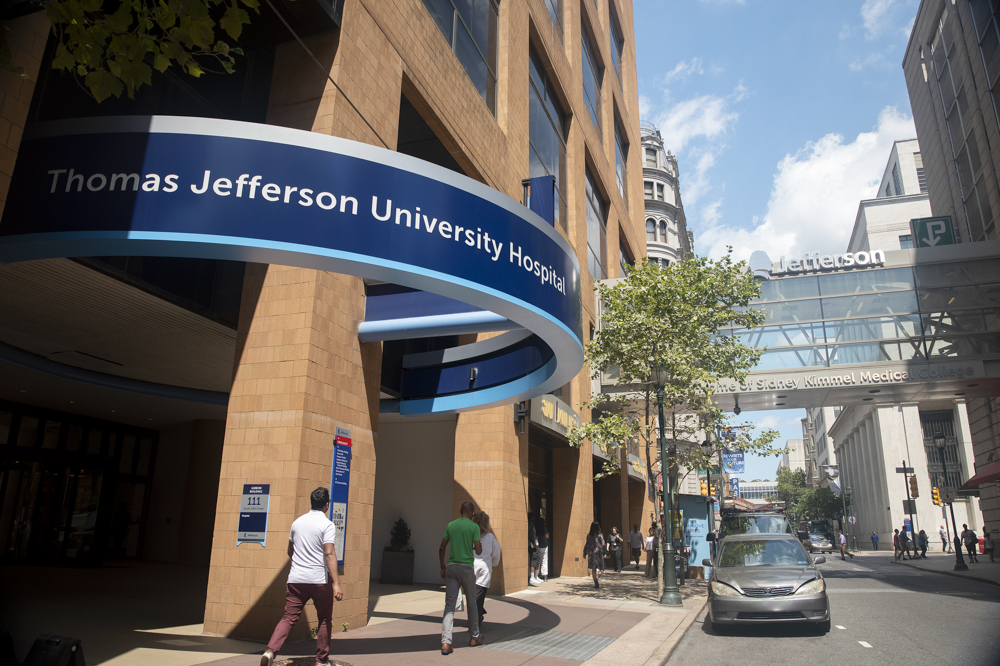
Philadelphia-based Thomas Jefferson University, including Jefferson Health, reported a multimillion-dollar loss in the third quarter ending Sept. 30.
Five things to know:
1. Thomas Jefferson University reported an $83.5 million loss for the quarter, down significantly from a $12.8 million gain in the same period last year.
2. Thomas Jefferson University reported $29.9 million in operating revenue. Clinical operations reported an $87.3 million loss from operations, and the insurance operations reported a $7.1 million gain for the quarter.
3. The organization reported a -3.7 percent operating margin, compared to 0.9 percent for the third quarter last year.
4. Hospital inpatient admissions grew 30.4 percent year over year to 39,463 cases for the quarter. Outpatient observations were also up 21.6 percent to 11,744 cases. Outpatient visits were up 36 percent year over year to 524,200 visits.
5. Days cash on hand for clinical operations dropped by nearly 11 days since the start of the fiscal year to 158.5 days due to nonoperating investment losses and repaying Medicare advance payments.
Providence, a 51-hospital system headquartered in Renton, Wash., ended the first nine months of 2022 with an operating loss of $1.1 billion, according to financial documents released Nov. 14.
The system said in a Nov. 11 news release that its third quarter financial results showed the “ongoing impact of inflation, the national healthcare labor shortage, delayed reimbursement from payers, global supply chain disruptions and financial market weakness.”
For the nine months ended Sept. 30, Providence’s operating revenues were $19.6 billion on a pro forma basis, up from $18.8 billion during the same period last year, according to the report. The pro forma results exclude the operations of Newport Beach, Calif.-based Hoag Hospital. Providence and Hoag ended their affiliation in January.
Operating expenses over the first nine months of the year were $20.7 billion, a 7 percent increase over the same period in 2021 on a pro forma basis. This includes a 9 percent increase in salary and benefits due to the cost of agency staff, overtime and wage increases, according to the release. It also includes a 6 percent increase in supply costs, driven by an 8 percent increase in pharmaceutical spending.
Providence said financial market weakness and volatility drove investment losses of $1.4 billion for the first nine months of 2022, bringing the system’s unrestricted cash and investments to $9.1 billion.
“Healthcare delivery systems across the country face unprecedented challenges, and Providence has not been immune,” Providence President and CEO Rod Hochman, MD, said in the release. “However, just as we have for more than 165 years, we will continue to be here to meet the health care needs of our communities. While we still have a journey ahead of us, we are moving in the right direction and are beginning to see signs of renewal this quarter. My deepest gratitude to the caregivers of Providence for continuing to focus on the Mission and serving those in need, especially those who are most vulnerable, with excellence and compassion.”
The nation’s largest payers have filed their third-quarter earnings reports, revealing which grew their profits the most year over year.
1. UnitedHealth Group: $5.3 billion The company’s third quarter earnings increased over 28 percent year over year. Total net earnings in 2022 are $15.7 billion, an increase of 16.2 percent from $13.5 billion in 2021.
2. Cigna: $2.8 billion The company’s third quarter earnings increased over 70 percent year over year. Total net earnings in 2022 are $5.5 billion, an increase of over 29 percent from $4.2 billion in 2021.
3. Elevance Health: $1.6 billion The company’s third quarter earnings increased over 7 percent year over year. Total net earnings in 2022 are $5.06 billion, an increase of nearly 2 percent from $5 billion in 2021.
4. Humana: $1.2 billion The company’s third quarter earnings decreased over 21 percent year over year. Total net earnings in 2022 are $2.8 billion, a decrease of over 4 percent from $2.9 billion in 2021.
5. Centene: $738 million The company’s third quarter earnings increased over 26 percent year over year. Total net earnings in 2022 are $1.4 billion, an increase of over 89 percent from $748 million in 2021.
6. CVS Health: $3.4 billion losses The company’s third quarter losses are attributable to an opioid legal settlement. Total net earnings in 2022 are $1.9 billion, a decrease of over 71 percent from $6.6 billion in 2021.
Here are 10 health systems with strong operational metrics and solid financial positions, according to reports from Fitch Ratings and Moody’s Investors Service.
1. Advocate Aurora Health has an “AA” rating and a stable outlook with Fitch. The health system, dually headquartered in Milwaukee and Downers Grove, Ill., has a strong financial profile and a leading market position over a broad service area in Illinois and Wisconsin, Fitch said. The health system’s fundamental operating platform is strong, the credit rating agency said.
2. Allina Health System has an “AA-” rating and a stable outlook with Fitch. The Minneapolis-based system is the inpatient market share leader in a highly competitive market and has a strong relation with payers in the market, Fitch said. Alliana’s financial profile is strong, the ratings agency said.
3. Banner Health has an “AA-” rating and stable outlook with Fitch. The Phoenix-based health system’s core hospital delivery system and growth of its insurance division combine to make it a successful, highly integrated delivery system, Fitch said. The credit rating agency said it expects Banner to maintain operating EBITDA margins of about 8 percent on an annual basis, reflecting the growing revenues from the system’s insurance division and large employed physician base.
4. Bon Secours Mercy Health has an “AA-” rating and stable outlook with Fitch. The Cincinnati-based health system has a broad geographic footprint as one of the five largest Catholic health systems in the U.S., a good payer mix and a leading or near-leading market share in eight of its eleven markets in the U.S., Fitch said.
5. Bryan Health has an “AA-” rating and stable outlook with Fitch. The Lincoln, Neb.-based health system has a leading and growing market position, very strong cash flow and a strong financial position, Fitch said. The credit rating agency said Bryan Health has been resilient through the COVID-19 pandemic and is well-positioned to accommodate additional strategic investments.
6. Deaconess Health System has an “AA” rating and stable outlook with Fitch. The Evansville, Ind.-based system has a leading market position in its primary service area and a favorable payer mix, Fitch said. The ratings agency said it expects Deaconess’ operating EBITDA margins to improve and stabilize around 10 percent by 2023, reflecting strong volumes and focus on operating efficiencies.
7. Gundersen Health System has an “AA-” rating and stable outlook with Fitch. The La Crosse, Wis.-based health system has strong balance sheet metrics, a leading market position and an expanding operating platform in its service area, Fitch said. The credit rating agency expects the health system to return to strong operating performance as it emerges from disruption related to the COVID-19 pandemic.
8. Hackensack Meridian Health has an “AA-” rating and stable outlook with Fitch. The Edison, N.J.-based health system has shown consistent year-over-year increases in market share and has a solid liquidity position, Fitch said.
9. Intermountain Healthcare has an “Aa1” rating and stable outlook with Moody’s. The Salt Lake City-based health system has exceptional credit quality, which will continue to benefit from its leading market position in Utah, Moody’s said. The credit rating agency said the health system’s merger with Broomfield, Colo.-based SCL Health will also give Intermountain greater geographic reach.
10. Yale New Haven (Conn.) Health has an “AA-” rating and stable outlook with Fitch. The health system’s turnaround efforts, brand recognition and market presence will help it return to strong operating results, Fitch said.
Oakland, Calif.-based Kaiser Foundation Health Plan, Kaiser Foundation Hospitals and their subsidiaries reported a net loss of $1.5 billion for the quarter ending Sept. 30, according to a Nov. 4 financial report.
The company posted total operating revenues of $24.3 billion and total operating expenses of $24.3 billion for the quarter. Total operating revenues of $23.2 billion and total operating expenses of $23.1 billion for the same period in 2021.
Additionally, there was an operating loss of $75 million in the third quarter compared to an operating income of $38 million in the third quarter of 2021, according to a Nov. 4 news release.
“I am proud of our ability to navigate the challenges of the past few years, including a global economic crisis, the high cost of goods and services, supply chain issues, labor shortages, and the pandemic while serving our 12.6 million members,” said Greg Adams, chair and CEO of Kaiser Permanente.
The net loss of $1.5 billion in the third quarter of 2022 compares to a $1.6 billion net income in the third quarter of 2021. Capital spending totaled $2.5 billion year-to-date.
“We are grateful to our extraordinary people whose commitment and compassion allow us to continue to fulfill our mission of providing high-quality and affordable care and improving the health of our communities,” said Tom Meier, corporate treasurer of Kaiser Permanente.
The third quarter brought little relief to hospitals in what is shaping up to be one of their worst financial years.
Kaufman Hall’s October National Hospital Flash Report— based on data from more than 900 hospitals — found slightly lower hospital expenses in September did not outweigh lower revenue across the board, with decreases in discharges, inpatient minutes and operating minutes.
The median year-to-date operating margin index for hospitals was -0.1 percent in September, marking a ninth straight month of negative operating margins and a dimmer outlook for their climb back into the black by year’s end.
Kaufman Hall noted that expense pressures and volume and revenue declines could force hospitals to make “difficult decisions” about service reductions and cuts.
“Health systems are starting to get a clear picture of what service lines have a positive effect on their margins and which ones are weighing them down,” said Matthew Bates, managing director and Physician Enterprise service line lead with Kaufman Hall. “Without a positive margin there is no mission. Health systems must think carefully and strategically about what areas of care they invest in for the future.”
Large health systems are reporting big losses this year while insurers continue to turn billion-dollar profits.
Humanareported $1.2 billion in third quarter profits, a slight drop from the same period last year. The company has focused on regaining Medicare Advantage market share and increased quarterly revenues 10.2 percent year over year.
Cigna’s third quarter profits jumped 70 percent year over year, hitting $2.8 billion. The company reported $45.3 billion in third quarter revenues and raised its annual earnings outlook based on the results. The company now projects $179 billion for full year 2022 adjusted revenue.
CVS Health also beat investor expectations in the third quarter and raised its earnings outlook. The company’s third quarter revenue jumped almost 10 percent year over year to $81.2 billion, although it reported $3.4 billion in losses after agreeing to pay into a $5 billion global opioid lawsuit settlement over 10 years.
At the same time, health systems are reporting multimillion and even billion-dollar losses. Chicago-based CommonSpirit Health reported $1.3 billion operating loss for the 12-months end on June 30. Ascension, based in St. Louis, also reported a $1.8 billion loss for the fiscal year’s end in June.
Community Health Systemreported a $42 million net loss for the third quarter in October and both Dallas-based Tenet Healthcare and Nashville, Tenn.-based HCA Healthcare reported more than 50 percent drops in quarterly net income from 2021 to 2022.
The profitability mismatch between the nation’s largest payers and health systems of all sizes will be front and center during contract negotiations in the coming year. There have already been high profile contract impasses between insurers and large systems, with some leading to contract termination.
As everyone in our industry knows, sluggish volumes amid persistently rising costs, especially for labor, have sent health system margins into a downward spiral across 2022. Using the latest data from consultancy Kaufman Hall, the graphic above shows that by the end of this year, employed labor expenses will have increased more than all non-labor costs combined.
While contract labor usage, namely travel nursing, is declining, the constant battle for nursing talent means travel nurses are still a significant expense at many hospitals. Through the first six months of this year, over half of hospitals reported a negative operating margin, and the median hospital operating margin has dropped over 100 percent from 2019.
Larger health systems are not faring better: all five of the large, multi-regional, not-for-profit systems we’ve highlighted below saw their operating margins tumble this year, with drops ranging from three points (Kaiser Permanente) to nearly seven points (CommonSpirit Health and Providence).
While these unfavorable cost trends have been building throughout COVID, health systems now have neither federal relief nor returns from a thriving stock market to help stabilize their deteriorating financial outlooks.
Health system boards will tolerate negative margins in the short-term (especially given that many have months’ worth of days cash on hand), but if this situation persists into 2023, pressure for service cuts, layoffs, and restructuring will mount quickly.
St. Louis-based Ascension reported higher expenses in the 12 months ended June 30 and closed out the year with a loss, according to recently released financial documents.
The 144-hospital system reported operating revenue of $27.98 billion in the year ended June 30, up from $27.24 billion a year earlier.
Ascension’s operating expenses climbed to $28.77 billion in the 12 months ended June 30, up from $26.69 billion last year. The increase was attributed to several factors, including higher salaries, wages and benefits due to staffing challenges and increased use of contract and premium labor.
Ascension ended the most recent fiscal year with an operating loss of $879.2 million, compared to an operating income of $676.3 million a year earlier.
After factoring in nonoperating items, Ascension reported a net loss of $1.8 billion for the 12 months ended June 30. A year earlier, the health system posted net income of $5.7 billion.
Ascension is facing many of the same financial pressures as other health systems across the U.S. More than half of hospitals — 53 percent — are projected to have negative margins for the rest of the year.







 HENRY KOTULA