Employers seeking a “source of truth” for coronavirus guidance

https://mailchi.mp/f2774a4ad1ea/the-weekly-gist-may-22-2020?e=d1e747d2d8

What Is Truth? | Psychology Today

As states begin to reopen, employers need guidance to ensure safe, COVID-free operations, and are beginning to call local health systems for advice on how to manage this daunting task. Providing this support is uncharted territory for most systems, and they’re learning on the fly as they bring back shuttered outpatient services and surgery centers themselves. This week we convened leaders from across our Gist Healthcare membership to share ideas on how to assist employers in bringing businesses safely back online—and to discuss whether the pandemic might create broader opportunities for working with the employer community.

It’s no surprise some companies are hoping that providers can step in to test their full workforce, but as several systems shared, “Even if we thought that was the right plan, testing supplies and PPE are still too limited for us to deliver on it now.” Better to support businesses in creating comprehensive screening strategies (with some offering their own app-based solutions), coupled with a testing plan for symptomatic employees.

Health systems have been surprised by the hunger for information on COVID-19 among the business community. Hundreds of companies have registered for informational webinars, hosted by systems through their local chambers of commerce. They’re excited to receive distilled information on local COVID-19 impact and response. As one leader said, the system isn’t really creating new educational content, but rather summarizing and synthesizing CDC, state and local guidance.

Business leaders are looking for “a source of truth” from their local health system amid conflicting guidelines and media reports. Case in point: employers are asking about the need for antibody testing, having been approached by testing vendors and feeling pressure from employees. Guidance from system doctors provides a plain-spoken interpretation on testing utility (great for looking at a population, meaningless right now for an individual), and helps them make smarter decisions and educate their workforce.

Health systems are hopeful that helping employers through the coronavirus crisis will lay the foundation for longer-term partnerships with employers, allowing them to continue to provide benefits through lower cost, coordinated care and network options. 

Timing is critical, and it may be smaller businesses that have the ability to change more quickly. Large companies have mostly locked in their benefits for 2021, whereas many mid-market businesses are looking for alternative options now.

Worksite health, telemedicine, and direct primary care arrangements are all on the table. One system surveyed local brokers and employers and found that 20 percent of mid-market employers are open to narrow-network partnerships. “The number seems low,” they reported, “but it’s up from five percent last year, a huge jump.” For systems seeking direct partnerships with employers, there’s a window of opportunity right now to find those businesses committed to continuing to offer benefits, who are looking for a creative, local alternative—and to get that first Zoom meeting on the calendar.


Further confusion on the coronavirus testing front

https://mailchi.mp/f2774a4ad1ea/the-weekly-gist-may-22-2020?e=d1e747d2d8

Coronavirus test: confusion over availability and criteria is ...

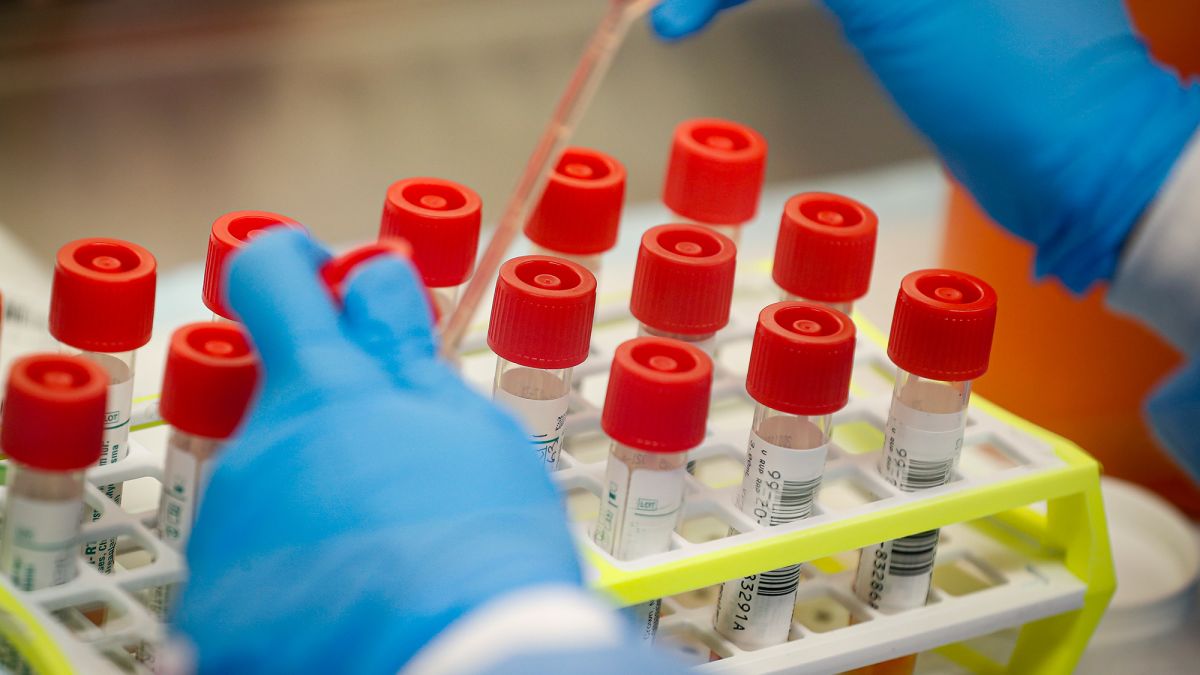
With all 50 states now in the process of reopening, data reported by public health agencies on coronavirus testing is under increased scrutiny. The issue is not how many tests are being conducted—that number has dramatically increased nationwide (although experts still caution that total testing should be about three times higher than the current 300,000 per day).

Rather, as reported this week, the issue is what kind of tests are being included in public reporting. It emerged this week that several states—including GeorgiaTexasPennsylvaniaVermont, and Virginia—have been combining statistics on polymerase chain reaction (PCR) tests, used to diagnose current infection, with antibody blood tests, used to detect past infection.

More troublingly, The Atlantic reported on Wednesday that the Centers for Disease Control and Prevention (CDC) has been doing the same thing, which artificially inflates the number of tests conducted, and makes the numbers difficult to interpret. Among other experts, Dr. Ashish Jha, director of Harvard’s Global Public Health Institute, was stunned: “You’ve got to be kidding me. How could the CDC make that mistake? This is a mess.”

Accurate testing data is critical to determine the pace and scope of reopening, and to monitor for resurgences of the virus that might necessitate future restrictions. It’s important to know who’s infected now for clinical reasons, and it’s essential to understand who’s already been sick for public health purposes. Combining the two datasets is positively unhelpful, and likely only serves a political purpose.

Testing problems have proven to be this country’s original sin in the way the coronavirus pandemic has evolved, but it’s not too late to make sure that we have ample, accurate, and well-reported testing to guide critical public health decisions.

US coronavirus update: 1.62M cases, 95K+ confirmed deaths, 12.9M tests conducted (of some type).


Huge Study Throws Cold Water on Antimalarials for COVID-19

https://www.medpagetoday.com/infectiousdisease/covid19/86642?xid=nl_mpt_DHE_2020-05-23&eun=g885344d0r&utm_source=Sailthru&utm_medium=email&utm_campaign=Daily%20Headlines%20Top%20Cat%20HeC%20%202020-05-23&utm_term=NL_Daily_DHE_dual-gmail-definition

Huge Study Throws Cold Water on Antimalarials for COVID-19 ...

— No support for continued use seen in analysis of 15,000 patients who got controversial drugs

Chloroquine or hydroxychloroquine (HCQ), with or without an antibiotic, in hospitalized COVID-19 patients were associated with increased risk of death in the hospital and higher rates of arrhythmias, analysis of outcomes in nearly 100,000 patients indicated.

The 15,000 patients who received HCQ or chloroquine were about twice as likely to die compared to controls who did not receive these agents after adjusting for covariates (18.o% for hydroxychloroquine and 16% for chloroquine versus 9.3% for controls), reported Mandeep Mehra, MD, of Brigham and Women’s Hospital in Boston, and colleagues.

The drug was also associated with a higher risk of ventricular arrhythmia during hospitalization (6.1% for hydroxychloroquine, 4.3% for chloroquine versus 0.3% for controls), the authors wrote in The Lancet.

Moreover, risks for both in-hospital mortality and ventricular arrhythmia were even higher compared to controls when either drug was combined with a macrolide antibiotic, they noted.

Mehra said in a statement these drugs should not be used as treatments for COVID-19 outside of clinical trials.

“This is the first large scale study to find statistically robust evidence that treatment with chloroquine or hydroxychloroquine does not benefit patients with COVID-19,” he said. “Instead, our findings suggest it may be associated with an increased risk of serious heart problems and increased risk of death. Randomised clinical trials are essential to confirm any harms or benefits associated with these agents.”

Mehra’s group analyzed some 96,000 patients from 671 hospitals on six continents with COVID-19 infection, from Dec. 20 to April 14, all of whom had either died or been discharged from the hospital by April 21.

Overall, 14,888 patients were treated with hydroxychloroquine, chloroquine, hydroxychloroquine with a macrolide antibiotic or chloroquine with an antibiotic, and their results were compared to 81,144 controls who did not receive these drugs.

Authors adjusted for demographic factors, as well as cardiovascular disease, diabetes, lung disease, smoking, immunosuppressed conditions and baseline disease severity.

The estimated excess risk attributable to the drug regimen rather than other factors, such as comorbidities, ranged from 34% to 35%.

Arrhythmia’s greatest risk was in the group who received hydroxychloroquine and a macrolide antibiotic such as azithromycin (8% versus 0.3% of controls), and this regimen was associated with a more than five-fold risk of developing an arrhythmia while hospitalized, though cause and effect cannot be inferred, the group noted.

“Previous small-scale studies have failed to identify robust evidence of a benefit and larger, randomised controlled trials are not yet completed,” said co-author Frank Ruschitzka, MD, Director of the Heart Center at University Hospital Zurich in a statement. “However, we now know from our study that the chance that these medications improve outcomes in COVID-19 is quite low.”

An accompanying editorial by Christian Funck-Brentano, MD, PhD, and Joe-Elie Salem, MD, PhD, of Sorbonne Université in Paris, noted limitations of the observational data, but said the authors “should be commended for providing results from a well designed and controlled study … in a very large sample of hospitalized patients.”

They also cautioned against attributing the increased risk of hospital deaths to the higher incidence of arrhythmias, noting that “the relationship between death and ventricular tachycardia was not studied and causes of deaths (i.e., arrhythmic vs non-arrhythmic) were not adjudicated.”

The editorialists nevertheless concluded both hydroxychloroquine and chloroquine, with or without azithromycin, “are not useful and could be harmful in hospitalized patients with COVID-19,” and stressed the importance of clinical trials for these drugs.

“The global community awaits the results of ongoing, well powered randomized controlled trials showing the effects of chloroquine and hydroxychloroquine on COVID-19 clinical outcomes,” they wrote.


Cartoon – I survived the Coronavirus

Politicalcartoons.com - Editorial Cartoon 237636

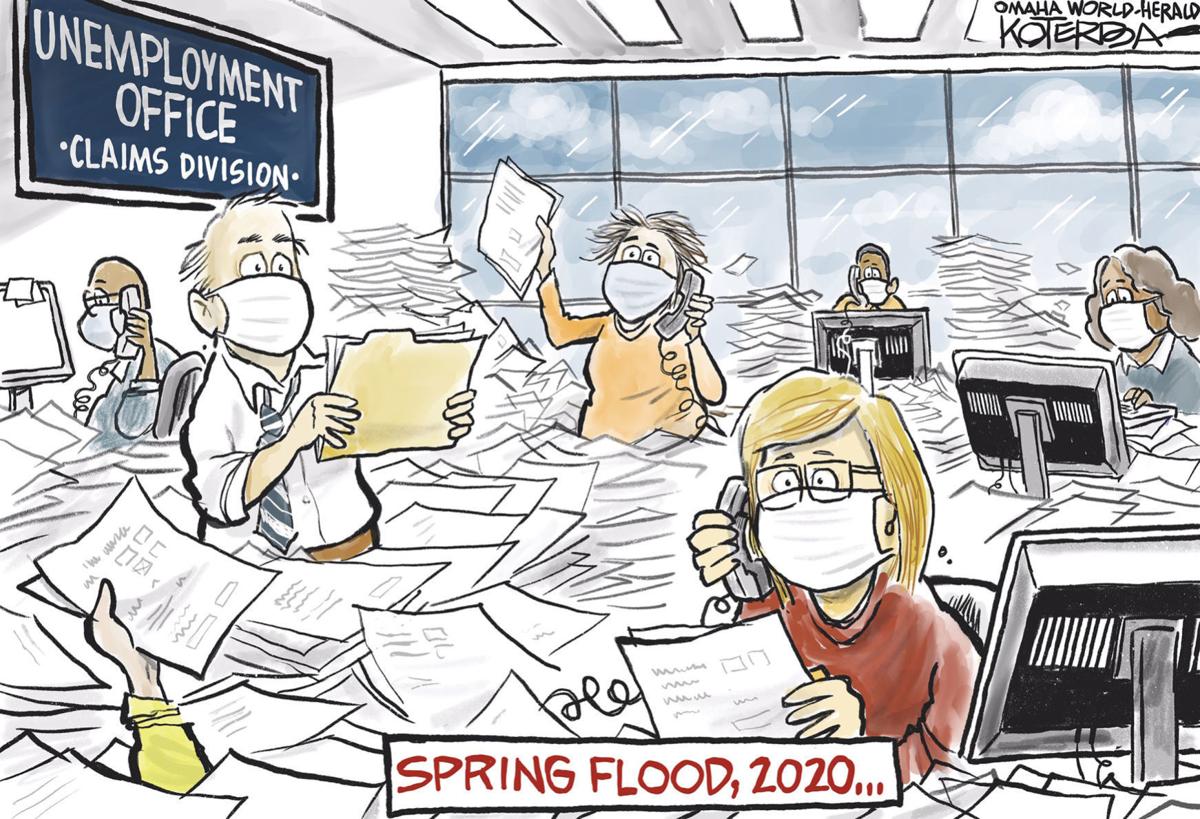
Cartoon – 2020 Spring Flood

Syndicated cartoons gallery: Unemployment cartoons from around the ...

Cartoon – Working Paycheck to Paycheck

The Benefits And Compensation Comics And Cartoons | The Cartoonist ...


Cartoon – Out of Work

unemployment-labor-day-2015.jpg (600×398) (With images) | Today ...

Cartoon – Post Graduate Unemployment

Unemployment cartoon 2 - NexGenT Blog

As Trump Rails Against Voting by Mail, States Open the Door for It

As Trump Rails Against Voting by Mail, States Open the Door for It ...

Despite the president’s opposition, states are increasingly reducing barriers to what many see as the safest way to vote amid the pandemic.

By threatening online on Wednesday to withhold federal grants to Michigan and Nevada if those states send absentee ballots or applications to voters, President Trump has taken his latest stand against what is increasingly viewed as a necessary option for voting amid a pandemic.

What he hasn’t done is stop anyone from getting an absentee ballot.

In the face of a pandemic, what was already limited opposition to letting voters mail in their ballots has withered. Eleven of the 16 states that limit who can vote absentee have eased their election rules this spring to let anyone cast an absentee ballot in upcoming primary elections — and in some cases, in November as well. Another state, Texas, is fighting a court order to do so.

Four of those 11 states are mailing ballot applications to registered voters, just as Michigan and Nevada are doing. And that doesn’t count 34 other states and the District of Columbia that already allow anyone to cast an absentee ballot, including five states in which voting by mail is the preferred method by law.

“Every once in a while you get the president of the United States popping up and screaming against vote-by-mail, but states and both political parties are organizing their people for it,” said Michael Waldman, the president of the Brennan Center for Justice at New York University. “It’s a bizarre cognitive dissonance.”

Many of the states that have relaxed their rules have done so only for pending primary elections, leaving the possibility that they could choose not to do so in November. But that is highly unlikely, said Daniel A. Smith, a University of Florida political scientist and expert on mail ballots.

“The horse is out of the barn whether it’s primaries or the general election,” he said. “The optics are such that states will be under enormous pressure to continue to allow mail voting in the fall.”

Even as the president has offered support for some groups of absentee voters like older Americans and military serving abroad — and even as he votes absentee himself — Mr. Trump has regularly warned with no factual basis that allowing widespread voting by mail was a recipe for election theft. “You get thousands and thousands of people sitting in somebody’s living room, signing ballots all over the place,” Mr. Trump said at a White House briefing last month.

Despite ballot stuffing scandals in the nation’s past, and an absentee vote scandal involving Republicans in North Carolina in 2018, nothing remotely comparable has been documented in modern American politics or linked to voting by mail.

Still, some conservative advocacy groups have embraced Mr. Trump’s view, even going to court to block the expansion of absentee balloting during the pandemic. Republican-controlled legislatures in Louisiana and Oklahoma also have bridled at making voting easier. More legal battles ahead of the November election seem certain.

But in many other states, governments controlled by each of the political camps have moved in the other direction.

In lawsuits and elsewhere, voting-rights advocates and Democrats have taken aim at state rules on voting that they see as discriminatory. In Texas, a federal court ruled this week that a state regulation granting blanket absentee-ballot privileges to voters over 65 — a not-uncommon exception nationally — discriminated against younger voters.

Elsewhere, lawsuits have sought to expand a common exception allowing absentee voting by people too sick to go to the polls. The goal is to cover voters who fear catching the coronavirus while in line at a polling place. A number of states have adopted that view, ruling that voters who reasonably fear exposure to the virus have a right to vote remotely.

Jocelyn Benson, the Democratic secretary of state in Michigan, said this week that the state would mail applications for absentee ballots to all 7.7 million registered voters for both the August primary and the November general election. The Legislature in deeply Republican South Carolina expanded absentee voting rights last week as a lawsuit pressing that cause lay before the state’s Supreme Court.

In West Virginia, the Republican secretary of state sent absentee ballot applications last month to each of the state’s 1.2 million registered voters; so far, nearly one in five has asked to vote absentee.

And in Kentucky, Republicans and Democrats agreed three weeks ago on an emergency plan that allows any voter to request an absentee ballot online and submit it by mail or at drop-off points for two weeks before the state’s June 23 primary. Michael G. Adams, the Republican secretary of state, told National Public Radio last week that he had been excoriated by his party for mailing postcards to voters explaining the new rules.

“The biggest challenge I have right now is making the concept of absentee voting less toxic for Republicans,” said Mr. Adams, who won election on a platform underscoring the threat of voter fraud.

Many political analysts say they find that odd. Until now, the decade-long crusade by Republicans against voter fraud has focused largely on requiring ID cards at polling places, supposedly to counter the distant possibility that an impersonator might make it into a voting booth. Studies show that fraud among absentee voters, while still rare, is more common — but that those voters have tended to be both older and white, a demographic that favors Republicans and Mr. Trump.

“Before 2018, Republicans loved mail balloting,” Michael McDonald, a University of Florida political science professor and elections expert, said this week.

Mr. Trump said in March that Democrat-backed election proposals for expanded voting by mail would ensure that “you’d never have a Republican elected in this country again.” Indeed, many Republicans and Democrats alike believe that expanding mail voting would increase Democratic turnout.

Their reasoning is that many more absentee ballots have traditionally been cast by wealthier and more educated voters and expanding voting by mail would add more votes by the low-income and minority voters who tend to lean Democratic and have a harder time getting to polls on Election Day.

But both academic studies and changing demographics throw that into question. Under Mr. Trump, the Republican base has shifted greatly toward whites with less education, while wealthier suburbanites have become increasingly Democratic. Studies in states that use voting by mail indicate it does not favor either party.

And in any case, mail voting is increasingly the norm everywhere: In 2016, nearly one in four voters cast absentee or mail ballots, twice the share just 16 years ago, in 2004.

Mr. McDonald and a number of other experts argue that the greatest threat posed by a shift to voting by mail has nothing to do with fraud. Rather, they say, it is the very real prospect that a tsunami of mail votes could overwhelm both postal workers and election officials, creating a snarl in tallying and certifying votes that would allow a candidate to claim that late-counted votes were fraudulent.

Mr. Trump’s unfounded assertions that mail balloting in Michigan and Nevada encourage fraud suggest that he could be laying the ground for such an scenario, said Richard Hasen, an election law expert at the University of California, Irvine.

“I think he’s trying to undermine confidence in elections,” Mr. Hasen said, citing Mr. Trump’s claim in 2018 that close races for governor and the United States Senate were “massively infected” by fraud until Republican candidates, Ron DeSantis and Rick Scott, prevailed. “Maybe he’s not being conscious about what he’s doing. But he’s acting as if he has a plan.”


Many Jobs May Vanish Forever as Layoffs Mount

Week 9 of the Collapse of the U.S. Labor Market: Still Getting ...

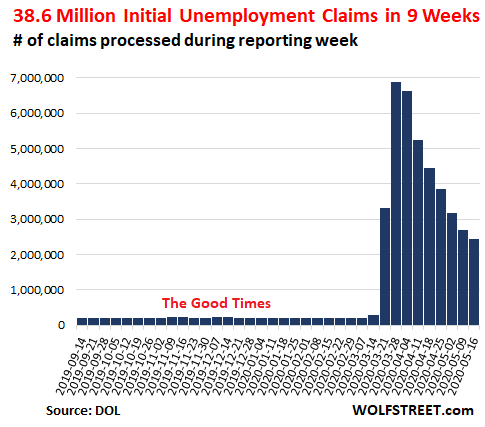
With over 38 million U.S. unemployment claims in nine weeks, one economist says the situation is “grimmer than we thought.”

Even as restrictions on businesses began lifting across the United States, another 2.4 million workers filed for jobless benefits last week, the government reported Thursday, bringing the total to 38.6 million in nine weeks.

And while the Labor Department has found that a large majority of laid-off workers expect their joblessness to be temporary, there is growing concern among economists that many jobs will never come back.

“I hate to say it, but this is going to take longer and look grimmer than we thought,” Nicholas Bloom, an economist at Stanford University, said of the path to recovery.

Mr. Bloom, a co-author of an analysis of the coronavirus epidemic’s effects on the labor market, estimates that 42 percent of recent layoffs will result in permanent job loss.

“Firms intend to hire these people back,” Mr. Bloom said, referring to a recent survey of businesses done by the Federal Reserve Bank of Atlanta. “But we know from the past that these aspirations often don’t turn out to be true.”

In this case, the economy that comes back is likely to look quite different from the one that closed. If social distancing rules become the new normal, causing thinner crowds in restaurants, theaters and stores, at sports arenas, and on airplanes, then fewer workers will be required.

Large companies already expect more of their workers to continue to work remotely and say they plan to reduce their real estate footprint, which will, in turn, reduce the foot traffic that feeds nearby restaurants, shops, nail salons and other businesses.

Concerns about working in close quarters and too much social interaction could also accelerate the trend toward automation, some economists say.

New jobs, mostly at low wages — as delivery drivers, warehouse workers and cleaners — are being created. But many more jobs will vanish.

“I think we’re in for a very long haul,” Mr. Bloom said.

In the meantime, the Labor Department’s latest data on unemployment claims, for new filings last week, reflects the shutdown’s continuing damage to the labor force.

“The hemorrhaging has continued,” Torsten Slok, chief economist for Deutsche Bank Securities, said of the mounting job losses. He expects the official jobless rate for May to approach 20 percent, up from the 14.7 percent reported by the Labor Department for April.

A household survey from the Census Bureau released Wednesday suggested that the pain was widespread: 47 percent of adults said they or a member of their household had lost employment income since mid-March. Nearly 40 percent expected the loss to continue over the next four weeks.

In testimony before the Senate on Tuesday, the Federal Reserve chair, Jerome H. Powell, emphasized how devastating prolonged joblessness can be for individual households and for the economy.

“There is clear evidence that when you have a situation where people are unemployed for long periods of time, that can permanently weigh on their careers and their ability to go back to work,” he said.

Emergency relief and expanded unemployment benefits that Congress approved in late March have helped tide households over. Roughly three-quarters of people who are eligible for a $1,200 stimulus payment from the federal government have received it, according to the Treasury Department.

Workers who have successfully applied for unemployment benefits are getting the extra $600 weekly supplement from the federal government, and most states have finally begun to carry out the Pandemic Unemployment Assistance program, which extends benefits to freelancers, self-employed workers and others who don’t routinely qualify. The total number of new pandemic insurance claims reported, though, was inflated by nearly a million because of a data entry mistake from Massachusetts, according to the state’s Executive Office of Labor and Workforce Development.

Mistakes, lags in reporting and processing, and weeding out duplicate claims and reports have clouded the unemployment picture in some places.

What is clear, though, is that many states are still struggling to keep up with the overwhelming demand, drawing desperate complaints from jobless workers who have been waiting two months or more to receive their first benefit check. Indiana, Wyoming, Hawaii and Missouri are among the states with large backlogs of incompletely processed claims. Another is Kentucky, where nearly one in three workers are unemployed.

The $600 supplement has become a point of contention, drawing criticism from Republican politicians who object to the notion that some workers — particularly low-wage ones — are getting more money in unemployment benefits than they would on the job. But many have also lost their employer-provided health insurance and other benefits.

Sami Adamson, a freelance scenic artist for theater, events and television shows, received the letter with her login credentials to collect benefits from New Jersey only Monday, more than two months after she first applied.

She said her partner, who is in the same line of work, had filed for jobless benefits in New York and quickly received his payments.

By the time she heard from New Jersey, a design studio had called her for a temporary assignment. She plans to eventually reclaim the lost weeks of benefits, but for now she is helping to make face shields in a large warehouse where assembly-line workers are spaced apart, handling plastic, foam and elastic.

“I don’t think I’ll need aid for the next two or three weeks,” Ms. Adamson said, “but I’m not sure too far ahead of that.”

Nearly half of the states have yet to provide the additional 13 weeks of unemployment insurance that the federal government has promised to those who exhausted their state benefits. Workers in Florida — which provides just 12 weeks of benefits, the fewest anywhere — are particularly feeling this pinch. And while several states, including those that pay the average of 26 weeks, have offered additional weeks of coverage during the pandemic, Florida has not.

Small-business owners who were hoping the Paycheck Protection Program would enable them to keep their workers on the payroll contend the program is not operating as intended.

Roy Surdej, who owns Peaches Boutique in Chicago, applied for a loan after he was forced to close and the pandemic eliminated the season’s wave of proms, quinceañeras and graduation celebrations were canceled.

Under the program, the loan turns into a grant if he rehires the 100-person staff he had built up in February in anticipation of selling thousands of ruffled, sequined and strappy dresses during the spring rush. But he said that would be impossible, given the income he had lost and the restrictions that continue to pre-empt social gatherings.

“No way can I qualify for full forgiveness,” said Mr. Surdej, who said revenue had dried up. “It’s devastating for us,” he added, saying he had no clue when he would be able to reopen and begin rehiring. “If the government can’t adjust the dates to allow us to use it properly so we can survive, then I won’t use it.”

At the same time, the Congressional Budget Office warned that businesses able to use the Paycheck Protection Program might end up laying off workers when the program expires at the end of June.

Several states have warned workers that they risk losing their benefits if they refuse an offer to work. Federal rules enacted during the pandemic say that workers are not compelled to return to unsafe working conditions, but just what constitutes such conditions is not necessarily clear.

On Tuesday, Democratic senators sent a letter to Labor Secretary Eugene Scalia to “clarify the circumstances” so that workers are not “forced to choose between going back to work in unsafe conditions, or continuing to social distance and losing their only source of income.”

Workers with child care responsibilities can stay on unemployment if public schools are closed, but once the term ends, a lack of day care or summer programs is not considered a legitimate reason. Nor are self-imposed quarantines.

Officials can lift stay-at-home and business restrictions, but then what happens? “There are lingering concerns about health, family situations, kids not in school, relatives who are sick and needing care,” said Carl Tannenbaum, chief economist at Northern Trust. “There’s going to be a very slow and gradual process of reopening and restoring employment beyond just a declaration from the statehouse or the county seat.”