


“They were terrified. And that was the best-case scenario.”
Experts around the country have been churning out model after model — marshaling every tool from math, medicine, science and history — to try to predict the coming chaos unleashed by the new coronavirus and to make preparations.
At the heart of their algorithms is a scary but empowering truth: What happens next depends largely on us — our government, politicians, health institutions and, in particular, 327 million inhabitants of this country — all making tiny decisions on an daily basis with outsize consequences for our collective future.
In the worst-case scenario, America is on a trajectory toward 1.1 million deaths. That model envisions the sick pouring into hospitals, overwhelming even makeshift beds in parking lot tents. Doctors would have to make agonizing decisions about who gets scarce resources. Shortages of front-line clinicians would worsen as they get infected, some dying alongside their patients. Trust in government, already tenuous, would erode further.
That grim scenario is by no means a foregone conclusion — as demonstrated by countries like South Korea which has reduced its new cases a day from hundreds to dozens with aggressive steps to bolster their health system.
If Americans embrace drastic restrictions and school closures, for instance, we could see a death toll closer to thousands and a national sigh of relief as we prepare for a grueling but surmountable road ahead.
Doing that will require Americans to “flatten the curve” — slowing the spread of the contagion so it doesn’t overwhelm a health-care system with finite resources. That phrase has become ubiquitous in our national conversation. But what experts have not always made clear is that by applying all that downward pressure on the curve — by canceling public gatherings, closing schools, quarantining the sick and enforcing social distancing — you elongate the curve, stretching it out over a longer period of time.
Success means a longer — though less catastrophic — fight against the coronavirus. And it is unclear whether Americans — who built this country on ideals of independence and individual rights — would be willing to endure such harsh restrictions on their lives for months, let alone for a year or more.
This month began with U.S. officials recommending actions such as hand-washing and social distancing. By Sunday, the Centers for Disease Control and Prevention was warning against gatherings of 50-plus people. By Monday, President Trump had made an abrupt turn from encouraging Americans to go on with their lives, to urging them to work from home, not meet in groups of more than 10, and calling on local officials to close schools, bars and restaurants. (Getting the public to comply has been alarmingly difficult. Young revelers from Bourbon Street to Miami have ignored those pleas, as have some elderly, who are at highest risk.)
Trump’s sudden shift was driven by an alarming new scientific model, developed by British epidemiologists and shared with the White House. The scientists bluntly stated the coronavirus is the most serious respiratory virus threat since the Spanish Flu of 1918. If no action to limit the viral spread were taken, as many as 2.2 million people in the United States could die over the course of the pandemic, according to epidemiologist Neil Ferguson and others at the Imperial College Covid-19 Response Team.
Adopting some mitigation strategies to slow the pandemic — such as isolating those suspected of being infected and social distancing of the elderly — only cuts the death toll in half to 1.1 million, although it would reduce demand for health services by two-thirds.

Only by enacting an entire series of drastic, severe restrictions could America shrink its death toll further, the study found. That strategy would require, at minimum, the nationwide practice of social distancing, home isolation, and school and university closures. Such restrictions would have to be maintained, at least intermittently, until a working vaccine is developed, which could take 12 to 18 months at best.
The report’s conclusion: This is “the only viable strategy.”
Here is another thing that hasn’t been spelled out in our national conversation about flattening the curve: There will probably be more than one curve.
If we’re lucky, the coming months will probably look more like string of hilly bumps, say epidemiologists. If authorities ease some measures in coming months or if we start letting them slip ourselves, that hill could easily turn right back into the exponential curve that has cratered Italy’s health system and that U.S. officials are desperately trying to avoid replicating.
Climbing this first bump is in many ways the most challenging because it involves persuading people to change their individual behaviors for an abstract larger good — and because no one knows how far we actually are from the peak.
On Tuesday morning, New York Gov. Andrew M. Cuomo (D) said infections in his state are expected to peak in 45 days — at the start of May. The state has roughly 53,000 hospital beds, including 3,000 intensive-care beds — way short of the projected need for as many as twice that number of beds and as many as 11 times the number of ICU beds.
A day earlier, Northwell Health — whose 23 hospitals and 800 outpatient centers make up New York’s largest health system — canceled all elective surgeries in its hospitals to free up staff and space. It has 5,500 beds.
“We’re looking at Italy, which is currently 10 days ahead of us, and what they’ve had to do,” said Maria Carney, Northwell’s chief of geriatrics. Carney was health commissioner for New York’s Nassau County during the 2009 H1N1 outbreak and has worked furiously on Northwell’s plans to prepare for the coming tsunami.
One reason she and others are alarmed: In China, the fatality rate in Wuhan, the raging epicenter, was 5.8 percent. But in all other areas of the country it was 0.7 percent — a signal that most deaths were driven by an overwhelmed health system.
And U.S. hospitals are pinched as it is, with some already running at 95 percent capacity pre-coronavirus, Carney noted. As cases surge, Northwell plans to place multiple beds in single rooms. Its ambulances will also shuttle patients to less crowded satellite sites. Those suffering from ordinary emergencies — strokes, heart attacks, car accidents — may find themselves routed to other facilities away from ERs to avoid transmission.
But it’s unclear if it will be anywhere near enough.
Staffing shortages are already developing: As of Tuesday, 18 Northwell employees had already tested positive for the coronavirus. More than 200 were self-quarantined as a result of potential exposures, foreshadowing what is likely to come.
If the numbers next month get truly crazy, cities may look to convert stadiums into isolation wards, as in Wuhan. Cuomo has talked of turning the six-block-long Javits Convention Center on New York City’s west side into a medical surge facility. Others might take Italy’s approach and split hospitals into those treating coronavirus and those treating all other medical problems, to reduce transmission.
In San Francisco, we may see coronavirus patients put into RVs. In Takoma Park, Md., the old Washington Adventist Hospital site, which shuttered in 2019, could suddenly find its doors reopened.
As America enters this utterly unfamiliar territory, some experts have turned to history for glimpses of what to expect in the months ahead.
Initially leery of alarming the public, they have increasingly compared this pandemic to the 1918 Spanish flu, the deadliest in modern history. It infected roughly a third of the world’s population and killed at least 50 million people, including at least 675,000 in the United States.
Like the hilly bumps experts foresee in coming months, the 1918 pandemic hit America in three waves — a mild one that spring, the deadliest wave in fall and a final one that winter.
With each wave came a cycle of denial, devastation, community response finally kicking into overdrive — always followed by finger-pointing and blame among leaders and the public.
“Every outbreak is different,” said medical anthropologist Monica Schoch-Spana, who spent months digging through archives to study how Spanish flu played out in Baltimore.
Like coronavirus is likely to do, the 1918 flu overwhelmed hospitals. Unable to get help, desperate families waited outside to beg and try to bribe doctors for treatment. In a three-week period, 2,000 died in Baltimore alone. Mortuaries ran out of caskets. When the bodies finally reached cemeteries, the gravediggers were so ill, no one could bury the dead.
Economic pressure on business owners and workers caused public resistance to adopt — and stick with restrictions. The crisis brought out the best in Baltimoreans — with sewing circles churning out gauze masks and hospital bedding, and neighbors donating food and services.
But it also brought out the worst — xenophobic conspiracy theories that nurses of “German extraction” were deliberately infecting people. African American patients were kept out of most hospitals under Jim Crow-era segregation.
“Pandemics aren’t just physical,” said Schoch-Spana. “They bring with them an almost shadow pandemic of psychological and societal injuries as well.”
Stanford virologist Karla Kirkegaard said she has tried to stave off dread from the projected U.S. death toll with a case study she teaches in her classes:
Amid a cholera outbreak in mid-19th century London, as panicked residents fled one hard-hit neighborhood, a doctor named John Snow calmly entered the breach. He deduced that the source of hundreds of deaths was a single contaminated water pump and persuaded authorities to remove the pump’s handle — a strategy that ended the outbreak.
Controlling the covid-19 pandemic will take much more than a single water pump, Kirkegaard acknowledged as she sheltered in place at her Bay Area home.
But the story, she said, reminds her how powerful the simple act of one individual can be.

Rationing of care for novel coronavirus patients has been reported in China and Italy.
Medical utility based on scientific patient profiles should guide decisions to ration critical care resources such as ventilators, medical ethicist James Tabery says.
In a pandemic, public health considerations should drive decisions on prioritizing who is tested for disease, he says.
The novel coronavirus (COVID-19) pandemic is raising thorny medical ethics dilemmas.
In China and Italy, there have been reports of care rationing as the supply of key resources such as ventilators has been outstripped by the number of hospitalized COVID-19 patients. China, the epicenter of the pandemic, has the highest reported cases of COVID-19 at more than 80,800 as of March 17, according to worldometer. Italy has the second-highest number of COVID-19 cases at nearly 28,000 cases.
The severest form of COVID-19 includes pneumonia, which can require admission to an ICU and mechanical ventilation. “Those are not just things, there are expertly trained healthcare workers who man those domains. There just isn’t enough of these resources than what we anticipate needing,” says James Tabery, PhD, associate professor in the University of Utah Department of Philosophy and the University of Utah School of Medicine’s Program in Medical Ethics and Humanities.
He says the COVID-19 outbreak poses four primary ethical challenges in the healthcare sector.
In the United States, caring for the anticipated surge of seriously ill COVID-19 patients is likely to involve heart-wrenching decisions for healthcare professionals, Tabery says. “The question is how do you ration these resources fairly? With treatment—we are talking about ICUs, ventilators, and the staff—the purpose is you are trying to save the severely sick. You are trying to save as many of the severely sick as you can.”
The first step in managing critical care resources is screening out patients who are unlikely to need critical care and urging them to self-quarantine at home, he says.
“But eventually, you bump up to a place where you not only have screened out all of the folks who are at low risk of serious illness, but you have millions of people across the country who fall into high-risk groups. If they get infected, many are going to need access to ventilators, and the way you do that ethically is you screen patients based on medical utility,” Tabery says.
Medical utility is based on scientific assessments, he says. “You basically look at the cases and try to evaluate as quickly and efficiently as possible the likelihood that you can improve a patient’s condition quickly.”
Rationing of critical care resources would be jarring for U.S. clinical staff.
Under most standard scenarios, a patient who is admitted to an ICU and placed on mechanical ventilation stays on the machine as long as the doctors think the patient is going to get better, Tabery says.
However, the COVID-19 pandemic could drive U.S. caregivers into an agonizing emergency scenario.
“When there are 10 people in the emergency room waiting to get on a ventilator, it is entirely feasible that you would be removing people from ventilators knowing that they are going to die. But you remove people from ventilators when your evaluation of the medical situation suggests that patients are not improving. If a patient is not improving, and it doesn’t look like using this scarce resource is a wise investment, then you try it out on another patient who might have better luck,” he says.
There has been rationing of COVID-19 testing in the United States since the first novel coronavirus patient was diagnosed in January.
While there are clinical benefits to COVID-19 testing such as determining what actions should be taken for low- and high-risk patients, the primary purpose of testing during a pandemic is advancing public health, Tabery says.
“The primary purpose of the test is pure public health epidemiology. It’s about keeping track of who has COVID-19 in service of trying to limit the spread of the disease to other people. When that is the purpose, the prioritization isn’t so much about who is at greatest risk. It’s about who is more likely to interact with lots of people, or who is more likely to have interacted with more people.”
A classic example of rationing COVID-19 testing based on public health considerations is the first reported infection of an NBA player, he says.
“For the Utah Jazz player who had symptoms, it made sense to test him very quickly because it was clear that he had interacted with a lot of people. Once he tested positive, the testing of the other players was not because public health officials thought the players were more valuable than the average person on the street. It was because the players had come into contact with more people than the average person on the street.”
The COVID-19 pandemic involves competing obligations for healthcare workers, Tabery says. “On the one hand, they have a set of obligations that inclines them to go to work when they get the call. On the other hand, healthcare workers have their own interests—they don’t want to get sick, which can incline them not to work,” he says.
“The punchline is there is an ethical consensus that healthcare workers have a prima facie duty to work because of everything that has been invested in them, because of their unique position where not just anybody can replace them, because society looks to them to serve this function, and because they went into this profession and are expected to go into work,” he says.
However, the obligation of healthcare workers to show up for their jobs is not absolute, Tabery says. “If hospitals don’t have personal protective equipment, they are in no position to tell their staff to show up and work. If a hospital cannot provide even a basic level of safety for their employees to do their job, then they are turning their hospital not into a place to treat patients—they are turning it into a hub to exacerbate the problem.”
When a vaccine becomes available, policymakers, public health officials, and healthcare providers will face rationing decisions until there is sufficient supply to treat the entire U.S. population, Tabery says.
“When the vaccine comes out, the first group you are going to want to prioritize are healthcare workers, who are at risk of getting infected by doing their jobs and saving lives. You would also want to prioritize people who serve essential functions to keep society going—the people who keep the water running, the lights on, police, and firefighters. Then you want to start looking at the high-risk groups,” he says.
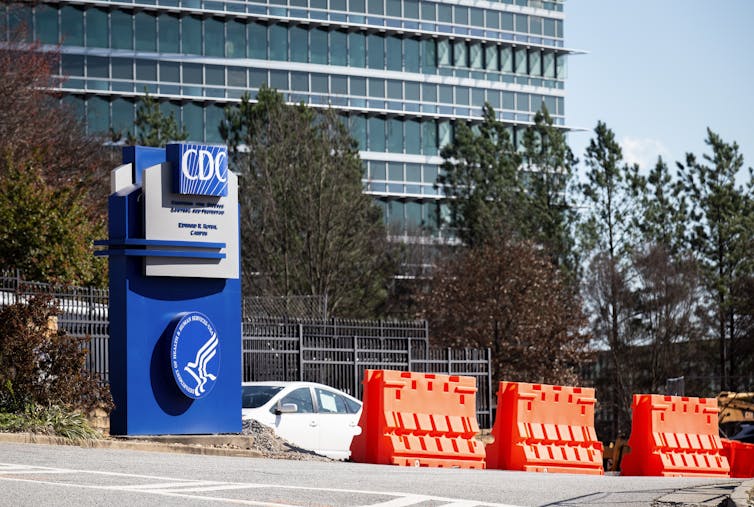
As the coronavirus pandemic exerts a tighter grip on the nation, critics of the Trump administration have repeatedly highlighted the administration’s changes to the nation’s pandemic response team in 2018 as a major contributor to the current crisis. This combines with a hiring freeze at the Centers for Disease Control and Prevention, leaving hundreds of positions unfilled. The administration also has repeatedly sought to reduce CDC funding by billions of dollars. Experts agree that the slow and uncoordinated response has been inadequate and has likely failed to mitigate the coming widespread outbreak in the U.S.
As a health policy expert, I agree with this assessment. However, it is also important to acknowledge that we have underfunded our public health system for decades, perpetuated a poorly working health care system and failed to bring our social safety nets in line with other developed nations. As a result, I expect significant repercussions for the country, much of which will disproportionately fall on those who can least afford it.
Spending on public health has historically proven to be one of humanity’s best investments. Indeed, some of the largest increases in life expectancy have come as the direct result of public health interventions, such as sanitation improvements and vaccinations.
Even today, return on investments for public health spending is substantial and tends to significantly outweigh many medical interventions. For example, one study found that every US$10 per person spent by local health departments reduces infectious disease morbidity by 7.4%.
However, despite their importance to national well-being, public health expenditures have been neglected at all levels. Since 2008, for example, local health departments have lost more than 55,000 staff. By 2016, only about 133,000 full-time equivalent staff remained. State funding for public health was lower in 2016-2017 than in 2008-2009. And the CDC’s prevention and public health budget has been flat and significantly underfunded for years. Overall, of the more than $3.5 trillion the U.S. spends annually on health care, a meager 2.5% goes to public health.
Not surprisingly, the nation has experienced a number of outbreaks of easily preventable diseases. Currently, we are in the middle of significant outbreaks of hepatitis A (more than 31,000 cases), syphilis (more than 35,000 cases), gonorrhea (more than 580,000 cases) and chlamydia (more than 1,750,000 cases). Our failure to contain known diseases bodes ill for our ability to rein in the emerging coronavirus pandemic.
Yet while we have underinvested in public health, we have been spending massive and growing amounts of money on our medical care system. Indeed, we are spending more than any other country for a system that is significantly underperforming.
To make things worse, it is also highly inequitable. Yet, the system is highly profitable for all players involved. And to maximize income, both for- and nonprofits have consistently pushed for greater privatization and the elimination of competitors.
As a result, thousands of public and private hospitals deemed “inefficient” because of unfilled beds have closed. This eliminated a significant cushion in the system to buffer spikes in demand.
At any given time, this decrease in capacity does not pose much of a problem for the nation. Yet in the middle of a global pandemic, communities will face significant challenges without this surge capacity. If the outbreak mirrors anything close to what we have seen in other countries, “there could be almost six seriously ill patients for every existing hospital bed.” A worst-case scenario from the same study puts the number at 17 to 1. To make things worse, there will likely be a particular shortage of unoccupied intensive care beds.
Of course, the lack of overall hospitals beds is not the most pressing issue. Hospitals also lack the levels of staffing and supplies needed to cope with a mass influx of patients. However, the lack of ventilators might prove the most daunting challenge.
While the U.S. spends trillions of dollars each year on medical care, our social safety net has increasingly come under strain. Even after the Affordable Care Act, almost 30 million Americans do not have health insurance coverage. Many others are struggling with high out-of-pocket payments.
To make things worse, spending on social programs, outside of those protecting the elderly, has been shrinking, and is significantly smaller than in other developed nations. Moreover, public assistance is highly uneven and differs significantly from state to state.
And of course, the U.S. heavily relies on private entities, mostly employers, to offer benefits taken for granted in other developed countries, including paid sick leave and child care. This arrangement leaves 1 in 4 American workers without paid sick leave, resulting in highly inequitable coverage. As a result, many low-income families struggle to make ends meet even when times are good.
I believe that the limitations of the U.S. public health response and a potentially overwhelmed medical care system are likely going to be exacerbated by the blatant limitations of the U.S. welfare state. However, after weathering the current storm, I expect us to go back to business as usual relatively quickly. After all, that’s what happened after every previous pandemic, such as H1N1 in 2009 or even the 1918 flu epidemic.
The problems are in the incentive structure for elected officials. I expect that policymakers will remain hesitant to invest in public health, let alone revamp our safety net. While the costs are high, particularly for the latter, there are no buildings to be named, and no quick victories to be had. The few advocates for greater investments lack resources compared to the trillion-dollar interests from the medical sector.
Yet, if altruism is not enough, we should keep reminding policymakers that outbreaks of communicable diseases pose tremendous challenges for local health care systems and communities. They also create remarkable societal costs. The coronavirus serves as a stark reminder.

If the coronavirus outbreak in the U.S. gets really bad — if it stretches on longer than we anticipated, if huge numbers of people get sick, if the disruptions to daily life become even more severe — early flaws in the testing process will bear a lot of the blame.
The big picture: You probably know that there were some early problems with testing, and that they’re getting better — which they are. But those early failures will help define the entire scope of this pandemic, and there’s not much we can do now to reverse the damage.
Why it matters: Because we haven’t been doing enough testing, we don’t actually know how many people in the U.S. have coronavirus. We know the official count is too low, and that the number of confirmed cases is likely to explode in the coming weeks as testing improves.
By the numbers: Independent researchers estimate that the U.S. has completed about 20,000 coronavirus tests as of Friday.
Widespread, accurate testing has been a key component of other countries’ success in bringing their outbreaks under control.
But the U.S. has not been able to do those things on the scale we’d need. And so, experts say, the virus has probably been spreading undetected for weeks.
“Our response is much, much worse than almost any other country that’s been affected,” Ashish Jha, a public health expert and the director of Harvard’s Global Health Institute, told NPR last week.
Between the lines: This makes other interventions, including individual “social distancing” and the cancellation of big events, even more important.
What’s next: Testing capacity in the U.S. is improving quickly. Nationwide, we now have the ability to test about 26,000 people per day, according to former Food and Drug Administration Commissioner Scott Gottlieb.
How we got here: The testing shortfall has been a multi-phase failure.
In the early days, testing was focused narrowly on people who had traveled to China. And that was probably the best way to triage limited resources, but it was never going to be sufficient.
The bottom line: Yes, the testing capacity is about to catch up. When it does, we will see a tidal wave of new confirmed cases. The fact that we needed to catch up made that tidal wave bigger — made the outbreak worse. And that won’t be undone by more tests now.

A severe coronavirus could easily overwhelm the U.S. health care system, Axios health care editor Sam Baker writes.
Most pandemics put health care workers at particular risk, both to become infected and then to spread the infection.
Experts fear a shortage of ventilators and intensive-care beds, if the outbreak becomes severe.
What we’re watching: The coronavirus also seems likely to expose structural gaps in the health care system.
Go deeper: Listen to Sam and Dan examine the health care issue.

There’s a lot of confusion and misinformation swirling around the virus, so here are quick just-the-facts answers to your most urgent concerns, based on current knowledge:
Q: What are the symptoms I should watch for?
Q. If I have those symptoms, should I go to my doctor or the hospital?
Q: Why is there a shortage of tests in the U.S.? When will we get them?
Q: What’s known about children and COVID-19?
Q: What stage is the outbreak in the U.S.?
https://www.axios.com/trump-coronavirus-oval-office-speech-e0f6685f-ffd4-4e28-9794-0e16ee71321b.html

The White House had to walk back three policy announcements from President Trump’s Oval Office announcement Wednesday that are causing more confusion than comfort during the coronavirus outbreak.
Why it matters: COVID-19 is already here in the U.S., and in some communities, it’s spreading rapidly. Trump’s travel restrictions won’t stop the infection in states where person-to-person spread is rampant.
1) Europe travel ban: Trump said Americans will be exempt “who have undergone appropriate screenings.”
2) Health insurers: “Have agreed to waive all copayments for coronavirus treatments,” Trump said.
3) Trade: The White House walked back Trump’s statement that the travel restrictions “apply to the tremendous amount of trade and cargo, but various other things as we get approval.”
The big picture: Although Trump spent extra time making sure businesses knew he’d ease economic uncertainty, stocks fell more than 8% on Thursday morning and halted briefly for the second time this week.
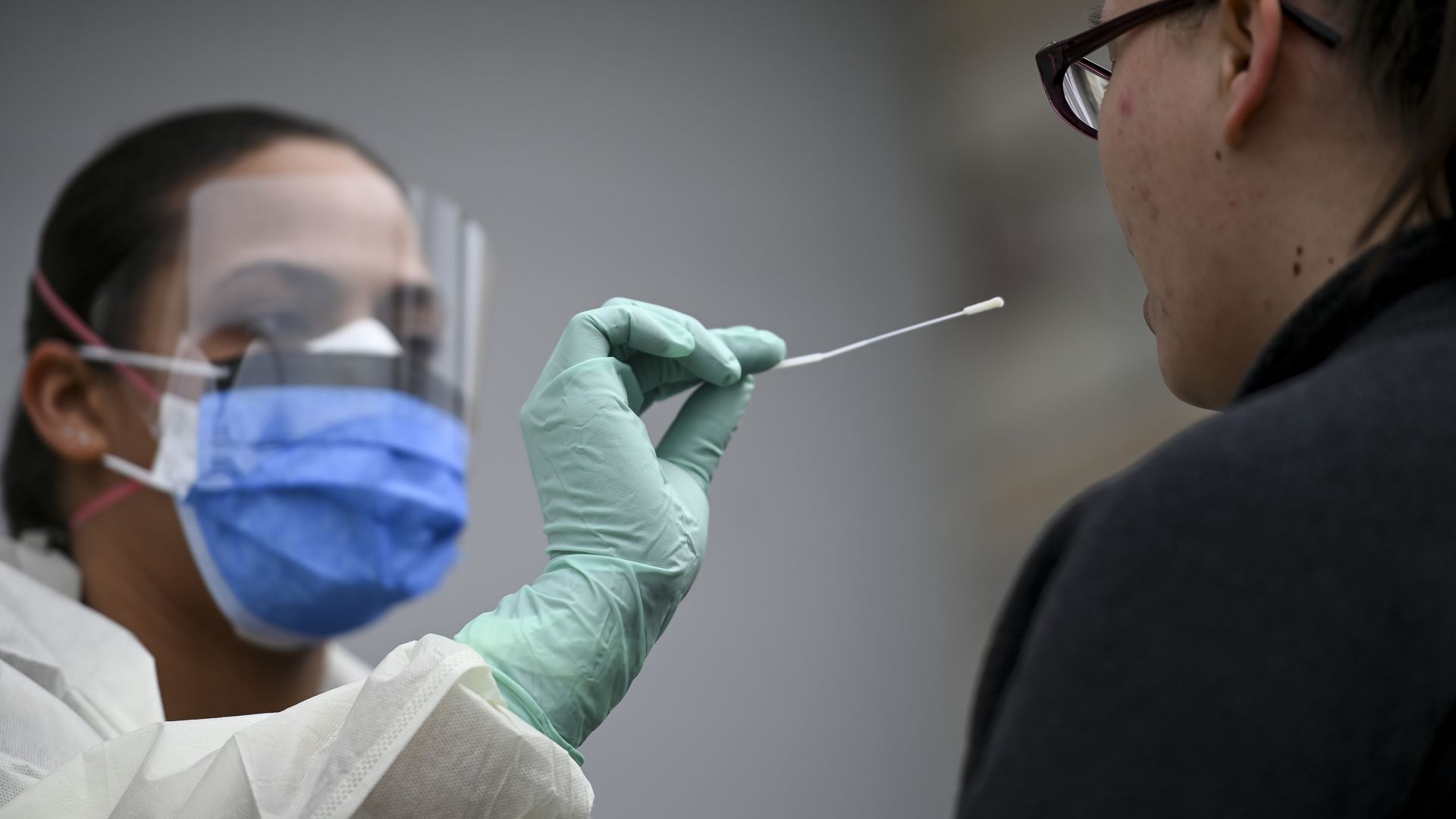
Congress’ in-house doctor told Capitol Hill staffers at a close-door meeting this week that he expects 70-150 million people in the U.S. — roughly a third of the country — to contract the coronavirus, two sources briefed on the meeting tell Axios.
Why it matters: That estimate, which is in line with other projections from health experts, underscores the potential seriousness of this outbreak even as the White House has been downplaying its severity in an attempt to keep public panic at bay.
Dr. Brian Monahan, the attending physician of the U.S. Congress, told Senate chiefs of staff, staff directors, administrative managers and chief clerks from both parties on Tuesday that they should prepare for the worst, and offered advice on how to remain healthy.
Between the lines: Forecasting the spread of a virus is difficult, and the range of realistic possibilities is wide.
Yes, but: These estimates include people who will get sick and make a full recovery, and many people will catch the virus without ever feeling seriously ill.
Meanwhile, Democratic and Republican leaders on Capitol Hill have told lawmakers they have no immediate plans to close Congress, despite it being a potential petri dish for the virus.

.jpg?upscale=true&width=1120&upscale=true&name=Hand%20sanitizer%20as%20is%20seen%20on%20the%20floor%20of%20the%20New%20York%20Stock%20Exchange%20(NYSE).jpg)

 HENRY KOTULA