US Supreme Court Agrees to Review Affordable Care Act — for the Third Time

US Supreme Court Agrees to Review Affordable Care Act — for the Third Time
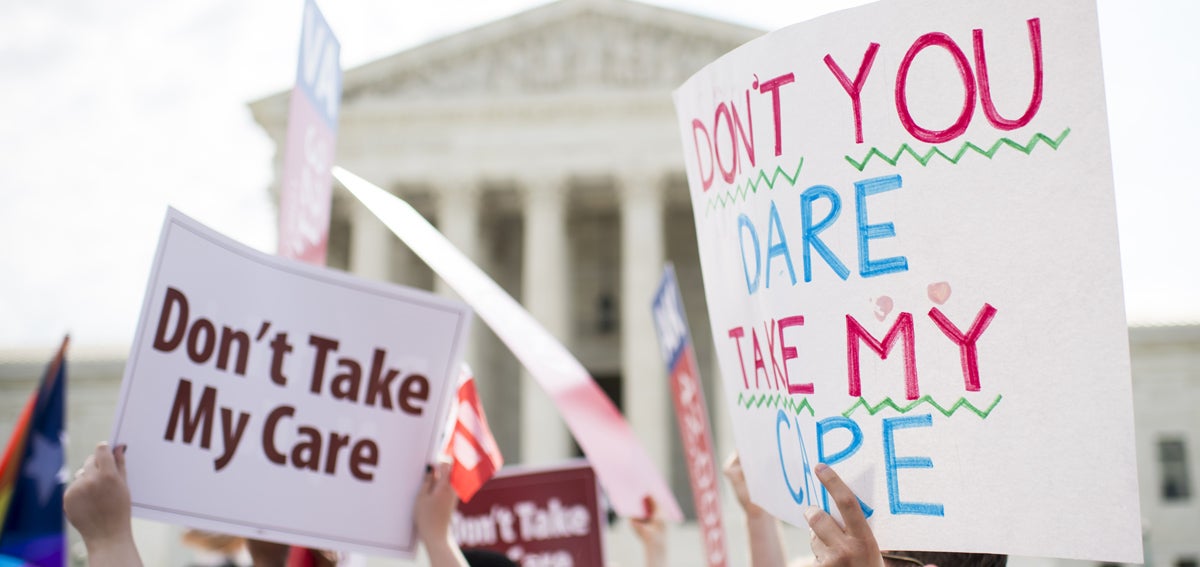
Image result for US Supreme Court Agrees to Review Affordable Care Act — for the Third Time

The fate of the Affordable Care Act (ACA) is once again in the hands of the US Supreme Court. On March 2, the court announced that it would hear a case challenging the health law, a wide-ranging measure that “touches the lives of most Americans, from nursing mothers to people eating at chain restaurants,” wrote Reed Abelson, Abby Goodnough, and Robert Pear in the New York Times. This will be the third time the court will rule on the ACA since President Barack Obama signed it on March 23, 2010.Essential Coverage

“The justices will review a federal appeals court decision that found part of the law . . . unconstitutional and raised questions about whether the law in its entirety must fall,” reported Robert Barnes in the Washington Post. He noted that it is one of the first cases accepted for the Supreme Court term beginning October 5, which means a decision is not likely until spring or summer of 2021.

Should the court overturn the ACA, many Americans would lose the benefits afforded under the law. As Dylan Scott wrote in Vox, “everything would go: protections for preexisting conditions, subsidies that help people purchase insurance, the Medicaid expansion.”

Let’s break down each of those categories.

Protections for Preexisting Conditions

Before the ACA, people with preexisting conditions, which included common medical conditions like asthma, diabetes, and cancer, were denied health insurance or charged higher insurance premiums. Important benefits like maternity care and mental health services frequently were carved out of the benefit packages in health plans sold in the individual market — that is, outside of employer-sponsored coverage. An issue brief (PDF) by the Department of Health and Human Services estimated that up to 133 million nonelderly Americans have a preexisting condition.

As Andy Slavitt, the former administrator of the Centers for Medicare & Medicaid Services under President Obama, wrote on Twitter, examples of being charged more included “$4,270 more for asthma, $17,060 for pregnancy, and $160,510 for metastatic cancer.”

Under the ACA, insurers are no longer allowed to deny coverage or charge higher prices to people with preexisting conditions. But if the Supreme Court rules against the ACA, these protections would vanish.

Medicaid Expansion

A key provision of the ACA is expanded eligibility for enrollment in Medicaid, a federally funded state option adopted so far by 36 states and the District of Columbia. More than 12 million adults with low incomes have gained Medicaid coverage through this provision, and research comparing expansion and nonexpansion states has linked expanded Medicaid access to better health outcomes.

According to the Urban Institute, if the ACA is repealed, “the uninsurance rate across all expansion states would increase from 9% of the nonelderly under current law to 17% under repeal. In nonexpansion states, the uninsurance rate would increase from 15% of the nonelderly to 21%.” Many of the newly uninsured would be the result of losing the Medicaid coverage the ACA provided.

“The uninsured rate for Black Americans would increase from 11% to 20% without Obamacare,” Scott reported. “There would also be a dramatic spike in uninsurance among Hispanics.”

Subsidies to Help People Purchase Insurance

To expand access to affordable health insurance for those who can’t get it through their jobs, the ACA offers federal subsidies to people with low and moderate incomes who buy insurance through the ACA insurance exchanges. The subsidies take the form of premium tax credits and cost-sharing subsidies.

Approximately 9.2 million Americans receive federal subsidies, reported Abelson, Goodnough, and Pear. “On average, the subsidies covered $525 of a $612 monthly premium for customers in the 39 states that use the federal marketplace,” they wrote.

If the ACA is overturned and the subsidies are eliminated, the cost of health insurance would become unaffordable for many of those 9.2 million people, and the uninsured population would soar.

Polls Show Public Support for the ACA

According to the February 2020 KFF Health Tracking Poll, 55% of Americans say they now favor the ACA, a new high compared to approval ratings below 40% as recently as 2016. Today 85% of Democrats express favorable views of the law, compared to 53% of independents and 18% of Republicans.

Though overall support for the health law remains partisan, many of its provisions have broad bipartisan support, KFF staff wrote in Health Affairs. For instance, large majorities of Democrats (94%), independents (88%), and Republicans (77%) have a favorable view of the ACA’s health insurance exchanges, and most Democrats (80%), independents (71%), and Republicans (54%) view the Medicaid expansion favorably.

Rising Health Costs Worsen California’s Coronavirus Threat

The global spread of the novel coronavirus disease known as COVID-19 puts threats to the ACA into perspective. Despite the coverage gains made under the ACA, nearly 28 million Americans remain uninsured, and that number would rise if the law were overturned. As Chris Sloan, associate principal at the consulting firm Avalere Health, told Caitlin Owens in Axios, we “could see uninsured or underinsured patients . . . skipping necessary treatment because they believe they can’t afford it.”

“Some lawmakers are concerned that the tens of millions who are underinsured — Americans with high deductibles or limited insurance — may also be at risk of unexpected expenses as more and more people are exposed to the virus,” Reed Abelson and Sarah Kliff reported in the New York Times.

Kristof Stremikis, director of CHCF’s market analysis and insight team, wrote in a recent blog post, “In an era when the average deductible facing a working family in California now exceeds $2,700, it’s not hard to imagine how many people missed detection and treatment opportunities because they could not afford to pay for them.”

To address some of these concerns, the California Department of Insurance (PDF) and the Department of Managed Health Care (PDF) directed all commercial health plans and Medi-Cal plans to “immediately reduce cost-sharing (including, but not limited to, co-pays, deductibles, or co-insurance) to zero for all medically necessary screening and testing for COVID-19, including hospital, emergency department, urgent care, and provider office visits where the purpose of the visit is to be screened and/or tested for COVID-19.”

Similar policies have been announced by state regulators in Washington and New York, the San Francisco Chronicle reported.



Ever-Rising Health Costs Worsen California’s Coronavirus Threat

Ever-Rising Health Costs Worsen California’s Coronavirus Threat

Image result for Ever-Rising Health Costs Worsen California’s Coronavirus Threat

As California and the nation prepare for the spread of the new coronavirus disease known as COVID-19, it is important to be reminded of another significant threat to the health of our people: the high costs of health care.

It is striking that one of the first steps policymakers must consider in the wake of an outbreak is waiving consumer cost sharing such as copays and co-insurance for coronavirus testing and treatment. Why? We’ve known for decades that the use of patient cost sharing is a blunt instrument that leads people to skimp on necessary services. In an era when the average deductible facing a working family in California now exceeds $2,700, it’s not hard to imagine how many people missed detection and treatment opportunities because they could not afford to pay for them.

The discussion around COVID-19 cost sharing is a reminder that coronavirus testing and treatment is not the only thing Californians forgo because of cost. The latest CHCF health policy poll found that in the last year, more than half of California families delayed or skipped care due to cost, including avoiding recommended medical tests or treatments, cutting medication doses in half, or postponing physical or mental health care. These practices are spreading, and they are making us sicker. Forty-three percent of those who postponed care said it made their conditions worse.

A close look at the survey data (PDF) shows that many Californians experience these problems, regardless of their health insurance status, income, or residence in high- or low-cost regions. And worries over health care costs are even more widely shared. More than two-thirds of state residents are worried about medical bills and out-of-pocket costs, including almost 60% of those with employer-sponsored insurance. These concerns reflect two unfortunate realities: We are all vulnerable to disease, and no one is immune from ruinous medical bills because of it.

A key reason for the growth in cost-related problems and worries for California families is the rise in underlying expenses within our health care system. Economists point to several factors that drive systemwide expenses, including new medical technologies and Californians’ health status. But none of these factors explains away the overall rise and dramatic variation in prices for the same procedures in different parts of the state, even after controlling for the complexity of the procedure and underlying costs like physician wages.

CHCF surveys of employer-sponsored insurance over the last decade show how much of this rise is being shifted to working California families in the form of higher insurance premiums and deductibles. The chart below shows the cumulative increase of inflation and wages along with premiums and deductibles for the average California family covered by a preferred provider organization (PPO) in a workplace health plan. While wage growth has barely kept pace with inflation, family premiums increased at more than twice that rate. It is especially striking that deductibles increased almost four times as much as wages.

California will not be an affordable place to live and raise a family unless it confronts the problem of unjustified, underlying health care costs. Expanding health insurance coverage, increasing subsidies, and limiting out-of-pocket expenses solve immediate problems, but sustained progress demands that we reduce systemwide expenditures for services that are not making Californians any healthier. Evidence suggests the opportunity for savings is significant.

In his state budget (PDF) released in January, California Governor Gavin Newsom proposed establishing an Office of Health Care Affordability to address underlying health care cost trends and to develop strategies and cost targets for different sectors of the health care industry. Other states have established offices or cost commissions of this type. A recent CHCF publication examined how four states have structured and empowered their commissions to successfully do this work.

As we confront the public health threat of COVID-19, we must remember that widespread cost-related access problems and worries already afflict most families in the state. In ways that few people anticipated before this year, this cost issue isn’t just a problem for strapped families — it’s a threat to the well-being of every last one of us.


High-priced specialty drugs: Exposing the flaws in the system

https://theconversation.com/high-priced-specialty-drugs-exposing-the-flaws-in-the-system-129598

Image result for High-priced specialty drugs: Exposing the flaws in the system

My husband, Andy, has Parkinson’s disease. A year ago, his neurologist recommended a new pill that he was to take at bedtime. We quickly learned that the medication would cost US$1,300 for a one-month supply of 30 pills. In addition, Andy could obtain the drug from only one specialty pharmacy and would have to use mail order.

This was our introduction to specialty drugs.

These medications are becoming increasingly common, though many Americans are unfamiliar with the term. In 2018, the Food and Drug Administration approved 59 new medications, of which 39 are considered specialty drugs.

Specialty drugs are generally high-cost drugs requiring special handling such as refrigeration or injection, though Andy’s did not. They treat complex conditions such as cancer and multiple sclerosis.

Specialty drugs are often available only through specialty pharmacies. In addition to filling prescriptions, these outlets provide educational and support services to patients. For example, they provide refill reminders and help patients learn how to inject their drugs.

In a forthcoming articleprofessor Isaac Buck and I argue that specialty drugs raise significant legal and ethical questions. These merit attention from the public and policymakers.

Specialty drug concerns

First, the term “specialty drug” is somewhat elusive and has no clear definition. In addition, government authorities and medical experts are not the ones who decide whether a medication is designated a specialty drug. Rather, the decision is entirely up to pharmacy benefit managers, or PBMs.

PBMs administer health plans’ drug benefit programs and thereby serve insurers. PBMs have been criticized for driving up health care costs. Drugs that are specialty drugs under one insurance policy are sometimes classified differently in other policies. Furthermore, some specialty drugs are simple pills that do not involve complicated instructions, and thus, it is unclear why they are categorized as specialty drugs.

The second problem is the very high cost of specialty drugs. The average price tag of the more than 300 medications that are considered specialty drugs is approximately $79,000 per year. Almost half of the dollars that Americans pay for medications are spent on specialty drugs. In fact, Medicare spent $32.8 billion on specialty drugs in 2015.

Because of these exorbitant costs, some insurers have created what they call a “specialty tier” in their health plans. In this tier, patients’ cost-sharing responsibilities are higher than they are for medications in other tiers. If your drug is placed in a specialty tier, your coinsurance payment, or the percentage of cost that you pay, may be 25% to 33% of the drug’s price.

This leads to a situation in which you may have the least generous insurance coverage for your most expensive drugs. Under some plans you might pay $10 per month for generic drugs but hundreds of dollars per month for specialty drugs. This can translate into many thousands of dollars in annual out-of-pocket costs, even for consumers with good health insurance. There are no federal regulations in the U.S. that limit drug prices or insurers’ tiering practices.

Conflict of interest and patient choice

A third problem is conflict of interest. PBMs own or co-own the top four specialty pharmacies in the U.S., which are responsible for two-thirds of nationwide specialty drug prescription revenues.

PBMs frequently require patients to purchase their medications from the specific specialty pharmacy that they own. Thus, PBMs have much to gain from designating medications as specialty drugs. Doing so may lead to significant revenues in the form of purchases at PBM-owned specialty pharmacies.

A related problem is the limiting of patient choice. Many specialty pharmacies fill prescriptions only through mail order. Consequently, patients may be restricted to using just one pharmacy and be forced to rely on the mail for delivery.

Some patients enjoy the convenience of home delivery. Others, however, prefer the traditional approach of visiting a drugstore in person. They may worry that the mail will be late, their package will be stolen, or they will be out of town when the drugs arrive. Yet, such patients do not have the option of a brick and mortar pharmacy.

Possible corrective measures

Both political parties have stated that health care costs are a priority for them. However, they have shown a limited appetite for tackling this herculean problem.

The House recently passed a bill that would enable the federal government to negotiate prices with drug manufacturers. Such negotiations could well lower specialty drug prices. The Senate, however, is unlikely to approve the bill, and Congress is unlikely to pass sweeping legislation in a divisive election year.

There has been more success at the federal level in promoting consumer choice. Medicare rules establish that Medicare plans may not force participants to use mail-order pharmacies.

In the meantime, individual states offer useful solutions. For example, some have provided patients with relief in the form of capping out-of-pocket costs. California limits consumers’ expenditures to $250 or $500 for a 30-day supply, depending on the drug type.

At least 15 states also have pharmacy choice statutes. Several ban PBM mandates that prevent patients from freely selecting their preferred qualified pharmacy. Many ban mail-order only requirements.

Some states have recognized that PBMs should not be entirely free to designate medications as specialty drugs. Because such designations can significantly disadvantage patients and may increase patients’ costs, such states have statutory definitions for the term “specialty drug.”

They generally mandate that the drug require special administration, delivery, storage or oversight. Such requirements may justify purchase from a specialty pharmacy. However, drugs without complicated instructions should not be deemed specialty drugs.

One more option that some insurers have already adopted is allowing patients to obtain just a few pills or doses for an initial trial period. Sometimes individuals quickly learn that they cannot tolerate a medication or that it is ineffective. Such “partial fill” programs can spare patients the exorbitant cost of a full 30-day specialty drug supply.

Specialty drugs contribute significantly to the American health care cost crisis. Additional state, or better yet, federal laws should be enacted to constrain PBMs’ authority over specialty drugs. We need further regulation concerning drug classification, pricing, conflicts of interest and patient choice.


Miami man with ‘junk plan’ owes thousands after hospital visit for coronavirus symptoms

https://www.beckershospitalreview.com/finance/miami-man-with-junk-plan-owes-thousands-after-hospital-visit-for-coronavirus-symptoms.html?utm_medium=email

Image result for skinny health plans

A man in Miami went to Jackson Memorial Hospital last month to receive a test for coronavirus after developing flu-like symptoms. He didn’t have the virus, but he was hit with a $3,270 medical bill, according to the Miami Herald.   

Osmel Martinez Azcue said he normally would have used over-the-counter medicine to fight his flu-like symptoms. However, since he had recently visited China, he followed the advice of public health experts and went to the hospital to get tested for coronavirus, known as COVID-19. 

Mr. Azcue said hospital staff told him a CT scan would be necessary to screen for coronavirus. He asked to receive a flu test first. The flu test came back positive.

A few weeks after leaving Jackson Memorial Hospital, Mr. Azcue received a $3,270 medical bill. Though he was insured, Mr. Azcue had a so-called “junk plan,” which offered limited benefits and didn’t cover pre-existing conditions.

Based on his insurance plan, Mr. Azcue is responsible for $1,400 of the bill, hospital officials told the Miami Herald. However, to get the claim covered, Mr. Azcue said his insurance company requested three years of medical records to show that his flu didn’t relate to pre-existing conditions.

The sale of “junk plans,” like the one Mr. Azcue pays $180 per month for, expanded after President Donald Trump’s administration rolled back ACA regulations in 2018.

Access the full Miami Herald article here.


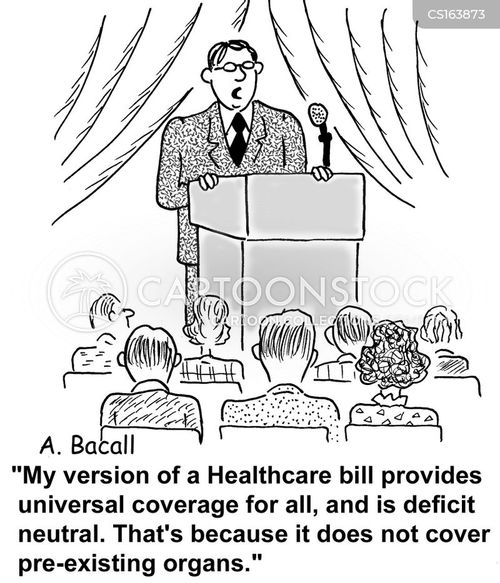
Cartoon – Modern Health Insurance Coverage

Image result for cartoon inadequate health insurance coverage


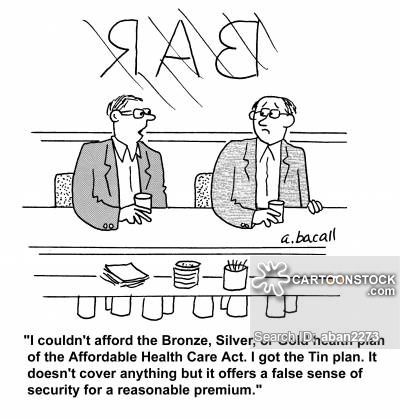
Cartoon – The Tin Plan

Image result for cartoon inadequate health insurance coverage

Cartoon – Acme Health Insurance

Image result for cartoon inadequate health insurance coverage

It’s Not Just Hospitals That Are Quick To Sue Patients Who Can’t Pay

https://www.npr.org/sections/health-shots/2020/02/19/798894062/its-not-just-hospitals-that-are-quick-to-sue-patients-who-cant-pay?utm_source=The+Fiscal+Times&utm_campaign=59b997dc59-EMAIL_CAMPAIGN_2020_02_19_10_03&utm_medium=email&utm_term=0_714147a9cf-59b997dc59-390702969

Social worker Sonya Johnson received a civil warrant to appear in court when the company that runs Nashville General Hospital’s emergency room threatened to sue her over a $2,700 ER bill — long after she’d already negotiated a reduced payment schedule for the rest of her hospital stay.

Nashville General Hospital is a safety net facility funded by the city. For a patient without insurance, this is supposed to be the best place to go in a city with many hospitals. But for those who are uninsured, it may have been the worst choice in 2019.

Its emergency room was taking more patients to court for unpaid medical bills than any other hospital or practice in town. A WPLN investigation finds the physician-staffing firm that runs the ER sued 700 patients in Davidson County during 2019.

They include patients such as Sonya Johnson, a 52-year-old social worker and single mother.

By juggling her care between a nonprofit clinic and Nashville General, Johnson had figured out how to manage her health problems, even though she was, until recently, uninsured. In 2018, she went in to see her doctor, who charges patients on a sliding scale. Her tongue was swollen and she was feeling weak. The diagnosis? She was severely anemic.

“He called me back that Halloween day and said, ‘I need you to get to the emergency [room], stat — and they’re waiting on you when you get there,’ ” she recalls.

Nashville General kept her overnight and gave her a blood transfusion. They wanted to keep her a second night — but she was worried about the mounting cost, so asked to be sent home.

Staying overnight even the one night meant she was admitted to the hospital itself, and the bill for that part of her care wasn’t so bad, Johnson says. The institution’s financial counselors offered a 75% discount, because of her strained finances and because her job didn’t offer health insurance at the time.

But emergency rooms are often run by an entirely separate entity. In Nashville General’s case, the proprietor was a company called Southeastern Emergency Physicians. And that’s the name on a bill that showed up in Johnson’s mailbox months later for $2,700.

“How in the world can I pay this company, when I couldn’t even pay for health care [insurance]?” Johnson asks.

Johnson didn’t recognize the name of the physician practice. A Google search doesn’t help much. There’s no particular website, though a list of Web pages that do turn up in such a search suggest the company staffs a number of emergency departments in the region.

Johnson says she tried calling the number listed on her bill to see if she could get the same charity-care discount the hospital gave her, but she could only leave messages.

And then came a knock at her apartment door over the summer. It was a Davidson County sheriff’s deputy with a summons requiring Johnson to appear in court.

“It’s very scary,” she says. “I mean, [I’m] thinking, what have I done? And for a medical bill?”

Nashville General Hospital was no longer suing patients

Being sued over medical debt can be a big deal because it means the business can get a court-ordered judgment to garnish the patient’s wages, taking money directly from their paycheck. The strategy is meant to make sure patients don’t blow off their medical debts. But this is not good for the health of people who are uninsured, says Bruce Naremore, the chief financial officer at Nashville General.

“When patients owe money, and they feel like they’re being dunned all the time, they don’t come back to the hospital to get what they might need,” he says.

Under Naremore’s direction in the past few years, Nashville General had stopped suing patients for hospital fees. He says it was rarely worth the court costs.

But Southeastern Emergency Physicians — which, since 2016, has been contracted by the hospital to run and staff its emergency department — went the other way, filing more lawsuits against patients than ever in 2019.

Naremore says the decision on whether to sue over emergency care falls to the company that staffs the ER, not Nashville General Hospital.

“It’s a private entity that runs the emergency room, and it’s the cost of doing business,” he says. “If I restrict them from collecting dollars, then my cost is going to very likely go up, or I’m going to have to find another provider to do it.”

This is a common refrain, says Robert Goff. He’s a retired hospital executive and board member of RIP Medical Debt. The nonprofit helps patients who are trapped under a mountain of medical bills, which are the No. 1 cause of personal bankruptcy.

“So the hospital sits there and says, ‘Not my problem.’ That’s irresponsible in every sense of the word,” Goff says.

The practice of suing patients isn’t new for Southeastern Emergency Physicians or its parent company, Knoxville-based TeamHealth. But such lawsuits have picked up in recent years, even as the company has stopped its practice of balance billing patients.

TeamHealth is one of the two dominant ER staffing firms in the nation, running nearly 1 in 10 emergency departments in the United States. And its strategy of taking patients to court ramped up after it was purchased by the private equity giant Blackstone, according to an investigation by the journalism project MLK50 in Memphis.

Under pressure from journalists, TeamHealth ultimately pledged to stop suing patients and to offer generous discounts to uninsured patients.

Officials from TeamHealth declined WPLN’s request for an interview to answer questions about how widespread its practice of suing patients for ER doctors’ services and fees has been.

“We will work with patients on a case by case basis to reach a resolution,” TeamHealth said in an email.

According to court records obtained by WPLN, the firm filed about 700 lawsuits against patients in Nashville in 2019. That’s up from 120 in 2018 and just seven in 2017. Its only contract in the city is with Nashville General’s ER, and the patients reached by WPLN say they were uninsured when they were sued.

What’s surprising to Mandy Pellegrinwho has been researching medical billing in Tennessee at the nonpartisan Sycamore Institute, is that it was all happening at Nashville General — where treating uninsured patients is part of the hospital’s mission.

“It is curious that a company that works for a hospital like that might resort to those sorts of actions,” Pellegrin says.

TeamHealth halts suits, pledges to drop cases

As for Sonya Johnson — she eventually went to court and worked out a payment plan of $70 a month over three years.

And now TeamHealth tells WPLN that its intent is to drop pending cases.

“We will not file additional cases naming patients as defendants and will not seek further judgments,” a TeamHealth spokesperson says in an emailed statement. “Our intent is not to have these pending cases proceed. We’re working as expeditiously as possible on resolving individual outstanding cases.”

Johnson says she’s been told that the lawsuit Southeastern Emergency Physicians filed against her will be dropped — but that she still owes the $2,700 bill.


Healthcare Reform: The Perfect or Politically Possible?

Healthcare Reform: The Perfect or Politically Possible?

Image result for healthcare cost tipping point

Health economist William Hsiao PhD lays out two stark choices on healthcare reform facing Americans:

  • should health insurance continue being treated as a market-driven commercial product, or should it be changed to a government-regulated social good?
  • if Americans opt for change, should they alter the system quickly in a few years or slowly over decades?

In the February issue of Foreign Affairs, Professor Hsiao makes the case the healthcare market has failed – “Americans pay more and get less.” But he questions whether Americans currently have enough political will to undertake more than small incremental steps toward transforming it.

He acknowledges that changing to a single-payer approach would radically cut administrative costs, extend coverage to all, strengthen fraud control, and spread actuarial risk more evenly. He also acknowledges that doing so would reduce the overall national spending on healthcare and would relieve households from the financial threats of escalating premiums and illness.

But, he writes, the single-payer approach would encounter both public fear of major change as well as resistance from powerful interest groups like the American Medical Association, American Hospital Association, insurance companies, and pharmaceutical firms. “Although Americans have begun to take a more favorable view of single-payer systems in recent years, it’s far from clear that the idea has enough popular support to clear such hurdles.”

He cites Canada and Taiwan as examples of rapid comprehensive reform undertaken in 1968 and 1995, respectively. He notes that these two systems have kept annual per-capita spending at $4,974 in Canada and $1,430 in Taiwan, compared with over $10,000 annually for Americans. And he notes that both countries enjoy longer life expectancy and lower infant mortality than the U.S.

But he questions whether such a radical approach is politically possible in the U.S. His admonitions should not be ignored, since he is a renowned international expert on healthcare financing and social insurance, with long-standing tenure at Harvard’s Chan School of Public Health. Also, he is no stranger to healthcare politics as the prime architect of Medicare’s resource-based relative-value pricing schema.

The German Alternative

Professor Hsiao suggests another model – Germany.

Germany’s first “sickness funds” were created in 1883 by Chancellor von Bismarck (see my YouTube video, “Brief History of U.S. Healthcare”).  Then, after World War I, the Reichstag mandated universal coverage for all citizens. In the 1990s, chaotic coverage packages were standardized by law. Since then, the hybrid regulated market consolidated down to just 115 insurers currently, all now using required uniform claims procedures. Administrative costs are low, drug costs are controlled, per-capital spending is $5,728, and life expectancy and infant mortality are better than in the U.S.

Professor Hsiao argues that an incremental approach like Germany’s is more politically feasible in the U.S.  For example, implementing a uniform system of records and payments could streamline claims processing and improve control of duplication and fraud. He favors allowing a monopsony of insurers to collectively bargain on drug prices. Measures like these would predictably save $200 to $300 billion dollars annually, a comparatively small but worthwhile step.

Meanwhile, he favors state-level or federal-level risk pools and regional health budgets to cover the uninsured and underinsured.  These measures would require modest tax increases along the way, but would sidestep the politically problematic issue of abolishing private health insurance.

Comment

Professor Hsiao astutely frames the question of healthcare reform as a debate over “the perfect and the good.” He implies that doing nothing is not an option. But he also astutely notes that the clash between public sentiment and the vested interests will drive the political power dynamic. Will Americans’ escalating pocketbook costs prevail over their fear of change and their tolerance for non-costworthy spending in the current system?

This blog has predicted that rising walletbook pain will push Americans to their political tipping point.  Time will tell.