It’s Official: CDC Recommends Public Wear Face Masks

https://www.medpagetoday.com/infectiousdisease/covid19/85800?xid=NL_breakingnewsalert_2020-04-04&eun=g885344d0r&utm_source=Sailthru&utm_medium=email&utm_campaign=CDCMasksAlert_040420&utm_term=NL_Daily_Breaking_News_Active

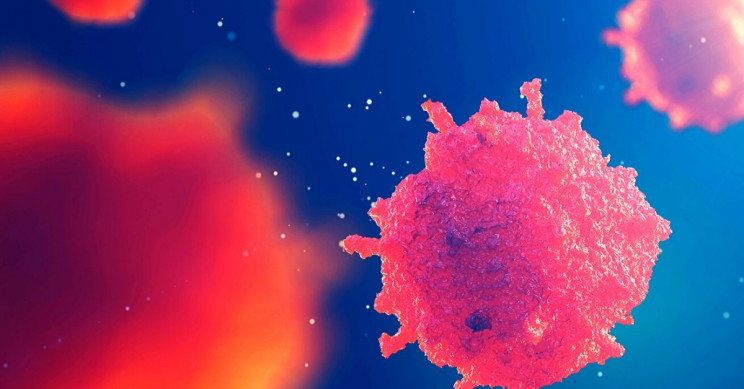
A computer rendering of the coronavirus

Stresses use of cloth coverings, not medical grade, for ordinary people.

The CDC is now recommending that everyone should wear a cloth face covering when out in public places to protect others in case they are unknowingly infected with the virus.

Late Friday night, the agency updated its consumer-facing web page for COVID-19 self-protection as follows:

  • Cover your mouth and nose with a cloth face cover when around others.
  • You could spread COVID-19 to others even if you do not feel sick.
  • Everyone should wear a cloth face cover when they have to go out in public, for example to the grocery store or to pick up other necessities.
  • Cloth face coverings should not be placed on young children under age 2, anyone who has trouble breathing, or is unconscious, incapacitated or otherwise unable to remove the mask without assistance.
  • The cloth face cover is meant to protect other people in case you are infected.
  • Do NOT use a face mask meant for a healthcare worker.
  • Continue to keep about 6 feet between yourself and others. The cloth face cover is not a substitute for social distancing.

Because there is currently no vaccine nor approved treatment, the agency stressed that the best strategy for preventing illness is still to avoid exposure to the virus. Even asymptomatic people can spread coronavirus to others, the CDC stressed.

During a White House briefing on Friday evening, President Trump underscored the CDC’s advice to Americans who are not clinicians, that they not wear “medical-grade or surgical -grade” masks. These are now in shortage at many hospitals, forcing administrators to adopt last-ditch strategies to extend supplies.

But Trump said he has no plans to follow the recommendation himself to wear a mask in public. “I’m choosing not to do it,” he said at the Friday briefing.

The SARS-CoV-2 virus is transmitted primarily through person-to-person contact from people who are in close contact, meaning less than 6-feet apart; through respiratory droplets, projected in a sneeze or cough that land in the mouths and noses of people nearby and can be inhaled into their lungs, but importantly the virus can also be transmitted through talking.

Researchers reported earlier in the week that the coronavirus could be spread through normal breathing and speechLarge droplets remain one method of transmission, when they are inhaled by a person nearby or through contact with a contaminated surface and later touching one’s face. However, researchers noted that tiny particles in the air can also carry the virus.

Former FDA Commissioner Scott Gottlieb, MD, recommended last weekend that “everyone, including people without symptoms, should be encouraged to wear nonmedical fabric face masks while in public.”

While asymptomatic transmission of the virus outside of China was discovered in late January, White House officials had initially suggested that it was not an important driver of transmission. “You really need to just focus on the individuals that are symptomatic,” HHS Secretary Alex Azar told ABC News in March.


Drivers of health and the coronavirus

Drivers of health and the coronavirus

Truck drivers under increased pressure due to coronavirus

I don’t have time for a fully formed post or column on this, but I want to make note of a few ways in which the COVID-19 pandemic is intersecting with drivers of health (which include social determinants and health system factors). The following list is not necessarily exhaustive and my focus is on the U.S.

  • Right now the health system cannot offer anything to prevent the consequences of COVID-19 infection. Prevention is entirely within the realm of public health measures and personal behaviors. In this way, this is a lot like HIV/AIDS before the mid-1990s. If one were engaged in an exercise of attributing COVID-19 deaths to various factors, personal behavior — degree of social distancing, hand washing, etc. — would get a significant share.
  • But, individuals do not fully control their own COVID-19 destiny. Not everyone can avoid all risk of exposure. Food and other necessities need to be brought into the house. We want some people to work (e.g., health care workers, those involved in producing and transporting food and medical supplies). Not everyone can control the behavior of everyone else in their household. Teens and young adults might sneak out, despite what their parents say.
  • Among those at highest risk will be people who don’t have the privilege of working from home. They need income and can’t get it without leaving the house. Peeling this onion leads back to the customary markers of socioeconomic status (education, income, rank/class, etc.) as drivers of health.
  • Those with privilege are more likely to find ways to get testing, care, and going forward, probably will be among the first (after health care workers) to get vaccinated. This is how it has always been in the U.S.
  • Policy clearly plays a role. Where leaders were slower to implement changes to increase or require social distancing, outbreaks are more widespread (relative to the counterfactual of those changes made sooner). Even national policy makers were slow to recognize the importance of preparing for a pandemic. Mistakes were made. Balls were dropped. So, policy/government is a driver, of course.
  • Finally, the health system clearly plays a role, not in prevention but in treatment. People can be saved, if the resources are there to save them and they can be accessed. Where and for whom health care is more available and accessible, people will be better off. This is complex because of the intersection of the effectiveness of health care, its accessibility (which is reduced for people losing job-based insurance, otherwise un- or under-insured, or without the resources to pay cost sharing, etc.), and the degree to which the health system has prepared for such a pandemic (which intersects with policy and health economics). So, the health system should get some blame/credit for deaths/saved lives, but it’s not so clear how much.

Fundamentally, it’s interesting how much we are reliant on collective resources — government through policy and shared health care infrastructure. The best thing we can do for ourselves individually is to engage in safe behaviors. But we also need collective action for our future well being. Yes/and, not either/or.


How the coronavirus pandemic differs from the flu

https://www.axios.com/coronavirus-pandemic-differs-from-flu-48e81eae-d275-4d33-83fa-4716551c61c0.html

Image result for axios How the coronavirus pandemic differs from the flu

The COVID-19 pandemic is caused by a virus humans haven’t encountered before — meaning our bodies have no built-in immunity to it and researchers are frantically working to learn more about it.

Why it matters: While there are important lessons to be learned from other pandemic flus and even seasonal flu outbreaks, the coronavirus pandemic is new and not exactly comparable, making predictions, policies and treatments all the more difficult.

The latest: The coronavirus is spreading throughout the U.S., with at least 35,224 confirmed cases and 471 deaths early Monday morning, per Johns Hopkins’ Center for Systems Science and Engineering.

  • Meanwhile, the Centers for Disease Control and Prevention estimates the 2019-2020 seasonal flu has caused at least 38 million illnesses, 390,000 hospitalizations and 23,000 deaths so far this season.

What they’re saying: Anthony Fauci, who’s served as director of the National Institute of Allergy and Infectious Diseases since 1984, told a JAMA podcast he’s worked on multiple infectious disease crises “but nothing of the magnitude of this.”

  • One of the problems, he said, is that without strong containment and mitigation efforts, it hits society and its health care system “all of a sudden — boom! It starts to skyrocket.”
  • The World Health Organization on Friday warned against dismissing the coronavirus as just a bad outbreak of the flu, saying overwhelmed health systems are “collapsing” around the world.
  • “This is not normal. This isn’t just a bad flu season,” WHO’s Mike Ryan said.

While both seasonal flu and COVID-19 cause similar respiratory illnesses, there are key differences between the viruses.

  • Influenza has an incubation period of roughly 2-3 days, whereas the coronavirus incubates longer (5-6 days on average) before symptoms appear, possibly allowing more people to unknowingly spread the virus.
  • On average, 1.3 people catch the flu from an infected person versus 2-3 for the coronavirus.
  • There’s a flu vaccine and multiple effective treatments, so many exposed to the flu will have lessened symptoms. There’s no vaccine or treatment yet approved for COVID-19.
  • Children appear to be more susceptible to severe complications from this seasonal flu than from COVID-19, with the CDC reporting the highest number of influenza-associated deaths (149) at this point in the season, with the exception of the 2009 flu pandemic.
  • But, the overall mortality rate for COVID-19 is between 10 and 40 times higher than the average 0.1% mortality rate for the seasonal flu.

The U.S. can learn from both Asia and Europe, which experienced cases of COVID-19 earlier than the U.S., Julie Fischer of Georgetown University’s Center for Global Health Science and Security tells Axios.

  • China is providing data showing what measures are working better than others, and is conducting treatment tests on patients, which will be valuable, she said.
  • In South Korea, robust diagnostic testing using creative measures like drive-thrus combined with strong health care followup shows the importance of isolating the right people early enough to limit the spread, Fischer says.
  • Italy tried to do a widespread but unfocused social distancing. There’s been some success in stemming the outbreak in certain areas that tested a large number of people, tracing and quarantining those who have been in contact with positive cases. But, it wasn’t early enough or sufficiently extensive, and many parts of Italy are now overwhelmed.

Longer term lessons can be drawn from prior pandemics, like the Spanish flu of 1918, Fischer says.

  • Comparing Philadelphia’s response with that of St. Louis is quite striking, Fischer says. Philadelphia decided to hold a 200,000-person parade to boost morale — but this led to widespread infections. In contrast, St. Louis rapidly battened down the hatches and reported a smaller epidemic.
  • Another lesson from the Spanish flu was that closing schools early on was “one of the most beneficial” non-pharmaceutical interventions.

The bottom line: “This is not an ‘abandon all hope, ye who enter here,’ scenario,” Fischer says. “We can focus our strategy and become much more aggressive” in diagnostics testing and social distancing measures until scientists make advancements on vaccines and treatments.


To solve the economic crisis, we will have to solve the health-care crisis

https://www.washingtonpost.com/opinions/the-coronavirus-pandemic-is-not-an-economic-crisis-its-a-health-care-crisis/2020/03/19/d7bb64a6-6a1a-11ea-abef-020f086a3fab_story.html?fbclid=IwAR1I–vZ_8aqfRe0mIyIdWSWGKHuTnBjS-tqkK3PcyYM7xVKx9LIVn9ddsY&utm_campaign=wp_main&utm_medium=social&utm_source=facebook

Image result for To solve the economic crisis, we will have to solve the health-care crisis

In Washington, the focus has now turned to the economic response to the coronavirus pandemic, with experts and politicians proposing their preferred policy tools — ranging from tax cuts to corporate bailouts to direct payments of cash. Each is worth debating, but the focus is misplaced. This is not an economic crisis; it is a health-care crisis.

The distinction may sound academic. But understanding it is actually vital to designing the policies that should follow.

In an economic crisis, you could imagine a situation in which people lose their jobs and are unable to spend money. That’s called a demand shock, which is what happened during the global financial crisis of 2008. Or producers could raise prices (for various reasons), making it harder to buy their goods. That’s a supply shock, and it describes the oil crises of 1973 and 1979. But what is happening now cannot be addressed primarily by economic responses, because we are witnessing the suspension of economics itself.

Today, even if you have money, increasingly you cannot go into a shop, restaurant, theater, sports arena or mall because those places are closed. If you own a factory that hasn’t already closed for health reasons, you may still have to shut it down because you can’t get key components from suppliers or you can’t find enough stores open to sell your goods.

In these conditions, cash to consumers cannot jump-start consumption. Relief to producers will not jump-start production. This problem is on a level different and far greater than the recession of 2008 or the aftermath of 9/11. If it were to go on for months, it could look worse than the Great Depression.

This is not an argument against any of the economic measures being proposed. People need to be able to eat, buy medicine and pay their bills. New York Times columnist Andrew Ross Sorkin has canvassed experts and concluded that the best approach would be a zero-interest “bridge loan to all businesses and self-employed people as long as they keep most of their workers on staff. It is probably the right course of action, massively expensive but cheaper than a full-blown Great Depression.

But even that might not work if we do not recognize that first and foremost the United States faces a health crisis. And that crisis is not being solved. China is now reporting no new domestic infections. South Korea, Taiwan and Singapore have also made progress in “flattening the curve” — the phrase of the year — because they have prioritized dealing with the health-care crisis over enacting a grand economic stimulus.

The United States is still dangerously behind the curve. A headline in Thursday’s Wall Street Journal is, “Coronavirus Testing Chaos Across America.” The article details how the country still has “a chaotic patchwork of testing sites,” with testing proceeding “far slower than experts say is necessary, in part due to a slow federal response.” The U.S. testing rate remains shockingly low, well behind the rates of most other rich countries and far behind those of the Asian countries that are handling this crisis best. Across the United States, hospitals are warning of a dire shortage of beds, medical equipment and supplies. And the worst is yet to come. With infections doubling every two to three days, the U.S. health-care system will face what New York Gov. Andrew Cuomo correctly described as a “tsunami.”

The Trump administration is still acting slowly and fitfully. Experts predicted weeks ago that cities would need thousands more hospital beds, and yet the Navy is still performing maintenance on two hospital ships and figuring out staffing. The president says he will invoke “defense production” powers only if necessary. What is he waiting for? He should direct firms to start production of all key medical equipment in short supply. The armed forces should be deployed immediately to set up field testing and hospital sites. Hotels and convention centers should be turned into hospitals. The federal government should announce a Manhattan Project-style public-private partnership to find and produce a vaccine. After decades of attacks on government, federal agencies are understaffed, underfunded and ill-equipped to handle a crisis of this magnitude. They need help, and fast.

And here’s another idea: President Trump could forge an international effort to unite the world against this common threat. If the United States, China and the European Union worked together, prospects for success — on a vaccine, for example — would be greater. China in particular produces most of the supplies and medical ingredients the world needs. Trump should remove all of his self-defeating tariffs so that American consumers don’t have to pay more for these goods and China can ramp up production. This is a war, and in a war you try to find allies rather than create enemies.


4 ETHICAL DILEMMAS FOR HEALTHCARE ORGANIZATIONS DURING THE COVID-19 PANDEMIC

https://www.healthleadersmedia.com/clinical-care/4-ethical-dilemmas-healthcare-organizations-during-covid-19-pandemic

Image result for 4 ETHICAL DILEMMAS FOR HEALTHCARE ORGANIZATIONS DURING THE COVID-19 PANDEMIC

There has already been rationing of testing in the United States and rationing of critical care resources is likely if severely ill COVID-19 patients surge significantly.


KEY TAKEAWAYS

Rationing of care for novel coronavirus patients has been reported in China and Italy.

Medical utility based on scientific patient profiles should guide decisions to ration critical care resources such as ventilators, medical ethicist James Tabery says.

In a pandemic, public health considerations should drive decisions on prioritizing who is tested for disease, he says.

The novel coronavirus (COVID-19) pandemic is raising thorny medical ethics dilemmas.

In China and Italy, there have been reports of care rationing as the supply of key resources such as ventilators has been outstripped by the number of hospitalized COVID-19 patients. China, the epicenter of the pandemic, has the highest reported cases of COVID-19 at more than 80,800 as of March 17, according to worldometer. Italy has the second-highest number of COVID-19 cases at nearly 28,000 cases.

The severest form of COVID-19 includes pneumonia, which can require admission to an ICU and mechanical ventilation. “Those are not just things, there are expertly trained healthcare workers who man those domains. There just isn’t enough of these resources than what we anticipate needing,” says James Tabery, PhD, associate professor in the University of Utah Department of Philosophy and the University of Utah School of Medicine’s Program in Medical Ethics and Humanities.

He says the COVID-19 outbreak poses four primary ethical challenges in the healthcare sector.

1. TREATMENT

In the United States, caring for the anticipated surge of seriously ill COVID-19 patients is likely to involve heart-wrenching decisions for healthcare professionals, Tabery says. “The question is how do you ration these resources fairly? With treatment—we are talking about ICUs, ventilators, and the staff—the purpose is you are trying to save the severely sick. You are trying to save as many of the severely sick as you can.”

The first step in managing critical care resources is screening out patients who are unlikely to need critical care and urging them to self-quarantine at home, he says.

“But eventually, you bump up to a place where you not only have screened out all of the folks who are at low risk of serious illness, but you have millions of people across the country who fall into high-risk groups. If they get infected, many are going to need access to ventilators, and the way you do that ethically is you screen patients based on medical utility,” Tabery says.

Medical utility is based on scientific assessments, he says. “You basically look at the cases and try to evaluate as quickly and efficiently as possible the likelihood that you can improve a patient’s condition quickly.”

Rationing of critical care resources would be jarring for U.S. clinical staff.

Under most standard scenarios, a patient who is admitted to an ICU and placed on mechanical ventilation stays on the machine as long as the doctors think the patient is going to get better, Tabery says.

However, the COVID-19 pandemic could drive U.S. caregivers into an agonizing emergency scenario.

“When there are 10 people in the emergency room waiting to get on a ventilator, it is entirely feasible that you would be removing people from ventilators knowing that they are going to die. But you remove people from ventilators when your evaluation of the medical situation suggests that patients are not improving. If a patient is not improving, and it doesn’t look like using this scarce resource is a wise investment, then you try it out on another patient who might have better luck,” he says.

2. TESTING

There has been rationing of COVID-19 testing in the United States since the first novel coronavirus patient was diagnosed in January.

While there are clinical benefits to COVID-19 testing such as determining what actions should be taken for low- and high-risk patients, the primary purpose of testing during a pandemic is advancing public health, Tabery says.

“The primary purpose of the test is pure public health epidemiology. It’s about keeping track of who has COVID-19 in service of trying to limit the spread of the disease to other people. When that is the purpose, the prioritization isn’t so much about who is at greatest risk. It’s about who is more likely to interact with lots of people, or who is more likely to have interacted with more people.”

A classic example of rationing COVID-19 testing based on public health considerations is the first reported infection of an NBA player, he says.

“For the Utah Jazz player who had symptoms, it made sense to test him very quickly because it was clear that he had interacted with a lot of people. Once he tested positive, the testing of the other players was not because public health officials thought the players were more valuable than the average person on the street. It was because the players had come into contact with more people than the average person on the street.”

3. HEALTHCARE WORKERS

The COVID-19 pandemic involves competing obligations for healthcare workers, Tabery says. “On the one hand, they have a set of obligations that inclines them to go to work when they get the call. On the other hand, healthcare workers have their own interests—they don’t want to get sick, which can incline them not to work,” he says.

“The punchline is there is an ethical consensus that healthcare workers have a prima facie duty to work because of everything that has been invested in them, because of their unique position where not just anybody can replace them, because society looks to them to serve this function, and because they went into this profession and are expected to go into work,” he says.

However, the obligation of healthcare workers to show up for their jobs is not absolute, Tabery says. “If hospitals don’t have personal protective equipment, they are in no position to tell their staff to show up and work. If a hospital cannot provide even a basic level of safety for their employees to do their job, then they are turning their hospital not into a place to treat patients—they are turning it into a hub to exacerbate the problem.”

4. VACCINE

When a vaccine becomes available, policymakers, public health officials, and healthcare providers will face rationing decisions until there is sufficient supply to treat the entire U.S. population, Tabery says.

“When the vaccine comes out, the first group you are going to want to prioritize are healthcare workers, who are at risk of getting infected by doing their jobs and saving lives. You would also want to prioritize people who serve essential functions to keep society going—the people who keep the water running, the lights on, police, and firefighters. Then you want to start looking at the high-risk groups,” he says.


Experts agree that Trump’s coronavirus response was poor, but the US was ill-prepared in the first place

https://theconversation.com/experts-agree-that-trumps-coronavirus-response-was-poor-but-the-us-was-ill-prepared-in-the-first-place-133674?utm_medium=email&utm_campaign=Latest%20from%20The%20Conversation%20for%20March%2017%202020%20-%201565314971&utm_content=Latest%20from%20The%20Conversation%20for%20March%2017%202020%20-%201565314971+Version+A+CID_6ce2ffeb273f535ccdcb368c4649a7ee&utm_source=campaign_monitor_us&utm_term=Experts%20agree%20that%20Trumps%20coronavirus%20response%20was%20poor%20but%20the%20US%20was%20ill-prepared%20in%20the%20first%20place

As the coronavirus pandemic exerts a tighter grip on the nation, critics of the Trump administration have repeatedly highlighted the administration’s changes to the nation’s pandemic response team in 2018 as a major contributor to the current crisis. This combines with a hiring freeze at the Centers for Disease Control and Prevention, leaving hundreds of positions unfilled. The administration also has repeatedly sought to reduce CDC funding by billions of dollars. Experts agree that the slow and uncoordinated response has been inadequate and has likely failed to mitigate the coming widespread outbreak in the U.S.

As a health policy expert, I agree with this assessment. However, it is also important to acknowledge that we have underfunded our public health system for decades, perpetuated a poorly working health care system and failed to bring our social safety nets in line with other developed nations. As a result, I expect significant repercussions for the country, much of which will disproportionately fall on those who can least afford it.

Decades of underfunding

Spending on public health has historically proven to be one of humanity’s best investments. Indeed, some of the largest increases in life expectancy have come as the direct result of public health interventions, such as sanitation improvements and vaccinations.

Even today, return on investments for public health spending is substantial and tends to significantly outweigh many medical interventions. For example, one study found that every US$10 per person spent by local health departments reduces infectious disease morbidity by 7.4%.

However, despite their importance to national well-being, public health expenditures have been neglected at all levels. Since 2008, for example, local health departments have lost more than 55,000 staff. By 2016, only about 133,000 full-time equivalent staff remained. State funding for public health was lower in 2016-2017 than in 2008-2009. And the CDC’s prevention and public health budget has been flat and significantly underfunded for years. Overall, of the more than $3.5 trillion the U.S. spends annually on health care, a meager 2.5% goes to public health.

Not surprisingly, the nation has experienced a number of outbreaks of easily preventable diseases. Currently, we are in the middle of significant outbreaks of hepatitis A (more than 31,000 cases), syphilis (more than 35,000 cases), gonorrhea (more than 580,000 cases) and chlamydia (more than 1,750,000 cases). Our failure to contain known diseases bodes ill for our ability to rein in the emerging coronavirus pandemic.

Failures of health care systems

Yet while we have underinvested in public health, we have been spending massive and growing amounts of money on our medical care system. Indeed, we are spending more than any other country for a system that is significantly underperforming.

To make things worse, it is also highly inequitable. Yet, the system is highly profitable for all players involved. And to maximize income, both for- and nonprofits have consistently pushed for greater privatization and the elimination of competitors.

As a result, thousands of public and private hospitals deemed “inefficient” because of unfilled beds have closed. This eliminated a significant cushion in the system to buffer spikes in demand.

At any given time, this decrease in capacity does not pose much of a problem for the nation. Yet in the middle of a global pandemic, communities will face significant challenges without this surge capacity. If the outbreak mirrors anything close to what we have seen in other countries, “there could be almost six seriously ill patients for every existing hospital bed.” A worst-case scenario from the same study puts the number at 17 to 1. To make things worse, there will likely be a particular shortage of unoccupied intensive care beds.

Of course, the lack of overall hospitals beds is not the most pressing issue. Hospitals also lack the levels of staffing and supplies needed to cope with a mass influx of patients. However, the lack of ventilators might prove the most daunting challenge.

Limits of the overall social safety net

While the U.S. spends trillions of dollars each year on medical care, our social safety net has increasingly come under strain. Even after the Affordable Care Actalmost 30 million Americans do not have health insurance coverage. Many others are struggling with high out-of-pocket payments.

To make things worse, spending on social programs, outside of those protecting the elderly, has been shrinking, and is significantly smaller than in other developed nations. Moreover, public assistance is highly uneven and differs significantly from state to state.

And of course, the U.S. heavily relies on private entities, mostly employers, to offer benefits taken for granted in other developed countries, including paid sick leave and child care. This arrangement leaves 1 in 4 American workers without paid sick leave, resulting in highly inequitable coverage. As a result, many low-income families struggle to make ends meet even when times are good.

Can the US adapt?

I believe that the limitations of the U.S. public health response and a potentially overwhelmed medical care system are likely going to be exacerbated by the blatant limitations of the U.S. welfare state. However, after weathering the current storm, I expect us to go back to business as usual relatively quickly. After all, that’s what happened after every previous pandemic, such as H1N1 in 2009 or even the 1918 flu epidemic.

The problems are in the incentive structure for elected officials. I expect that policymakers will remain hesitant to invest in public health, let alone revamp our safety net. While the costs are high, particularly for the latter, there are no buildings to be named, and no quick victories to be had. The few advocates for greater investments lack resources compared to the trillion-dollar interests from the medical sector.

Yet, if altruism is not enough, we should keep reminding policymakers that outbreaks of communicable diseases pose tremendous challenges for local health care systems and communities. They also create remarkable societal costs. The coronavirus serves as a stark reminder.


Coronavirus Has Mutated into More Aggressive Infection, Say Scientists

https://interestingengineering.com/coronavirus-has-mutated-into-more-aggressive-infection-say-scientists?utm_source=Facebook&utm_medium=Article&utm_campaign=organic&utm_content=Mar06&fbclid=IwAR1uIWQYvlWNvx6BfTbkb7bburGW2-zikXr4KCYhAhoozm2xyx2efPRqQ2s

Coronavirus Has Mutated into More Aggressive Infection, Say Scientists

Coronavirus has undergone mutation into two distinct strains, one of which is far more aggressive and efficient.

Coronavirus has undergone mutation into two distinct strains, and one of them is far more aggressive than the other, according to scientists. This development may slow global attempts to develop a viable vaccine.

Coronavirus: “L” and “S” types

Researchers at Peking University’s School of Life Sciences and the Institut Pasteur of Shanghai witnessed the deadly virus evolve into two major lineages — called “L” and “S” types.

The “S-type” is the older, milder and less infectious type, while the evolved “L-type” spreads more rapidly, and presently accounts for roughly 70% of cases. While the L strain seemed to be more prevalent than the S strain, the S-type of the coronavirus is the ancestral version, reports The Guardian.

Genetic analysis of a man residing in the U.S. who was confirmed infected with coronavirus on Jan. 21 demonstrated to scientists that double-infection is possible.

In other words, anyone can be infected with both types.

Early origin of mutation

The scientists who carried out the genetic analysis used 103 samples of the virus, taken from patients in Wuhan and other cities. This suggests that both the L and S strains emerged early in the early days of the coronavirus, according to The Guardian.

It’s important to note that all viruses mutate over time, and the virus causing COVID-19 is no exception. In other words, while it’s natural to be dismayed, this was and is an expected development.

How widespread it ultimately becomes depends on the evolutionary process of natural selection — the types capable of propagating fastest and most efficiently within the human body achieve the most “success.”


Is COVID-19 really any worse than normal seasonal flu?

https://bigthink.com/politics-current-affairs/covid-19-vs-flu

  • Many are suggesting coronavirus is just flu-season business as usual. It’s not.
  • No sensible comparison can be made anyway, for a few reasons.
  • The one that’s less bad — whichever that is — can still kill you.

A lot of people are trying to get a sense of whether COVID-19 is any more dangerous than normal seasonal flu strains. Unfortunately, making meaningful comparisons between them is just not possible yet. From a “what should I do/worry about?” point of view, though, it’s pretty pointless to compare the two.

Whichever one you select as the ultimate Big Bad, they’re both out there: You have a decent chance of contracting either illness, and they both can be fatal for certain demographic segments. Trying to choose which one is worse is like trying to choose whether you’d rather be hit by a bus or a truck.

At this point, the best advice remains the same for both: Start washing those hands well and frequently, and follow the CDC’s recommendations for avoiding infection.

Here’s why we can’t know which is worse

There are some fundamental differences between the statistics available on seasonal flu and COVID-19, and they make a direct comparison impossible.

  • Seasonal flu is an annual phenomenon (even though strains change). There’s lots of multi-year data on rates of infection and mortality in the hands of numerous national health authorities. COVID-19, on the other hand, has been around for only about two months, and most of the available data comes from just one country, China, where it first emerged.
  • Related to this is that it’s impossible to calculate the spread of COVID-19 from such a limited amount of data, both in terms of time and geography. The disease is now apparently racing around the globe outside China, but how fast will it circulate and what will be its final infection rate? It’s impossible to know.
  • There are remedies and vaccines for seasonal flu strains — neither exist for COVID-19. While existing therapies are being tested for their efficacy against coronavirus, no silver bullet has yet been found and there’s no way to know when/if one will. Hilary Marston, a medical officer and policy advisor at the National Institute of Allergy and Infectious Diseases says of a coronavirus vaccine, “If everything moves as quickly as possible, the soonest that it could possibly be is about one-and-a-half to two years. That still might be very optimistic.” This makes a comparison of the death rates between seasonal flu and COVID-19 unfair: One has a cure, the other doesn’t.

Things people are saying, and what’s real

You’re more likely to get the seasonal flu.

Um, maybe, at the moment. Be aware that COVID-19 is being found in new areas pretty much every day. Harvard epidemiologist Mark Lipstich says, “I think the likely outcome is that it will ultimately not be containable.”

On top of that, we don’t know how fast it will spread in the wild. If it continues to travel at the rate it has in the last two months, hoo boy. However, contagion doesn’t usually remain linear. So it could get better. Or worse. Will seasons affect it? Proper sanitation? Other factors? With only two months of data, we can’t possibly know, but Lipstich predicts 40% to 70% of us will get it.

COVID-19 is 20 times more deadly than seasonal flu.

Sorry. It’s likely a lot worse than that. Last week, COVID-19’s mortality rate was thought to be 2.3%. Now it’s considered to be 3.4%, or .034 of the total number of infections. The CDC estimates the seasonal flu mortality rate this year is .001% — the number of deaths divided by the number of total infections. So, as of March 4, the latest figure for COVID-19’s mortality rate is 34 times greater than seasonal flu, nearly double what you’ve been hearing.

Of course, the lack of effective treatment is a key factor in COVID-19’s mortality rate. When/if one is identified, that rate will go down.

Most people get through COVID-19 just fine.

This is true, However, while in one sense it’s great that the vast majority of people who contract COVID-19 get over it easily, it also means that a lot of people have the coronavirus without realizing it and are continuing to spread the infection. In stark — and tragic — contrast, one of the reasons Ebola eventually stopped infecting people was that most of its victims typically died before they could spread the disease. COVID-19, on the other hand, can travel quite invisibly far and wide before being recognized.

Epidemiologist Jennifer Nuzzo tells The Washington Post that the recent U.S. diagnoses confirm “what we have long suspected — that there is a good chance there already are people infected in this country and that the virus is circulating undetected. It points to the need for expanded surveillance so we know how many more are out there and how to respond. It’s also likely that person-to-person spread will continue to occur, including in the United States.”

So stop comparing and just be safe

Regardless of which disease is worse, they’re both potentially dangerous, so be safe and follow safety guidelines. Take hand-washing seriously: Rub your hands together with soap and water for at least 20 seconds. (Sing the alphabet at a moderate speed and you’ll be about right.)


Congress releases $8.3B coronavirus funding package. Here’s what’s in it

https://www.fiercehealthcare.com/hospitals-health-systems/congress-releases-8-3b-coronavirus-funding-package-here-s-what-s-it?mkt_tok=eyJpIjoiWXpZek1tWm1NakprWTJaaSIsInQiOiJFYkFWWlwvYzc5c09JOWNiV1ZmSXlqclZsSU5RYnNBQ1NGd2EyQTdiYUdoa3BpV2ZwMTlyZ0xwcWNSNkthZ0pnbDRxR0IrWGNwZmFrcDhWQ3FjNkdzSUx6YTRKM3RHVWhPaitCXC8wRE5rRHM1a3dSRVBNTFdodnBiY0tkclQxSTVRIn0%3D&mrkid=959610

Image result for Congress releases $8.3B coronavirus funding package. Here's what's in it

Congress is expected to pass a major $8.3 billion spending package to help providers and local governments handle the spread of the coronavirus and to boost the development of vaccines and tests of the virus.

Here are key parts of the spending package released Wednesday:

  • $500 million for an emergency telehealth waiver. The bill would waive certain Medicare restrictions for telehealth, including that a Medicare beneficiary can use telehealth services even if they aren’t in a rural community. “This provision would also allow beneficiaries to receive care from physicians and other practitioners in their homes,” a summary of the package said;
  • $2.2 billion to the Centers for Disease Control and Prevention to help state and local health agencies. The funding would include a provision to reimburse state or local costs for coronavirus response and preparedness activities from Jan. 20 to the end of this supplemental;
  • Nearly $1 billion to buy drugs and medical supplies. This procurement will include $500 million for drugs, masks and personal protective equipment that can be distributed to state and local health agencies in areas that are in shortage. It also includes funding for increasing the supply of biocontainment beds, which are secured areas used for patients with highly contagious diseases; and
  • More than $3 billion to support the research and development of vaccines, diagnostics and other treatments for the coronavirus. Any vaccine or diagnostic developed via taxpayer funds must also “be available for purchase by the federal government at a fair and reasonable price,” the summary said. The bill also enables the Department of Health and Human Services to ensure any vaccine or diagnostic can be affordable in the commercial market, but doesn’t elaborate on how.

The package sailed through the House on Wednesday and could be taken up quickly by the Senate.

Provider groups bracing for a coronavirus outbreak praised the spending package.

“This bill will provide essential assistance to caregivers and communities on the front lines of this battle,” said Chip Kahn, president and CEO of the Federation of American Hospitals, in a statement.


House Democrats ask Trump to ensure affordability of future coronavirus vaccine

https://thehill.com/policy/healthcare/483888-house-democrats-ask-trump-to-ensure-affordability-of-future-coronavirus?utm_source=&utm_medium=email&utm_campaign=27749

House Democrats ask Trump to ensure affordability of future coronavirus vaccine

Dozens of House Democrats wrote to President Trump Thursday to ask that he ensure any future coronavirus vaccines and treatments be “accessible, available and affordable.” 

The Department of Health and Human Services (HHS) will help fund efforts by Janssen — a drug company owned by Johnson & Johnson — to create a coronavirus vaccine and treatment. HHS is also partnering with French drugmaker Sanofi to produce a potential coronavirus vaccine.

Rep. Jan Schakowsky (D-Ill.) led 45 House Democrats in warning that HHS should not give an exclusive license to any private manufacturer or risk making the vaccines or treatments unaffordable.

“Providing exclusive monopoly rights could result in an expensive medicine that is inaccessible, wasting public resources and putting public health at risk in the United States and around the globe,” the lawmakers wrote. 

“If HHS or any other federal agency moves forward with such a proposal, we urge you to instead issue a limited license and implement requirements that a vaccine or treatment be made available at an affordable price.”

The efforts are in the early stages, and it could take years for a vaccine to be available to the public. 

“Americans deserve to know that they will benefit from the fruits of their public investments,” the lawmakers wrote.

“That goal cannot be met if pharmaceutical corporations are given authority to set prices and determine distribution, putting profit-making interests ahead of public health priorities.”

But the concern from House Democrats comes as lawmakers increase their scrutiny of drugmakers over rising prescription costs.

“You have repeatedly called for action to lower drug prices and know that unjustifiably high drug prices are one of the most pressing public health concerns we face today,” the lawmakers wrote to Trump.

“We should not grant any manufacturer a blank check to monopolize a coronavirus vaccine or treatment developed with public, taxpayer support.”