The Health 202: Social distancing hasn’t been as effective in stemming U.S. coronavirus deaths as policymakers had hoped.

https://www.washingtonpost.com/news/powerpost/paloma/the-health-202/2020/05/05/the-health-202-social-distancing-hasn-t-been-as-effective-in-stemming-u-s-coronavirus-deaths-as-policymakers-had-hoped/5eb04b6d88e0fa594778ea5e/

Social distancing isn’t having the effects many had hoped for.

Despite encouraging signs on the nation’s East and West coasts, daily diagnosed cases of the novel coronavirus appear to still be on the rise in about 20 states. A number of rural counties have become unexpected hot spots in recent weeks, including in the Black Belt region of Mississippi and Alabama and in communities throughout Iowa and northern Texas around the Oklahoma panhandle. The country’s overall daily figures of diagnoses and deaths have plateaued, worrying health policymakers as many states move to reopen parts of their economy.

That steep curve of covid-19 cases in March and April isn’t receding the way it rose.

Hot spots are shifting geographically from New York City to areas around the country. For the past month, the figures have hovered around 30,000 diagnosed cases and around 2,000 deaths every day, former Food and Drug Administration commissioner Scott Gottlieb noted in a Wall Street Journal op-ed.

“Everyone thought we’d be in a better place after weeks of sheltering in place and bringing the economy to a near standstill,” he wrote. “Mitigation hasn’t failed; social distancing and other measures have slowed the spread. But the halt hasn’t brought the number of new cases and deaths down as much as expected or stopped the epidemic from expanding.”

President Trump, who last week suggested the novel coronavirus would disappear even without a vaccine, has now upgraded his prediction of fatalities to as many as 100,000 people. Nonetheless, he said in a New York Post interview yesterday that Americans are “starting to to feel good now. The country’s opening again. We saved millions of lives, I think.”

A leaked government report, still in draft version, predicts a spike in cases and deaths beginning on May 14.

The report, which the Centers for Disease Control quickly disavowed as an unfinished projection, suggests new cases could surge to 200,000 per day and daily American deaths could number more than 3,000 by June 1. That’s far more than what other models predict, but the Johns Hopkins epidemiologist who prepared it told my colleagues William Wan, Lenny Bernstein, Laurie McGinley and Josh Dawsey that 100,000 new cases per day by the end of the month isn’t out of the realm of possibility.

Former FDA commissioner Scott Gottlieb:

University of Michigan professor Justin Wolfers:

That’s not the only model showing discouraging figures for the month of May. A model out of the University of Washington, relied upon heavily by the administration, yesterday upgraded its U.S. fatality predictions for the virus’s first wave from 72,433 deaths to 134,475 deaths by Aug. 4.

These aren’t the trends many policymakers had hoped to see, after most Americans spent seven weeks at home under an unprecedented lockdown that has torched the once-booming economy and thrust millions into economic uncertainty. Protests against extended lockdowns are starting to mount around the country, and many governors have assembled and even embarked upon gradual plans to reopen businesses, schools and other public areas.

Nonetheless, a new Washington Post-University of Maryland poll out this morning shows sizable majority of Americans oppose the reopening of restaurants, retail stores and businesses.

Executive producer of 7News WHDH in Boston:

Social distancing did accomplish some important objectives. It undoubtedly saved the health-care system from being crushed by an overwhelming caseload of sick patients all at once.

And the United States is still outranked by half a dozen European countries when it comes to deaths per capita. The U.S. death rate is about 206 deaths per million people. That figure is 538 in Spain, 372 in France, 481 in Italy, 432 in the United Kingdom and 207 in Switzerland, according to a tally by Mother Jones.

But distancing clearly hasn’t been enough — at least the way it’s been carried out — to halt the spread of the highly contagious virus in some places.

New cases and deaths across the whole U.S. are about where they were 20 days ago, my colleague Philip Bump reports. He created a graphic where you can view the three-day averages of cases, deaths and tests performed by state (check it out here).

“The back of the mountain doesn’t look the way the front did,” Philip writes. “We saw a steady, exponential rise in confirmed cases and deaths each day for several weeks. But particularly with daily case totals, the period after the peak nationally has looked more like a plateau than a downward slide.”

Daily cases appear to be rising significantly in Delaware, Illinois, Indiana, Minnesota and Virginia. They’re also trending upward in Arizona, Colorado, D.C., Iowa, Kansas, Maryland, Mississippi, Nebraska, New Hampshire, New Mexico, North Carolina, Tennessee, Texas, Utah and Wisconsin.

Andy Slavitt, former head of the Centers for Medicare and Medicaid Services:

“There are so many emerging areas still throughout the country that our group has been trying to wave our hands about,” Marynia Kolak, a health and spatial data science researcher at the University of Chicago, told me.

Kolak and her colleagues are tracking covid-19 cases and deaths at the county level. They’ve been increasingly spotting clusters of the disease in rural areas. Kaiser Family Foundation researchers have also found that rural areas are experiencing a faster growth in cases, even as their total numbers remain far below those seen in urban settings.

One example: Five counties in Minnesota with significant meat-processing plants. State officials said about a quarter of cases reported over the weekend came from those counties.

One is Nobles County, home to a JBS USA pork processing plant in Worthington, with a population of around 22,000. It is scheduled to partially reopen this week, under an order by Trump to keep meat plants open.

The outbreaks in counties with meat-processing plants “illustrates how powerfully situations can change at the community level,” said Jan Malcolm, commissioner of Minnesota’s Department of Health.

Malcolm stressed how hard it is to stem the spread of the virus in these types of facilities.

“These are particularly challenging investigations,” Malcolm said. “Many of the workers involved don’t have phones, don’t provide phone numbers, aren’t answering calls. It’s been a very labor-intensive, shoe-leather kind of an approach.”
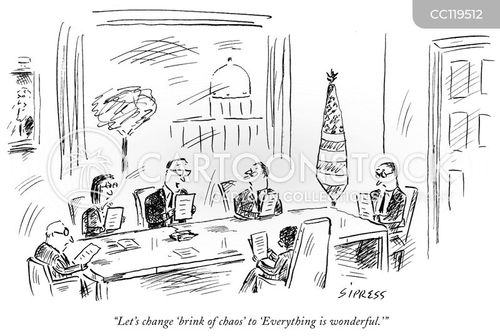



Cartoon – Let’s Change “Brink of Chaos” to “Everything is Wonderful”

Cartoon – Status Update | HENRY KOTULA

The High Stakes of Low Scientific Standards

https://www.axios.com/coronavirus-pandemic-science-problems-e6e619b8-c1a8-4e06-97d9-c328d4d0400e.html

The Lucky Seven States Already Pursuing Gambling Legislation In 2018

In the midst of this pandemic, science is suffering from low standards for some research, a new study argues.

The big picture: Science — which is slow, methodical and redundant — isn’t necessarily made for the immediacy and acute public interest brought on by a health crisis.

  • Scientists rely on peer review and back and forth exchange that leads to a more polished final study. But a health crisis like the current pandemic, or the Ebola outbreak, creates a sense of urgency that can be antithetical to the scientific process.

What’s happening: A new study out today in the journal Science warns many of the clinical trials and studies first published about treatments and other issues involving the current pandemic were designed poorly or had other issues that affected their outcomes.

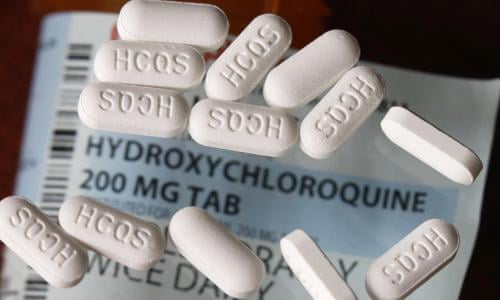
  • Studies that have yet to go through peer-review — like a recent, flawed study of the use of hydroxychloroquine to treat coronavirus — have found their way into news stories thanks to pre-print services, leading to problematic reporting and real-time peer review through Twitter.
  • More than 18 clinical trials testing hydroxychloroquine to treat the novel coronavirus have enrolled more than 75,000 patients in North America.
  • “This massive commitment concentrates resources on nearly identical clinical hypotheses, creates competition for recruitment, and neglects opportunities to test other clinical hypotheses,” the study says.
  • Early, flawed work has potentially increased the risk that later results may have gotten false positives and more media attention than they deserved, the new study says.

Yes, but: While the pandemic is exacerbating these problems with misinformation and lax research standards, it isn’t the cause of them.

  • “Some of the problems that we’re seeing right now are actually not that exceptional compared to the problems that we have under normal conditions as well, just that maybe they’re a little bit more amplified and have a little more visibility,” Jonathan Kimmelman, director of the Biomedical Ethics Unit at McGill University and one of the authors of the new paper, told Axios.
  • These kinds of issues cropped up during previous health crises, and while the authors of the new study argue that some of those problems around information sharing and standards of research have improved, there’s still a long way to go.

What’s next: Many of these issues around varying standards of research and communication could be remedied through better communication among researchers and the agencies funding their work.

  • Instead of having a number of fragmented studies competing for resources and looking for effective treatments, the researchers say it would make more sense to bring them under one umbrella, allowing them to coordinate.
  • “You could reduce variation, and you might get answers more quickly,” Alex John London, the director of the Center for Ethics and Policy at Carnegie Mellon and one of the authors of the new study, told Axios.
  • The authors are also calling on clinicians to resist performing their own small studies, instead opting to join up with larger trials.
  • They also say agencies need to help build those larger studies and avoid making statements to the public about unvalidated treatments that may or may not work, instead opting to elevate larger studies in their various stages to the public.


The Health 202: States are ending their coronavirus lockdowns earlier than health roadmaps recommend

https://www.washingtonpost.com/news/powerpost/paloma/the-health-202/2020/04/23/the-health-202-states-are-ending-their-coronavirus-lockdowns-earlier-than-health-roadmaps-recommend/5ea09b5988e0fa34528d6eb8/?utm_campaign=wp_the_health_202&utm_medium=email&utm_source=newsletter&wpisrc=nl_health202

The Health 202: States are ending their coronavirus lockdowns ...

Over a nearly three-week span in March, most state governors across the nation locked down their states because of the novel coronavirus.

Gradually opening things up will take even longer — and probably will vary considerably from state to state.

Governors are feeling pressure from two sides. Many troubling questions about the coronavirus remain unanswered, such as how to get more Americans tested and whether the United States even has enough capacity to track and isolate virus cases. At the same time, they’re feeling immense pressure to restart economic activity, with tens of millions of Americans out of work and the country stuck in a deepening economic crater.

As governors weigh when and how to reopen public gathering spots, there are several road maps they could look to.

Yesterday the National Governors Association released a 10-point guide for states. The first point is to make coronavirus testing broadly available. It urges states to improve surveillance to detect outbreaks, ensure hospitals are equipped to respond to surges and create a plan to reopen in stages.

The plan also warns states against opening prematurely. 

“Opening without the tools in place to rapidly identify and stop the spread of the virus … could send states back into crisis mode, push health systems past capacity and force states back into strict social distancing measures,” it says.

Then there’s guidance from the Trump administration, which says states should first see a decrease in confirmed coronavirus cases over a 14-day period. That guidance is in line with what public health experts have recommended — although Trump has also frequently suggested he’d like to see states open sooner.

So far, governors vary widely in how they’re approaching the issue.

Some, like Trump, are chomping at the bit. Georgia Gov. Brian Kemp (R) is allowing businesses including gyms and barber shops to reopen on Friday. Colorado Gov. Jared Polis (D) has said some businesses may reopen on Monday, and retailers can have a limited number of in-store shoppers starting May 1.

Other governors are much more cautious. Virginia Gov. Ralph Northam (D), for example, has issued a stay-at-home order in effect until June 10. California Gov. Gavin Newsom (D) declined yesterday to name a date for easing restrictions, saying the state hasn’t reached its six goals before reopening the economy.

Newsom, however, did indicate progress has been made with his detailed playbook for reopening the state. After a phone conversation with Trump, the governor said the two had agreed to significantly ramp up testing across California, with hundreds of thousands of new swabs on the way and 86 new testing sites opening.

But virtually every governor is working on plans, some in coordination with other governors, on how to shape the post-quarantine world.

Here are the states opening things up first:

Georgia: Certain businesses may open on Friday; theaters and restaurants can reopen on Monday. Bars, nightclubs and music venues will remain closed; schools have been closed through the end of the school year.

Kemp explained his decision to reopen tanning salons, barber shops, massage parlors and bowling alleys, saying on Monday: “I see the terrible impact of covid-19 on public health as well as the pocketbook.” Kemp said he will urge businesses to take precautions, such as screening for fevers, spacing workstations apart and having workers wear gloves and masks “if appropriate,” my Washington Post colleagues William Wan, Carolyn Y. Johnson and Joel Achenbach report.

“Georgia, according to some models, is one of the last states that should be reopening,” they write. “The state has had more than 830 covid-19 deaths. It has tested fewer than 1 percent of its residents — low compared with other states and the national rate. And the limited amount of testing so far shows a high rate of positives, at 23 percent.”

Trump blasted Kemp’s decision during his briefing last night, saying it violates his administration’s phase 1 guidelines for when to reopen.


Colorado: Polis is allowing the state’s stay-at-home order to expire Sunday, after which the state will gradually reopen businesses. Starting May 4, nonessential offices may have 50 percent of their workforce at the site, although large workplaces will be advised to conduct symptom and temperature checks.

Polis has warned the restrictions won’t all be lifted at the same time.

“The virus will be with us,” he said earlier this month. “We have to find a sustainable way that will be adapted in real time to how we live with it.”


South Carolina: Gov. Henry McMaster (R) said Monday he was allowing nonessential businesses such as department stores and retailers to open, followed by beaches on Tuesday.

But businesses must follow three rules for operating: They must limit the number of customers in the store; require patrons to be six feet apart; and follow sanitation guidelines from the Centers for Disease Control and Prevention.

“I urge everyone to remember we are still in a very serious situation,” McMaster said at a news conference. “We know that this disease, this virus, spreads easily, and we know it is deadly. So we must be sure that we continue to be strict and disciplined with our social discipline and taking care not to infect others.”


Tennessee: Gov. Bill Lee (R) said he plans to allow some businesses to reopen once his “safer-at-home” order expires in one week. But the state’s biggest cities will make their own reopening determinations. Lee has appointed a 30-member economic recovery group to create a plan.

Lee, along with Kemp and McMaster, have met with the governors of Mississippi, Alabama and Florida to consider how to reopen their economies in a coordinated way in the country’s southeast region. The number of new cases and deaths in Florida has leveled off somewhat — something the state’s governor, Ron DeSantis (R), has been pointing to as he urges a speedy reopening in his state.

Ahh, oof and ouch

AHH: CDC Director Robert Redfield confirmed comments he made to our colleague Lena H. Sun after Trump claimed he’d been “misquoted.”
Trump claims his CDC director was ‘misquoted’ on second wave of covid-19
Director of the Centers for Disease Control and Prevention Robert Redfield said April 22 that his statement on covid-19 in the fall is “accurately quoted.” (The Washington Post)

The president took issue with the portrayal of comments from Redfield following an interview with our Post colleague Lena H. Sun. In that interview, Redfield warned that a second wave of the coronavirus could be worse than the current one.

“There’s a possibility that the assault of the virus on our nation next winter will actually be even more difficult than the one we just went through,” Redfield told Lena. He added: “We’re going to have the flu epidemic and the coronavirus epidemic at the same time.”

The president again repeated the claim at his daily White House coronavirus task force briefing – this time, with Redfield standing awkwardly next to him.

Redfield then said this: “I’m accurately quoted in The Washington Post.”

But Redfield also sought to “soften his words as the president glowered next to him,” Lena, Ashley Parker, Josh Dawsey and Yasmeen Abutaleb write.

“The remarkable spectacle provided another illustration of the president’s tenuous relationship with his own administration’s scientific and public health experts, where the unofficial message from the Oval Office is an unmistakable warning: Those who challenge the president’s erratic and often inaccurate coronavirus views will be punished — or made to atone,” they write.

Ahh, oof and ouch

AHH: CDC Director Robert Redfield confirmed comments he made to our colleague Lena H. Sun after Trump claimed he’d been “misquoted.”
Trump claims his CDC director was ‘misquoted’ on second wave of covid-19

It’s apparent “Trump is again bristling at a health official offering too dire a scenario,” our colleague Aaron Blake writes. He points out that Trump was set off a previous time when another top CDC official warned in February that the spread of the coronavirus was inevitable.

OOF: The former head of the U.S. agency pursuing a coronavirus vaccine says he was ousted for opposing efforts to promote hydroxychloroquine, a drug Trump has insistently touted as a weapon against the virus despite a lack of scientific proof.

Rick Bright, previously the director of the Biomedical Advanced Research and Development Authority, said he was dismissed and pushed into a narrower role after he called for strictly vetting supposed treatments like anti-malarials repeatedly embraced publicly by the president. 

“I believe this transfer was in response to my insistence that the government invest the billions of dollars allocated by Congress to address the Covid-19 pandemic into safe and scientifically vetted solutions, and not in drugs, vaccines and other technologies that lack scientific merit,” Bright said in a statement, according to the New York Times’s Michael D. Shear and Maggie Haberman.

He added: “I am speaking out because to combat this deadly virus, science — not politics or cronyism — has to lead the way.” 

The president was asked about Bright during last night’s briefing and whether the official was pushed out.

“Maybe he was and maybe he wasn’t. I don’t know who he is,” Trump responded.

OUCH: There were early missteps by Health and Human Services Secretary Alex Azar that bogged down the government’s response to the virus.

In late January, days after the first coronavirus case was confirmed in the United States, Azar told Trump in a meeting the coronavirus spread was “under control,” the Wall Street Journal’s Rebecca Ballhaus and Stephanie Armour report. Azar also told the president more than a million diagnostic tests would be available in weeks and that it was the “fastest we’ve ever created a test.”

These promises didn’t pan out.

“Six weeks after that Jan. 29 meeting, the federal government declared a national emergency and issued guidelines that effectively closed down the country,” Rebecca and Stephanie write. “Mr. Azar, who had been at the center of the decision-making from the outset, was eventually sidelined.”

There were numerous factors that slowed the administration’s initial coronavirus response, but “interviews with more than two dozen administration officials and others involved in the government’s coronavirus effort show that Mr. Azar waited for weeks to brief the president on the threat, oversold his agency’s progress in the early days and didn’t coordinate effectively across the health-care divisions under his purview,” they report.

Earlier this year, Azar tapped an aide to lead HHS’s day-to-day coronavirus response who had joined the agency after running a dog-breeding business for six years. 

The aide, Brian Harrison, was derisively called “the dog breeder” by some within the White House, Reuters’s Aram Roston and Marisa Taylor report.

“Azar’s optimistic public pronouncement and choice of an inexperienced manager are emblematic of his agency’s oft-troubled response to the crisis,” they add. “… Harrison, 37, was an unusual choice, with no formal education in public health, management, or medicine and with only limited experience in the fields. In 2006, he joined HHS in a one-year stint as a ‘Confidential Assistant’ to Azar, who was then deputy secretary. He also had posts working for Vice President Dick Cheney, the Department of Defense and a Washington public relations company.”

There’s much we don’t know about the coronavirus

Scientists say a mysterious blood-clotting complication may be causing a number of the coronavirus-related deaths.

Doctors are learning that covid-19, once believed to be a straightforward respiratory virus, is much more frightening. Since the earlier waves of coronavirus cases, doctors have learned that the disease attacks not just lungs but kidneys, the heart, intestines, liver and the brain. Autopsies also have shown that some coronavirus patients lungs were filled with hundreds of microclots, our Post colleague Ariana Eunjung Cha reports.

“The problem we are having is that while we understand that there is a clot, we don’t yet understand why there is a clot,” said Lewis Kaplan, a University of Pennsylvania physician and head of the Society of Critical Care Medicine. “We don’t know. And therefore, we are scared.”

“In hindsight, there were hints blood problems had been an issue in China and Italy as well, but it was more of a footnote in studies and on information-sharing calls that had focused on the disease’s destruction of the lungs,” Ariana writes.

New data provide troubling statistics about coronavirus patients on ventilators.

A study found 88 percent of 320 coronavirus patients on ventilators in New York state’s largest health system died.

It’s an uptick from pre-pandemic figures. “That compares with the roughly 80 percent of patients who died on ventilators before the pandemic, according to previous studies — and with the roughly 50 percent death rate some critical care doctors had optimistically hoped when the first cases were diagnosed,” Ariana reports.

The research, published in the journal JAMA, also notes many of the hospitalized had other conditions.

“The paper also found that of those who died, 57 percent had hypertension, 41 percent were obese and 34 percent had diabetes, which is consistent with risk factors listed by the Centers for Disease for Control and Prevention,” she adds. “Noticeably absent from the top of the list was asthma. As doctors and researchers have learned more about covid-19, the less it seems that asthma plays a dominant role in outcomes.”

The economic fallout

If there’s a recovery from the current economic downswing this year, it could be temporary, economists warn.

There’s a growing chance of a second economic downturn if there’s another surge of the coronavirus or if there’s an increase in bankruptcies and defaults, our Post colleague Heather Long reports.

Instead of a V-shaped recovery, economists say, it is increasingly likely that the recovery will be W-shaped, in which there are improvements before another downturn later this year or in the following year. That possibility is “in part because creating a vaccine is likely to take at least a year and millions of Americans and businesses are piling up debt without an easy ability to repay it,” Heather writes.

“It could be triggered by reopening the economy too quickly and seeing a second spike in deaths from covid-19, the disease the coronavirus causes,” she adds. “… This could cause many businesses, which were barely hanging on, to close again. Many Americans could become even more afraid to venture out until a vaccine is found.”

“Pretending the world will return to normal in three months or six months is just wrong,” said Diane Swonk, chief economist at Grant Thornton, told The Post. “The economy went into an ice age overnight. We’re in a deep freeze. As the economy thaws, we’ll see the damage done as well. Flooding will occur.”

https://www.nga.org/wp-content/uploads/2020/04/NGA-Report.pdf?utm_campaign=wp_the_health_202&utm_medium=email&utm_source=newsletter&wpisrc=nl_health202


Trump reportedly squandered 3 crucial weeks to mitigate the coronavirus outbreak after a CDC official’s blunt warnings spooked the stock market

https://www.businessinsider.com/trump-wasted-3-weeks-coronavirus-mitigation-time-february-march-nyt-2020-4

Dow closes with decline of 950 points as coronavirus continues to ...

  • President Donald Trump’s administration wasted three key weeks between February and March that could have been spent enacting mitigatory measures against COVID-19, The New York Times reported on Saturday.
  • By the end of February, top officials knew that time was running out to stem the virus spread, and wanted to present Trump with a plan to enact aggressive social distancing and stay-at-home measures.
  • But on February 26, a top CDC official issued stark warnings about the virus’ spread right before the stock market plummeted, which angered Trump for being, in his view, too alarmist. 
  • The Times reported that the entire episode killed off the efforts to persuade Trump to take aggressive, action to mitigate the virus’ spread. In the end, Trump didn’t issue stay-at-home guidance until March 16. 

President Donald Trump’s administration stalled three key weeks in February that could have been spent enacting mitigatory measures against COVID-19 after Trump was angered by a public health official issuing a dire warning about the virus, The New York Times reported on Saturday.

On Saturday,The Times published a lengthy investigation of all the instances Trump brushed aside warnings of the severity of the coronavirus crisis, failed to act, and was delayed by significant infighting and mixed messages from the White House over what action to take and when. 

The Times wrote: “These final days of February, perhaps more than any other moment during his tenure in the White House, illustrated Mr. Trump’s inability or unwillingness to absorb warnings coming at him.”

The Times conducted dozens of interviews with current and former officials and obtained 80 pages of emails from a number of public health experts both within and outside of the federal government who sounded the alarm about the severity of the crisis on an email chain they called “Red Dawn.”

One of the members of the email group, Health & Human Service disaster preparedness official Dr. Robert Kadlec, became particularly concerned about how rapidly the virus could spread when Dr. Eva Lee, a Georgia Tech researcher, shared a study with the group about a 20-year-old woman in China who spread the virus to five of her family members despite showing no symptoms.

“Eva is this true?! If so we have a huge [hole] on our screening and quarantine effort,” he replied on February 23. 

At that point, researchers and top officials in the federal government determined that since it was way too late to try to keep the virus out of the United States, the best course of action was to introduce mitigatory, non-pharmaceutical interventions (NPIs) like social distancing and prohibiting large gatherings.

As officials sounded the alarm that they didn’t have any time to waste before enacting aggressive measures to contain the virus, top public health officials including Dr. Robert Kadlec concluded that it was time to present Trump with a plan to curb the virus called “Four Steps to Mitigation.”

The plan, according to The Times, included canceling large gatherings, concerts, and sporting events, closing down schools, and both governments and private businesses alike ordering employees to work from home and stay at home as much as possible, in addition to quarantine and isolating the sick.

But their entire plan was derailed by a series of events that ended up delaying the White House’s response by several weeks, wasting precious time in the process.

Trump was on a state visit to India when Dr. Kadlec and other experts wanted to present him with the plan, so they decided to wait until he came back.

But less than a day later, Dr. Nancy Messonnier, the director of the National Center for Immunization and Respiratory Diseases at the CDC, publicly sounded the alarm about the severity of the coronavirus outbreak in a February 26 press conference, warning that the outbreak would soon become a pandemic.

“It’s not so much a question of if this will happen anymore but rather more a question of exactly when this will happen and how many people in this country will have severe illness,” Messonnier said, bluntly warning that community transmission of the virus would be inevitable.

The Times reported that Trump spent the plane ride stewing in anger both over Messonnier’s comments and the resulting plummet of the stock market they caused, calling Secretary of Health & Human Services Alex Azar “raging that Dr. Messonnier had scared people unnecessarily,” The Times said. 

The Times reported that the entire episode effectively killed off any efforts to persuade Trump to take aggressive, decisive action to mitigate the virus’ spread and led to Azar being sidelined, writing, ” With Mr. Pence and his staff in charge, the focus was clear: no more alarmist messages.” 

In the end, Dr. Kadlec’s team never made their presentation. Trump did not issue nationwide social distancing and stay-at-home guidelines until March 16, three weeks after Messonnier warned that the US had limited time to mitigate community transmission of the virus, and several weeks after top experts started calling for US officials to implement such measures.

In those nearly three weeks between February 26 and March 16, the number of confirmed COVID-19 cases rose from just 15 to 4,226, The Times said. As of April 12, there are over half a million confirmed cases in the United States with over 21,000 deaths.


Pandemic spurs court fights over mail-in voting

https://thehill.com/regulation/court-battles/492135-pandemic-spurs-court-fights-over-mail-in-voting?userid=12325

Pandemic spurs court fights over mail-in voting | TheHill

Election officials are scrambling ahead of the November vote to ramp up alternative methods like mail-in voting as the coronavirus pandemic raises concerns about the safety of in-person voting.

That dash to expand polling options could bring a new wave of court fights around the 2020 election, legal experts say. As states move to bolster balloting options — or face challenges to such plans — both sides in the debate are likely to take those decisions to court.

And when Election Day arrives, questions over the handling of mail-in ballots could lead to more court fights.

“We do not want the election resolved in the courts and so I hope it does not come to that,” said Richard Pildes, a law professor at New York University.

Legal experts say the nightmare scenario would be a situation resembling the Supreme Court’s decision on Bush v. Gore, which was seen as an ideological one that undermined both the legitimacy of the court and the 2000 presidential election results among critics of the decision.

“We know that the current partisan divide over the legitimacy of the U.S. Supreme Court can be timed to the release of the Bush v. Gore decision,” said Charles Stewart, a political science professor and election expert at MIT. “So, we have to be worried both about the legitimacy of the result and the legitimacy of the courts.”

States are hoping to avoid the situation Wisconsin faced this week where widespread in-person voting took place, despite last-minute efforts to avoid that outcome amid a virus that had infected some 2,500 and killed nearly 80 in the state by the Tuesday vote.

“There’s nonstop work being done by election officials to plan for November,” Stewart said.

The hope is that the pandemic will have abated enough to allow for in-person voting, which could be done more safely if early voting is expanded to reduce crowding on Voting Day. But given the fears over inciting a second wave of infections, that may not be advisable by the fall.

All states allow at least some mail-in balloting for select voters. While some states have relatively expansive mail voting systems, others have few provisions.

The fight over expanding voting options has already sparked legal battles. Texas is one of the states that has cases pending in court over efforts to expand mail-in balloting.

Under the current state election rules in Texas, only voters with a “qualifying reason” — advanced age, disability, incarceration or planned travel — can mail in ballots, despite public health guidance to avoid public gatherings. But a lawsuit filed by Texas Democrats ahead of the July primary runoff seeks to have that criteria expanded by including social distancing as a qualifying disability.

Progress toward developing a voting failsafe by November is likely to be uneven among the states given that not all are beginning from the same starting point, and because the push has increasingly become riven by partisan politics.

States that have a head start will be better off, though, experts said.

“States that already have a well-developed vote-by-mail program may well have the capacity to supersize it, and states that don’t may well have the capacity to provide some incremental vote-by-mail capacity,” said Justin Levitt, a professor at Loyola Law School.

“But it will be a herculean task for a state without much vote-by-mail capacity to get to almost everyone voting by mail by November. That takes expertise and systems, equipment and personnel, and the capacity to print a lot more ballots. And it is not easy to get any of those quickly.”

Lorraine Minnite, a political science professor at Rutgers University-Camden, put it even more starkly.

“A large-scale change in procedure hastily administered will likely not run smoothly even under the best of conditions,” she said.

Experts warn that expanded mail-in voting could lead to more voter errors and omissions, create more opportunities for fraud or coercion, and pose special challenges for those who move frequently or lack a permanent address. 

Edward Foley, a law professor at Ohio State University, said that if states are too slow to mail out ballots, litigation could arise from those issues.

“The most likely problem to trigger litigation would be if voters request absentee ballots on time, but election officials because they are overwhelmed with the high volume of absentee ballot requests fail to send the ballots to voters in time for voters to return them by the legally specified deadline,” Foley said.

“This, then, creates a problem of wrongful disenfranchisement of eligible voters, through no fault of the voters but because of the government’s own problems, and requires a court to come up with an appropriate remedy,” he added.

Rick Hasen, a professor of law and political science at the University of California Irvine, said that more courts may be drawn into a battle similar to the one playing out in Texas over whether voting by mail should require a valid excuse.

“There are a number of issues courts may address related to the vote by mail and the coronavirus,” he said. “Do states have to expand ballot deadlines to deal with a flood of absentee ballots? Do voters have a right to be told their absentee ballots have been rejected and given the opportunity to ‘cure’ a problem for rejecting a ballot like a purported signature mismatch?”

According to Levitt, one common thread among states is the urgent need for money to ramp up mail-in operations.

“The single most important piece is funding,” he said. “There are a lot of logistics between here and there, including space and machinery and people to process mail ballots, and that takes money.”  

The more than $2 trillion coronavirus stimulus package included $400 million for states to expand early voting, election by mail and for other election matters.

“The recent funding from Congress is an extremely welcome start, but only barely a start,” he added. “There needs to be much more, and quickly: it does little good to get more funding for this in October.”


Why medical experts worry about President Trump touting chloroquine

https://www.politifact.com/article/2020/apr/07/why-medical-experts-worry-about-president-trump-to/?fbclid=IwAR2mxG7HzUAZgmfrwsC9cZtNL2-q8_xQSj6jbdjF45Aod7x8848A3voRYVw

Trump touts hydroxychloroquine as a cure for Covid-19. Don't ...

IF YOUR TIME IS SHORT

• Already, an Arizona man died and his wife was hospitalized after self-administering a variant of chloroquine, prompting the Centers for Disease Control and Prevention to send out a warning.

The American Medical Association says it “strongly opposes” prophylactically prescribing chloroquine as well as pharmacies and hospitals “purchasing excessive amounts” of the medication.

• Some people have health conditions that mean they shouldn’t take chloroquine because of potential side effects. 

• Putting too much focus on one specific treatment could make Americans lax about following social distancing guidelines.

In more than half a dozen public events since March 19, President Donald Trump has touted a possible treatment for coronavirus infection — using the malaria drug chloroquine or a related drug hydroxychloroquine, sometimes in combination with the antibiotic azithromycin.

“I hope they use the hydroxychloroquine, and they can also do it with Z-Pak (azithromycin), subject to your doctor’s approval and all of that,” Trump said at an April 4 briefing. “But I hope they use it, because I’ll tell you what: What do you have to lose?”

Trump reiterated praise for chloroquine in his April 5 briefing: “A lot of people are saying that … if you’re a doctor, a nurse, a first responder, a medical person going into hospitals, they say taking it before the fact is good.”

When a reporter asked Trump for “the conclusive medical evidence” to support his optimism, Trump dismissed the question as “fake news.”

Trump isn’t wrong that this drug combination might prove helpful, at least based on preliminary evidence. The treatment is currently being studied in clinical trials, according to the Centers for Disease Control and Prevention.

But randomized tests — the gold standard of medical evidence — have not been completed, and the lack of rigorous testing as a treatment against coronavirus has led many medical experts to be more cautious than the president. The drug has significant side effects, including damage to the heart and nervous system and suicidal thoughts. And a run on chloroquine could harm patients with lupus and other diseases that the drug is already used for.

Some medical experts are concerned that the president’s words from a White House lectern may be skewing Americans’ perceptions of the best way to fight coronavirus.

Not long after Trump began touting chloroquine, an Arizona man died and his wife was hospitalized after they ingested a fish-tank solvent that includes chloroquine phosphate. The woman told NBC News that they thought the compound was the same as the one Trump cited. Fish-tank cleaners are not the same as the drugs used for malaria, nor are they suitable for human consumption.

A few days later, the CDC released a warning, not just against using the fish-tank cleaner but also the malaria drug itself without a doctor’s orders.

In a statement to PolitiFact, the American Medical Association seconded such concerns, saying that no medication has yet been approved by the Food and Drug Administration for patients with coronavirus, also known as COVID-19. The association said it “strongly opposes” prescribing chloroquine as a preventive measure and also opposes pharmacies and hospitals “purchasing excessive amounts” of the medication.

On several occasions, Trump has reminded viewers of his briefings to consult with doctors about treatments. But at other times, he has trumpeted his own confidence in chloroquine as a treatment.

“I’ve seen things that I sort of like,” he has said. “So what do I know? I’m not a doctor. I’m not a doctor. But I have common sense.”

Experts said Trump’s high-profile endorsement risked overshadowing the views of medical experts.

“The evidence just isn’t there yet to prove that these drugs work, and while the risks from inappropriately prescribing them are rare, they can be serious,” said Joel F. Farley, associate head of the department of pharmaceutical care and health systems at the University of Minnesota College of Pharmacy.

Farley said he even worries about patients going through proper channels.

“Even if prescribed by a physician, I am not convinced that patients are being adequately screened or monitored for some of the more serious side effects, like cardiotoxicity,” he said. “I have heard anecdotal reports of physicians prescribing these medications for friends and family members, which doesn’t always come with an appropriate physical or health screening.”

Another worry among medical specialists is the possible stockpiling of chloroquine. This could harm patients with lupus or rheumatoid arthritis, who depend on the drug to treat their own conditions. “Being just stewards of limited resources is essential,” the American Medical Association said in its statement.

Finally, focusing on one potential treatment could overshadow the nitty-gritty things Americans need to do on a daily basis to stay safe.

“My biggest concern is that people will believe there’s some magic cure and not follow social distancing and other normal precautions in the belief that there’s a drug to ‘fix this,’” said Ally Dering-Anderson, a clinical associate professor at the University of Nebraska College of Pharmacy.