


Thought of the Day: Team Defined





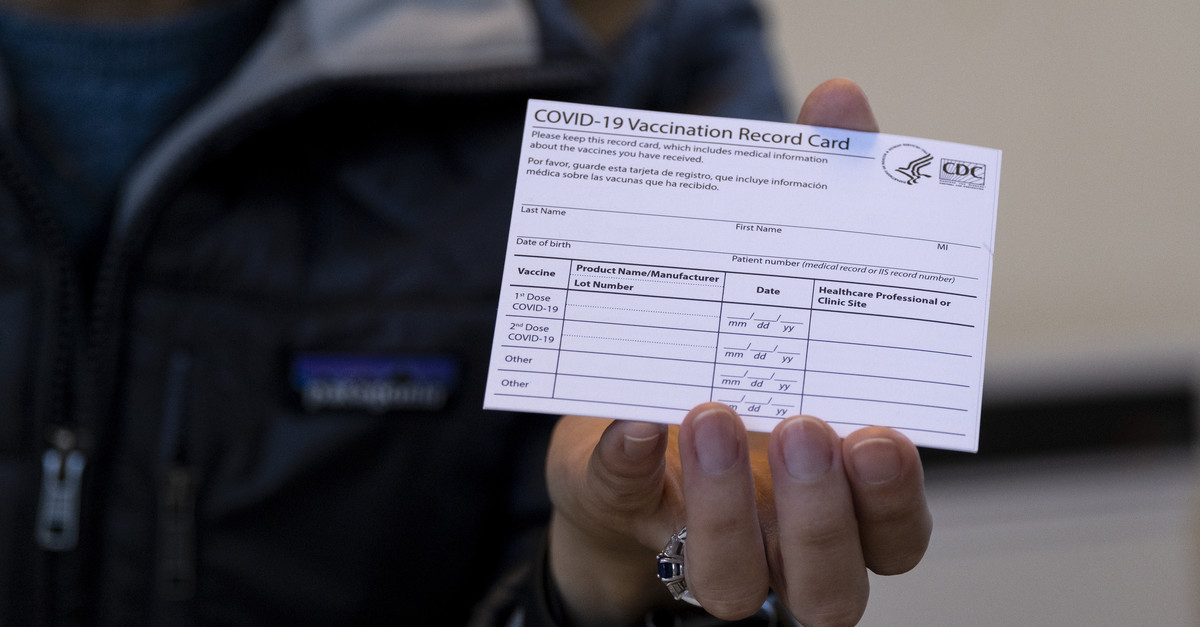
CMS is preparing to enforce its vaccine mandate for health care workers, but the agency may not have an accurate count of how many remain unvaccinated—and five health systems are pushing back on federal hospital vaccination data, calling it “extremely erroneous,” Cheryl Clark writes for MedPage Today.
The Supreme Court earlier this month ruled that CMS could require most health care workers to be vaccinated against Covid-19—but U.S. officials currently do not know exactly how many workers remain unvaccinated, primarily due to a lack of reliable immunization data.
At the end of December, CDC reported that 77.6% of hospital workers were fully vaccinated. However, that figure was based on data from only about 40% of the nation’s hospitals. Hospitals currently send vaccination data to the agency on a voluntary basis, but beginning May 15, they will be required to send in weekly data, just like nursing homes have been.
According to Janis Orlowski, chief health care officer at the Association of American Medical Colleges (AAMC), CDC’s data is likely representative of providers nationwide, as an AAMC survey of 125 academic hospitals found similar results. More than 99% of doctors and close to 90% of nurses were vaccinated, she said, but vaccination rates dropped off to the 30% to 40% range for those in more operational roles, such as transportation and food service workers.
Further adding to the confusion about health care workers’ vaccination rates are potential inaccuracies in a federal database that tracks Covid-19 vaccinations among workers in hospitals across the country. According to five health systems listed as having the highest numbers of unvaccinated workers, the database is “extremely erroneous,” Clark writes.
In the database, Adventist Health Orlando (AHO) is shown to have 18,576 unvaccinated workers, 637 partially vaccinated workers, and 25,253 fully vaccinated workers. However, Jeff Grainger, director of external communications for AdventHealth in Central Florida, said those numbers weren’t possible since the organization “[doesn’t] have 44,000 employees in one hospital.” He added that 96% of AHO’s team members have already complied with CMS’ mandate.
The University of Illinois Hospital (UI) was listed in the database as having 12,049 unvaccinated workers and 272 partially vaccinated workers. Jacqueline Carey, from health system’s public affairs department, disputed these numbers, saying UI had 6,530 workers as of Jan. 19, with 96% of them fully vaccinated. The remainder were either partially vaccinated or had approved exemptions.
The hospital with the third highest number of unvaccinated workers was Mount Sinai Hospital, Clark writes, but Lucia Lee, a hospital spokesperson, said the federal data was inaccurate. According to Lee, Mount Sinai Health System, of which the hospital is a part, has vaccinated 99% of its more than 43,000 employees.
A representative for Ochsner Medical Center, which is listed as having the fourth highest number of unvaccinated workers, also pushed back on the statistics in the database. Currently, 99.57% of Ochsner’s over 34,000 employees are compliant with its Covid-19 policy, with 95% of workers Ochsner Health and Ochsner LSU Health Shreveport fully vaccinated.
Finally, Kena Lewis, a spokesperson for Orlando Regional Medical Center, said that federal data showing the hospital has 44,154 workers is inaccurate. Instead, she said the hospital is one of 10 in the Orlando network, which has 23,709 total employees. Although Lewis did not give the health system’s vaccination rates, she said it “continues to review the guidelines regarding Covid-19 vaccination requirements for health care organizations and will take appropriate steps.”
Although it is not clear why there are discrepancies between the federal data and what these health systems are reporting regarding vaccination rates, there are some potential explanations, Clark writes.
According to Carey, the federal database only includes vaccination information provided by the UI health system and employee health services. This means that vaccinations workers received elsewhere, such as through a personal provider or pharmacy, are not included in the data, and they will show up as being unvaccinated.
Separately, a spokesperson for another of the five organizations told Clark on background that short-term nursing staff contracted through agencies may show up as unvaccinated in the federal database. Although the agencies assure employers the nurses are vaccinated, hospitals do not independently verify this information.
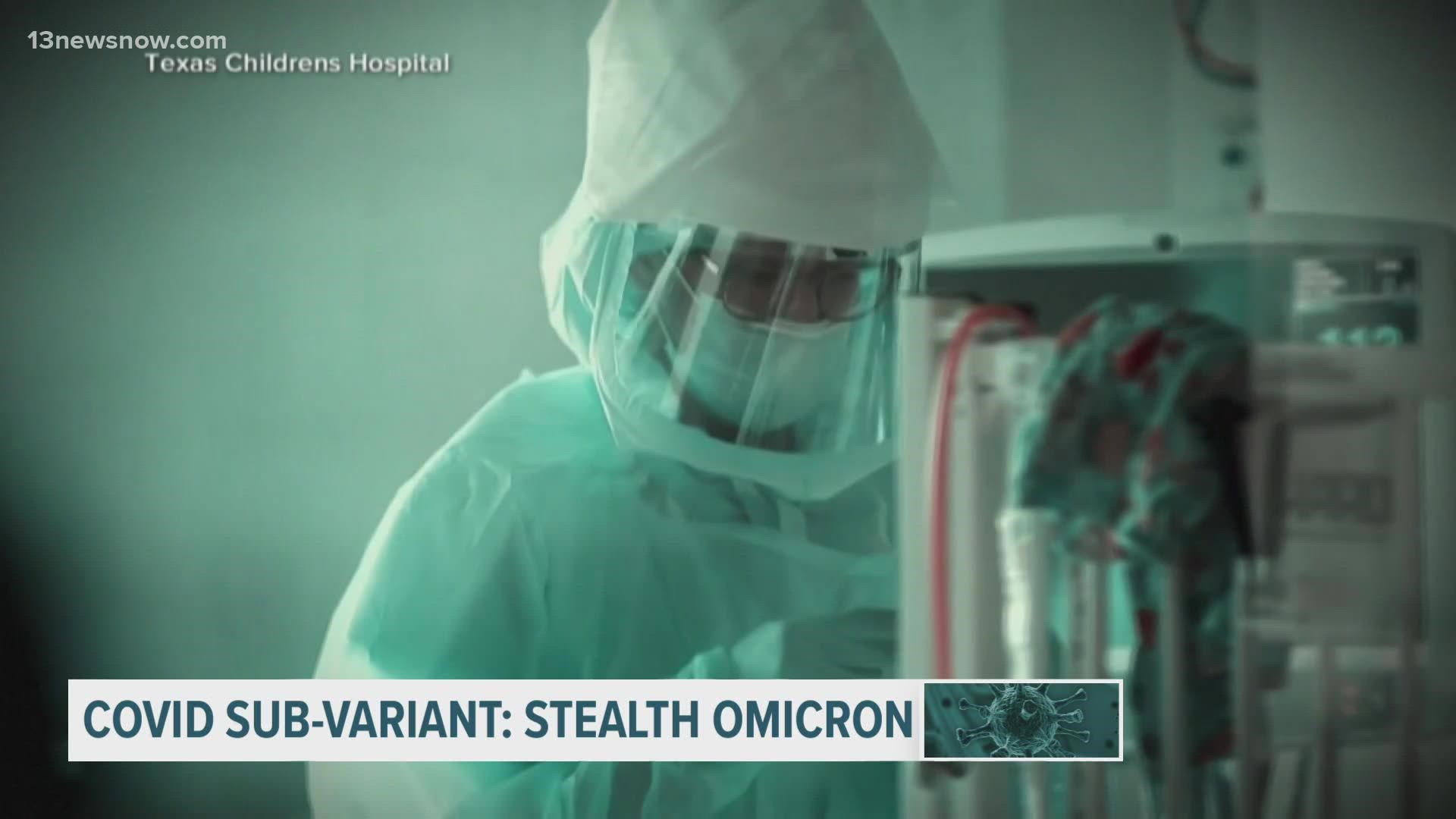
Scientists and health officials around the world are tracking the BA.2 subvariant of omicron, which has been referred to as “stealth omicron” because it cannot easily be identified via PCR tests.
The BA. 2 omicron subvariant is a descendant of the original BA.1 omicron variant that has caused massive global Covid-19 surges. On Monday, the World Health Organization (WHO) urged researchers to prioritize the investigation of BA.2’s characteristics to determine whether it poses new challenges for areas already overwhelmed by the pandemic.
“The BA. 2 descendant lineage, which differs from BA. 1 in some of the mutations, including in the spike protein, is increasing in many countries,” WHO said. “Investigations into the characteristics of BA. 2, including immune escape properties and virulence, should be prioritized independently (and comparatively) to BA. 1.”
Currently, there is no evidence that BA. 2 is more transmissible or evades immunity better than BA. 1, the Washington Post reports.
In fact, experts still know very little about the transmissibility of BA.2 compared with BA.1, said Jeremy Luban, a professor of molecular medicine, biochemistry, and molecular pharmacology at UMass Medical School. And according to Luban, it is too early to determine whether vaccines and existing medications will provide adequate protection against BA.2.
Like the original omicron variant, BA.2 has many mutations, including roughly 20 found in the area targeted by most vaccines. BA.2 also has unique mutations that are not found in BA.1, which could limit the effectiveness of monoclonal antibodies, Luban said.
Further, scientists have found that BA.2 is harder to detect with PCR tests than BA.1. Although researchers were able to quickly differentiate BA.1 from the delta variant using a PCR test, the BA.2 subvariant does not possess the same “S gene target failure” seen in BA.1. As a result, BA.2 looks like the delta variant on the test, according to Wesley Long, a pathologist at Houston Methodist Hospital.
“It’s not that the test doesn’t detect it; it’s just that it doesn’t look like omicron,” Long said. “Don’t get the impression that ‘stealth omicron’ means we can’t detect it. All of our PCR tests can still detect it.”
So far, BA.2 has been identified in 40 countries, including the United States. Although there are few reported cases of BA.2 in the United States, the subvariant is widely circulating in Asia and Europe.
Throughout Europe, BA.2 seems to be the most widespread in Denmark—but experts said that could be because of the country’s robust program of sequencing the virus’s genome, the Post reports. On Jan. 20, health officials said that the BA.2 cases made up more than 50% of the country’s omicron cases.
In the United States, at least three cases have been found at Houston Methodist Hospital in Texas, which is currently studying the genetic makeup of virus samples from its patients, the Post reports.
“The good news is we have only three,” said James Musser, director of the Center for Molecular and Translational Human Infectious Diseases Research at Houston Methodist. “We certainly do not see the 5% and more that is being reported in the U.K. now and certainly not the 40% that is being reported in Denmark.”
In addition, a spokesperson for the Washington Department of Health on Monday told Fox News, “Two cases of BA.2 … were detected earlier this month in Washington.”
Although BA.2 is now on at least four continents, experts say this new subvariant shouldn’t be a cause for panic, as it is expected to be relatively mild, USA Today reports.
“I don’t think it’s going to cause the degree of chaos and disruption, morbidity and mortality that BA.1 did,” said Jacob Lemieux, an infectious disease specialist at Massachusetts General Hospital. “I’m cautiously optimistic that we’re going to continue to move to a better place and, hopefully, one where each new variant on the horizon isn’t news.”
Similarly, Robert Garry, a virologist at Tulane University School of Medicine, said, “Variants have come, variants have gone.” He added, “I don’t think there’s any reason to think this one is a whole lot worse than the current version of omicron.”
Still, Musser argued that BA.2 deserves close attention until scientists can learn more about it.
“We know that omicron … can clearly evade preexisting immunity” from both vaccines and exposure to other variants of the virus, he said. “What we don’t know yet is whether son-of-omicron does that better or worse than omicron. So that’s an open question.”

