These Hospitals Pinned Their Hopes on Private Management Companies. Now They’re Deeper in Debt.

https://www.propublica.org/article/these-hospitals-pinned-their-hopes-on-private-management-companies-now-theyre-deeper-in-debt?utm_source=ActiveCampaign&utm_medium=email&utm_content=Does+the+US+Spend+Too+Much+on+Police%3F&utm_campaign=TFT+Newsletter+06042020

At least 13 hospitals in Oklahoma have closed or experienced added financial distress under the management of private companies. Some companies charged hefty management fees, promising to infuse millions of dollars that never materialized.

Revenues soared at some rural hospitals after management companies introduced laboratory services programs, but those gains quickly vanished when insurers accused them of gaming reimbursement rates and halted payments. Some companies charged hefty management fees, promising to infuse millions of dollars but never investing. In other cases, companies simply didn’t have the hospital management experience they trumpeted.

Click on link above for examples of rural hospitals that pinned their hopes on private management companies that left them deeper in debt. They are based on interviews, public records and financial information from the Centers for Medicare and Medicaid Services and the American Hospital Directory.

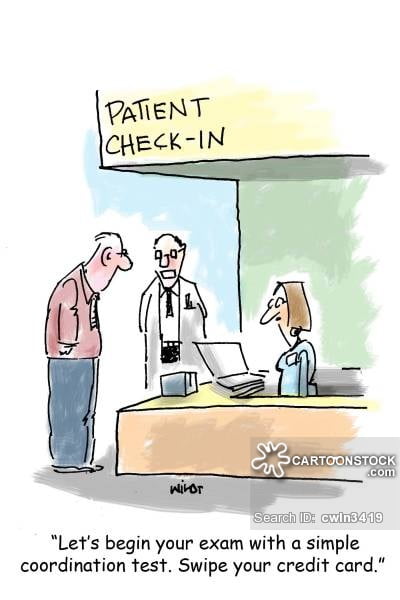
Cartoon – Let’s begin your exam with a simple coordination test

Difference Between Islamic Takaful and Conventional Insurance - ED ...

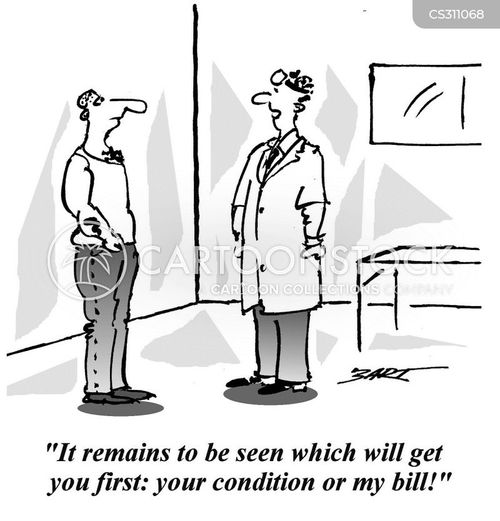
Cartoon – It remains to be seen which will get you first

Cartoon – It remains to be seen which will get you first | HENRY ...

Cartoon – Out of Pocket Experience

Cartoon – Out of Body Feeling vs Out of Pocket Experience | HENRY ...

Open (Your Wallet) Wide: Dentists Charge Extra For Infection Control

https://khn.org/news/open-your-wallet-wide-dentists-charge-extra-for-infection-control/

Open (Your Wallet) Wide: Dentists Charge Extra For Infection ...

After nearly two months at home due to the COVID-19 pandemic, Erica Schoenradt was making plans in May to see her dentist for a checkup.

Then she received a notice from Swish Dental that the cost of her next visit would include a new $20 “infection control fee” that would likely not be covered by her insurer.

“I was surprised and then annoyed,” said Schoenradt, 28, of Austin, Texas. She thought it made no sense for her dentist to charge her for keeping the office clean since the practice should be doing that anyway. She canceled the appointment for now.

Swish Dental is just one of a growing number of dental practices nationwide that in the past month have begun charging patients an infection control fee between $10 and $20.

Swish and others say they need the extra money to cover the cost of masks, face shields, gowns and air purifiers to help keep their offices free of the coronavirus. The price of equipment has risen dramatically because of unprecedented demand from health workers.

Dentists say they struggle to pay these extra costs particularly after most states shut down dental offices in March and April for all but emergency care to reserve personal protective equipment for hospital use. They are also seeing fewer patients than before the pandemic because some fear going back to the dentist and at the same time dentists need to space out appointments to keep the waiting room uncrowded.

Nearly two-thirds of dental offices across the country have reopened for routine care, according to the American Dental Association.

The association, which sets industry standards, says dentists who opt to charge the extra infection control fee should disclose it to patients ahead of each visit, a spokesperson said.

“The infection control fee is helping us mitigate the costs of the extra expenses,” said Michael Scialabba, a dentist and vice president of 42 North Dental, whose 75 dental offices in New England are charging an extra $10.

Why don’t dentists just raise prices instead? Dentists said they have little or no leverage with large insurance companies to force them to raise their reimbursement rates. The ADA asked insurers to take into account additional COVID costs dentists face and many insurers responded by agreeing to pay extra fees.

For example, Harrisburg, Pennyslvania-based United Concordia Dental agreed to pay dentists $10 per patient per visit in May and June to offset their PPE expenses for all fully insured clients. The company has more than 9 million members nationwide.

The new infection control fee upsets some patients, although most understand that the cost of dentistry has increased, said Rishi Desai, director of operations and finance at Swish Dental, which has eight locations in the Austin area. “We are just as frustrated with all of these, too, but as a small business we had to reassess things.”

Desai, whose wife, Viraj, is a dentist and the founder of the dental chain, said the extra money will help the practice survive. “We are not making money off this,” he said. “This is just to sustain us so we are not bleeding out cash.”

He noted that last year Swish was paying about $6 for a box of 20 face masks. Today, $6 buys a single mask. The dental office has installed sneeze guards, staffers are wearing face shields over their masks, and the offices have added air filtration systems and hired additional sanitation staff members to clean their offices every day.

He estimates the offices are working at only about half capacity since reopening in mid-May. In weighing how to handle the extra costs, Swish was reluctant to cut employee wages, he said. “Everyone is trying to figure this out,” he added.

Kim Hartlage, office manager of Klein Dental Group in Louisville, Kentucky, said insurers recommended the office add an infection control fee. The insurers balked at raising their reimbursement rates.

She said the small office has had to buy many more disposable masks and gloves. “We’ve had to step up our game,” she said. So far, she hasn’t heard any feedback on the $10 fee. “We have very understanding clients,” she said.

Tamar Lasky, an epidemiologist, said she likes her Owings Mills, Maryland, dentist and was glad the office was communicating the many precautions it was taking to prevent the spread of COVID-19. But she was stunned when informed by email that a $15 “infection control charge” would be added to her bill.

“I can readily imagine there are a range of additional expenses, as well as a loss of revenue associated with the pandemic, but infection control is not an extra service. It is part of the practice of dentistry,” Lasky said.

“I’m not sure what is the best solution to the increased costs of tighter infection control, but this new charge may not be covered by insurance, and that passes all the burden to the patient.”


Red Cross blood supply cut in half amid ‘staggering’ donor decline

https://www.beckershospitalreview.com/supply-chain/red-cross-blood-supply-cut-in-half-amid-staggering-donor-decline.html?utm_medium=email

Healthy blood donors needed amid coronavirus concerns | NOHredcross

The American Red Cross said its blood supply levels have been cut in half as social-distancing and stay-at-home orders have caused fewer people to donate, The New York Times reported. 

Across the country, collection drives at offices, schools and churches have been canceled to comply with stay-at-home orders.

For a while, the drop in donations weren’t critical because supply and demand fell at the same time, as hospitals canceled most elective surgeries and far fewer people were getting injured in car crashes and other accidents. 

But now that hospitals are resuming elective surgeries and many people are leaving the house more often, the number of donations has not increased, according to the Times. 

Chris Hrouda, president of biomedical services for the American Red Cross, which collects about 40 percent of the country’s blood donations, told the Times that there’s been a “staggering” drop in blood supply. The Red Cross usually has enough blood to meet the country’s needs for five days; it currently has less than two days’ worth. 

On May 31, the Red Cross had to stop sending hospitals their full blood orders and could fill only 75 percent of them, Mr. Hrouda told the Times. He said that if donations don’t increase in the next week or two, the Red Cross will have to start filling just half of hospitals’ requested blood orders.

“It puts hospitals and doctors in the precarious position of deciding who gets blood,” Mr. Hrouda told the Times.

Hospitals are performing even more surgeries than before the pandemic to get through backlogs of operations. 

Brian Gannon, chief executive of the Gulf Coast Regional Blood Center in Texas, said he told about 100 hospitals that get blood from his center to slow down their elective procedures, according to the Times. 

Read the full article here. 


ICUs become a ‘delirium factory’ for Covid-19 patients

https://www.cnn.com/2020/06/01/health/brain-coronavirus-delirium-kaiser/index.html

ICUs Become A 'Delirium Factory' For COVID-19 Patients | Health ...

Doctors are fighting not only to save lives from Covid-19, but also to protect patients’ brains.

Although Covid-19 is best known for damaging the lungs, it also increases the risk of life-threatening brain injuries — from mental confusion to hallucinations, seizures, coma, stroke and paralysis. The virus may invade the brain, and it can starve the brain of oxygen by damaging the lungs. To fight the infection, the immune system sometimes overreacts, battering the brain and other organs it normally protects.
Yet the pandemic has severely limited the ability of doctors and nurses to prevent and treat neurological complications. The severity of the disease and the heightened risk of infection have forced medical teams to abandon many of the practices that help them protect patients from delirium, a common side effect of mechanical ventilators and intensive care.
And while Covid-19 increases the risk of strokes, the pandemic has made it harder to diagnose them.
When doctors suspect a stroke, they usually order a brain MRI — a sophisticated type of scan. But many patients hospitalized with Covid-19 are too sick or unstable to be wheeled across the hospital to a scanner, said Dr. Kevin Sheth, a professor of neurology and neurosurgery at the Yale School of Medicine.
Many doctors also hesitate to request MRIs for fear that patients will contaminate the scanner and infect other patients and staff members.
“Our hands are much more tied right now than before the pandemic,” said Dr. Sherry Chou, an associate professor of critical care medicine, neurology and neurosurgery at the University of Pittsburgh School of Medicine.
In many cases, doctors can’t even examine patients’ reflexes and coordination because patients are so heavily sedated.
“We may not know if they’ve had a stroke,” Sheth said.
A study from Wuhan, China — where the first Covid-19 cases were detected — found 36% of patients had neurological symptoms, including headaches, changes in consciousness, strokes and lack of muscle coordination.
“Our hands are much more tied right now than before the pandemic,” said Dr. Sherry Chou, an associate professor of critical care medicine, neurology and neurosurgery at the University of Pittsburgh School of Medicine.
In many cases, doctors can’t even examine patients’ reflexes and coordination because patients are so heavily sedated.
“We may not know if they’ve had a stroke,” Sheth said.
A smaller, French study observed such symptoms in 84% of patients, many of which persisted after people left the hospital.
Some hospitals are trying to get around these problems by using new technology to monitor and image the brain.
New York’s Northwell Health is using a mobile MRI machine for Covid patients, said Dr. Richard Temes, the health system’s director of neurocritical care. The scanner uses a low-field magnet, so it can be wheeled into hospital rooms and take pictures of the brain while patients are in bed.
Staffers at Northwell were also concerned about the infection risk from performing EEGs, tests that measure the brain’s electrical activity and help diagnose seizures, Temes said. Typically, technicians spend 30 to 40 minutes in close contact with patients in order to place electrodes around their skulls.
“Right now, we actually don’t know enough to say definitely how Covid-19 affects the brain and nervous system,” said Chou, who is leading an international study of neurological effects of the virus. “Until we can answer some of the most fundamental questions, it would be too early to speculate on treatments.”
To reduce the risk of infection, Northwell is using a headband covered in electrodes, which can be placed on patients in just a couple of minutes, he said.

The brain under attack

Answering those questions is complicated by the limited data from patient autopsies, said Lena Al-Harthi, a professor and the chair of the microbial pathogens and immunity department at Rush Medical College in Chicago.
But many neuropathologists are unwilling or unable to perform brain autopsies, Al-Harthi said.
That’s because performing autopsies on patients who died of Covid-19 carries special risks, such as the aerosolization of the virus during brain removal. Pathologists need specialized facilities and equipment to conduct an autopsy safely.
Some of the best-known symptoms of Covid-19 might be caused by the virus invading the brain, said Dr. Robert Stevens, an associate professor of anesthesiology and critical care medicine at Johns Hopkins University.
Authors of a recent study from Germany found the novel coronavirus in patients’ brains.
Research shows that the coronavirus may enter a cell through a molecular gateway known as the ACE-2 receptor. These receptors are found not only in the lung, but also other organs, including many parts of the brain.
In a recent study, Japanese researchers reported finding the novel coronavirus in the cerebrospinal fluid that surrounds the brain and spinal cord.
Some of the most surprising symptoms of Covid-19 ― the loss of the senses of smell and taste ― remain incompletely understood, but may be related to the brain, Stevens said.
A study from Europe published in May found that 87% of patients with mild or moderate Covid-19 lost their sense of smell. Patients’ loss of smell couldn’t be explained by inflammation or nasal congestion, the researchers said. Stevens said it’s possible that the coronavirus interacts with nerve pathways from the nose to the brain, potentially affecting systems involved with processing scent.
A new study in JAMA provides additional evidence that the coronavirus invades the brain. Italian researchers found abnormalities in an MRI of the brain of a Covid-19 patient who lost her sense of smell.
Many coronavirus patients also develop “silent hypoxia,” in which they are unaware that their oxygen levels have plummeted dangerously low, Stevens added.
When hypoxia occurs, regulatory centers in the brain stem — which control respiration — signal to the diaphragm and the muscles of the chest wall to work harder and faster to get more oxygen into the body and force out more carbon dioxide, Stevens said. The lack of this response in some patients with Covid-19 could indicate the brain stem is impaired.
Scientists suspect the virus is infecting the brain stem, preventing it from sending these signals, Temes said.

Collateral damage

Well-intentioned efforts to save lives can also cause serious complications.
Many doctors put patients who are on mechanical ventilators into a deep sleep to prevent them from pulling out their breathing tubes, which would kill them, said Dr. Pratik Pandharipande, chief of anesthesiology and critical care medicine at Vanderbilt University School of Medicine in Nashville, Tennessee.
Both the disease itself and the use of sedatives can cause hallucinations, delirium and memory problems, said Dr. Jaspal Singh, a pulmonologist and critical care specialist at Atrium Health in Charlotte, North Carolina.
Many sedated patients experience terrifying hallucinations, which may return in recovery as nightmares and post-traumatic stress disorder.
Research shows 70% to 75% of patients on ventilators traditionally develop delirium. Delirious patients often “don’t realize they’re in the hospital,” Singh said. “They don’t recognize their family.”
In the French study in the New England Journal of Medicine, one-third of discharged Covid-19 patients suffered from “dysexecutive syndrome,” characterized by inattention, disorientation or poorly organized movements in response to commands.
Research shows that patients who develop delirium — which can be an early sign of brain injury — are more likely to die than others. Those who survive often endure lengthy hospitalizations and are more likely to develop a long-term disability.
Under normal circumstances, hospitals would invite family members into the ICU to reassure patients and keep them grounded, said Dr. Carla Sevin, director of the ICU Recovery Center, also at Vanderbilt.
Simply allowing a family member to hold a patient’s hand can help, according to Dr. Lee Fleisher, chair of an American Society of Anesthesiologists committee on brain health. Nurses normally spend considerable time each day orienting patients by talking to them, reminding them where they are and why they’re in the hospital.
“You can decrease the need for some of these drugs just by talking to patients and providing light touch and comfort,” Fleisher said.
These and certain innovative practices — such as helping patients to move around and get off a ventilator as soon as possible — can reduce the rate of delirium to 50%.
Hospitals have banned visitors, however, to avoid spreading the virus. That leaves Covid-19 patients to suffer alone, even though it’s well known that isolation increases the risk of delirium, Fleisher said.
Although many hospitals offer patients tablets or smartphones to allow them to videoconference with family, these devices provide limited comfort and companionship.
Doctors are also positioning patients with Covid-19 on their stomachs, rather than their backs, because a prone position seems to help clear the lungs and let patients breathe more comfortably.
But a prone position also can be uncomfortable, so that patients need more medication, Pandharipande said.
All of these factors make coronavirus patients extremely vulnerable to delirium. In a recent article in Critical Care, researchers said the intensive care unit has become a “delirium factory.”
“The way we’re having to care for patients right now is probably contributing to more mortality and bad outcomes than the virus itself,” said Dr. Sharon Inouye, a geriatrician at Harvard Medical School and Hebrew SeniorLife, a long-term care facility in Boston. “A lot of the things we’d like to do are just very difficult.”

Hospitals push for release of $50B more in COVID-19 funds

https://www.healthcaredive.com/news/hospitals-push-for-release-of-50b-more-in-covid-19-funds/579072/

COVID-19 Stimulus Bill: What It Means for States

Dive Brief:

  • The American Hospital Association is urging HHS to distribute at least $50 billion more in funding from the $175 billion allocated by Congress to hospitals as providers continue to wrestle with the challenges spurred by the outbreak of the novel coronavirus. 
  • More funds are “urgently needed” for the more than 5,000 hospitals and health systems AHA represents, the group wrote in a letter to HHS Secretary Alex Azar on Tuesday.
  • While AHA is calling for more money for all hospitals, it also wants a special focus paid to hospitals in hot spot areas and those serving a higher number of Medicaid and uninsured patients. 

Dive Insight:

AHA is requesting $10 billion for hot spot areas, $10 billion for hospitals with a larger share of Medicaid and uninsured patients and another $30 billion for all hospitals, including inpatient rehabilitation centers and inpatient psychiatric facilities.

Making substantial funds of money available will help facilities weather the pandemic and will “actually ensure they are able to keep their doors open,” AHA CEO Richard Pollack wrote. The second quarter is expected be the hardest hit to hospital operations.​

On Tuesday, the HHS Office of the Assistant Secretary for Preparedness and Response said it was making available another $225 million for health systems. That’s a drop in the bucket compared to the total federal funds that have already gone out the door. 

So far, the federal government has earmarked a total of $175 billion to disperse to hospitals and providers across the country. Only a portion of those funds have gone out. Initially, HHS sent out $30 billion directed to all eligible hospitals, based on Medicare fee-for-service. The criteria for funding faced criticism over seemingly giving an advantage to certain hospitals over others, such as those with many Medicaid patients.

Other more targeted tranches have followed, including $20 billion based on net patient service revenue. Disbursements of $10 and $12 billion were reserved for rural providers and hot spots, respectively.

AHA’s latest requests seems to acknowledge the concerns others have raised about providers with high Medicaid numbers.

Late last month, America’s Essential Hospitals, which represent safety net hospitals, said the administration should quickly move to dstribute more funding to facilities serving large shares of uninsured and Medicaid members.

“They continue to struggle with the heavy financial costs of this public health emergency and need relief now,” Bruce Siegel, CEO of AEH, said in a statement.

HHS developed funding formulas that rely heavily on a Medicare and net patient service revenue, so facilities that rely more on Medicaid as opposed to private insurers and Medicare, like pediatric hospitals, are at a disadvantage when it comes to receiving funds.

As such, AHA is calling for an additional $20 billion, divided evenly between hot spot hospitals and those with a large share of Medicaid patients.

“These hospitals care for the nation’s most vulnerable patients, who, largely as a result of underlying health conditions, have suffered disproportionately from the pandemic. They have been hospitalized at greater rates, and required more care and resources once hospitalized,” AHA said of hospitals with large shares of Medicaid patients.