A growing body of research has made it clear that airborne transmission of the coronavirus is possible.
Why it matters: That fact means indoor spaces can become hot spots. Those spaces also happen to be where most business and schooling takes place, so any hope for a return to normality will require better ways of filtering indoor air.
What’s happening: After a concerted campaign by scientists, the WHO last month updated its guidelines on COVID-19 to include the possibility that the coronavirus could be airborne.
That marked a shift from initial assumptions that the virus was mostly transmitted via contaminated surfaces and respiratory droplets emitted at close range, like an infected person coughing near someone susceptible.
More evidence was added to the airborne hypothesis last week, when researchers at the University of Nebraska Medical Center reported in a paper published in Nature that they had found coronavirus-filled aerosols — small airborne particles of fluid — in the air of COVID-19 patients’ hospital rooms.
It’s still not clear just how much or how often the airborne transmission happens, a question Anthony Fauci has said the White House coronavirus task force will examine.
Context: If coronavirus-contaminated aerosols can indeed hang in the air, perhaps for hours, then “mitigating airborne transmission should be at the front of our disease-control strategies for COVID-19,” Joseph Allen of Harvard’s Healthy Building program wrote in the Washington Post.
Schools in particular “definitely present a challenge,” says Barry Po, president of connected solutions for mCloud Technologies, a provider of cloud-based remote HVAC management. Many school buildings in the U.S. are old and poorly ventilated, which makes them prime locations for indoor transmission.
The good news is there are existing technologies that can filter out or destroy coronavirus trapped in indoor air.
The easiest way is simply opening windows whenever possible, which dilutes the amount of virus in the air. In Japan windows are kept open in subway trains, which has helped prevent outbreaks in the country’s crowded transit system.
Portable HEPA filters, which can cost as little as a few hundred dollars, are capable of capturing particles as small as the novel coronavirus and could be used to clean individual classrooms.
Commercial HVAC systems can be adjusted to increase the number of times they exchange air per hour, analysts from McKinsey said in a report last month.
The catch: Increasing ventilation decreases energy efficiency, and Po estimates that net energy costs for buildings could increase by at least 10% in the COVID-19 era.
A more high-tech solution involves the use of specialized UV light to deactivate coronavirus in the air or on surfaces.
Fred Maxik, the founder of Healthe Lighting, developed Far UVC 222, a short-wave UV light spectrum that the company reports can neutralize 99.9% of coronavirus in a space. The UV light breaks the chemical bonds in the virus, Maxik says, making it incapable of replicating.
Unlike the UVB rays in sunlight that can damage DNA and cause skin cancer, Far UVC 222 doesn’t penetrate the human body.
The bottom line: Despite the runs early in the pandemic on Clorox wipes, it may be the air we breathe more than the surfaces we touch that need to be kept clean.
With testing once again a huge vulnerability to America’s coronavirus response, public health officials are calling for a revamped strategy that features the use of more tests, even if they’re imperfect.
Why it matters: The system is overwhelmed by the demand for tests, and yet prolific testing is key to identifying asymptomatic or pre-symptomatic coronavirus cases. Experts say the solution is smarter testing — which doesn’t require perfect accuracy.
The big picture: Most coronavirus diagnostic tests right now are PCR tests, which are highly accurate, but relatively slow and expensive. But other kinds of tests exist; they just carry the risk of more false negatives.
Some experts argue that, when doing mass testing, the tests don’t need to be 100% accurate. Catching, for example, even 50% of unidentified cases is better than the much-lower percentage that we’re catching today.
Between the lines: Strategy is key, and who gets which test matters.
In a white paper calling for a national testing strategy, former FDA Commissioner Mark McClellan, Johns Hopkins’ Caitlin Rivers and Duke’s Christina Silcox last week wrote that symptomatic patients and people who are close contacts of known cases should still receive PCR or other highly-accurate diagnostic tests.
But “for people without symptoms, we also need broad availability of more rapid but sometimes less accurate screening tests … to detect outbreaks sooner and give people more confidence in their workplaces and schools,” they write.
Details: There are several alternative testing options. Antigen tests are faster and cheaper than PCR tests, but less accurate. The FDA has already authorized two companies to sell antigen tests, per Science, and others are in the pipeline.
Pool testing is another way to stretch limited resources.
Yes, but: Many insurers don’t pay for tests that aren’t “medically necessary,” which generally includes screening or surveillance testing.
The absence of a guaranteed demand could be depressing the creation and mass production of these alternative tests.
“Without clear funding or screening protocols, test manufacturers are not getting a clear signal for investing in much larger testing capacity for the months ahead,” McClellan, Rivers and Silcox write.
What we’re watching: Six states announced last week that, in the absence of a national testing strategy, they’re banding together in partnership with the Rockefeller Foundation to buy 3 million rapid point-of-care antigen tests.
If this goes well, it could provide a model for how states — or even the federal government — can evolve their testing strategies.
We are two months into life in the age of COVID-19 and it’s getting more complicated. Right as many of us were getting used to staying distanced, staying home, and staying in, some states and areas are relaxing restrictions. It isn’t life as it used to be, and it’s inconsistent across the nation. As we all try to figure out what relaxing measures means and what we are comfortable with, we’ve also embraced full on what life via video chat and living six feet apart can be like. Like normal humans, we all have questions, concerns, pet peeves, opinions and of course mute buttons that malfunction.
Before we dive into Etiquette in the Age of COVID-19 we would like to start by saying:
The threat of the novel coronavirus is still present. Until we have a vaccine or until we’ve gotten a handle on this virus’ impact on us, we are going to see requests, and requirements to physically distance ourselves and use personal protective measures like masks and hand washing regularly. It has changed our social behavior and it will continue to change our social behavior as communities find ways to interact safely. These new social measures can feel incredibly awkward and at times impolite, but you are not alone in feeling that way about them. Everyone is learning and figuring this out as we go.
Safety is the guideline right now and measures that we take to protect ourselves and others are right in line with the Emily Post principles of etiquette: consideration, respect, and honesty.
To find more information about the virus, it’s spread and what precautions and measures to take please visit:
As well as your state or local department of health.
Safety First
When we think about what advice to give, we think first about safety and then about how to be kind and considerate and respectful when trying to be safe. Safety comes before etiquette. This doesn’t mean we toss consideration, respect, and honesty out the window. Far from it, we’ve seen how doing so can lead to tragically bad and completely unnecessary things happening. What it means is that how we interact and what is deemed “polite” or “acceptable” behavior will change during this time. Let’s look at some of the basics to consider here and for specific topics see these articles:
Zoom/Video Call Etiquette for Socializing (coming soon)
Navigating Hanging Out Together Apart (coming soon)
PHYSICAL DISTANCING
We are all familiar with the term “social distancing” by now. And many are encouraging the use of the phrase “physical distancing” instead which helps people to imagine a less isolated solution. Our goal for physical distancing is that when out and about in public or when socializing with those we don’t live with, we keep ourselves – or our family group – at least 6 feet away from others when possible.
It’s not as easy as it sounds. We’ve all navigated a tight aisle at a store, an elevator or stairwell, or a friend leaning in too closely despite feeling awkward. But what is the right thing to do?
Speak Up
We get asked, more than anything else through our podcast and media interviews, how do you speak up when something is wrong, or bothering you? It’s not an easy thing to do. How you do it makes a huge difference to how well it’s received, but it’s not a magic key. You can never predict someone else’s reaction, especially that of a stranger. So our first piece of advice is and always will be to seek the help of someone in charge if the scenario provides such a person. A manager, usher, flight attendant, host, or whomever is in charge, can have the authority to help you and can also ensure that you aren’t dealing with someone alone. That being said, you don’t do this as a way to punish someone else, it’s to make sure a concern is raised, or that help or safety can be achieved.
If someone at a store hasn’t given you enough space to pass or reach the item you’d like, then a friendly “Mind giving me just a little more space so I can pass [or grab that item] safely?” You want to have an upbeat tone to your delivery, no edge whatsoever (think that person you know who is always upbeat, or sounds cheerful and if no one comes to mind think: how would Glinda the Good Witch, Dr. Martin Luther King, Mother Teresa, the CW’s Superman say it?). If the person scoffs at you, you can either pass anyway keeping as much distance as possible, wait until they move farther away, or go get something else and come back later.
Other phrases that are being heard and used when out and about to manage distancing:
Excuse me Sir, the line starts back there, everyone’s just distanced.
Do you mind giving us just a little bit more space please, (hopefully followed by a: thank you so much)
A little space please.
Flow of Traffic
While following the guidance of the arrows and directions through stores is always important, it’s not worth getting into an altercation over. Either pass, doing what you can keep your distance, or go back the other way if the aisle isn’t crowded. Don’t make a stand when there are other safe options.
Public Outdoor Spaces
When it comes to public outdoor spaces it’s important to respect any distancing guides that have been put in place whether it’s marked areas to lounge or workout in, or directions for flow of traffic. Remember that even though you’re spaced apart from others, covering your mouth when you cough or sneeze as well as not coughing, sneezing, singing, or yelling in the direction of others is helpful.
When trying to create physical distance on sidewalks, recreational paths and trails, you’re still trying to aim for six feet (about two adult arm lengths) apart. It’s really thoughtful if you’re a group or family out together to consider dropping to single file when passing others to help make room.
If it’s easy for you to be the person to step off the path or into the street (because you aren’t, using a walking or mobility aid, managing a frisky dog, balancing a toddler and a baby carriage or are on foot rather than wheels) to create space by all means make the move and do so early so that the other person doesn’t even have to guess at it.
Greetings
Greetings continue to feel lacking during this strange time. Despite wonderfully bright and cheery waves, mini dances, hops, and skips when we meet, we miss hugs and solid handshakes, high fives, and fist bumps. Greetings that involve touching are still not recommended at this time, so perfect your waves (you know your “professional wave”, your “zoom-meeting wave”, your “I-love-you-Grandma wave”, your “I-haven’t-seen-you-and-I’m-trying-so-hard-not-to-hug-you wave”) and use your tone of voice to match the occasion.
WEARING MASKS
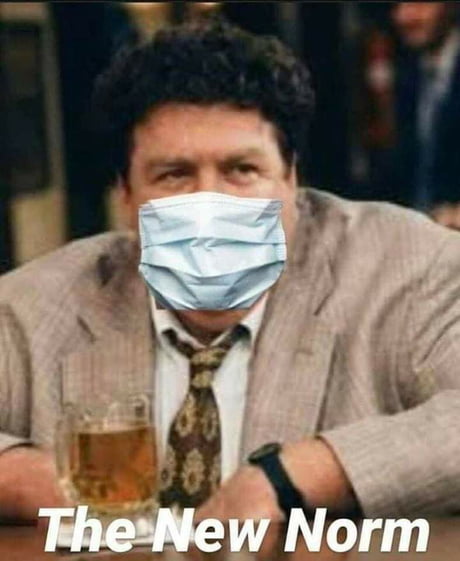
While masks are causing a lot of divisiveness, when combined with physical distancing wearing a mask in public can greatly reduce the risk of spread. Wearing masks may be around for a while so it’s best to try and get used to what it’s like to interact with them on. Since most people are wearing cotton or medical masks and few have clear plastic ones allowing their full face to be seen we are more often than not without many facial cues.
Smiling (anyway), and using your eyes (cue acting skills from every medical show ever for inspiration) and hands to gesture will be the way to connect while wearing masks.
Masks unfortunately also muffle the sound of our voice and so it’s important to get comfortable speaking up, especially when in a noisy store or on a loud street. While you don’t want to shout to the point of sounding unnatural or making the listener uncomfortable, you do need to literally speak up to be heard. If you don’t, often the other person will lean in to hear you, and then you end up stepping back to recreate some space. It’s a odd dance but it happens often.
As we move into figuring out dining indoors and patio dining scenarios be prepared to see people storing their masks in a paper bag or envelope while eating. Some places may place plastic shields between tables or even at tables depending on the restaurant and local requirements.
Wearing masks outdoors is not a bad idea if you’re passing frequently while out on rec paths and trails or in the park or on the sidewalks of your neighborhood. Many choose to “mask when they pass” and let their mask down while on long stretches without others or when there’s more than enough room to pass without any worry. (According to this article in the New York Times, you’re more likely to encounter an issue for yourself if you have prolonged time indoors without masks on than if you pass someone outdoors without a mask on.)
If you’re uncomfortable when you encounter someone without a mask on resist the urge to glare or tsk at them. Do what you can to keep yourself physically distanced and avoid interacting instead. Remember you can only control yourself as best you can. There will be times when it doesn’t go perfectly and even though that can cause stress and anxiety, which often lead to rudeness, arming ourselves with kindness and avoiding judgement of others is good etiquette.
CONTACT TRACING
Contact tracing – tracing the virus’ spread through individuals who have tested positive or been around those who tested positive for COVID-19 – is happening at different rates throughout the country, but early indications show that contact tracing by businesses and through events that we attend may become commonplace. Many places already use your phone number or email address to contact you about tickets or a reservation or even a purchase so it’s not unfamiliar. But to have it be connected to our health when visiting a restaurant can feel very different. While we don’t know yet exactly how contact tracing will impact our personal social gatherings (birthday parties, showers, weddings…) or our public socializing (bars, sports, groups, restaurants…) we are considering the possibility that in the future a host’s to-do list list, or advice for making a restaurant reservation for a work lunch might involve contact info for potential contact tracing follow ups.
BE COMPASSIONATE
We cannot emphasize this enough right now. These are extraordinary times and there are so many ways this virus is impacting all of us. Especially when it comes to how we are mentally handling the longevity of this pandemic. You don’t know what is affecting someone’s life making the current threat even worse (financially, emotionally, physically). It’s important to respect people where they are at, and not blow off their concerns or drive fear where it doesn’t need to be.
Many of us are so fortunate to have so many ways to connect to help get us through this crisis together, but loneliness and anxiety are still huge concerns. Reaching out to one another. Being patient and kind with each other. Listening to one another. Respecting one another. Helping those in need. These are the kinds of attitudes and actions that will carry us through. They often cost us nothing, and yet they can make an impactful difference.
AN INK-BLOT test of sorts on the U.S. economic situation, the July unemployment numbers can be seen optimistically or pessimistically. The jobless rate of 10.2 percent and the net total of new jobs created of 1.76 million were both slightly better than forecast. At the same time, the rate of recovery was slower than in June, when 4.8 million jobs came back.
The rational response for both Democrats and the White House is to stay focused on the big picture: however you look at last month, total employment is 13 million below what it was in February, the last full month before pandemic-related business shutdowns began. The economy remains too weak to recover its lost ground without another substantial injection of federal money.
Yet an impasse continues between congressional Democrats, who previously passed a $3.4 trillion package, and the White House, whose position is in flux but was at least partly defined in a $1.1 trillion bill unveiled by Senate Majority Leader Mitch McConnell (R-Ky.) last month. In hindsight, everyone would have been better off if Mr. McConnell had engaged earlier this year. Sensing the national political tide flowing their way, House Speaker Nancy Pelosi (D-Calif.) and Senate Minority Leader Charles E. Schumer (D-N.Y.) are driving a hard bargain, refusing, for now, to compromise on a key issue: how to renew the $600-per-week unemployment insurance (UI) supplement.
President Trump, desperate for negotiating leverage, and a political comeback, announced Saturday that he was resorting to executive actionto impose a scaled-back version of UI, renewing the supplement at a reduced rate. The president also said he intends to suspend the payroll tax, beginning next month, which even Republicans in Congress regard as an ineffective trickle of relief. Even if Mr. Trump can be do these things lawfully — a doubtful proposition — they are likely to create more uncertainty at a time when the economy, and the country, need the opposite. Congress should continue working toward a permanent fix on UI and other pressing needs.
Those needs are clear and far from fully addressed by Mr. Trump’s unilateral action: a renewal of unemployment benefits at an elevated rate without disincentives to work; help to state and local governments ; support for small businesses; money for safe school reopenings where possible; funding for safe and fair elections in this unique public health environment; and an enhancement to housing and nutrition programs, targeted at the poorest Americans.
Though a faction of congressional Republicans oppose such spending, based on selective concern about the federal debt, others recognize the need — if only to aid the party’s dwindling chances of holding the White House and Senate. Democratic leaders on Friday indicated a willingness to reduce their bill’s cost by $1 trillion over 10 years, if Republicans would raise theirs by the same amount. That would mean a roughly $2 trillion deal. It’s a place to start when talks get serious, which they should have long ago.
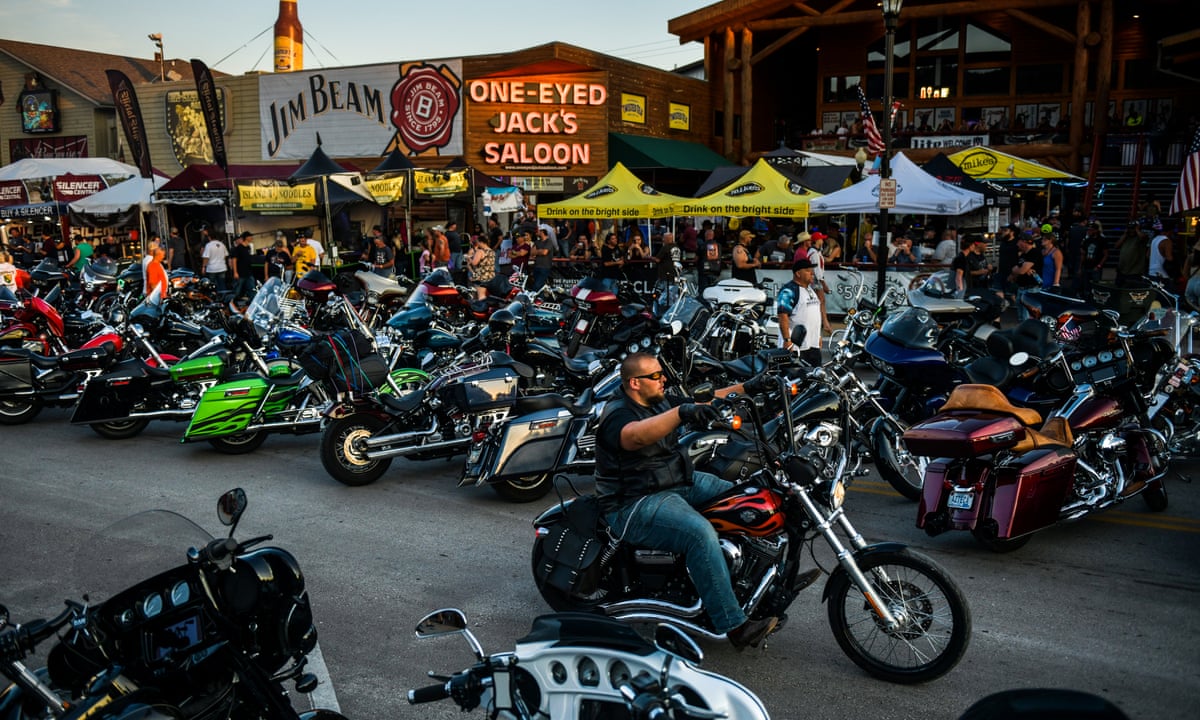
Tens of thousands of motorcyclists roared into the western South Dakota community on Friday, lining Main Street from end to end, for the start of the annual Sturgis Motorcycle Rally.
Tens of thousands of motorcyclists roared into the western South Dakota community of Sturgis on Friday, lining Main Street from end to end, for the start of an annual rally that kicked off despite objections from residents and with little regard for a public health emergency ravaging the world.
It could have been any other past summer rally in Sturgis, with herds of R.V.s, bikers and classic cars converging for the Sturgis Motorcycle Rally, a 10-day affair that was expected to attract roughly 250,000 enthusiasts this year — about half the number who attended last year but a figure that puts it on track to be among the country’s largest public gatherings since the first coronavirus cases emerged in the spring.
Save for a few hard-to-spot hand-sanitizer stations, it could have been any other major festival in pre-pandemic times.
“Screw Covid I went to Sturgis,” read a black T-shirt amid a sea of Harley Davidson and Trump 2020 outfits sported by the throng of people walking along Main Street. Their gear did not include face masks, and social distancing guidelines were completely ignored.
South Dakota is among several states that did not put in place a lockdown, and state officials have not required residents to wear masks, giving attendees who rode in from outside the state fewer restrictions than they may have had back home.
Attendance on Friday was on par with previous years, said Dan Ainslie, City Manager for Sturgis.
“It’s kind of like a typical rally,” Mr. Ainslie said of the number of people coming into town, “and the crowds are still building.”
Indeed, fears that the rally could be a superspreader event did not appear to scare riders from attending. Bikers flocked to tents featuring tattoo artists, apparel, gear and food.
Health experts say the coronavirus is less likely to spread outdoors, especially when people wear masks and socially distance. But large gatherings like the motorcycle rally also increase the number of visitors inside restaurants and stores. A few businesses in Sturgis put up signs limiting the number of customers who could enter, but most did not post such notices.
Over the past week, there has been an average of 84 coronavirus cases per day in South Dakota, a 31 percent increase over the previous two weeks. At least four new virus deaths and 105 new cases were reported on Thursday.
Gov. Kristi Noem, a Republican, encouraged people to attend the rally in an interview on Fox News on Wednesday night, saying the state had successfully hosted other large events — including a Fourth of July celebration at Mount Rushmore that President Trump attended — without seeing a direct increase in virus cases. Plus, she said, the state’s economy benefits when people visit.
The state’s Department of Tourism has estimated that the annual festival generates about $800 million in revenue.
The rally, which has taken place every summer in Sturgis since 1938, commenced amid strong objections from residents. In a city-sponsored survey, more than 60 percent of the nearly 7,000 residents favored postponing the event.
Little could be done to stop the event, said Doreen Allison Creed, the Meade County commissioner who represents Sturgis. Ms. Creed said the county lacked the authority to shut down the rally because much of it takes place on state-licensed campgrounds.
When it became clear that it would go on as planned, the city said in a news release that changes would be made to safeguard residents from the coronavirus, including adding hand-sanitizing stations to the downtown area. The city plans to offer coronavirus testing for its residents once the rally concludes on Aug. 16.
While the most recent Centers for Disease Control and Prevention guidelines do not suggest a specific limit for the number of attendees at gatherings or community events, they encourage organizers to maintain a capacity conducive to reducing the spread of the virus. The agency encourages people to socially distance at six feet apart and wear masks.
“Attendees will be asked to be respectful of the community concerns by practicing social distancing and taking personal responsibility for their health by following C.D.C. guidelines,” the news release said.
But on Friday, throngs of ralliers parked their bikes and walked shoulder to shoulder along the downtown streets, nary a mask in sight. Police officers stationed at the intersections also were not wearing masks.
Bruce Labsa, 66, drove from North Carolina last week to be among the first in town. This was the first year he would be able to attend the rally since retiring, and he did not want to miss it. On Friday, he was not wearing a mask, and he said he had no concerns about catching the coronavirus.
“I don’t know anyone who’s had it,” Mr. Labsa said.
Amy Svoboda, 27, who was working in a women’s apparel shop for bikers called One Sexy Biker Chick, said Friday’s crowd of shoppers had been steady. She said she didn’t know what to expect, but was happy to see people turning out.
“We are allowed to make our own choices,” she said. “If we get it, we chose to be here.”
Still, Nelson Horsley, 26, of Rapid City, S.D., said he expects there will be a rise in coronavirus cases in the area once the rally concludes next weekend. But he said he didn’t feel the need to wear a mask while walking around downtown Friday afternoon. He compared the virus to getting the seasonal flu.
“I haven’t seen anyone out here wear a mask so it kind of feels like it defeats the purpose,” he said, to wear a mask himself.
While most residents opposed the rally, some offered their front yards as camp sites for bikers who were unable to find a hotel room. But many others said they were worried about the impact the rally would eventually have on the small community.
Among those was Patricia Viator, 64, who has lived in Sturgis for 16 years. She said she became resigned to the fact that there was nothing residents could do to keep thousands of bikers from coming to the city. She said she’s worried for her family and the town, and she takes several precautions when leaving her house, including wearing a mask.
“It scares me more than before because we don’t have many cases around here, but now this increases the chances of us locals getting it,” she said.
The U.S. has recorded more than 5 million coronavirus cases since the start of the outbreak in the country, according to data compiled by Johns Hopkins University.
More than 1.5 million people have recovered from the disease in the country while the U.S. has also reported more than 162,000 coronavirus-related deaths, according to Johns Hopkins.
The U.S. has reported the most confirmed COVID-19 cases and deaths of any other country. The number of new infections across the U.S. have showed signs of easing recently, though the number of cases remains at a high level compared to earlier in the pandemic.
In some states, governors responded to spikes in June and July by implementing mandatory statewide mask policies and reimposing a number of restrictions. Other states, however, have largely kept nonessential businesses open despite the summer uptick.
In Georgia, for example, Gov. Brian Kemp (R) refused to implement a statewide mask mandate despite COVID-19 spikes and has sought to prohibit localities from imposing similar orders.
In Florida, another hotspot for the virus, Gov. Ron DeSantis (R) declined to impose a statewide order, though some local leaders across the state have put in place mandatory face covering requirements.
States like Florida, Arizona and Texas saw their peak in cases in mid- and late July, though they have dropped the past couple weeks. For many states, the number of cases has started to trend downward, though is at a high level, underscoring the difficulty of quickly getting the disease under control.
President Trump maintained in an interview with Axios released Monday that the pandemic is “under control as much as you can control it” in the U.S., saying that the death toll “is what it is.”
“They are dying, that’s true. And you have — it is what it is,” he said. “But that doesn’t mean we aren’t doing everything we can. It’s under control as much as you can control it. This is a horrible plague.”
The interview was recorded before the coronavirus-related death toll in the U.S. surpassed 150,000.




 HENRY KOTULA