


Cartoon – Where’s your Artificial Sense of Urgency?




The state will bid out the business to private insurance carriers instead of doing the work in-house. Medicaid managed care organizations will be required to submit a bid.
Nevada’s plan to launch a public option health plan hinges on participation from the state’s Medicaid managed care organizations.
After passing both houses of the legislature, Democratic Gov. Steve Sisolak told reporters Tuesday he will sign the bill that will likely crown Nevada as the second state to pass a public option — a government-run plan that promises to lower premiums and increase access to care by creating an additional insurance option for residents.
To achieve its aims, Nevada’s public option plan requires premiums to be 5% lower than the benchmark silver Affordable Care Act plan in each ZIP code and, ultimately, premiums must be reduced by 15% over a four-year period. At the same time, reimbursement to providers must not go below Medicare rates.
Coverage under the public option would begin in 2026. The bill is just the beginning of a process in which Nevada will seek a waiver from the federal government to enact the public option plan. In short, the state is asking to capture the savings it may generate for the federal government.
Similar to other public health programs, the state of Nevada will bid out the public option business to insurance carriers instead of doing the work in-house. The state will rely heavily on Medicaid managed care organizations, at least at first, as it tries to spur participation.
“As a condition of continued participation in any Medicaid managed care program,” Medicaid MCOs will be forced to offer a public option plan if they want a Medicaid contract with the state, according to the bill sponsored by a Democratic state senator and Nevada’s majority leader, Nicole Cannizzaro, which passed the body earlier this week.
The bill says Medicaid MCOs must submit a “good faith proposal,” in response to an eventual RFP.
Sabrina Corlette, a research professor at Georgetown’s Center on Health Insurance Reforms, said she “assumed they wanted a guaranteed pool of potential bidders for the public option. Maybe they were afraid that if they didn’t require some bidders, they might not get any.”
Currently, there are three Medicaid MCOs in the state of Nevada: Centene, UnitedHealthcare and Anthem Blue Cross Blue Shield.
None of the companies responded to a request for comment.
The Nevada bill comes at a time when there is a renewed interest at the federal level for a public option plan, and a push from a handful of other states interested in creating an affordable health plan option for residents who have found themselves ineligible for Medicaid but unable to afford a marketplace plan.
Washington was the first state to implement a public option plan, which went live this year.
President Joe Biden is a proponent of a public option plan — instead of “Medicare for All” — as it would build on the ACA, a law he helped usher in under former President Barack Obama, instead of dismantle it.
The insurance lobby is strongly opposed to a public option and previously expressed concern over Nevada’s plan via an opposition letter dated May 3 and addressed to Cannizzaro and the state’s Health and Human Services Committee.
AHIP, America’s Health Insurance Plans, took aim at the way in which the bill requires premiums for the public option plan to be lower than certain competitive plans on the exchange. AHIP characterized it as arbitrary “government rate setting.”
The tactic of prodding insurers into offering a separate business line in a specific state is not new.
The exchanges, launched under the ACA, relied on insurers to voluntarily sell plans to a relatively new market. At times, some counties were at risk of having no exchange plan at all. Some states tried to alleviate this problem by creating incentives for Medicaid MCOs if they also offered an exchange plan.
In a more extreme example, New York banned insurers from providing plans to any other program, including Medicaid, if they exited the exchange, according to a 2017 executive order from Gov. Andrew Cuomo.
Over time, the exchanges have become a core business for Medicaid MCOs.
Selling exchange plans is a complementary business for Medicaid MCOs that traditionally contract with states to care for Medicaid-eligible members. By selling exchange plans, Medicaid MCOs attempt to attract the Medicaid members they were serving as they churn off the program as their income fluctuates. It’s a key strategy for players like Centene.
However, if they’re forced to participate in the public option plan they will have to undercut their own premium prices on the exchange.
In Nevada, UnitedHealthcare and Centene command the largest market share on the exchange, according to the Kaiser Family Foundation.

ACLA began its legal case against the implementation of PAMA late in 2017, weeks after the release of the final private payer rate-based clinical laboratory fee schedule. As ACLA sees it, HHS diverged from PAMA directives by exempting “significant categories and large numbers of laboratories” from reporting market data, meaning “Medicare rates will not be consistent with market-based rates.”
The U.S. District Court for the District of Columbia dismissed the case on the grounds that ruling on the establishment of PAMA payment amounts was barred by the statute. ACLA successfully appealed that ruling in 2019. However, the lower court again dismissed the case in late March.
The trade group said the court relied “on the same conclusions that the D.C. Circuit [appeals court] rejected.” The court ruling said the case was dismissed “for lack of subject matter jurisdiction.”
ACLA’s filing of a notice of appeal restarts a process that could take months to play out. The last time the trade group appealed, there was a nine-month wait between the submission of a notice and the delivery of the opinion of the court.
While preparing its opening brief and then waiting on the decision of the appeals court, ACLA will try to tackle PAMA from another angle.
“ACLA will continue to work with policymakers to establish a Medicare Clinical Laboratory Fee Schedule that is truly representative of the market and supports continued innovation and access to vital laboratory services, as Congress originally intended,” Julie Khani, president of ACLA, said in a statement.
Congress has already delayed the next set of fee cuts until 2022. ACLA said the cuts will reduce rates for certain tests used to diagnose chronic diseases by 15%, potentially threatening access to testing. Rates were previously cut in 2018, 2019 and 2020.
Talking to investors in April, LabCorp CEO Adam Schechter said he expects the 2022 impact to “be about the same as it was in 2019, around the $100 million mark.”

Patients seeking out the pricey ER setting for minor illnesses that could have been treated elsewhere has been a perennial issue for the healthcare industry. Misuse of the nation’s emergency departments for minor ailments costs the nation’s healthcare system $32 billion a year, according to a previous report from UnitedHealth Group, the parent firm of UnitedHealthcare.
Providers worry such policies will lead to a chilling effect, causing patients to hesitate even in a true emergency such as a heart attack or stroke. Some of those concerns about the effects on patients were aired on Twitter this week after the provider bulletin became public.
UnitedHealthcare’s policy contains exclusions, including observation stays, visits by children under the age of two and admissions from the ER. It’s not clear precisely how many patients will be impacted but UnitedHealthcare had a total of 26.2 million commercial members at the end of 2020.
The insurer said this is an attempt to ensure healthcare is more affordable. To curb costs, they want patients to seek out treatment in a more “appropriate setting” like an urgent care facility.
Other major insurers have enacted similar policies in the past and faced pushback from the public and providers.
Anthem in recent years has also enacted policies that put patients on the hook for the ER bill if they sought care that didn’t warrant a trip to the ER. The policy also attracted scrutiny from then Senator Claire McCaskill, a Missouri Democrat, who requested Anthem turn over internal documents over the policy and the Blues player ultimately scaled back some of its policies amid pushback from doctors and others.
Providers have argued these policies collide with federal law that require emergency rooms to treat any patient that shows up, regardless of their ability to pay.
UnitedHealthcare does have a process in place for those to contest a visit that was deemed a non-emergency.

Norfolk, Va.-based Sentara Healthcare and Greensboro, N.C.-based Cone Health have abandoned plans to merge into an $11.5 billion system, the organizations said in a joint statement June 2.
The health systems said they mutually agreed to end the plans late last week. Leaders said they believe their respective organizations will be better served by remaining independent.
The two healthcare systems announced plans to combine last August. The deal would have formed an $11.5 billion system with 17 hospitals in Virginia and North Carolina.
“Sentara Healthcare and Cone Health are high performing, well respected, community-focused organizations. Those similarities served as the basis for efforts toward an affiliation. I am confident that this mutual decision will not alter either organization’s ongoing commitment to meet the needs of our respective communities,” Howard Kern, president and CEO of Sentara, said in a prepared statement. “I have no doubt that Cone Health will remain a top tier health system and will continue to pursue new and innovative ways to provide value for North Carolinians for years to come.”
“We appreciate the efforts of Sentara to work with Cone Health to determine whether an affiliation of our two high-performing organizations is in the best interest of those we serve. Recently, in the final analysis, we mutually decided that we can best serve our communities by remaining independent organizations,” Terry Akin, CEO of Cone Health, said in the news release.
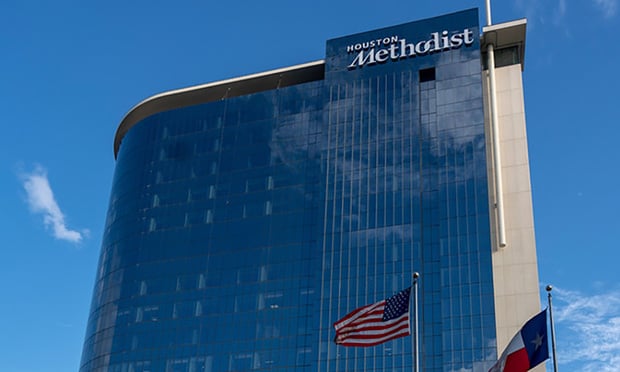
A group of 117 employees is suing Houston Methodist over its COVID-19 vaccination mandate for workers, ABC News reported May 29.
Houston Methodist, which comprises an academic medical center and six community hospitals, rolled out its mandatory vaccination policy March 31, setting an April 15 deadline for managers to receive at least one dose or get an exemption. More than 99 percent of the management team complied by the deadline. By June 7, all about 26,000 employees are required to be vaccinated. However, employees can receive medical or religious exemptions or a deferral if they are pregnant.
Now, 117 Houston Methodist employees have filed a lawsuit, claiming that the mandate is illegal.
The lawsuit, filed May 28 in Montgomery County District Court in Texas, alleges the hospital is “illegally requiring its employees to be injected with an experimental vaccine as a condition of employment,” according to ABC News. It specifically cites that the COVID-19 vaccines are authorized for emergency use by the FDA but have not been fully approved.
The employees allege that Houston Methodist is violating Texas public policy and the Nuremberg Code, a medical ethics code for human experimentation drafted in 1947 because of the Nuremberg trials at the end of World War II, according to the report.
The plaintiffs’ attorney, Jared Woodfill, told ABC News the health system’s mandate is meant “to promote its business and increase profits at the expense of other healthcare providers and their employees’ health. Defendants advertise to the public that they ‘require all employees and employed physicians to get a COVID-19 vaccine.’ More clearly, defendants’ employees are being forced to serve as human ‘guinea pigs’ to increase defendants’ profits.”
Houston Methodist said earlier this year that employees who do not comply with the vaccination mandate initially will have a discussion with their supervisor, then could face suspension followed by termination. The lawsuit seeks to prevent the health system from terminating unvaccinated workers.
Houston Methodist President and CEO Marc Boom, MD, shared a statement about the lawsuit with Becker’s. As of May 28, he said 99 percent of Houston Methodist’s employees have met the requirements for the vaccination mandate.
“We are extremely proud of our employees for doing the right thing and protecting our patients from this deadly virus,” Dr. Boom said. “As healthcare workers, it is our sacred obligation to do whatever we can to protect our patients, who are the most vulnerable in our community. It is our duty and our privilege.
“It is unfortunate that the few remaining employees who refuse to get vaccinated and put our patients first are responding in this way. It is legal for healthcare institutions to mandate vaccines, as we have done with the flu vaccine since 2009. The COVID-19 vaccines have proven through rigorous trials to be very safe and very effective and are not experimental. More than 165 million people in the U.S. alone have received vaccines against COVID-19, and this has resulted in the lowest numbers of infections in our country and in the Houston region in more than a year. We proudly stand by our employees and our mission to protect our patients.”

In the past year, cost was a bigger factor driving Americans to skip recommended healthcare than fear of contracting COVID-19, according to a report released June 1 by Patientco, a revenue cycle management company focusing on patient payment technology.
Patientco surveyed 3,116 patients and 46 healthcare providers, finding 34 percent of female patients and 30 percent of male patients have avoided care in the past year citing concerns about out-of-pocket costs.
Below are three more notable findings from the report:

