Coronavirus Layoffs Keep Coming as Jobless Claims Top 45 Million

http://www.thefiscaltimes.com

About 1.5 million people filed for state unemployment benefits last week, the Department of Labor announced Thursday, bringing the 13-week total for first-time claims to more than 45 million. Another 760,000 filed new claims for Pandemic Unemployment Assistance, a temporary program for workers such as independent contractors who ordinarily do not qualify for unemployment payments.

While new jobless claims continue to decline, falling for the 11th straight week, the numbers remain startlingly high relative to previous recessions, and some economists have expressed concerns that the labor market is not healing as rapidly as they had hoped.

“It’s not clear why claims are still so high,” said Ian Shepherdson, chief economist at Pantheon Macroeconomics, in a note to clients. “[I]s it the initial shock still working its way up through businesses away from the consumer-facing jobs lost in the first wave, or is it businesses which thought they could survive now throwing in the towel, or both? Either way, these are disappointing numbers and serve to emphasize that a full recovery is going to take a long time.”


Visualizing the Growth of COVID-19 in the U.S., Organized by State Peak Date

Visualizing the Growth of COVID-19 in the U.S., Organized by State Peak Date

Visualizing the Growth of COVID-19 in the U.S., Organized by State Peak Date

The exponential nature of viral spread means that pandemics are fast-moving and dynamic.

Combine this with the high interconnectedness of modern life—even when social distancing and lockdowns are applied—and pandemics can evolve quickly. In just a few weeks, previous hotspots can cool down, while new high risk areas can crop up seemingly out of nowhere.

In the United States, like many other places in the world, the virus is hitting regions differently, and this landscape is constantly changing over time.

COVID-19 Growth, by State

Today’s first visualization above comes to us from Reddit user bgregory98, and it uses data from the New York Times to plot confirmed active COVID-19 cases by state.

States are organized by the date that weekly average cases peaked, from top to bottom. Data is normalized and is current until June 16th, and states are colored based on regional definitions (i.e. Northeast, Midwest, West, South) as defined by the U.S. Census Bureau.

As you can see, when looking purely at active cases, the situation has evolved considerably from a geographical perspective.

Early on, COVID-19 cases were more concentrated in coastal population centers, especially in the Northeast. New York, New Jersey, and Massachusetts, the three hardest hit states per capita so far, saw cases peak in April.

However, a look at the bottom half of the visualization shows that generally, states in the South and West are starting to heat up with cases. Recent daily numbers confirm this, with California, Texas, Florida, Arizona, and North Carolina all gaining more than 1,000 new cases on June 17th.

Growth by State, Part Deux

The following visualization by Reddit user jawsem17 is designed using a similar concept, and is current as of June 17th.

This version uses the same data set from the New York Times. However, it also includes deaths as a metric, showing a comparison of peak deaths to peak cases for each state.

Visualizing the Growth of COVID-19 by Peak Cases and Peak Deaths

Although one would expect peak deaths to follow peak cases, this is not always the case.

Peak deaths in Nevada, for example, occurred on April 24th, but peak cases have been in the last week. This same peculiar pattern can be seen in a variety of states, from California to Oklahoma.

Mapped: The Evolution of COVID-19 in the U.S.

As the pandemic spreads and the situation has evolved, the mean center of weekly COVID-19 cases has been moving in a southwest direction.

The following map, which also comes from Reddit user bgregory98, averages the center coordinates of all counties weighted by how many new confirmed cases they have had over the past week:

Mean Cases Map

Originating in Ohio, the mean center of cases was initially heavily skewed by cases in the New York metro area. Since then, the mean center of cases has shifted and has now journeyed slightly past the mean center of U.S. population, located in Missouri.

This is partially a regression to the mean, but it is also driven by growing case counts in aforementioned states in the southern and western parts of the country.

Mapped: Peak County Totals

Finally, the progression of COVID-19 within the U.S. can be mapped in another useful way, revealing a geographical perspective to the virus’ spread.

These maps from Winston Saunders show places where current disease levels are below their previous peaks (blue), and where current COVID-19 cases are at highs (red) as of June 18:

Cases Below Previous Peaks

Cases at Peak Levels

This again shows the shift from the Northeast and Midwest parts of the country towards the West and South regions.

As always, the path of the virus’ spread will continue to change and evolve, and the picture could again look quite different in just a few weeks time.


LA healthcare leaders urge reopening coronavirus surge hospital

LA healthcare leaders urge reopening coronavirus surge hospital

LA healthcare leaders urge reopening coronavirus surge hospital ...

With recent flare-up in neighboring counties, L.A.-area hospital leaders want the county to work with the state to keep surge hospitals open.

Healthcare officials on Tuesday called for Los Angeles County leaders to work with the state to reopen its “surge” hospital and recommended that another in Long Beach swing open its doors, citing the need to fully reopen medical centers while also dealing with an expected surge in coronavirus cases.

The state-funded Los Angeles Surge Hospital, which opened on April 13 at the former site of the St. Vincent Medical Center amid heightened concern about having enough beds to deal with Covid-19 patients, has closed.

But Dr. Hector Flores, an Adventist Health White Memorial physician, told the county’s Board of Supervisors and his fellow members on the county’s Economic Resiliency Task Force that county officials should work to bring it back online. He also recommended that Long Beach Community Hospital — which has long been on the cusp of reopening — become a surge hospital.

The context in June is different, however, than it was in March and April, when public health officials were intensely concerned that the county’s hospital capacity would be overwhelmed by a never-before-seen virus that was spreading and killing exponentially.

Along with many other businesses, hospitals, too, shut down many services in an effort to grow bed capacity for COVID-19 patients. But those services were essential for many hospitals’ bottom line — everything from elective procedures to vital surgeries. Couple that with patients who were delaying or outright canceling vital non-coronavirus visits, and in the first 90 days of the pandemic in L.A. County, hospitals — typically among the largest employers — were shedding jobs and occupancy (which fell to about 40% collectively, according to Flores).

“Hospitals are like hotels. If they are not fully occupied they are losing money,” said Flores, who heads a working group on the county’s task force.

Ultimately, the industry took an estimated $15 billion hit, he said, and only now, in the past two weeks is it starting to recover as health orders are eased and 15,000 doctors and medical support staffs make their way back to their once-shuttered practices.

Flores, and his committee of healthcare leaders have been devising a framework for recovery in the healthcare sector of the county’s economy. They want to maintain those jobs in the $100-billion-a-year healthcare industry.

It’s a larger goal among county leaders, who started the resiliency task force to figure out how several of the region’s economic sectors can recover after being shut down for months.

But there’s a looming concern: A second wave of the virus.

Flores said recent coronavirus spikes in Orange and Ventura counties — which saw large crowds gathering at beaches over the Memorial Day holiday — are giving him pause.

And that’s prompted Flores and others to call for the county to work with state officials to reopen and keep surge hospitals open. The move would help regular hospitals keep their non-COVID business going but allow for more capacity, if needed.

As it stands, non-COVID patients are coming back. Hospitals over the last two to three weeks have gone from 40% to 85% occupancy rates.

“What that tells us is that if there is a surge there won’t be the same capacity that we had for the first 90 days (of the pandemic),” he said. “We’re concerned about the uptick we see in Ventura and Orange County, since on Memorial Day weekend they opened beaches, hiking trails and parks. Sadly, many people took advantage of that open environment without protection of masks and often congregating in clusters. We’re also waiting to see the impact of the protests in two weeks.”

State and local officials have repeatedly said that public health data will guide local decisions, and have held out the possibility that public health orders could be re-tightened.

During Tuesday’s meeting, Supervisor Sheila Kuehl questioned whether Flores meant the county should keep surge hospitals “available” or actually open them.

Flores said as hospitals reopen and perform essential surgeries, they need “safe units” where patients can recover from an operation without the threat of being infected by the virus. And to do that, they need more space, he said.

“As we see a smaller number of beds available in hospitals, we are eventually going to rely on surge hospitals … because we anticipate there is quite likely going to be another surge if the patterns we see in Ventura and Orange counties come to play in Los Angeles,” Flores said.

The shuttered St. Vincent’s hospital, on a 10-acre campus in the Westlake District near Downtown Los Angeles, seemed essential when it was pressed into duty on April 13 after being closed in January. It quickly became part of the state’s plan to outfit roughly 50,000 more hospital beds to handle a surge of infected patients.

Ultimately, though, that surge never came. The hospital treated 65 people at a cost to taxpayers of nearly $15 million, the Southern California News Group reported.

It may very well stay that way. A spokesperson for the hospital said Tuesday that the hospital is “officially closed at the present time, there are no plans to reopen.”

Long Beach Community Hospital, too, was eyed. City leaders and officials from Molina, Wu, Network, Inc. — the hospital’s new operator — scurried to reopen it in the early COVID-19 days.

MWN said in late March that the facility was “days away” from opening, as Long Beach looked for capacity.  That never came. Plus, the U.S. Navy hospital ship Mercy, which arrived in Los Angeles in late March to help treat non-coronavirus patients, returned to San Diego after treating just 77 patients.

Meanwhile, regular hospitals were scambling to find room for the expected surge of COVID patients. But between that and the March “Safer-at-Home” order, hospitals suffered the unintended consequence of furlough and layoffs related to a shortage of “non-essential” medical work.

The county’s Department of Health Services says the decision to reopen the St. Vincent’s property lies with the state, which in consultation with Dignity Health and Kaiser, closed down operations as its contract was due to run out by the end of June.

Could it come back online?

“The opinion of the County is that a) currently we project having sufficient overall beds in the county to meet demand (with the exception of ICU which can be resolved by flexing bed types within existing hospitals) and b) surging our existing hospitals,” according to a statement.

Officials say adding beds at existing hospitals is a “better approach” because it makes use of the existing infrastructure. County health services officials add that all hospitals have the ability “to surge patients at least 20% above their normal capacity.”

As for Long Beach Community Hospital, health officials noted that it has not yet been approved to operate by licensing through the state.

“We would welcome LBCH coming on line as an additional acute care hospital, but need for them to meet state licensing criteria,” according to the statement.

L.A. County Public Health officials predict that with no change in the transmission rate of the disease, the demand for hospital beds will remain relatively stable, with some slight “up-trending” because of the easing of health-order restrictions.

If transmission increases by half above current levels, a June 10 county Department of Health Services projection concluded that nearly 70% of the county’s population will catch the virus by Dec. 1.

Hospitalizations across the county were down to 1,285 as of Monday from a peak of nearly 2,000 in late April. While the numbers have been down considerably, some hospitals have experienced a slight uptick in recent days. Whether that increase is the result of an oncoming surge has yet to be seen, according to Molly Lawson, spokeswoman for Centinela Hospital Medical Center in Inglewood.

“It’s really too early to tell,” Lawson said. “This week we had anticipated seeing the community impact of some of the protests and marches and all the activities happening of late.”

Centinela Hospital, which according to Lawson had one of the higher levels of hospitalization rates, treated about 70 COVID-19 patients in late April and early May. Patients occupied two full units, Lawson said. As of Tuesday, the hospital had 17 patients, just half a unit.

At Torrance Memorial Medical Center, which saw a peak of about 55 patients just as “Safer-at-Home” orders went into effect in late March, the hospital has been treating 15 to 21 patients for the past several weeks, according to spokeswoman Sandy Rodriguez. The lowest number of COVID-19 patients the hospital had admitted was 11.

“We have seen some intermittent increases, but no surge,” Rodriguez said.


11 hospital, health system projects costing $300M or more

https://www.beckershospitalreview.com/capital/11-hospital-health-system-projects-costing-300m-or-more.html?utm_medium=email

2019 Hospital Construction Survey | Health Facilities Management

Eleven hospitals and health systems since Feb. 18 have advanced, completed or begun facility expansions and renovations with price tags of $300 million or more.

1. Moffitt Cancer Center’s $400M hospital construction to start in July
Tampa, Fla.-based Moffitt Cancer Center will begin construction of its 10-story, $400 million hospital in July.

2. UCSF’s plans 1.5M-square-foot hospital
The University of California San Francisco plans to build a 1.5 million-square-foot hospital and research facility in the city. The first phase of the construction included a $500 million pledge from the Helen Diller Foundation, according to The San Francisco Chronicle. 

3. City of Hope buys site for $1B cancer hospital, research center
Duarte, Calif.-based City of Hope has purchased a 190,000-square-foot building and 11 acres of land as part of a $1 billion investment in a new hospital and cancer research center in Irvine, Calif.

4. Texas Children’s to build $450M hospital in Austin
Texas Children’s Hospital plans to build a $450 million freestanding women and children’s hospital in Austin, the organization said May 20.

5. Dell Children’s to invest $700M in new hospital, expansion
Austin, Texas-based Dell Children’s Medical Center plans to invest $700 million in the next three years to expand in the state

6. Children’s Hospital of Philadelphia pumps $3.4B into expansion
Children’s Hospital of Philadelphia is planning to build a new 22-story patient tower.

7. Valleywise Health breaks ground on $900M Phoenix medical center
Phoenix-based Valleywise Health broke ground late February on its $900 million medical center in Phoenix. The health system told Becker’s Hospital Review May 13 that the project is “on track for completion in late 2023, and so far, no significant delays.”

8. UC Davis Medical Center details $1.9B expansion
UC Davis Medical Center in Sacramento, Calif., plans to invest $1.9 billion in expansion and renovation projects over the next 10 years.

9. MUSC opens $389M Charleston children’s hospital
The Medical University of South Carolina opened its $389 million children’s hospital to patients Feb. 22.

10. Pennsylvania hospital’s $327M modernization project OK’d
Media, Pa.-based Riddle Hospital’s $327 million upgrade and expansion project received the green light from the Middle Township board and its parent organization, Main Line Health.

11. Texas A&M plans to build $550M complex in Texas Medical Center
College Station-based Texas A&M University plans to build a $550 million complex in the Texas Medical Center, a sprawling Houston hub of healthcare institutions.


Walmart to expand health centers to Arkansas this month

https://www.beckershospitalreview.com/strategy/walmart-to-expand-health-centers-to-arkansas-this-month.html?utm_medium=email

Walmart Opening More Healthcare 'Super Centers'

Walmart will open two more standalone health clinics this month, including a site in Arkansas, the company said June 17.

The health clinics, called Walmart Health, will offer primary care, imaging, lab, dental and behavioral health services. 

The health clinics opening this month will be in Loganville, Ga., and Springdale, Ark. The Loganville Walmart Health opened June 17. The first Arkansas location will open June 24.

The company already has clinics in the Georgia cities of Dallas and Calhoun.

Walmart said it believes that expanding the standalone clinics will help bring affordable, quality healthcare to more Americans, because 90 percent of them live within 10 miles of a Walmart store. 

“Patients have responded favorably to our low, transparent pricing for key healthcare services, regardless of insurance status,” Walmart’s senior vice president of health and wellness, Sean Slovenski wrote in a blog post. “They’re also appreciative of the convenience of our facilities that offer primary and urgent care, labs, X-ray and diagnostics, counseling, dental, optical and hearing services, all in one central facility.”


Judge refuses to approve pension plan deal requiring Dignity to pay up to $747M

https://www.beckershospitalreview.com/legal-regulatory-issues/judge-refuses-to-approve-pension-plan-deal-requiring-dignity-to-pay-up-to-747m.html?utm_medium=email

Dignity Health Poised to Settle ERISA Lawsuit for $100 Million

A California federal judge again refused to approve a deal requiring Dignity Health to pay as much as $747 million to settle a class-action lawsuit accusing the San Francisco-based health system of underfunding its pension plan, according to Law360.

The lawsuit, filed by former Dignity Health workers, alleges the health system used a religious Employee Income Retirement Security Act exemption to underfund its pension plan by $1.8 billion. In October, a federal judge in the Northern District of California refused to sign off on a proposed settlement because it contained a “kicker” clause. The clause would allow Dignity to keep the difference between the amount of attorneys’ fees awarded by the court and the more than $6 million in fees authorized by the settlement.

“Although the fact is not explicitly stated in the settlement, if the court awards less than $6.15 million in fees, defendants keep the amount of the difference and those funds are not distributed to the class,” Judge Jon S. Tigar said, according to Bloomberg Law. “The Court concludes that this arrangement, which potentially denies the class money that defendants were willing to pay in settlement — with no apparent countervailing benefit to the class — renders the settlement unreasonable.”

Both sides agreed to eliminate the kicker clause and resolved other issues the court outlined when it denied preliminary approval and class certification in October. In November, the workers filed a renewed unopposed motion, which the court denied June 12.

To certify a class for the purpose of settlement, the court must find that the plaintiffs named in the lawsuit and their lawyer were negotiating on behalf of the entire class. In Dignity’s case, there’s a “fundamental conflict of interest between the vesting subgroup and the rest of the class that must be addressed by subclass certification,” Mr. Tigar wrote in the order denying the motion. “Because the court cannot certify the class, it cannot grant preliminary approval of the settlement.”

Mr. Tigar wrote that he made the finding reluctantly because of the extensive litigation that has already occurred and the age of the case. However, he said Rule 23 of the Federal Rules of Civil Procedure requires it. 


Dr. Fauci Sends Warning About The Football Season

https://thespun.com/nfl/nfc-east/dallas-cowboys/fauci-warning-football-season-college-nfl-bubble-nba-orlando?utm_source=ConstantContact&utm_medium=Email&utm_campaign=CFB051am

Fauci: It Would Be Hard To Play Football This Season Without A ...

Both college football and the NFL are currently prepared to move forward with their fall seasons, despite the ongoing public health crisis. Dr. Anthony Fauci has called into question whether that will be possible.

The NBA is pushing towards a July restart effectively in a “bubble” down at Disney property in Orlando. With 22 teams and fewer than 20 players on each, with support staff and others, the number of people in Orlando is large but manageable. Football presents much bigger problems.

Right now, the NFL and college football are set to play out schedules at home stadiums, whether or not fans can attend. Dr. Fauci says he thinks the NBA approach can work, but he has significant questions about how football will get underway.

“Unless players are essentially in a bubble, insulated from the community and they are tested nearly every day, it would be very hard to see how football is able to be played this fall,” Dr. Fauci said during a CNN appearance with Dr. Sanjay Gupta.

“If there is a second wave, which is certainly a possibility and which would be complicated by the predictable flu season, football may not happen this year,” Dr. Fauci added.

A second wave would definitely be a complicating factor, considering the first wave hasn’t really ended. While cases have been on a decline nationally, that is most due to a dip in the places where the virus was bad from the start, like New York.

At the same time, 22 states are currently peaking, including some major football hotbeds like Florida, South Carolina, and Texas after early reopening. The first wave in the country hasn’t ended, it has just started to hit new areas hard in recent weeks.

It would be nearly impossible for college football to implement some kind of bubble, and with the sheer size of NFL teams, and all 32 teams involved, it is unclear whether an NBA-style plan could work for the league. Football is definitely not out of the woods yet.


Federal Reserve – Semiannual Monetary Policy Report to the Congress

https://www.federalreserve.gov/newsevents/testimony/powell20200616a.htm

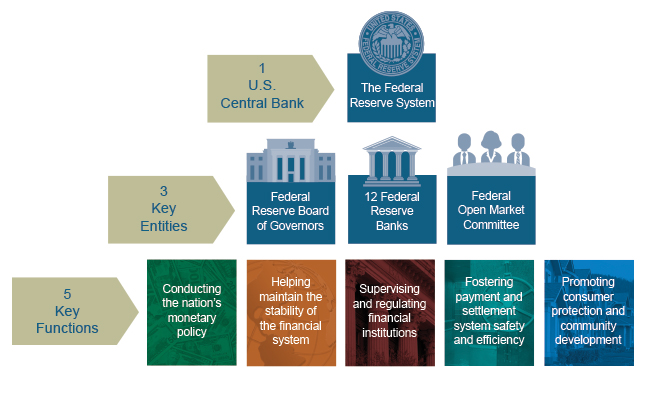
Federal Reserve Board - Structure of the Federal Reserve System

Chair Powell submitted identical remarks to the Committee on Financial Services, U.S. House of Representatives, Washington, D.C., on June 17, 2020.

Chairman Crapo, Ranking Member Brown, and other members of the Committee, thank you for the opportunity to present the Federal Reserve’s semiannual Monetary Policy Report.

Our country continues to face a difficult and challenging time, as the pandemic is causing tremendous hardship here in the United States and around the world. The coronavirus outbreak is, first and foremost, a public health crisis. The most important response has come from our health-care workers. On behalf of the Federal Reserve, I want to express our sincere gratitude to these dedicated individuals who put themselves at risk, day after day, in service to others and to our nation.

Current Economic Situation and Outlook
Beginning in mid-March, economic activity fell at an unprecedented speed in response to the outbreak of the virus and the measures taken to control its spread. Even after the unexpectedly positive May employment report, nearly 20 million jobs have been lost on net since February, and the reported unemployment rate has risen about 10 percentage points, to 13.3 percent. The decline in real gross domestic product (GDP) this quarter is likely to be the most severe on record. The burden of the downturn has not fallen equally on all Americans. Instead, those least able to withstand the downturn have been affected most. As discussed in the June Monetary Policy Report, low-income households have experienced, by far, the sharpest drop in employment, while job losses of African Americans, Hispanics, and women have been greater than that of other groups. If not contained and reversed, the downturn could further widen gaps in economic well-being that the long expansion had made some progress in closing.

Recently, some indicators have pointed to a stabilization, and in some areas a modest rebound, in economic activity. With an easing of restrictions on mobility and commerce and the extension of federal loans and grants, some businesses are opening up, while stimulus checks and unemployment benefits are supporting household incomes and spending. As a result, employment moved higher in May. That said, the levels of output and employment remain far below their pre-pandemic levels, and significant uncertainty remains about the timing and strength of the recovery. Much of that economic uncertainty comes from uncertainty about the path of the disease and the effects of measures to contain it. Until the public is confident that the disease is contained, a full recovery is unlikely.

Moreover, the longer the downturn lasts, the greater the potential for longer-term damage from permanent job loss and business closures. Long periods of unemployment can erode workers’ skills and hurt their future job prospects. Persistent unemployment can also negate the gains made by many disadvantaged Americans during the long expansion and described to us at our Fed Listens events. The pandemic is presenting acute risks to small businesses, as discussed in the Monetary Policy Report. If a small or medium-sized business becomes insolvent because the economy recovers too slowly, we lose more than just that business. These businesses are the heart of our economy and often embody the work of generations.

With weak demand and large price declines for some goods and services—such as apparel, gasoline, air travel, and hotels—consumer price inflation has dropped noticeably in recent months. But indicators of longer-term inflation expectations have been fairly steady. As output stabilizes and the recovery moves ahead, inflation should stabilize and then gradually move back up over time closer to our symmetric 2 percent objective. Inflation is nonetheless likely to remain below our objective for some time.

Monetary Policy and Federal Reserve Actions to Support the Flow of Credit
The Federal Reserve’s response to this extraordinary period is guided by our mandate to promote maximum employment and stable prices for the American people, along with our responsibilities to promote the stability of the financial system. We are committed to using our full range of tools to support the economy in this challenging time.

In March, we quickly lowered our policy interest rate to near zero, reflecting the effects of COVID-19 on economic activity, employment, and inflation, and the heightened risks to the outlook. We expect to maintain interest rates at this level until we are confident that the economy has weathered recent events and is on track to achieve our maximum-employment and price-stability goals.

We have also been taking broad and forceful actions to support the flow of credit in the economy. Since March, we have been purchasing sizable quantities of Treasury securities and agency mortgage-backed securities in order to support the smooth functioning of these markets, which are vital to the flow of credit in the economy. As described in the June Monetary Policy Report, these purchases have helped restore orderly market conditions and have fostered more accommodative financial conditions. As market functioning has improved since the strains experienced in March, we have gradually reduced the pace of these purchases. To sustain smooth market functioning and thereby foster the effective transmission of monetary policy to broader financial conditions, we will increase our holdings of Treasury securities and agency mortgage-backed securities over coming months at least at the current pace. We will closely monitor developments and are prepared to adjust our plans as appropriate to support our goals.

To provide stability to the financial system and support the flow of credit to households, businesses, and state and local governments, the Federal Reserve, with the approval of the Secretary of the Treasury, established 11 credit and liquidity facilities under section 13(3) of the Federal Reserve Act. The June Monetary Policy Report provides details on these facilities, which fall into two categories: stabilizing short-term funding markets and providing more-direct support for credit across the economy.

To help stabilize short-term funding markets, the Federal Reserve set up the Commercial Paper Funding Facility and the Money Market Liquidity Facility to stem rapid outflows from prime money market funds. The Fed also established the Primary Dealer Credit Facility, which provides loans against good collateral to primary dealers that are critical intermediaries in short-term funding markets.

To more directly support the flow of credit to households, businesses, and state and local governments, the Federal Reserve established a number of facilities. To support the small business sector, we established the Paycheck Protection Program Liquidity Facility to bolster the effectiveness of the Coronavirus Aid, Relief, and Economic Security Act’s (CARES Act) Paycheck Protection Program. Our Main Street Lending Program, which we are in the process of launching, supports lending to both small and midsized businesses. The Term Asset-Backed Securities Loan Facility supports lending to both businesses and consumers. To support the employment and spending of investment-grade businesses, we established two corporate credit facilities. And to help U.S. state and local governments manage cash flow pressures and serve their communities, we set up the Municipal Liquidity Facility.

The tools that the Federal Reserve is using under its 13(3) authority are appropriately reserved for times of emergency. When this crisis is behind us, we will put them away. The June Monetary Policy Report reviews the implications of these tools for the Federal Reserve’s balance sheet.

Many of these facilities have been supported by funding from the CARES Act. We will be disclosing, on a monthly basis, names and details of participants in each such facility; amounts borrowed and interest rate charged; and overall costs, revenues, and fees for each facility. We embrace our responsibility to the American people to be as transparent as possible, and we appreciate that the need for transparency is heightened when we are called upon to use our emergency powers.

We recognize that our actions are only part of a broader public-sector response. Congress’s passage of the CARES Act was critical in enabling the Federal Reserve and the Treasury Department to establish many of the lending programs. The CARES Act and other legislation provide direct help to people, businesses, and communities. This direct support can make a critical difference not just in helping families and businesses in a time of need, but also in limiting long-lasting damage to our economy.

I want to end by acknowledging the tragic events that have again put a spotlight on the pain of racial injustice in this country. The Federal Reserve serves the entire nation. We operate in, and are part of, many of the communities across the country where Americans are grappling with and expressing themselves on issues of racial equality. I speak for my colleagues throughout the Federal Reserve System when I say, there is no place at the Federal Reserve for racism and there should be no place for it in our society. Everyone deserves the opportunity to participate fully in our society and in our economy.

We understand that the work of the Federal Reserve touches communities, families, and businesses across the country. Everything we do is in service to our public mission. We are committed to using our full range of tools to support the economy and to help assure that the recovery from this difficult period will be as robust as possible.

Thank you. I am happy to take your questions.