The Value of Home Health Care

https://morningconsult.com/opinions/the-value-of-home-health-care/?utm_source=ActiveCampaign&utm_medium=email&utm_content=Does+the+US+Spend+Too+Much+on+Police%3F&utm_campaign=TFT+Newsletter+06042020

5 Truths About Home Health Care

For the first time in our modern history, staying at home has become a “new” normal. And with more than 1.5 million Americans now infected with COVID-19, never before in our lifetime has accessing care in a person’s home been so important.

Smartly, our federal and state policymakers quickly expanded reimbursement for telehealth and removed barriers that have now allowed more providers to care for patients virtually via video and phone, eliminating the risk of COVID-19 exposure during provider visits. But not all care can be provided through telehealth – and we would be shortsighted to not also address the growing need for home-based care.

Long before the COVID-19 emergency, health care policy experts have increasingly recognized the value of home-based health care. A recent AARP survey found that three in four adults 50 years and older would prefer to age in their homes and communities. And a growing body of evidence suggests it is less expensive to deliver care in the home. Indeed, for years we’ve seen hospitalized patients more quickly returning to their homes and communities to heal and recover safely, reducing costs for themselves and the health care system.

Home-based care addresses some of the negative health effects of social isolation and loneliness, which drive poorer health outcomes that annually cost billions of excess health care dollars. According to one study, those experiencing loneliness and social isolation had a more than 60 percent higher risk of developing dementia and a fourfold increase in hospital readmission rates within a year of discharge.

Despite its demonstrated value, our country has yet to fully integrate the support needed for home-based care. Instead, we have a collage of different reimbursement frameworks across state, federal, and private payers.

Traditionally, Medicare has paid only for home caregivers in very limited circumstances. But we’re now seeing small and promising changes. The Medicare Advantage program, for example, now allows plans to offer non-medical care services in the home as supplemental benefits. These benefits can include day care services, in-home support services including meals and support for caregivers.

We have also seen a surge of technologies to enable home-based care. From those receiving home infusion therapies, to home dialysis, to remote patient monitoring, the private sector has stepped up to meet the needs of those wanting to or needing to receive care at home.

Now is the time to expand on these promising changes with a more comprehensive approach to paying for home-based care delivery. With more thoughtful integration of caregiving services and improved care coordination across care settings, including the home, such models can drive down health care costs for patients and the system overall.

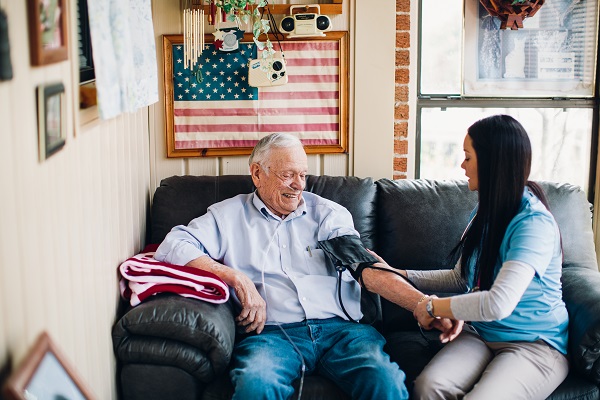
Whether caring for those impacted by our current public health crisis, or those who are medically homebound, or those who simply choose to age in place, policymakers should think beyond essential medical services and consider the non-medical drivers of health that are often as essential to good health outcomes. For example, many individuals needing to stay at home are ill-equipped to carry out their own basic needs. Daily tasks — such as getting in and out of a chair or bed, moving about the house, shopping and preparing meals, taking medications properly, bathing and dressing, and cleaning and laundry — can be a struggle for the elderly and those with serious health conditions.

Fortunately, we have millions of home health nurses and caregivers working on the front lines to care for vulnerable adults who should safely remain in their homes during this pandemic and beyond.

These workers are the foot soldiers who perform tasks such as shopping, meal preparation and assisting with mobility and personal care. Well-trained caregivers and nurses, sensitive to the time and place where patients actually live, can more readily identify and address issues that can exacerbate a person’s chronic, complex illness that may not otherwise be visible in a single visit to a traditional health care setting.

As we face record unemployment, federal, state and local policymakers should consider how best to utilize this untapped resource both now and in the future. With the appropriate testing, training, and reimbursement, individuals can have a choice in where they age and receive care.

While keeping people safe and healthy in their homes has always been appealing, now it is imperative. For our most vulnerable individuals — the elderly and those with chronic health conditions – home-based care can save their lives.


CDC director: US needs up to 100,000 contact tracers by September to fight coronavirus

https://thehill.com/policy/healthcare/501157-cdc-director-us-needs-30-to-100-thousand-contact-tracers-by-september-to?utm_source=ActiveCampaign&utm_medium=email&utm_content=Does+the+US+Spend+Too+Much+on+Police%3F&utm_campaign=TFT+Newsletter+06042020

CDC director: US needs up to 100,000 contact tracers by September to fight coronavirus

Centers for Disease Control and Prevention (CDC) Director Robert Redfield told Congress on Thursday that the country needs between 30,000 and 100,000 people working on contact tracing in order to help contain the next wave of the coronavirus.

The estimate shows the daunting challenge of hiring an army of people to interview those infected with coronavirus to identify who they have been in contact with so that those people can quarantine and help prevent the spread of the virus.

“I’ve estimated between 30 and 100,000” contact tracers are needed,” Redfield told the House Appropriations Committee during a hearing Thursday. He acknowledged the figure is “sizable,” though it is actually less than the 300,000 people former CDC director Tom Frieden has estimated the U.S. will need.

He said it is crucial to get the contact tracing system in place by September to try to keep the virus in check ahead of an expected surge in the fall and winter. That could help prevent the type of blunt stay-at-home orders that the U.S. had to implement this spring after missing the window to contain the virus earlier this year.

“We really have to get this built and we have to get it built between now and September,” Redfield said.

Redfield said his agency has met with all 50 states to discuss hiring contact tracers and is pleased that some states have already started to do so. New York City, for example, has hired 1,700 contact tracers. 

He said the CDC Foundation is working to hire personnel to augment state efforts and the CDC has distributed funding to states provided by Congress for the purpose. He added he hopes AmeriCorps is a source of additional staff.

“It is fundamental that we have a fully operational contact tracing workforce that every single case, every single cluster, can do comprehensive contact tracing within 24 to 36 hours, 48 hours at the latest, get it completed, get it isolated, so that we can stay in containment mode as we get into the fall and winter of 2020,” he said.


These Hospitals Pinned Their Hopes on Private Management Companies. Now They’re Deeper in Debt.

https://www.propublica.org/article/these-hospitals-pinned-their-hopes-on-private-management-companies-now-theyre-deeper-in-debt?utm_source=ActiveCampaign&utm_medium=email&utm_content=Does+the+US+Spend+Too+Much+on+Police%3F&utm_campaign=TFT+Newsletter+06042020

At least 13 hospitals in Oklahoma have closed or experienced added financial distress under the management of private companies. Some companies charged hefty management fees, promising to infuse millions of dollars that never materialized.

Revenues soared at some rural hospitals after management companies introduced laboratory services programs, but those gains quickly vanished when insurers accused them of gaming reimbursement rates and halted payments. Some companies charged hefty management fees, promising to infuse millions of dollars but never investing. In other cases, companies simply didn’t have the hospital management experience they trumpeted.

Click on link above for examples of rural hospitals that pinned their hopes on private management companies that left them deeper in debt. They are based on interviews, public records and financial information from the Centers for Medicare and Medicaid Services and the American Hospital Directory.

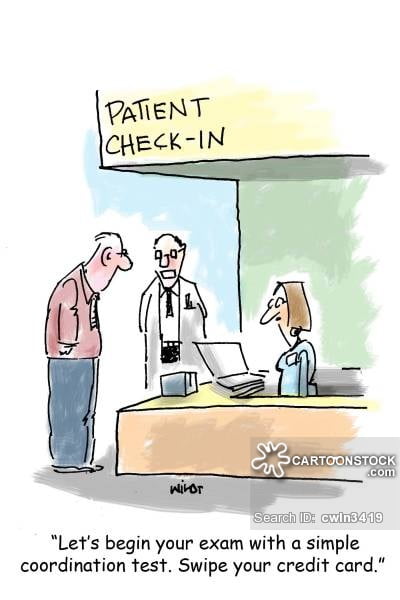
Cartoon – Let’s begin your exam with a simple coordination test

Difference Between Islamic Takaful and Conventional Insurance - ED ...

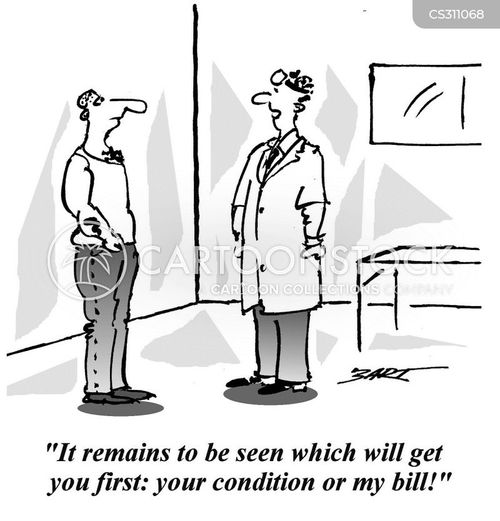
Cartoon – It remains to be seen which will get you first

Cartoon – It remains to be seen which will get you first | HENRY ...

Cartoon – Out of Pocket Experience

Cartoon – Out of Body Feeling vs Out of Pocket Experience | HENRY ...

Open (Your Wallet) Wide: Dentists Charge Extra For Infection Control

https://khn.org/news/open-your-wallet-wide-dentists-charge-extra-for-infection-control/

Open (Your Wallet) Wide: Dentists Charge Extra For Infection ...

After nearly two months at home due to the COVID-19 pandemic, Erica Schoenradt was making plans in May to see her dentist for a checkup.

Then she received a notice from Swish Dental that the cost of her next visit would include a new $20 “infection control fee” that would likely not be covered by her insurer.

“I was surprised and then annoyed,” said Schoenradt, 28, of Austin, Texas. She thought it made no sense for her dentist to charge her for keeping the office clean since the practice should be doing that anyway. She canceled the appointment for now.

Swish Dental is just one of a growing number of dental practices nationwide that in the past month have begun charging patients an infection control fee between $10 and $20.

Swish and others say they need the extra money to cover the cost of masks, face shields, gowns and air purifiers to help keep their offices free of the coronavirus. The price of equipment has risen dramatically because of unprecedented demand from health workers.

Dentists say they struggle to pay these extra costs particularly after most states shut down dental offices in March and April for all but emergency care to reserve personal protective equipment for hospital use. They are also seeing fewer patients than before the pandemic because some fear going back to the dentist and at the same time dentists need to space out appointments to keep the waiting room uncrowded.

Nearly two-thirds of dental offices across the country have reopened for routine care, according to the American Dental Association.

The association, which sets industry standards, says dentists who opt to charge the extra infection control fee should disclose it to patients ahead of each visit, a spokesperson said.

The infection control fee is helping us mitigate the costs of the extra expenses,” said Michael Scialabba, a dentist and vice president of 42 North Dental, whose 75 dental offices in New England are charging an extra $10.

Why don’t dentists just raise prices instead? Dentists said they have little or no leverage with large insurance companies to force them to raise their reimbursement rates. The ADA asked insurers to take into account additional COVID costs dentists face and many insurers responded by agreeing to pay extra fees.

For example, Harrisburg, Pennyslvania-based United Concordia Dental agreed to pay dentists $10 per patient per visit in May and June to offset their PPE expenses for all fully insured clients. The company has more than 9 million members nationwide.

The new infection control fee upsets some patients, although most understand that the cost of dentistry has increased, said Rishi Desai, director of operations and finance at Swish Dental, which has eight locations in the Austin area. “We are just as frustrated with all of these, too, but as a small business we had to reassess things.”

Desai, whose wife, Viraj, is a dentist and the founder of the dental chain, said the extra money will help the practice survive. “We are not making money off this,” he said. “This is just to sustain us so we are not bleeding out cash.”

He noted that last year Swish was paying about $6 for a box of 20 face masks. Today, $6 buys a single mask. The dental office has installed sneeze guards, staffers are wearing face shields over their masks, and the offices have added air filtration systems and hired additional sanitation staff members to clean their offices every day.

He estimates the offices are working at only about half capacity since reopening in mid-May. In weighing how to handle the extra costs, Swish was reluctant to cut employee wages, he said. “Everyone is trying to figure this out,” he added.

Kim Hartlage, office manager of Klein Dental Group in Louisville, Kentucky, said insurers recommended the office add an infection control fee. The insurers balked at raising their reimbursement rates.

She said the small office has had to buy many more disposable masks and gloves. “We’ve had to step up our game,” she said. So far, she hasn’t heard any feedback on the $10 fee. “We have very understanding clients,” she said.

Tamar Lasky, an epidemiologist, said she likes her Owings Mills, Maryland, dentist and was glad the office was communicating the many precautions it was taking to prevent the spread of COVID-19. But she was stunned when informed by email that a $15 “infection control charge” would be added to her bill.

“I can readily imagine there are a range of additional expenses, as well as a loss of revenue associated with the pandemic, but infection control is not an extra service. It is part of the practice of dentistry,” Lasky said.

“I’m not sure what is the best solution to the increased costs of tighter infection control, but this new charge may not be covered by insurance, and that passes all the burden to the patient.”


Red Cross blood supply cut in half amid ‘staggering’ donor decline

https://www.beckershospitalreview.com/supply-chain/red-cross-blood-supply-cut-in-half-amid-staggering-donor-decline.html?utm_medium=email

Healthy blood donors needed amid coronavirus concerns | NOHredcross

The American Red Cross said its blood supply levels have been cut in half as social-distancing and stay-at-home orders have caused fewer people to donate, The New York Times reported. 

Across the country, collection drives at offices, schools and churches have been canceled to comply with stay-at-home orders.

For a while, the drop in donations weren’t critical because supply and demand fell at the same time, as hospitals canceled most elective surgeries and far fewer people were getting injured in car crashes and other accidents. 

But now that hospitals are resuming elective surgeries and many people are leaving the house more often, the number of donations has not increased, according to the Times

Chris Hrouda, president of biomedical services for the American Red Cross, which collects about 40 percent of the country’s blood donations, told the Times that there’s been a “staggering” drop in blood supply. The Red Cross usually has enough blood to meet the country’s needs for five days; it currently has less than two days’ worth. 

On May 31, the Red Cross had to stop sending hospitals their full blood orders and could fill only 75 percent of them, Mr. Hrouda told the Times. He said that if donations don’t increase in the next week or two, the Red Cross will have to start filling just half of hospitals’ requested blood orders.

“It puts hospitals and doctors in the precarious position of deciding who gets blood,” Mr. Hrouda told the Times.

Hospitals are performing even more surgeries than before the pandemic to get through backlogs of operations. 

Brian Gannon, chief executive of the Gulf Coast Regional Blood Center in Texas, said he told about 100 hospitals that get blood from his center to slow down their elective procedures, according to the Times

Read the full article here