


Cartoon – Worthless Hodgepodge of Complexity


The state’s Supreme Court ruled against the governor’s last-minute effort to delay the election.
The Summer Olympics are delayed. March Madness was canceled. Even the pope celebrated Palm Sunday Mass before a nearly empty St. Peter’s Basilica.
But in Wisconsin, there could still be an election tomorrow.
Yes, you read that correctly: A state that has been under a stay-at-home order for nearly two weeks is about to hold an in-person election amid the coronavirus pandemic.
Just over an hour ago — and with just hours to go before the polls are scheduled to open — the Wisconsin Supreme Court ruled against a last-minute effort by Gov. Tony Evers to postpone the election until June 9, siding with a Republican-controlled State Legislature that has resisted making nearly any changes to voting during the worldwide crisis.
The last-minute fighting over whether it is safe for people to vote tomorrow injects even more chaos into an election already rife with legal challenges and public safety concerns.
It’s a situation that could foreshadow the kind of politically toxic battles over voting that the country may face this fall, if the virus lingers into the November election. (Wisconsin has more than 2,000 reported coronavirus cases and at least 80 deaths.)
Mr. Evers, a Democrat, had previously said that he lacked the legal authority to move the election, but today he argued that a postponement was necessary to protect voters and slow the spread of the virus.
Within minutes of his order, Republican legislative leaders called his move unconstitutional, instructing clerks to move forward with the election and challenging the order in the State Supreme Court, which has a conservative majority.
Already, 15 other states and one territory had either pushed back their presidential primaries or switched to voting by mail with extended deadlines.
Dysfunctional politics kept Wisconsin from doing the same. On Saturday, state lawmakers rejected Mr. Evers’s proposals for holding an all-mail election and extending voting to May, gaveling out a special legislative session within seconds. That prompted Mr. Evers and his team to reassess what authority he might have to postpone the election with an executive order.
Even with voters’ very lives at stake, Wisconsin’s politicians were unable to come to an agreement — a fight that mirrors the dynamics of battles over voting access already underway at the national level.
As Democrats push for billions of dollars in federal funds to bolster voting by mail and other absentee options, Republicans say those kinds of options would increase the risk of electoral fraud. Some, including President Trump, also argue it would harm the electoral prospects of Republican candidates.
“The things they had in there were crazy,” Mr. Trump said of the Democratic proposal. “They had things — levels of voting that, if you ever agreed to it, you’d never have a Republican elected in this country again.”
While Wisconsin Republicans have not made that argument explicitly, they do have a competitive State Supreme Court election on the ballot on Tuesday (along with the presidential primary and thousands of local offices).
Wisconsin, one of the most gerrymandered states in the country, has a long history of electoral shenanigans. Two years ago, the Republicans in charge tried to move Tuesday’s State Supreme Court election to a different date to help their candidate.
Even if in-person voting does happen tomorrow, the legitimacy of the election will most likely be thrown into question. Turnout is expected to be dismal, given the warnings about contracting the virus and confusion over the actual elections.
Already, more than 100 municipalities have said they lack enough staff members to run even one polling place. Milwaukee typically has about 180 sites; this election the city will have five open. The head of the state elections commission has raised the possibility that some voters may have to head to a different town because no one will be staffing the polls in their hometowns.
The poll workers who remain are overwhelmingly older. Some have serious health conditions. Many have been waiting to receive protective equipment.
In Wisconsin, it seems, maintaining democracy means risking your health — to both toxic politics and a deadly virus.
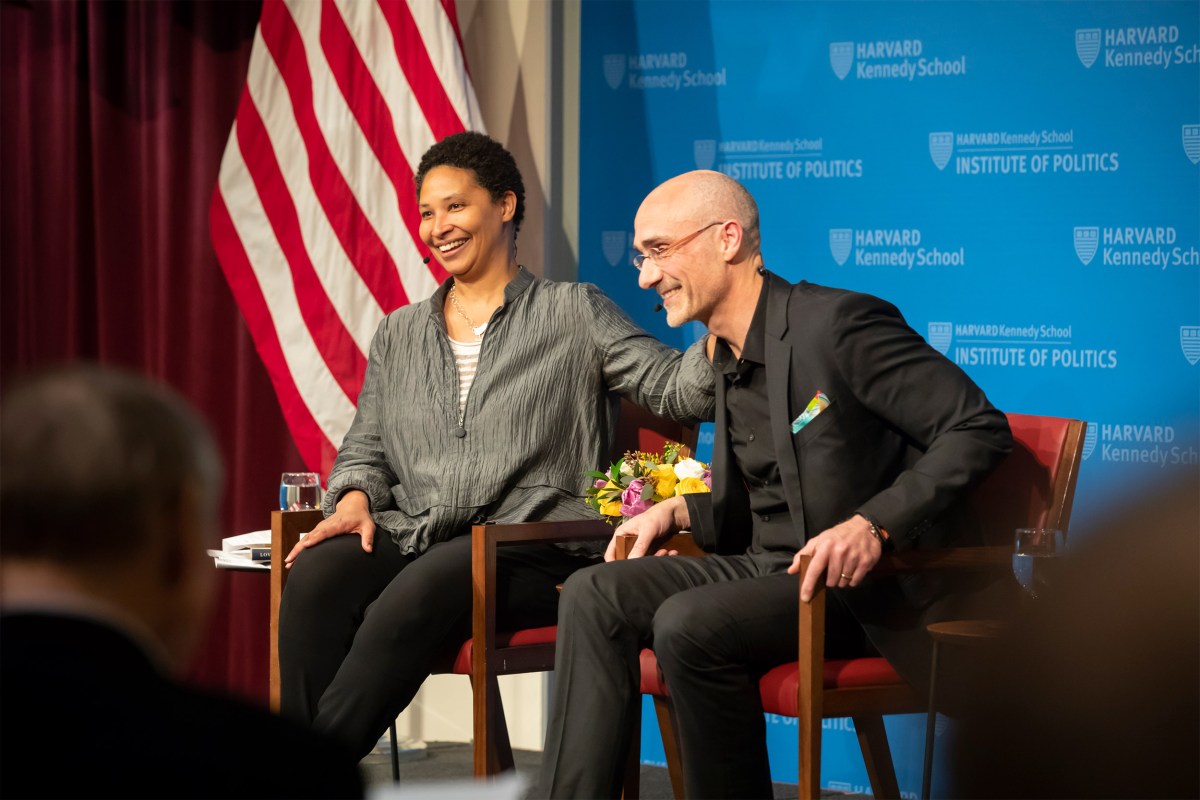
As the coronavirus pandemic sweeps the globe, it’s hard to know where to turn or what to think. TED Connects is a free, live, daily conversation series featuring experts whose ideas can help us reflect and work through this uncertain time with a sense of responsibility, compassion and wisdom.
Danielle Allen serves as Director of the Edmond J. Safra Center for Ethics at Harvard University. The Center seeks to advance teaching and research on ethical issues in public life. Widespread ethical lapses of leaders in government, business, and other professions prompt demands for more and better moral education. More fundamentally, the increasing complexity of public life – the scale and range of problems and the variety of knowledge required to deal with them – make ethical issues more difficult, even for men and women of good moral character. Not only are the ethical issues we face more complex, but the people we face them with are more diverse, increasing the frequency and intensity of our ethical disagreements.
Given these changes in the United States and in societies around the globe, the Center seeks to help meet the growing need for teachers, scholars, and leaders who address questions of moral choice across many of the professions and in public life more generally, and promotes a perspective on ethics informed by both theory and practice. We explore the connection between the problems that professionals confront and the social and political structures in which they act. More generally, we address the ethical issues that all citizens face as they make the choices that profoundly affect the present and future of their societies in our increasingly interdependent world.
https://scholar.harvard.edu/danielleallen/edmond-j-safra-center-ethics
In an email to 160,000 employees, Ascension’s CEO said the St. Louis-based hospital system will protect their pay if they’re temporarily assigned to different jobs or unable to work for reasons linked to COVID-19.
In the April 3 email, Ascension President and CEO Joseph R. Impicciche said the protection will come through such programs as furlough pay, pay continuation, PTO advance, worker’s compensation and short-term disability.
Ascension also will offer daycare subsidies and reimbursements for employees who care for infected patients and may need to stay in a hotel for social-distancing purposes, the email stated.
“We are blessed to be able to make this commitment and appreciate the tremendous work and flexibility of our associates, leaders and physicians in providing compassionate, personalized care,” Mr. Impicciche wrote. “I am proud to witness the way all associates have come together to address the challenges of today, just like we have throughout our history.”

As the coronavirus roils the economy and throws millions of Americans out of work, Medicaid is emerging as a default insurance plan for many of the newly unemployed. That could produce unprecedented strains on the vital health insurance program, according to state officials and policy researchers.
Americans are being urged to stay home and practice “social distancing” to prevent the spread of the virus, causing businesses to shutter their doors and lay off workers.
The Labor Department reported Thursday that more than 6.6 million people signed up for unemployment insurance during the week that ended March 28. This number shattered the record set the previous week, with 3.3 million sign-ups. Many of these newly unemployed people may turn to Medicaid for their families.
Policymakers have often used Medicaid to help people gain health coverage and healthcare in response to disasters such as Hurricane Katrina, the water crisis in Flint, Michigan, and the 9/11 terrorist attacks. But never has it faced a public health crisis and economic emergency in which people nationwide need its help all in virtually the same month.
“Medicaid is absolutely going to be in the eye of the storm here,” said Joan Alker, executive director of the Georgetown University Center for Children and Families. “It is the backbone of our public health system, our public coverage system, and will see increased enrollment due to the economic conditions.”
Meeting those needs will require hefty investments―both in money and manpower.
Medicaid—which is run jointly by the states and federal government and covers about 70 million Americans―is already seeing early application spikes. Because insurance requests typically lag behind those for other benefits, the numbers are expected to grow in the coming months.
“We have been through recessions in the past, such as in 2009, and saw what that meant,” said Matt Salo, who heads the National Association of Medicaid Directors. “We are going to see that on steroids.”
The majority of states have expanded their Medicaid programs since 2014 to cover more low-income adults under a provision in the Affordable Care Act (ACA). That may help provide a cushion in those areas. In the 14 states that have chosen not to expand, many of the newly unemployed adults will not be eligible for coverage.
It’s possible the pandemic could change the decision-making calculus for non-expansion states, Salo said. “The pandemic is like a punch in the mouth.”
But even without expansion in those states, the Medicaid rolls could increase with more children coming into the system as their families’ finances deteriorate. Many states don’t have the resources or systems in place to meet the demand.
“It is going to hit faster and harder than we’ve ever experienced before,” Salo said.
The unique circumstances of social distancing impose new challenges for those whose jobs are to enroll people for coverage. In California, where more than a million people have filed for unemployment insurance since March 13, much of the workforce that would typically be signing people up and processing their paperwork is now working from home, which adds a layer of complexity in terms of accessing files and documents, and can inhibit communication.
“It’s going to be certainly more difficult than it was under the [2008] recession,” said Cathy Senderling-McDonald, deputy executive director for the County Welfare Directors Association of California. She said that although strides have been made in the past decade to set up better online forms and call centers, it will still be a heavy lift to get people enrolled without seeing them in person.
In some states, the challenges to the system are already noticeable.
Utah, for instance, has seen a 46% increase in applications for Medicaid. (These applications can be for individuals or families.) In March 2019, about 14,000 people applied. This March, it was more than 20,400.
“Our services are needed now more than ever,” said Muris Prses, assistant director of eligibility services for the Utah Department of Workforce Services, which processes Medicaid enrollment. The state typically takes 15 days to determine whether someone is eligible, he said, though that will increase by several days because of the surge in applicants and some staff working at home.
In Nevada, where the hotel- and casino-dominated economy has been hit particularly hard, applications for public benefits programs, including food stamps and Medicaid, skyrocketed from 200 a day in February to 2,000 in mid-March, according to the state Department of Health and Human Services. The volume of calls to a consumer hotline for Medicaid and health coverage questions is four times the regular amount.
In Ohio, the number of Medicaid applications has already exceeded what’s typical for this time of year. The state expects that figure to continue to climb.
States that haven’t yet seen the surge warned that it’s almost certainly coming. And as layoffs continue, some are already experiencing the strains on the system, including processing times that could leave people uninsured for months, while Medicaid applications process.
For 28-year-old Kristen Wolfe, of Salt Lake City, who lost her job and her employer-sponsored health insurance March 20, it’s a terrifying time.
Wolfe, who has lupus—an autoimmune disorder that requires regular doctor appointments and prescription medication―quickly applied for Medicaid. But after she filled in her details, including a zero-dollar income, she learned the decision on her eligibility could take as long as 90 days. She called the Utah Medicaid agency and, after being on hold for more than an hour, was told they did not know when she would hear back.
“With my health, it’s scary to leave things in limbo,” said Wolfe, who used her almost-expired insurance last week to order 90-day medication refills, just in case. “I am pretty confident I will qualify, but there is always the ‘What if I don’t?’”
Others have reported smoother sailing, though.
Jen Wittlin, 33—who, until recently, managed the now-closed bar in Providence, Rhode Island’s Dean Hotel―qualified for Medicaid coverage starting April 1. She was able to sign up online after waiting about half an hour on the phone to get help answering specific questions. Once she receives a check for unemployment insurance, the state will reassess her income—currently zero―to see if she still qualifies.
“It was all immediate,” she said.
In fact, she said, she is now working to help newly uninsured former colleagues also enroll in the program, using the advice the state gave her.
In California, officials are trying to reassign some employees—who are now working remotely―to help with the surge. But the system to determine Medicaid eligibility is complicated and requires time-intensive training, Senderling-McDonald said. She’s trying to rehire people who’ve retired and relying on overtime from staffers.
“It’s hard to expand this particular workforce very, very quickly by a lot,” she said. “We can’t just stick a new person in front of a computer and tell them to go. They’re going to screw everything up.”
The move away from in-office sign-ups is also a disadvantage for older people and those who speak English as a second language, two groups who frequently felt more comfortable enrolling in person, she added.
Meanwhile, increasing enrollment and the realities of the coronavirus will likely create a need for costly medical care across the population.
“What about when we start having many people who may be in the hospital, in ICUs or on ventilators?” said Maureen Corcoran, the director of Ohio’s Medicaid program. “We don’t have any specific answers yet.”
These factors will hit just as states―which will experience shrinking tax revenue because of the plunging economy—have less money to pay their share of the Medicaid tab.
“It’s all compounded,” said Lisa Watson, a deputy secretary at Pennsylvania’s Department of Human Services, which oversees Medicaid.
The federal government pays, on average, about 61% of the costs (PDF) for traditional Medicaid and about 90% of the costs for people who joined the program through the ACA expansion. The rest comes from state coffers. And, unlike the federal government, states are constitutionally required to balance their budgets. The financial squeeze could force cuts in other areas, like education, child welfare or law enforcement.
On March 18 (PDF), Congress agreed to bump up what Washington pays by 6.2 percentage points (PDF) as part of the second major stimulus bill aimed at the economic consequences of the pandemic. That will barely make a dent, Salo argued.
“The small bump is good, and we are glad it’s there, but in no way is that going to be sufficient,” he said.

The White House coronavirus task force had its biggest fight yet on Saturday, pitting economic adviser Peter Navarro against infectious disease expert Anthony Fauci. At issue: How enthusiastically should the White House tout the prospects of an antimalarial drug to fight COVID-19?
Behind the scenes: This drama erupted into an epic Situation Room showdown. Trump’s coronavirus task force gathered in the White House Situation Room on Saturday at about 1:30pm, according to four sources familiar with the conversation. Vice President Mike Pence sat at the head of the table.
Toward the end of the meeting, Hahn began a discussion of the malaria drug hydroxychloroquine, which Trump believes could be a “game-changer” against the coronavirus.
Navarro’s comments set off a heated exchange about how the Trump administration and the president ought to talk about the malaria drug, which Fauci and other public health officials stress is unproven to combat COVID-19.
Fauci’s mention of anecdotal evidence “just set Peter off,” said one of the sources. Navarro pointed to the pile of folders on the desk, which included printouts of studies on hydroxychloroquine from around the world.
Navarro started raising his voice, and at one point accused Fauci of objecting to Trump’s travel restrictions, saying, “You were the one who early on objected to the travel restrictions with China,” saying that travel restrictions don’t work. (Navarro was one of the earliest to push the China travel ban.)
Between the lines: “There has never been a confrontation in the task force meetings like the one yesterday,” said a source familiar with the argument. “People speak up and there’s robust debate, but there’s never been a confrontation. Yesterday was the first confrontation.”
The bottom line: The way to discuss the drug’s potential has become a fraught issue within the Trump administration.

Dr. Derrick Smit shares the final words from one of his COVID-19 patients as he struggled for his last breath, “Who’s going to pay for it?”
This doesn’t happen anywhere else in the world. Only in America.


 HENRY KOTULA