The pandemic shaping the future

https://www.axios.com/newsletters/axios-future-trends-0eb404e7-34a3-40ac-af56-8fefba59535c.html?utm_source=newsletter&utm_medium=email&utm_campaign=newsletter_axiosfuturetrends&stream=top

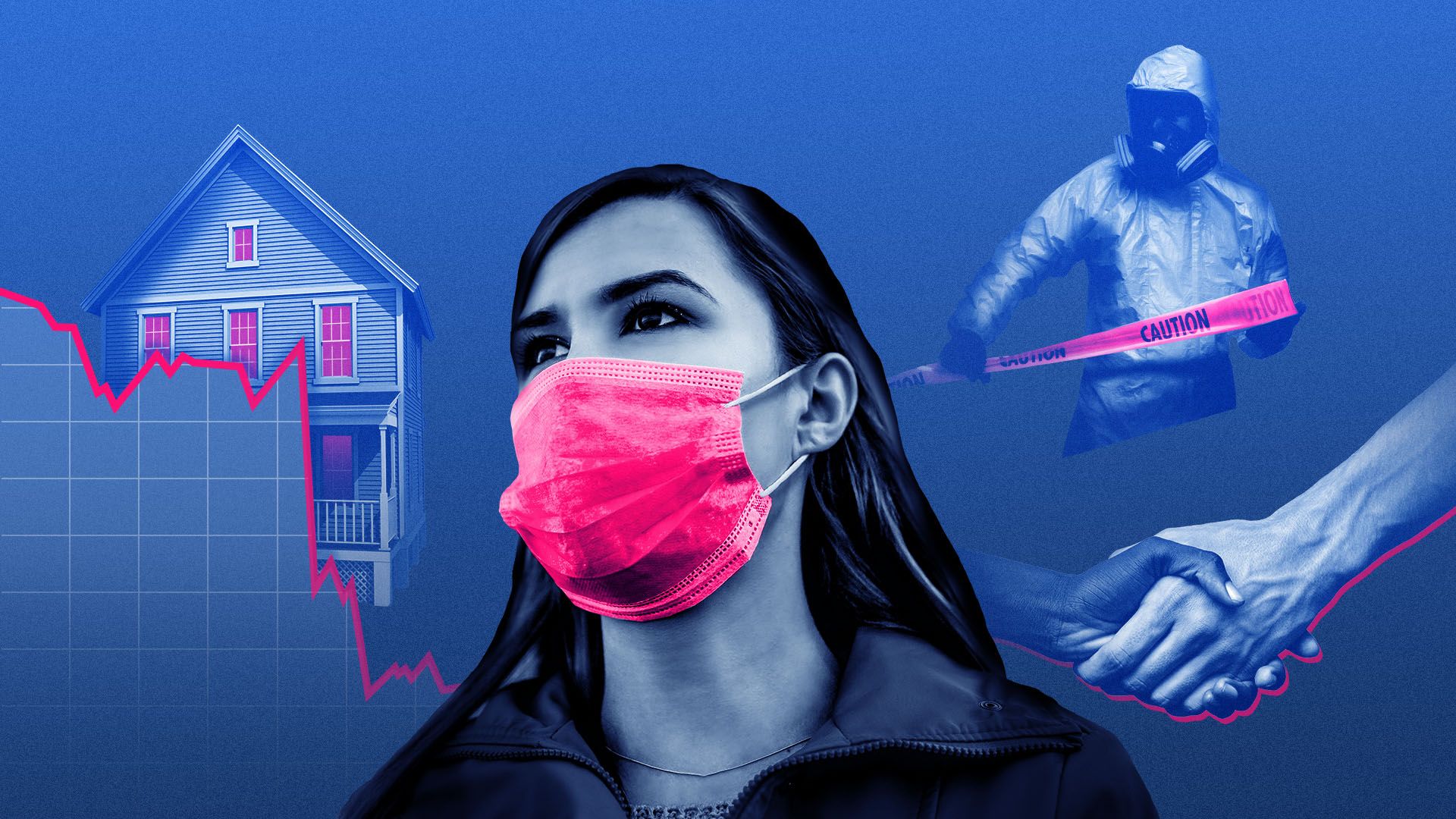
Illustration of a woman in a medical mask surrounded by a falling trend line, a house, a person in a hazmat suit with caution tape, and two hands shaking

The world that emerges from the coronavirus pandemic will be fundamentally different, Axios Future correspondent Bryan Walsh writes.

  • Why it matters: This crisis may prove to be as significant as the 2008 financial meltdown or even 9/11.
  • So the choices that businesses and governments are making now will have enormous social and economic ramifications.

The intrigue: U.S. health and government officials are facing the epidemiological equivalent of the “fog of war,” worsened by a massive American failure to act on weeks of warnings as the virus spread in China.

  • The Trump administration declared a national emergency yesterday, seven weeks after the first U.S. case was announced by the Centers for Disease Control and Prevention.
  • By failing to rapidly scale up testing, U.S. officials have added an additional — and partly unnecessary — layer of uncertainty about how to respond.
  • Harvard epidemiologist Michael Mina calls it “the most daunting virus that we’ve contended with in half a century or more.”

Flashback: As recently as the 1918 influenza pandemic, scientists lacked the ability to rapidly respond to an infectious disease outbreak.

  • Today, scientists can sequence a virus in days, develop rapid tests that can determine infection before obvious symptoms, and use complex mathematical models to predict future spread.

What we’ll find out in coming days:

  • The actual fatality rate of the virus.
  • How contagious it is, and the precise role that children — who seem outwardly unaffected by the disease — may play in transmission.
  • If the outbreak will naturally slow down when the weather warms, as tends to happen with influenza.

What’s next: For now, distance becomes the first line of defense. Schools and companies are shifting online — with potential consequences.

  • If companies are able to function relatively well with a largely remote workforce, expect lower levels of business travel.
  • After decades of emphasizing the efficiency of supply chains — which often meant complex international linkages and just-in-time inventories — businesses will look to build resilient supply chains.

The bottom line: The mobility — of people, capital and products — that we’ve taken for granted may not outlast the virus.


Pelosi, Trump strike deal on coronavirus response package

Pelosi, Trump strike deal on coronavirus response package
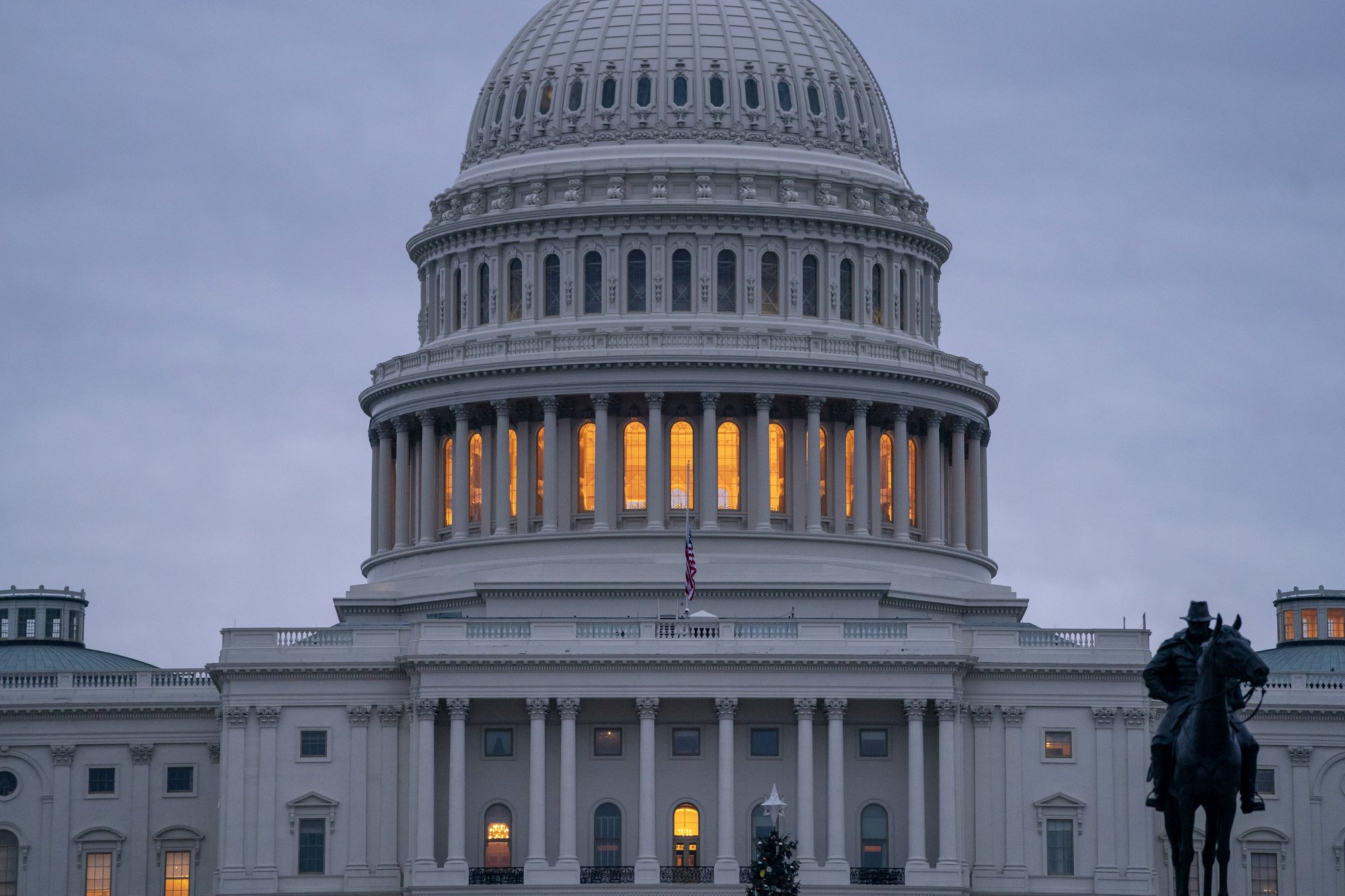
Image result for coronavirus response deal

Speaker Nancy Pelosi (D-Calif.) and President Trump have struck a deal on a multibillion-dollar stimulus package aimed at assisting millions of Americans directly hurt by the coronavirus outbreak.

Pelosi announced the deal on Friday evening after days of roller-coaster negotiations that put the outcome in doubt, as the nation’s leaders raced to ease public anxiety and stabilize volatile markets. Trump said on Twitter that he looked forward to signing the legislation.

“I have directed the Secretary of the Treasury and the Secretary of Labor to issue regulations that will provide flexibility so that in no way will Small Businesses be hurt. I encourage all Republicans and Democrats to come together and VOTE YES!” Trump wrote in a series of tweets.

Just hours before the deal was announced, Trump said in a Rose Garden address that he wasn’t on board, suggesting a bipartisan deal was out of reach even as the number of cases in the U.S. approached 2,000.

And even after Pelosi’s announcement, there was widespread confusion across the Capitol about whether Trump had endorsed the package. Several GOP lawmakers said no agreement had been secured, and even House Majority Leader Steny Hoyer (D-Md.) suggested Friday evening that the talks were still in flux.

Yet Treasury Secretary Steven Mnuchin, who has been leading the negotiations with Pelosi, seemed to put the confusion to rest just before 8 p.m. when he told Fox Business that there was, in fact, a deal.

“We have an agreement that reflects what the president talked about in his speech the other night. He’s very focused on making sure that we can deal with the coronavirus,” he said.

The frantic, eleventh-hour talks that brought the sides together highlight the urgency facing leaders from both parties to take aggressive actions to contain the fast-moving virus, for reasons of both public health and national morale.

“As Members of Congress, we have a solemn and urgent responsibility to take strong, serious action to confront and control this crisis and to put Families First and stimulate the economy,” Pelosi wrote in a letter to Democratic members announcing the deal.

The deadly pandemic has roiled the stock market, upended small businesses and large industries alike, and cancelled major sporting and political events around the country. Millions of Americans could lose income — or their jobs entirely — due to mass public closures, work-from-home orders and the economic downturn sure to follow.

The agreement announced Friday aims to ease some of the economic stress by providing financial assistance to those most directly affected by the crisis, including unemployment and paid leave benefits. Perhaps more importantly, the deal aims to calm some of the public trepidation and market turmoil of recent weeks by demonstrating that Washington policymakers can put aside partisan differences and unite quickly behind an emergency response befitting — at least in rhetoric — the severity of the crisis.

On Friday, Pelosi and Mnuchin spoke no fewer than 13 times by phone as they neared an agreement, aides said.

To get there, they had to iron out a small handful of stubborn wrinkles that threatened to sink the entire package — disagreements that were finally resolved late Friday evening.

Republicans, for instance, had insisted on the inclusion of language, known as the Hyde Amendment, explicitly barring the use of federal funds for abortions. Democrats conceded and threw it in.

Republicans also balked at Democrats’ initial paid leave provision, which would have required employers to provide the benefit not only for the coronavirus, but for all future public health emergencies. The final compromise bill removed the permanent language, limiting the benefit to the current outbreak.

In addition, Republicans were concerned about the effects of the paid-leave expansion on small businesses. The final bill provides subsidies to businesses with 500 employees or fewer, Mnuchin said.

“Obviously, we expect the bigger corporations to pick up these costs,” he told Fox.

The deal comes on the heels of an initial $8.3 billion package, signed by Trump last week, that focused largely on the most immediate health concerns surrounding the crisis, including a  boost in the nation’s efforts to locate victims, treat them and stop the spread of the deadly epidemic.

The second round of relief focuses more squarely on mitigating the economic fallout of the coronavirus, giving priority to those most directly affected by the outbreak.

House lawmakers are now set to vote on the bipartisan package late Friday night, before heading home for a 10-day break. The Senate has canceled its recess plans for next week and will take up the House-passed measure then.

The fast-moving events reflect the heightened urgency facing lawmakers as they try to assess the scope of the coronavirus and contain its economic fallout around the country and the world.

Early in the week, House leaders signaled they would pass a Democratic bill on Thursday and then leave town for their pre-scheduled 10-day recess, pushing the bipartisan negotiations to the week of March 23.

But leaders sped up their timeline for talks amid a chaotic 48-hour stretch that saw broad changes in American society.

Trump put sharp restrictions on travel from parts of Europe. The NBA and NHL suspended their seasons. The NCAA nixed March Madness. Disneyland shuttered its doors. Officials closed the U.S. Capitol to the public after a Hill staffer tested positive. One of America’s most beloved actors, Tom Hanks, and his wife Rita Wilson, announced they had tested positive for the virus. And the Dow Jones Industrial Average plunged roughly 15 percent over the course of two days, including Thursday’s 2,300-point drop, which marked its worst day in more than 30 years.

Also on Thursday, lawmakers in both chambers had been briefed behind closed doors by public health experts and other administration officials leading the coronavirus response. Many lawmakers emerged from those meetings exasperated that, weeks after the first case was diagnosed in the U.S., test kits have been slow to be analyzed and the number of cases remains anyone’s guess.

“There’s too many basic numbers that they don’t have,” said a frustrated Rep. Pramila Jayapal (D-Wash.), who represents much of hard-hit Seattle. “Lab capacity. It doesn’t matter how many kits are out there; if you don’t have the lab capacity to process those tests, then it means nothing.”

The crush of calamities put pressure on leaders of both chambers to roll up their sleeves and secure an agreement, prodded by vulnerable lawmakers wary of facing voters in their districts without doing so first.

While House and Senate Republicans had objected to the Democrats’ initial bill, Trump’s support for the revised package is likely to convince many Republicans in both chambers to get on board.

Central to the package are provisions to provide paid sick leave for affected workers; bolster unemployment insurance for those who lose their jobs as a result of the crisis; expand federal food aid for low-income families and children; and ensure free coronavirus testing.

Pelosi said Friday that it’s the last provision that’s the most crucial.

“We can only defeat this outbreak if we have an accurate determination of its scale and scope, so that we can pursue the precise, science-based response that is necessary,” she said.


Taking a look at the Biden healthcare plan

https://mailchi.mp/325cd862d7a7/the-weekly-gist-march-13-2020?e=d1e747d2d8


Now that the Democratic primary campaign has produced a clear front runner, it’s worth examining Joe Biden’s healthcare plan, which aims to expand the Affordable Care Act (ACA) by increasing access and affordability. As the graphic above highlights, former Vice President Biden has a broad—if at this point, still fairly high-level—proposal that includes a Medicare-like public option along with a variety of other ACA tweaks that aim to offer consumers more options and lower their healthcare costs.

These include allowing individuals in states without Medicaid expansion to join the pubic option premium-free, providing unlimited subsidy eligibility, and limiting drug price increases to the level of consumer inflation.

An independent analysis projects Biden’s plan would cost $2.25T and add an additional $800B to the deficit over 10 years. While large at first blush, these costs pale in comparison to Sen. Bernie Sanders’ Medicare for All plan, which would add a projected $12.95T to the deficit over the same period.

Of course, there are still many unanswered questions in Biden’s proposal, including how much consumers would pay under the public option, how much the public option plan would reimburse providers as a percentage of Medicare, and how the public option would impact competition among private insurers.

A public option offered at a significant discount has the potential to drive private plans out of business, which some project could eventually result in Medicare for All as an ultimate consequence. The devil will, as always, be in the details.


Confronting a national emergency over coronavirus

https://mailchi.mp/325cd862d7a7/the-weekly-gist-march-13-2020?e=d1e747d2d8

Image result for national emergency

President Trump declared a national emergency today, in response to the growing spread of coronavirus across the country. The administration had come under sharp criticism for its sluggish response to the coronavirus crisis, in particular the widespread shortage of tests. Dr. Antony Fauci, director of the National Institute of Health’s infectious disease branch, told Congress on Thursday that the government’s response on testing was “not really geared to what we need right now…That’s a failing. Let’s admit it.”

In response, the administration today announced a series of emergency steps to increase testing capacity, turning to private labs to support the effort. The emergency status frees up $50B in federal emergency funding. Trump also announced that the Health and Human Services (HHS) Secretary will be able to waive regulations around telemedicine licensing, critical access hospital bed requirements and length of stay, and other measures to provide hospitals with added flexibility. House Speaker Nancy Pelosi and Treasury Secretary Steven Mnuchin have negotiated a sweeping aid package that would strengthen safety net programs, and offer sick leave for American workers affected by the virus.

Meanwhile, the American economy likely entered a recession, as consumers continued to pull back on spending on airline travel, entertainment, and other discretionary areas, while financial markets experienced the worst one-day drop in more than 30 years. Many school districts and universities shut down and announced plans to convert to online instruction for the foreseeable future. Employers imposed broad travel restrictions on their employees, moved to teleworking where possible, and even began to lay off workers as demand for services cratered. Shoppers stocked up on staples, cleaning supplies, and (inexplicably) toilet paper, as shelves ran bare in many stores.

Epidemiologists and disease experts urged broad adoption of “social distancing”, restricting large gatherings and reducing the ability of the virus to spread person-to-person. The objective: “flattening the curve” of transmission, so that the healthcare delivery system does not become overwhelmed as the virus spreads exponentially.


Congressional doctor predicts 70 million-150 million U.S. coronavirus cases

https://www.axios.com/congressional-physician-predicts-75-150-million-us-coronavirus-cases-fec69e77-1515-4fbc-8340-c53b65c22c53.html?utm_source=newsletter&utm_medium=email&utm_campaign=newsletter_axiosvitals&stream=top

Image result for Congressional doctor predicts 70 million-150 million U.S. coronavirus cases

Congress’ in-house doctor told Capitol Hill staffers at a close-door meeting this week that he expects 70-150 million people in the U.S. — roughly a third of the country — to contract the coronavirus, two sources briefed on the meeting tell Axios.

Why it matters: That estimate, which is in line with other projections from health experts, underscores the potential seriousness of this outbreak even as the White House has been downplaying its severity in an attempt to keep public panic at bay.

Dr. Brian Monahan, the attending physician of the U.S. Congress, told Senate chiefs of staff, staff directors, administrative managers and chief clerks from both parties on Tuesday that they should prepare for the worst, and offered advice on how to remain healthy.

Between the lines: Forecasting the spread of a virus is difficult, and the range of realistic possibilities is wide.

  • But other estimates, including statistical modeling from Harvard epidemiologist Marc Lipsitch, have said that somewhere between 20% and 60% of adults worldwide might catch the virus.

Yes, but: These estimates include people who will get sick and make a full recovery, and many people will catch the virus without ever feeling seriously ill.

  • Monahan told staffers that about 80% of people who contract coronavirus will ultimately be fine, one of the sources said.
  • Monahan’s office declined to comment.

Meanwhile, Democratic and Republican leaders on Capitol Hill have told lawmakers they have no immediate plans to close Congress, despite it being a potential petri dish for the virus.

  • Many lawmakers fit high-risk profiles because they’re over 60, have underlying health conditions and are mixing in close quarters with visitors, staff and reporters.


Coronavirus updates: State Department urges Americans not to travel abroad

https://www.axios.com/coronavirus-latest-developments-8b8990c4-6762-494a-8ee0-5091746bda9b.html?utm_source=newsletter&utm_medium=email&utm_campaign=newsletter_axiosvitals&stream=top

Image result for Johns Hopkins Confirmed cases of COVID-19

The State Department issued a global level 3 health advisory late Wednesday advising Americans to “reconsider travel abroad due to the global impact” of the novel coronavirus pandemic.

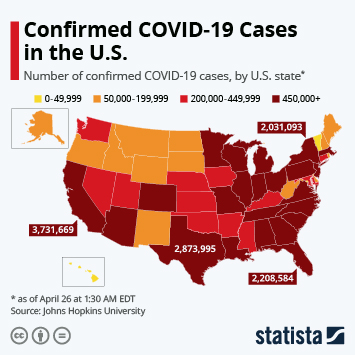
The big picture: President Trump announced hours earlier European travel to the U.S. will be restricted for 30 days, with some exemptions, and the NBA suspended its season. There are more than 126,000 cases in over 100 countries and territories and more than 4,600 deaths. There are over 1,300 cases in the U.S.

LAST 48 HOURS
  • Travel restrictions: The Trump administration’s new rules affect European member states of the Schengen Area, which includes most but not all of the EU. The United Kingdom and Ireland are not in the zone and are not affected by the restrictions.
    • In Israel, all travelers entering from any country — including Israeli citizens — are required to self-quarantine for 14 days.
  • Travel advisory: “Many areas throughout the world are now experiencing COVID-19 outbreaks and taking action that may limit traveler mobility, including quarantines and border restrictions,” the State Department advisory reads. “Even countries, jurisdictions, or areas where cases have not been reported may restrict travel without notice.”


  • U.S. cases: Nearly 40 states reported at least 1,220 cases as of Wednesday, and roughly two dozen have declared a state of emergency. The novel coronavirus has now killed at least 30 Americans in five states.
    • Washington, D.C., Mayor Muriel Bowser announced a state of emergency Wednesday, as well as six new COVID-19 cases. There are now 10 presumptive cases in D.C. — including person-to-person transmission and at least two individuals who contracted the virus from unknown causes.
    • A staffer in the D.C. office of Sen. Maria Cantwell (D-Wash.) has tested positive to the virus — the first known case of a congressional staffer becoming infected with the virus.
    • California’s Los Angeles County announced six additional cases on Wednesday — including one that health officials presume is the county’s second case of community spread transmission.
    • The state’s health officials now recommend that events larger than 250 people be canceled.
    • There are now four deaths in California after Los Angeles County announced Wednesday the death of an “older adult” who “traveled extensively over the past month,” including to South Korea.
    • Virginia announced that a teenager in the Chickahominy Health District, who recently traveled internationally, has tested positive for COVID-19 on Wednesday, marking 9 current cases in the state. The affected teen did not attend school.
    • The states with the most cases as of Wednesday are: WashingtonNew York and California — where three TSA officers at Mineta San Jose International Airport were confirmed to have tested positive for the virus Tuesday night.
    • Maryland now has 9 confirmed cases after a 70-year-old Montana resident who was visiting Anne Arundel County came in close contact with someone who had contracted the virus, Maryland Gov. Larry Hogan said Wednesday.
    • New York Gov. Andrew Cuomo said he planned to deploy the National Guard to the New York City suburb New Rochelle on Tuesday to establish a one-mile “containment zone” and help contain the spread of the novel coronavirus.


  • Pandemic classification: The World Health Organization classified the outbreak as a pandemic Wednesday.
  • Global impact: Cases continue to surge in Spain, Germany, France and Italy, which is on complete lockdown with more than 12,000 cases — second-highest to China.
  • Business: Twitter announced Wednesday night that it instructed all employees globally to work from home.
  • Google recommended Tuesday that all its employees in North America work from home until at least April 10 amid the novel coronavirus outbreak, one of the most sweeping cautionary edicts.
    • The Securities and Exchange Commission is the first federal agency to direct its staff at its D.C. office to work remotely after an employee with respiratory problems was told they may have the virus.
    • IBM is encouraging its employees who live or work in New York City and Westchester County to work from home. Amazon, Facebook, Microsoft and Salesforce have similar practices in place.
    • Deloitte has recommended its staff return from areas impacted by COVID-19 to work from home for 14 days from their return date. The consulting firm has asked workers to defer nonessential international and domestic travel.


  • Australia: Actor Tom Hanks confirmed Wednesday he and his wife, Rita Wilson, tested positive for the virus while in Australia, which now has 128 cases.
  • Federal aid: The Department of Health and Human Services announced Wednesday it is allocating over $560 million to states and local areas to assist with COVID-19 response.
  • Cruise ship: Nearly 300 people left the docked Grand Princess ship in Oakland, Calif. on Tuesday, with more than half sent to Travis Air Force base and 98 to Lackland Air Force base in Texas, Gov. Gavin Newsom said Tuesday.
  • Community spread warning: Some areas in the U.S. have passed the point of containment and communities should focus on mitigation plans, such as canceling events, CDC director Robert Redfield said Tuesday.
  • Conferences and events: Music festival Coachella has been postponed until October. Many international and domestic conferences affecting all businesses, trades and entertainment are being either postponed or canceled.


  • Financial impact: U.S. stocks have taken a toll with various dips and corrections all week. Worries are growing that the outbreak could shrink global GDP and perhaps sink the U.S. dollar.
  • Oil: Already struggling with mounting debt and falling market valuations, energy companies are at serious risk for mass bond defaults.
  • Diagnostics: Health insurers and regulators are working to ensure coronavirus diagnostic tests are covered — but that doesn’t necessarily mean COVID-19 treatment will be affordable. Concerns linger as to how the health care system can meet the demands of high-volume testing.
  • Universities: As colleges cancel classes and boot students off campus because of the coronavirus, they’re creating logistical and financial nightmares that could leave many students in a bind.
  • Tourism: White House advisers are looking at policy changes to help relieve the travel and hospitality industry. Tourism and travel operators have had to reprice globally, as airlines, hotels and travel operators see major declines in bookings and revenue.
  • Social media: A large part of the problem is the “infodemic,” as stories get shared that are designed to drive fear rather than build understanding about the illness, according to NewsWhip data provided to Axios.


WHO declares the coronavirus outbreak a pandemic

WHO declares the coronavirus outbreak a pandemic

Image result for WHO declares the coronavirus outbreak a pandemic

The World Health Organization on Wednesday declared the rapidly spreading coronavirus outbreak a pandemic, acknowledging what has seemed clear for some time — the virus will likely spread to all countries on the globe.

Director General Tedros Adhanom Ghebreyesus said the situation will worsen.

“We expect to see the number of cases, the number of deaths, and the number of affected countries climb even higher,” said Tedros, as the director general is known.

As of Wednesday, 114 countries have reported that 118,000 have contracted Covid-19, the disease caused by the virus, known as SARS-CoV2. In the United States, where for weeks state and local laboratories could not test for the virus, just over 1,000 cases have been diagnosed and 29 people have died. But authorities here warn continuing limits on testing mean the full scale of spread in this country is not yet known.

The virus causes mild respiratory infections in about 80% of those infected, though about half will have pneumonia. Another 15% develop severe illness and 5% need critical care.

“Describing the situation as a pandemic does not change WHO’s assessment of the threat posed by this coronavirus,” Tedros said at the WHO’s headquarters in Geneva, in making the announcement. “It doesn’t change what WHO is doing, and it doesn’t change what countries should do.”

At the same time, Tedros said: “This is not just a public health crisis, it is a crisis that will touch every sector — so every sector and every individual must be involved in the fight.”

The virus, which probably originated in bats but passed to people via an as yet unrecognized intermediary animal species, is believed to have started infecting people in Wuhan, China, in late November or early December. Since then the virus has raced around the globe.

While China appears on the verge of stopping its outbreak — it reported only 24 cases on Tuesday — outbreaks are occurring and growing in a number of locations around the world including Italy, Iran and the United States.

South Korea, which has reported nearly 8,000 cases, also appears poised to bring its outbreak under control with aggressive measures and widespread testing. But other countries have struggled to follow the leads of China and South Korea — a reality that has frustrated WHO officials who have exhorted the world to do everything possible to end transmission of the virus.

“The bottom line is: We’re not at the mercy of the virus,” Tedros said on Monday. “The great advantage is that the decisions we all make as governments, businesses, communities, families and individuals can influence the trajectory of this epidemic.”

“The rule of the game is: Never give up,” he insisted.

The WHO has been criticized and second-guessed for not declaring the outbreak a pandemic sooner. Mike Ryan, head of the agency’s health emergencies program, admitted in a press conference on Monday that the agency fears that countries may interpret a pandemic declaration as a sign efforts to contain the virus have failed and they no longer need to try.

“For me, I’m not worried about the word. I’m more concerned about that the world’s reaction will be to that word. Will we use it as a call to action? Will we use it to fight? Or will we use it to give up?” Ryan asked.


US Supreme Court Agrees to Review Affordable Care Act — for the Third Time

US Supreme Court Agrees to Review Affordable Care Act — for the Third Time

Image result for US Supreme Court Agrees to Review Affordable Care Act — for the Third Time

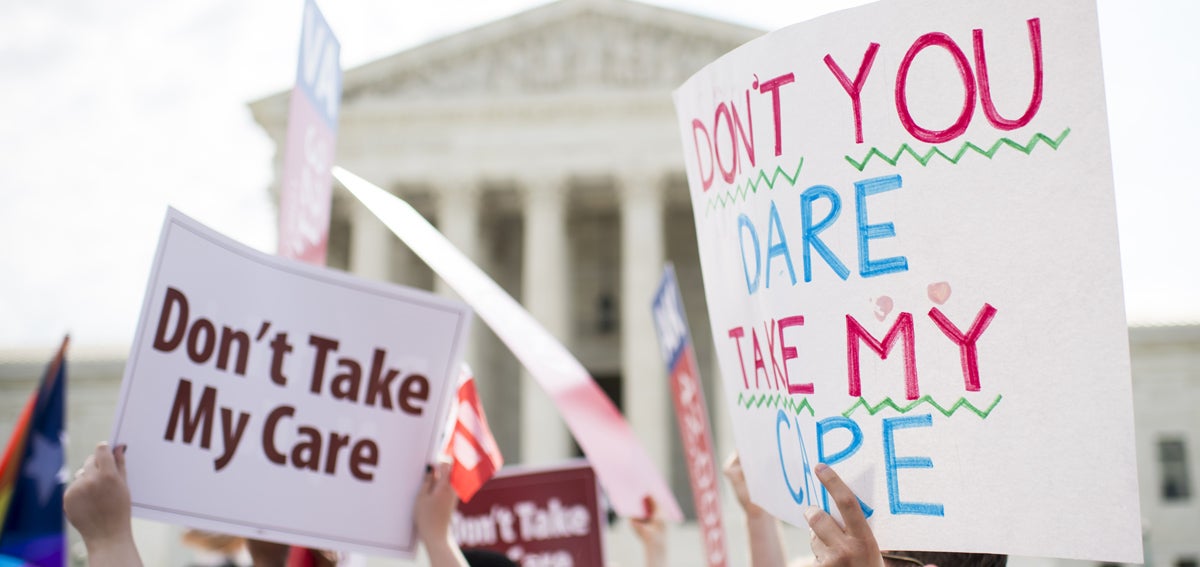
The fate of the Affordable Care Act (ACA) is once again in the hands of the US Supreme Court. On March 2, the court announced that it would hear a case challenging the health law, a wide-ranging measure that “touches the lives of most Americans, from nursing mothers to people eating at chain restaurants,” wrote Reed Abelson, Abby Goodnough, and Robert Pear in the New York Times. This will be the third time the court will rule on the ACA since President Barack Obama signed it on March 23, 2010.Essential Coverage

“The justices will review a federal appeals court decision that found part of the law . . . unconstitutional and raised questions about whether the law in its entirety must fall,” reported Robert Barnes in the Washington Post. He noted that it is one of the first cases accepted for the Supreme Court term beginning October 5, which means a decision is not likely until spring or summer of 2021.

Should the court overturn the ACA, many Americans would lose the benefits afforded under the law. As Dylan Scott wrote in Vox, “everything would go: protections for preexisting conditions, subsidies that help people purchase insurance, the Medicaid expansion.”

Let’s break down each of those categories.

Protections for Preexisting Conditions

Before the ACA, people with preexisting conditions, which included common medical conditions like asthma, diabetes, and cancer, were denied health insurance or charged higher insurance premiums. Important benefits like maternity care and mental health services frequently were carved out of the benefit packages in health plans sold in the individual market — that is, outside of employer-sponsored coverage. An issue brief (PDF) by the Department of Health and Human Services estimated that up to 133 million nonelderly Americans have a preexisting condition.

As Andy Slavitt, the former administrator of the Centers for Medicare & Medicaid Services under President Obama, wrote on Twitter, examples of being charged more included “$4,270 more for asthma, $17,060 for pregnancy, and $160,510 for metastatic cancer.”

Under the ACA, insurers are no longer allowed to deny coverage or charge higher prices to people with preexisting conditions. But if the Supreme Court rules against the ACA, these protections would vanish.

Medicaid Expansion

A key provision of the ACA is expanded eligibility for enrollment in Medicaid, a federally funded state option adopted so far by 36 states and the District of Columbia. More than 12 million adults with low incomes have gained Medicaid coverage through this provision, and research comparing expansion and nonexpansion states has linked expanded Medicaid access to better health outcomes.

According to the Urban Institute, if the ACA is repealed, “the uninsurance rate across all expansion states would increase from 9% of the nonelderly under current law to 17% under repeal. In nonexpansion states, the uninsurance rate would increase from 15% of the nonelderly to 21%.” Many of the newly uninsured would be the result of losing the Medicaid coverage the ACA provided.

“The uninsured rate for Black Americans would increase from 11% to 20% without Obamacare,” Scott reported. “There would also be a dramatic spike in uninsurance among Hispanics.”

Subsidies to Help People Purchase Insurance

To expand access to affordable health insurance for those who can’t get it through their jobs, the ACA offers federal subsidies to people with low and moderate incomes who buy insurance through the ACA insurance exchanges. The subsidies take the form of premium tax credits and cost-sharing subsidies.

Approximately 9.2 million Americans receive federal subsidies, reported Abelson, Goodnough, and Pear. “On average, the subsidies covered $525 of a $612 monthly premium for customers in the 39 states that use the federal marketplace,” they wrote.

If the ACA is overturned and the subsidies are eliminated, the cost of health insurance would become unaffordable for many of those 9.2 million people, and the uninsured population would soar.

Polls Show Public Support for the ACA

According to the February 2020 KFF Health Tracking Poll, 55% of Americans say they now favor the ACA, a new high compared to approval ratings below 40% as recently as 2016. Today 85% of Democrats express favorable views of the law, compared to 53% of independents and 18% of Republicans.

Though overall support for the health law remains partisan, many of its provisions have broad bipartisan support, KFF staff wrote in Health Affairs. For instance, large majorities of Democrats (94%), independents (88%), and Republicans (77%) have a favorable view of the ACA’s health insurance exchanges, and most Democrats (80%), independents (71%), and Republicans (54%) view the Medicaid expansion favorably.

Rising Health Costs Worsen California’s Coronavirus Threat

The global spread of the novel coronavirus disease known as COVID-19 puts threats to the ACA into perspective. Despite the coverage gains made under the ACA, nearly 28 million Americans remain uninsured, and that number would rise if the law were overturned. As Chris Sloan, associate principal at the consulting firm Avalere Health, told Caitlin Owens in Axios, we “could see uninsured or underinsured patients . . . skipping necessary treatment because they believe they can’t afford it.”

“Some lawmakers are concerned that the tens of millions who are underinsured — Americans with high deductibles or limited insurance — may also be at risk of unexpected expenses as more and more people are exposed to the virus,” Reed Abelson and Sarah Kliff reported in the New York Times.

Kristof Stremikis, director of CHCF’s market analysis and insight team, wrote in a recent blog post, “In an era when the average deductible facing a working family in California now exceeds $2,700, it’s not hard to imagine how many people missed detection and treatment opportunities because they could not afford to pay for them.”

To address some of these concerns, the California Department of Insurance (PDF) and the Department of Managed Health Care (PDF) directed all commercial health plans and Medi-Cal plans to “immediately reduce cost-sharing (including, but not limited to, co-pays, deductibles, or co-insurance) to zero for all medically necessary screening and testing for COVID-19, including hospital, emergency department, urgent care, and provider office visits where the purpose of the visit is to be screened and/or tested for COVID-19.”

Similar policies have been announced by state regulators in Washington and New York, the San Francisco Chronicle reported.


Anxiety over coronavirus grows on Capitol Hill

Anxiety over coronavirus grows on Capitol Hill

Anxiety over coronavirus grows on Capitol Hill

Pressure is mounting on congressional leaders to cancel votes and restrict activity in the Capitol to avert a coronavirus outbreak.

Several lawmakers appearing at the recent American Israel Public Affairs Committee (AIPAC) and Conservative Political Action Conference (CPAC) gatherings in the Washington, D.C., area interacted with individuals who have since tested positive for the highly contagious virus.

Both Sen. Ted Cruz (R-Texas) and Rep. Paul Gosar (R-Ariz.) said over the weekend they would self-quarantine after coming into contact with a person at CPAC who had tested positive.

Cruz, who had a brief interaction and shook hands with the individual, said he is not showing any symptoms of coronavirus, but would remain in Texas “out of an abundance of caution.”

Gosar, a dentist, said both he and his staff came in contact with the individual. The congressman said he would shut down his Washington office this week and follow Congress’s “tele-commute plan.”

Over the weekend, Congress’s medical office sent lawmakers an update on the CPAC encounters that supported the self-quarantines and suggested the chances of transmission were low.

“The public health authorities assessed each person’s contact with the ill individual,” reads the notice, which was obtained by The Hill. “The overall findings are considered to be a “low risk” to acquire SARS-Cov-2 (coronavirus) infection and they were advised on courses of action specific to their unique level of exposure.”

Others are taking self-imposed precautions, as well.

Rep. Liz Cheney (R-Wyo.), the third-ranking House Republican, opted to skip a leadership retreat on the Eastern Shore of Maryland over the weekend, with a spokesperson citing a need to protect “people in our families who are particularly vulnerable,” Politico reported.

As of Monday morning, more than 500 patients in the United States had been diagnosed with the virus across 34 states, according to a tally being kept by The New York Times.

Senate and House lawmakers were expected to travel back to Washington, with votes still scheduled for Monday afternoon and evening. And lawmakers across the country were boarding planes Monday morning to return to the nation’s capital, including those from coronavirus hot-spots like Seattle.

But a sense of anxiety permeated Capitol Hill, where many lawmakers — including the top three Democratic leaders — are in their 70s and 80s, travel constantly around the country for district visits and campaign events, and meet regularly with constituents and other interest groups.

“I don’t see how you keep asking a large group of elderly folks to fly on planes back and forth over the next few weeks,” said one House aide who’s been monitoring the situation on Capitol Hill.

Added a GOP lawmaker: “The most vulnerable population are people over 70 … which is all of the Democrat leadership and most chairman, and a third of the U.S. Senate.”

Still, many leaders and rank-and-file lawmakers believe closing the Capitol at this moment could send the wrong message to an already jittery public, setting off a wave of panic. On Monday, the Dow Jones industrial average tumbled more than 1,600 points on falling oil prices related to the coronavirus outbreak.

“Business should carry on,” the GOP lawmaker said.

A second staffer said that while leaders have given no signal of shuttering the Capitol, individual lawmakers are making their own contingency plans.

“Many offices including ours are preparing for some kind of total office building shutdown, shifting to telework, etc.,” the aide said.

Last week, the top congressional leaders received a partially classified briefing on the threat to the Capitol complex.

Afterward, Speaker Nancy Pelosi (D-Calif.) said the Capitol Police assured the lawmakers that the Capitol is well-secure, while the message from the Capitol physician’s office largely related to simple precautions related to personal hygiene, like washing hands and sneezing into tissues. Around the Capitol, illustrated signs have popped up in the bathrooms instructing visitors on proper hand-washing procedures.

“It’s not about testing everybody who comes into the building. That’s not realistic,” Pelosi said last Thursday. “But it is also, hopefully, that the message that goes out more globally is that people will be more responsible about their own preventative measures.”

She added: “Some of that sounds very basic and mundane, but it does prevent the spread.”

House Democratic leaders are expected to huddle Monday afternoon, ahead of the evening’s votes, where the coronavirus issue will almost certainly be front and center. Meanwhile, leadership offices are reaching out to members to encourage preparations in the event the Capitol is closed down.

“Offices are putting together emergency telework plans … and assessing IT needs, and encouraging off site meetings or phone calls,” said a third staffer.