A single conference may have seeded 20,000 COVID cases

https://mailchi.mp/95e826d2e3bc/the-weekly-gist-august-28-2020?e=d1e747d2d8

COVID-19 'superspreaders' behind most new cases, researchers say | wcnc.com

A conference bringing together 175 Biogen leaders in Boston during the last week of February demonstrated the anatomy of a superspreader event: attendees from all over the world working, eating and drinking together, at a time when little was known about COVID-19 and few precautions were taken.

A new study reveals the magnitude of spread of this single event: 20,000 COVID infections may have been linked to the conference by early May, orders of magnitude greater than the previously reported 99 cases. A group of researchers evaluated the viral genomes from 772 patients across the greater Boston area, finding over 80 separate introductions of the virus, primarily from Western Europe or elsewhere in the US.

But the Biogen event was far and away the largest source of infections, accounting for 37 percent of investigated cases, which extrapolates to an estimated 20,000 cases across the area (the event also seeded clusters in several states and overseas).

Many patients with the Biogen virus had no direct connection with the event, including a large number of homeless individuals.

As college campuses reopen and states flirt with allowing larger gatherings, the study provides an important lesson of the potential for exponential spread of the virus when left unchecked by preventive measures, and the need for testing and contact tracing to quickly stop the chain of transmission. 


COVID-related controversy and hope amid a week of politics

https://mailchi.mp/95e826d2e3bc/the-weekly-gist-august-28-2020?e=d1e747d2d8

Democracy vs. disease: the role of freedom in facing pandemics | University  of Nevada, Reno

Week two of the 2020 Pre-Recorded Virtual Presidential Convention-thon wrapped up Thursday night, albeit with a decidedly less Zoom-Webex-FaceTimey feel for this week’s Republicans compared to last week’s Democrats. As delegates and VIPs sat cheek-by-jowl at several in-person events, with scarce masking and plenty of loud cheering, the viewer was left hoping that a rigorous attendee COVID testing protocol was being used.

That hope may have been dashed by a significant change to testing guidelines from the Centers for Disease Control and Prevention (CDC), which reversed course on Monday by recommending asymptomatic people who have been exposed to the coronavirus should no longer be tested.

The altered guidance drew sharp rebukes from doctors and infectious disease experts, who worried that it would undermine the ability to track the spread of the virus, which has now claimed more than 181,000 American lives. The flap over testing guidelines came at the same time as Food and Drug Administration (FDA) commissioner Stephen Hahn was forced to apologize for misleading claims he made over the weekend about the efficacy of convalescent plasma in treating COVID patients. In announcing an Emergency Use Authorization (EUA) for the treatment, Hahn dramatically overstated evidence supporting the lifesaving ability of the therapy. The missteps by CDC and FDA officials were undoubtedly an unwelcome distraction for the Trump administration, overshadowing the president’s bold promise in his acceptance speech that a COVID vaccine would be available before the end of the year.

There was hopeful news on the COVID front this week as well. In what was quickly hailed as a “game changer” in solving the nation’s faltering ability to deliver timely test results, Abbott Laboratories was granted its own EUA for a 15-minute, $5 rapid antigen test, which does not require laboratory analysis. The company plans to produce tens of millions of the new BinaxNOW test kits in the next month, and the US government has agreed to acquire nearly all of the 150M tests the company will produce by the end of the year, at a $760M purchase price. Although some antigen tests have been cited for accuracy problems, the FDA said that the new Abbott test delivers correct positive tests 97.1 percent of the time, and correct negative tests 98.5 percent of the time.

Rapid, reliable point-of-care testing could allow for safer return to schools, workplaces, and public gatherings, and if successfully deployed will be an essential tool in managing the impact of the virus until effective vaccines are fully developed, launched, and administered. A genuine ray of hope as the nation looks ahead to the fall and winter.

US coronavirus update: 5.9M cases; 181K deaths; 81.8M tests conducted.


Patchwork approach to contact tracing hampers national recovery

Patchwork approach to contact tracing hampers national recovery

Patchwork approach to contact tracing hampers national recovery | TheHill

A patchwork approach to contact tracing across state health departments is making it increasingly difficult to know where people are getting exposed to COVID-19.

While some states like Louisiana and Washington state publicly track detailed data related to COVID-19 cases in bars, camps, daycares, churches, worksites and restaurants, most states do not, creating obstacles to preventing future cases.

The extensive spread of the virus, combined with the country’s 50-state approach to pandemic response, has led to a dearth of information about where transmissions are occurring. Those shortcomings are in turn complicating efforts to safely open the economy and to understand the risks associated with certain activities and settings.

Experts know COVID-19 spreads in crowded indoor spaces, but more specifics could help state and local lawmakers strike a better balance between public health needs and those of the economy.

“If you want to take a more targeted approach to public health measures, the more information you have the better,” said Joshua Michaud, an associate director for global health policy at the Kaiser Family Foundation and an infectious disease epidemiologist.

“Rather than have a blunt, close-everything-down approach, you could be a bit more targeted and surgical about how you implement certain measures,” he added.

The Hill asked every state for information about the data they collect and share as part of their contact tracing programs, one of the main tools public health officials have to slow the spread of COVID-19.

Most states release information about outbreaks and cases at congregate settings like nursing homes, meatpacking plants, and prisons, which comprise the majority of cases. But there is less information publicly available about the numbers of cases or outbreaks tied to other settings commonly visited by people.

A handful of states including ArkansasColoradoKansasLouisianaMaryland, Michigan, Ohio, Rhode Island and Washington track and publicly release data on the settings where COVID-19 outbreaks are occurring, according to responses from state health departments.

For example, Louisiana has tied 468 cases to bars in the state, but most of the new cases in the past week have been tied to food processing plants.

In The Hill’s review of publicly available state data, other settings for COVID-19 transmission include restaurants, childcare centers, gyms, colleges and schools, churches, retailers, weddings and other private social events. It is not clear how widely those settings contributed to infections because widespread transmission of the virus means many people who get sick do not get interviewed by contact tracers — over the past week, there has been an average of 42,000 confirmed cases, though many more are likely going undetected.

State health departments in Idaho, Illinois, Massachusetts, Mississippi, Missouri, New Hampshire, North Carolina, South Carolina, Tennessee, Texas, Vermont, Virginia and West Virginia told The Hill they don’t track location data.

Utah tracks outbreaks and cases tied to workplaces and schools, but not restaurants or bars.

Arizona, California, Delaware, Indiana, Oregon and Pennsylvania track infection locations, but don’t release it to the public.

“The number of people getting COVID-19 from isolated, identifiable outbreaks, such as those in long term care facilities, is decreasing, and more people are contracting COVID-19 from being out and about in their community, such as when visiting restaurants and bars,” said Maggi Mumma, a spokeswoman for the Pennsylvania Department of Health.

Bars, indoor dining and gyms are still closed in most of New York and New Jersey, so there is no current data to track for those settings.

But the state health departments also don’t release data on outbreaks or cases tied to other settings like childcare or retail stores.

MinnesotaMontanaNorth Dakota and Wisconsin release the number of cases tied to outbreaks in the community but do not go into specifics about possible transmission sites.

For example, Minnesota lists nearly 7,000 cases as being tied to “community” exposure, but that includes settings like restaurants, bars and workspaces.

In Iowa, a state health department spokesperson said the agency is working on extracting and sharing this type of data on its website, while Maine would not say if they track by specific location.

The remaining state health departments did not respond to multiple requests for comment from The Hill and don’t have information about outbreaks or exposure settings on their websites.

Several states said local health departments may be tracking infection locations even if the state is not.

Experts said such a decentralized approach can miss outbreaks if local departments aren’t communicating with each other, meaning any data should be public.

“I do think it would be very valuable for states to make that information public,” said Crystal Watson, assistant professor at Johns Hopkins Bloomberg School of Public Health.

“It helps us collectively get a better understanding as policymakers, as people trying to help in the response. It can also help with personal decision making for people to understand … where it’s most dangerous to go related to getting infected,” Watson said.

The disparities between state health departments are partially due to a lack of federal guidance.

There are no federal requirements on the information contact tracers collect; guidelines vary from state to state, and sometimes from county to county.

Tracking data about where people are getting sick would allow states to take a “cluster busting” approach, experts said, by working backwards from confirmed cases to find where patients might have first contracted the disease, potentially stopping future outbreaks.

That approach requires a change in mindset for contact tracers, who typically focus on reaching close contacts of confirmed cases who might have been exposed to the virus. But research shows between 10 and 20 percent of people are responsible for about 80 percent of new infections, mostly through so-called super-spreader events.

“We know that the way this virus has transmitted is highly clustered groups and anytime you have settings where a lot of people are together in one place,” said Kaiser’s Michaud.

“Collecting good information on this — the cluster busting approach — is a good way to find out where your prevention efforts can have the best bang for your buck,” he said.

At the same time, some state programs are still not operating at full force and are struggling to keep up with widespread infections.

“I think that many parts of the country, especially outside of the Northeast … simply have too many cases to use contact tracing as the primary public health measure to control cases,”  said Stephen Kissler, a research fellow at the Harvard T.H. School of Public Health.

“It’s just not enough,” he said. “We just don’t have enough resources, and in a lot of these places enough contact tracers, to follow up on all of the cases.”


Battle over COVID-19 school openings goes to the courts

Battle over COVID-19 school openings goes to the courts

Nearly 800 COVID-19 lawsuits have been filed, according to law firm's  tracker

Teachers unions are waging court fights across the country aimed at unwinding what they say are unsafe and politically motivated timetables for reopening schools that risk exposing personnel to the coronavirus pandemic.

State officials eager to ramp up brick-and-mortar operations are facing lawsuits from Florida to Texas to Iowa over reopening plans as well as access to the COVID-19 infection data needed to monitor the rate of spread within school communities. 

At the same time, lawsuits are flying from the opposition direction: Parents in several states, including New York, Massachusetts and Oregon, dissatisfied with web-based teaching alternatives, are suing to force state officials to reopen physical schools sooner as courts are increasingly called upon to referee the fight over education in the age of coronavirus.

“A legal storm is brewing as safety and social distancing requirements for a physical return to school begin to take shape around the country,” Maria Ferguson, executive director of the Center on Education Policy at George Washington University, wrote on the education website The 74.

As millions of students prepare for the first day of school — whether in-person, remote or a hybrid of the two — the fight over the reopening physical school buildings is likely to intensify.

The debate over in-person K-12 instruction planning is inseparably tied to the issues of child care needs and parents’ ability to return to the workforce to help revive the struggling economy, all of which is playing out against the backdrop of a fast-approaching November election in a country that has seen nearly 6 million cases and more than 181,000 deaths from COVID-19.

Perhaps the highest-profile legal battle is taking place in the courts of Florida, where Republican Gov. Ron DeSantis signed off last month on an emergency order over school reopenings.

Under the order, most Florida school districts would be required to hold in-person classes five days a week by the end of August or risk losing funding. President Trump, who counts DeSantis as a close ally, has also threatened to cut off federal funding for schools if they do not resume in-person learning this fall.

The Florida policy prompted a lawsuit from the Florida Education Association (FEA), a statewide teachers union, and several other plaintiffs in favor of a more cautious return to in-person teaching.

“Public schools are not designed for COVID safety, and indeed, the government has recognized that they are high-contact environments,” said Kendall Coffey, the lead plaintiff’s attorney in the Florida case, who likened prematurely opened schools to “disease factories” and called the Florida policy “financial bullying.”

There are any number of issues, in terms of hallway sizes, the flow of students in and out of classrooms, ventilation, even how many students go into the bathroom,” he told The Hill. “There are many elements that are virtually impossible to guarantee when you’re dealing with children in large amounts.”

On Aug. 24, a Florida judge ruled in favor of the union and temporarily halted the statewide order. In his decision, Judge Charles Dodson struck down the order’s unconstitutional provisions and blasted DeSantis for having “essentially ignored” the state’s constitutional requirement that schools be operated safely.

“The districts have no meaningful alternative,” wrote Dodson, of Leon County. “If an individual school district chooses safety, that is, delaying the start of schools until it individually determines it is safe to do so for its county, it risks losing state funding, even though every student is being taught.”

A Florida appeals court agreed to temporarily halt Judge Dodson’s order from taking effect while DeSantis appeals.

The state contends that the benefit of in-person instruction outweighs the health risks associated with reopening brick-and-mortar schools. Some Florida school officials have also declined to disclose incidents of positive COVID-19 cases to school communities, citing the need for patient privacy. 

Attorneys for Florida have also argued in hearings that courts should not substitute their judgment for that of policymakers who have balanced all the equities and decided a prompt in-person reopening is the best policy.

Randi Weingarten, president of the American Federation of Teachers (AFT), one of the largest teachers unions in the country, said Florida has its priorities backward.

“What their arguments show is that they don’t care about human life,” Weingarten told The Hill.

According to Weingarten, internal AFT polling in June showed that about 3 in 4 teachers said they would be comfortable returning to the classroom if guidelines from the Centers for Disease Control and Prevention (CDC) were implemented in schools.

But she predicts that attitudes among teachers have shifted dramatically in past months as the Trump administration has failed to adequately manage the virus to ensure schools can be reopened safely.

“We’re polling right now,” she said. “And my hunch is that just like the public polls, it’s totally flipped.”

The AFT is backing lawsuits in Florida, New Mexico and Texas. Before schools can reopen safely — for what Weingarten calls “the biggest move indoors that the nation has done since March” — the group says local positivity rates should be below 3 percent and schools should have visibility into daily transmission rates. 

The union is also pushing for protocols that involve testing, contact tracing and isolation and implement best practices from the CDC for things such as ventilation, cleaning, physical distancing, mask-wearing and other safeguards.

As teachers unions make their case in court, parents in at least five states have filed lawsuits of their own to accelerate school reopenings.

A nonprofit litigation group called the Center for American Liberty, co-founded by lawyer and GOP official Harmeet Dhillon, is backing one such suit in California. Democratic Gov. Gavin Newsom’s restrictions on in-person school openings in the Golden State will affect an estimated 80 percent of K-12 students.

“The effects of this ham-handed policy are as predictable as they are tragic,” the lawsuit filed in a federal court in California states. “Hundreds of thousands of students will essentially drop out of school, whether because they lack the technological resources to engage with ‘online learning’ or because their parents cannot assist them.”

The litigation raises concerns about everything from school closures exacerbating the achievement gap and disproportionately harming special needs students and those without convenient internet access to challenges over the constitutional validity of government health orders.

Weingarten, of AFT, said it’s important to remember that despite seemingly irreconcilable differences over the policy details, all parties want to see schools reopen as soon as it’s safe to do so.

“None of us believes that remote is a substitute,” she said. “It’s a supplement.”


Top U.S. Officials Told C.D.C. to Soften Coronavirus Testing Guidelines

The Centers for Disease Control and Prevention abruptly changed its recommendations, saying people without Covid-19 symptoms should not get tested.

 Trump administration officials on Wednesday defended a new recommendation that people without Covid-19 symptoms abstain from testing, even as scientists warned that the policy could hobble an already weak federal response as schools reopen and a potential autumn wave looms.

The day after the Centers for Disease Control and Prevention issued the revised guidance, there were conflicting reports on who was responsible. Two federal health officials said the shift came as a directive to the Atlanta-based C.D.C. from higher-ups in Washington at the White House and the Department of Health and Human Services.

Adm. Brett P. Giroir, the administration’s coronavirus testing czar, called it a “C.D.C. action,” written with input from the agency’s director, Dr. Robert R. Redfield. But he acknowledged that the revision came after a vigorous debate among members of the White House coronavirus task force — including its newest member, Dr. Scott W. Atlas, a frequent Fox News guest and a special adviser to President Trump.

“We all signed off on it, the docs, before it ever got to a place where the political leadership would have, you know, even seen it, and this document was approved by the task force by consensus,” Dr. Giroir said. “There was no weight on the scales by the president or the vice president or Secretary Azar,” he added, referring to Alex M. Azar II, the secretary of health and human services.

Regardless of who is responsible, the shift is highly significant, running counter to scientific evidence that people without symptoms could be the most prolific spreaders of the coronavirus. And it comes at a very precarious moment. Hundreds of thousands of college and K-12 students are heading back to campus, and broad testing regimens are central to many of their schools’ plans. Businesses are reopening, and scientists inside and outside the administration are growing concerned about political interference in scientific decisions.

Democratic governors who were weighing how to keep the virus contained as their economies and schools come to life said limiting testing for asymptomatic citizens would make the task impossible.

“The only plausible rationale,” Gov. Andrew M. Cuomo of New York told reporters in a conference call from Albany, N.Y., “is that they want fewer people taking tests, because as the president has said, if we don’t take tests, you won’t know the number of people who are Covid-positive.”

Over the weekend, the Food and Drug Administration, under pressure from Mr. Trump, gave emergency approval to expand the use of antibody-rich blood plasma to treat Covid-19 patients. The move came just days after scientists, including Dr. Anthony S. Fauci, the nation’s top infectious disease expert, and Dr. Francis S. Collins, the director of the National Institutes of Health, intervened to stop the practice because of lack of evidence that it worked.

The move echoed a decision by the Food and Drug Administration to grant an emergency use waiver for hydroxychloroquine, a malaria drug repeatedly sold by Mr. Trump as a treatment for Covid-19. The agency revoked the waiver in June, when clinical trials suggested the drug’s risks outweighed any possible benefits.

The testing shift, experts say, was a far more puzzling reversal. Dr. Giroir said the move was “discussed extensively by” members of the White House coronavirus task force, and he named Dr. Redfield, Dr. Atlas, Dr. Fauci and Dr. Stephen M. Hahn, the commissioner of food and drugs. Notably, he did not name Dr. Deborah L. Birx, the White House coronavirus response coordinator. But he said Dr. Fauci was among those who had “signed off.”

In a brief interview, Dr. Fauci said he had seen an early iteration of the guidelines and did not object. But the final debate over the revisions took place at a task force meeting on Thursday, when Dr. Fauci was having surgery under general anesthesia to remove a polyp on his vocal cord. In retrospect, he said, he now had “some concerns” about advising people against getting tested, because the virus could be spread through asymptomatic contact.

“My concern is that it will be misinterpreted,” Dr. Fauci said.

The newest version of the C.D.C. guidelines, posted on Monday, amended the agency’s guidance to say that people who had been in close contact with an infected individual — typically defined as being within six feet of a person with the coronavirus and for at least 15 minutes — “do not necessarily need a test” if they do not have symptoms.

Exceptions might be made for “vulnerable” individuals, the agency noted, or if health care providers or state or local public health officials recommended testing.

Dr. Giroir said the new recommendation matched existing guidance for hospital workers and others in frontline jobs who have “close exposures” to people infected with the coronavirus. Such workers are advised to take proper precautions, like wearing masks, socially distancing, washing their hands frequently and monitoring themselves for symptoms.

He argued that testing those exposed to the virus was of little utility, because tests capture only a single point in time, and that the results could give people a false sense of security.

“A negative test on Day 2 doesn’t mean you’re negative. So what is the value of that?” Dr. Giroir asked, adding, “It doesn’t mean on Day 4 you can go out and visit Grandma or on Day 6 go out without a mask on in school.”

The guidelines come amid growing concern that the C.D.C., the agency charged with tracking and fighting outbreaks of infectious disease, is being sidelined by its parent agency, the Department of Health and Human Services, and the White House. Under ordinary circumstances, administering public health advice to the nation would fall squarely within the C.D.C.’s portfolio.

Experts have called the revisions alarming and dangerous, noting that the United States needs more testing, not less. And they have expressed deep concern that the C.D.C. is posting guidelines that its own officials did not author. A former C.D.C. director, Dr. Thomas R. Frieden, railed against the move on Twitter on Wednesday:

Dr. Tom Frieden
@DrTomFrieden
Two unexplained, inexplicable, probably indefensible changes, likely imposed on CDC’s website. * Dammit, if you come from a place with lots of Covid, quarantine for 14 days * If you’re a contact, get tested. If +, we can trace your contacts and stop chains of spread. A sad day.

Later, in an interview, Dr. Frieden elaborated. He noted that the C.D.C. had recently dropped its recommendation that people quarantine for 14 days after traveling from an area with a high number of cases to one where the virus was less prevalent. And he reiterated that testing the contacts of those infected was an important means of curbing the spread of the virus.

“We don’t know the best protocol for testing of contacts: Should you test all contacts? That’s the kind of study that frankly needs to get done,” Dr. Frieden said. But absent the answer to that question, he added, “I certainly wouldn’t say, ‘Don’t test contacts.’”

Democrats, including Speaker Nancy Pelosi and two governors — Mr. Cuomo and Gavin Newsom of California — were outraged by the changes. Mr. Newsom said California would not follow the new guidelines, and Mr. Cuomo blamed Mr. Trump.

Representative Frank Pallone Jr. of New Jersey, a Democrat and the chairman of the House Energy and Commerce Committee, also chimed in on Twitter: “The Trump Admin has a lot of explaining to do. #COVID19 testing is essential to stopping the spread of the pandemic. I’m concerned that CDC is once again caving to political pressure. This simply cannot stand.”

Mr. Trump has suggested that the nation should do less testing, arguing that administering more tests was driving up case numbers and making the United States look bad. But experts say the true measure of the pandemic is not case numbers but test positivity rates — the percentage of tests coming back positive.

As Dr. Giroir denied that politics was involved, he encouraged the continued testing of asymptomatic people for surveillance purposes — to determine the prevalence of the virus in a given community — and said such “baseline surveillance testing” would still be appropriate in schools and on college campuses.

“We’re trying to do appropriate testing, not less testing,” he said.

Still, the revisions left many public health officials scratching their heads. They might have made sense when the United States was experiencing a shortage of tests, some experts said, but that no longer appears to be the case. Dr. Frieden, however, said it was possible the administration was trying to conserve testing in case of another surge.

“The problem is we have too many cases, so there is basically no way to keep up the testing if you have a huge outbreak,” he said.

Jennifer Nuzzo, an epidemiologist at Johns Hopkins Bloomberg School of Public Health, said she was “not as up in arms about the content of the guidelines” as she was about the idea that the C.D.C.’s own experts did not write them — and that C.D.C. officials were referring all questions about them to the health department in Washington.

“These guidelines are clearly controversial, and many are calling on C.D.C. to explain its rationale for them, but C.D.C. is unable to comment,” she said in an email. “This is really dangerous precedent, and I fear it will erode public trust in C.D.C.”


CMS to require positive COVID-19 test results for Medicare pay boost

https://www.beckershospitalreview.com/finance/cms-to-require-positive-covid-19-test-results-for-medicare-pay-boost.html?utm_medium=email

CMS to Pay For Hospital COVID-19 Care Furnished in Other Settings

CMS recently released guidance that includes a new requirement for hospitals to get a Medicare payment boost for caring for patients diagnosed with COVID-19. 

The Coronavirus Aid, Relief and Economic Security Act provided a 20 percent add-on payment to the inpatient prospective payment system diagnosis-related group rate for treating patients diagnosed with COVID-19. Until now, a physician’s documentation that a patient has COVID-19 was sufficient to receive the add-on payment. However, recent guidance from CMS adds the requirement to have a positive COVID-19 laboratory test documented in the patient’s medical record for the claim to be eligible for the add-on payment. The new requirement applies to admissions occurring on or after Sept. 1.

To receive the payment boost under the new guidance, the COVID-19 test must be taken within 14 days of the hospital admission. Only the results of viral testing that are consistent with CDC guidelines can be used. Tests performed by an entity other than the hospital, such as a local government-run testing center, can be manually entered into the patient’s medical record, CMS said.

Meeting the new requirement for the add-on payment could be difficult for hospitals, Ronald Hirsch, MD, vice president of the regulations and education group at R1 Physician Advisory Services, told Becker’s Hospital Review

“There is no way to indicate on a claim for a hospital patient that a test was positive or negative,” he said. “First, the hospital will manually need to go into every record for a patient with U07.1 as a diagnosis and look for a positive test in their own lab system. If one is not found, they will need to search the notes to see if the patient had a test in the 14 days prior to admission and if that test was positive. If there is a note the patient self-reported that they had a positive test, the hospital must decide if they must go through due diligence and attempt to get that actual test result for their records.”

In cases where there isn’t a positive test noted in the medical record, hospitals would need to notify the Medicare audit contractor that they are submitting a claim for a COVID-19 diagnosis that was made clinically, Dr. Hirsch said. The MAC would need to make the appropriate adjustment to ensure the 20 percent add-on payment is not made.

The “undue burden” that the new requirement will place on hospitals was one of the concerns the American Hospital Association highlighted in an Aug. 26 letter to CMS Administrator Seema Verma. The group is also concerned that requiring a positive COVID-19 test will lead to unnecessary additional testing.

“Basing the COVID-19 diagnosis code on clinical judgment alone — in line with coding rules — continues to be an important approach given that test accuracy may not be reliable, re-testing is unnecessarily onerous, and some communities face persistent testing shortages.” 

The AHA is urging CMS to drop the new requirement and allow provider documentation of a COVID-19 diagnosis to be sufficient for the add-on payment if the test result is unavailable. 


2020 Health Care Legislative Guide

https://unitedstatesofcare.org/resources/2020-health-care-legislative-guide/

Pennsylvania 2020 Health Care Legislative Guide - United States of Care

ABOUT THE UNITES STATES OF CARE

United States of Care is a nonpartisan nonprofit working to ensure every person in America has access to
quality, affordable health care regardless of health status, social need or income. USofCare works with elected
officials and other state partners across the country by connecting with our extensive health care expert
network and other state leaders; providing technical policy assistance; and providing strategic communications
and political support. Contact USofCare at help@usofcare.org

Health care remains one of the most important problems facing America.

Voters are concerned about access to and the cost for health care and insurance.

Health Care During the COVID Pandemic
The COVID-19 pandemic has illuminated the need for effective solutions that address both the immediate
challenges and the long-term gaps in our health care systems to ensure people can access quality health care
they can afford. Americans are feeling a mix of emotions related to the pandemic, and those emotions are
overwhelmingly negative.*

In addition, the pandemic has illuminated deficiencies of our health care system.

People feel that the U.S. was caught unprepared to handle the pandemic and our losses have
been greater than those of other countries.

People blame government for the inadequate pandemic response, not health care systems.

Health Care During the COVID Pandemic

The COVID-19 pandemic has illuminated the need for effective solutions that address both the immediate challenges and the long-term gaps in our health care systems to ensure people can access quality health care they can afford. In the wake of COVID, policymakers have a critical opportunity to enact solutions to meet their constituents’ short- and long-term health care needs. The 2020 Health Care Legislative Candidate Guide provides candidates with public opinion data, state-specific health care information, key messages and ideas for your health care platform.

Key Messages for Candidates:

  • Acknowledge the moment: “Our country is at a pivotal moment. The pandemic, economic recession, and national discussion on race have created a renewed call for action. They have also magnified the critical problems that exist in our health care system.”
  • Take an active stance: “It is long past time to examine our systems and address gaps that have existed for decades. We must find solutions and common ground to build a health care system that serves everyone.”
  • Commit to prioritizing people’s needs: “I will put people’s health care needs first and I’m already formalizing the ways I gather input and work with community and business leaders to put effective solutions in place.”
  • Commit to addressing disparities and finding common ground: “The health care system, as it’s currently structured, isn’t working for far too many. I will work to address the lack of fairness and shared needs to build a health care system that works for all of us.”

Click to access USC_Generic_CandidateEducationGuide.pdf


Promising State Policies to Respond to People’s Health Care Needs

In the wake of COVID, policymakers have a critical opportunity to enact solutions to meet their constituents’
short- and long-term health care needs. Shared needs and expectations are emerging in response to the
pandemic, including the desire for solutions that:

Ensure individuals are able to provide for themselves and their loved ones, especially those worried about
the financial impact of the pandemic.

• Protect against high out-of-pocket costs.
• Expand access to telehealth services for people who prefer it to improve access to care.
• Extend Medicaid coverage for new moms to remove financial barriers to care to support healthier moms
and babies.

Ensure a reliable health care system that is fully resourced to support essential workers and available when
it is needed, both now and after the pandemic.

• Ensure safe workplaces for front-line health care workers and essential workers and increase the capacity to
maintain a quality health care workforce.
• Support hospitals and other health care providers, particularly those in rural or distressed areas.
• Expand mental health services and community workforce to meet increased need.

Ensure a health care system that cares for everyone, including people who are vulnerable and those who
were already struggling before the pandemic hit.

• Adopt an integrated approach to people’s overall health by coordinating people’s physical health, behavioral health
and social service needs.
• Establish coordinated data collection to quickly address needs and gaps in care, especially in vulnerable
communities.

Provide accurate information and clear recommendations on the virus and how to stay healthy and safe.
• Build and maintain capacity for detailed and effective testing and surveillance of the virus.
• Resource and implement contact tracing by utilizing existing programs in state health departments, pursuing
public-private partnerships, or app-based solutions while also ensuring strong privacy protections.


BY THE NUMBERS

The pandemic is showing different impacts for people across the country
that point to larger challenges individuals and families are grappling.

A disproportionate number of those infected by COVID-19 are Black, Indigenous, and people of color. According to recent CDC data, 31.4% of cases and 17% of deaths are among Latino residents and 19.9% of cases and 22.4% of deaths were among Black residents.ix They make up 18.5% and 13.4% of the total population, respectively.

Seniors are at greatest risk. According to a CDC estimate on August 1, 2020, 80% of COVID-19 deaths were among patients ages 65 and older. In 2018, only 16% of Americans were in this age range.

Access to health care in rural areas has only become more challenging during the pandemic and will likely have lasting impacts on rural communities.

The economic fallout of the pandemic has caused nearly 27 million Americans to lose their employer-based health insurance. An estimated 12.7 million would be eligible for Medicaid; 8.4 million could qualify for subsidies on exchanges; leaving 5.7 million who would need to cover the cost of health insurance policies (COBRA policies averaged $7,188 for a single person to $20,576 for a family of four) or remain uninsured.


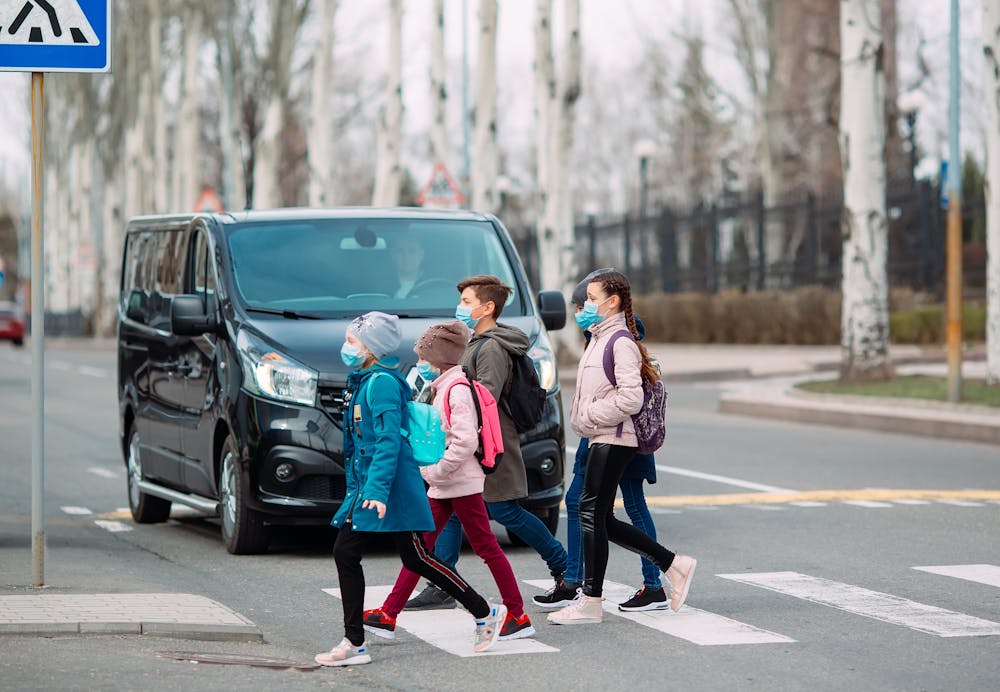
Children might play a bigger role in COVID transmission than first thought. Schools must prepare

https://theconversation.com/children-might-play-a-bigger-role-in-covid-transmission-than-first-thought-schools-must-prepare-144947?utm_medium=email&utm_campaign=Latest%20from%20The%20Conversation%20for%20August%2028%202020%20-%201715916573&utm_content=Latest%20from%20The%20Conversation%20for%20August%2028%202020%20-%201715916573+Version+A+CID_8719e3ecf842bc9762e48ce42f2ba6ad&utm_source=campaign_monitor_us&utm_term=Children%20might%20play%20a%20bigger%20role%20in%20COVID%20transmission%20than%20first%20thought%20Schools%20must%20prepare

Children might play a bigger role in COVID transmission than first thought—schools  must prepare

Over the weekend, the World Health Organisation made an announcement you might have missed.

It recommended children aged 12 years and older should wear masks, and that masks should be considered for those aged 6-11 years. The German Society for Virology went further, recommending masks be worn by all children attending school.

This seems at odds with what we assumed about kids and COVID-19 at the start of the pandemic. Indeed, one positive in this pandemic so far has been that children who contract the virus typically experience mild illness. Most children don’t require hospitalisation and very few die from the disease. However, some children can develop a severe inflammatory syndrome similar to Kawasaki disease, although this is thankfully rare.

This generally mild picture has contributed to cases in children being overlooked. But emerging evidence suggests children might play a bigger role in transmission than originally thought. They may be equally as infectious as adults based on the amount of viral genetic material found in swabs, and we have seen large school clusters emerge in Australia and around the world.

How likely are children to be infected?

Working out how susceptible children are has been difficult. Pre-emptive school closures occurred in many countries, removing opportunities for the virus to circulate in younger age groups. Children have also missed out on testing because they typically have mild symptoms. In Australia, testing criteria were initially very restrictive. People had to have a fever or a cough to be tested, which children don’t always have. This hindered our ability to detect cases in children, and created a perception children weren’t commonly infected.

One way to address this issue is through antibody testing, which can detect evidence of past infection. A study of over 60,000 people in Spain found 3.4% of children and teenagers had antibodies to the virus, compared with 4.4% to 6.0% of adults. But Spain’s schools were also closed, which likely reduced children’s exposure.

Another method is to look at what happens to people living in the same household as a known case. The results of these studies are mixed. Some have suggested a lower risk for children, while others have suggested children and adults are at equal risk.

Children might have some protection compared to adults, because they have less of the enzyme which the virus uses to enter the body. So, given the same short exposure, a child might be less likely to be infected than an adult. But prolonged contact probably makes any such advantage moot.

The way in which children and adults interact in the household might explain the differences seen in some studies. This is supported by a new study conducted by the Centers for Disease Control and Prevention. Children and partners of a known case were more likely to be infected than other people living in the same house. This suggests the amount of close, prolonged contact may ultimately be the deciding factor.

How often do children transmit the virus?

Several studies show children and adults have similar amounts of viral RNA in their nose and throat. This suggests children and adults are equally infectious, although it’s possible children transmit the virus slightly less often than adults in practice. Because children are physically smaller and generally have more mild symptoms, they might release less of the virus.

In Italy, researchers looked at what happened to people who’d been in contact with infected children, and found the contacts of children were more likely to be infected than the contacts of adults with the virus.

Teenagers are of course closer to adults, and it’s possible younger children might be less likely to transmit the virus than older children. However, reports of outbreaks in childcare centres and primary schools suggest there’s still some risk.

What have we seen in schools?

Large clusters have been reported in schools around the world, most notably in Israel. There, an outbreak in a high school affected at least 153 students, 25 staff members, and 87 others. Interestingly, that particular outbreak coincided with an extreme heatwave where students were granted an exemption from having to wear face masks, and air conditioning was used continuously.

At first glance, the Australian experience seems to suggest a small role for children in transmission. A study of COVID-19 in educational settings in New South Wales in the first half of the year found limited evidence of transmission, although a large outbreak was noted to have occurred in a childcare centre.

This might seem reassuring, but it’s important to remember the majority of cases in Australia were acquired overseas at the time of the study, and there was limited community transmission. Also, schools switched to distance learning during the study, after which school attendance dropped to 5%. This suggests school safety is dependent on the level of community transmission.

Additionally, we shouldn’t be reassured by examples where children have not transmitted the virus to others. Approximately 80% of secondary COVID-19 cases are generated by only 10% of people. There are also many examples where adults haven’t transmitted the virus.

As community transmission has grown in Victoria, so has the significance of school clusters. The Al-Taqwa College outbreak remains one of Australia’s largest clusters. Importantly, the outbreak there has been linked to other clusters in Melbourne, including a major outbreak in the city’s public housing towers.

Close schools when community transmission is high

This evidence means we need to take a precautionary approach. When community transmission is low, face-to-face teaching is probably low-risk. But schools should switch to distance learning during periods of sustained community transmission. If we fail to address the risk of school outbreaks, they can spread into the wider community.

While most children won’t become severely ill if they contract the virus, the same cannot be said for their adult family members or their teachers. In the US, 40% of teachers have risk factors for severe COVID-19, as do 28.6 million adults living with school-aged children.

Recent recommendations on mask-wearing by older and younger children mirror risk-reduction guidelines for schools developed by the Harvard T. H. Chan School of Public Health. These guidelines stress the importance of face masks, improving ventilation, and the regular disinfection of shared surfaces.

The changing landscape

As the virus has spread more widely, the demographic profile of cases has changed. The virus is no longer confined to adult travellers and their contacts, and children are now commonly infected. In Germany, the proportion of children in the number of new infections is now consistent with their share of the total population.

While children are thankfully much less likely to experience severe illness than adults, we must consider who children have contact with and how they can contribute to community transmission. Unless we do, we won’t succeed in controlling the pandemic.


History tells us trying to stop diseases like COVID-19 at the border is a failed strategy

https://theconversation.com/history-tells-us-trying-to-stop-diseases-like-covid-19-at-the-border-is-a-failed-strategy-145016?utm_medium=email&utm_campaign=Latest%20from%20The%20Conversation%20for%20August%2028%202020%20-%201715916573&utm_content=Latest%20from%20The%20Conversation%20for%20August%2028%202020%20-%201715916573+Version+A+CID_8719e3ecf842bc9762e48ce42f2ba6ad&utm_source=campaign_monitor_us&utm_term=History%20tells%20us%20trying%20to%20stop%20diseases%20like%20COVID-19%20at%20the%20border%20is%20a%20failed%20strategy

History tells us trying to stop diseases like COVID-19 at the border is a failed  strategy

To explain why the coronavirus pandemic is much worse in the U.S. than anywhere else in the world, commentators have blamed the federal government’s mismanaged response and the lack of leadership from the Trump White House.

Others have pointed to our culture of individualism, the decentralized nature of our public health, and our polarized politics.

All valid explanations, but there’s another reason, much older, for the failed response: our approach to fighting infectious disease, inherited from the 19th century, has become overly focused on keeping disease out of the country through border controls.

As a professor of medical sociology, I’ve studied the response to infectious disease and public health policy. In my new book, “Diseased States,” I examine how the early experience of outbreaks in Britain and the United States shaped their current disease control systems. I believe that America’s preoccupation with border controls has hurt our nation’s ability to manage the devastation produced by a domestically occurring outbreak of disease.

Germ theory and the military

Though outbreaks of yellow fever, smallpox, and cholera occurred throughout the 19th century, the federal government didn’t take the fight against infectious disease seriously until the yellow fever outbreak of 1878. During that same year, President Rutherford B. Hayes signed the National Quarantine Act, the first federal disease control legislation.

By the early 20th century, a distinctly American approach to disease control had evolved: “New Public Health.” It was markedly different from the older European concept of public health, which emphasized sanitation and social conditions. Instead, U.S. health officials were fascinated by the newly popular “germ theory,” which theorized that microorganisms, too small to be seen by the naked eye, caused disease. The U.S. became focused on isolating the infectious. The typhoid carrier Mary Mallon, known as “Typhoid Mary,” was isolated on New York’s Brother Island for 23 years of her life.

Originally, the military managed disease control. After the yellow fever outbreak, the U.S. Marine Hospital Service (MHS) was charged with operating maritime quarantine stations countrywide. In 1912, the MHS became the U.S. Public Health Service; to this day, that includes the Public Health Service Commissioned Corps led by the surgeon general. Even the Centers for Disease Control and Prevention started as a military organization during World War II, as the Malaria Control in War Areas program. Connecting the military to disease control promoted the notion that an attack of infectious disease was like an invasion of a foreign enemy.

Germ theory and military management put the U.S. system of disease control down a path in which it prioritized border controls and quarantine throughout the 20th century. During the 1918 influenza pandemicNew York City held all incoming ships at quarantine stations and forcibly removed sick passengers into isolation to a local hospital. Other states followed suit. In Minnesota, the city of Minneapolis isolated all flu patients in a special ward of the city hospital and then denied them visitors. During the 1980s, the Immigration and Naturalization Service denied HIV-positive persons from entering the country and tested over three million potential immigrants for HIV.

Defending the nation from the external threat of disease generally meant stopping the potentially infectious from ever entering the country and isolating those who were able to gain entry.

Our mistakes

This continues to be our predominant strategy in the 21st century. One of President Trump’s first coronavirus actions was to enforce a travel ban on China and then to limit travel from Europe.

His actions were nothing new. In 2014, during the Ebola outbreakCaliforniaNew York and New Jersey created laws to forcibly quarantine health care workers returning from west Africa. New Jersey put this into practice when it isolated U.S. nurse Kaci Hickox after she returned from Sierra Leone, where she was treating Ebola patients.

In 2007, responding to pandemic influenza, the Department of Homeland Security and the CDC developed a “do not board” list to stop potentially infected people from traveling to the U.S.

When such actions stop outbreaks from occurring, they are obviously sound public policy. But when a global outbreak is so large that it’s impossible to keep out, then border controls and quarantine are no longer useful.

This is what has happened with the coronavirus. With today’s globalization, international travel, and an increasing number of pandemics, attempting to keep infectious disease from ever entering the country looks more and more like a futile effort.

Moreover, the U.S. preoccupation with border controls means we did not invest as much as we should have in limiting the internal spread of COVID-19. Unlike countries that mounted an effective response, the U.S. has lagged behind in testingcontact tracing, and the development of a robust health care system able to handle a surge of infected patients. The longstanding focus on stopping an outbreak from ever occurring left us more vulnerable when it inevitably did.

For decades, the U.S. has been underfunding public health. When “swine flu” struck the country in 2009, the CDC said 159 million doses of flu shots were needed to cover “high risk” groups, particularly health care workers and pregnant women. We only produced 32 million doses. And in a pronouncement that now looks prescient, a Robert Wood Johnson Foundation report said if the swine flu outbreak had been any worse, U.S. health departments would have been overwhelmed. By the time Ebola appeared in 2014, the situation was no better. Once again, multiple government reports slammed our response to the outbreak.

Many causes exist for the U.S.‘s failed response to this crisis. But part of the problem lies with our past battles with disease. By emphasizing border controls and quarantine, the U.S. has disregarded more practical strategies of disease control. We can’t change the past, but by learning from it, we can develop more effective ways of dealing with future outbreaks.


Six months ago, Trump said that coronavirus cases would soon go to zero. They … didn’t.

https://www.washingtonpost.com/politics/2020/08/26/six-months-ago-trump-said-that-coronavirus-cases-would-soon-go-zero-they-didnt/?utm_campaign=wp_main&utm_medium=social&utm_source=facebook&fbclid=IwAR2-yqYYel73YR3zJXfqtn25DXNEA8Yi1qc0L0RQ3PNP-NqUJ299PFNdeWc


But with new constraints on testing, Trump may get his wish eventually.

It was exactly six months ago Wednesday when the spread of the coronavirus in the United States had become too significant for President Trump to wave away. He and several members of the team planning the administration’s response held a news briefing designed to inform the public about the virus and, more important, to allay concerns.

This was the briefing in which Trump made one of his most wildly incorrect assertions about what the country could expect.

“The level that we’ve had in our country is very low,” Trump said, referring to new confirmed infections, “and those people are getting better, or we think that in almost all cases they’re better, or getting. We have a total of 15. We took in some from Japan — you heard about that — because they’re American citizens, and they’re in quarantine.”

That part was generally true. At the time, there had been only a smattering of confirmed cases, with the addition of passengers from the cruise ship Diamond Princess pushing the confirmed total to more than 50.

“So, again,” he added later, “when you have 15 people, and the 15 within a couple of days is going to be down to close to zero, that’s a pretty good job we’ve done.”

It was a brash prediction and seemingly an off-the-cuff one. Trump’s point was less about what was going to happen than arguing that his administration had done a good job. But by linking those two things, he made it simple for observers to use his assertion that the number of cases would fade as a baseline for measuring everything that followed.

Over time, more cases from the period before Feb. 26 would be discovered, including two early deaths in California from covid-19, the disease caused by the virus. There were actually almost 200 cases that would eventually be confirmed by the time Trump was saying the country would go from 15 to zero.

The experts standing behind Trump would have known that Trump’s claims were inaccurate. As the briefing was underway, The Washington Post reported a confirmed case of “community spread” — a documented infection that couldn’t be traced to international travel. In other words, it was uncontained: The virus was moving from person to person without impediment or detection.

Although about 200 cases in that period eventually would be confirmed, even that number was far lower than the reality. Researchers can use documented cases to estimate the number of cases that weren’t being detected and that also weren’t later confirmed through testing. For example, an estimate produced by data scientist Youyang Gu puts the likely number of new infections on Feb. 26 somewhere in the range of 13,000 to 25,000.

On that day alone.

Within a month, the country would go from Trump’s 15 cases to nearly 88,000 cases. By April 26, the total was nearly a million. By May 26, 1.7 million. The most recent total is north of 5.7 million.

That steady increase is in part a function of Trump repeating the same mistake over and over, portraying the pandemic as ending or functionally ended. As cases faded a bit in May and June, he pushed for a return to normal economic activity, triggering a new surge in confirmed cases. That second increase has been fading for about a month, happily, but the country is still adding 33 percent more confirmed new cases each day than it did at the peak in April.

That’s confirmed cases, a metric that relies on testing. Gu’s estimates of the actual spread of the virus put the country about 40 percent below the peak in daily new cases, which was reached in early July.

Trump, of course, blames testing for revealing the scale of the pandemic in the first place. He has a point, in a way: Had the United States never managed to solve its problems with testing, something that took weeks, there wouldn’t have been millions of confirmed cases. There would still have been millions of cases or, perhaps, tens of millions of cases. We just wouldn’t have known how many there were.

It has been about two months since Trump held a political rally in Tulsa, contributing to a new surge of cases in the city. There, he made a tongue-in-cheek reference to asking his team to slow down on testing, because it was pushing the number of confirmed cases higher. As they say, though, each joke contains a grain of truth, and it was clear that Trump, in fact, would be happy to see the number of tests drop so that the number of confirmed cases did as well.

Data compiled by the COVID Tracking Project show that he has gotten his wish, to a degree. Over the past month, the number of tests being completed each day in the United States has dropped by nearly one-fifth.

Part of this is a function of interference from natural disasters, with storms in Florida and fires in California limiting testing capacity. Part of it, too, is probably a function of the drop in the number of cases coming back positive. Fewer new cases means fewer people feeling sick and seeking tests to confirm an infection. The drop in the percent of tests coming back positive reinforces that trend.

But, increasingly, part of it will stem from the administration de-emphasizing testing. New guidance published by the Centers for Disease Control and Prevention suggested that those who had been in contact with an infected person no longer needed to be tested, particularly when asymptomatic.

This, too, has been something Trump has talked about a lot, complaining that people without symptoms were being tested and confirmed as positive — and added to the total number of infections.

“Many of those cases are young people that would heal in a day,” Trump said in an interview on July 19. “They have the sniffles and we put it down as a test.”

The reason it’s important to track asymptomatic cases, of course, is that those people can still infect others. To defeat the pandemic, we need to contain it, and the new CDC approach runs the significant risk of leaving large holes in that containment effort. But, with the presidential election only about 70 days away, it will mean fewer confirmed cases.

The irony of Trump’s complaints about the virus from the outset is that the United States’ confirmed infection totals already have been minimized because of limited testing. The reason Trump was able to claim that there were only 15 cases six months ago was that the administration had spent the month since the first confirmed case in the country unable to put together a robust testing regimen that would allow the virus to be constrained. South Korea, where such a regimen was quickly implemented, actually did see its virus numbers drop to near zero.

In other words, Trump’s prediction was not only wrong, it was wrong in large part because Trump’s team hadn’t done what would have been needed to make it come true. Trump portrays himself as an unwitting victim of the pandemic, but his comment six months ago Wednesday is a good reminder that he can put a lot of the blame for his position on himself.