Most states still aren’t doing enough coronavirus testing

https://www.axios.com/coronavirus-testing-states-still-behind-629973cb-d8ad-4f36-a6fa-d59959fe84a3.html


Most states still aren't doing enough coronavirus testing - Axios


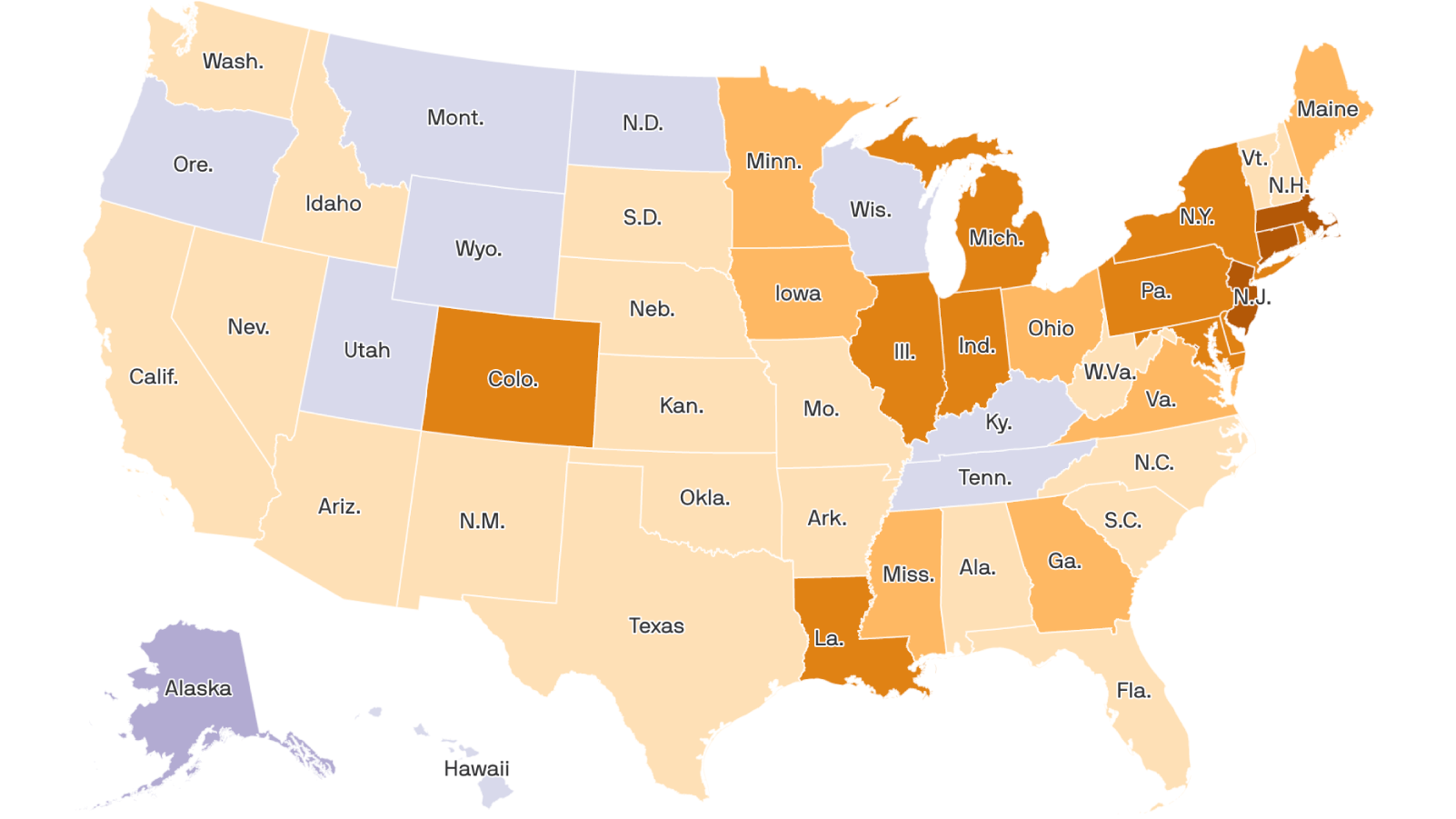
Most states still aren’t doing enough coronavirus testing, especially those that have suffered from larger outbreaks, according to recent testing targets calculated by the Harvard Global Health Institute.

Between the lines: It’s much harder to contain the virus once a lot of people have it — which is why we needed strong social distancing in the first place. But knowing who is infected is the foundation of containment going forward, and most states are still behind.

The big picture: Nationally, the U.S. needs to be doing about 900,000 tests a day, according to the Harvard estimate, which was released earlier this month.

  • But not all states need to be doing the same amount of tests. The goal Harvard suggested for each state — the number of tests they should have done on May 15  was calculated based on the size of its outbreak as of early May.
  • That means that New York needs to be doing a much larger number of tests each day than Wyoming, even after accounting for the states’ huge population discrepancy.

Why it matters: Most states have already begun reopening to some extent, even without key public health tools — like testing and contact tracing — fully built up.

  • That increases the chance that the virus will spread undetected as people begin interacting with one another again.
  • And these premature measures may just increase the number of tests a state needs, especially because the estimates were based on the assumption states would remain closed until May 15.
  • “The moment you relax, the number of cases will start climbing. And therefore, the number of tests you need to keep your society, your state from having large outbreaks will also start climbing,” Harvard’s Ashish Jha warned.


If the White House is struggling, how will ordinary businesses fare? 

https://mailchi.mp/f4f55b3dcfb3/the-weekly-gist-may-15-2020?e=d1e747d2d8

The RAOI Advisory Opinion: A Transformative Moment or a Bump in ...

In a week that saw reopening activity pick up across the country, drawing even more attention to the need for sufficient testing to give employers and workers confidence in returning to work, a new study from researchers at New York University (NYU) suggested that a widely-hailed rapid testing machine from Abbott Labs may be unreliable.

The Abbott ID NOW COVID-19 test produced false negatives a third of the time using nasopharyngeal swabs, and 48 percent of the time with less-invasive “dry nasal swabs”, according to the study, which has not yet undergone peer review. The five-minute, point-of-care test received emergency use authorization from the Food and Drug Administration (FDA) in late March and has been touted as a “great test” by President Trump, whose White House relies on it to test the President and those around him.

On Thursday, the FDA issued a warning about the potential for false negative results using the Abbott test. The company disputes the findings and sent a list of questions to the NYU researchers for clarification. Meanwhile, two White House staffers—an aide to the President and the Vice President’s press secretary—tested positive for coronavirus, causing the White House to mandate masks for all employees starting this week.

The uncertainty around test results, and the ensuing concern about safety at the White House, provides a foretaste of the difficult road ahead for thousands of employers nationwide as stay-at-home orders are lifted, and companies consider when and how to reopen workplaces.

If the White House is struggling, how will ordinary businesses fare?

US coronavirus update: 1.46M cases, 87K+ confirmed deaths, 10.2M total tests conducted.


Trump faces criticism over lack of national plan on coronavirus

Trump faces criticism over lack of national plan on coronavirus

COVID-19 National Health Plan – Primary Care – Central Patient ...

The Trump administration is facing intense criticism for the lack of a national plan to handle the coronavirus pandemic as some states begin to reopen.

Public health experts, business leaders and current administration officials say the scattershot approach puts states at risk and leaves the U.S. vulnerable to a potentially open-ended wave of infections this fall.

The White House has in recent days sought to cast itself as in control of the pandemic response, with President Trump touring a distribution center to tout the availability of personal protective equipment and press secretary Kayleigh McEnany detailing for the first time that the administration did have its own pandemic preparedness plan.

Still, the White House lacks a national testing strategy that experts say will be key to preventing future outbreaks and has largely left states to their own devices on how to loosen restrictions meant to slow the spread of the virus. Trump this week even suggested widespread testing may be “overrated” as he encouraged states to reopen businesses.

The Centers for Disease Control and Prevention (CDC) on Thursday night issued long-awaited guidance intended to aid restaurants, bars and workplaces as they allow employees and customers to return, but they appeared watered down compared to previously leaked versions.

Some experts said the lack of clear federal guidance on reopening could hamper the economic recovery. 

“A necessary condition for a healthy economy is a healthy population. This kind of piecemeal reopening with everyone using different criteria for opening, we’re taking a big risk,” said Mark Zandi, chief economist at Moody’s Analytics.

The lack of coherent direction from the White House was driven home this week by damaging testimony by a former top U.S. vaccine official who claims he was ousted from his post improperly.

“We don’t have a single point of leadership right now for this response, and we don’t have a master plan for this response. So those two things are absolutely critical,” said Rick Bright, who led the Biomedical Advanced Research and Development Authority until he was demoted in late April.

The U.S. faces the “darkest winter in modern history” if it does not develop a more coordinated national response, Bright said. “Our window of opportunity is closing.”

From the start, the White House has let states chart their own responses to the pandemic.

The administration did not issue a nationwide stay-at-home order, resulting in a hodgepodge of state orders at different times, with varying levels of restrictions.

Facing a widespread shortage, states were left to procure their own personal protective equipment, ventilators and testing supplies. Trump resisted using federal authority to force companies to manufacture and sell equipment to the U.S. government.

Without clear federal guidance, state officials were competing against each other and the federal government, turning the medical supply chain into a free-for-all as they sought scarce and expensive supplies from private vendors on the commercial market.

“The fact that we had questions about our ability to have enough mechanical ventilators, and you had states basically bidding against each other, trying to secure personal protective equipment …  it shouldn’t be happening during a pandemic,” said Amesh Adalja, a senior scholar at the Johns Hopkins University Center for Health Security.

Internally, the administration struggled to mount a unified front as various agencies jockeyed for control. Multiple agencies have been providing contradictory instructions.

At first, Department of Health and Human Services (HHS) Secretary Alex Azar led the White House coronavirus task force.

Roughly a month, later he was replaced by Vice President Pence. The Federal Emergency Management Agency (FEMA) was later tasked with leading the response to get supplies to states, while senior White House adviser Jared Kushner led what has been dubbed a “shadow task force” to engage the private sector. Now, FEMA is reportedly winding down its role, and turning its mission back over to HHS.

The CDC has been largely absent throughout the pandemic. Director Robert Redfield has drawn the ire of President Trump as well as outside experts, and he has been seen infrequently at White House briefings.

“I think seeing the nation’s public health agency hobbled at a time like this and looking over its shoulder at its political bosses is something I hoped I would never see, and I’ve been working with the CDC for over 30 years,” said Lawrence Gostin, a professor of public health at Georgetown University.

“I think that people will die because the public health agency has lost its visibility and its credibility and that it’s being politically interfered with,” he added.

The administration recently has taken some steps to improve on the initial response to the pandemic.

Ventilator production has increased, and the U.S. is no longer seeing a shortage of the devices. 

Testing has improved dramatically as well, though experts think the U.S. needs to be testing thousands of more people per day before the country can reopen.

The administration also unveiled plans to expand the Strategic National Stockpile’s supply of gowns, respirators, testing supplies and other equipment, after running out of supplies early in the pandemic.

Adalja said the administration’s positive steps are coming way too late. 

“It’s May 15, we should have been in this position January 15,” he said.

McEnany on Friday for the first time detailed the White House’s preparedness plan that replaced the Obama-era pandemic playbook, an acknowledgement that Trump’s predecessor did leave a road map, despite claims to the contrary from some of the president’s allies.

She did not give many specifics on the previously unknown plan. Instead, McEnany declared the Trump administration’s handling of the virus had been “one of the best responses we’ve seen in our country’s history.”

Yet as states look to reopen businesses and get people back to work, the White House is taking a back seat as governors set their own guidelines for easing stay-at-home orders and restrictions on social activities.

The White House in April issued a three-step plan for states to reopen their economies, but it has largely been ignored by states and by the president.

Dozens of governors have begun easing restrictions on businesses and social activities without meeting the White House guidelines. Trump has been urging them to move even faster, backing anti-lockdown protesters in Michigan, Virginia, Minnesota and Pennsylvania.

Even scaled-down guidance from federal agencies is critical for providing a road map for state and local leaders, and for businesses considering how best to resume operations, said Neil Bradley, chief policy officer with the U.S. Chamber of Commerce.

“We need guidance because it helps instill confidence about the right types of approaches to take, but when you begin to move away from guidance and into either regulations or very strict approach, then that’s increasingly going to be unworkable in lots of different locations,” Bradley said.


Amid reports of White House clashes with CDC, experts raise alarms about lack of coronavirus screening at airports

https://www.yahoo.com/news/coronavirus-screening-airports-144105500.html

Terminal 1 at John F. Kennedy International Airport in New York City. (Lev Radin/Pacific Press/LightRocket via Getty Images)

As the nation begins to reopen amid the coronavirus pandemic, some people are looking to the skies — and experts don’t necessarily like what they see, arguing there are not enough safeguards in place to protect passengers and crew. 

While air travel has fallen sharply due to the virus, the airports are open and planes are flying both domestically and internationally. The Centers for Disease Control and Prevention has issued travel guidelines encouraging air passengers to wear face coverings, “keep 6 feet of physical distance from others” and only board planes for essential travel. However, these guidelines are merely suggestions. 

There is no requirement for masks, and there have been multiple reports of crowded conditions in airports and on planes, which have left passengers alarmed. The Transportation Security Administration, which screens passengers and luggage at airports, has also experienced over 560 confirmed cases of COVID-19, the disease caused by the coronavirus, and six deaths from the illness.

Despite these concerns, there are currently no coronavirus screening procedures for domestic air travelers, and a congressional investigation has also raised questions about the level of screening being conducted for international passengers. Speaking in the Oval Office on April 28, President Trump told reporters his administration is working on implementing a procedure for temperature checks and COVID-19 tests for air travelers.

“We’re also setting up a system where we do some testing, and we’re working with the airlines on that,” Trump said.

According to a May 6 government document reviewed by Yahoo News, the CDC was “developing a tool for predicting risk of importation of COVID-19 among international travelers” and meeting with the White House National Security Council “to discuss strategies for screening arriving international passengers from countries with substantial COVID-19 transmission.”

However, there have been reports of discord between the CDC and the White House. On May 9, USA Today reported CDC officials were overruled by the White House after they raised concerns about a potential plan to establish temperature checks at the airports. While some COVID-19 patients do have high fevers, many do not and others are entirely asymptomatic. 

USA Today’s report included an email Dr. Martin Cetron, the CDC’s director of global mitigation and quarantine, sent to officials with the Department of Homeland Security criticizing the temperature checks as “a poorly designed control and detention strategy.” 

Cetron, the CDC and DHS did not respond to requests for comment. The White House did not respond to questions about the reported disagreements from the CDC or whether the Trump administration believes temperature checks are an adequate screening measure for airports.

Rep. Raja Krishnamoorthi, the chairman of the House oversight subcommittee on economic and consumer policy, has investigated coronavirus screening procedures at airports. Earlier this week, the Illinois Democrat told Yahoo News he was concerned by the report that the White House is pursuing a temperature screening plan over the objections of CDC officials. 

“The White House has been ignoring and sidelining America’s public health experts at the CDC, instead relying on nonexpert political appointees to make public health decisions,” Krishnamoorthi said. “I am troubled by reports that officials at the Centers for Disease Control and Prevention could raise this public health concern and be essentially overruled by presidential aides. The desire to lure Americans back into traveling by making them feel like they are safe cannot outweigh the need to actually keep this country safe.”

Krishnamoorthi has previously raised concerns about what he described as “lax” screening procedures for international travelers coming into the United States from coronavirus hot spots in March as the pandemic exploded around the globe. Trump has repeatedly pointed to restrictions he imposed on travelers from China — where the virus originated — on Jan. 31 as evidence of his strong efforts to curb its spread in the United States.

However, the restrictions on China contained exemptions that allowed over 400,000 people to subsequently travel from that country to the United States. And on May 7, Krishnamoorthi’s subcommittee released the results of an investigation that focused on two other early coronavirus hot spots — Italy and South Korea. Krishnamoorthi said he believes Trump has focused on “rhetoric and bluster rather than actually effective screenings.”

“Just from what we found with Italy and South Korea, there was no border closing. There was no screening. Unfortunately, the lack of screening probably had some very serious consequences at a time when cases were exponentially rising in the United States.”

Krishnamoorthi’s investigation, which included extensive briefings from officials, found that the White House National Security Council’s Policy Coordination Committees decided in March to rely on South Korean and Italian officials to screen passengers in those countries who were headed to the United States. The probe further found the U.S. had “limited” oversight for those screenings in Italy and that only 69 passengers were prevented from coming to the U.S. from those two countries in March. Once they arrived, the investigation found passengers entering from the two countries did not receive additional health screenings.

“Potentially thousands and thousands of people came across without screenings” from what were two of the leading coronavirus hot spots at the time, Krishnamoorthi told Yahoo News. “It doesn’t take a lot to believe that folks came over and seeded further outbreaks here in this country.”

Jonathan Ullyot, a spokesperson for the White House National Security Council, responded to questions about Krishnamoorthi’s investigation with a statement touting the government’s steps to screen international arrivals earlier this year.

“The reality is that the United States government took early and decisive action to mitigate the risk from global hot spots, including China, Iran, South Korea, and the Schengen area of Europe,” Ullyot wrote. “After restricting travel from China on January 31 … the security directive put forth by the administration required enhanced medical screenings for all passengers before they departed on flights to the United States from Northern Italy and South Korea.”

According to Ullyot, the screenings in Italy and South Korea “included checking the passenger’s temperature, visual observations to detect signs of illness, and questionnaires.” While Ullyot did not dispute Krishnamoorthi’s contention that the U.S. relied on officials in those countries to conduct the screenings and that few passengers were denied boarding, he said “U.S. mission staff visited airports” in both countries to “observe these screening procedures.”

A senior Trump administration official, who requested not to be named, said all international arrivals to the United States are subject to Customs and Border Protection (CBP) screenings that are following CDC guidelines. The official explained that those guidelines require CBP officers to refer travelers “to the CDC, DHS contract medical screeners, or local health authorities for health screening” if they are exhibiting symptoms or have traveled from countries that have experienced major outbreaks.

According to the official, the CBP has “established processes to identify travelers who have traveled to the United States directly or indirectly from areas that are experiencing COVID-19 outbreaks.”

Domestic air passengers, however, are treated differently.

“With regard to domestic travel, there’s not more screening beyond what TSA normally does,” Krishnamoorthi said. 

He said that lack of screening for domestic travelers is particularly worrisome as areas of the country are beginning to lift lockdown restrictions. He suggested this could lead to a situation where business people “go back and start traveling” and then “transport these cases everywhere.”

“We have to look at the science of it more closely, and we have to develop a more precise way of screening,” Krishnamoorthi said.

Randy Babbitt, a former administrator of the Federal Aviation Administration, said the lack of new screening procedures is not as much of a problem right now since “nobody’s flying.” However, he said it will become a pressing issue as the country reopens and airports become more crowded.

“People are going to start flying and as it ramps back up, that becomes a different question,” Babbitt told Yahoo News.

Babbitt further explained that one difficulty with establishing comprehensive procedures for airports is that so many different government agencies are involved in air travel. However, he pointed to proposals generated by Stonebriar Strategy Group Thought Leadership Initiative, a nonprofit consultancy, as a realistic potential road map.

Howard Thrall, the president and senior partner of the group, said the organization is comprised of multiple retired consultants and executives who have worked in the industry. According to Thrall, a  veteran executive who has worked for multiple aviation and aerospace companies, the group came together because they were “totally amazed” a coronavirus airport screening system has not yet been established. 

“This is really a pro bono exercise for a bunch of old graybeards,” Thrall said.

The Stonebriar Strategy Group’s proposal calls for screening perimeters to be established outside airports, where rapid COVID-19 tests, questionnaires and temperature checks could be administered to travelers and workers. Setting up a screening perimeter would mean that even if passengers ended up in close proximity during boarding or on planes, they could have a higher degree of confidence those around them were not contagious.

Along with addressing safety concerns, Thrall said implementing these screenings could help the economy since aviation is a substantial part of the nation’s gross domestic product and boosting consumer confidence is crucial to returning the industry to normal levels. He pointed to the aftermath of the Sept. 11 attacks, when the TSA was formed and security screening procedures were transformed, as evidence that airport procedures can quickly be revamped.

The Stonebriar Strategy Group’s detailed proposal estimated it would cost approximately $6.8 million per airport, per year, to establish coronavirus screening perimeters. With approximately 5,000 public airports in the country, that would mean a total cost of about $34 billion.

However, Thrall argued that cost is realistic relative to the urgent need and the trillions of dollars the government is spending to address the coronavirus. 

“That’s why we wrote it up. It wasn’t happening and it could happen. This is not a big deal,” Thrall said. “I mean, it’s not going to be free by any means, but this is very, very manageable.”


Rick Bright, ousted director of vaccine agency, warns that administration lacks ‘centralized, coordinated plan’

https://www.cnn.com/2020/05/14/politics/coronavirus-whistleblower-testimony/index.html?fbclid=IwAR0KfVp-njw8vqKFdaLbBC4r4NAx3KeS4rFg2vmFbSneW7PcqOwVYult9rc

Virus whistleblower tells lawmakers US lacks vaccine plan | Where ...

Rick Bright, the ousted director of a crucial federal office charged with developing countermeasures to infectious diseases, testified before Congress on Thursday that the US will face an even worse crisis without additional preparations to curb the coronavirus pandemic.

“Our window of opportunity is closing,” Bright said. “Without better planning, 2020 could be the darkest winter in modern history.”
Bright criticized the Trump administration for failing to implement a “standard, centralized, coordinated plan” to combat the virus and questioned its timeline for a vaccine. His testimony came a week after filing a whistleblower complaint alleging he was fired from his job leading the Biomedical Advanced Research and Development Authority for opposing the use of a drug frequently touted by President Donald Trump as a potential coronavirus treatment.
About an hour before Bright’s hearing, Trump tweeted that he had “never met” or “even heard of” Bright, but considers the NIH senior adviser a “disgruntled employee, not liked or respected by people I spoke to and who, with his attitude, should no longer be working for our government!”
Before the House Committee on Energy and Commerce’s health subcommittee, Bright urged the Trump administration to consider a number of actions, including increasing production of essential equipment and establishing both a national test strategy and a national standard of procurement of supplies. He calls on top officials to “lead” through example and wear face coverings and social distance.
Bright claimed that the administration missed “early warning signals” to prevent the spread of the virus. He said that he would “never forget” an email from Mike Bowen, the hearing’s other witness and the vice president of the medical supply company Prestige Ameritech, indicating that the US supply of N95, the respirator masks used by health care professionals, was at a perilous level.
“He said, ‘We’re in deep shit,'” testified Bright. “‘The world is.'”
Bright said he “pushed” that warning “to the highest levels” he could at Health and Human Services but received “no response.”
“From that moment, I knew that we were going to have a crisis for health care workers because we were not taking action,” said Bright. “We were already behind the ball.”
In his written statement, Bright blamed the leadership of HHS for being “dismissive” of his “dire predictions.” Bright wrote that he knew the US had a “critical shortage of necessary supplies” and personal protective equipment during the first three months of the year and prodded HHS to boost production of masks, respirators, syringes and swabs to no avail. He alleged that he faced “hostility and marginalization” from HHS officials after he briefed White House trade adviser Peter Navarro and members of Congress “who better understood the urgency to act.”
And he charged that he was removed from his post at BARDA and transferred to “a more limited and less impactful position” at NIH after he “resisted efforts to promote” the “unproven” drug chloroquine.
A Department of Health and Human Services spokesperson responded that it was “a personnel matter that is currently under review” but said it “strongly disagrees with the allegations and characterizations.”
Bright is seeking to be reinstated to his position as the head of BARDA. The Office of Special Counsel, which is reviewing Bright’s complaint, has determined that was a “substantial likelihood of wrongdoing” in removing him from his post, according to Bright’s attorneys.
Rep. Anna Eshoo, a California Democrat and the panel’s chairwoman, said Bright “was the right person, with the right judgment, at the right time.”
“We can’t have a system where the government fires those who get it right and reward those who get it completely wrong,” added Eshoo.
In his testimony, Bright also cast doubt on the Trump administration’s goal of manufacturing a vaccine in 12 to 18 months as overly optimistic, calling it “an aggressive schedule” and noting that it usually takes up to 10 years to make a vaccine.
“My concern is if we rush too quickly, and consider cutting out critical steps, we may not have a full assessment of the safety of that vaccine,” Bright said. “So, it’s still going to take some time.”
Some Republicans on the subcommittee said that the hearing shouldn’t have been held at all.
Rep. Michael Burgess of Texas, the top Republican on the panel, said “every whistleblower needs to be heard,” but added the hearing was “premature” and a “disservice” to the Special Counsel’s investigation since Bright’s complaint was filed only a week ago.
And Republican Rep. Richard Hudson of North Carolina claimed that the hearing was not about the whistleblower complaint but “undermining the Administration during a national and global crisis.”
Thursday’s subcommittee meeting comes two days after a blockbuster hearing in the Senate that featured Dr. Anthony Fauci, who leads the National Institute of Allergy and Infectious Diseases. Fauci said that access to a vaccine in time for the fall school year would be “a bit of a bridge too far” and warning against some schools opening too soon, which Trump later called “not an acceptable answer.”
Fauci testified from his modified quarantine at home since he had made contact with a White House staffer who tested positive. But Bright appeared masked and in-person for his hearing on Capitol Hill, as did the lawmakers who questioned him. Many members of the House have steered clear of Capitol Hill since the onset of the outbreak, although they are expected to return on Friday to vote on a multi-trillion dollar Democratic bill responding to the crisis.


The pandemic broke America

https://www.axios.com/coronavirus-america-broken-2baa69e4-60e6-49a5-932a-5d118441ae20.html

The coronavirus pandemic broke America - Axios

Eight weeks into this nation’s greatest crisis since World War II, we seem no closer to a national strategy to reopen the nation, rebuild the economy and defeat the coronavirus.

Why it matters: America’s ongoing cultural wars over everything have weakened our ability to respond to this pandemic. We may be our worst enemy.

  • The response is being hobbled by the same trends that have impacted so much of our lives: growing income inequality, the rise of misinformation, lack of trust in institutions, the rural/urban divide and hyper-partisanship.
  • We’re not even seeing the same threat from the virus. Democrats are far more likely than Republicans to be worried about getting seriously ill, while Republicans — including the president — are more likely to think the death counts are too high.

Without even a basic agreement on the danger of the pandemic and its toll, here’s how we see the national response unfold:

  • The Centers for Disease Control and Prevention, the crown jewel of the globe’s public health infrastructure, has been sidelined, its recommendations dismissed by the White House.
  • President Trump declares the U.S. has “prevailed on testing” at a time when health experts say we still need far more daily tests before the country can reopen safely.
  • Distribution of the promising coronavirus drug remdesivir was initially botched because of miscommunication between government agencies.
  • More than two thirds of Americans say it’s unlikely they would use a cell phone-based contact tracing program established by the federal government, a key component of a testing regime to control the virus.
  • The second phase of a program to aid small businesses isn’t fully allocated because firms are either concerned about its changing rules, confused about how to access it, or find the structure won’t help them stay in business.
  • With the unemployment rate at a post-Depression record last month, and expected to go higher, there is no meaningful discussion between the parties in Congress on aid to the out-of-work.
  • States and local governments are facing billions in losses without a strategy for assistance.
  • The virus is literally inside the White House. Aides have tested positive for coronavirus, leading to quarantines for some of the nation’s top public health officials and a new daily testing regime for White House staff and reporters who enter the West Wing.
  • The No. 1 book on Amazon for a time was a book by an anti-vaxxer whose conspiracy-minded video about the pandemic spread widely across social media, leading to takedowns by platforms like YouTube and Facebook.

The other side: There’s better news at the state level. “Governors collectively have been winning widespread praise from the public for their handling of the coronavirus outbreak,” the Washington Post reports.

Between the lines: Nationwide, 71% of Americans approve of the job their governor is doing, according to the Post. For Trump, the figure is 43%.

  • And former presidents we often expect to help rally the nation in trying times are scarce.
  • George W. Bush released a video, in which his face barely appeared, calling for unity in the fight against the virus. Barack Obama was recorded in leaked remarks to former staffers calling Trump’s coronavirus response “an absolute chaotic disaster.” Trump attacked both of them on Twitter.

The bottom line: An existential threat — like war or natural disaster — usually brings people together to set a course of action in response. Somehow, we’ve let this one drive us apart.


Window of Opportunity is Closing for Coronavirus Response

https://www.axios.com/rick-bright-testimony-opening-statement-6817ae7a-5196-4357-b83c-d3ff96990efd.html?stream=health-care&utm_source=alert&utm_medium=email&utm_campaign=alerts_healthcare

Window of opportunity – definition and meaning – Market Business News

A top vaccine doctor who was ousted from his position in April is expected to testify Thursday that the Trump administration was unprepared for the coronavirus, and that the U.S. could face the “darkest winter in modern history” if it doesn’t develop a national coordinated response, according to prepared testimony first obtained by CNN.

The big picture: Rick Bright, the former head of the Biomedical Advanced Research and Development Authority (BARDA), will tell Congress that leadership at the Department of Health and Human Services ignored his warnings in January, February and March about a potential shortage of medical supplies.

  • He will testify that HHS “missed early warning signals” and “forgot important pages from our pandemic playbook” early on — but that “for now, we need to focus on getting things right going forward.”
  • Bright’s testimony also reiterates claims from a whistleblower report he filed last week that alleges he was ousted over his attempts to limit the use of hydroxychloroquine — an unproven drug touted by President Trump — to treat the coronavirus.

What he’s saying: Bright will testify he urged HHS to ramp up production of
masks, respirators and medical supplies as far back as January. Those warnings were dismissed, Bright says, and he was “cut out of key high-level meetings to combat COVID-19.”

  • “I continue to believe that we must act urgently to effectively combat this deadly disease. Our window of opportunity is closing. If we fail to develop a national coordinated response, based in science, I fear the pandemic will get far worse and be prolonged, causing unprecedented illness and fatalities.”

Bright will call for a national strategy to combat the virus, including “tests that are accurate, rapid, easy to use, low cost, and available to everyone who needs them.”

  • “Without clear planning and implementation of the steps that I and other experts have outlined, 2020 will be darkest winter in modern history.”

Read Bright’s prepared statement.


The latest in the U.S.

https://www.axios.com/newsletters/axios-vitals-72173ec6-3383-4391-afbb-a5ed682e5d7a.html?utm_source=newsletter&utm_medium=email&utm_campaign=newsletter_axiosvitals&stream=top

COVID-19 in the U.S.

As of May 12, 2020, 11pm EDT

Deaths       Confirmed Cases

82,376           1,369,574

Trump and some top aides question accuracy of coronavirus death ...


The U.S. will “without a doubt” have more coronavirus infections and deaths in the fall and winter if effective testing, contact tracing and social distancing measures are not scaled up to adequate levels, NIAID director Anthony Fauci testified on Tuesday.

  • He also said that the “consequences could be really serious” for states and cities that reopen without meeting federal guidelines.

Sen. Mitt Romney (R-Utah) criticized the Trump administration’s coronavirus testing coordinator Adm. Brett Giroir at a Senate hearing Tuesday, accusing him of framing U.S. testing data in a politically positive light: “I find our testing record nothing to celebrate whatsoever.”

Millions of Americans are risking their lives to feed us and bring meals, toiletries and new clothes to our doorsteps — but their pay, benefits and working conditions do not reflect the dangers they face at work, Axios’ Erica Pandey reports.

House Democrats released Tuesday their phase 4 $3 trillion coronavirus relief proposal that would provide billions of additional aid to state and local governments, hospitals and other Democratic priorities.

The American Federation of Teachers launched several capstone lesson plans Tuesday to help K-12 teachers measure student progress during school closures and overcome the challenges of a remote learning setting.

Grocery staples in the U.S. cost more in the last month than in almost 50 years, according to new data out Tuesday from the U.S. Bureau of Labor Statistics.

A new study by economists at the University of Illinois, Harvard Business School, Harvard University and the University of Chicago projects that more than 100,000 small businesses have permanently closed since the coronavirus pandemic was declared in March, the Washington Post reports.


New urgency surrounding children and coronavirus

https://www.axios.com/newsletters/axios-vitals-72173ec6-3383-4391-afbb-a5ed682e5d7a.html?utm_source=newsletter&utm_medium=email&utm_campaign=newsletter_axiosvitals&stream=top

CDC adds 6 new possible coronavirus symptoms - Axios

Solving the mystery of how the coronavirus impacts children has gained sudden steam, as doctors try to determine if there’s a link between COVID-19 and kids with a severe inflammatory illness, and researchers try to pin down their contagiousness before schools reopen.

Driving the news: New York state’s health department is investigating 100 cases of the illness in children, Gov. Andrew Cuomo said at a Tuesday press briefing, Axios’ Orion Rummler reports.

  • Three children in the state have died: an 18-year-old girl, a 5-year-old boy, and a 7-year-old boy. The state’s hospitals had previously reported 85 cases on Sunday.

Doctors have described children “screaming from stomach pain” while hospitalized for shock, Jane Newburger of Boston Children’s Hospital told the Washington Post.

  • In some, arteries in their hearts swelled, similar to Kawasaki disease, a rare condition most often seen in infants and small children that causes blood vessel inflammation, she said.
  • Researchers remain uncertain if this is being caused by COVID-19, but most children appear to have a link. Some affected children have tested positive for coronavirus antibodies, suggesting that the inflammation is “delayed,” Nancy Fliesler of Boston Children’s Hospital wrote on Friday.

What’s next: The CDC is funding a $2.1 million study of 800 children who have been hospitalized after testing positive for the coronavirus through Boston Children’s Hospital. The study aims to understand why some children are more vulnerable to the disease.


Germany’s daily coronavirus cases nearly TRIPLE – states bring back tougher measures

https://www.express.co.uk/news/world/1281241/germany-coronavirus-cases-jump-lockdown-lift-tougher-lockdown-rules-angela-merkel?fbclid=IwAR0D6VbvvxIu4PUwUwMOu7AAKePOdxcUhZFyQybDdJTvEmosNZlrDeodLnM

coronavirus

CORONAVIRUS cases in Germany have almost trebled in the past 24 hours sparking fears of a second wave of COVID-19 infections.

Health authorities in Germany have reported more than 900 new cases of the deadly coronavirus less than a week after lockdown restrictions were relaxed by German Chancellor Angela Merkel. The Robert Koch Institute for public health and disease control has reported 933 new COVID-19 infections on Tuesday – an increase from just 357 on Monday.

According to the Institute the infection rate – the so-called “R” rate – has been above one for the past three days.

The rate means on average one person will potentially transmit the virus to one other individual.

The Institute for public health estimated the “R” rate was at 1.07 on Monday and 1.13 on Sunday.

The number indicates that 100 infected people would on average infect 107 others.

Today, the R rate once again dipped just below one with an estimated value of 0.94, but the latest spike in cases will worry some.

Despite the rise in the rate in recent days, the Robert Koch Institute said: “So far, we do not expect a renewed rising trend.”

Last Thursday Ms Merkel outlined a scenario at which the country would need to apply an “emergency brake” and re-impose restrictions.

The lockdown measures would be introduced again if a second wave of new infections were reported at a rate of 50 per 100,000 people.

Since Ms Merkel’s announcement, however, three districts across Germany have used the emergency measures to halt the virus.

The states of North Rhine-Westphalia and Schleswig-Holstein were forced to re-introduce lockdown after outbreaks of coronavirus at meat processing plants.

One district in the state of Thuringia is also understood to have implemented the emergency measures after outbreaks in care homes.

Just six days ago the German Chancellor announced measures to lift the lockdown by opening more shops and outlining the gradual re-opening of schools.

Shops and gyms have been allowed to begin trading providing social distancing measures were enforced.

The Chancellor also announced most Germans will be allowed to meet people from outside their households for the first time.

Top flight Bundesliga matches are also set to begin behind closed-doors this upcoming weekend.

Ms Merkel has been under increasing pressures to kick-start the faltering German economy with widespread protests taking place at the weekend in major cities including Munich.