Hospitals and health systems across the country are telling some Medicare and Medicaid patients that they can’t schedule telehealth appointments due to the federal government’s shutdown, now heading into its second week. That’s because Medicare reimbursement for telehealth expired on September 30, leaving health systems with the choice of pausing such visits or keeping them going in hopes of retroactive reimbursement after the shutdown ends.
Reimbursement for the Hospital at Home program, which allows patients to receive care without being admitted to a hospital, also lapsed with the shutdown. That led to providers scrambling to discharge patients under the program or admit them to a hospital. Mayo Clinic, for example, had to move around 30 patients from their homes in Arizona, Florida and Wisconsin to its facilities.
At issue in the government shutdown is healthcare, specifically tax credits for middle- and lower-income Americans that enable them to afford health insurance on the federal exchanges set up by the Affordable Care Act. Democrats want to extend those tax credits, which are set to expire at the end of the year, while Republicans want to reopen the government first and then negotiate about the tax credits in a final budget.
The impasse has prevented the Senate from overcoming a filibuster, despite a Republican majority. Around 24 million Americans get their health insurance through the ACA, and the loss of tax credits will cause their premiums to rise an average of 75%–and as high as 90% in rural areas–and likely cause at least 4 million people to lose coverage entirely.
The government’s closure has reverberated through its operations in healthcare. The Department of Health and Human Services has furloughed some 41% of its staff, making it harder to run oversight operations. CDC’s lack of staff will hinder surveillance of public health threats. And FDA won’t accept any new drug applications until funding is restored.
When the government might reopen remains unclear. Most shutdowns are relatively brief, but the longest one, which lasted 35 days, came during Donald Trump’s first term. Senate majority leader John Thune, R-S.D., and Speaker of the House Mike Johnson, R-La., have both said they won’t negotiate with Democrats, and the House won’t meet again until October 14.Bettors on Polymarket currently expect it to last until at least October 15. Pressure on Congress will increase after that date because there won’t be funds available to pay active military members.
The Supreme Court on Friday upheld a key Affordable Care Act requirement that insurance companies cover certain preventative measures recommended by an expert panel.
Justices upheld the constitutionality of the provision in a 6-3 decision and protected access to preventative care for about 150 million Americans.
The justices found that the secretary of the Department of Health and Human Services has the power to appoint and fire members of the U.S. Preventative Services Task Force (USPSTF).
The cases started when a small business in Texas and some individuals filed a lawsuit against the panel’s recommendation that pre-exposure prophylaxis (PreP) for HIV be included as a preventative care service.
They argued that covering PreP went against their religious beliefs and would “encourage homosexual behavior, intravenous drug use, and sexual activity outside of marriage between one man and one woman.”
The plaintiffs further argued that the USPSTF mandates are unconstitutional because panel members are “inferior officers” who are not appointed by the president or confirmed by the Senate.
While the panel is independent, they said that since their decisions impact millions of people members should be confirmed.
A U.S. district judge in 2023 ruled that all preventative-care coverage imposed since the ACA was signed into law areinvalid and a federal appeals court judge ruled in agreement last year.
The Biden administration appealed the rulings to the Supreme Court, and the Trump administration chose to defend the law despite its long history of disparaging Obamacare.
Though public health groups celebrated the ruling Friday, some noted another potential outcome.
“While this is a foundational victory for patients, patients have reason to be concerned that the decision reaffirms the ability of the HHS secretary, including our current one, to control the membership and recommendations of the US Preventive Services Task Force that determines which preventive services are covered,” Anthony Wright, executive director of Families USA, said in a statement.
“We must be vigilant to ensure Secretary Kennedy does not undo coverage of preventive services by taking actions such as his recent firing of qualified health experts from the CDC’s independent vaccine advisory committee and replacing them with his personal allies.”
Judge Mary McElroy of the U.S. District Court for the District of Rhode Island ruled Friday to extend a temporary restrainingorder she issued last month that barred the Trump administration from wiping out pandemic-era funding to Washington D.C., and 23 Democratic-led states.
States behind the lawsuit argued that HHS acted unlawfully by abruptly ending the grant funding without any analysis of the move’s benefits or consequences.
HHS said that the $11.4 billion worth of grant funding was mainly used to pay for testing, vaccines and hiring community health workers to combat COVID-19. And the agency argues since the pandemic is over, state and local health agencies no longer need that money.
Although the grants were initially authorized by COVID-19 relief legislation, the funds were allowed to be spent on other efforts like combating the ongoing measles outbreak in Texas. State and local health departments said the funds were already being used for such efforts.
McElroy ruled that the agency does not have the legal right to unilaterally withhold the grant funding that has already been allocated to localities, especially in states where that funding has been used to build essential health programs.
She wrote in her ruling that the funding cuts would “result in devastating consequences to their local jurisdictions … would constrain the States’ infectious disease research, thwart treatment efforts to those struggling with mental health and addiction, and impact the availability of vaccines to children, the elderly and those living in rural areas.”
A 3-page ruleopens in a new tab or window published in the Federal Register today and signed by HHS Secretary Robert F. Kennedy Jr. ends the ability of stakeholders to comment on many of the agency’s policies regarding benefits, contracts, and grants within the agency.
“The intent of this policy is very clearly to enable the administration to adopt major policy changes very quickly, without first letting the public know what those changes are going to be,” said Samuel Bagenstos, JD, who served as general counsel to the Office of Management Budget and subsequently HHS during the 4 years of the Biden administration.
Under this new policy, which says it “is rescinding the policy on public participation in rule making,” rules issued by any of the divisions within HHS that fall under the Administrative Procedure Act (APA) would be affected — except for Medicare, which falls under a separate provision of the Medicare Act, Bagenstos told MedPage Today during a phone call Friday.
Medicaid, the Substance Abuse and Mental Health Services Administration, the Administration for Children and Families, the National Institutes of Health, and many other agencies fall under this new rule, he said, for all policies having to do with grants or benefits or both.
The policy ends a practice that has been an important part of U.S. healthcare for more than 50 years.
“For example, if they wanted to allow work requirements under Medicaid, they could do that now … without going through rule changing policies,” said Bagenstos, who now is a professor of law at the University of Michigan in Ann Arbor.
Bagenstos said he doubts the new rule “is going to hold up in court. There are very substantial grounds to challenge this as being arbitrary and capricious.”
Typically, HHS issues a notice of proposed policies and then allows a period, typically 60 days, for interested and affected parties to give feedback on how the rule would impact them and/or the public. Often hundreds and sometimes thousands of comments in support or opposition are typically posted on regulations.govopens in a new tab or window for each proposed rule. After the comment period, the agency reviews each comment and often provides a written response in the final rule explaining why the provision was or wasn’t finalized.
This new rule contends that the APA exempts the agency from having to adhere to the commenting process in rulemaking when the matter relates to “agency management or personnel or to public property, loans, grants, benefits or contracts.”
In 1971, HHS adopted a policy that waived the APA’s statutory exemption from procedural rulemaking requirements, the so-called “Richardson Waiver.” The waiver required HHS to use notice and comment rulemaking procedures.
But under the new rule, that waiver is “contrary to the clear text of the APA and imposes on the Department obligations beyond the maximum procedural requirements specified in the APA.”
It concludes, “Effective immediately, the Richardson Waiver is rescinded and is no longer the policy of the Department.”
The new rule relieves these agencies of a tremendous amount of work. It states: “The extra-statutory obligations of the Richardson Waiver impose costs on the Department and the public, are contrary to the efficient operation of the Department, and impede the Department’s flexibility to adapt quickly to legal and policy mandates.”
Steven Balla, PhD, co-director of the George Washington Regulatory Studies Center in Washington, D.C., said that while it’s unclear how the new policy will be enforced, “It hit me out of the blue.”
“There’s historically been a bipartisan consensus that there are these two practices that you should follow when writing rules, and one is to seek public input, and the other is to do regular regulatory impact analysis. You have studies of the costs and benefits, the likely impacts of what you’re going to do,” he said.
He thinks that going forward, policies that must be published in the Federal Register “that have the full force of law as a regulation would all still have to go through notice and comment, unless the agency [invokes] a good cause exemption from the Administrative Procedure Act.”
The announcement also seems inconsistent with the Trump administration’s stated goal to improve transparency in public policy, a key element of which is public involvement that would be taken away, he said. “It’s a big deal, for sure.”
In the hours following the unpublished rule’s posting on Friday, several organizations expressed opposition mixed with confusion.
Stella Dantas, MD, president of the American College of Obstetricians and Gynecologists (ACOG), said in a statement that such a policy could weaken the healthcare system and harm patients and clinicians.
“The practice, delivery, and regulation of medicine is incredibly complex. The experiences of patients, clinicians, administrators, and other stakeholders across medicine must be taken into account in order to avoid unintended outcomes,” she said. Expert input from medical societies, researchers, and patient advocates is necessary “to inform regulatory bodies and ensure the soundness of final rules and other actions.”
Kate Smith Sloan, president and CEO of LeadingAge, an association of 5,400 non-profit organizations including nursing homes that provide a variety of services for seniors, echoed many of ACOG’s views. In a statement, she said the policy “has the potential to significantly harm older adults and the nonprofit providers who serve them.”
“The possibility that HHS under the Trump White House will eliminate or significantly scale back public comment on policies impacting payment, regulations, safety, operations, and other critical areas is truly troubling — a move we can only hope will not have the negative impact that we fear it might,” she said.
Ted Okon, MBA, executive director of the Community Oncology Alliance, a non-profit organization of oncology practices, told MedPage Today in an email that the administration needs to provide more clarification on the rule. But he said the ability to comment on any policy impacting cancer care “is critical … to provide agencies with real-world data and insight that is not available to them in D.C.”
Alice Bers, JD, litigation director for the Center for Medicare Advocacy, said that the “likely attempt to avoid public comment on actions and policies the agency expects will be unpopular” and “will have broad impact across HHS and its subagencies.”
Like Bagenstos, Bers doesn’t think the changes would impact Medicare policy, which has its own notice and comment requirements under the Medicare Act separate from the APA.
It was not immediately clear whether the HHS under Kennedy plans to pursue additional policy changes on annual Medicare rulemaking, a complex process that affects payment amounts, reporting, qualification and quality requirements affecting hospitals, physician practices, nursing homes, hospices, and many other healthcare settings.
Said Bagenstos: “They’d need to get Congress to repeal it [which] I can’t really see happening.”
Several large healthcare advocacy organizations appeared caught off guard by the new rule.
Representatives of the American Medical Association, the American Hospital Association, and the California Hospital Association said on Friday they were reviewing the new policy.
Last week, President-elect Donald Trump announced that Robert F. Kennedy, Jr. would be his nominee for Secretary of Health and Human Services (HHS). He followed this up on Tuesday with his selection of Dr. Mehmet Oz as his nominee for the Centers for Medicare and Medicaid Services (CMS) Administrator. If confirmed, the two men would replace Xavier Becerra and Chiquita Brooks-LaSure, respectively.
Kennedy, who ended his independent presidential campaign and endorsed Trump in August, has become known for his heterodox views on public health, including vaccine skepticism and opposition to water fluoridization.
Dr. Oz, first famous as a TV personality and more recently a Republican candidate for Pennsylvania Senator, is a strong proponent of Medicare Advantage, having co-authored an op-ed advocating for “Medicare Advantage for All” in 2020.
The Gist:
These nominees, especially Kennedy, hold a number of personal beliefs at odds with the public health consensus.
They are both likely to be confirmed, however, as the last cabinet nominee to be rejected by the Senate was John Tower in 1989. (This does not include nominees who have chosen to withdraw themselves from consideration, as former Representative Matt Gaetz has just done.)
Should they be confirmed, they will be responsible for implementing not their own but President Trump’s agenda, the specific priorities of which also remain relatively undefined.
However, possible consensus points between Trump and his nominees include public health cuts and deregulation, greater scrutiny of pharmaceutical companies, and a favoring of Medicare Advantage over traditional Medicare.
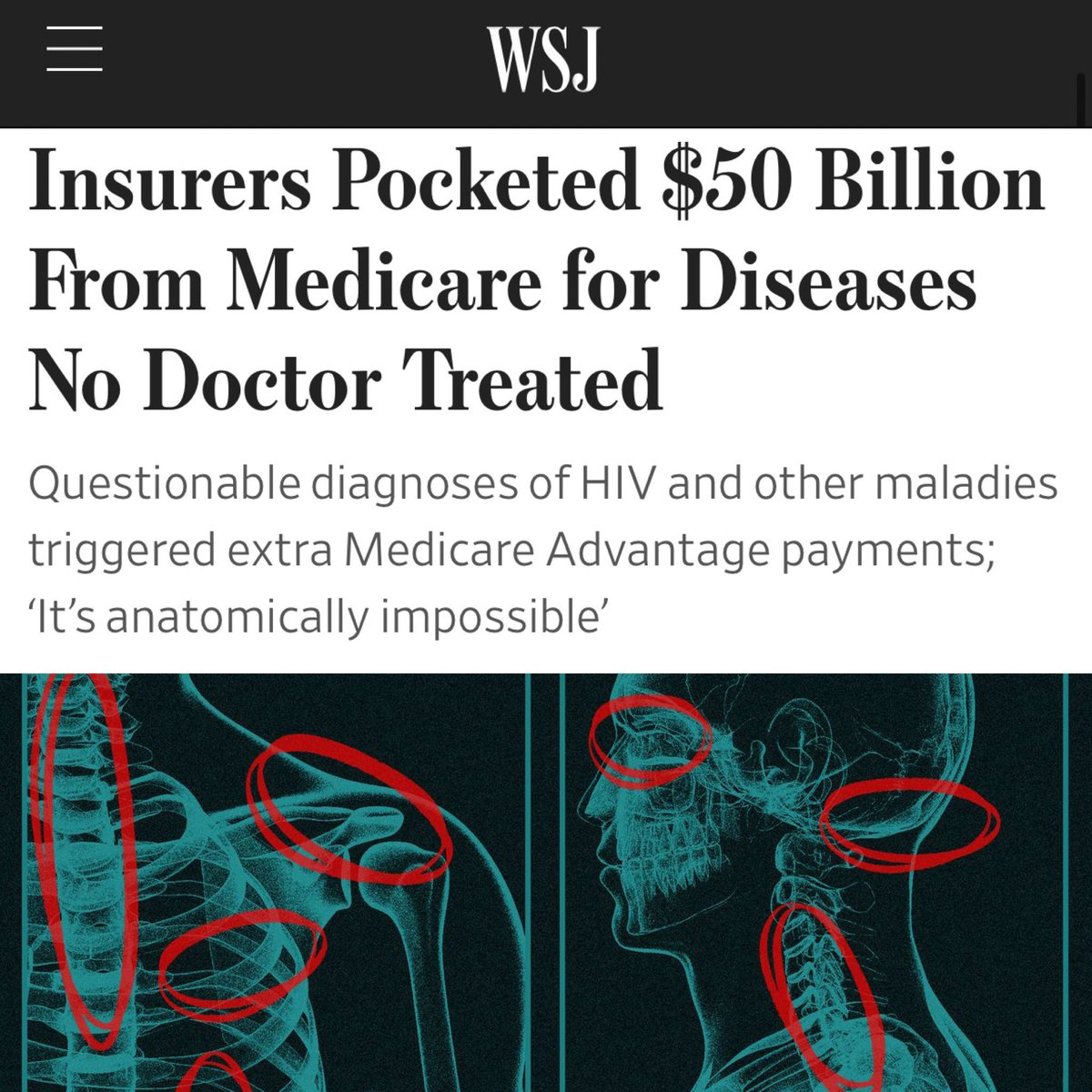
Medicare Advantage plans received $50 billion in payments between 2018 and 2021 for diagnoses insurers added to medical records, a Wall Street Journal investigation published July 8 has found.
The Journal investigated billions of Medicare Advantage records and found that some conditions were diagnosed at a much higher rate among Medicare Advantage beneficiaries than among traditional Medicare beneficiaries. For example, diabetic cataracts were diagnosed much more often among Medicare Advantage beneficiaries than among traditional Medicare beneficiaries, the Journal found.
The federal government pays Medicare Advantage plans a rate per beneficiary based on their diagnoses.
CMS does not reimburse MA plans for beneficiaries with non-diabetic cataracts, a common condition among older adults, according to the Journal. The government does reimburse for diabetic cataracts. CMS paid Medicare Advantage plans more than $700 million for diabetic cataracts diagnoses between 2018 and 2021, the investigation found.
A spokesperson for UnitedHealth, the largest Medicare Advantage insurer, told the Journal its analysis was “inaccurate and biased.” Medicare Advantage plans code diagnoses more completely and ensure diseases are caught earlier, the spokesperson told the outlet.
The Journal’s investigation also found some Medicare Advantage beneficiaries were diagnosed with serious diseases in their medical records, but no evidence of treatment for the disease appeared in these patients’ records. Among beneficiaries who had a diagnosis of HIV added to their record by their insurer, just 17% received treatment for the disease, according to the investigation. Among beneficiaries who were diagnosed with HIV by their physician, 92% received treatment.
The Journal’s investigation is the latest examining upcoding by MA plans. A 2022 report in The New York Times alleged some insurers incentivized employees or physicians to add diagnoses to patients’ reports. Nearly every major payer has been accused of overbilling by a whistleblower, the federal government or an investigation by HHS’ Office of Inspector General.
MedPAC, which advises the government on Medicare issues, estimates the federal government will spend $83 billion more on Medicare Advantage beneficiaries than if they were enrolled in fee-for-service Medicare. Coding intensity in MA will be 20% higher than in fee-for-service in 2024, according to the commission.
In February, the American Hospital Association and five other hospital organizations had urged the court to review the case. The current formula costs DHS hospitals more than a billion dollars each year, according to the AHA.
“The AHA is pleased that the Supreme Court agreed to consider this case,” said Chad Golder, AHA general counsel and secretary, by statement. “As we explained in our amicus brief urging the Court to grant certiorari, it is critical to hospitals and health systems that HHS interpret the DSH fraction consistently across the statute. The agency’s longstanding failure to do so has cost hospitals more than a billion dollars each year, directly harming the hospitals that serve America’s most vulnerable patients. We look forward to the Supreme Court rectifying this legal error next term.”
WHY THIS MATTERS
This case, and one heard by SCOTUS in 2002 called Becerra v. Empire Health Foundation, can be viewed as being two sides of the same coin. Both deal with a different portion of the DSH fraction that determines payment. The Empire Health case dealt with the Medicare portion. This latest case is about the Supplemental Security Income portion.
The AHA and other organizations have argued that HHS incorrectly adopted the view that a patient is entitled to Supplemental Security Income benefits only if the patient actually received cash SSI payments during a hospital stay. This interpretation is inconsistent with the court’s reasoning in Becerra v. Empire Health Foundation, the AHA said.
That 2022 decision said that patients are entitled to Medicare Part A benefits for purposes of the DSH formula if they qualify for the program, even if Medicare is not paying for their hospital stay.
“This case concerns a question that is critical to calculating the Medicare DSH fraction: When are patients ‘entitled to’ SSI benefits and so counted in the numerator? Is it when they are eligible for SSI benefits, or when they are actually receiving cash SSI benefits,” the AHA and other organizations wrote in their brief to the court.
THE LARGER TREND
In February, the American Hospital Association and five other national hospital associations representing hospitals urged the Court to review the case challenging how HHS applies Congress’ formula for calculating Disproportionate Share Hospital payments..
“The correct interpretation of the DSH formula is vitally important to America’s hospitals,” the brief said. “Although HHS has refused to share the data that would allow hospitals to accurately count the SSI-eligible patients whom the agency’s approach excludes, the available estimates suggest that hospitals will lose more than a billion dollars each year in DSH funds. What’s more, a hospital’s eligibility for DSH payments affects its entitlement to other federal benefits designed to help hospitals ‘provide a wide range of medical services’ to vulnerable populations. HHS’s error thus has far-reaching implications for hospitals, patients, and the American healthcare system.”
Becerra v. Empire Health Foundation was a United States Supreme Court case that in 2022 clarified calculations for the Medicare fraction — one of two fractions the Medicare program uses to adjust the rates paid to hospitals that serve a higher-than-usual percentage of low-income patients, according to SCOTUSblog. Those individuals “entitled to [Medicare Part A] benefits” are all those qualifying for the program, regardless of whether they receive Medicare payments for part or all of a hospital stay, the court ruled.
In Becerra v. Empire Health Foundation, the court ruled 5-4 that HHS had properly interpreted the underlying statute and reversed and remanded the decision of the United States Court of Appeals for the Ninth Circuit.
On Tuesday, health system leaders testified before the House Energy and Commerce Subcommittee onOversight and Investigations about potential changes to the 340B Drug Pricing Program.
The committee was receptive to witnesses’ claims that the program is essential to the financial survival of many systems, but representatives stated that “the status quo is not acceptable” and that they had a responsibility to “step in and provide oversight.”
There was little interest expressed in broad overhauls to the program, but both witnesses and representatives focused on how it could benefit from greater transparency, for example requiring hospitals to disclose 340B revenue, how savings are used, and which patient populations are served through the program.
Meanwhile, Republicans and Democrats in both houses have introduced multiple bills this session that focus on various aspects of the 340B program, including transparency.
The Gist: It’s encouraging to see members of congress recognize how essential the 340B program is to health system finances, and of the potential reforms on the table, increased transparency is a relatively palatable option.
Congress is exploring statutory tweaks to the program in response to the myriad legal challenges concerning it, many of which involve the Department of Health and Human Services. Several of these lawsuits stem from more than 20 major drugmakers restricting 340B discounts at contract pharmacies, which has led multiple states to enact legislation protecting these discounts, in turn prompting further lawsuits.
The mess of conflicting rulings these cases have produced so far is a clear sign that the 340B statute will be amended, and health system advocates should continue working with Congress to find solutions that preserve the integrity of the program.
Late last week, the Department of Health and Human Services (HHS) published a final rule establishing a new administrative dispute resolution process for the 340B drug discount program.
A panel, composed of government experts from the Office of Pharmacy Affairs, will resolve claims raised by covered entity providers about drugmakers overcharging them for 340B drugs, as well as claims from pharmaceutical companies that covered entities are diverting or duplicating discounts improperly. The new process, which will go into effect in mid-June, allows the panel to review claims on issues related to those pending in federal court. It’s intended to be “more accessible, administratively feasible, and timely” than a prior process established by HHS in 2020 that was paused after legal challenges.
The Gist:
This new 340B dispute resolution process is likely to see extensive use, as battles between providers and drugmakers over the drug discount program have heated up significantly in recent years. There are more than 50 ongoing court cases related to the program, many of which concern actions taken by at least 20 major drugmakers to restrict 340B sales to contract pharmacies. Although this new process may provide more effective dispute resolution, none of its decisions can be considered final until courts have settled the myriad cases before them.
Indianapolis-based Community Health Network has agreed to a $345 million settlement to resolve allegations that, dating back to 2008, it violated the False Claims Act and Stark law.
The settlement, announced Dec. 19, stems from a whistleblower complaint filed in 2014 by the nonprofit health system’s former CFO and COO under the qui tam provisions of the False Claims Act.
The United States filed suit against CHN in 2020, alleging that the system violated the False Claims Act by knowingly submitting claims to Medicare for services that were referred in violation of the Stark law, which requires that the compensation of employed physicians be fair market value and cannot account for the volume of referrals.
The U.S. complaint alleged that, starting in 2008, CHN’s senior management engaged in a scheme to recruit physicians for employment with outsized pay in an effort to secure profitable referrals. The salaries offered to cardiologists, cardiothoracic surgeons, vascular surgeons, neurosurgeons and breast surgeons for CHN employment were sometimes up to double what physicians earned in private practices, the complaint alleged.
The government alleged that CHN provided false compensation information to a valuation firm, ignored the consultants’ warnings about legal risks of overcompensation and awarded bonuses to physicians based on their referrals to providers within the CHN network.
CHN said the $345 million settlement will be paid from its reserves, which reported operating revenue of $3.1 billion in 2022. The nonprofit system has more than 200 sites of care and affiliates throughout Central Indiana, including 10 hospitals.
“This is completely unrelated to the quality and appropriateness of the care Community provided to patients,” CHN Spokesperson Kris Kirschner said in a statement shared with Becker’s. “This settlement, like those involving other health systems and hospitals, relates to the complex, highly regulated area of physician compensation. Community has consistently prioritized the highest regulatory and ethical standards in all our business processes.”
The system said it “has always sought to compensate employed physicians based on evolving industry best practices with the advice of independent third parties” and “has always sought to provide complete and accurate information to our third-party consultants.”
“When doctors refer patients for CT scans, mammograms or any other medical service, those patients should know the doctor is putting their medical interests first and not their profit margins,” Zachary Myers, U.S. attorney for the Southern District of Indiana, said in the Justice Department news release.
“Community Health Network overpaid its doctors. It also paid doctors bonuses based on the amount of extra money the hospital was able to bill Medicare through doctor referrals,” Mr. Myers said. “Such compensation arrangements erode patient trust and incentivize unnecessary medical services that waste taxpayer dollars.”
Under the settlement, CHN will enter into a five-year corporate integrity agreement with HHS in addition to its $345 million payment to the U.S.








 HENRY KOTULA