Amazon and several other major companies have made numerous attempts to “disrupt” health care over the years without much success. But new acquisitions in primary care, home health care, and more may allow them to more successfully expand into the industry, David Wainer writes for the Wall Street Journal.
Competition heats up in the health care industry
According to Wainer, the United States spends a greater proportion of its economy on medical services than any other developed nation, making health care “too big of an opportunity to ignore” for many companies, including those in technology, retail, and more.
For example, Amazon has launched several forays into health care in recent years, although not all of them have been successful. Some of these health care efforts include its now defunct partnership with Berkshire Hathaway and JPMorgan Chase, as well as Amazon Care, the company’s primary care service that will shut down at the end of the year.
Amazon has also acquired several smaller health care companies in an effort to expand its reach. In 2018, Amazon purchased PillPack for $1 billion as a way to expand its online pharmacy business. Similarly, Amazon in July reached an agreement to acquireOne Medical, a primary care company, for roughly $3.9 billion.
Several other companies, including retailers like Walmart and Walgreens and large insurers like UnitedHealth Group* (UHG) and CVS Health‘s Aetna, are also looking to expand their health care offerings. In fact, CVS announced last week that it had purchased home health care company Signify Health for roughly $8 billion—beating out several other competitors.
So far, “[s]hifting social attitudes and market conditions have helped fuel the wave” of health care acquisitions from major companies, Wainer writes, and more are likely to occur going forward.
What companies are targeting in health care
In contrast to the more traditional fee-for-service model, many health care startups are moving toward value-based care, which encourages providers to help prevent illnesses, rather than just treat them.
According to Wainer, UHG, which includes a pharmacy benefit manager, an insurance business, and 60,000 physicians, has made the most progress transitioning to value-based care so far. For example, many of the multi-specialty physician practices UHG has purchased through its medical provider arm Optum Care focus on proactively providing patients home, virtual, and on-site care to help them stay out of the hospital.
In addition, UHG and Walmart last week announced a partnership to provide services and “improve the patient experience” for certain Medicare Advantage enrollees. Through the partnership, UHG will use analytics to help Walmart clinics deliver value-based care to patients.
Aside from value-based care, many companies, including Amazon and CVS, are looking to expand their businesses into primary care. Currently, there is a nationwide shortage of primary care doctors, which has led to worse health outcomes for many Americans.
By providing primary care services directly to consumers, Amazon and other companies are hoping to use the relationship between patients and their providers to sell even more services, such as prescription drug deliveries and more.
Overall, “staying healthy probably will never be the sort of frictionless, one-click experience that Amazon pioneered,” Wainer writes, but the company’s current involvement in the health care industry “is a testament to the fact that there’s a lot of money to be made by fixing America’s broken system.” (Wainer, Wall Street Journal, 9/9)
*Advisory Board is a subsidiary of Optum, a division of UnitedHealth Group. All Advisory Board research, expert perspectives, and recommendations remain independent.
Amazon announced it will shut down Amazon Care—its primary care service sold to employer health plans—by the end of the year. There’s one thing that Amazon’s decision will surely mean: It will continue to be fashionable to mock Amazon.
People may look at this, compare it to Amazon’s Haven misadventure, and say that everyone (including Advisory Board) who speculated that Amazon could succeed in health care is either naïve or delusional.
But there’s more to it.
In looking at what Amazon reportedly said about the challenges facing Amazon Care, we believe that the acquisition of One Medical is the clearest signal yet that Amazon intends to succeed at health care.
The problems with Amazon Care
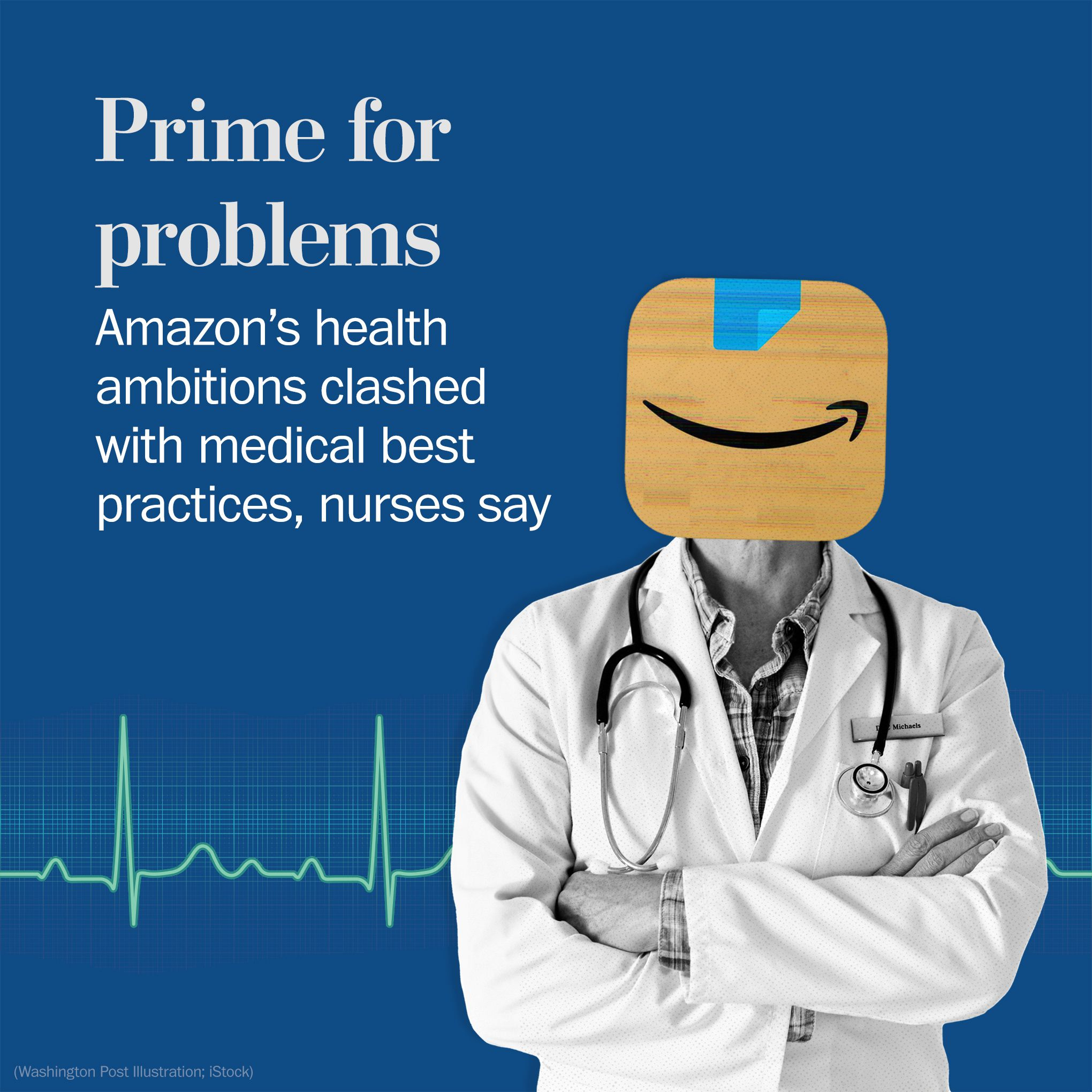
Amazon Care appears to have struggled to understand the nuances and demands of care delivery, as detailed recently in the Washington Post. Clearly, the tension between expectations for growth and quality were real. This raised questions for us: Was Amazon going to truly “iterate” on its health care capabilities? When it came to care delivery, would Amazon get better, or would it do enough to get by?
Amazon concedes that its product was not comprehensive enough for its employer partners. It’s unclear whether that means it simply wasn’t saving them money, even if employees were using it. At the same time, we wonder how hard it was to persuade employees to embrace Amazon-branded health care or to attract employees to a product centered on virtual and home-based care—or some combination of the two.
Remember: Everyone had to try out telehealth in 2020 because, in many cases, they had no choice. There isn’t any similarly powerful and pervasive force pushing anyone to virtual-first care today. People tend to like virtual visits, but that doesn’t mean that they want to receive all adequately satisfy users or keep care from fragmenting with its mosaic of services, channels, and providers.
What shutting down Amazon Care suggests about Amazon’s health care ambition
Amazon’s willingness to jettison its homegrown but underperforming health care business suggests three things.
One Medical is the centerpiece of Amazon’s health care strategy, not simply one component among many. When viewed this way, the details of the acquisition make more sense than they did four weeks ago. Knowing that a virtual and home-based model wasn’t attractive for employers, we can understand more clearly why Amazon wanted a partner with both in-person and digital health capabilities. Knowing that its own product was struggling, we can see why it was willing to pay a huge premium for One Medical.
Amazon is iterating on its health care capabilities, but it is iterating at an enormous scale. “Fail fast” is axiomatic in technology. It’s usually applied to minimum viable products—applications and services that are quickly built, delivered, and assessed for their ability to meet customer demands and gain traction in the market. Products that don’t meet those demands are replaced as quickly as possible. Obviously, Amazon Care was not a minimum viable product. It was rolled out three years ago, and it offered telehealth services in all 50 states and in-home services in seven markets. But when you look at the pivot Amazon seems to be making from virtual and home-based care with Amazon Care to in-person and virtual with One Medical, it’s hard not to reach for the “fail fast” comparison.
Amazon is a different kind of competitor in health care. We can’t think of another organization that would spend years building out a care delivery enterprise, roll it out in 50 states, and then simply shut it down. We also can’t think of another organization whose alternative care delivery plan is to spend nearly $4 billion on another company. It’s not just the scale and the money—it’s the willingness to throw around those assets that makes Amazon a potentially potent competitor.
There are still enormous execution challenges for Amazon and One Medical. Massive disruption of the industry is not a given, no matter how much money is spent or how many companies are bought and/or fail.
It seems likely that the impact of Amazon on the market will be centered, at least for the immediate future, on the same direct-to-consumer approach that One Medical has taken and at which Amazon is expert in its other lines of business.
That does not mean Amazon can be dismissed as a dilettante or a dabbler in health care. Its mere presence in the market already seems to have sparked a bidding war for Signify Health. Amazon’s continued iteration of its approach to health care demands ongoing attention.
Radio Advisory’s Rachel Woods sat down with Advisory Board’s Sarah Hostetter and Vidal Seegobin to discuss the good and bad elements of private equity and what leaders can do to make it a valuable partner to their practices.
Private equity (PE) tends to get a bad rap when it comes to health care. Some see it as a disruptive force that prioritizes profits over the patient experience, and that it’s hurting the industry by creating a more consolidated marketplace. Others, however, see it as an opportunity for innovation, growth, and more movement towards value-based care.
Radio Advisory’s Rachel Woods sat down with Advisory Board‘s Sarah Hostetter and Vidal Seegobin to discuss the good and bad elements of PE and what leaders can do to make it be a valuable partner to their practices.
Rachel Woods: Clearly there are a lot of feelings about private equity. I’m frankly not that surprised, because the more we see PE get involved in the health care space, we hear more negative feelings about what that means for health care.
Frankly, this bad guy persona is even seen in mainstream media. I can think of several cable medical dramas that have made private equity, or maybe it’s specific investors, as the literal enemy, right? The enemy of the docs that are the saviors of their hospital or ER or medical practice. Is that the right way we should be thinking about private equity? Are they the bad guy?
Sarah Hostetter: The short answer is no. I think private equity is a scapegoat for a lot of the other problems we’re seeing in the industry. So the influx of money and where it’s going and the influence that that has on health care. I think private equity is a prime example of that.
I also think the horror stories all get lumped together. So we don’t think about who the PE firm is or what is being invested in. We put together physician practices and health systems and SNPs, and we lump every story all together, as opposed to considering those on their individual merits.
Woods: And feeds to this bad guy kind of persona that’s out there.
Hostetter: Yeah. And like you said, the media doesn’t help, right? If the average consumer is watching and seeing different portrayals or lumped portrayals, it’s not helping.
Vidal Seegobin: Private equity, as all actors in our complex ecosystem, is not a monolith, and no one has the monopoly on great decisions in health care, nor do they have a monopoly on the bad decisions in health care. And so if you attribute a bad case to private equity, then you also have to attribute the positive returns done from a private equity investment as well.
Hostetter: Agree with what Vidal’s saying, but bottom line is that every stakeholder is not going to have the same outcomes or ripple effects from a private equity deal. It really depends on the deal itself, the market, and the vantage points that you take.
Woods: I want to actually play out a scenario with the two of you and I want you to talk about the positive and the potentially negative consequences for different sectors or different stakeholders.
So let’s take the newest manifestation that Sarah, you talked to us through. Let’s say that there is a PE packed multi-specialty practice heavily in value-based care. That practice starts to get bigger. They acquire other practices, including maybe even some big practices in a market and they start employing all of the unaffiliated or loosely affiliated practices in the market.
I am guessing that every health system leader listening to this episode is already starting to sweat. What does this mean for the incumbent health system?
Seegobin: So I think one thing that’s going to be pretty clear is that size does confer clear advantages and health care is part and parcel that kind of benefit. What I think is challenging is when we’re entering into a moment where access to capital is challenging for health systems in particular and we’re going to need to scale up investments, health systems could see themselves falling further and further behind as private equity makes smart investments into these practices to both capture and retain volume. And as a consequence of that, reduces the amount of inpatient demand or the demand to their bread and butter services.
Hostetter: And I think it’s really important that you phrase the question, Rae, as health system. Because we so often equate health system and hospital.
But a health system includes lots of hospitals, it includes ambulatory facilities, a range of services. And so I think for systems to equate health system and hospital, it’s really hard when any type of super practice or large backed practice comes into the market.
Whether we are talking about a plan backed practice, a PE backed practice, or just a really large independent group. There are pressures on health systems who think of their job or their primary service as the hospital. And there is a moment where the power dynamics can shift in markets away from the health system, if they aren’t able to pivot their strategy beyond just the hospital.
Woods: Which is exactly why health systems see this scenario as, let’s just say it, threatening. Sarah, then how do the physicians feel? Do they have the opposite feelings as the incumbent health systems?
Hostetter: There’s a huge range. Private equity is incredibly polarizing in the physician practice world, the same way that it is in other parts of the industry. So I think there is a hope from some practices that private equity is a type of investor that is aligned with them.
Physicians who go into private practice historically tend to be more entrepreneurial. They are shareholders in their own practice, so there are some natural synergies between private equity, business minded folks, and these physicians.
Also, even though I go into a small business, it takes a lot to run a small business, so there are potentially welcome synergies and help that you can get from a PE firm. On the flip side of that, there are groups who would never in a million years consider taking a private equity investment and are unwilling to have these conversations.
Woods: There is a tendency, especially in the conversation that we’re having, for folks to think about private equity as being something that primarily impacts the provider space, at least when it comes to health care. But I’m not sure that that’s actually true. So what consequences, good or bad, might the payers feel? Might the life sciences companies feel?
Seegobin: So one common refrain when talking about private equity and their acquisition or partnering with traditional health care businesses like physician practices is that they are immediately focused on cutting costs. So they are going to consolidate all of the purchasing contracts, they are going to make pretty aggressive decisions about real estate, all the types of cost components that run the business.
Now, if you are a kind of life sciences or a diagnostic business for whom you would depend on being an incumbent in those contracting decisions, you’re worried that the private equity is either going to direct you to a lower cost provider, or in many cases, another business that the private equity firm owns as well, right?
They would love to keep synergies within the portfolio of businesses that they’ve acquired and they partner. So if you were relying on incumbent or historical purchasing practices with these physician practices, it can be disrupted, depending on the arrangement.
Hostetter: And then I think there’s a range of potential implications for payers. So you have some payers who themselves are aggregating independent practices, and they’re targeting the same type of practices that the PE firms that are betting on value-based care are targeting. They are targeting primary care groups who are big in Medicare Advantage. So there’s some inherent competition potentially for the physician practice landscape there.
Woods: Well, and I think they’re trying to offer the same thing, right? They’re trying to offer capital. They’re trying to do that with the promise of autonomy. And they’re coming up against a competitive partner that is saying, “I can do both of those things and I can do it better and faster.”
Hostetter: Yeah. And both of them are saying we can do it better and faster than hospitals. That’s the other thing, right?
Woods: Which, that part is probably true.
Hostetter: Yeah. Their goals are aligned and they believe they can get there different ways. And I think autonomy is a big sticking point here for me or a big bellwether for me, because I think whoever can get to value-based care while preserving autonomy is going to win. You have to have some level of standardization to do value-based care well. You can’t just let everyone do whatever they want. You need high quality results for lower cost. That inherently requires standardization. So who can thread the needle of getting that standardization while preserving a degree of autonomy?
It’s fascinating, as we’ve had this call, it was suggested multiple times that payers actually might be the end of the line for some of these PE deals. That there’s a lot of alignment between what payers are trying to do with their aggregation and what PE firms who are investing in primary care do, and hey, payers have a lot of money too. So could we actually see some of these PE deals end with a payer acquisition? Because they’re trying to achieve similar things, just differently.
Three years after it began piloting a primary care service for its employees that blended telehealth and in-person medical services, Amazon plans to cease operations of its Amazon Care service.
Amazon announced Wednesday afternoon that it would end Amazon Care operations after December 31. In an email to Amazon Health Services employees, Neil Lindsay, senior vice president of Amazon Health Services, said Amazon Care wasn’t a sustainable, long-term solution for its enterprise customers.
Amazon provided a copy of the email to Fierce Healthcare.
The decision only impacts Amazon Care and Care Medical teams and not Amazon’s other healthcare services.
While operating Amazon Care, the company “gathered and listened to extensive feedback” from its enterprise customers and their employees and evolved the service to continuously improve the experience for customers.
“However, despite these efforts, we’ve determined that Amazon Care isn’t the right long-term solution for our enterprise customers, and have decided that we will no longer offer Amazon Care after December 31, 2022,” Lindsay wrote.
“This decision wasn’t made lightly and only became clear after many months of careful consideration. Although our enrolled members have loved many aspects of Amazon Care, it is not a complete enough offering for the large enterprise customers we have been targeting, and wasn’t going to work long-term,” he said.
The online retail company piloted virtual urgent care and primary care service with its employees and their families in the Seattle region in 2019.
Amazon Care has since expanded rapidly with telehealth services available in all 50 states and in-person services in at least seven cities, including Dallas, D.C. and Baltimore. As part of its ambitions in healthcare, Amazon then focused on ramping up partnerships with employers and signed on other companies as clients including Silicon Labs, TrueBlue, Whole Foods Market, Precor—a Washington-based fitness equipment company that was acquired by Peloton—and Hilton.
Some industry insiders have said that Amazon Care struggled to gain a foothold with employer clients.
The company was on track to rapidly expand its hybrid care model to more than 20 additional cities in 2022, including major metropolitan areas like San Francisco, Miami, Chicago and New York City.
If the One Medical deal goes through, it would significantly expand Amazon’s foothold in the nearly $4 trillion healthcare market, specifically in the competitive primary care market.
One Medical markets itself as a membership-based, tech-integrated, consumer-focused primary care platform. The company operates 188 offices in 29 markets. At the end of March, One Medical had 767,000 members.
The deal also gives Amazon rapid access to the lucrative employer market as One Medical works with 8,000 companies.
The One Medical acquisition has not yet closed.
Lindsay said the company’s work building Amazon Care has deepened its understanding of “what’s needed long-term to deliver meaningful health care solutions for enterprise and individual customers.“
“I believe the health care space is ripe for reinvention, and our efforts to help improve the health care experience can have an immensely positive impact on our quality of life and health outcomes. However, none of these reasons make this decision any easier for the teams that have helped to build Amazon Care, or for the customers our Care team serves,” he wrote.
The decision to cease Amazon Care’s operations will likely mean some employees will be laid off. Lindsay said in his email to employees that many Amazon Care employees will have an opportunity to join other parts of the Health Services organization or other teams at Amazon. “Well also support employees looking for roles outside of the company,” he said.
Amazon plans to acquire virtual and in-person primary care company One Medical, the online retailer said July 21.
In a cash deal valued at $3.9 billion, the aim is to combine One Medical’s technology and team with Amazon, it said in a news release. The goal of the acquisition, according to the two companies, is to offer more convenient and affordable healthcare in-person and virtually.
“The opportunity to transform healthcare and improve outcomes by combining One Medical’s human-centered and technology-powered model and exceptional team with Amazon’s customer obsession, history of invention and willingness to invest in the long-term is so exciting,” said Amir Dan Rubin, CEO of One Medical, in a company news release. “There is an immense opportunity to make the healthcare experience more accessible, affordable, and even enjoyable, for patients, providers and payers. We look forward to innovating and expanding access to quality healthcare services together.”
Amazon will acquire One Medical for $18 per share.
Completion of the transaction is subject to customary closing conditions, including approval by One Medical’s shareholders and regulatory approval.
If the acquisition is approved, Mr. Rubin will remain CEO of One Medical.
As the economic situation has worsened over the past few months, we’ve been working with several health systems to recalibrate strategy. For many, the anticipated “post-COVID recovery” period has turned into a struggle to reverse declining (often negative) margins, while still scrambling to address mounting workforce shortages. All this amid continued pressure from disruptive competitors and ever-rising consumer expectations.
In the graphic above, we’ve pulled together some of the most important changes we believe health systems need to make. These range from improvements to the operating model (shifting to a team-based approach to staffing, greater use of automation where appropriate, and moving to asset-light capital strategies) to transformations of the clinical model (moving care into lower-cost outpatient and community settings, integrating virtual care into clinical delivery, and creating tighter alignment with key physicians).
In general, the goal is to deliver lower-cost care in less expensive settings, using less expensive staff.
But those cost-saving strategies will need to be coupled with a new go-to-market approach, including new payment models that reward systems for shifting away from high-cost (and highly reimbursed) care models.
Employers and consumers will expect more solution-based offerings, which integrate care across the continuum into coherent bundles of service. This will require a more deliberate focus on service line strategies, moving away from a fragmented, inpatient-centric model.
Contracting approaches must align payment with this shift, changing incentives to reward coordinated, cost-effective, outcomes-driven care.
A key insight from our discussions with health system leaders: short-term cost-cutting initiatives to “stop the bleed” won’t suffice—instead, more permanent solutions will be required that address not only the core operating model, but also the approach to revenue generation.
The post-COVID environment is turning out to be a lot tougher than many had expected, to say the least.
The digital platform is designed to provide consumers with a coordinated healthcare experience across care settings. It’s being sold to Aetna’s fully insured and self-insured plan sponsors, as well as CVS Caremark clients, and is due to go live next year. According to CVS Health, the new offering “enables consumers to choose care when and where they want,” whether that’s virtually, in a retail setting (including at a MinuteClinic or HealthHUB), or through at-home services.
Patients will have access to primary care, on-demand care, medication management, chronic condition management, and mental health services, as well as help in identifying other in-network care providers.
The Gist: CVS Health has been working to integrate its retail clinics, care delivery assets, and health insurance business. This new virtual-first care platform is aimed at coordinating care and experience across the portfolio, and streamlining how individuals access the range of services available to them.
CVS is not alone in focusing here: UnitedHealth Group, Cigna, and others have announced virtual-first health plans with a similar value proposition. Any payer or provider who aims to own the consumer relationship must field a similar digital care platform that streamlines and coordinates service offerings, lest they find themselves in a market where many patients turn first to CVS and other disruptors for their care needs.
Hospital systems can employ artificial intelligence to reduce the types of health inequities that have made communities of color more vulnerable to COVID-19, the leader of one of the nation’s largest health systems says.
“At Northwell Health, New York’s largest health system, we know health disparities will only grow worse if we don’t move more quickly to identify and correct them,” Michael Dowling, president and CEO of New Hyde Park-based Northwell Health, wrote in a May 11 news release with Tom Manning, chair of Ascertain, an AI venture between Northwell and Aegis Ventures. “To do that, we have turned to AI to disrupt this future.”
For instance, health systems can utilize AI to forecast which expectant mothers could benefit from early intervention and specialized care to treat preeclampsia, a pregnancy complication characterized by high blood pressure that affects Black women at three times the rate of white women, the executives wrote.
Organizations can also use health screenings and predictive models to determine which patients are most likely to develop chronic health conditions such as obesity, diabetes and hypertension, the men wrote. In addition, systems should diligently research AI health care applications, such as the National Institutes of Health’s All of Us initiative, which seeks to obtain health data from a representative sample of the U.S. population.
Dowling and Manning noted that health systems must also commit to high standards of data integrity outlined by the U.S. Food and Drug Administration and apply the Hippocratic oath to AI to make sure it does not widen health inequities.
The explosion of apps, wearables, and other health tech solutions targeted at employers has overwhelmed and frustrated many HR executives who make decisions about employee health benefits. At a recent convening of health insurance brokers we participated in, several bemoaned the challenge of helping their clients understand which solutions might bring real value.
One shared, “For the past few years, it’s felt like ‘App-apalooza’ out there. CHROs [chief human resource officers] get pitches for new apps every day…there are literally thousands out there saying they’ll reduce costs and improve employee health, but it’s next to impossible to tell which ones of them actually work.”
Brokers expressed surprise at how little evidence, or in some cases, actual patient and client experience, some health tech companies brought to the table: “We have startups coming to our clients talking about their millions of dollars in funding, but when you dig into what they’re actually doing, not only can they not show outcomes data, you find out they’ve only worked with a few dozen patients!”
But among the sea of apps purporting to manage any and every employee health need, from chronic disease to fertility to sleep quality, brokers reported their clients were finding value in a few distinct areas.
Technology-based mental health solutions received high marks for increasing access to care, with the prediction that “tele-behavioral health could become a standard part of most benefits packages very quickly”.
More surprisingly, employers shared positive feedback on the impact of virtual physical therapy solutions: “I was skeptical that it would work, but people like being able to rehab at home. And not only is it cheaper, we’re seeing higher adherence rates.”
But even the best apps are often challenged by a lack of connectivity to the rest of a patient’s healthcare. The technologies that will have the greatest staying power will be those that not only deliver results, but are able to move beyond point solutions to become part of an integrated care experience, meaningfully connected to other providers involved in a patient’s care.
At a recent health system physician leadership retreat, two cardiologists presented a fascinating update on the electrophysiology (EP) service line. Electrophysiologists use advanced heart mapping and ablation technologies to diagnose, pinpoint, and treat abnormal heart rhythms, and the field has made dramatic advances over the past decade. The success rate of interventions has risen, and procedures which used to take hours in a cath lab are now performed in a fraction of the time—with some patients even able to go home same-day.
This increased efficiency has expanded the EP program’s capacity, but the system still finds itself overwhelmed with demand. The system is located in a high-growth market, and demand is also fueled by shifting demographics, with more aging Baby Boomers seeking care. But a key driver of growthhas been the spread of “smart watches” like the Apple Watch and Fitbit, which tout the ability to detect abnormal heart rhythms like atrial fibrillation. With “half of the community walking around with an EKG on their wrist”, the number of patients seeking evaluations for “a-fib” has skyrocketed: at this system, over 50 percent growth in patient volume, leading to 25 jump in procedures during the pandemic.
While the doctors were excited about growth, they also stressed the need to rethink care pathways to make sure that electrophysiologists’ time was prioritized for the patients who needed it most. The system should look to develop care pathways and technology that enable other physicians to readily triage and manage routine atrial fibrillation.
But smartwatch-driven self-diagnosis raises larger questions about how doctors and hospitals must adapt when consumer technology outpaces the science evaluating its effectiveness, and the health system’s ability to meet new demand. With private equity firms now focused on acquiring cardiology practices, this massive spike of demand, coupled with the ability to move more heart rhythm procedures outpatient, is seen by investors as a significant profit opportunity—making it even more critical for doctors, researchers, and hospitals to ensure that sound clinical guidelines are developed to drive high-quality, appropriate management.







 HENRY KOTULA